
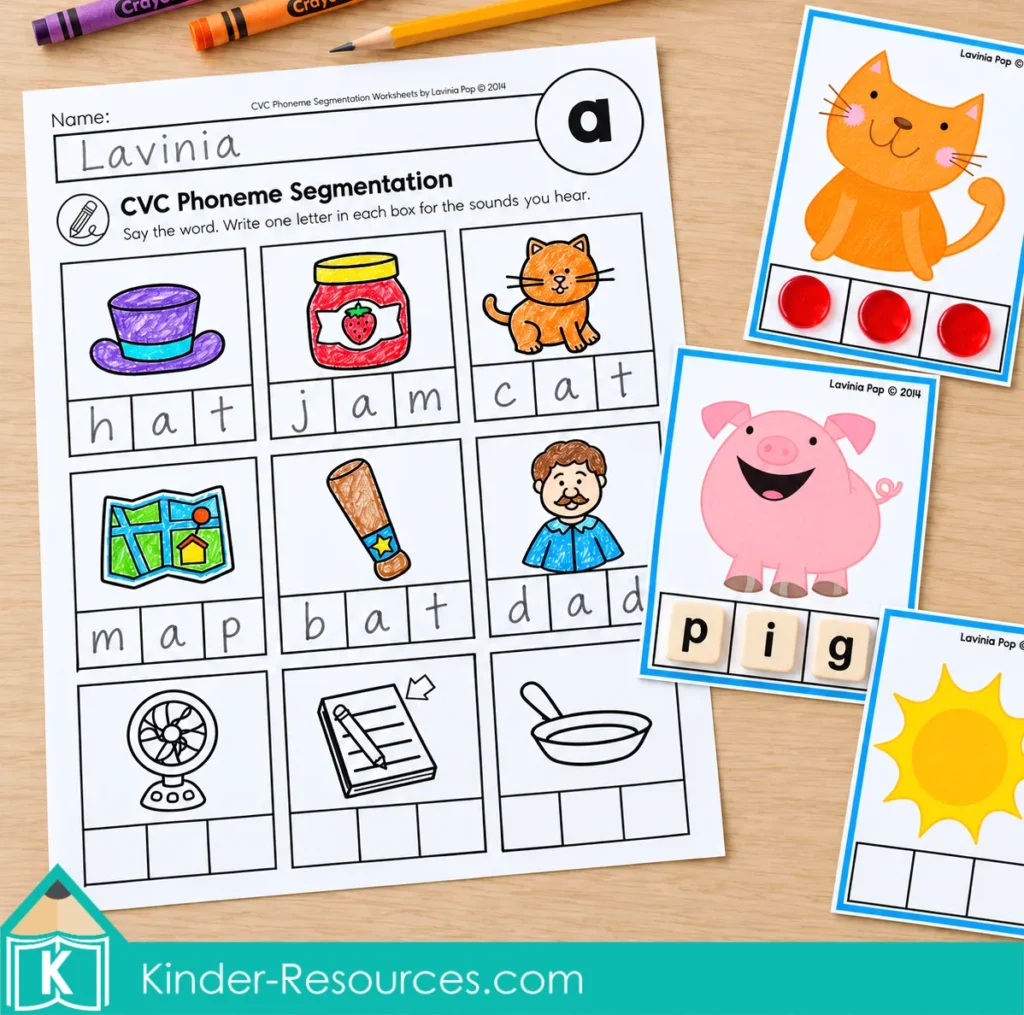
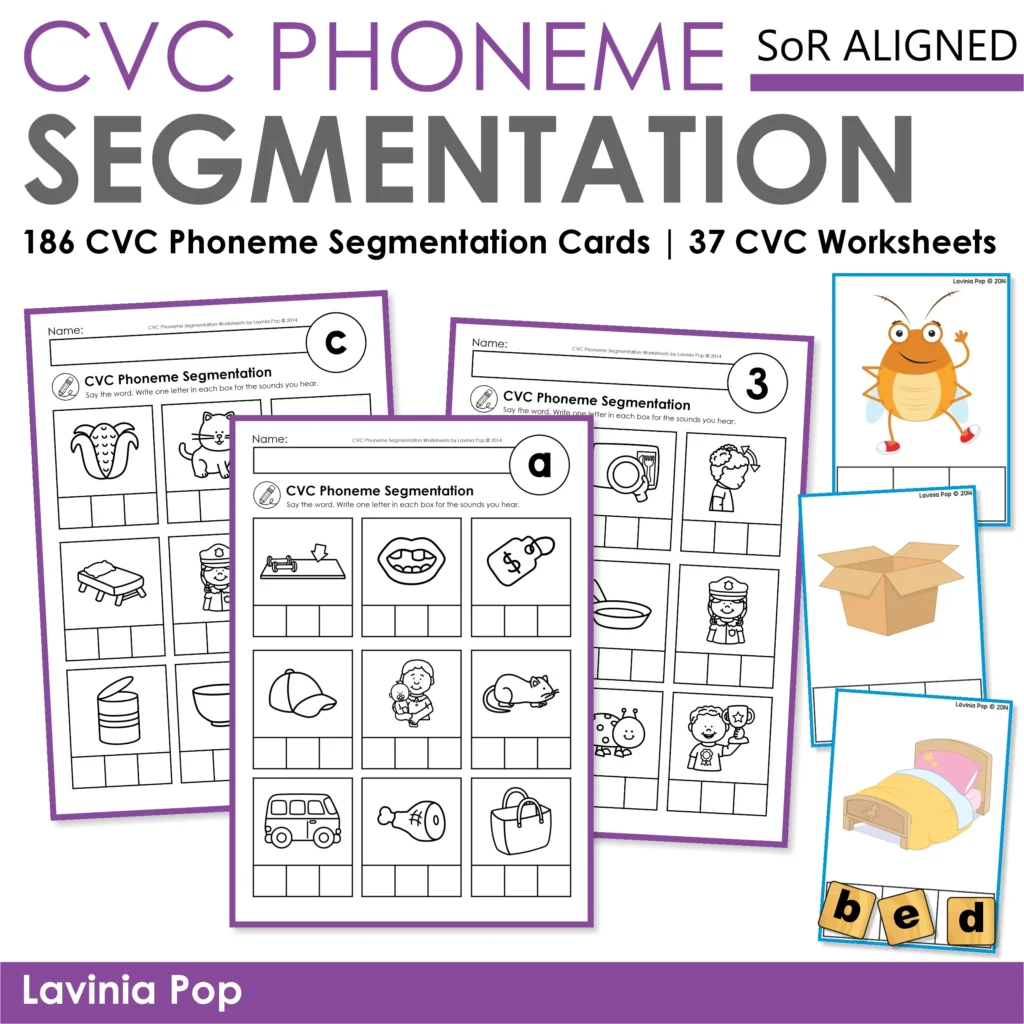
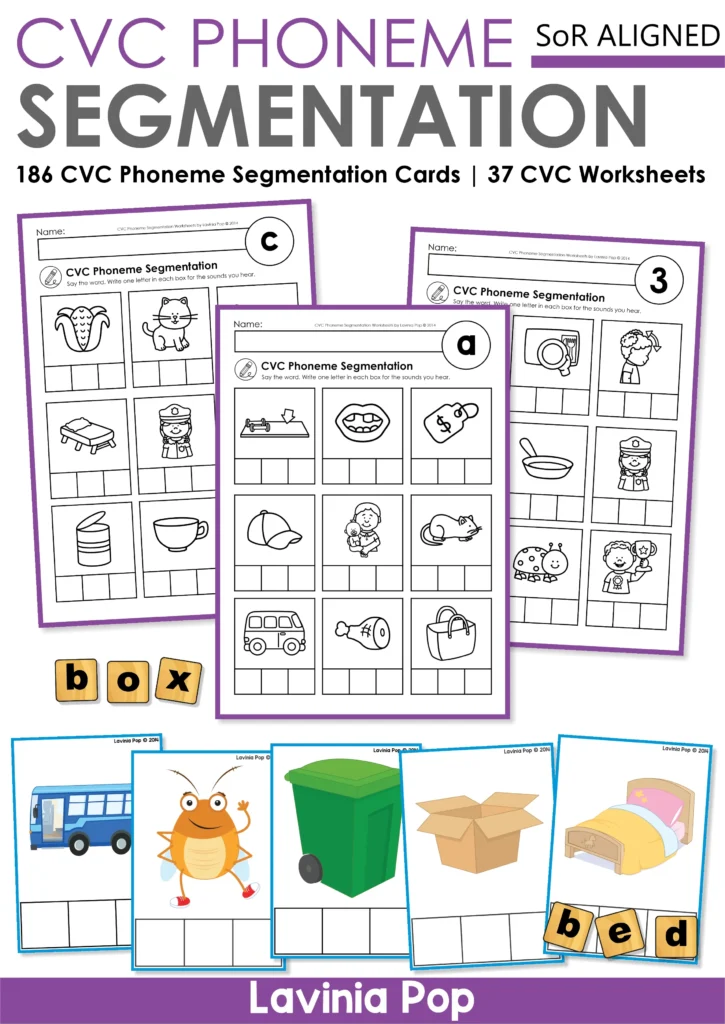
Naming a picture and spelling its word are two different tasks. A child might recognize a pig straight away, but writing pig means listening for each sound and choosing the letters to represent it. My CVC Phoneme Segmentation Cards bring those steps together through picture cards, counters, letter tiles, and simple writing activities. You can begin with a few familiar words and adjust the activity to the support your learners need.
Here are some ways to use the cards for kindergarten word work, small-group lessons, or phonics practice at home.
Try the Free CVC Phoneme Segmentation Cards Sample
Want to try the activity with your learners? Download the free sample pages and choose a few pictures to explore together.
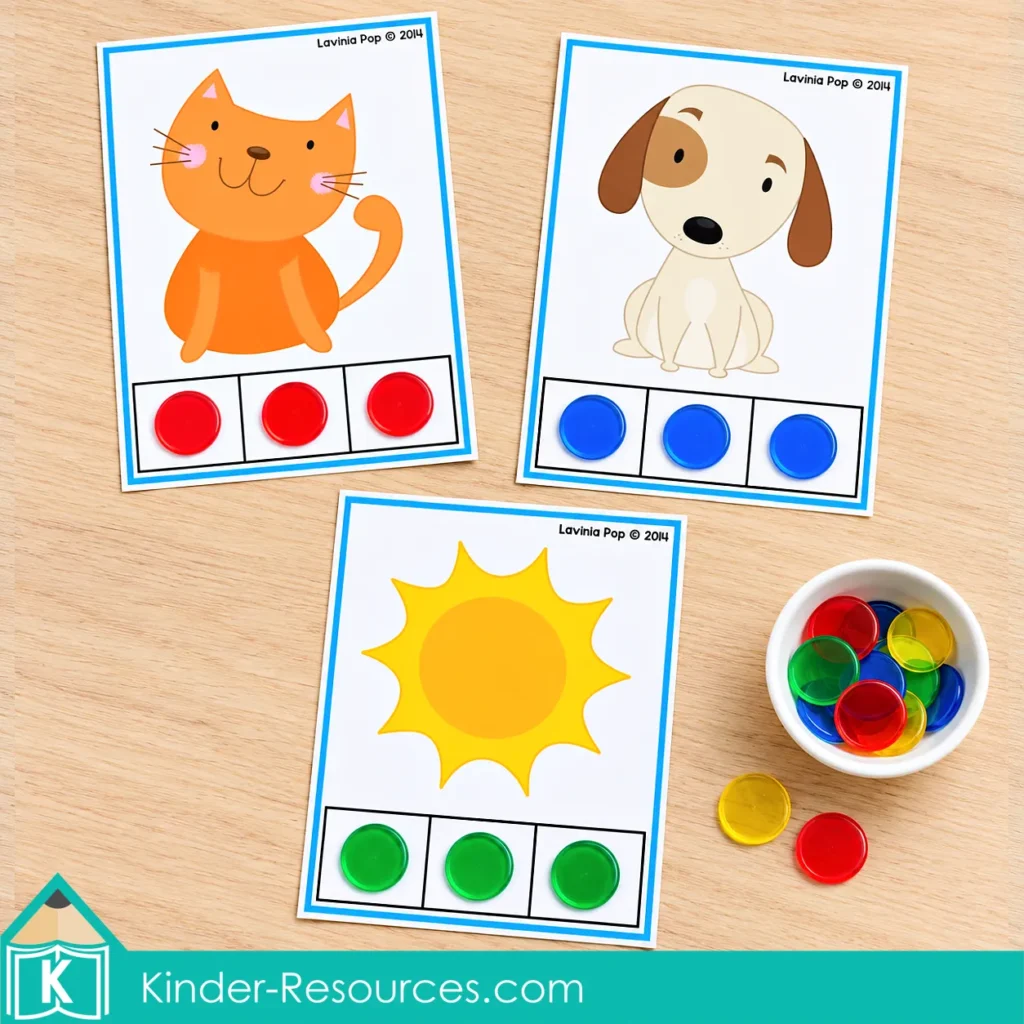
Start by Saying the Picture Names
Before introducing counters or letters, look through your chosen cards together and name each picture.
This quick conversation helps everyone work with the same word. A child might call the cat a “kitten,” for example. You can acknowledge their answer and explain, “Yes, it’s a little cat. For this card, we’re going to use the word cat.”
Choose words that match the letter–sound relationships you have already taught. Three or four cards are plenty for a short practice session.
One Counter for Each Sound
Phoneme segmentation means separating a spoken word into its individual sounds. For children who need help hearing those sounds, counters give them something to move as they listen.
Start with a three-sound word such as sun:
- Say the whole word: “sun.”
- Say /s/ and move a counter into the first box.
- Say the short /ŭ/ sound and move a counter into the middle box.
- Say /n/ and move a counter into the last box.
- Blend the sounds together and say “sun” again.
Model a turn, then invite the child to try. The counters represent the sounds they hear, so encourage them to say the sounds rather than the letter names.
Keep this sound-focused practice brief and connect it with familiar letters as appropriate for your learners.
Teaching tip: Count sounds carefully when selecting cards. A word such as box has three letters but four sounds because x represents /k/ /s/. Choose words such as cat, dog, and sun for the three-counter activity.
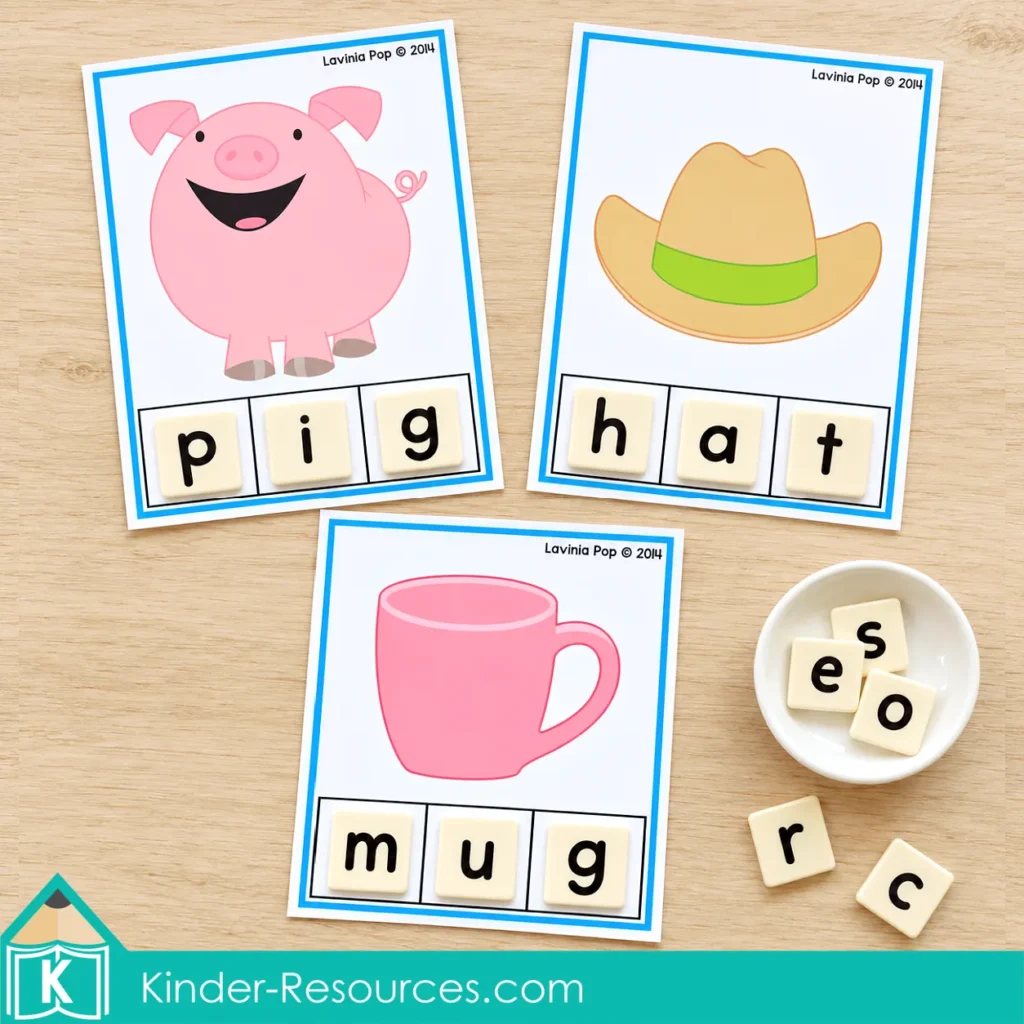
Build the Word with Letter Tiles
Next, use the CVC Phoneme Segmentation Cards to connect those spoken sounds with letters.
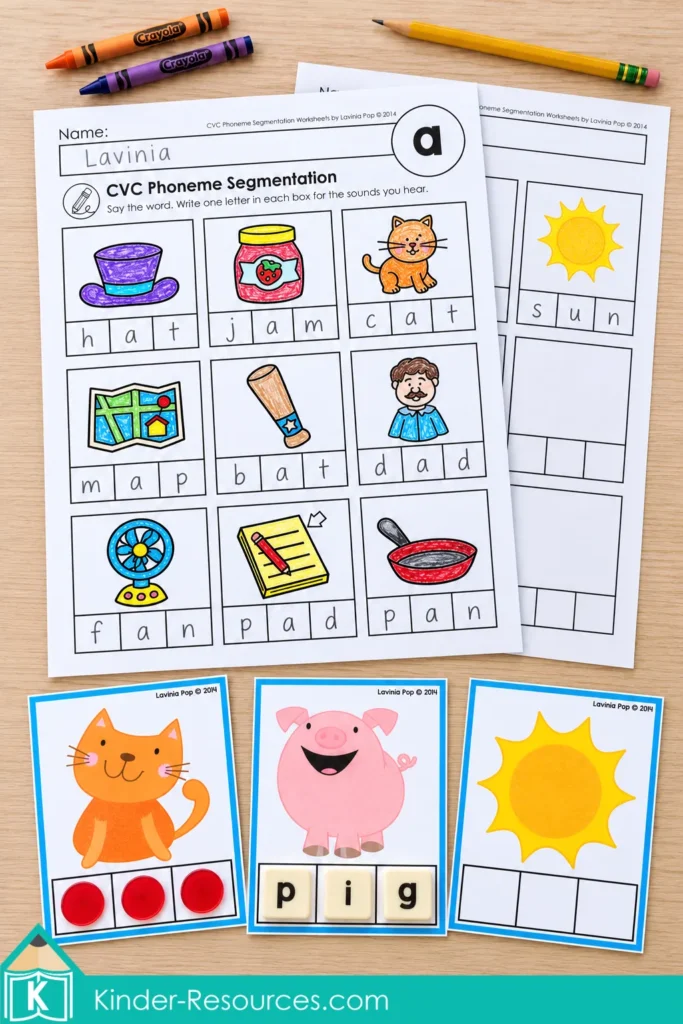
For pig, children say the word, listen for /p/ /ĭ/ /g/, and place p, i, and g in the boxes. Once the word is built, encourage them to blend the sounds and read it back.
You can adjust how much help you provide. Begin with just the letters needed for a few chosen words. As children become more confident, offer a wider selection of tiles.
If a child is unsure, return to the spoken word together. Prompts such as “What do you hear first?” or “Say the word again and listen to the middle” keep the focus on spelling through sounds.
Letter tiles are also useful when a child is ready to practice spelling but still finds handwriting demanding.
Listen Closely to the Middle Sound
The middle vowel deserves some attention too!
Choose cat, hat, and map, then say the words together. Can children hear the same short a sound in each one?
When they are ready to compare vowels, try pan, pen, and pin. Build the words in turn and talk about what changes. The first and last letters stay the same, but changing the middle vowel makes a different word.
Keep the selection connected to your current phonics teaching. You can revisit the same cards as children learn more letter–sound relationships.
Say and Write the Words
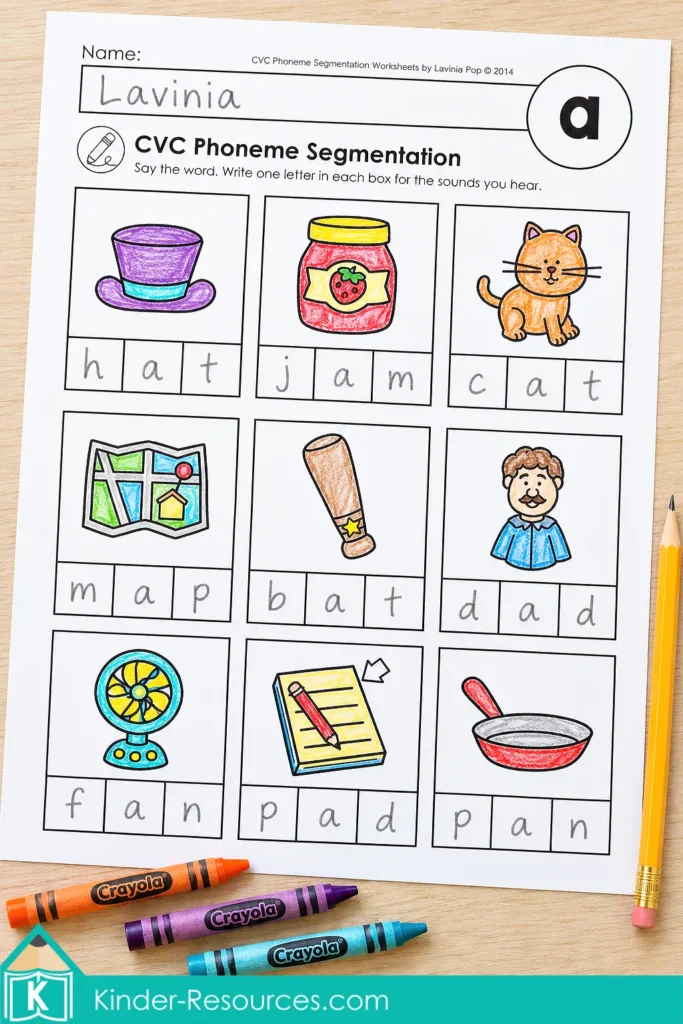
The picture worksheets give children another way to use the sounds and letters they have been practicing.
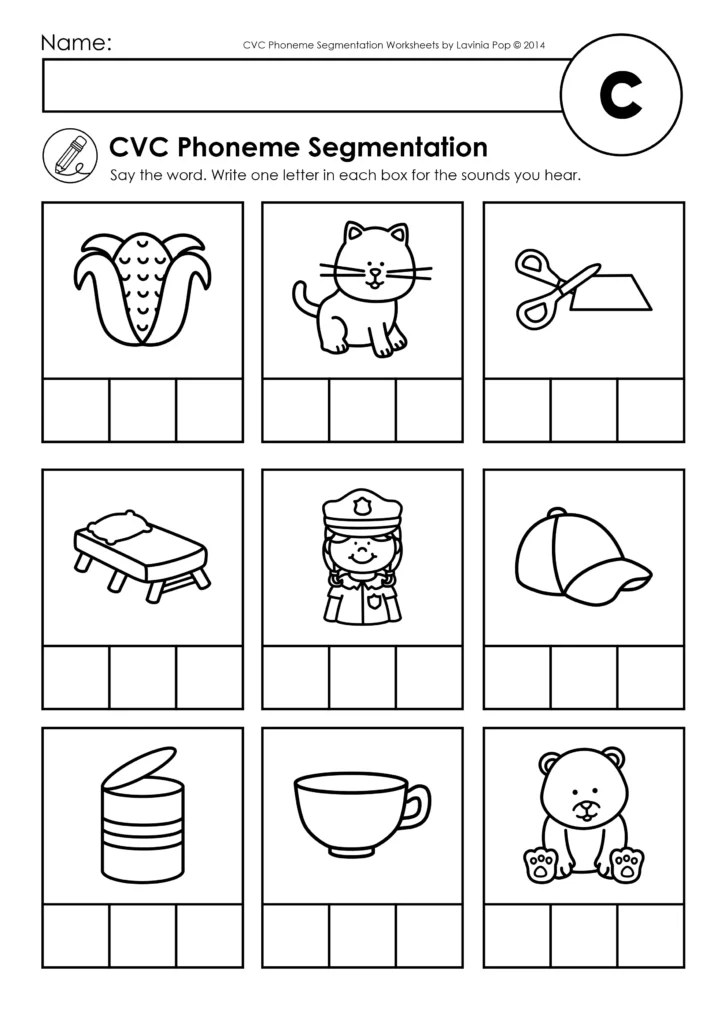
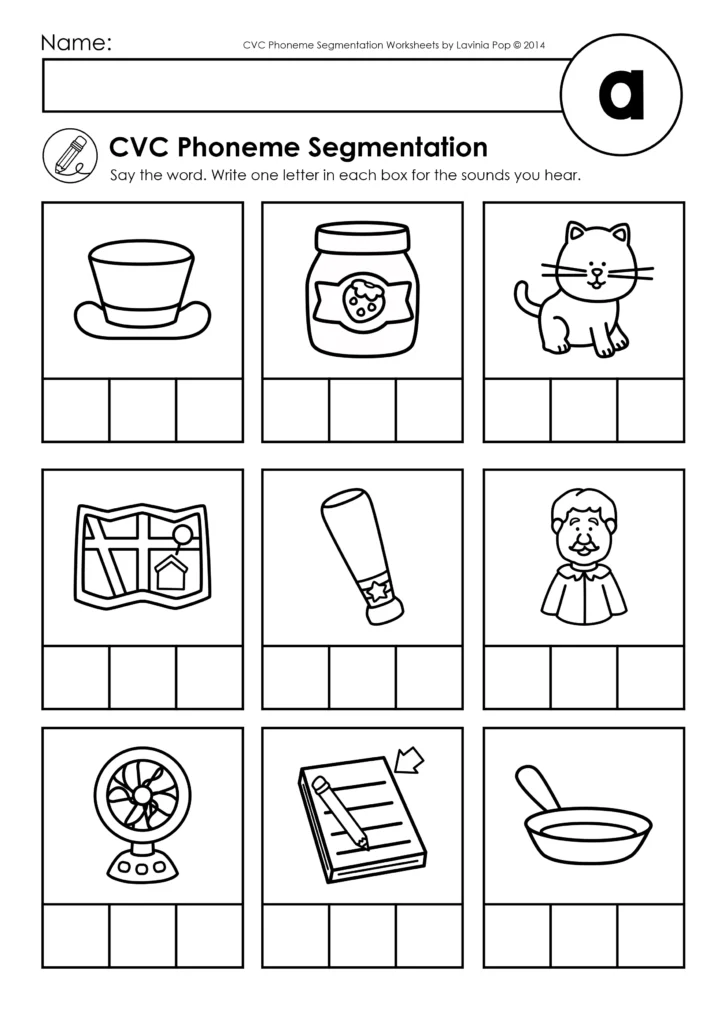
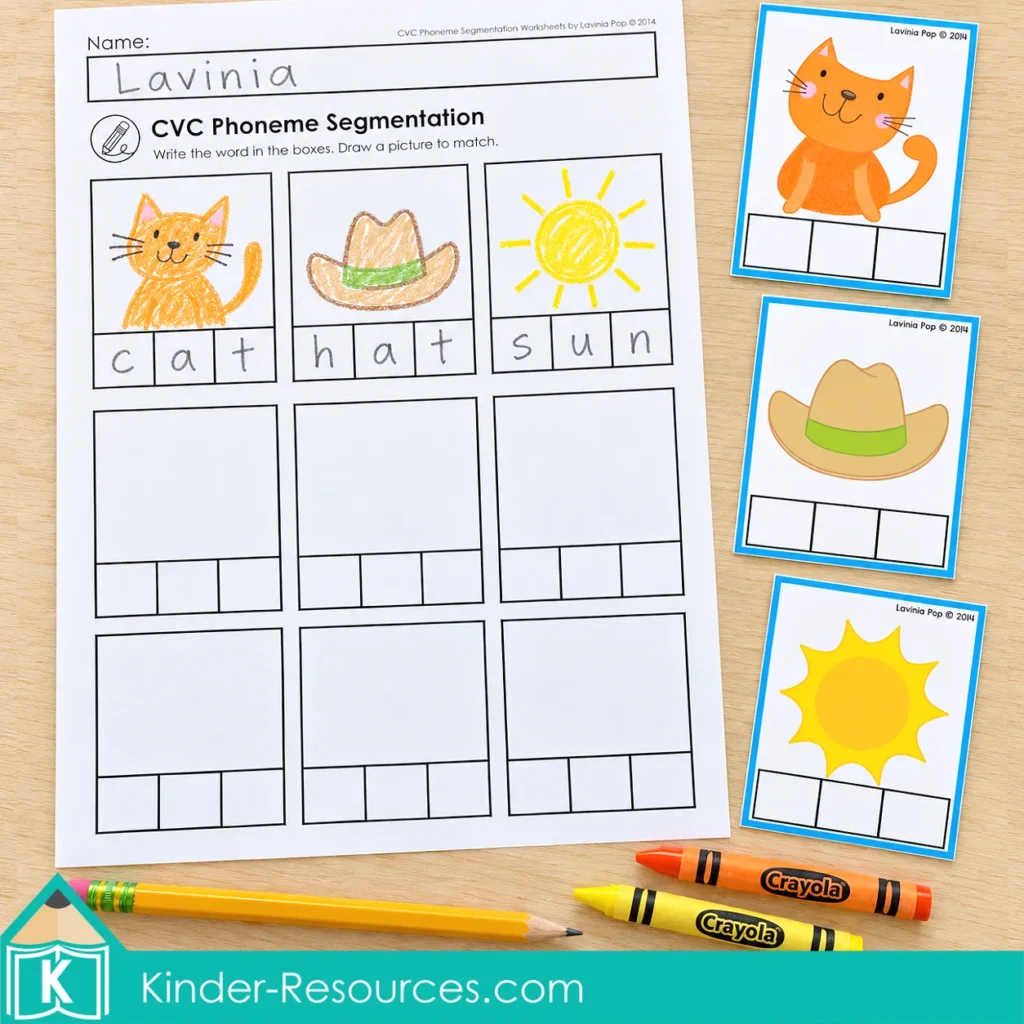
Each picture has three letter boxes underneath. Children name the picture, segment the word, and write its letters in order. After writing, ask them to read the word back.
The short a page, for example, includes words such as hat, jam, cat, and map. Children can work through a few pictures with you before continuing with others they can manage independently.
The worksheet collection includes pages grouped by beginning consonant, pages grouped by short vowel, and mixed practice pages. This makes it easy to choose a page that fits the words you are teaching.
Coloring the pictures can be a finishing activity after the spelling work is complete.
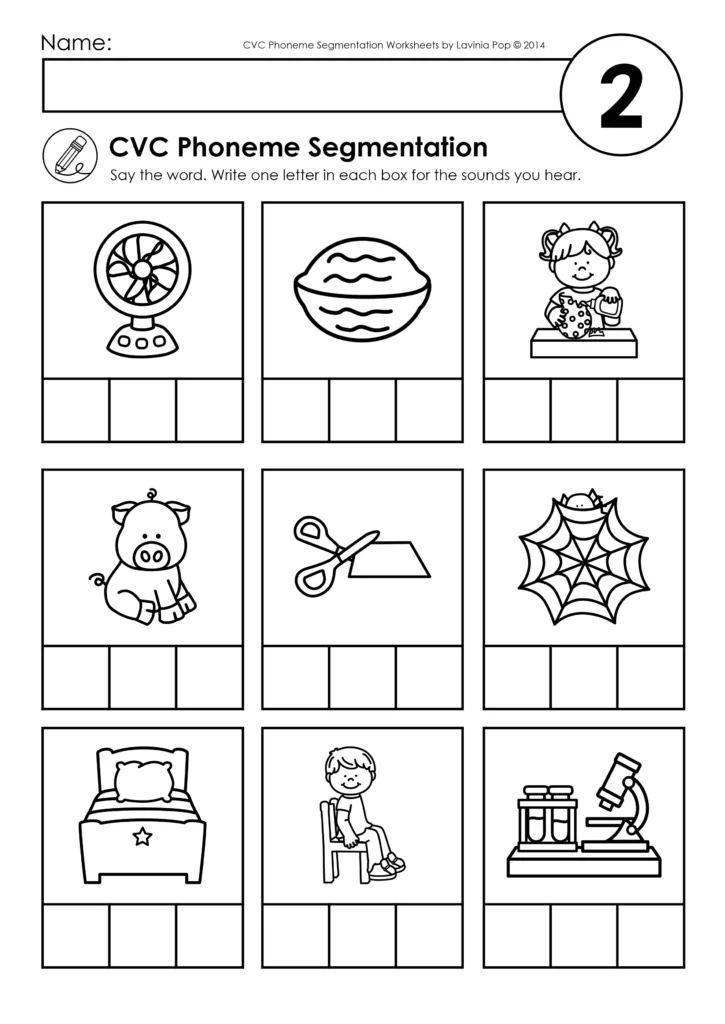
Pick a Card, Draw, and Write
The blank recording page adds a drawing step to the activity.
Children choose a picture card, build or write its word, and draw a matching picture in the space above the letter boxes. A few cards, a pencil, and some crayons are all you need.
You might leave the completed letter-tile word nearby as a reference. For more independent spelling practice, remove the tiles and invite the child to say the word again before writing.
There is no need to complete all nine spaces at once. Three words and three drawings can make a manageable activity, with the remaining spaces saved for another session.
A Simple Word Work Setup
For a small group or literacy center, place a few selected cards in a tray with letter tiles and a recording page. Include counters when children need that extra support with hearing the sounds.
Teach the routine together before using it for independent work. Children can then follow a familiar sequence:
Say the word → listen for the sounds → build it → read it → write it.
You can also use the recording page for a short dictation activity. Say a familiar word aloud, have children repeat it, and ask them to write it before drawing a matching picture.
Explore the Complete CVC Phoneme Segmentation Cards Packet
The complete resource includes 186 picture cards and 37 worksheet pages, including the blank recording page.
With beginning consonant, short vowel, and mixed practice worksheets, you can return to familiar words in different ways as your learners develop their spelling skills.
Happy Teaching! 😊
You Might Also Like


This looks great for my ESL students. How can I purchase it? I teach grades k-4 at two schools and need to stretch my money.
thank you. it’s very good.
My boy study in year1,English not our first language, he need study CVC world to raise he’s ready.