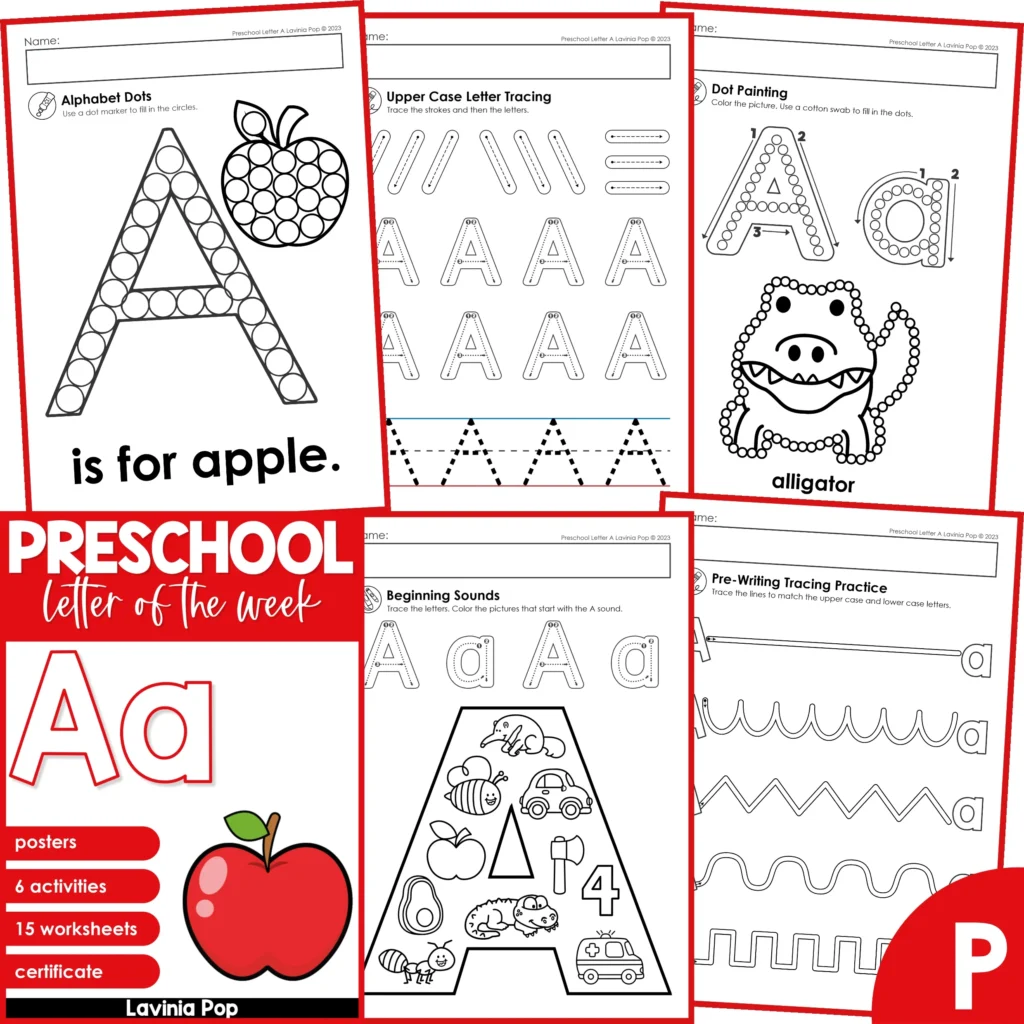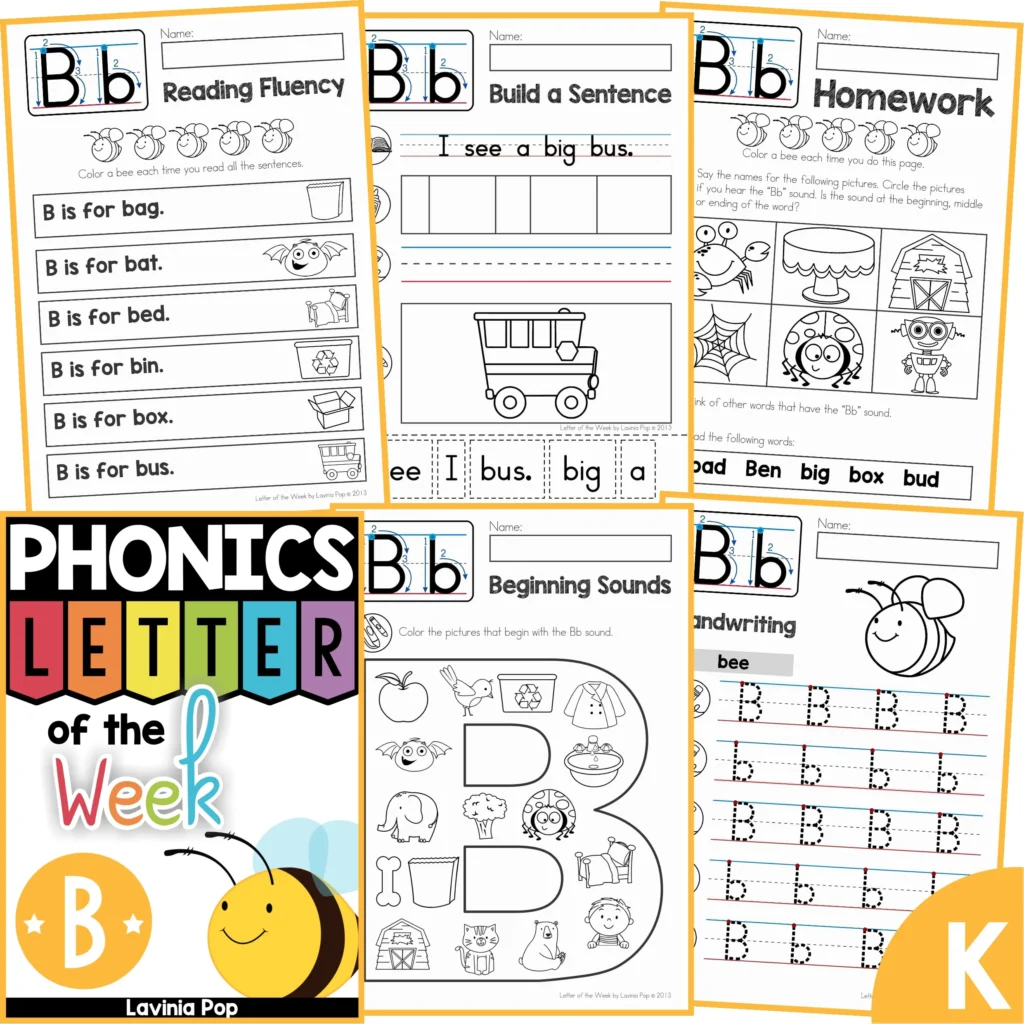
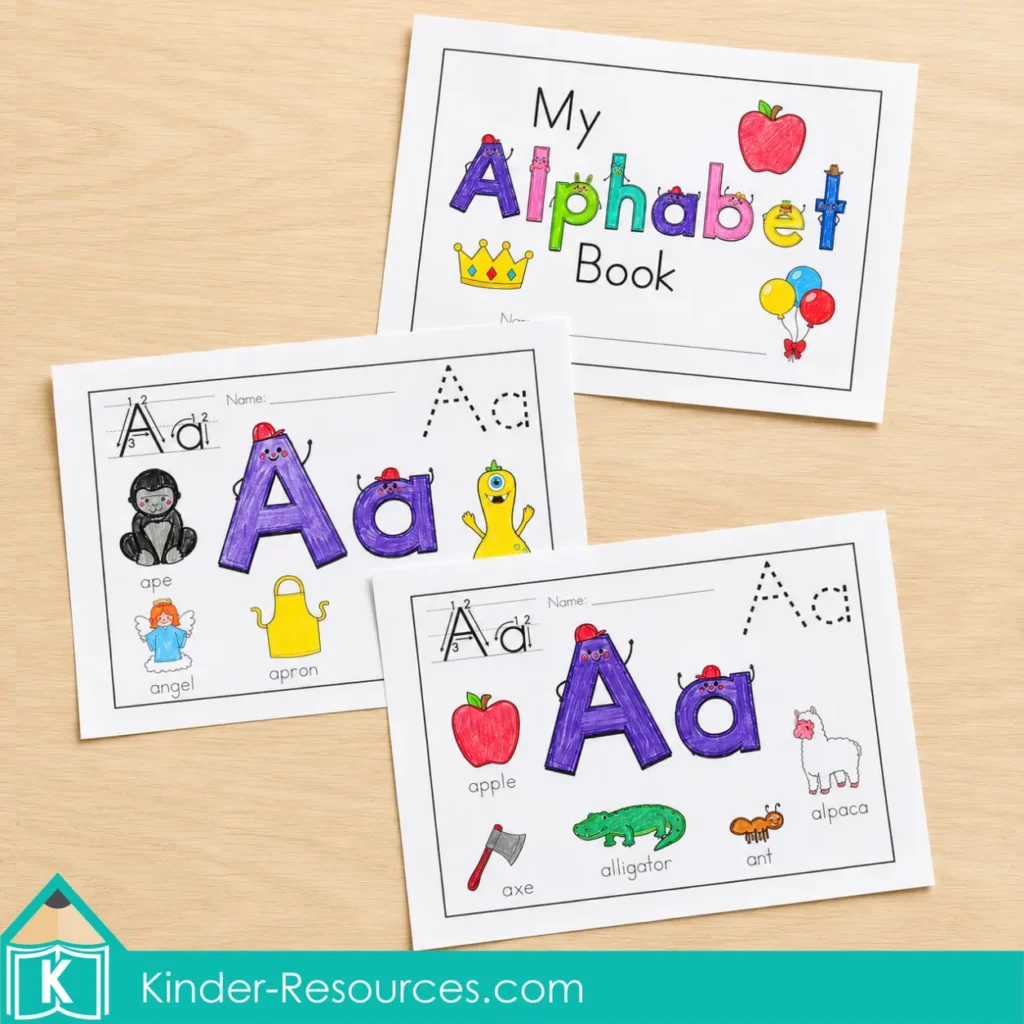
Learning the alphabet becomes much more meaningful when children can see each letter, hear its sound and connect it with familiar pictures. This Alphabet Coloring Book combines coloring, tracing, letter formation and beginning sound practice in one simple activity.
Each page focuses on one letter of the alphabet. Children can color the large uppercase and lowercase letters, name the pictures, practice the letter sound and trace the letter formation models.
The completed pages can then be collected and turned into a personalized alphabet book that children can revisit throughout the year.
More Than an Alphabet Coloring Book Activity
Coloring pages are often considered a quiet activity. However, with a little teacher guidance, they can become a valuable part of an early literacy lesson.
Before children begin coloring, introduce the letter and its most common sound. Say the sound clearly and ask children to repeat it. Next, look at each picture together and emphasize the first sound in the word.
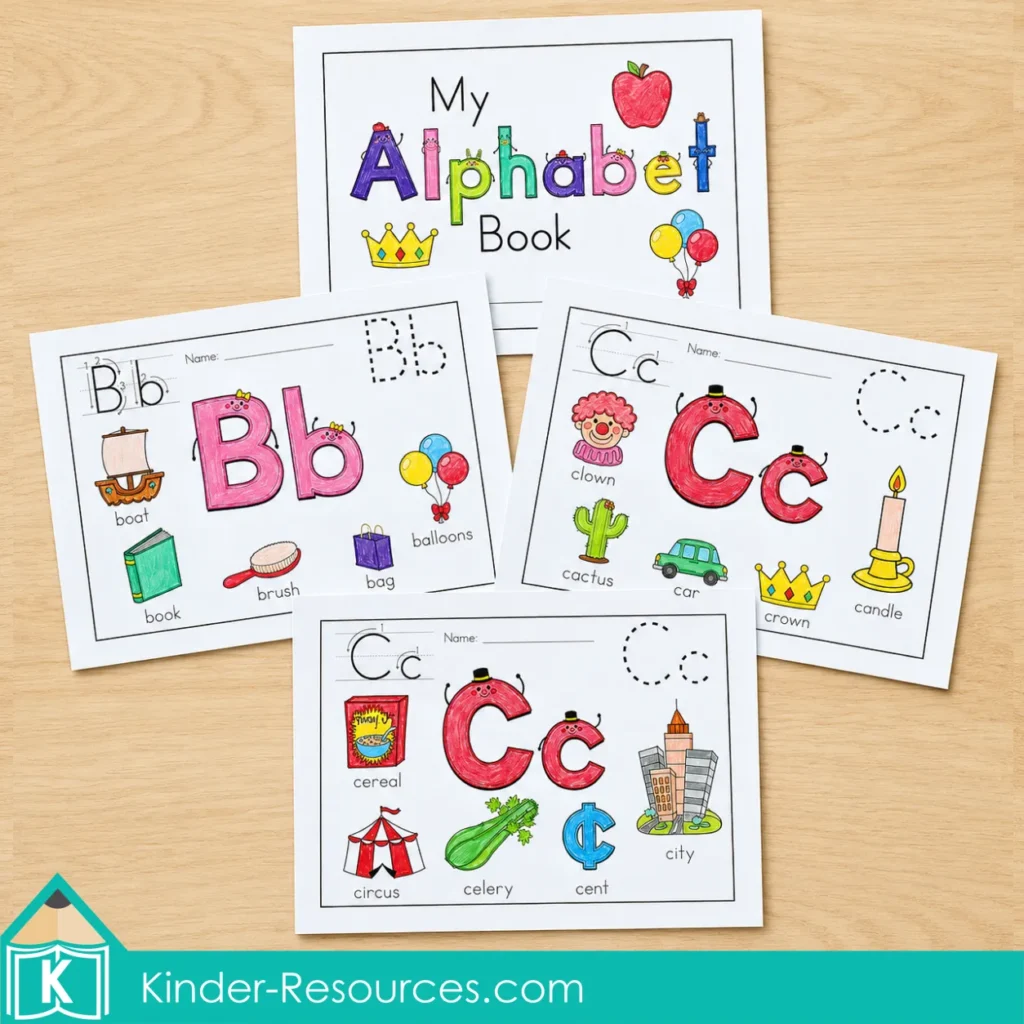
For example, children working on the letter B can name the boat, book, brush, bag and balloons. They can listen for the same beginning sound in each word before coloring the pictures.
This simple discussion turns the page into an interactive letter sound activity. It also helps children build vocabulary while learning that printed letters represent sounds in spoken words.
Explicitly connecting speech sounds with letters is an important part of foundational reading instruction. Children also benefit from frequent opportunities to review recently introduced letter sound relationships.
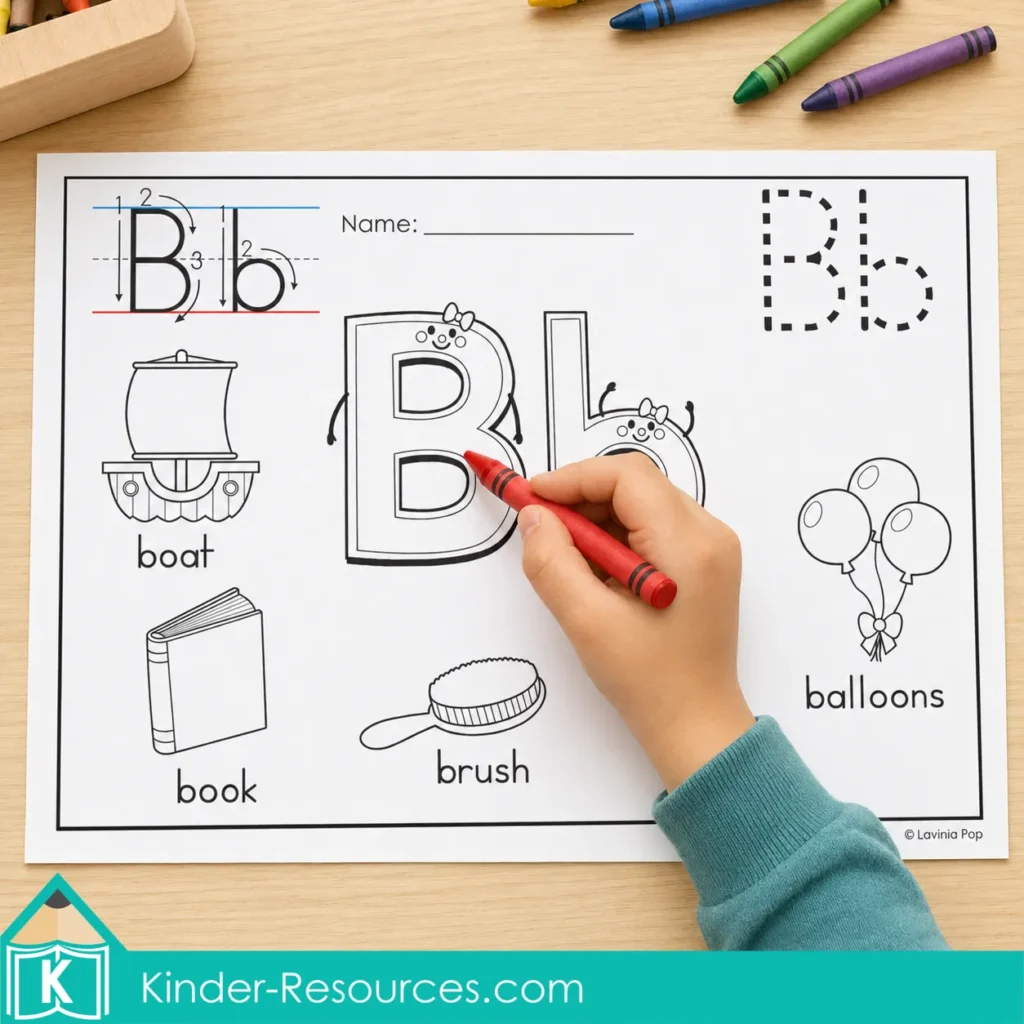
What Is Included in the Alphabet Coloring Book Printable
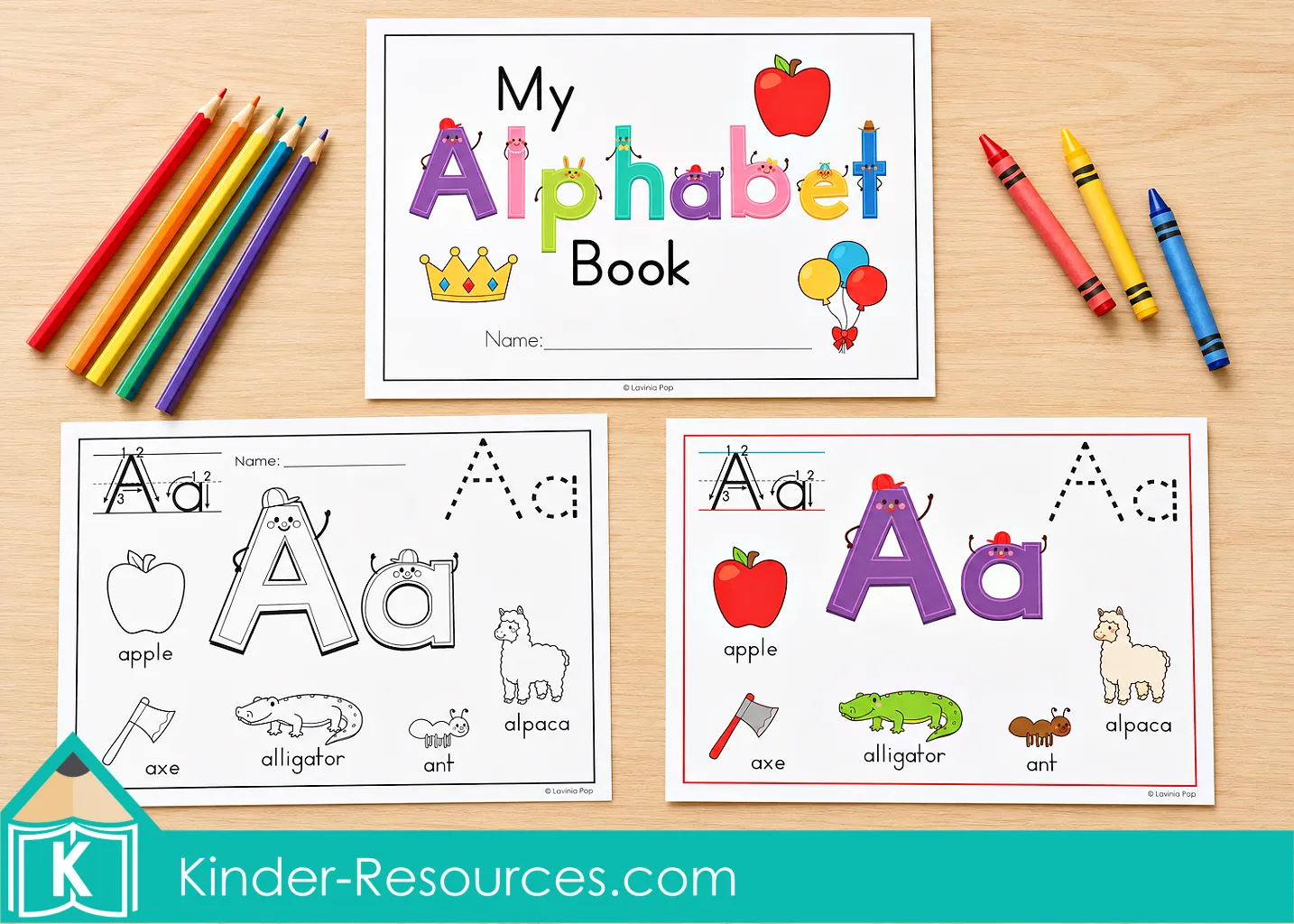
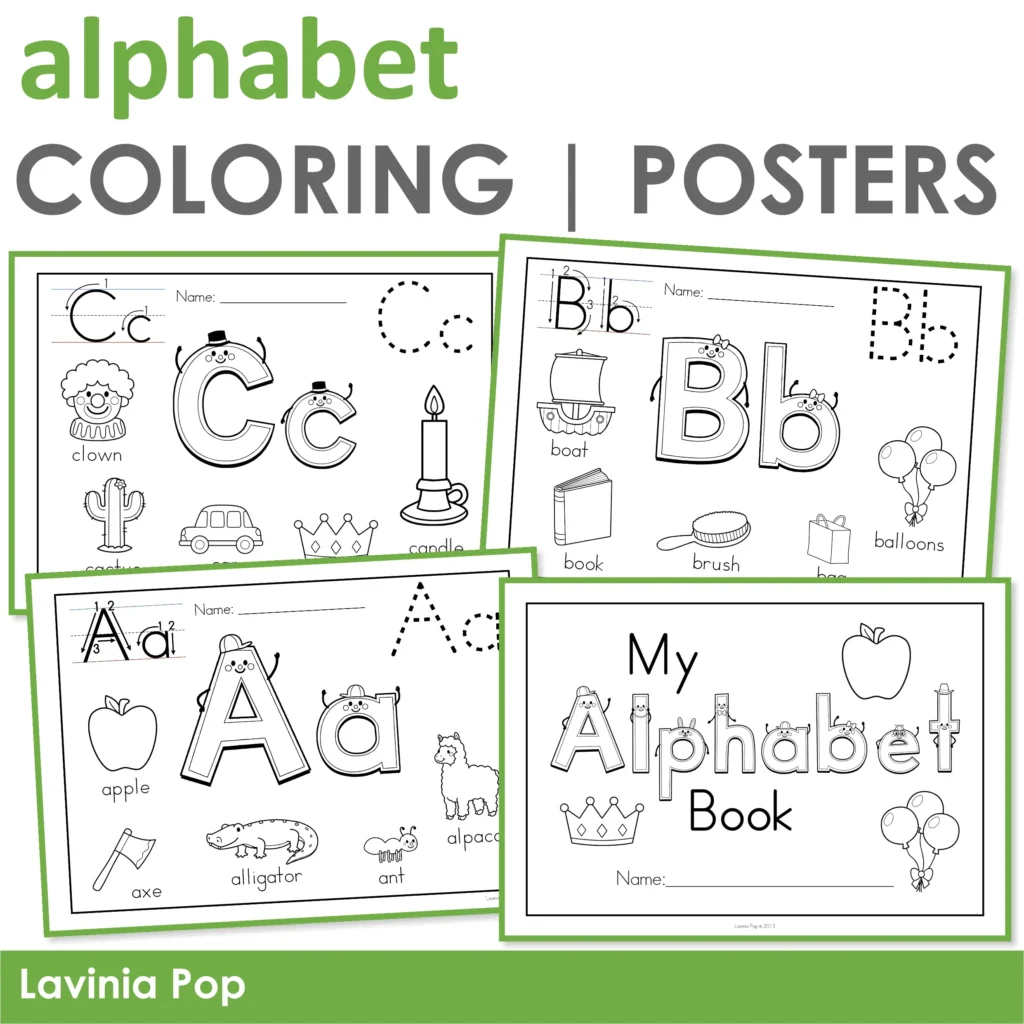
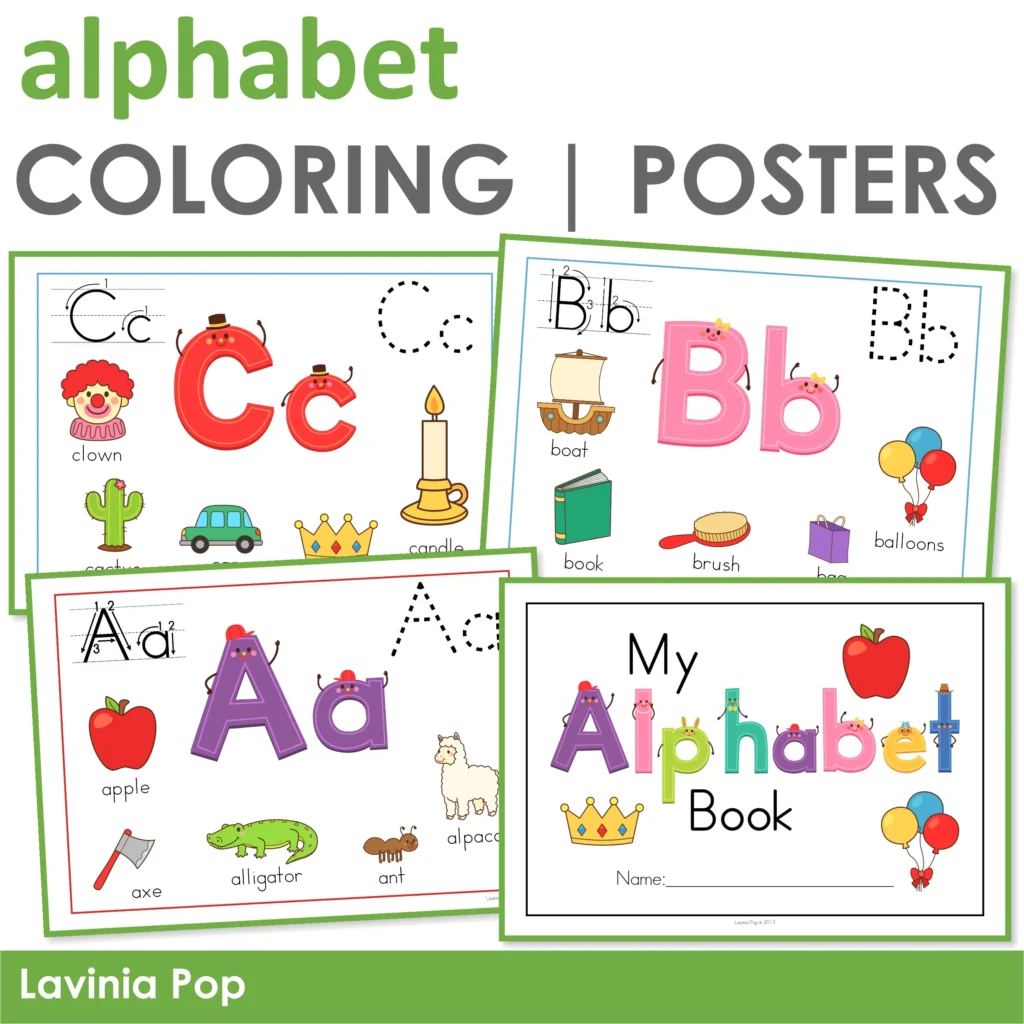
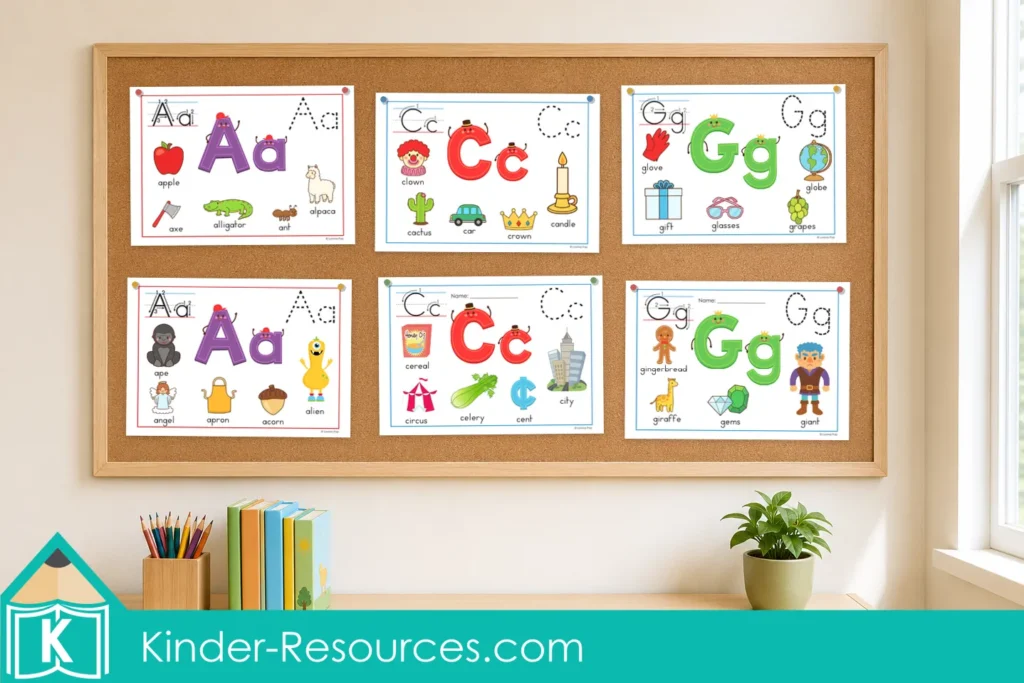
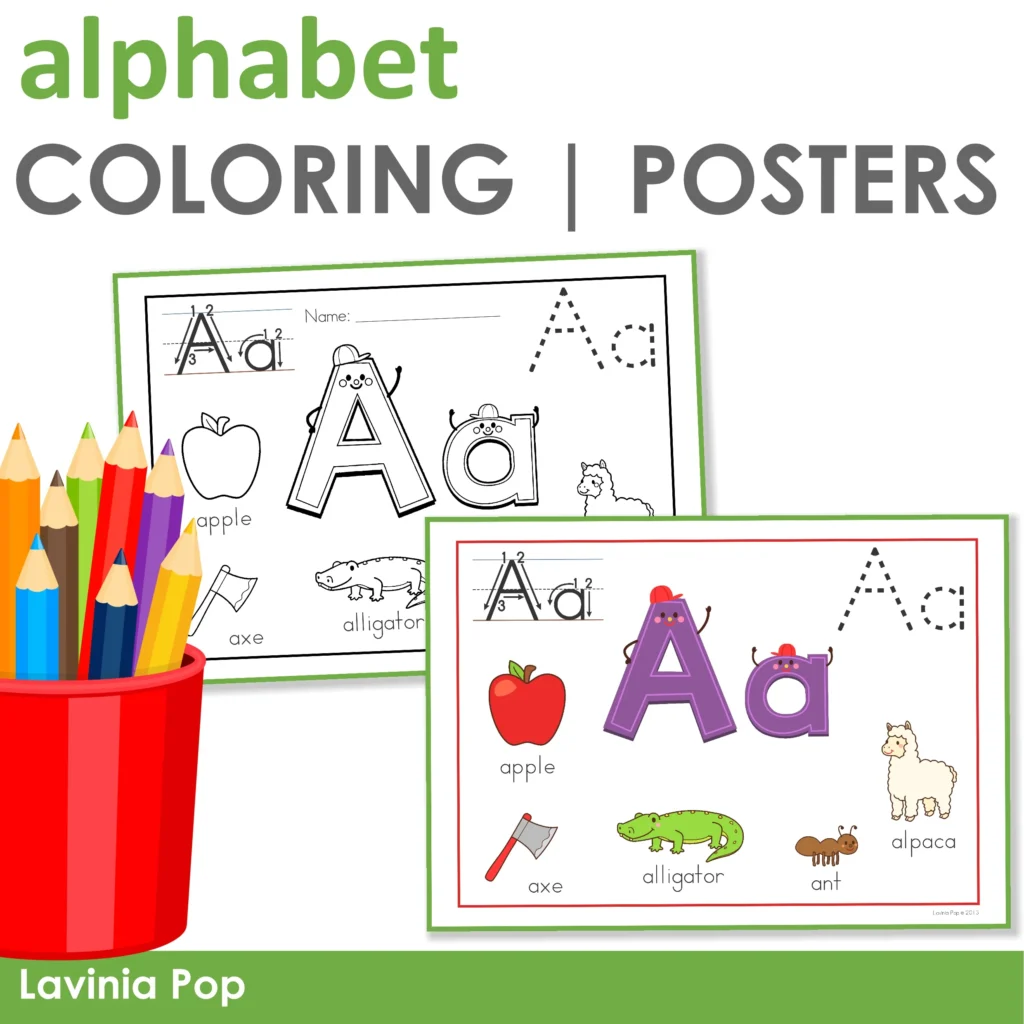
The resource includes black and white alphabet coloring pages and matching full color alphabet posters.
Each letter page includes:
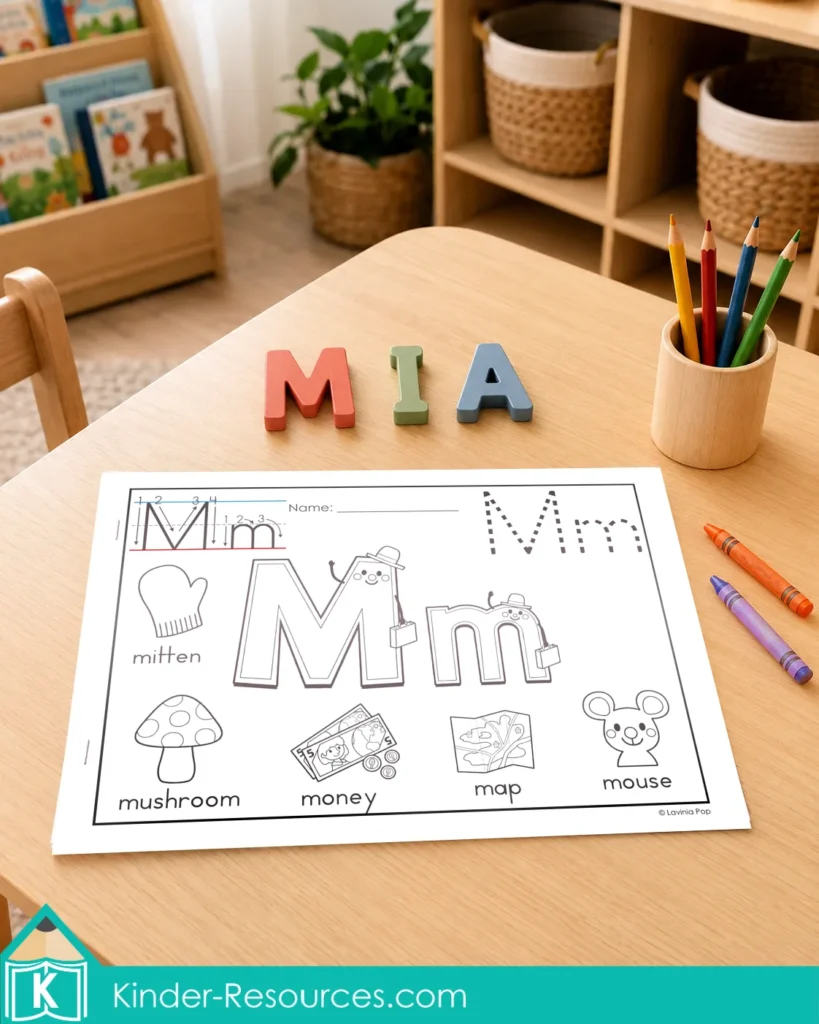
- A large uppercase letter character
- A large lowercase letter character
- A selection of labeled beginning sound pictures
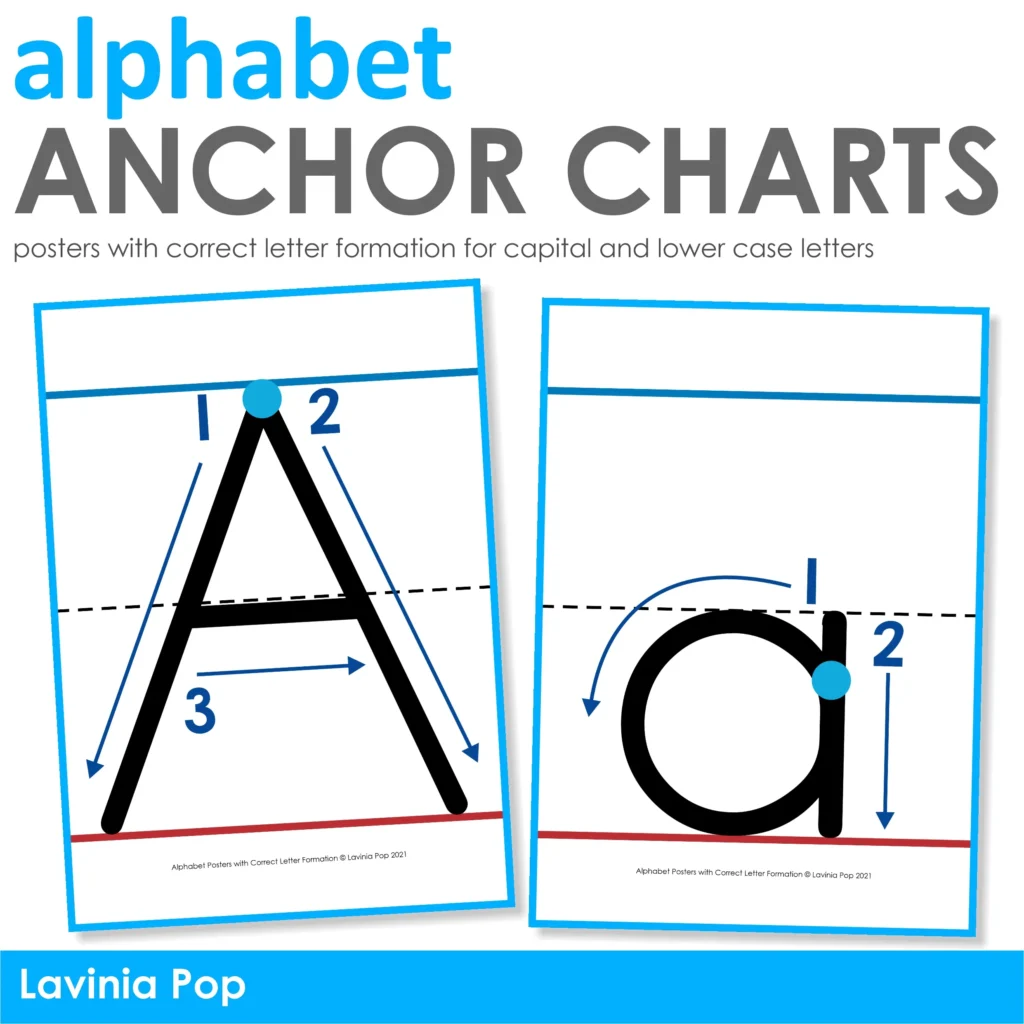
- Uppercase and lowercase letter formation guides
- Dotted letters for tracing
- Plenty of space for coloring
The full color posters contain the same familiar pictures and letter formation support. Therefore, children can refer to the classroom poster while completing the matching coloring page.
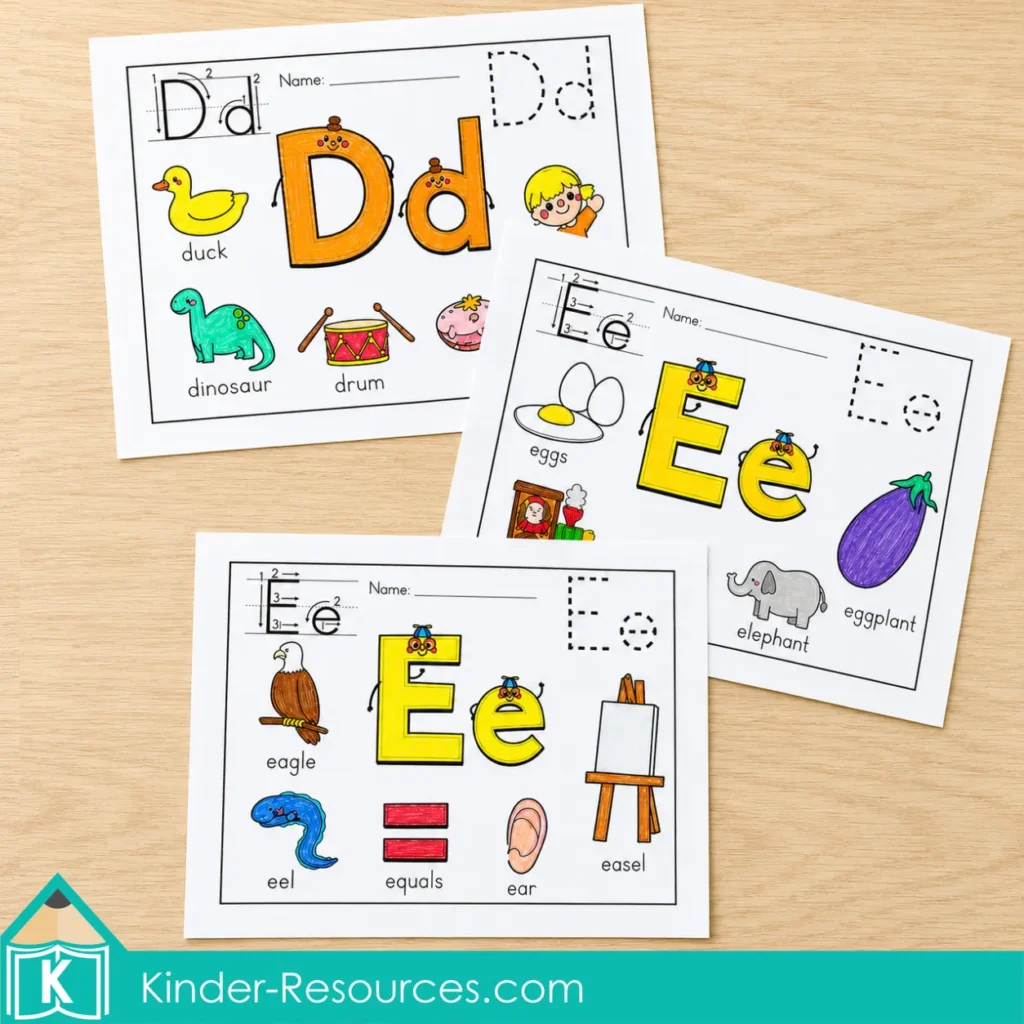
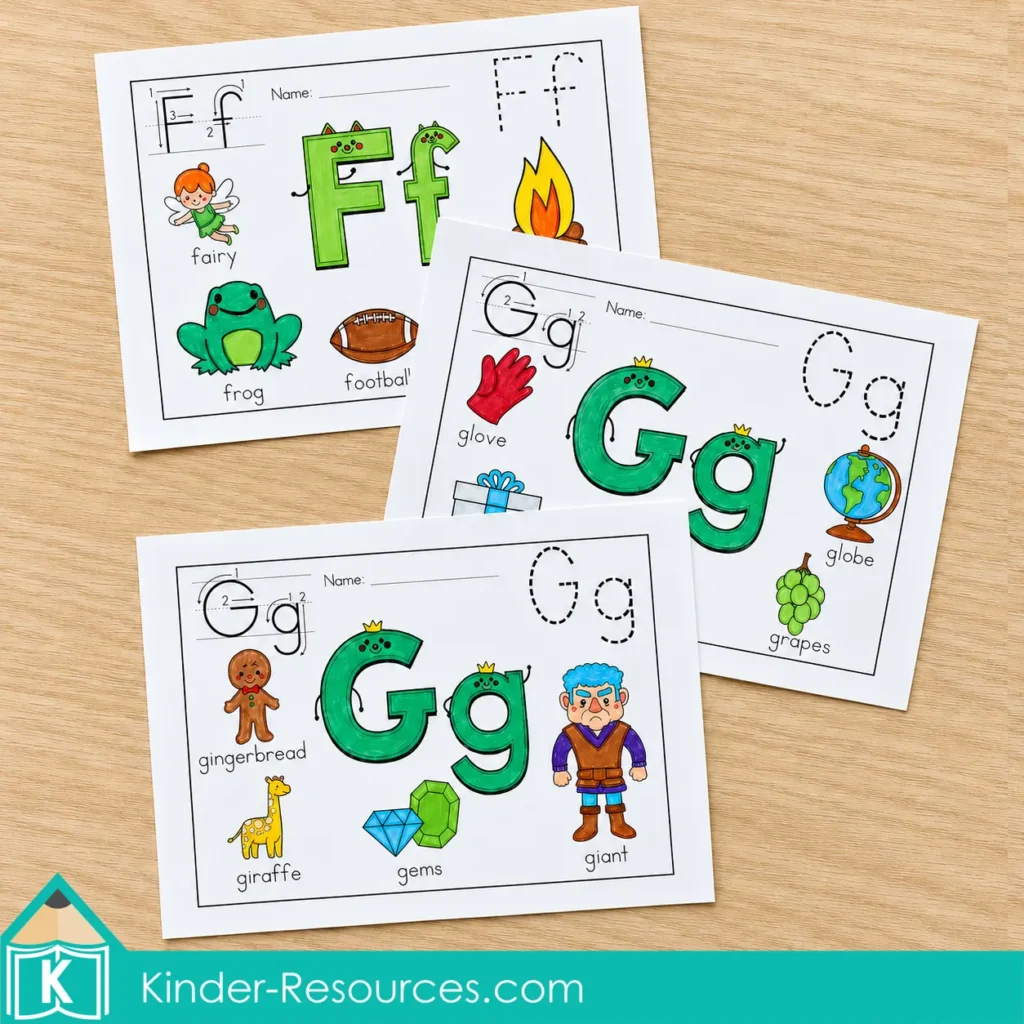
Alternative vocabulary pages are included for the vowels A, E, I, O and U, as well as C and G. These options allow teachers to select pictures that best match the sound or vocabulary being taught. The resource also includes American and Australian spelling options where needed.
Download the Free Alphabet Coloring Book Sample
Try a selection of pages from the Alphabet Coloring Book before purchasing the complete resource. The free sample lets you see the letter characters, beginning sound pictures, tracing practice and letter formation guides included in the full packet.
Practice Uppercase and Lowercase Letters Together
Young children need to learn that uppercase and lowercase letters are two forms of the same letter. However, the forms do not always look alike.
The large letter characters make both forms easy to notice. Children can compare them as they color and trace.
Ask questions such as:
- “Which letter is uppercase?”
- “Which letter is lowercase?”
- “Do the two letters look similar or different?”
- “Where might we see an uppercase letter?”
These short prompts help children pay attention to the important visual features of each letter.
Build Beginning Sound Awareness with the Alphabet Coloring BOok
Each page contains a selection of labeled pictures beginning with the featured letter. The pictures give children repeated opportunities to hear and identify the target sound.
Begin by naming each picture together. Then stretch or emphasize its first sound.
For the letter M, you might say, ‘Mmmmouse begins with /m/.”
Next, invite children to think of another word beginning with the same sound. Their answers can be added to a classroom chart or drawn on the back of the page.
You can also turn the activity into a listening game. Say several words aloud and ask children to raise their crayons whenever they hear the featured sound at the beginning of a word.
Support Correct Letter Formation with the Alphabet Coloring Book
The letter formation guides show children where to begin and which direction to move their pencils. Dotted uppercase and lowercase letters are also included for tracing.
Model the formation before asking children to work independently. Children can first trace the letter with their finger. Next, they can trace it with a pencil. Finally, they can try writing it without the dotted guide.
You can also use a multisensory material before completing the page. Children might form the letter with play dough, trace it in sand or write it on a dry erase board.
The coloring page can then provide a final review of the letter introduced during the lesson.
Create Individual Alphabet Books
Instead of giving children all the pages at once, introduce them as each letter is taught.
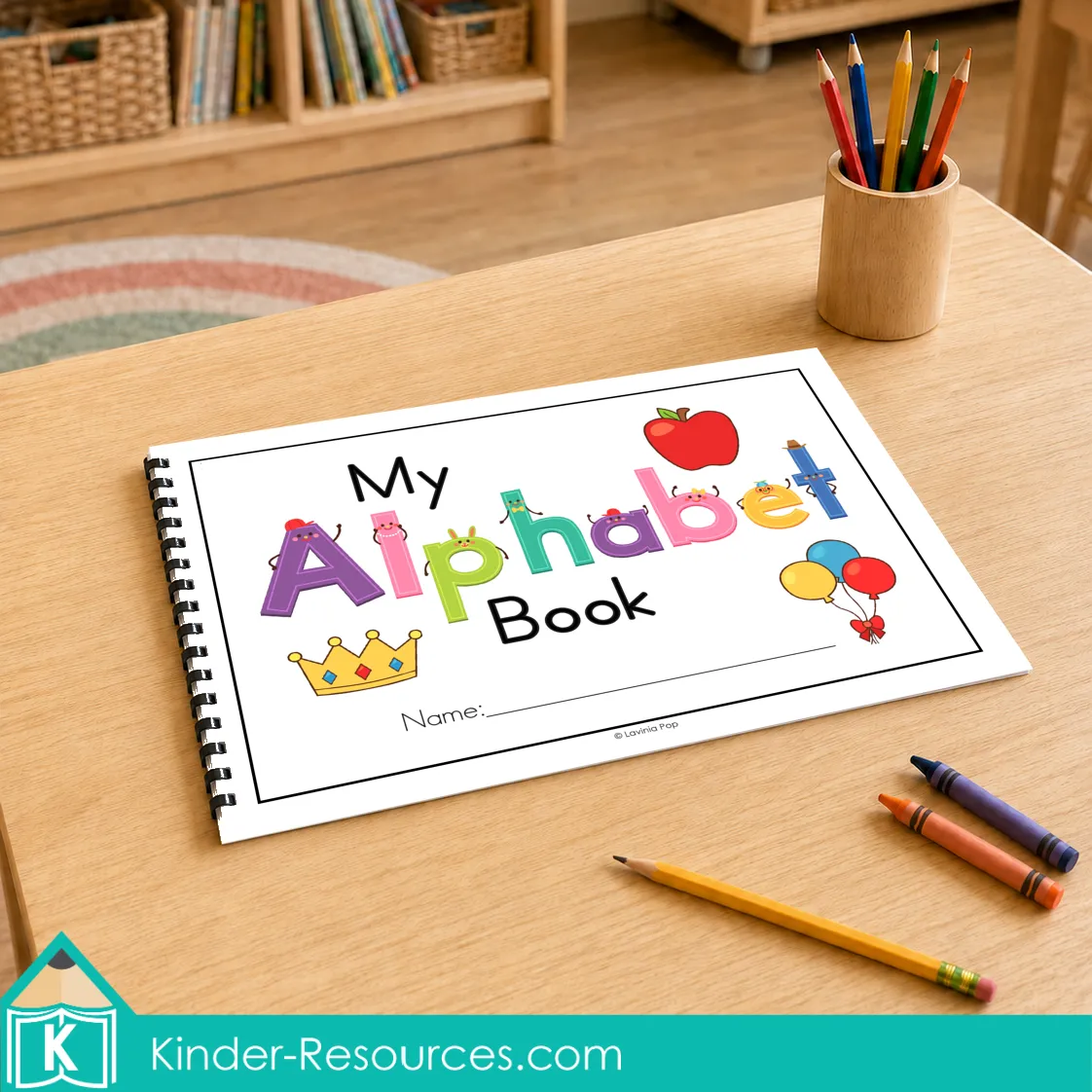
Keep the completed pages in individual folders. Once the class has worked through the alphabet, place the pages in alphabetical order and add the cover.
The finished books make meaningful classroom keepsakes. Children can take them home and use them to review letter names, sounds and vocabulary with their families.
You might also add the books to individual book boxes before sending them home. This allows children to reread and discuss their work throughout the school year.
Use the Full Color Alphabet Posters
The matching posters can be used in several areas of the classroom.
Display the complete set above a writing center or along an alphabet wall. Alternatively, display only the letter currently being taught.
The posters can also be placed in literacy centers as reference tools. Children can use them while writing, matching letters or sorting beginning sound pictures.
For a smaller format, print several pages on one sheet. The reduced posters can become alphabet reference cards, ring cards or writing folder inserts.
Additional Ways to Use the Pages
Morning Work
Place a recently introduced letter page on each child’s table. Review the letter and sound before children begin working.
Literacy Centers
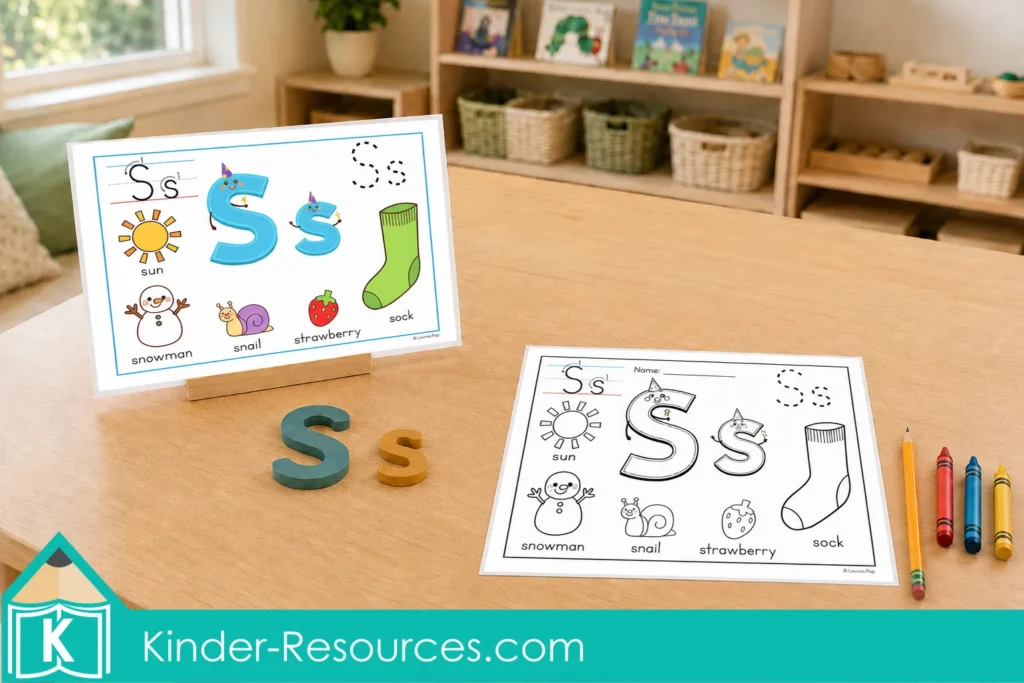
Add the pages to an alphabet center with crayons, pencils and small letter manipulatives. Children can build the letter before coloring it.
Small Group Instruction
Use one page during targeted alphabet practice. Work together to name the pictures, identify the sound and form the letter.
Take Home Practice
Send home the page that matches the letter taught during the week. Families can review the pictures and sound together.
Early Finishers
Keep previously taught letter pages available for children who need a purposeful independent activity.
Name Books
Print only the letters found in each child’s name. Staple them together to create a personalized name coloring book.
Tips for Using Alphabet Coloring Book Pages
Introduce the letter and sound before handing out the page. This keeps the activity connected to your phonics instruction.
Say each picture name aloud so children hear the correct vocabulary. Some children may recognize the illustration but not know its English name.
Encourage children to trace the formation guide carefully. However, avoid requiring young children to complete too much tracing or coloring in one sitting.
Most importantly, use the pages alongside songs, books, oral language, hands on letter activities and explicit phonics teaching. The coloring pages work best as practice and review rather than as the entire alphabet lesson.
Purchase the Alphabet Coloring Book and Posters | Anchor Charts
The complete Alphabet Coloring Book gives children an engaging way to practice uppercase and lowercase letters from A to Z.
With coloring pages, labeled beginning sound pictures, letter formation guides, tracing practice and matching color posters, the resource can support alphabet instruction throughout the year.

You may also like…