
Apple life cycle activities are a wonderful addition to a fall science theme. Apples are familiar to young children, which makes them the perfect starting point for learning how plants grow and change over time.
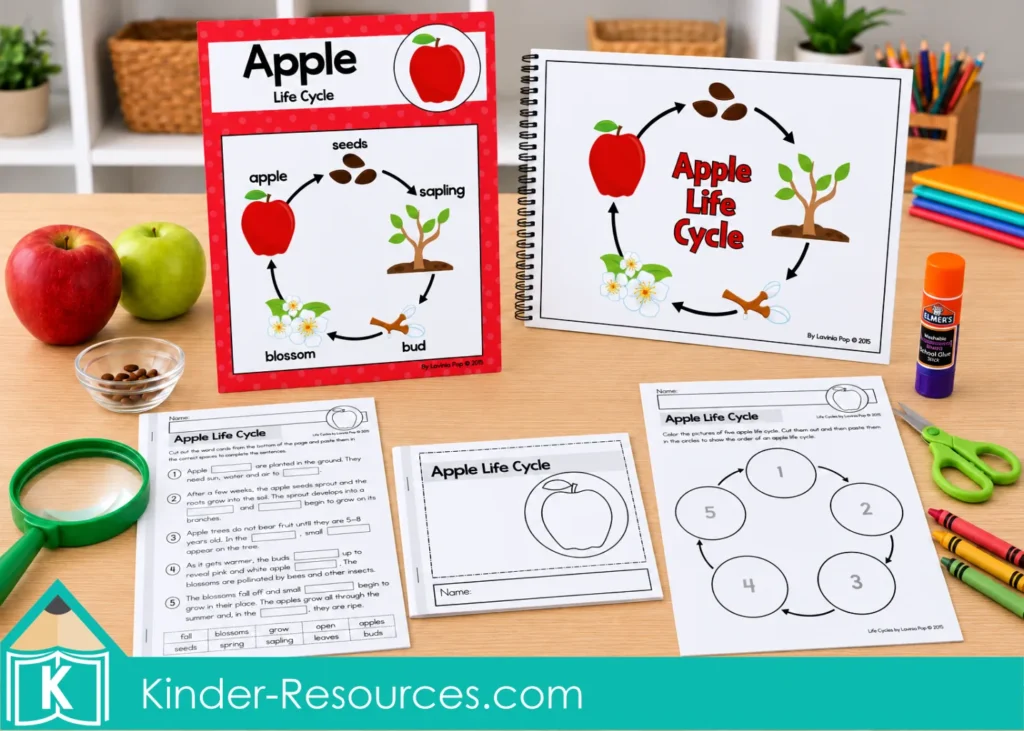
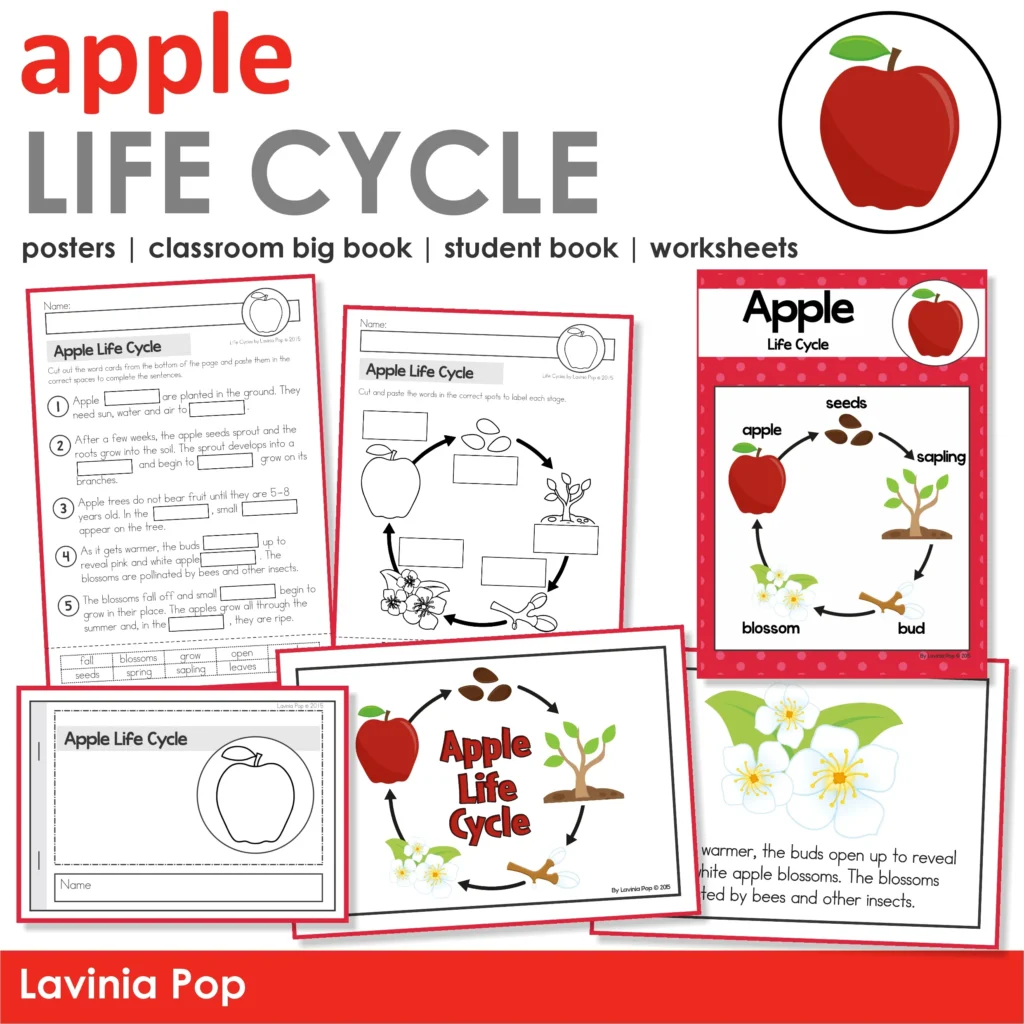
This printable Apple Life Cycle pack includes classroom posters, a class book, a student reader and several cut and paste worksheets. The activities can be used together as a complete science lesson or introduced gradually throughout your apple theme.
Exploring How an Apple Grows
Before introducing the printables, I like to begin with a real apple. Children can look closely at its skin, stem and leaf before the apple is cut open to reveal the seeds inside. Placing a few apple seeds in a small clear dish gives children something real to observe while you introduce the first stage of the life cycle.
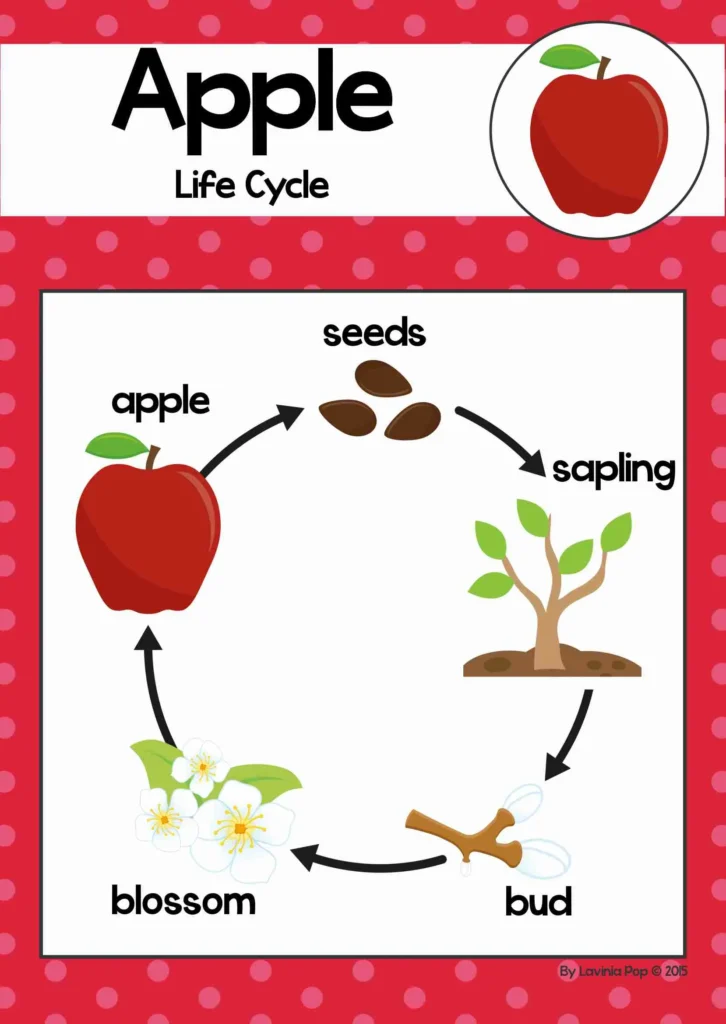
The printable activities follow five simple stages: seeds, sapling, bud, blossoms and apple. The seeds are planted in the ground and begin to grow. As roots develop beneath the soil, a young sapling grows above the ground. Once the tree is mature, buds appear and open into blossoms. After the blossoms are pollinated, small apples begin to grow and eventually ripen.
Keep a real apple and a few seeds on the science table throughout the lesson. Children will enjoy comparing them with the illustrations in the posters, books and worksheets.
Begin with the Apple Life Cycle Posters
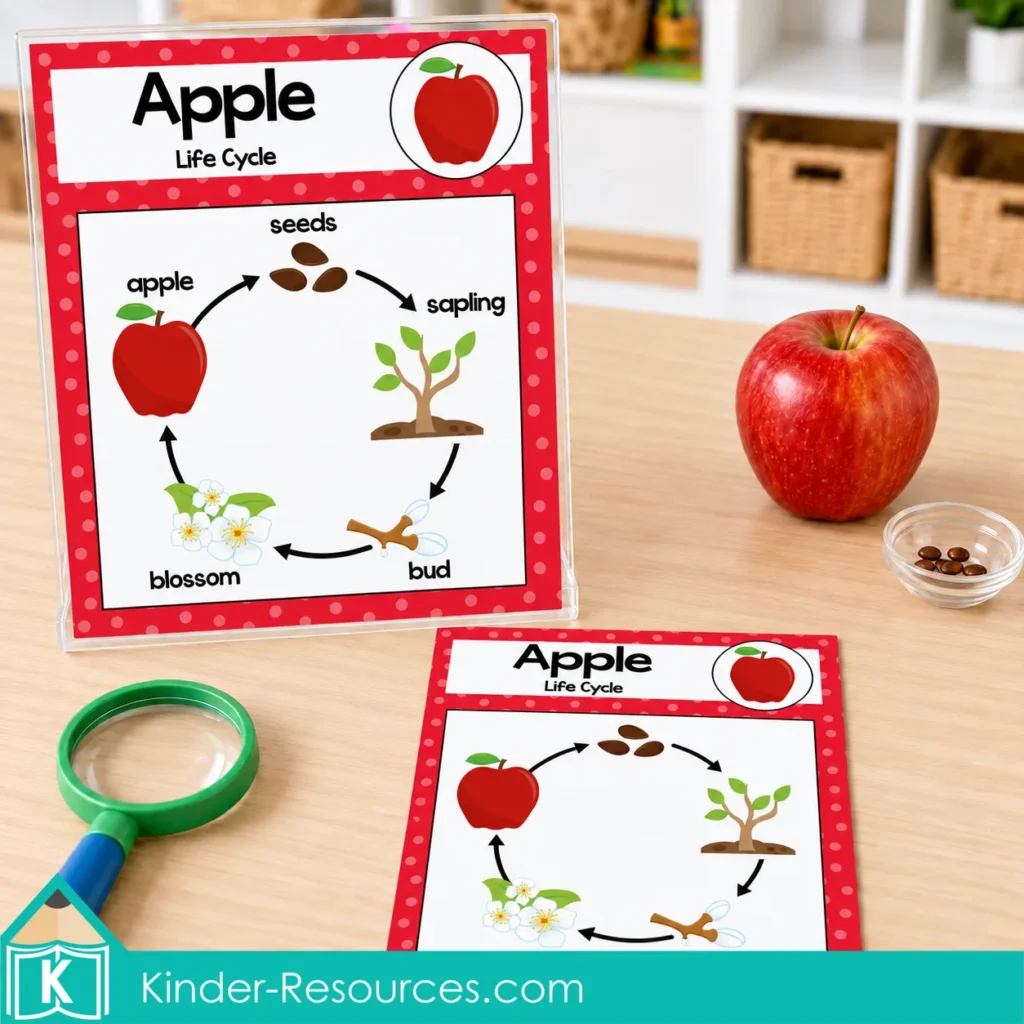
The posters provide a simple overview of the complete apple life cycle. Begin with the labeled poster and slowly follow the arrows from the seeds to the ripe apple. As you point to each illustration, encourage children to repeat the stage name and describe what they notice.
The unlabeled poster can be introduced once children are familiar with the sequence. Point to one stage at a time and invite children to name it. You can also cover part of the poster and ask children to predict what comes next.
After the lesson, display one of the posters in your science area. It provides a helpful reference when children begin completing the readers and worksheets independently.
Read the Apple Life Cycle Class Book
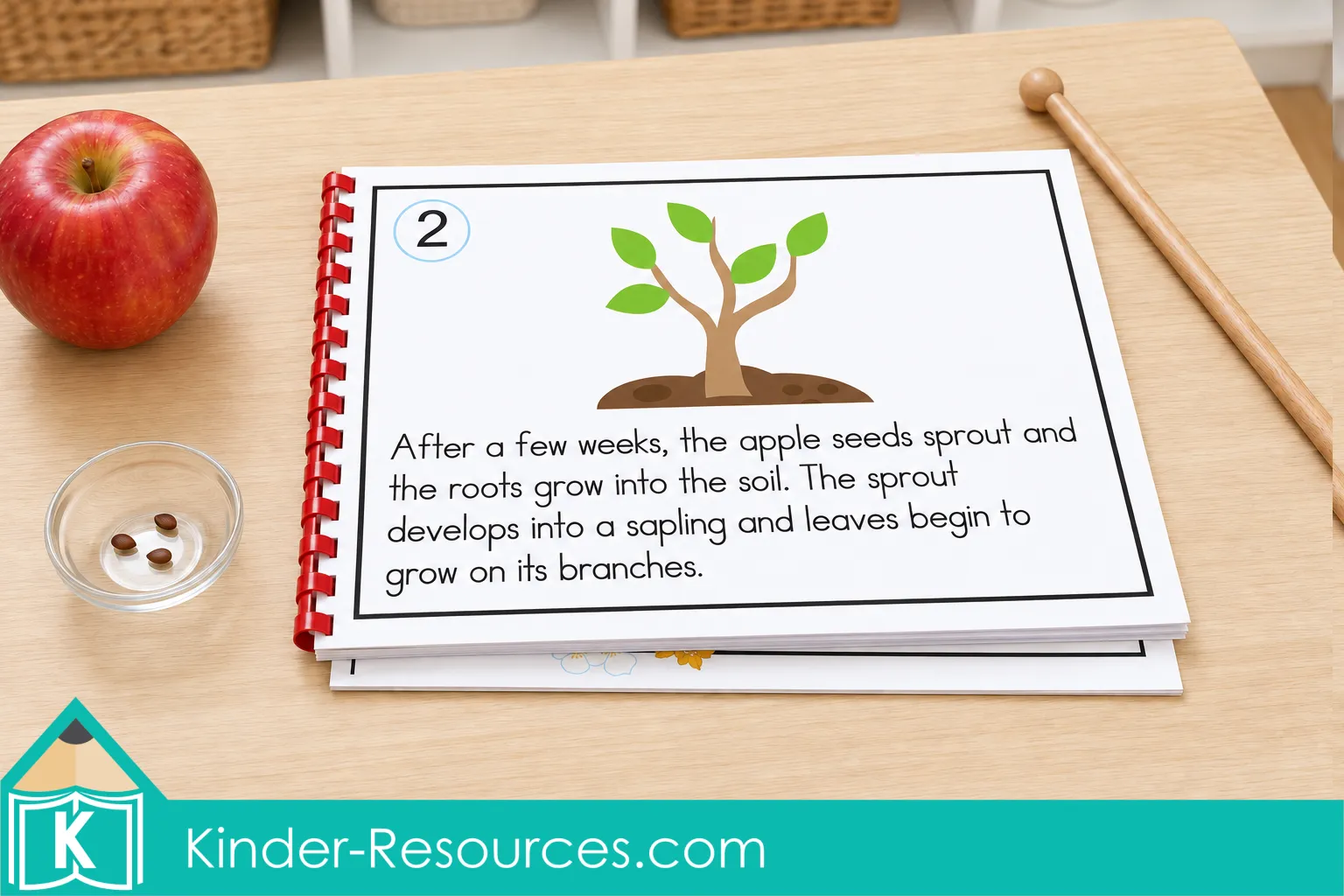
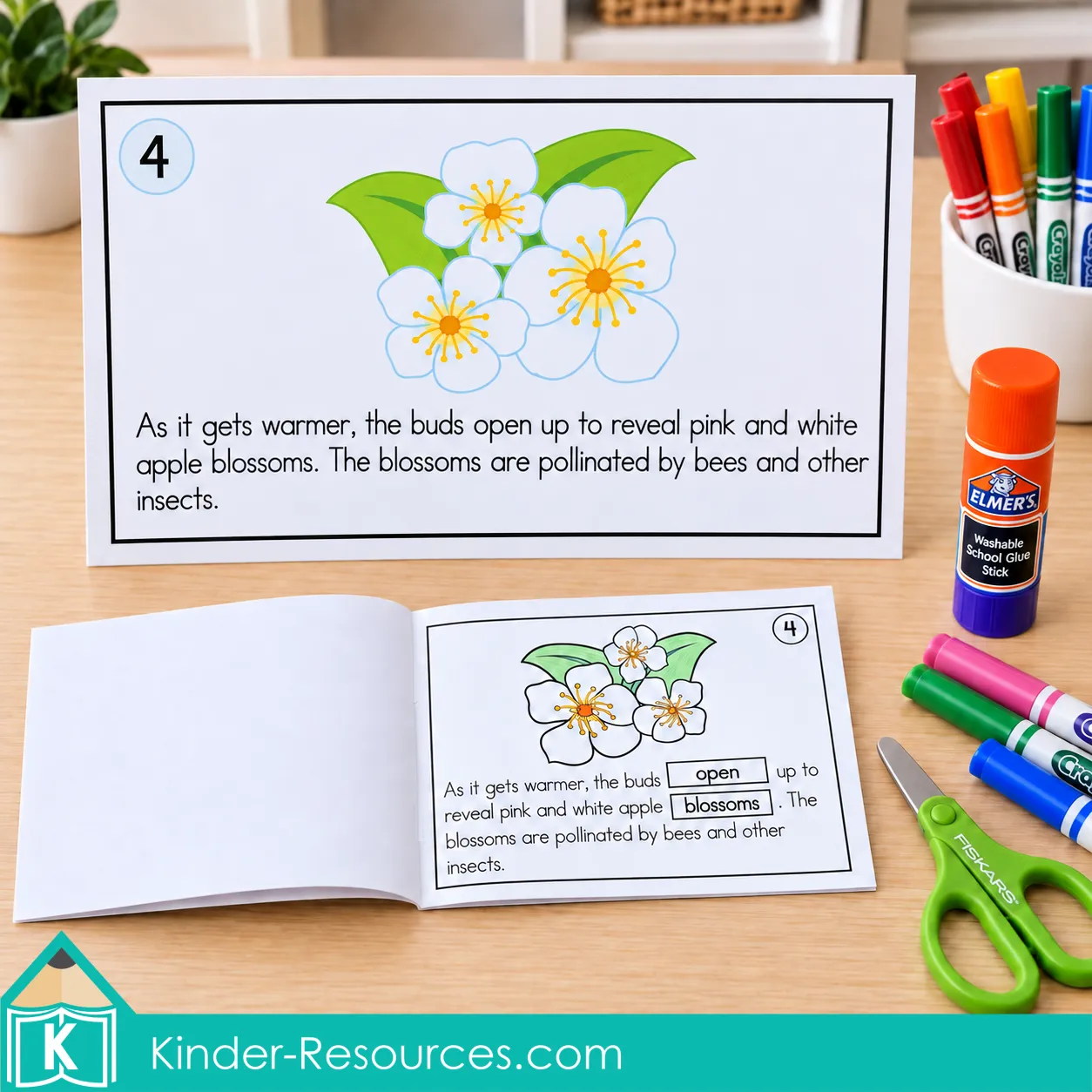
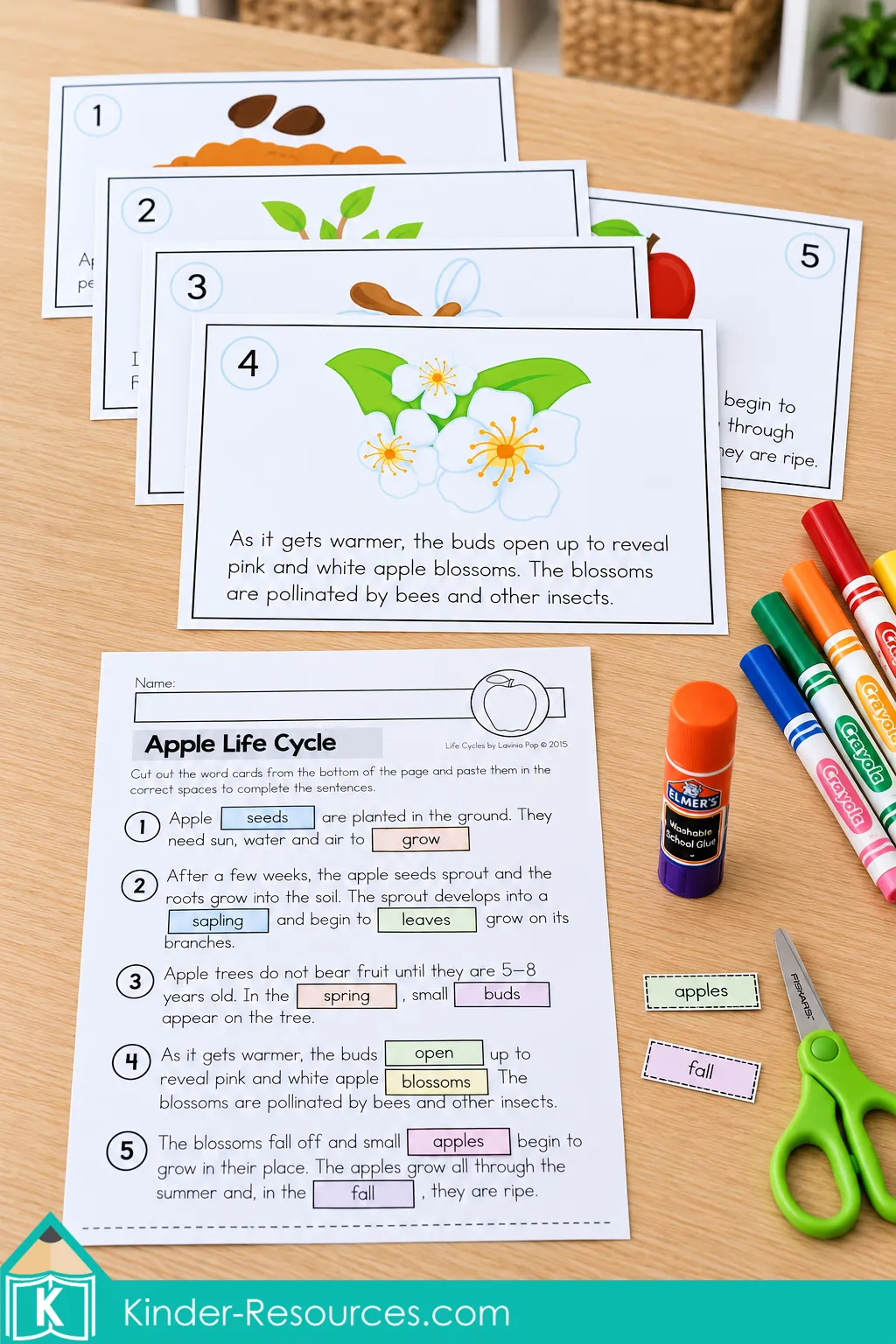
The classroom book takes a closer look at each stage. Every card includes a large illustration and a short explanation, allowing you to slow down and discuss one part of the life cycle at a time.
You can staple the pages together, bind them along one side or place them on a large binder ring. During whole group reading, pause after each page and ask children what they think will happen next. Once you have finished reading, place the book in your science or reading center so children can revisit it throughout the week.
The individual cards can also be displayed as a sequence. Mix them up and work together to place them in order, using the pictures and sentences as clues.
Make an Apple Life Cycle Student Reader
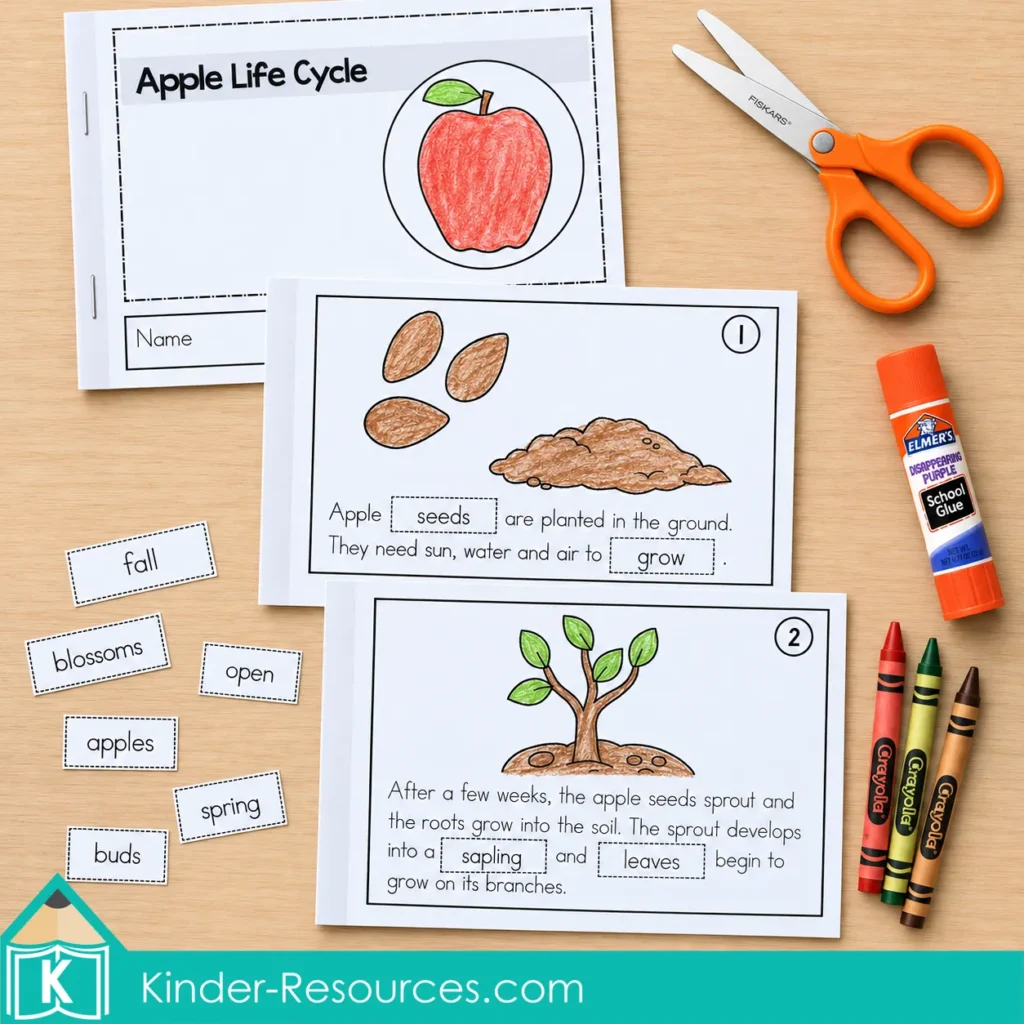
After reading the classroom book together, children can make their own smaller Apple Life Cycle reader. The illustrations are provided in black and white so children can color each stage with crayons or markers.
Each reading page contains one or two missing words. Children cut out the word cards and use the picture and sentence clues to decide where each word belongs. They can refer to the classroom book or poster when they need help.
Once the words have been pasted into place, children arrange the pages from seeds to apple and staple them behind the cover. The completed reader can be taken home and shared with family members, giving children another opportunity to explain what they have learned.
Complete the Missing Words Worksheet
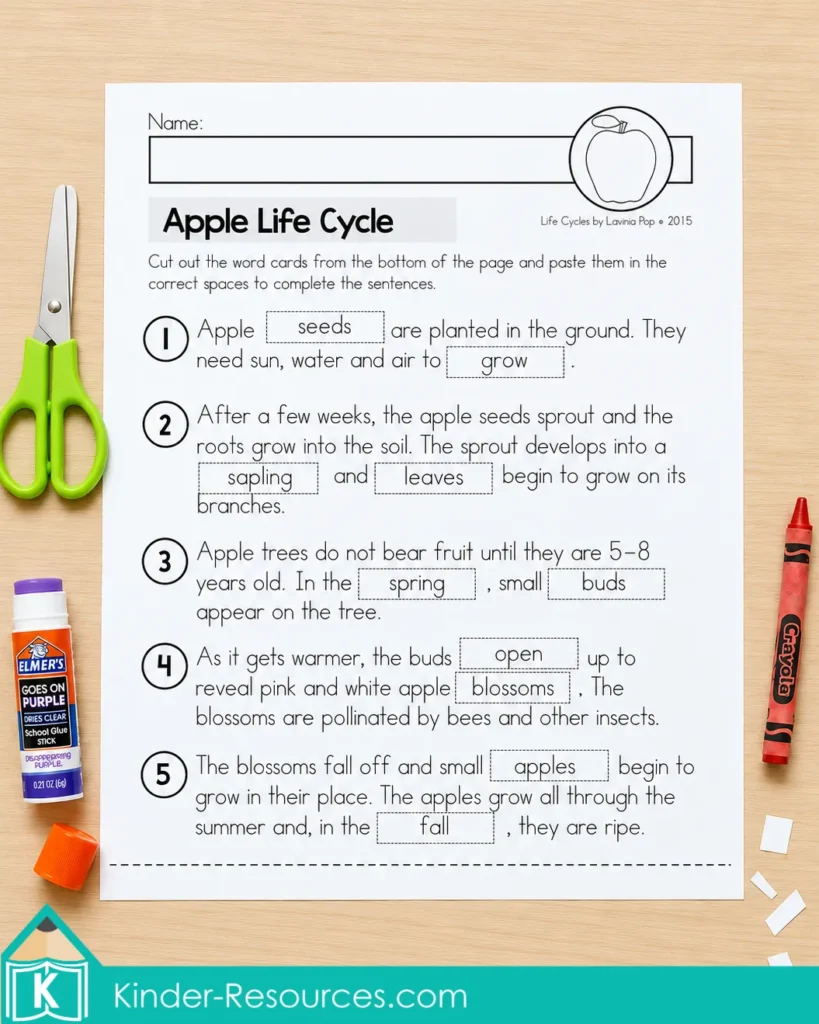
The missing words worksheet revisits the information from the class book in a slightly different format. Children read five short sections about the apple life cycle and paste the correct words into the blank spaces.
There are ten word cards to cut from the bottom of the page. Before children begin gluing, encourage them to place all the cards over the blanks and read through the completed sentences. This makes it easier to correct a word that has been placed in the wrong sentence.
Emerging readers may complete the worksheet with an adult or in a small group. More confident readers can work independently and use the poster to check their answers.
Sequence the Apple Life Cycle
The pack includes two sequencing activities, allowing you to choose the level of support that best suits your learners.
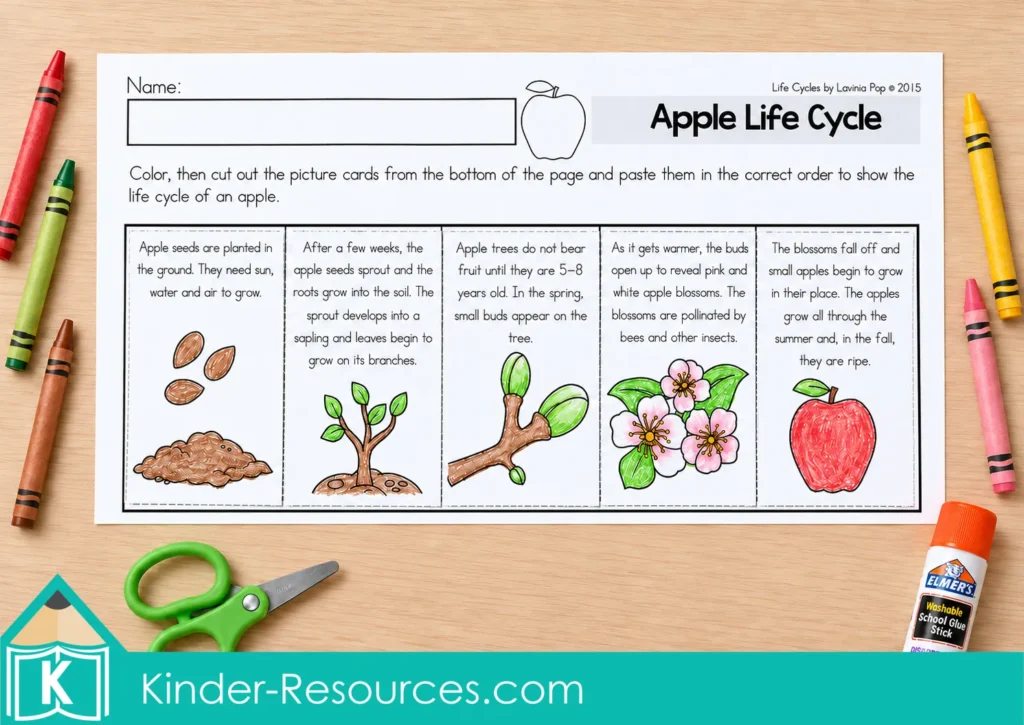
The first worksheet includes five picture cards with short explanations. Children color the illustrations, cut out the rectangular cards and arrange them in order across the worksheet. The printed sentences provide helpful clues and encourage children to connect each illustration with what is happening during that stage.
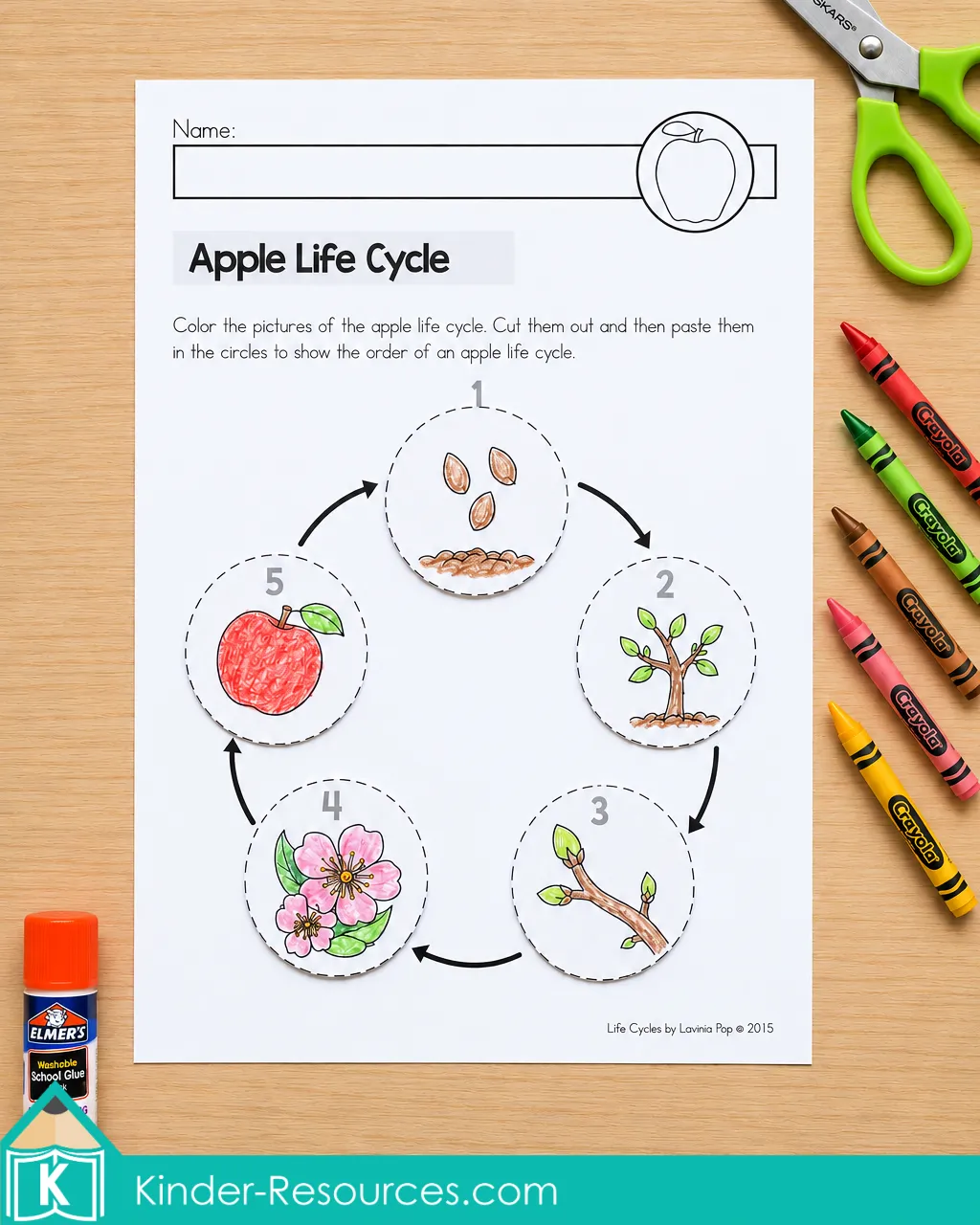
The second worksheet uses pictures only. Children color and cut out the five circular pieces before pasting them over the numbered circles. This version is especially useful for children who understand the sequence but are not yet ready to read the longer explanations.
Both activities encourage children to think carefully before gluing. Ask them to point to each stage and tell the story of the apple life cycle once their pictures are in place.
Label the Apple Life Cycle
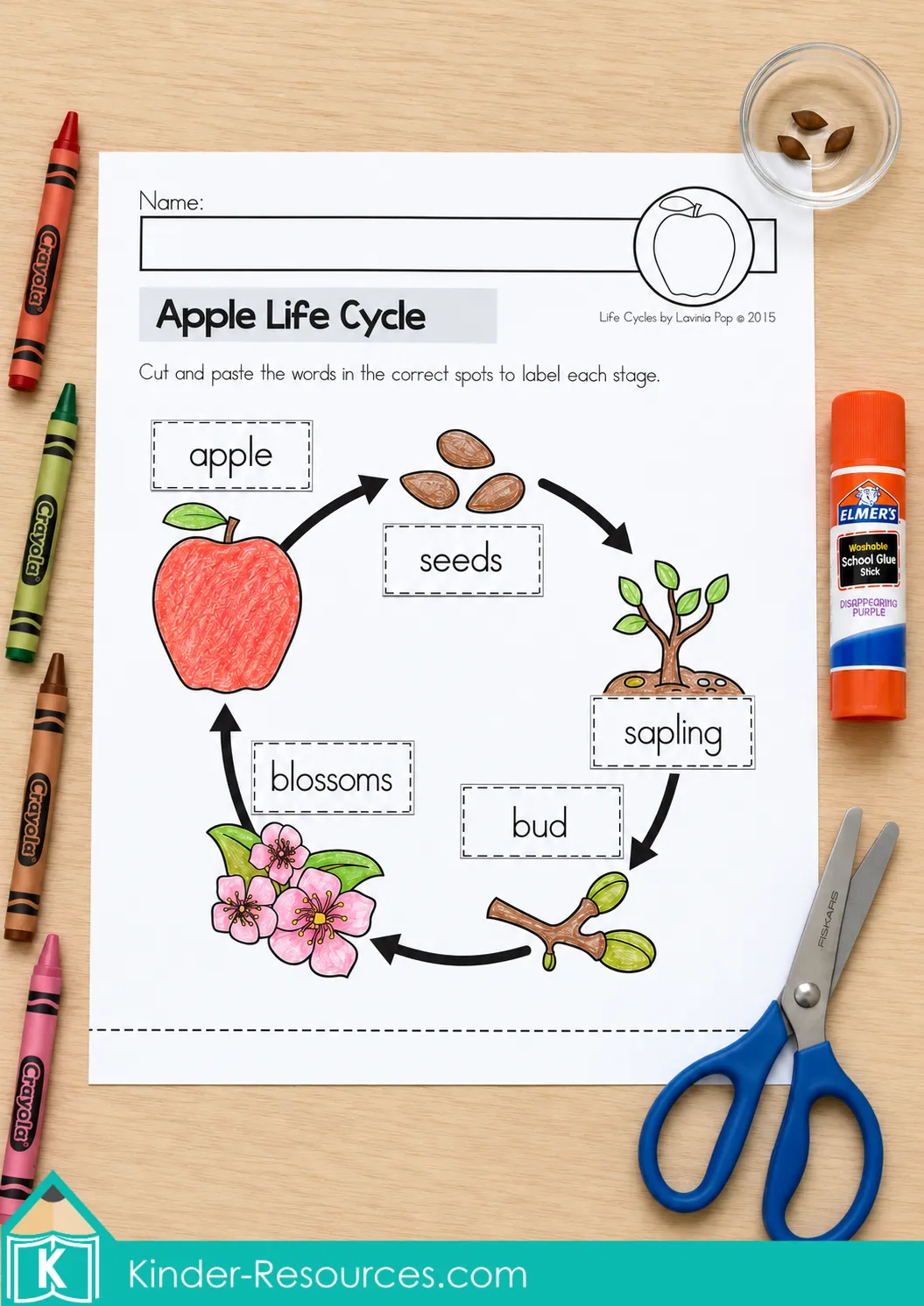
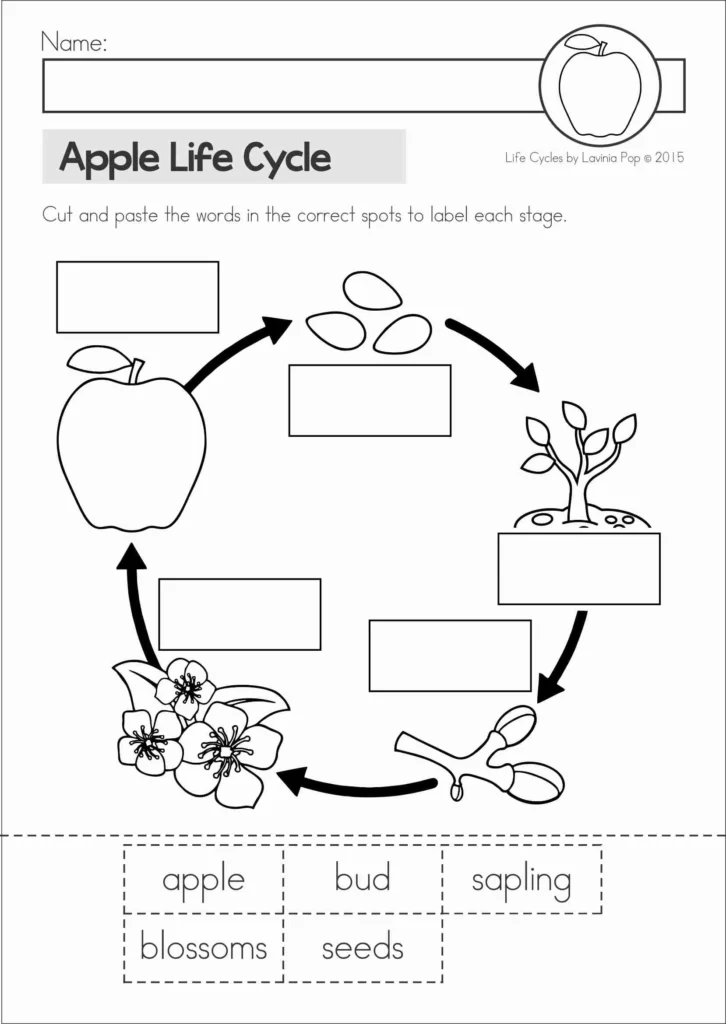
The labeling worksheet gives children another way to demonstrate their understanding of the five stages. After coloring the illustrations, children cut out the words apple, seeds, sapling, bud and blossoms and paste them beside the matching pictures.
The arrows help children follow the cycle as it moves from one stage to the next. When the worksheet is complete, ask children to point to each picture and explain what happens. Some children may be able to name the stage, while others may be ready to describe the changes in a complete sentence.
If you would like to reuse the activity, laminate the worksheet and labels and attach hook and loop dots. It can then be added to a science center for children to complete more than once.
Using the Activities with Different Learners
These activities can be adapted easily for different ages and ability levels. Younger children may need the picture pieces or word cards cut out in advance. They can focus on coloring, arranging and gluing the stages in order.
Children who are beginning to read can work with an adult or partner. Read each sentence together and encourage children to listen for the word that makes sense in the blank. Keep the labeled poster nearby so they can compare the pictures and vocabulary.
More confident learners can complete the activities independently and explain the apple life cycle in their own words. They might also draw an additional picture, write a sentence about their favorite stage or compare the apple life cycle with another plant life cycle.
The class book, student reader and worksheets can be used during whole group science, small group instruction, literacy centers, morning work or independent practice. The variety of activities gives children several opportunities to revisit the same information without completing the same task repeatedly.
Learning About Apples Through Science and Literacy
Learning about the apple life cycle is a meaningful way to combine science and literacy during a fall apple theme. Children learn how a familiar fruit grows while practicing sequencing, reading, vocabulary, coloring, cutting and gluing.
By the end of the activities, children should be able to recognize the five stages, place them in order and talk about some of the changes that happen as an apple tree grows.
Purchase the Apple Life Cycle Activities
The complete Apple Life Cycle packet is available from Kinder Resources and Teachers Pay Teachers. Choose your preferred store below.


You Might Also Like
How do I get this apple life cycle
Hi Debbie! Scroll down to “Purchase the Apple Life Cycle Activities” near the bottom of the blog post. You can choose Kinder Resources or Teachers Pay Teachers to purchase the pack. 😊