
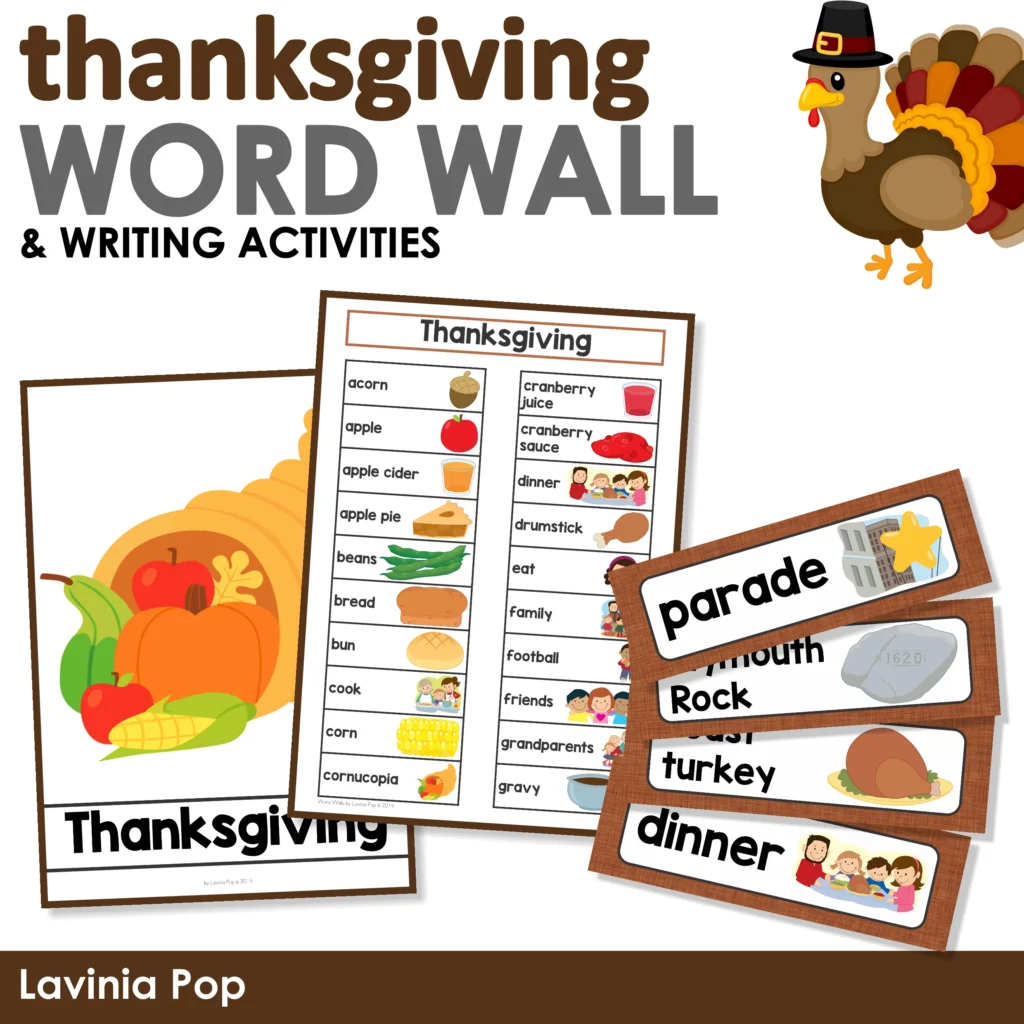
A pumpkin picture can become a label, an item on a dinner menu, or the sentence “I see a pumpkin.” My Thanksgiving Word Wall gives children illustrated words they can return to as they talk, draw, and write about foods, family, fall, and things they appreciate.
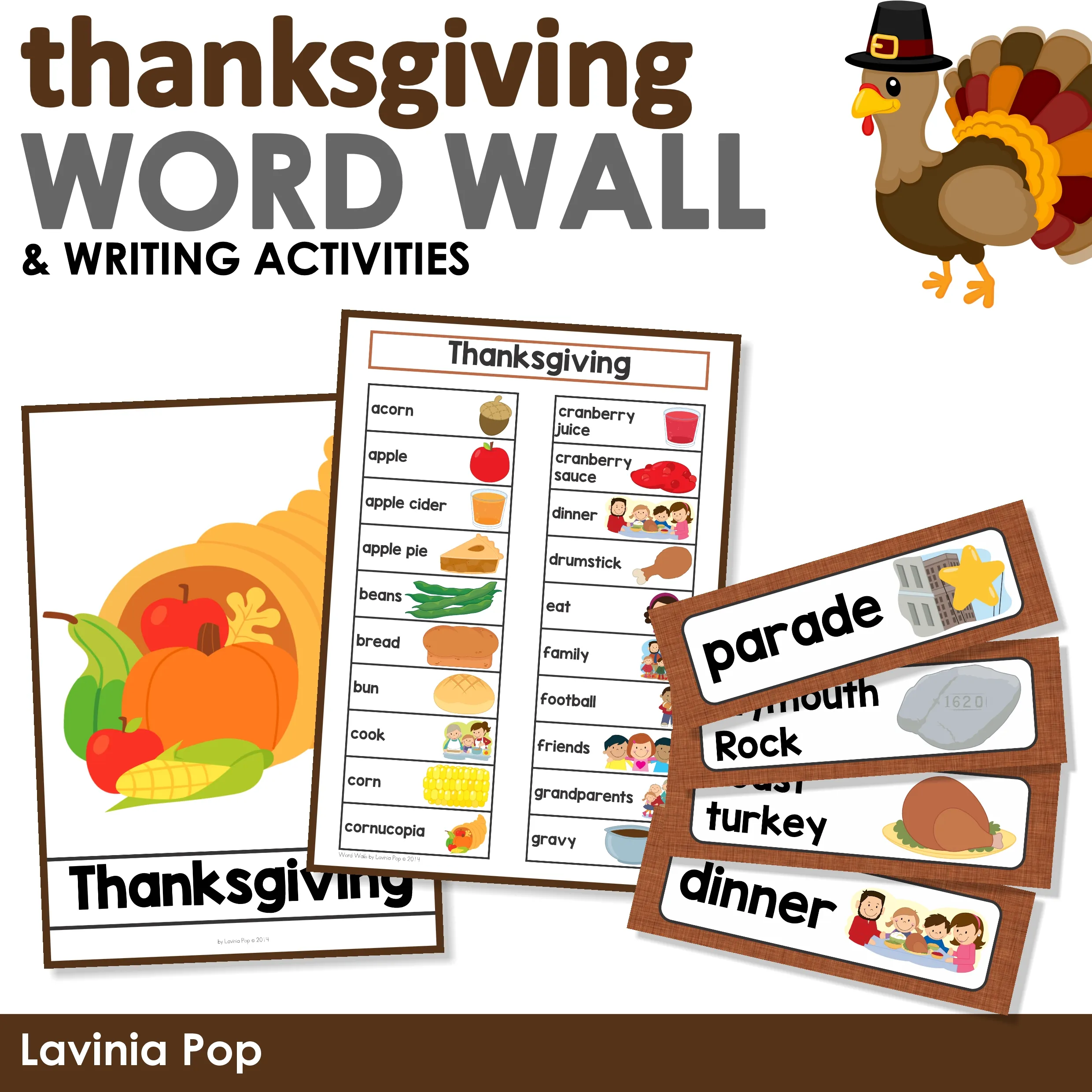
I created this printable packet with classroom picture cards, personal word lists, and six optional word work pages. You can use it for preschool and Pre-K vocabulary conversations, kindergarten writing centers, or first grade word work, choosing the materials that fit your children’s current skills.
Download Free Thanksgiving Word Wall Sample Pages
Would you like to take a closer look before choosing the complete packet? Download the free sample pages below.

What’s Included in the Thanksgiving Word Wall Packet?
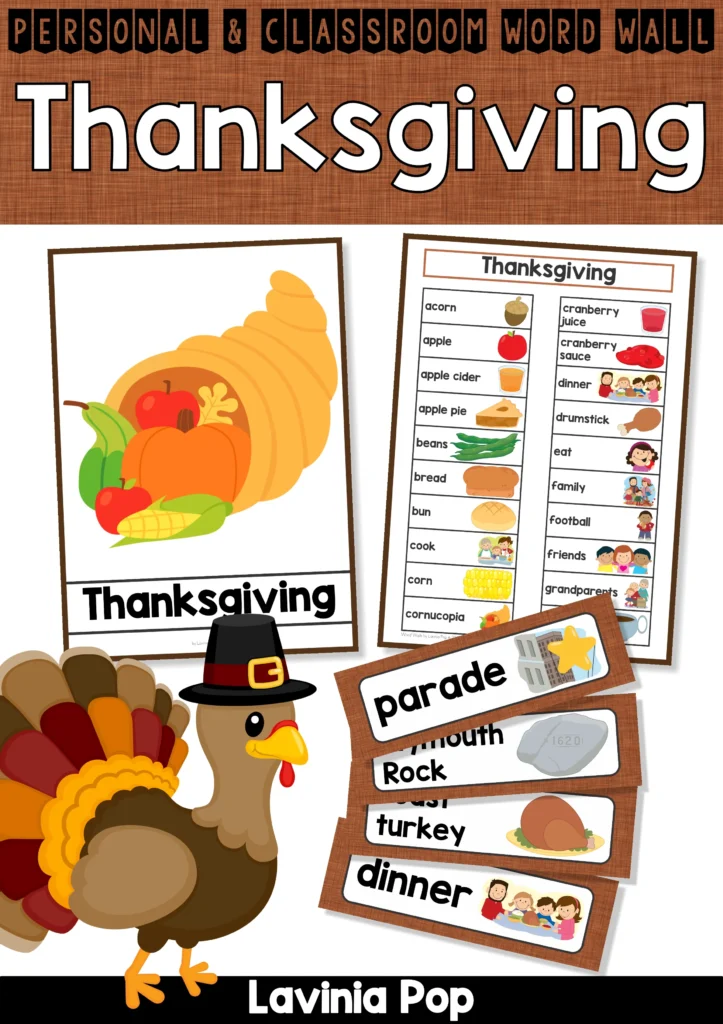
The packet brings together several ways to keep useful vocabulary close to children’s writing:
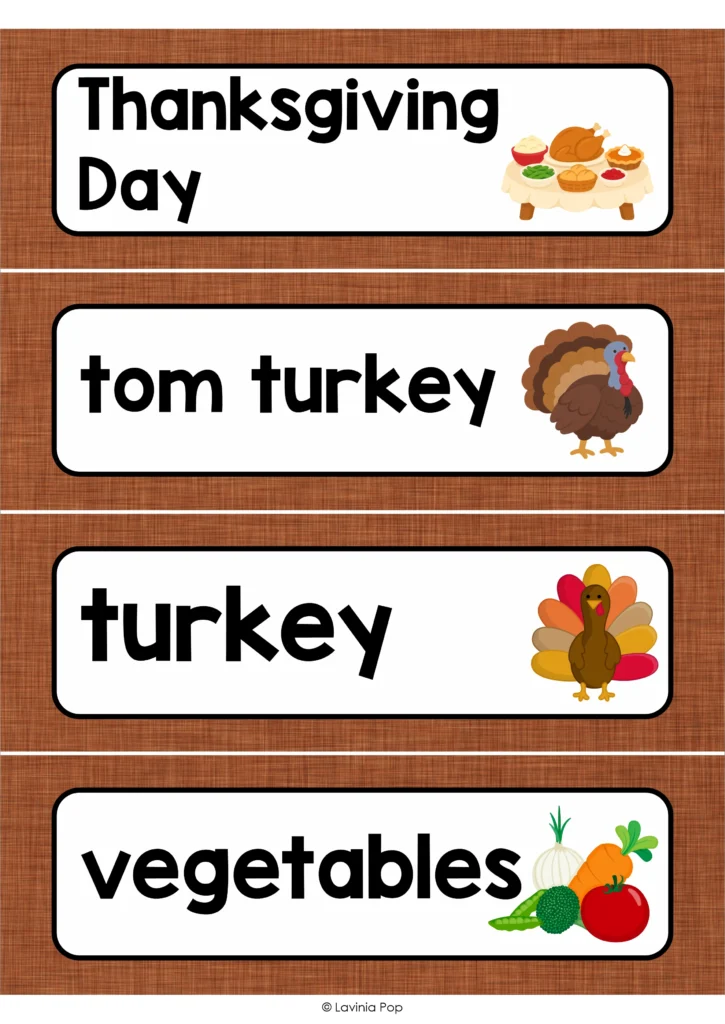
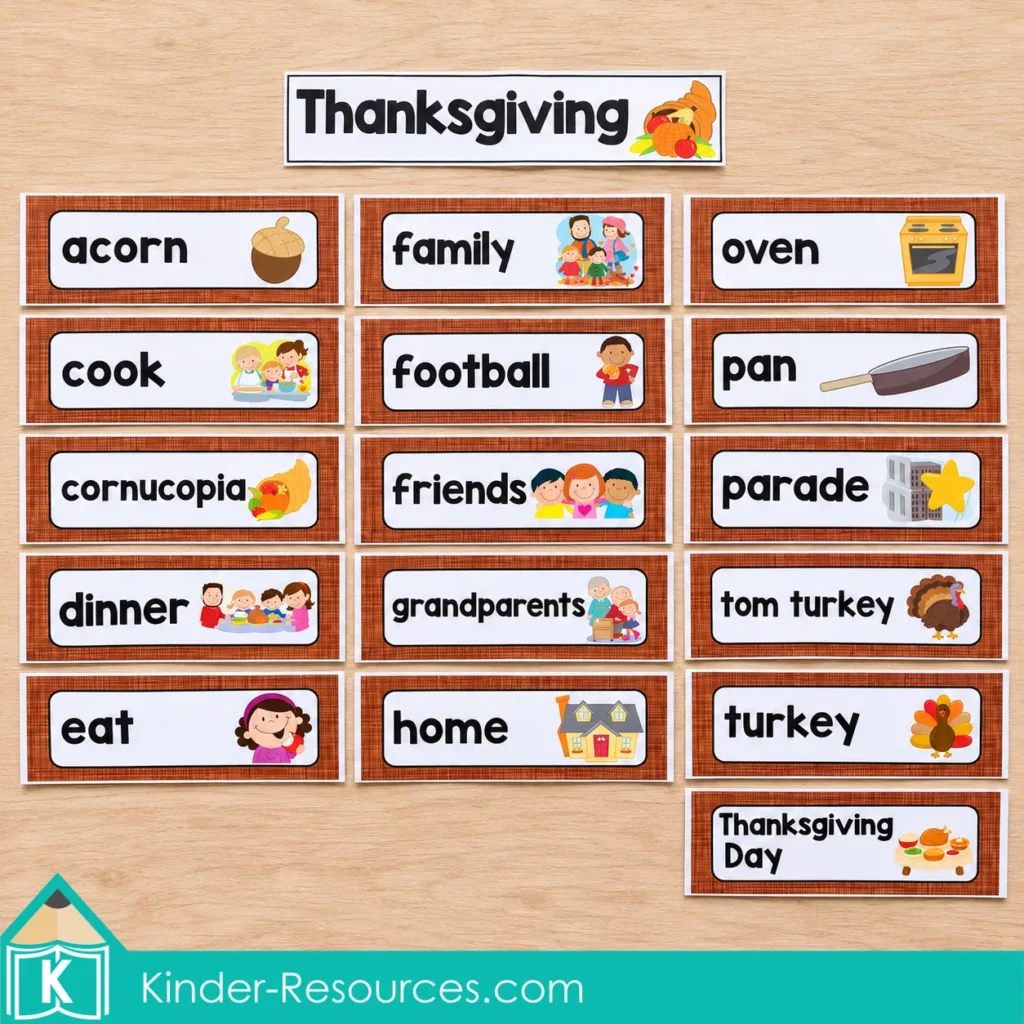
- Large picture word cards with a choice of colored or white backgrounds.
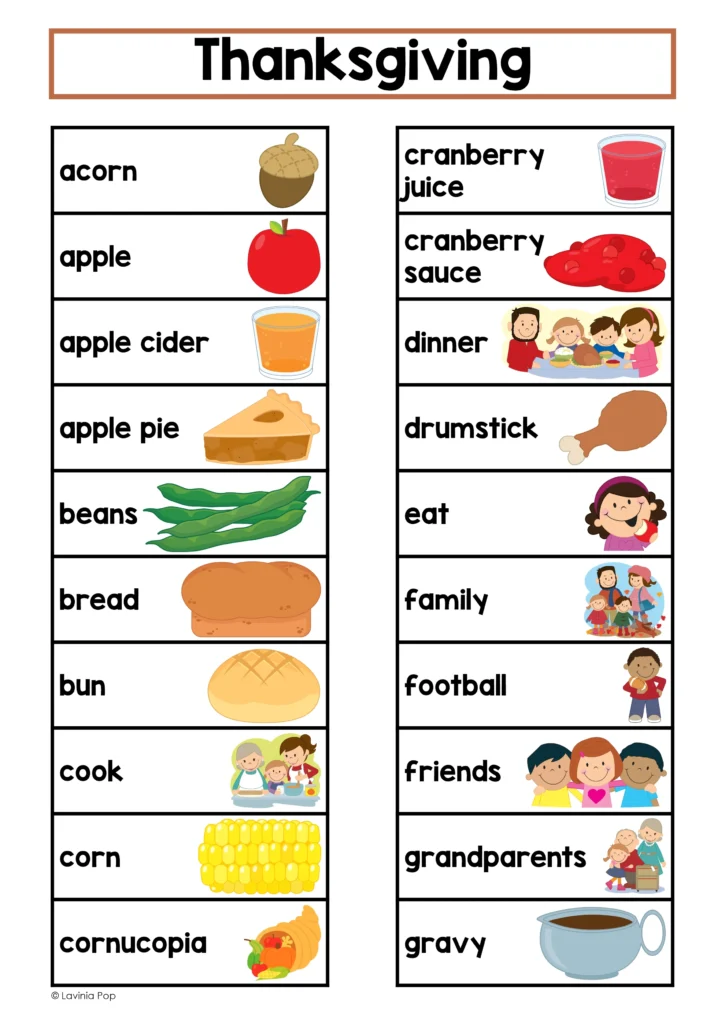
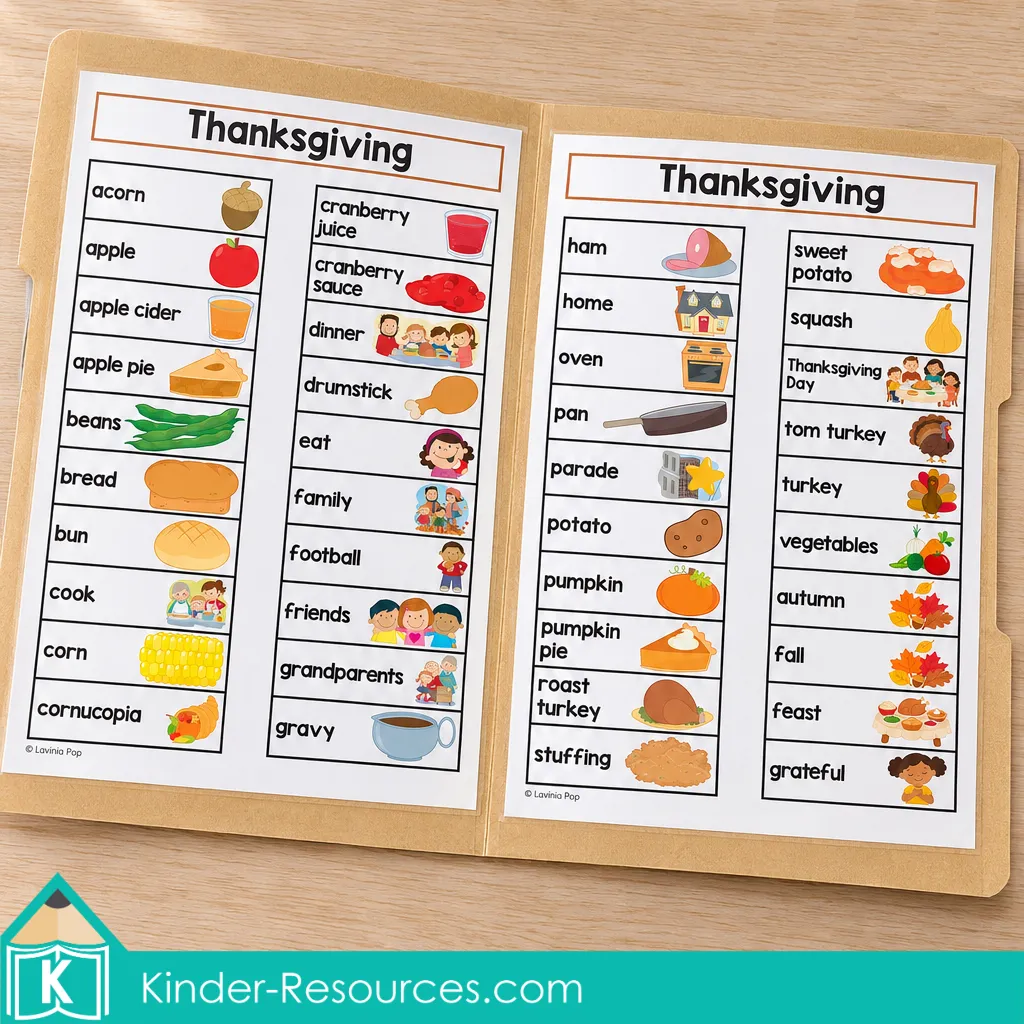
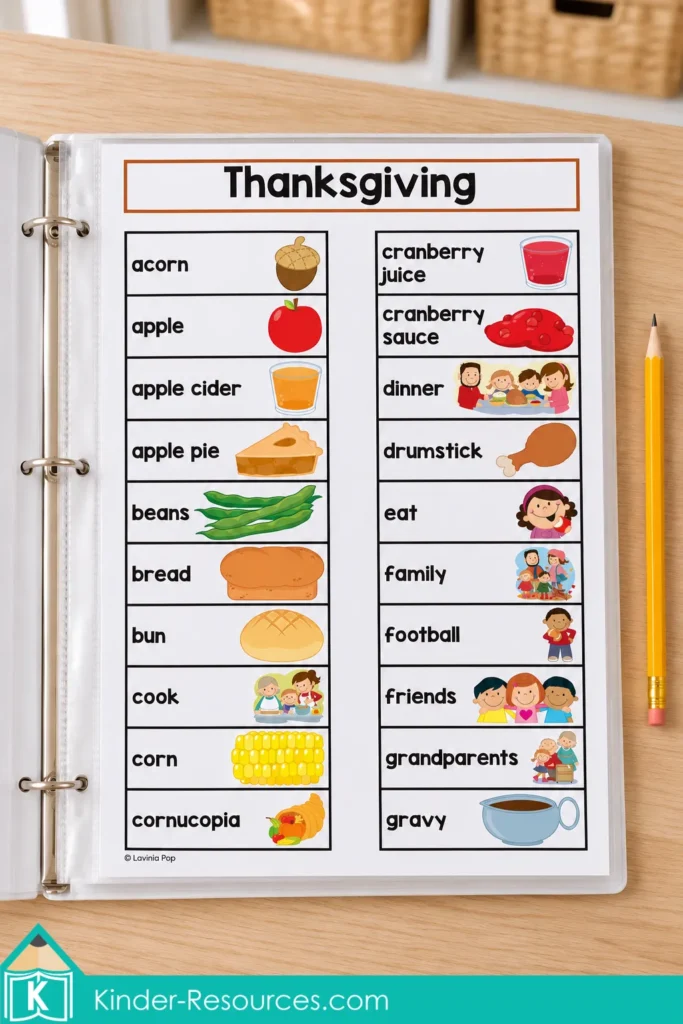
- Four illustrated personal word list pages for binders, notebooks, or file folders.
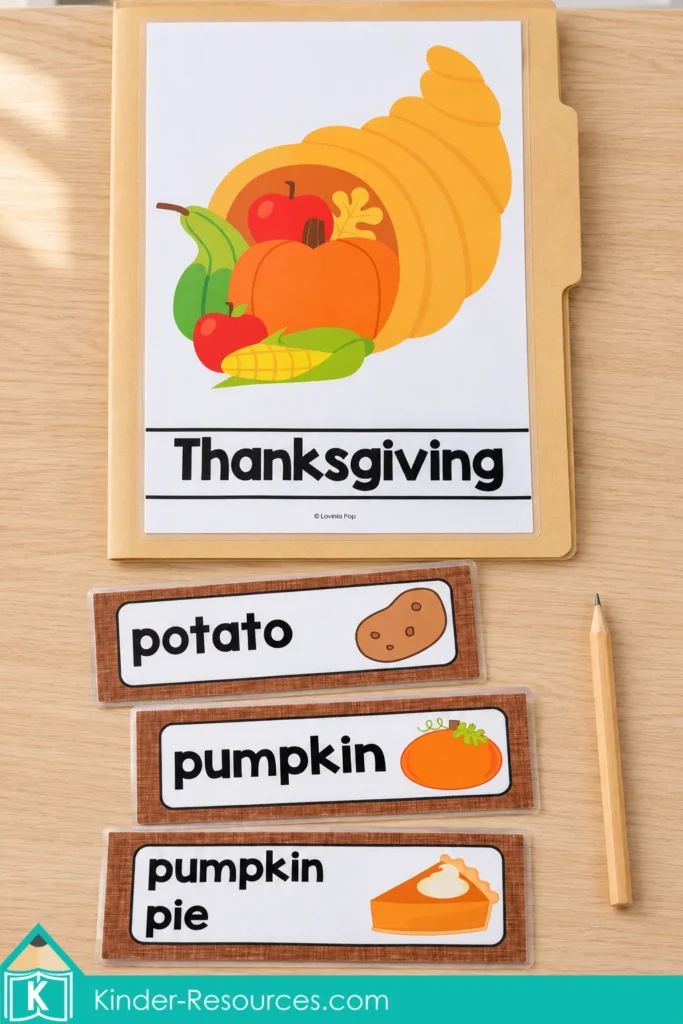
- A Thanksgiving file folder cover and a classroom display heading.
- A Word Work Tasks panel listing the six activity choices.
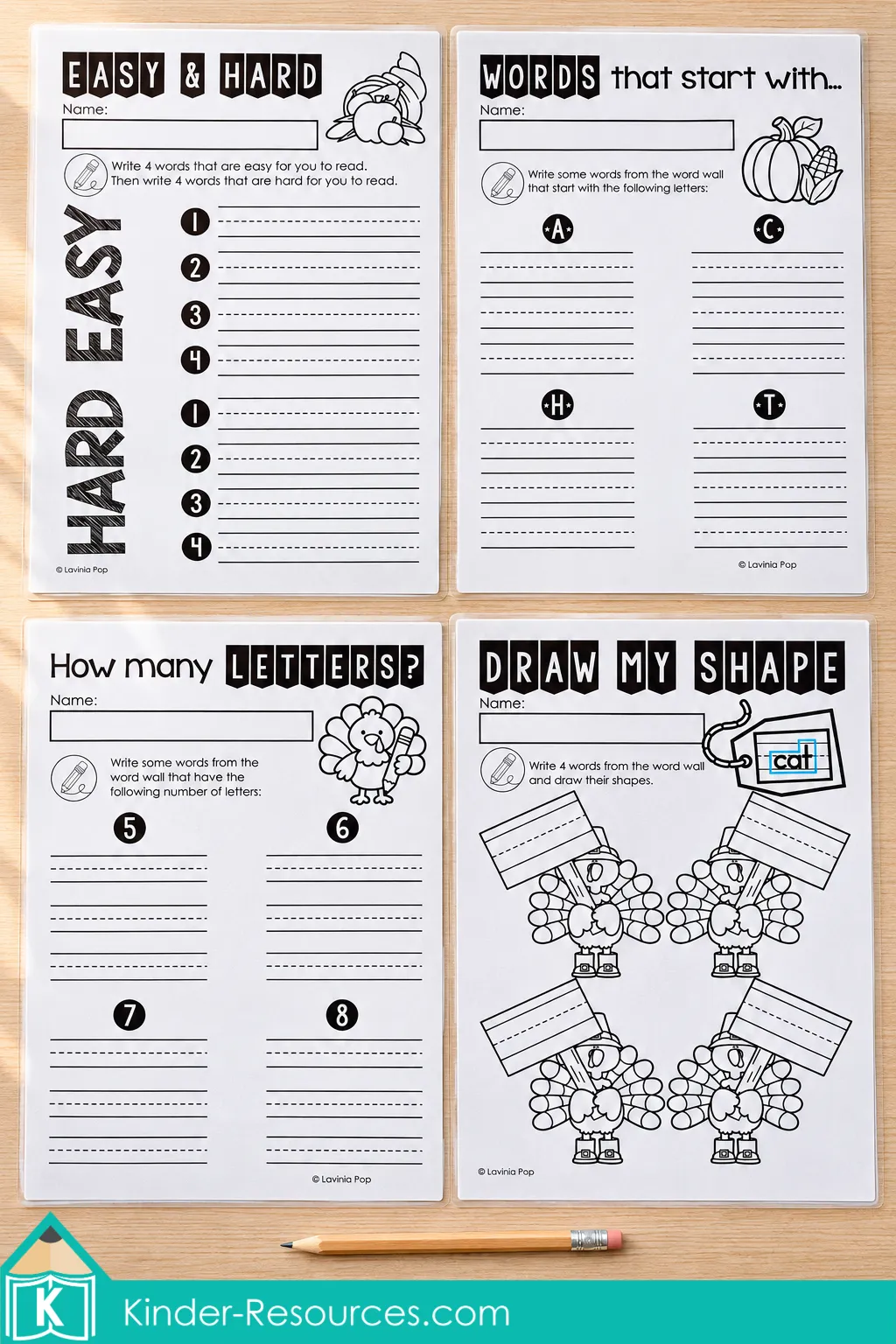
- Six word work worksheets: Easy & Hard, Alphabetical Order, Words That Start With…, How Many Letters?, Sentence Writing, and Draw My Shape.
- Blank word list and card templates for adding your own words and pictures.
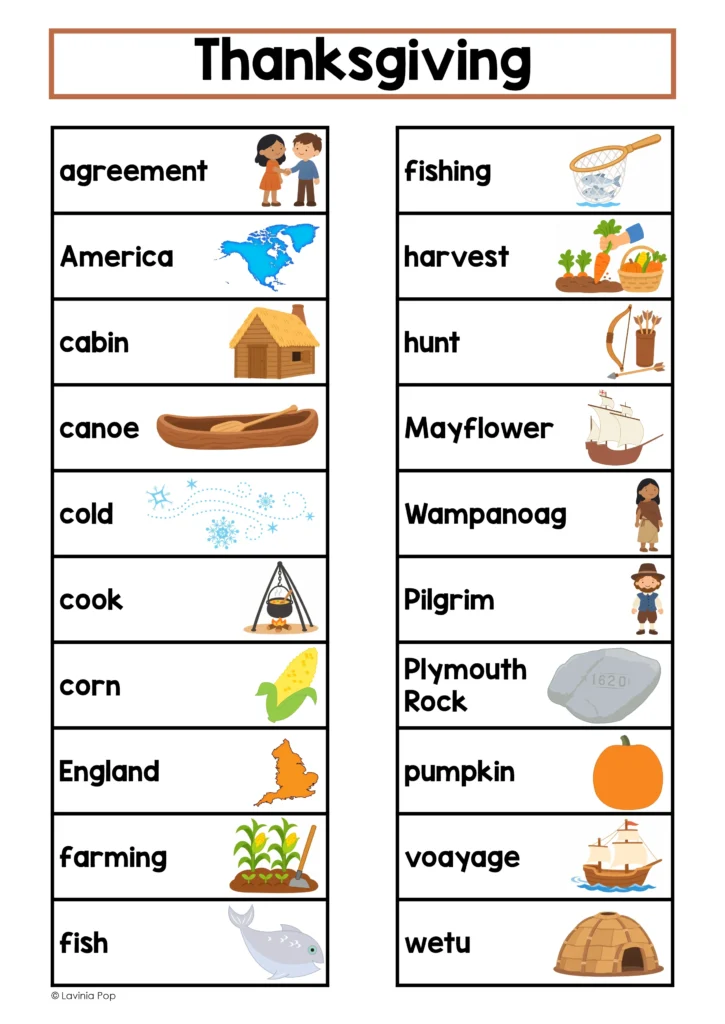
The vocabulary includes familiar foods and celebrations, seasonal words such as autumn and November, gratitude words, and a separate selection connected with historical topics.
Set Up a Thanksgiving Writing Center
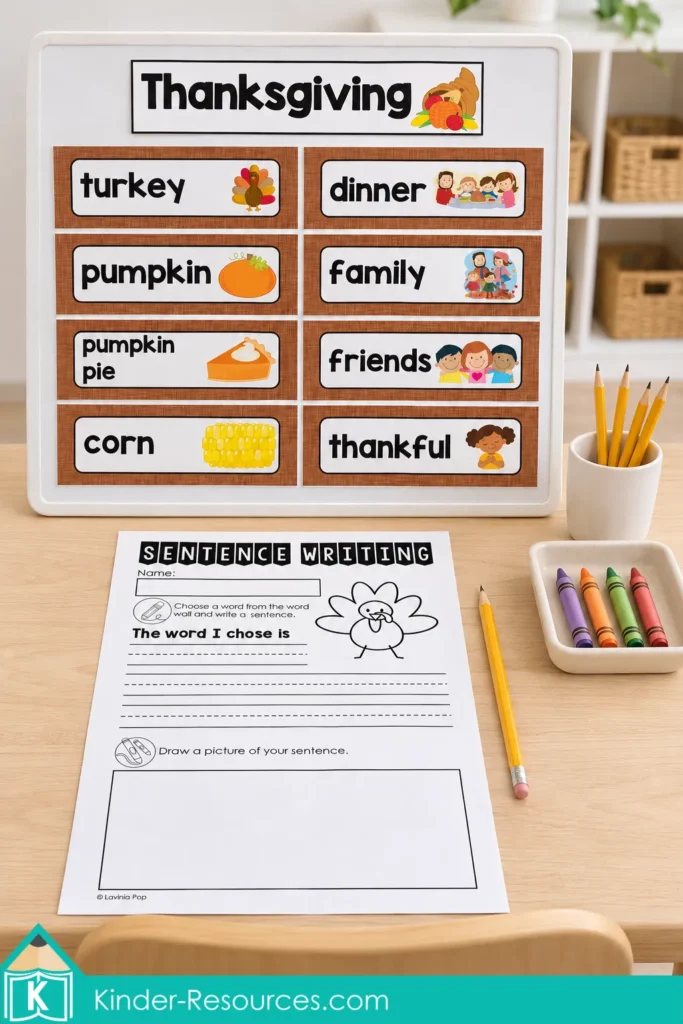
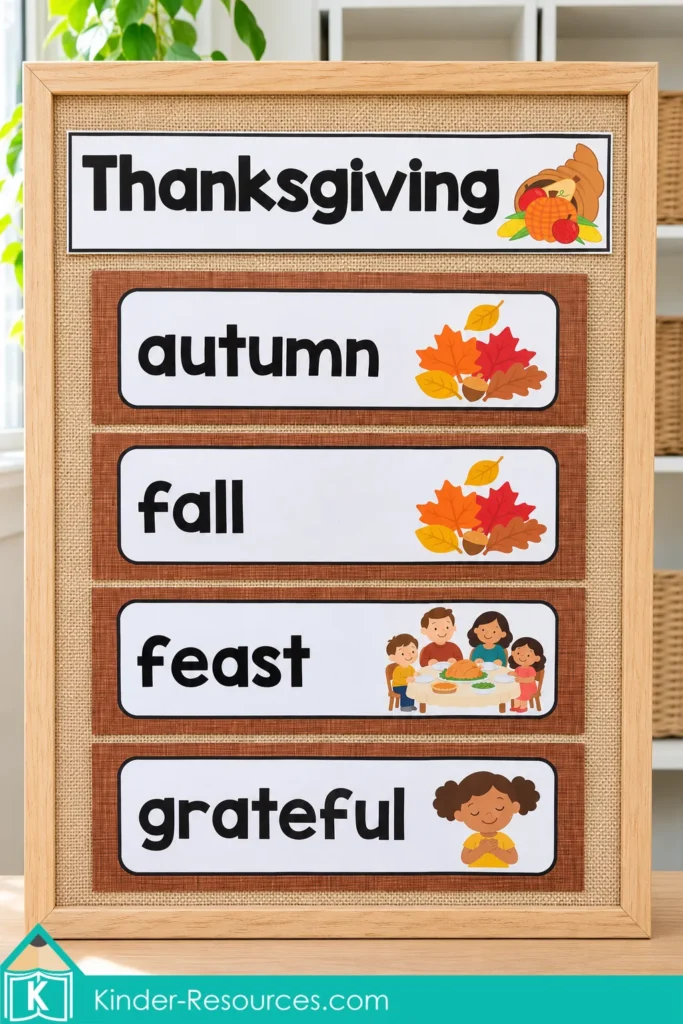
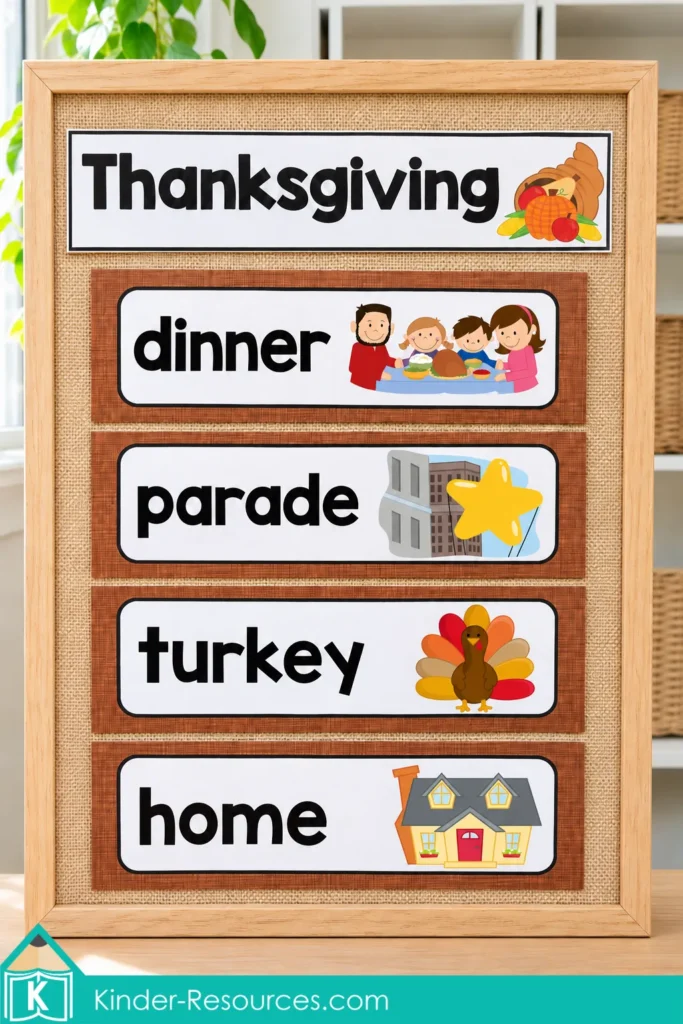
Print, laminate, and cut out the cards you want to use. Place them where children can see the words from their writing seats and reach a card when they need a closer look. A small board, pocket chart, or tabletop display can work well.
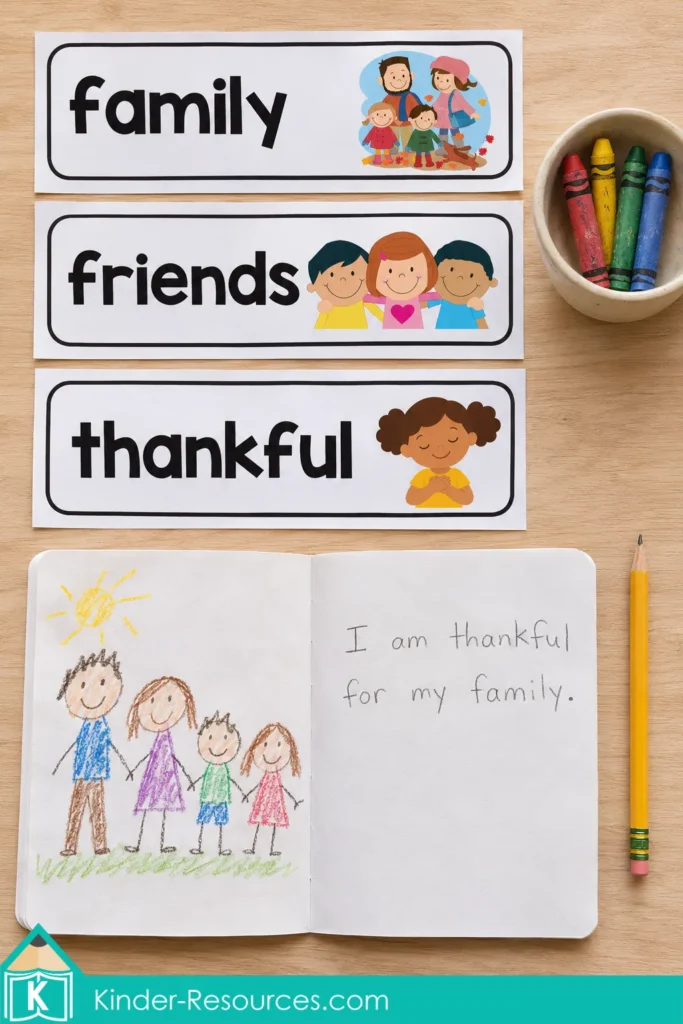
For the writing center pictured above, I selected turkey, pumpkin, pumpkin pie, corn, dinner, family, friends, and thankful. These give children choices for food lists, family drawings, and simple sentences. Start with a smaller selection if needed, then add words as you introduce them.
Keep paper, pencils, crayons, and a personal word list nearby. Offer plain paper for drawing and labeling alongside the lined activity pages. Both card versions include color illustrations, so you can choose the background that suits your display.
This approach follows Primary Connections’ guidance on accessible, interactive word walls: select relevant words, introduce them gradually, and refer to them during learning activities.
Introduce the Words Through Conversation
Before asking children to write, look at a few cards together. Say each word, explain its meaning, and model a sentence. With parade, you might talk about people, music, and floats moving along a route. With thankful, invite children to describe someone or something they appreciate.
Invite children to point to a card, describe its picture, or use its word in a spoken sentence. Revisit the same words during a read-aloud, a small-group conversation, and writing time. The What Works Clearinghouse vocabulary guide recommends giving learners repeated opportunities to use a small set of words through speaking, listening, and writing.
Explore food words
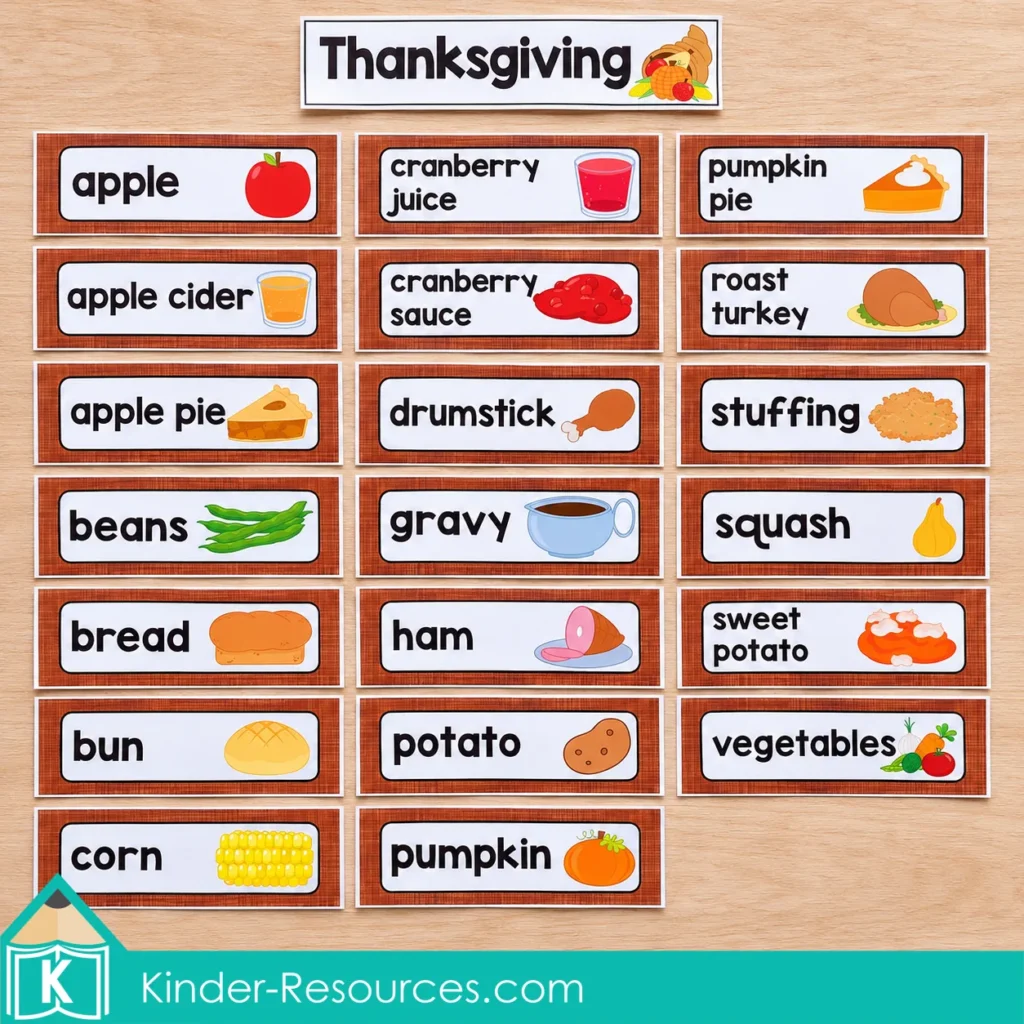
Use cards such as corn, bread, pumpkin pie, and vegetables to discuss familiar foods. Children can sort a small selection into groups they explain, choose foods for a pretend menu, or draw a plate and label what they would like to eat.
A useful prompt is, “Which foods would you choose for a meal?” Children can contribute their own preferences and family foods.
Talk about people and traditions
The family, friends, grandparents, home, and dinner cards can lead into conversations about time spent together. Children might describe someone they enjoy visiting or something they like doing with their family.
Families have different traditions, and some do not celebrate Thanksgiving. Invite children to share a familiar meal, a person they appreciate, or another family occasion.
Make a Portable File Folder Word Wall
Attach the cornucopia cover to the front of a file folder and place your selected word lists inside. The two-page arrangement pictured below gives children a writing reference they can open beside their paper and put away when they finish.
You can prepare additional folders for the remaining lists. If you plan to use the worksheets, attach the included Word Work Tasks panel to the back of the folder. Introduce each task before offering it as a familiar activity choice.
Keep Personal Word Lists in Student Binders
The same lists can go in sheet protectors inside a binder or be glued into a writing notebook. The first page includes 20 entries, beginning with acorn and ending with gravy.
Model how to find a needed word, bring the reference close, and return to the writing task. For example, a child drawing a meal might locate corn and use the printed word to label the picture.
Add words that matter to your children
Use the blank templates and empty spaces to add vocabulary from a book, children’s questions, or their own experiences. You might write a family food, a person’s name, or a word a child needs for a particular sentence, then add a drawing or photograph. Families can also help contribute words in children’s home languages.
Give Children a Reason to Write
A few classroom supplies let children use the cards in different ways:
- Plan a menu: Choose food cards and record a list for a pretend meal.
- Label a drawing: Draw a turkey, pumpkin, meal, or family scene and add useful words.
- Write a thank-you message: Think of someone who helped and dictate or write a short note.
- Make a gratitude page: Draw something meaningful and finish “I am thankful for…” with support as needed.
The notebook in the photo is an example of using the cards with ordinary writing supplies. Children can draw, attempt their own spelling, use a reference word, or tell an adult what they want to say. NAEYC’s guidance on emergent writing emphasizes meaningful purposes for writing, adult modeling, and support matched to each child’s development.
Use the Six Thanksgiving Word Work Pages
The worksheets offer focused activities once children are familiar with the vocabulary. Choose one that matches your teaching goal; children can use the cards and personal lists throughout.
Easy & Hard
Children record four words they find easy to read and four they need help with. Read together and discuss which parts feel familiar or need practice.
You can introduce the groups as “words I can read” and “words I am learning.” Revisit the choices later so children can notice their progress.
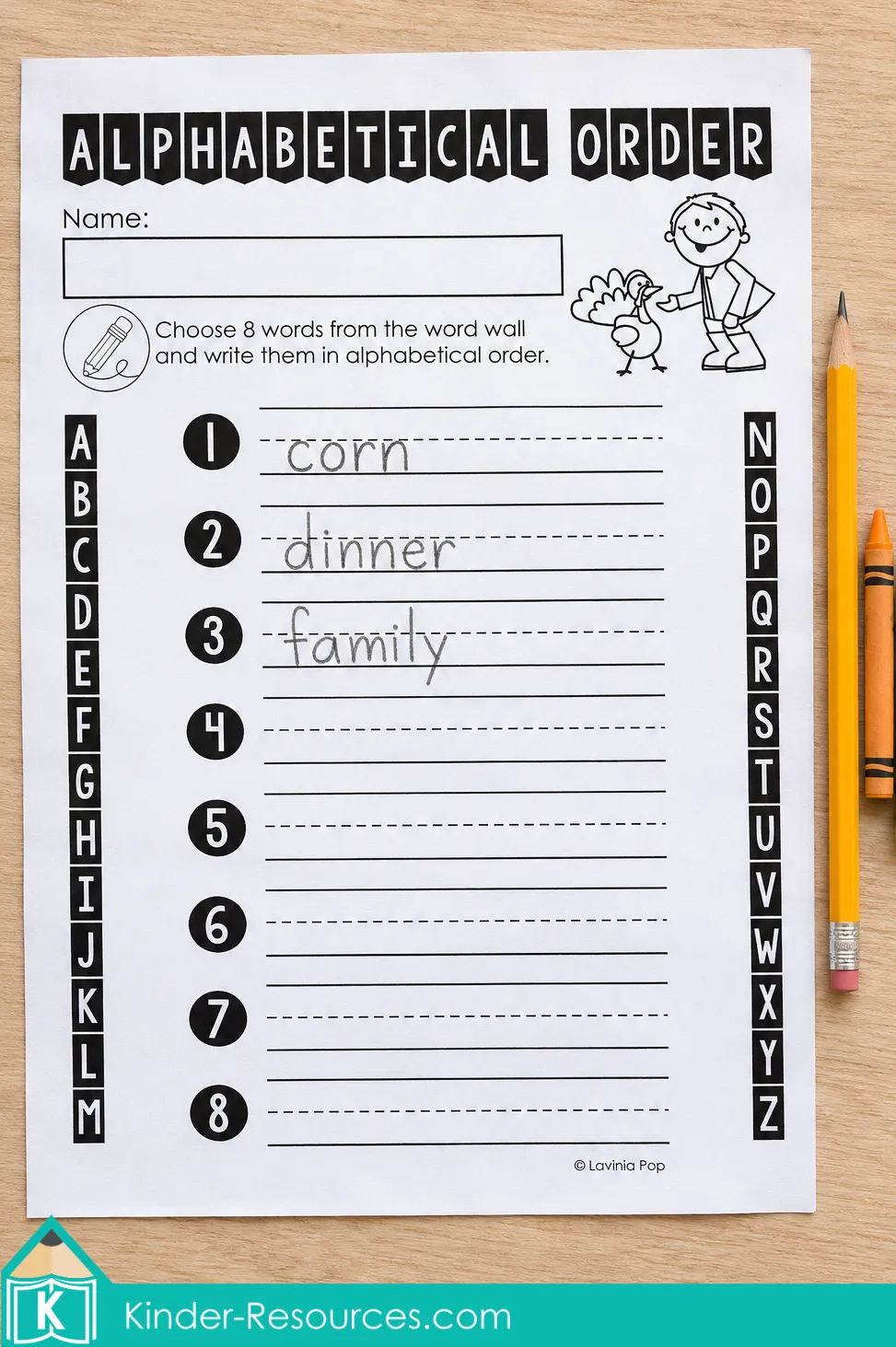
Alphabetical Order
This page has space for eight words, with the alphabet printed along the sides. Begin by arranging a few cards together before recording them. The example photo starts with corn, dinner, and family.
Children who are ready can choose eight words. If two begin with the same letter, model comparing the next letters: family comes before friends because a comes before r.
Words That Start With…
Children find and record words beginning with A, C, H, and T. Possible choices include apple, corn, home, and turkey.
Model finding the first written letter and matching it to the correct section. You can discuss the sounds in each word separately as part of your phonics teaching.
How Many Letters?
The page groups words with 5, 6, 7, and 8 letters. Try bread for five, turkey for six, pumpkin for seven, and thankful for eight.
Have children point to each printed letter as they count, then write the word in its group. Start with single-word cards to keep the task clear.
Sentence Writing
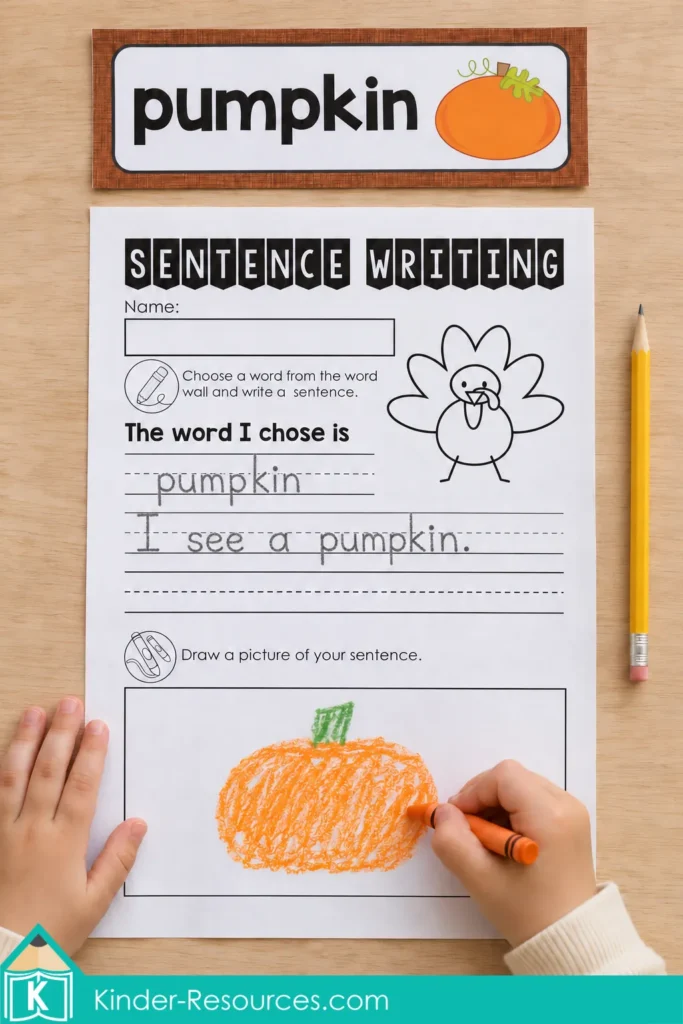
Children choose a word, write it on the word line, use it in a sentence, and illustrate their sentence. Invite them to say the sentence aloud before writing. In the example below, pumpkin becomes “I see a pumpkin.”
Support a beginning writer with a spoken sentence starter or adult scribing. A more confident writer might add a detail: “I see a big orange pumpkin.”
Model spacing and the handwriting lines, with short letters resting on the baseline, tall letters reaching the top line, and descending letters extending below the baseline.
Draw My Shape
Children copy four words onto the turkey signs and draw an outline that follows the letters’ heights. Use this as a brief handwriting activity: notice which letters are short, which are tall, and which extend below the baseline.
For example, bun has a tall b followed by two short letters. Continue teaching children to read through letter–sound relationships and blending; the outline is a way to examine their handwriting. The What Works Clearinghouse foundational reading guide supports explicit teaching of decoding and sound–spelling connections.
Choose the Right Level of Support
For preschool and Pre-K, focus on naming, describing, sorting, drawing, and dictating ideas. Children can participate fully in vocabulary activities before they are ready to complete a worksheet.
For kindergarten, introduce labels, short lists, and simple sentences alongside carefully selected word work. For first grade or more experienced writers, invite children to explain a choice, add descriptive details, or write several connected sentences.
Keep the same topic while adjusting the amount of writing and adult help. An oral response, a labeled picture, and a written sentence can all communicate a child’s idea.
Introduce Historical Vocabulary With Context
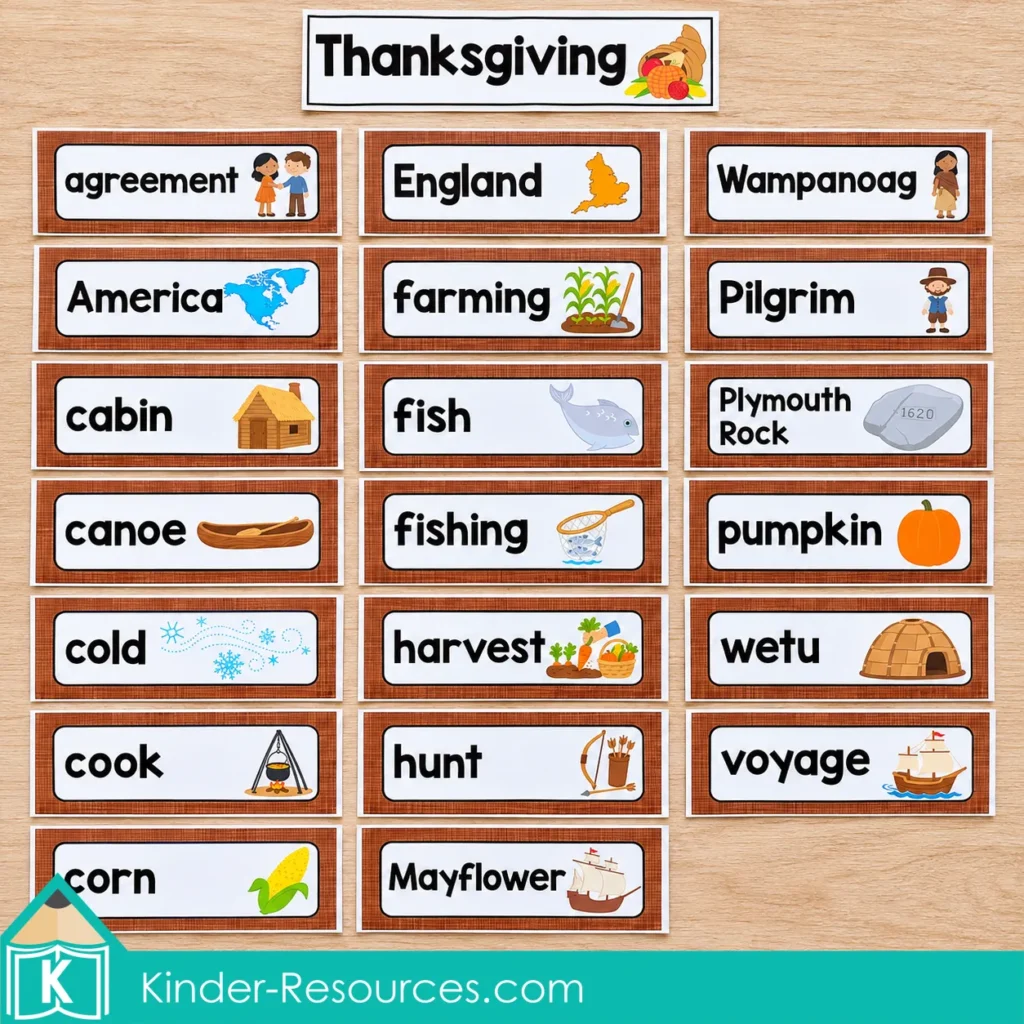
The packet also includes words such as Mayflower, voyage, Wampanoag, and wetu. Select these when they connect with an age-appropriate book or lesson, and explain their meanings together.
Pair historical references with contemporary Wampanoag voices and images so children understand that Wampanoag people and communities are here today. The National Museum of the American Indian’s Thanksgiving guidance offers teacher background and recommends books with accurate, nation-specific perspectives.
For children focusing on foods, family, and gratitude, you can keep the display centered on those words.
Get the Complete Thanksgiving Word Wall Packet
If you would like the classroom cards, personal word lists, folder materials, blank templates, and all six word work pages, you can find the complete Thanksgiving Word Wall & Writing Activities packet in my Teachers Pay Teachers store.

Happy Teaching! 😊
You Might Also Like
these are just what I was looking for!