
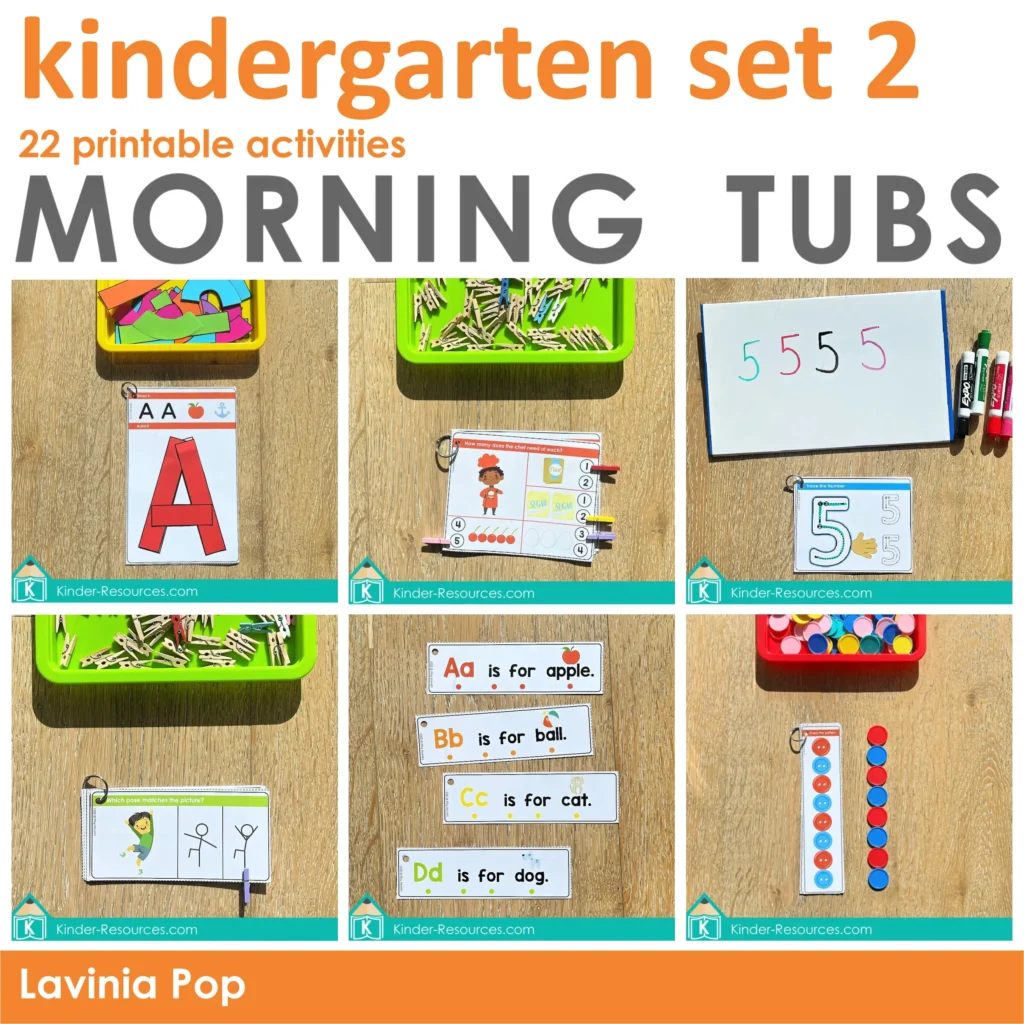
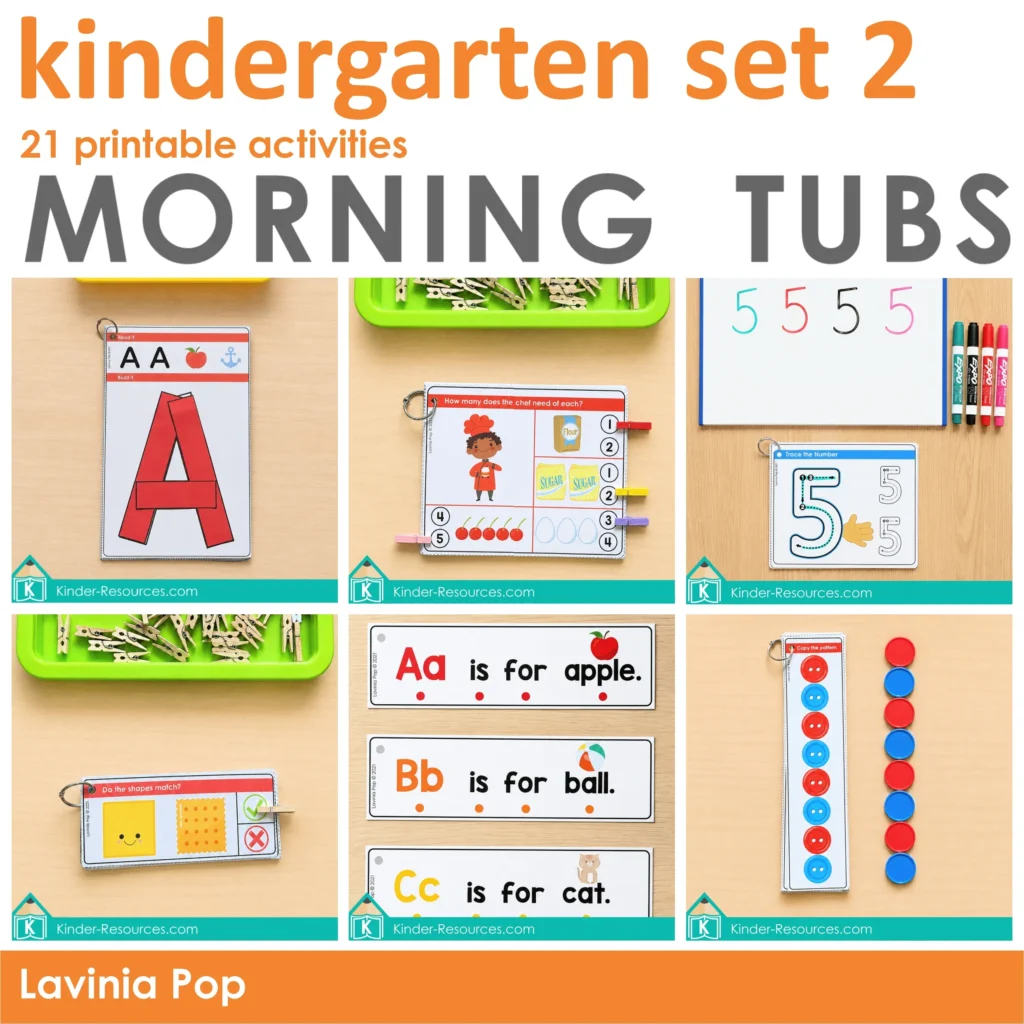
Kindergarten morning bins are one of my favorite ways to give children a calm, purposeful start to the school day. While students work with familiar, hands on materials, teachers have time to greet families, take attendance, check folders, and help everyone settle into the morning routine.
Kindergarten Morning Bins Set 2 continues the learning from Kindergarten Morning Bins Set 1. The activities are nonseasonal, simple to prepare, and easy to rotate throughout the year. Children practice early literacy, math, fine motor, visual thinking, and social emotional skills while becoming more confident working independently.
Why Use Kindergarten Morning Bins?
Morning bins give children something inviting and meaningful to begin as soon as they arrive. The activities feel playful, but every task has a clear learning purpose. Children might trace a letter, build a number, copy a pattern, match beginning sounds, or strengthen their hands with lacing and playdough.
Because the directions remain simple and consistent, children can gradually complete the activities with less adult help. This builds independence and responsibility while creating a smoother classroom routine.
- Create a calm and organized start to the day
- Review literacy and math skills through hands on practice
- Strengthen fine motor control and handwriting readiness
- Encourage children to work independently
- Provide flexible activities for centers, small groups, intervention, and early finishers
What Is Included in Kindergarten Morning Bins Set 2?
This 293 page resource includes 21 printable activity sets covering alphabet skills, phonological awareness, sight words, colors, patterns, numbers, counting, shapes, visual discrimination, and feelings. Photo instruction cards are also included to help children understand how to use each activity.
Would you like to try a few of the activities first? Download the free Kindergarten Morning Bins Set 2 sample here or click the button below. You will find links to the complete resource near the end of this post.
How to Prepare and Organize the Morning Bins
Print the activities and laminate the pieces you would like children to use more than once. Most pieces have straight cutting lines, making preparation quick and manageable. The cards can be stored on key rings, in small tubs, or inside labeled zip pouches.
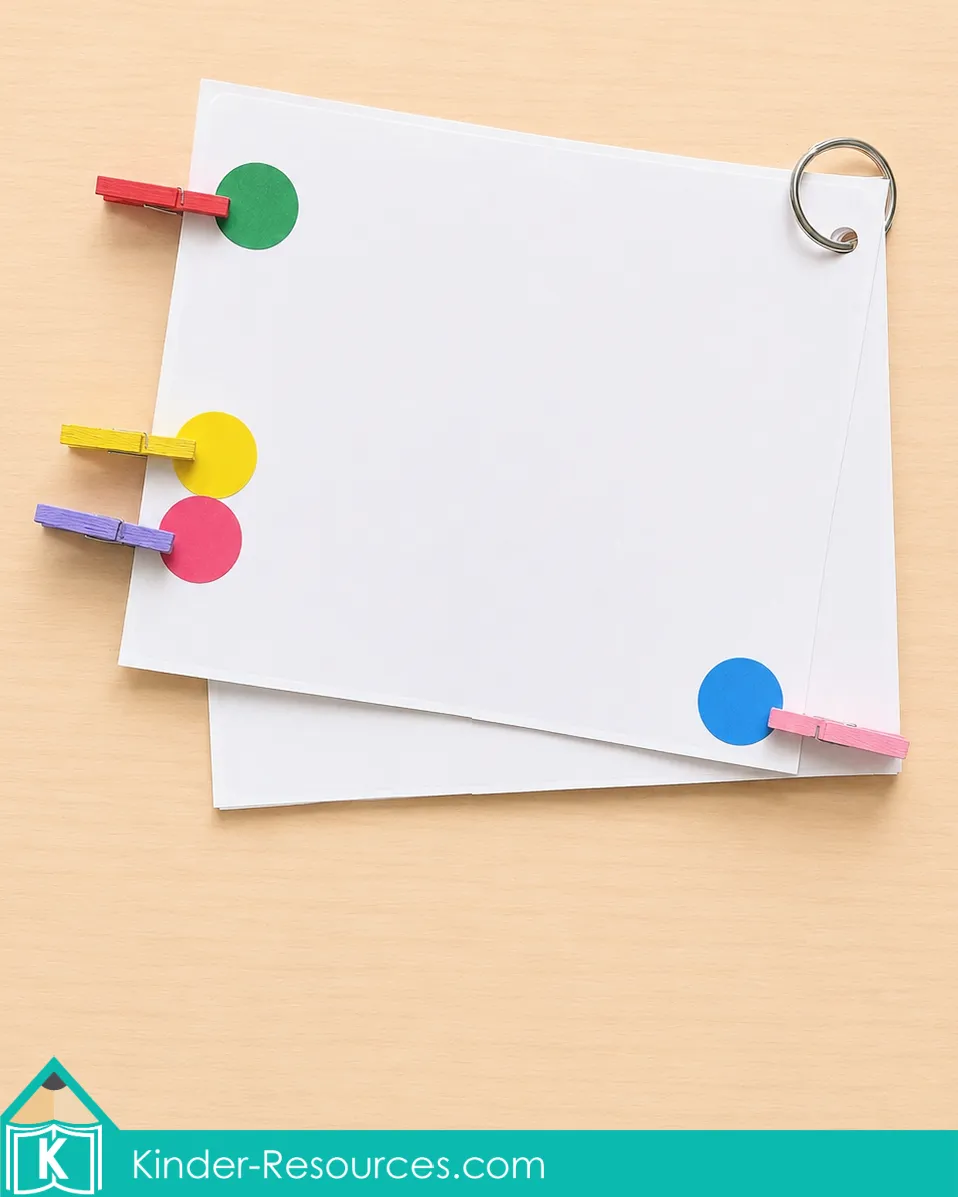
Place the included photo instruction card with each activity so children can see what to do. For clip cards, add a small colored dot behind the correct answer. Children can turn the card over after clipping their choice and check their work independently.
Useful materials to keep nearby include dry erase markers, clothespins, playdough, yarn or lacing cords, buttons, and the printable building strips included in the packet. Introduce one or two new activities at a time before adding them to the independent rotation.
Literacy and Fine Motor Kindergarten Morning Bins
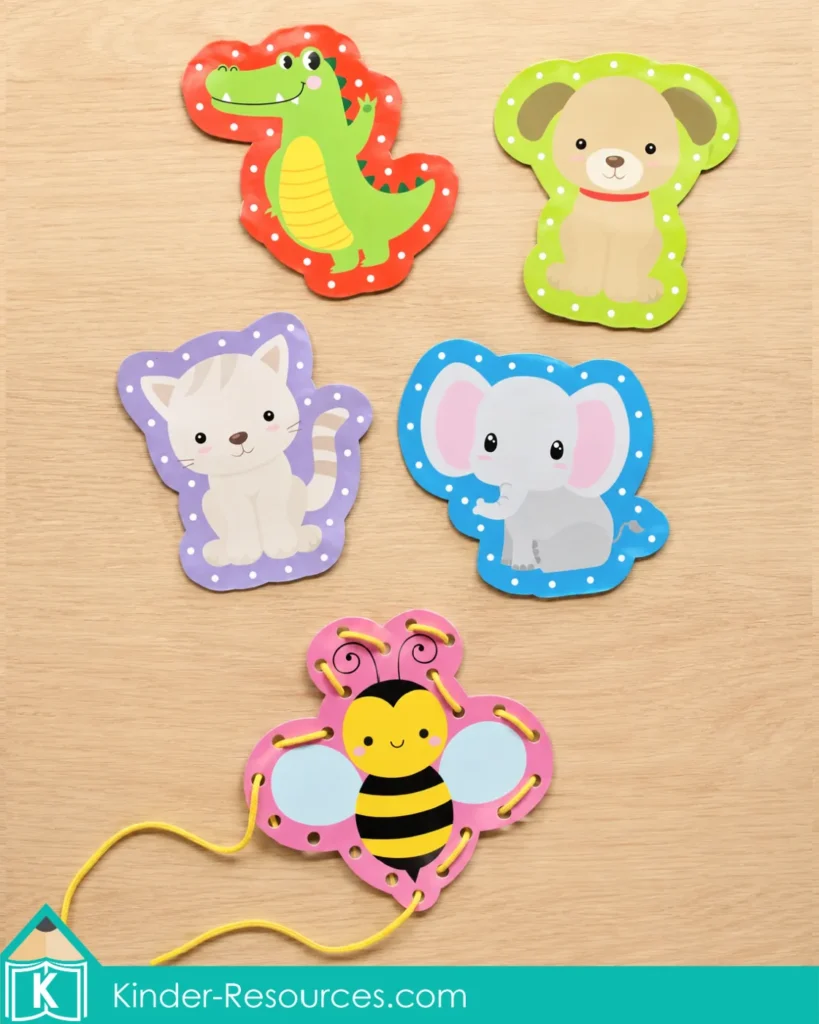
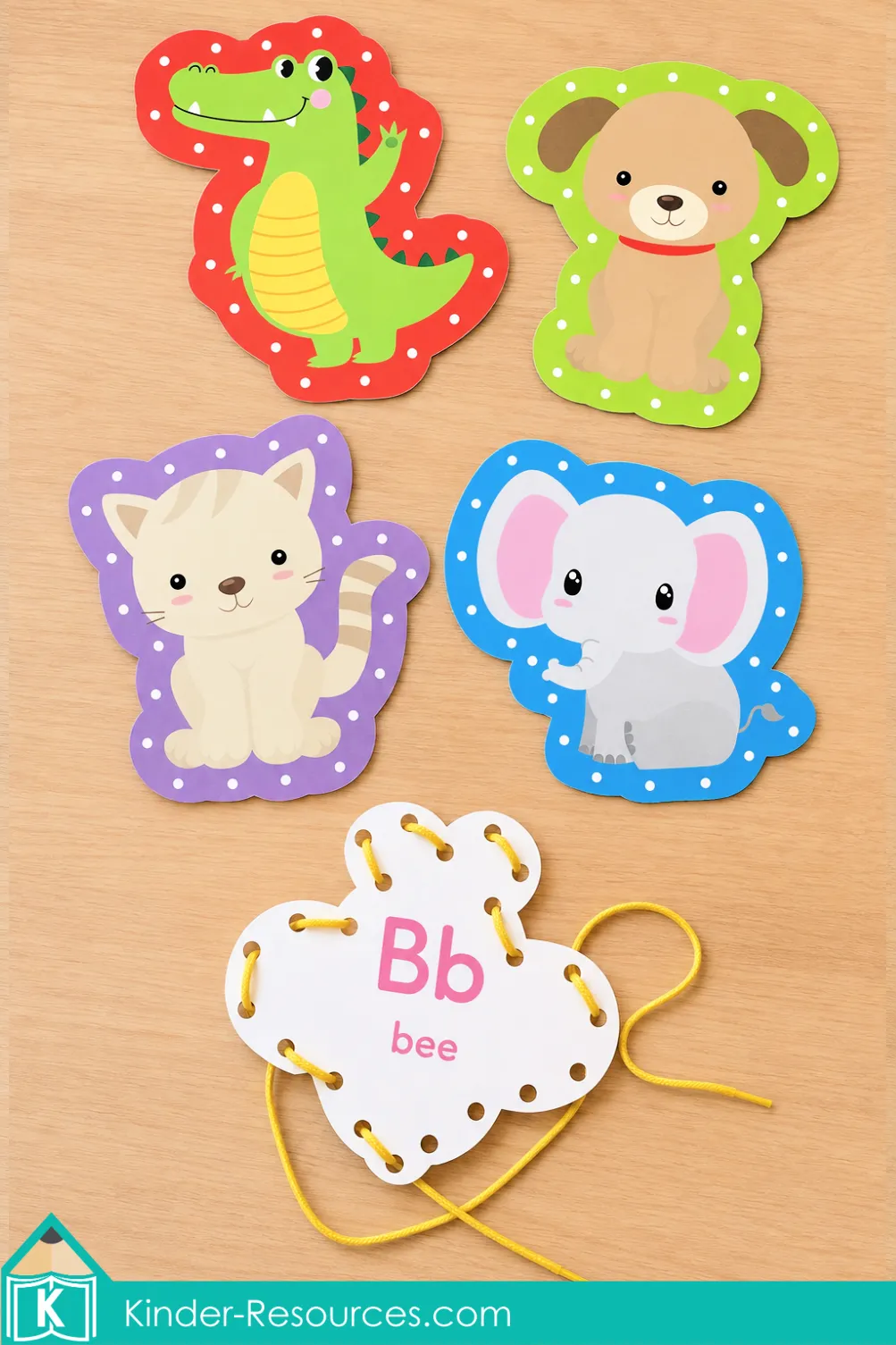
Alphabet Lacing Cards
Materials: Shoelaces, yarn, or lacing cord
Children thread the cord through the holes around each letter. This quiet activity strengthens hand and eye coordination while helping children notice and recognize uppercase and lowercase letter shapes.
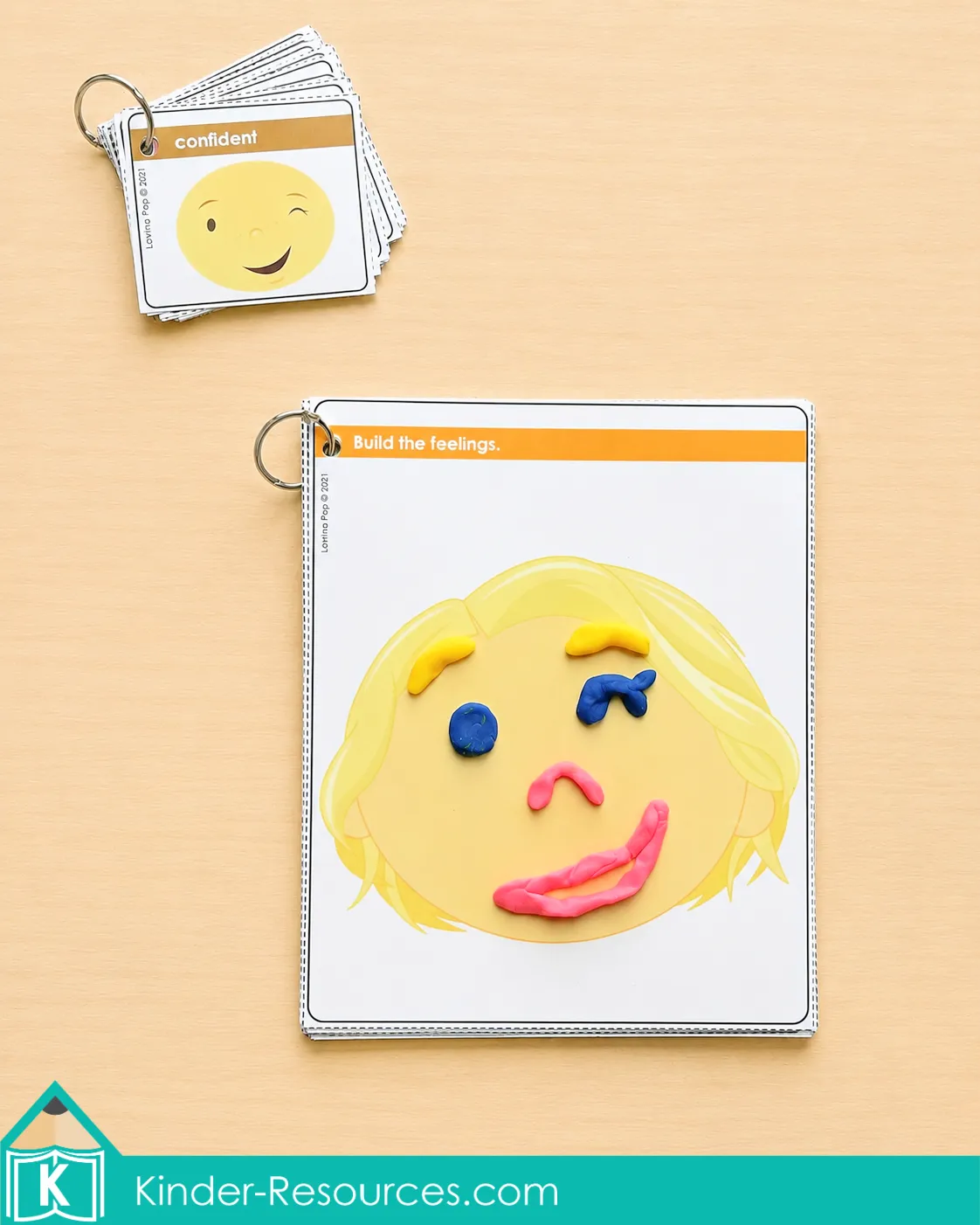
Build the Feelings Playdough Mats
Materials: Assorted colors of playdough
Children use playdough to create facial features that match different emotions. As they build each expression, they strengthen their hands and develop the vocabulary needed to identify and talk about feelings.
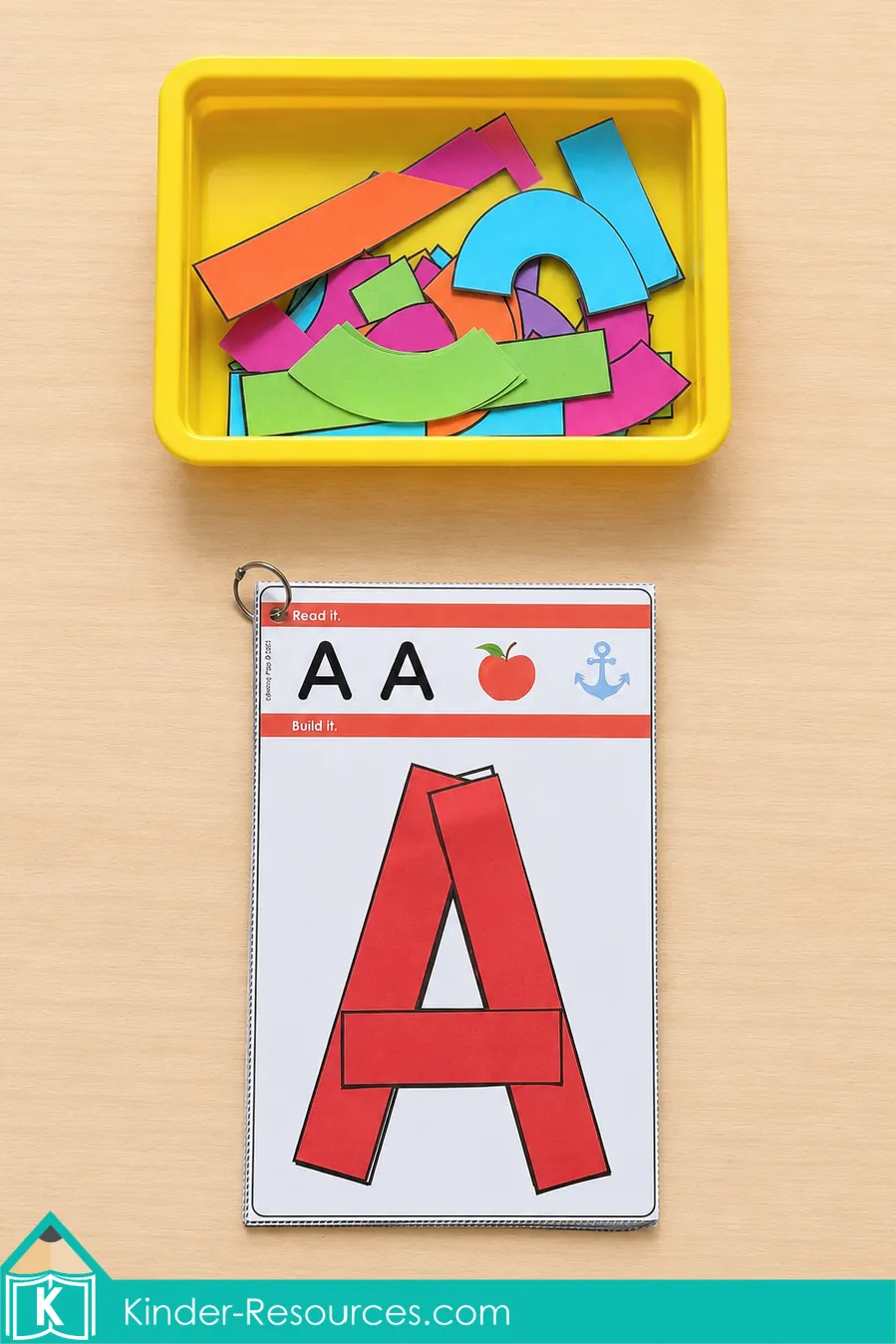
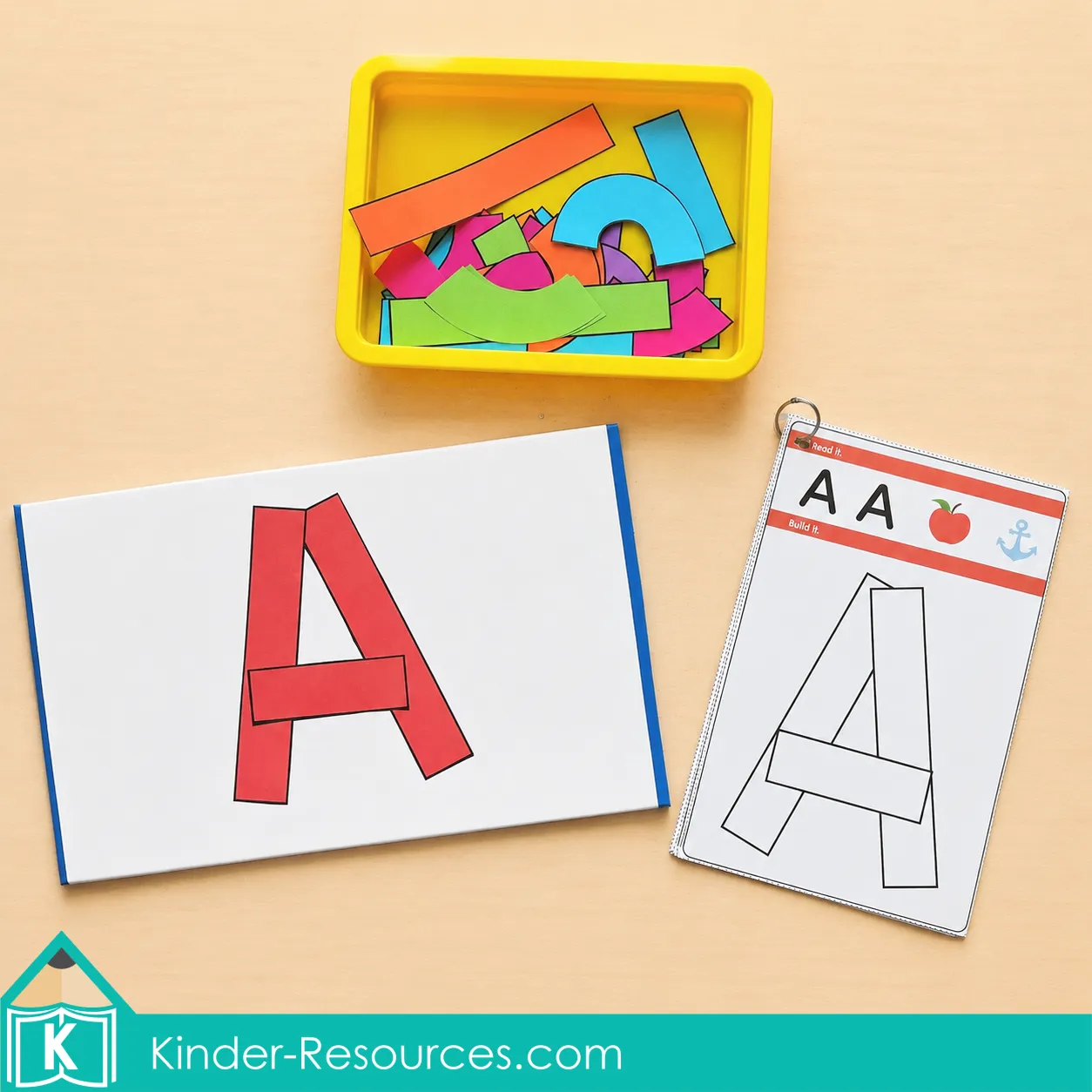
Uppercase Letter Building Cards
Materials: Printable building strips included in the resource
Children arrange straight and curved strips to build each uppercase letter. Constructing the letters helps children notice their shapes, lines, and spatial features before they begin writing them independently.
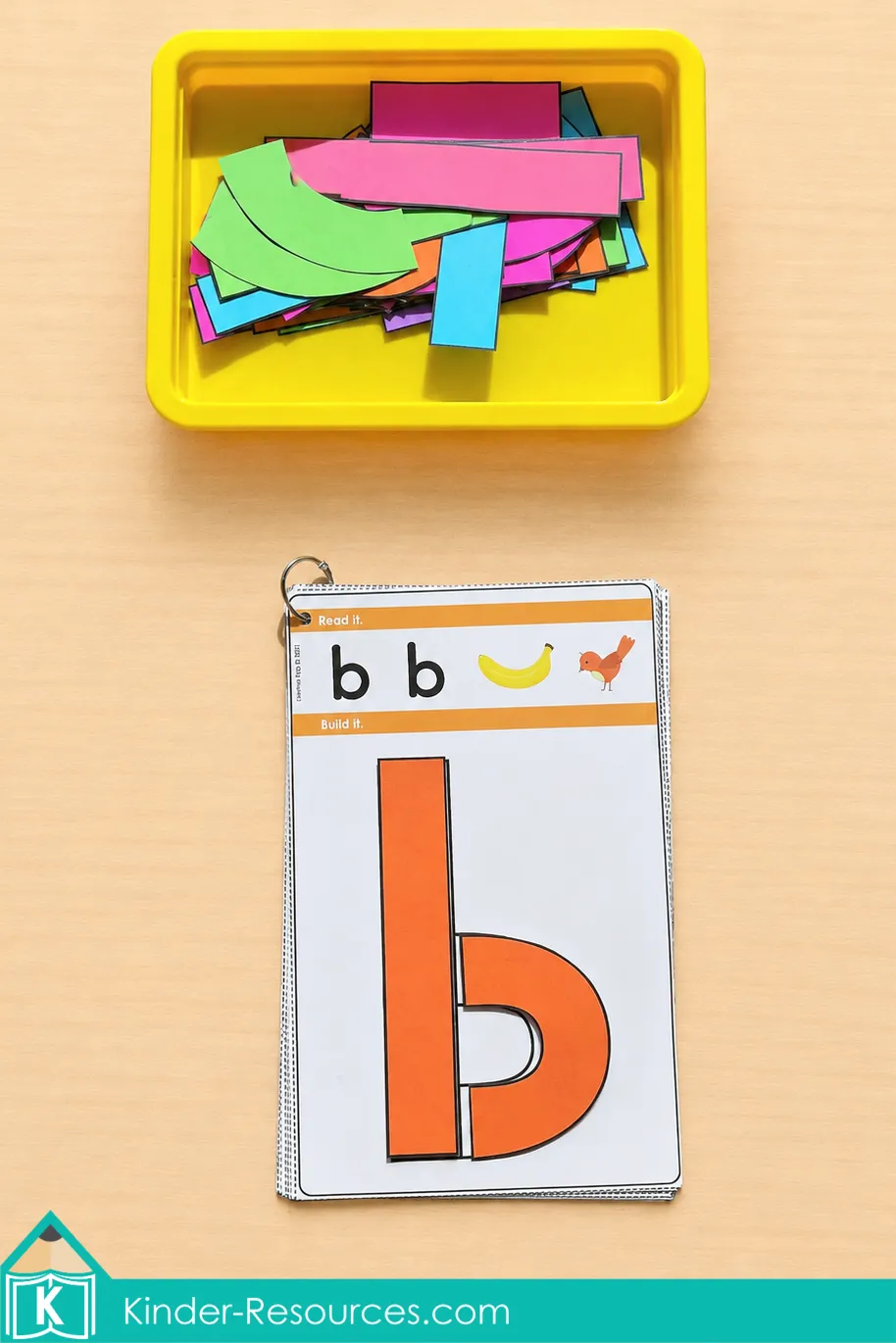
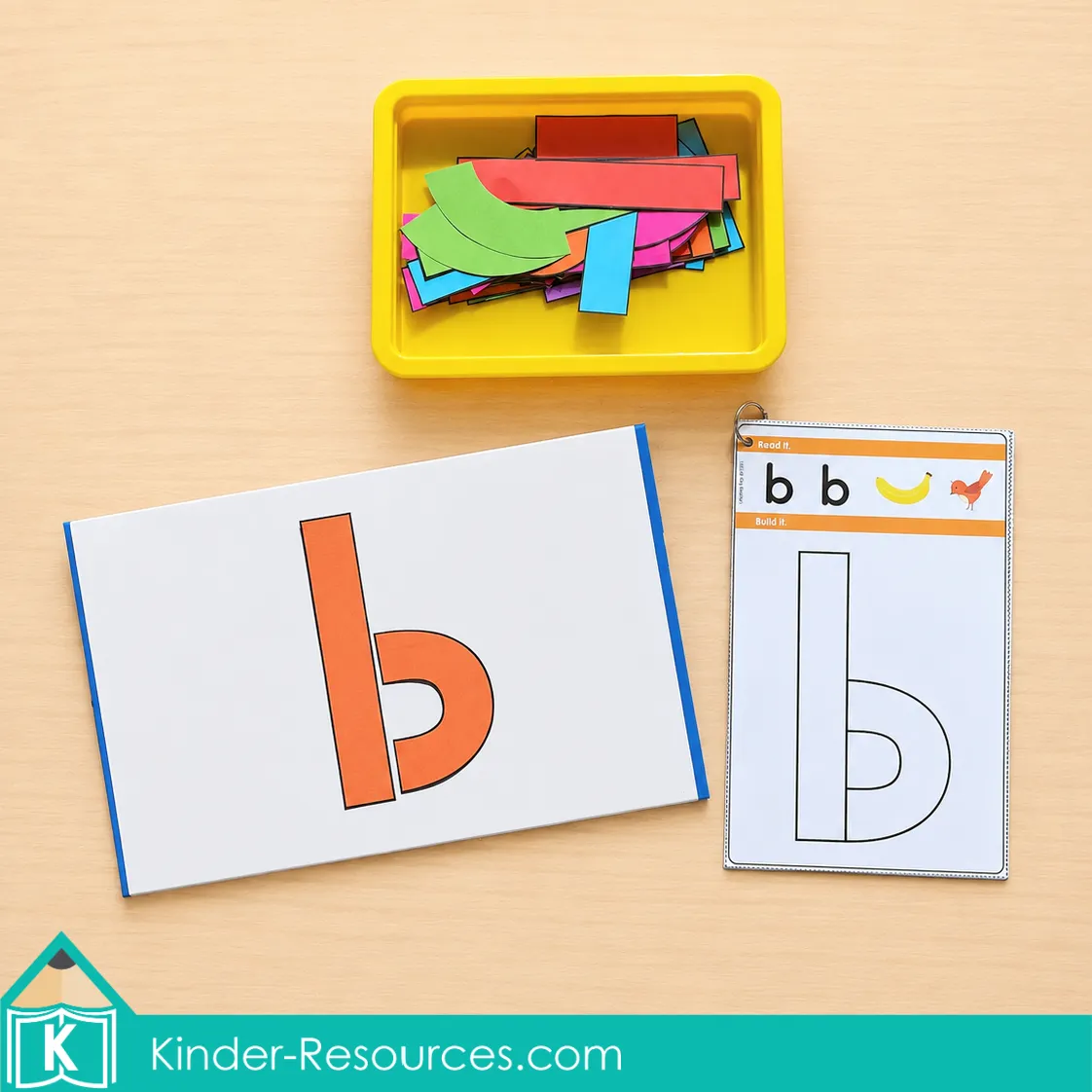
Lowercase Letter Building Cards
Materials: Printable building strips included in the resource
Children use the included strips to build lowercase letters. This hands on letter formation activity supports alphabet recognition, spatial awareness, and fine motor control.
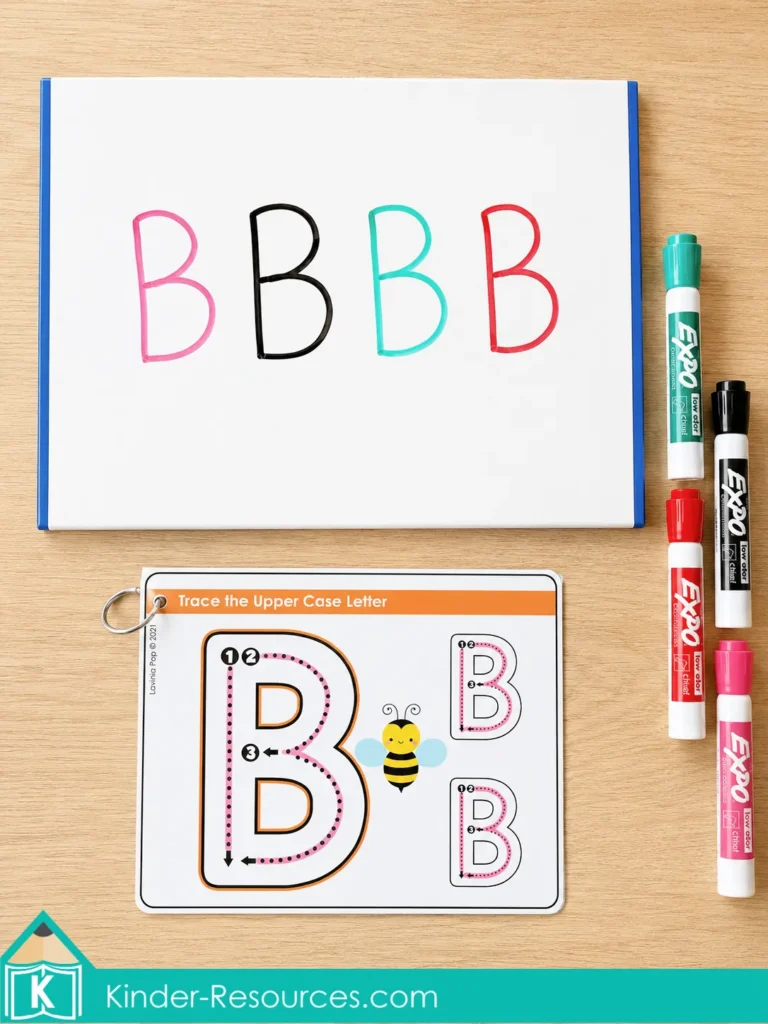
Trace the Uppercase Letter Cards
Materials: Dry erase markers
Children follow the dotted lines to trace each uppercase letter. Repeated tracing develops pencil control, reinforces correct letter formation, and gives children extra handwriting practice without using a worksheet.
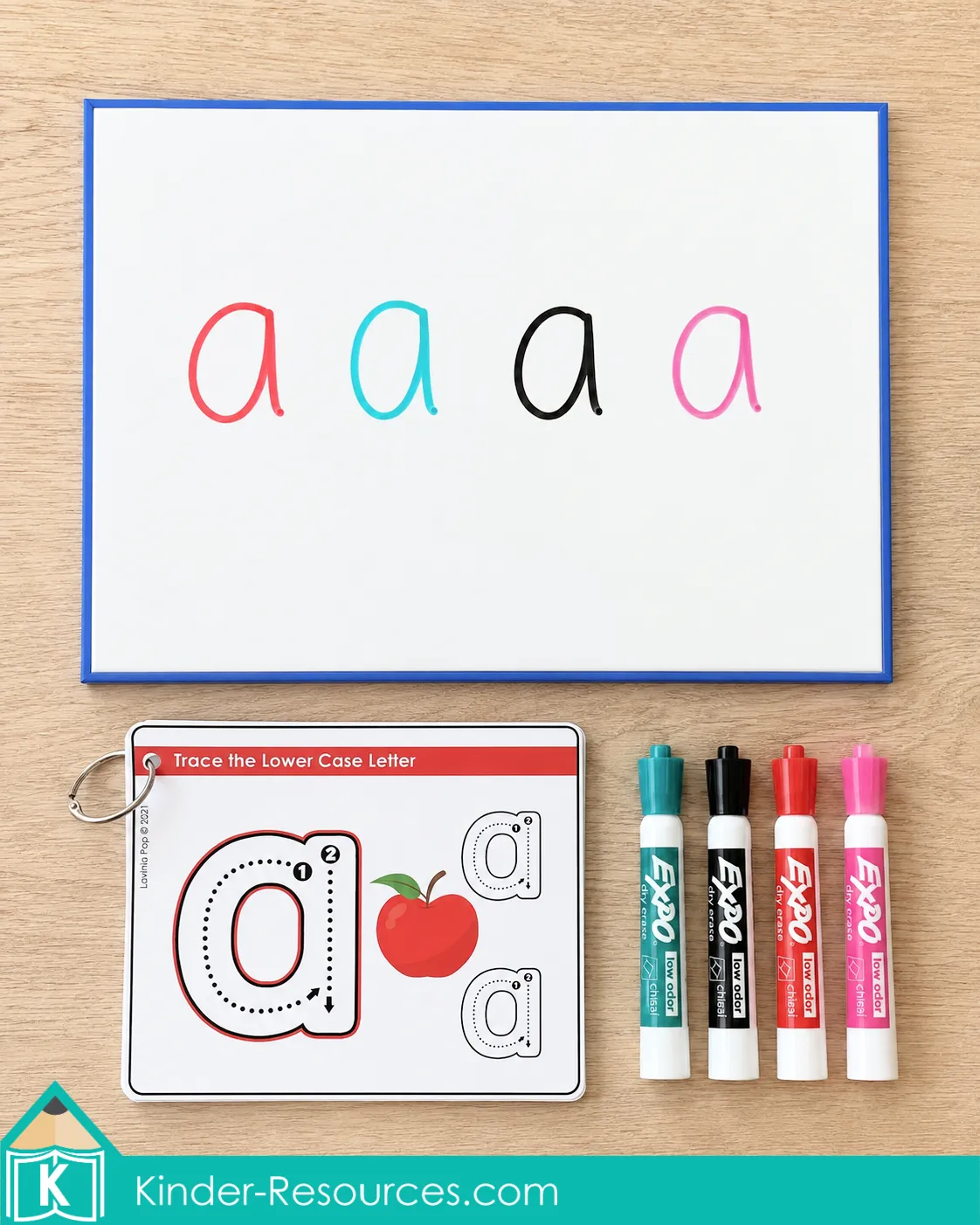
Trace the Lowercase Letter Cards
Materials: Dry erase markers
Children trace each lowercase letter from the starting point. The cards can be wiped clean and reused during morning work, literacy centers, or focused handwriting practice.
Alphabet Reading Fluency Strips
Materials: No additional materials
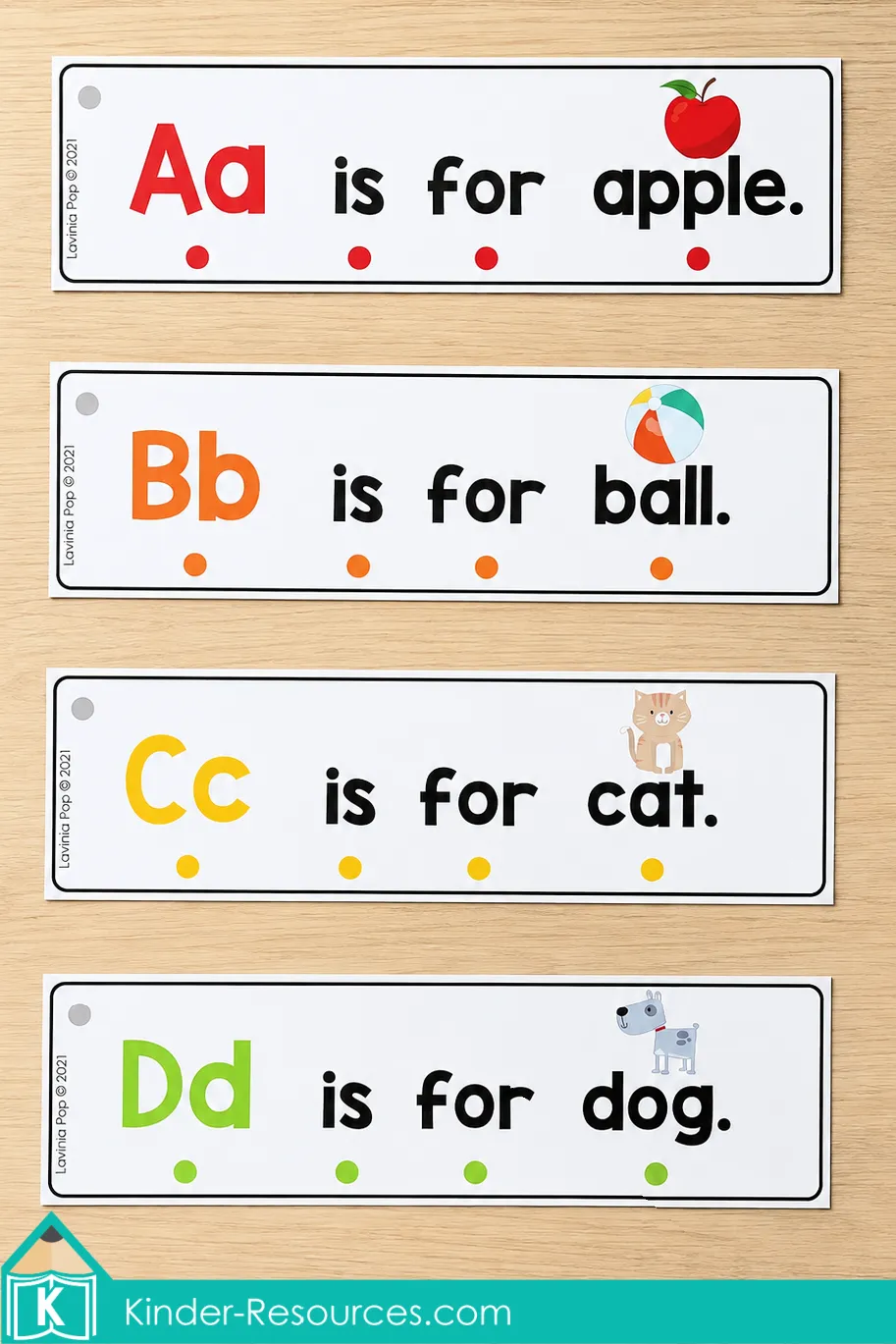
Children read predictable sentences such as “A is for apple.” The repeated sentence pattern supports early reading confidence while helping children connect each letter with its most common sound.
Beginning Sound Match Clip Cards
Materials: Clothespins
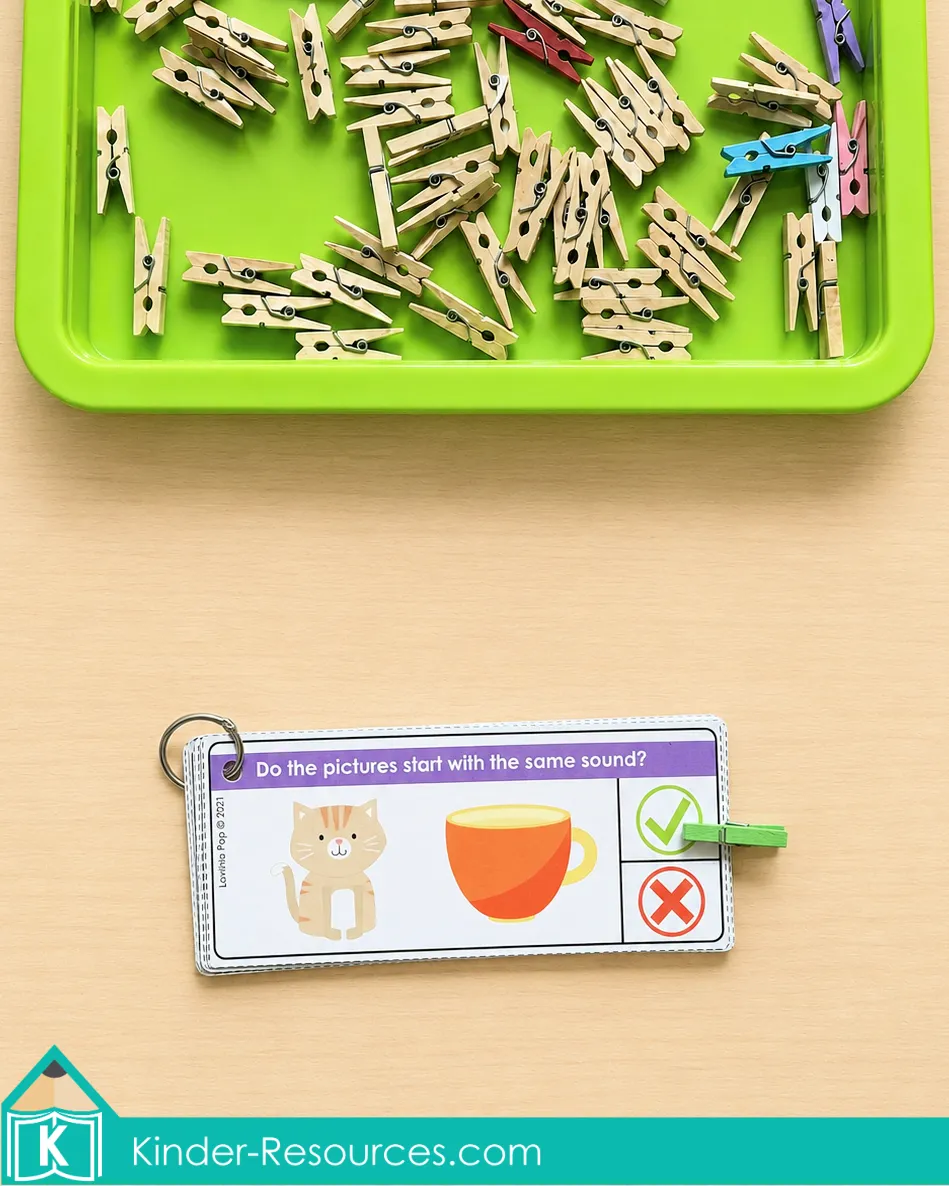
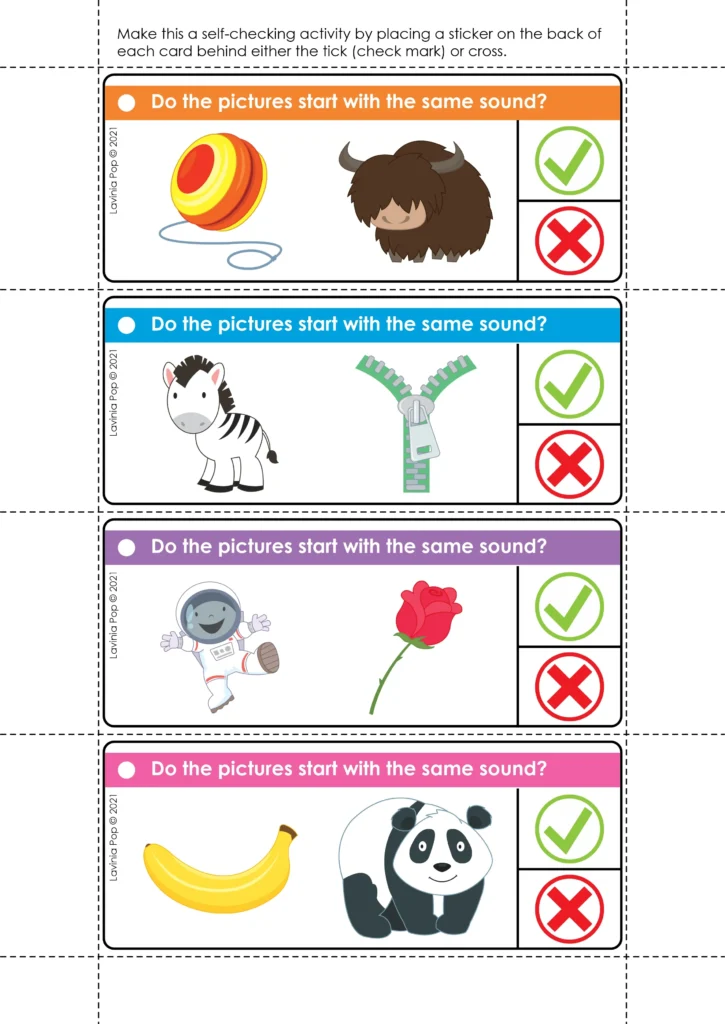
Children name the two pictures, listen to their beginning sounds, and clip the check mark or cross to show whether the sounds match. The activity combines phonemic awareness practice with fine motor strengthening.
Rhyming Match Clip Cards
Materials: Clothespins
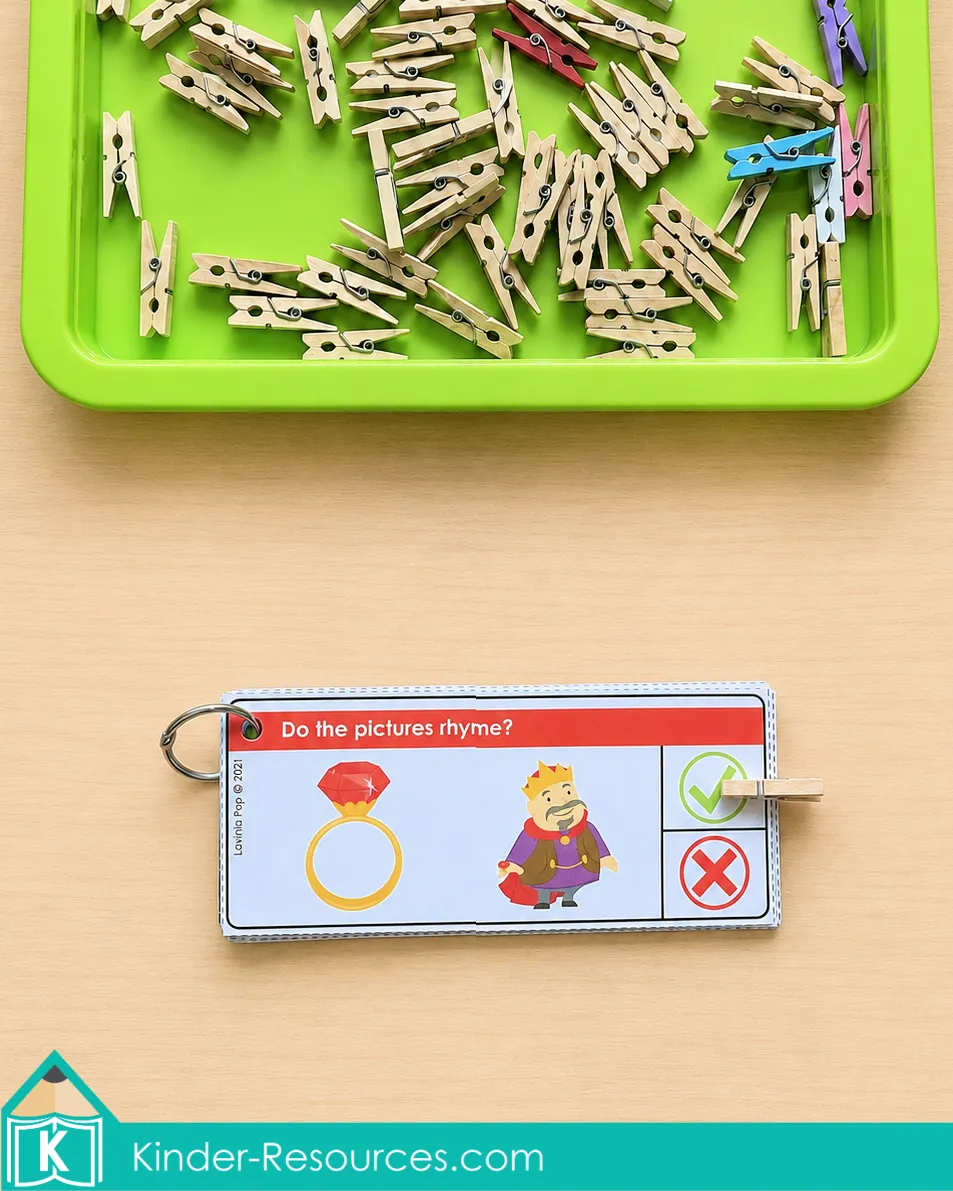
Children name the pictures and listen to determine whether the words rhyme. They then clip the correct symbol, giving them an engaging way to practice hearing and comparing ending sound patterns.
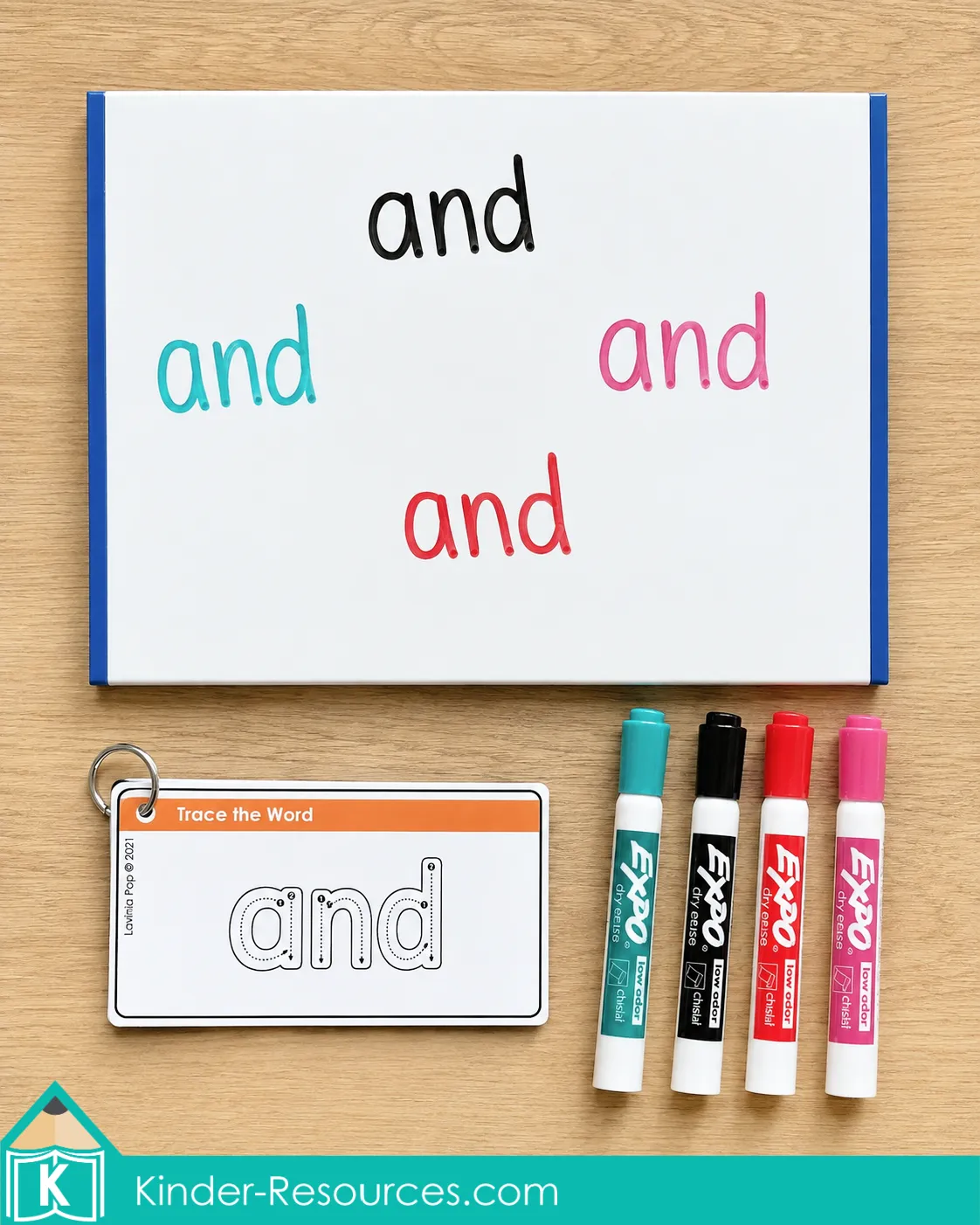
Trace the Sight Word Cards
Materials: Dry erase markers
Children trace common high frequency words and read each word aloud. Reusing the cards helps build word recognition, pencil control, and confidence during independent word work.
Visual Thinking, Directionality and Color Activities
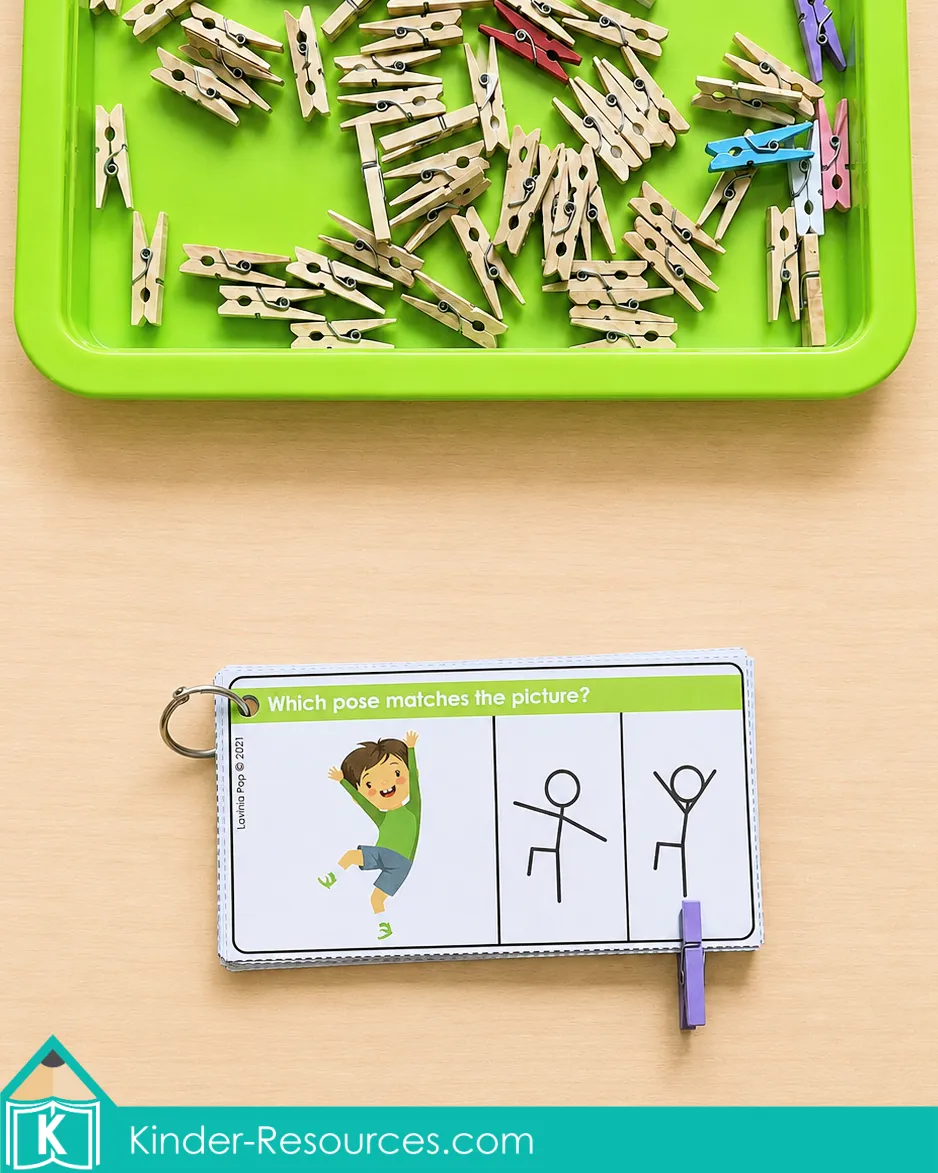
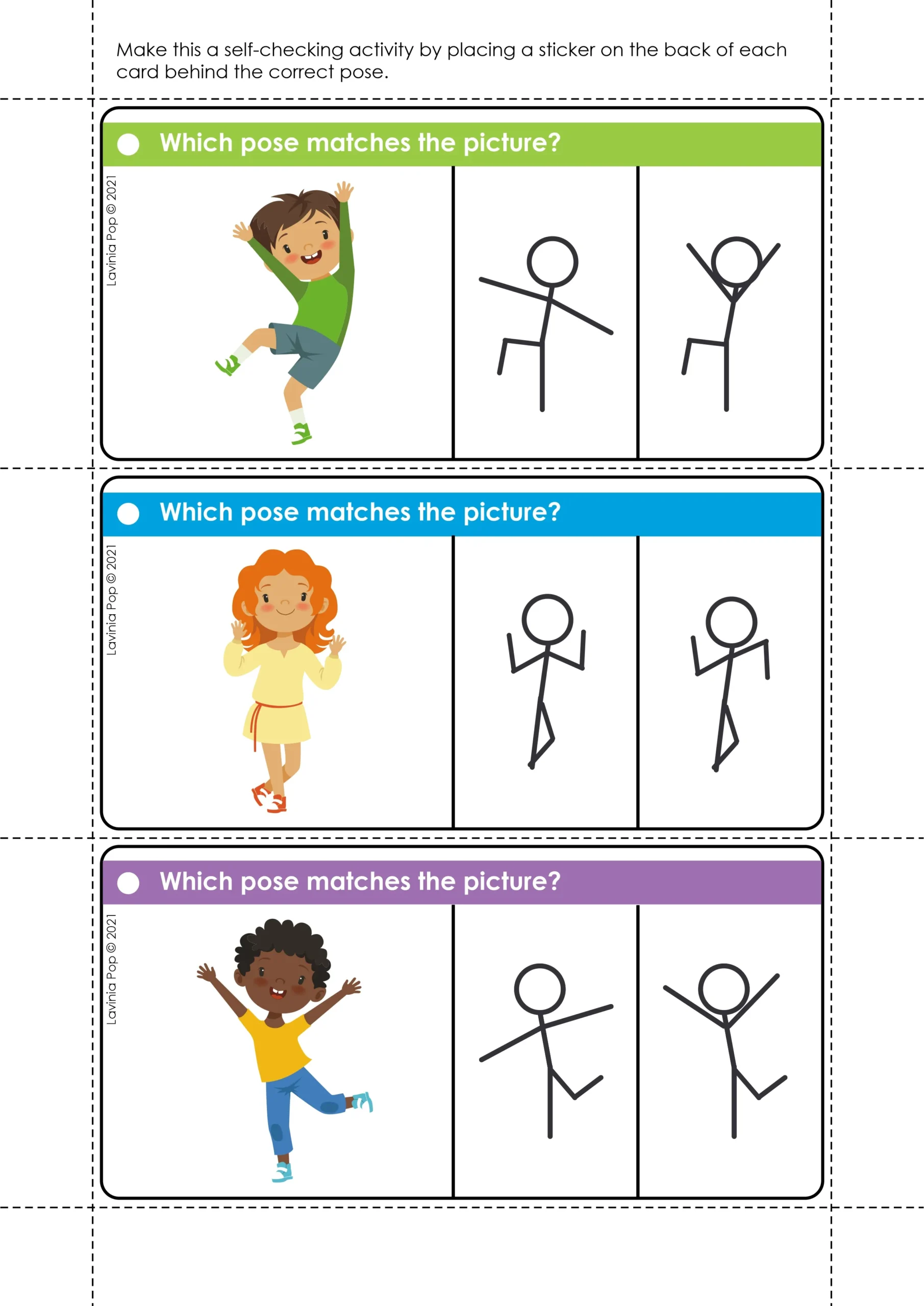
Visual Discrimination: Which Pose Matches?
Materials: Clothespins
Children study the child’s position and clip the stick figure showing the same pose. Comparing the small visual details develops careful observation, visual discrimination, and attention.
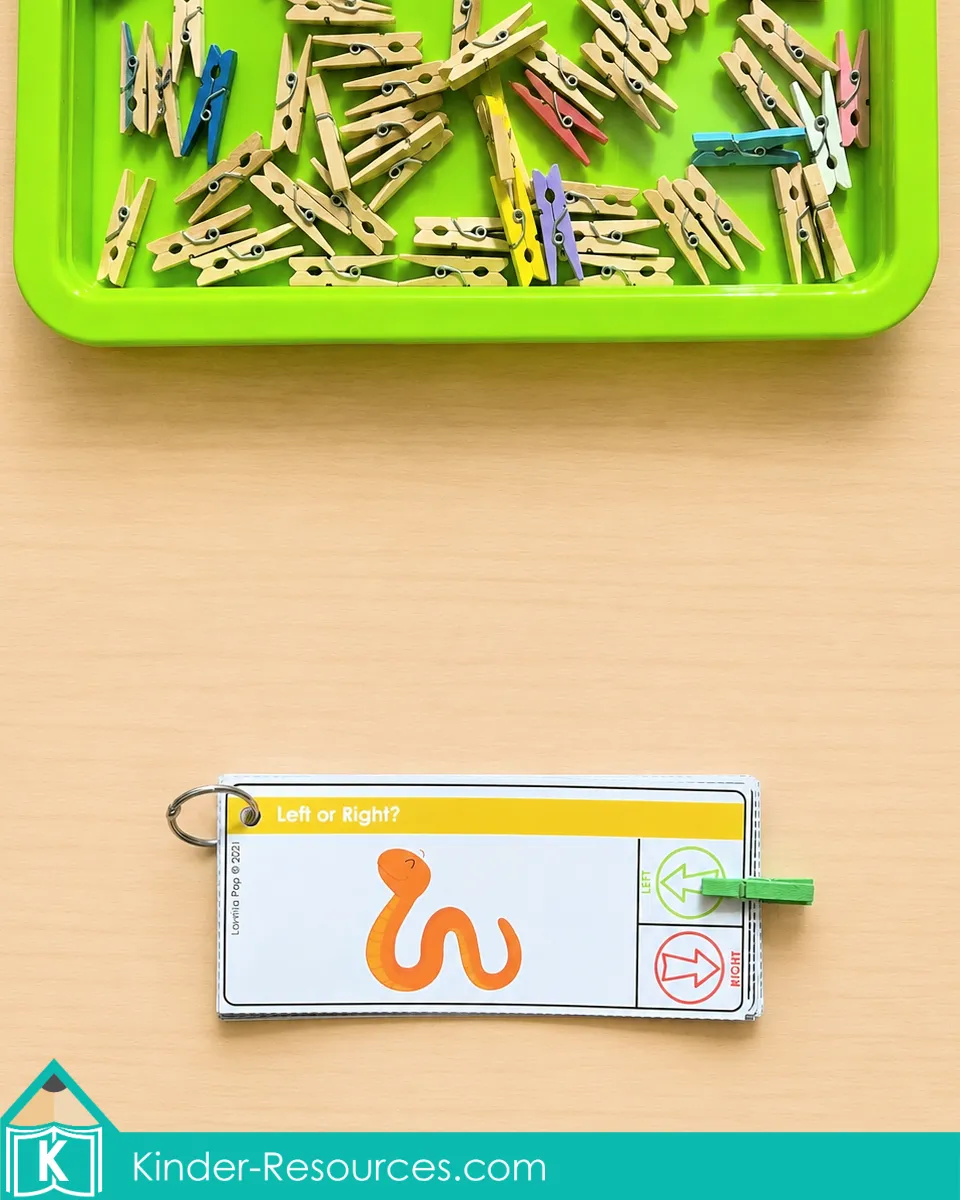
Left or Right? Clip Cards
Materials: Clothespins
Children look at the direction in which each object is facing and clip the matching arrow. This provides repeated practice with directionality, left and right vocabulary, and spatial awareness.
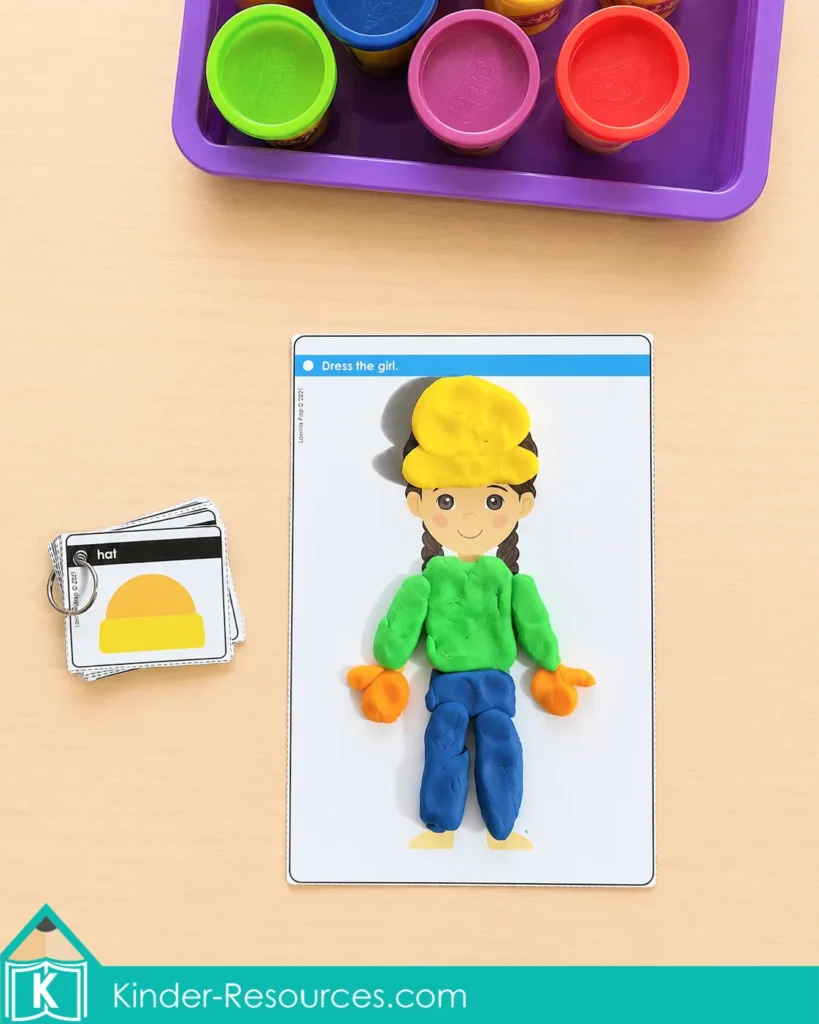
Playdough Color Match: Dress the Child
Materials: Assorted colors of playdough
Children choose a color card and use matching playdough to make clothing for the child. The open ended task develops color recognition, descriptive vocabulary, creativity, and hand strength.
Math and Number Sense Kindergarten Morning Bins
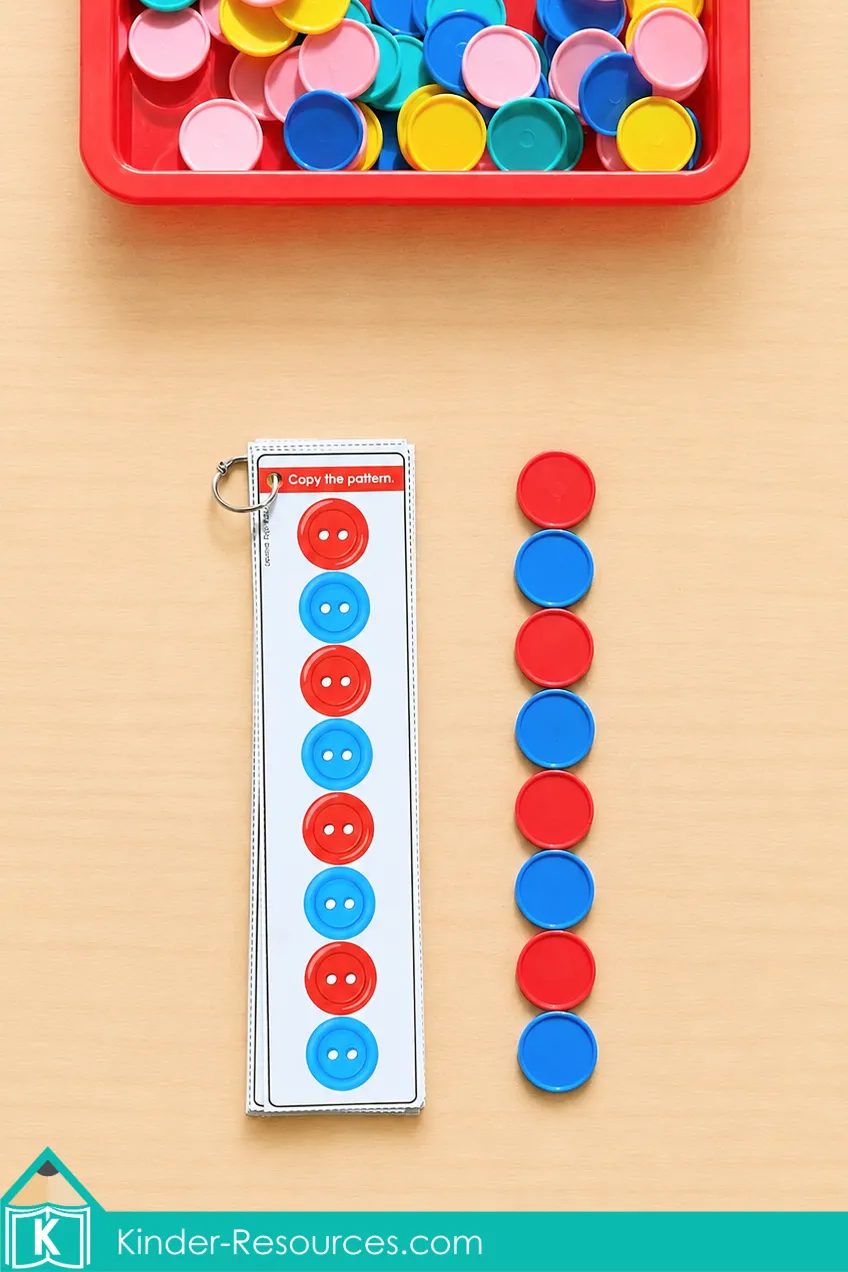
Copy the Pattern
Materials: Colored buttons or other small manipulatives
Children recreate the arrangement shown on each pattern card. They practice matching colors and positions while developing sequencing, visual memory, and one to one correspondence.
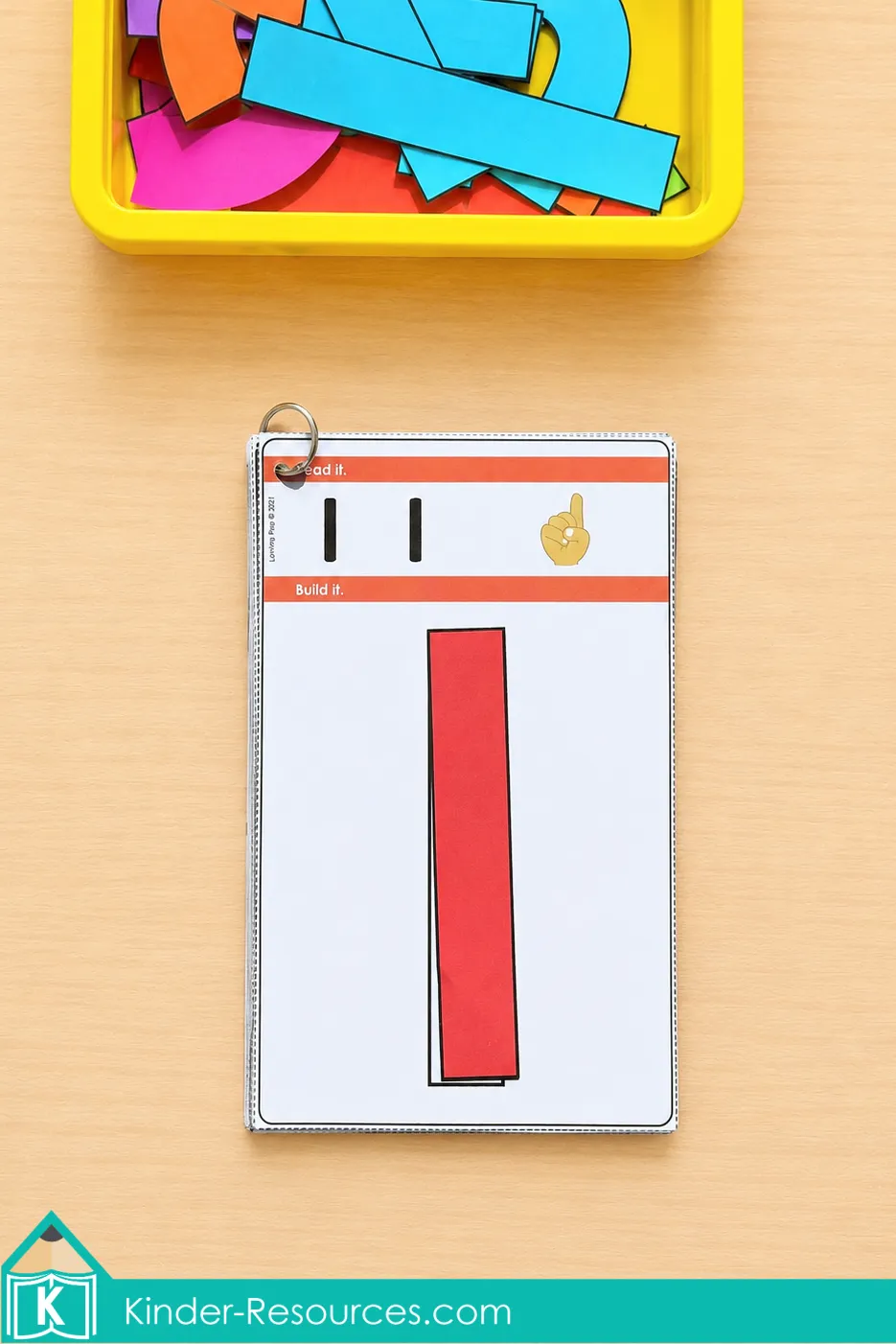
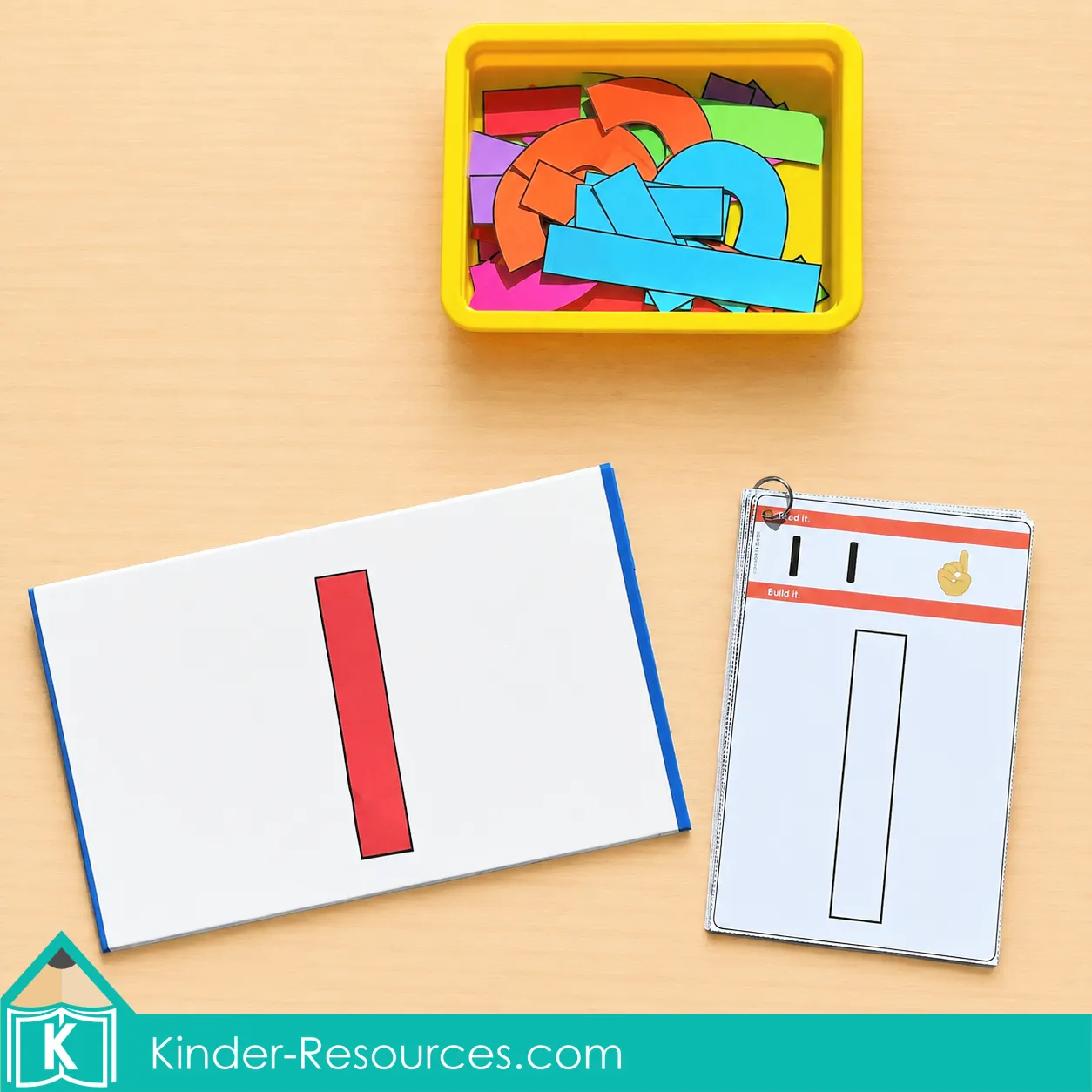
Number Building Cards
Materials: Printable building strips included in the resource
Children arrange straight and curved strips to form each numeral. Building numbers before writing them helps children recognize numeral shapes and understand how the different parts fit together.
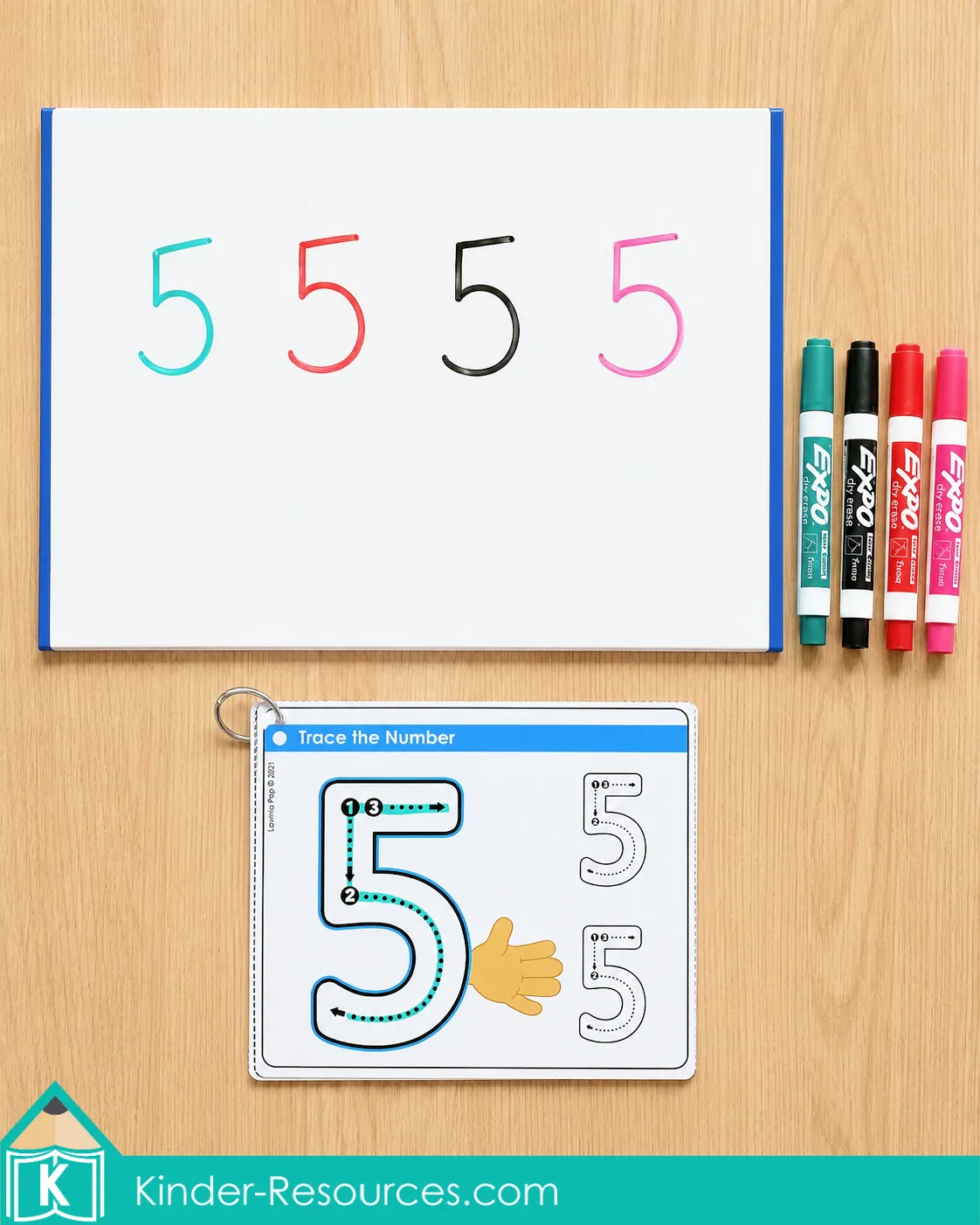
Trace the Number Cards
Materials: Dry erase markers
Children trace each numeral by following the dotted formation guide. The reusable cards strengthen pencil control while reinforcing number recognition and correct numeral formation.
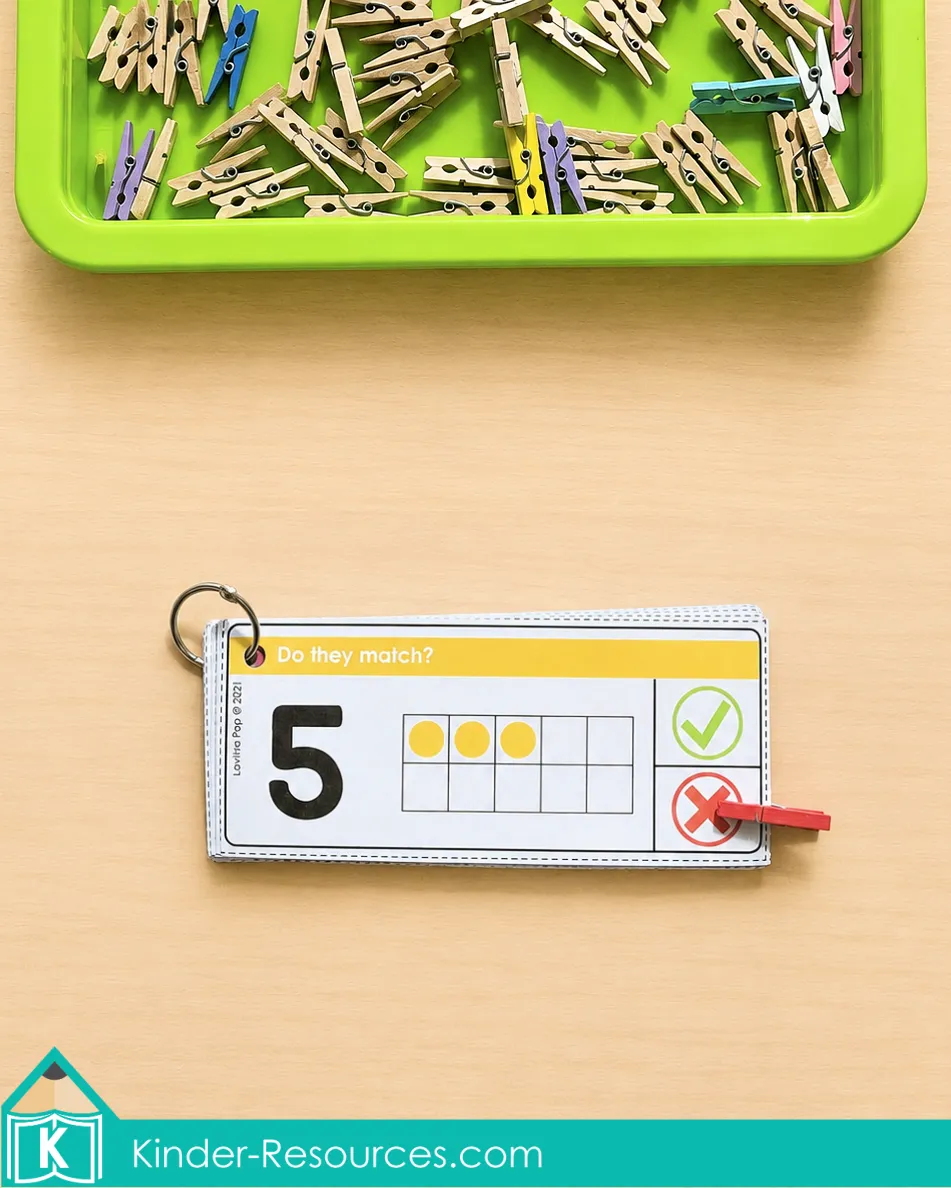
Ten Frame and Number Match Clip Cards
Materials: Clothespins
Children compare the numeral with the quantity shown on the ten frame and clip the check mark or cross. This strengthens counting, subitizing, and the connection between numerals and quantities.
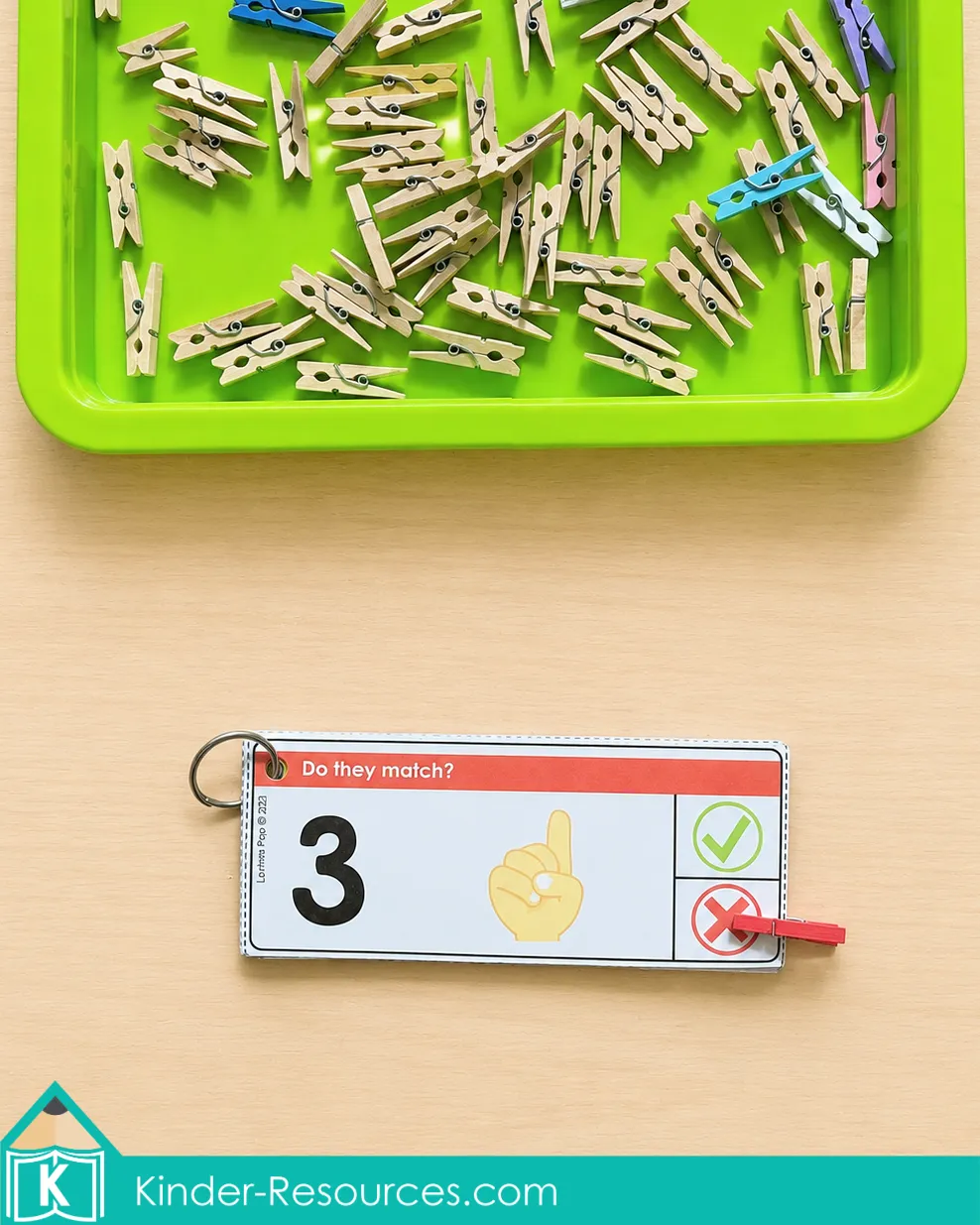
Counting Fingers and Number Match Clip Cards
Materials: Clothespins
Children count the raised fingers and decide whether the quantity matches the numeral. The cards help children connect concrete number representations with written symbols.
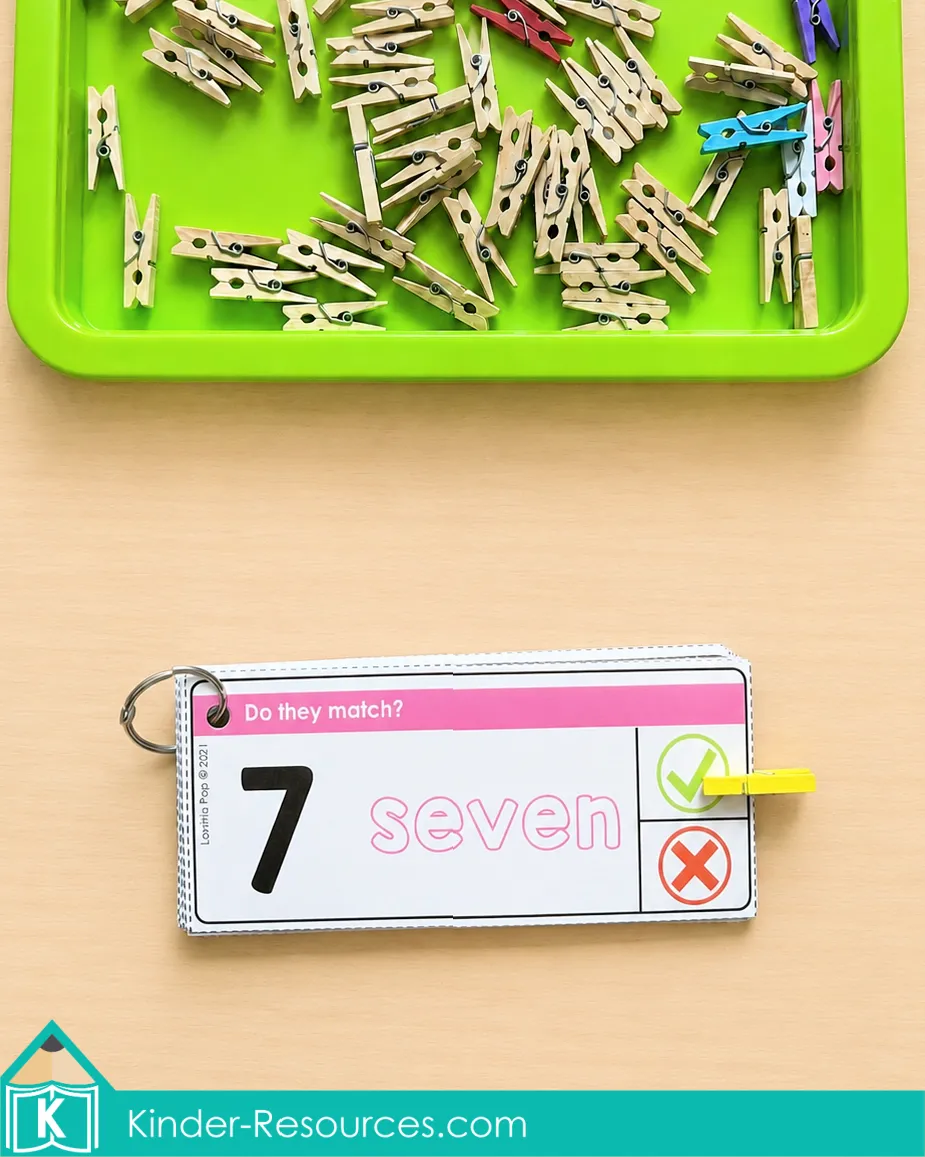
Number Word and Numeral Match Clip Cards
Materials: Clothespins
Children read the number word, compare it with the numeral, and clip whether the pair matches. This activity connects early reading with number recognition and mathematical vocabulary.
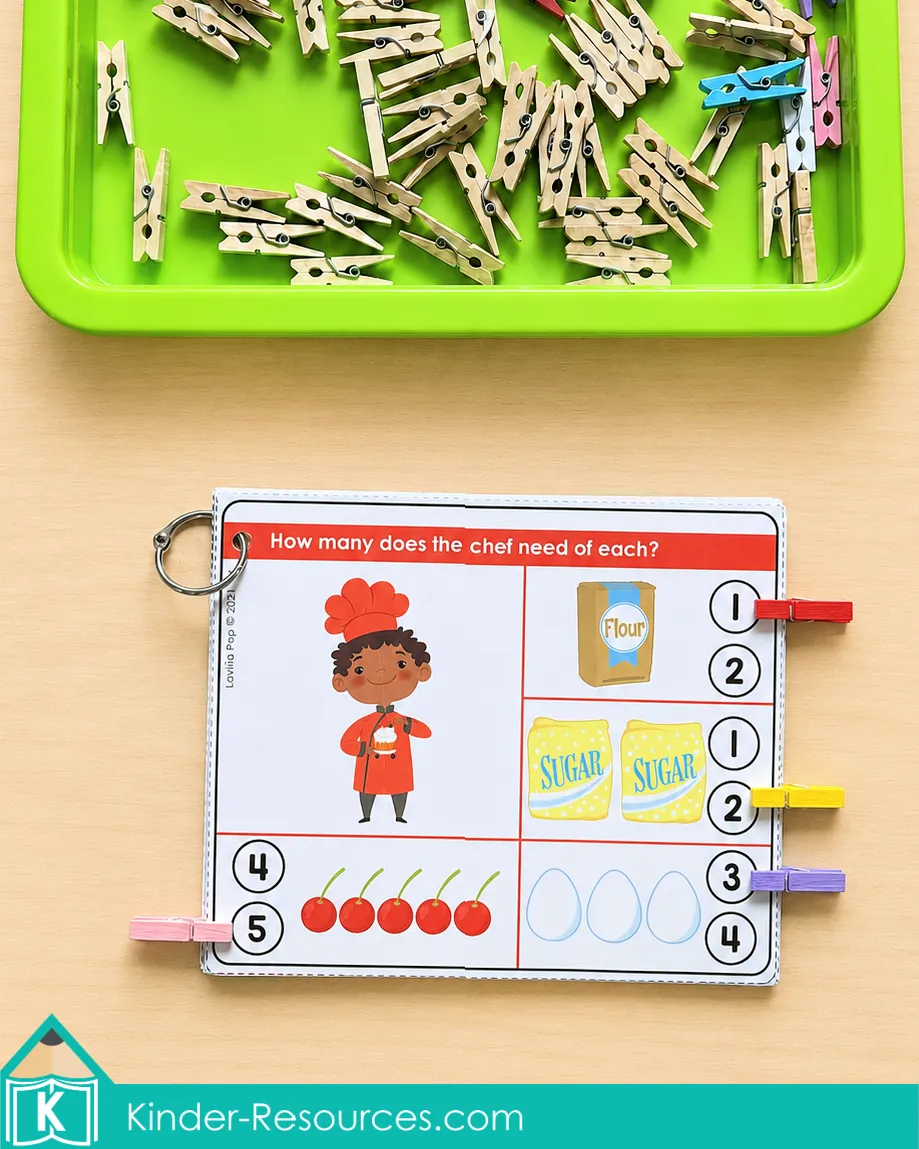
Chef Counting Clip Cards
Materials: Clothespins
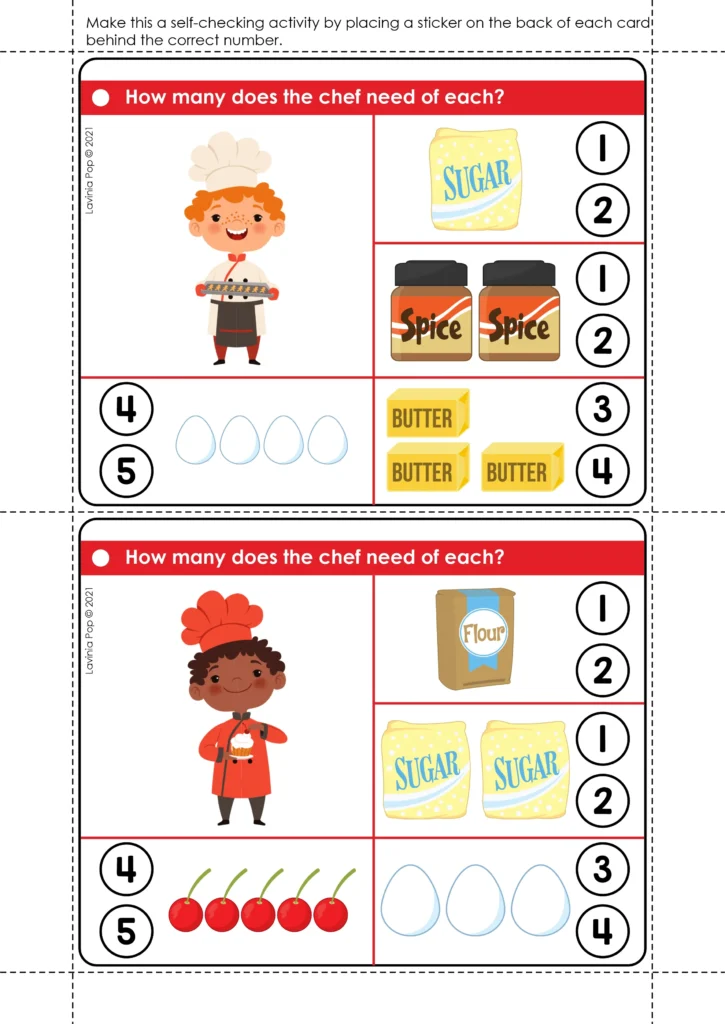
Children count the food items and clip the numeral showing how many the chef needs. The playful theme supports one to one correspondence, cardinality, and accurate counting.
Shape Match Clip Cards
Materials: Clothespins
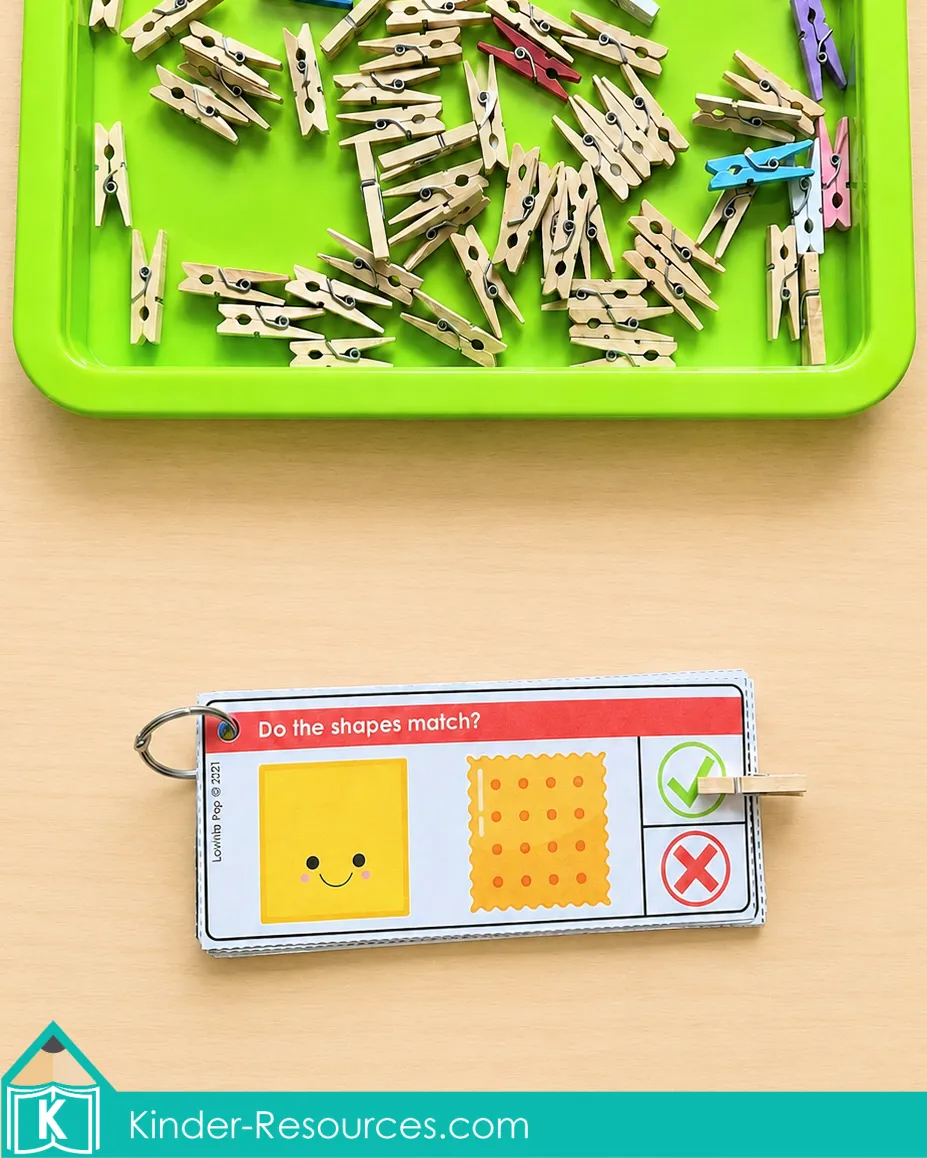
Children compare each two dimensional shape with a familiar object and decide whether they match. This builds shape recognition, geometry vocabulary, and the ability to identify shapes in everyday surroundings.
Purchase the Kindergarten Morning Bins Set 2
If you would like all 21 activities, photo instruction cards, and printable pieces, you can purchase the complete 293 page Kindergarten Morning Bins Set 2 resource from either of my online stores. Click the store button you prefer below.

More Kindergarten Morning Bins and Centers
Happy Teaching! 😊