
These Thanksgiving No Prep Preschool Worksheets & Activities bring seasonal fun to letter practice, counting, cutting, tracing, and early reading. With turkeys, pumpkins, harvest foods, and parade pictures throughout the packet, there are plenty of activities to choose from for your November learning.
Use the pages with Preschool, Pre-K, Transitional Kindergarten, and Kindergarten children, selecting activities that match their skills and interests. You can introduce a page during a small group, add familiar tasks to morning work, or choose a few activities for learning at home.
Download FREE Thanksgiving Preschool Worksheets
Would you like to try some activities with your children? Download the free sample pages below for a closer look at the packet.
Print the pages you would like to use, gather the supplies shown in the directions, and introduce one activity at a time.


Fine Motor and Pre-Writing Activities
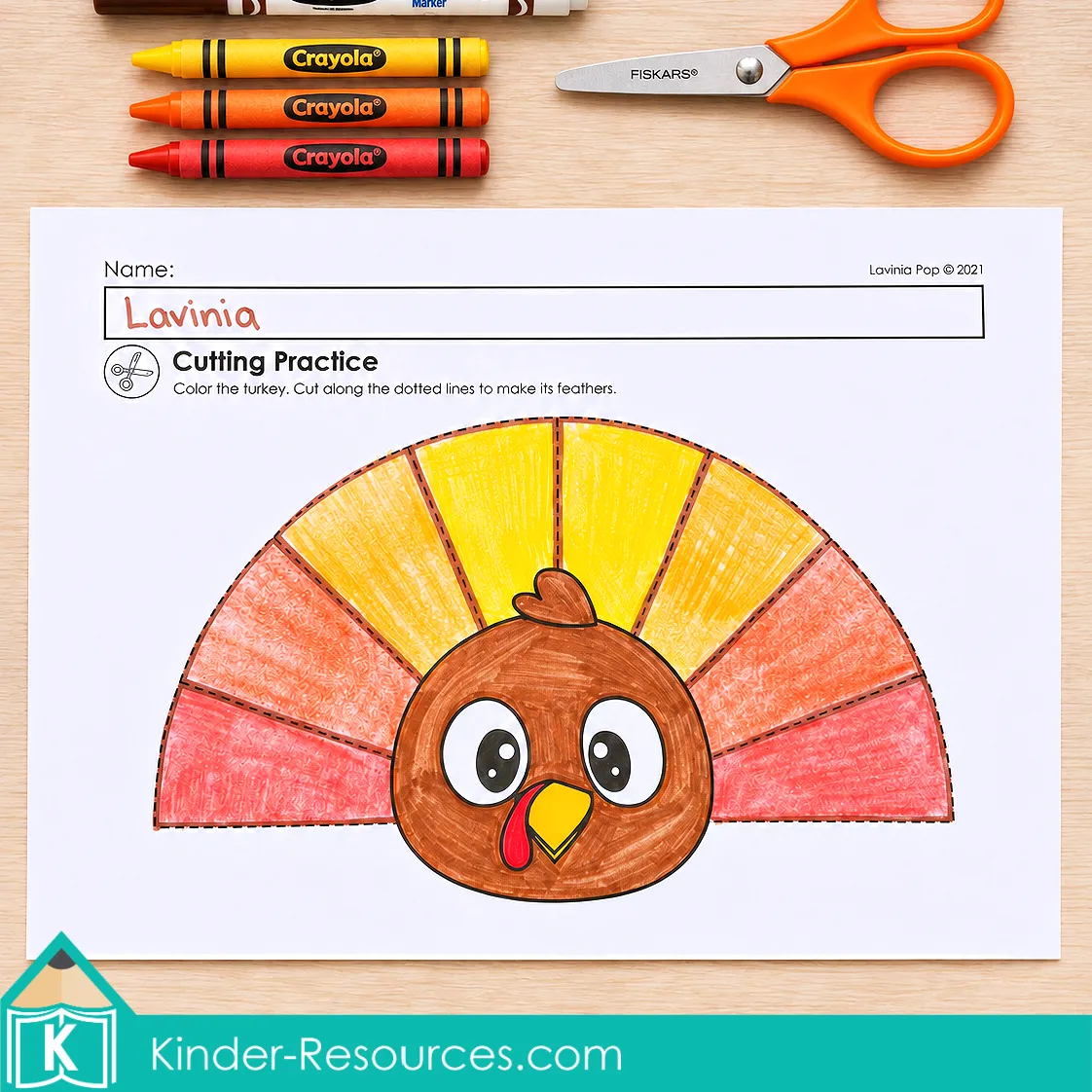
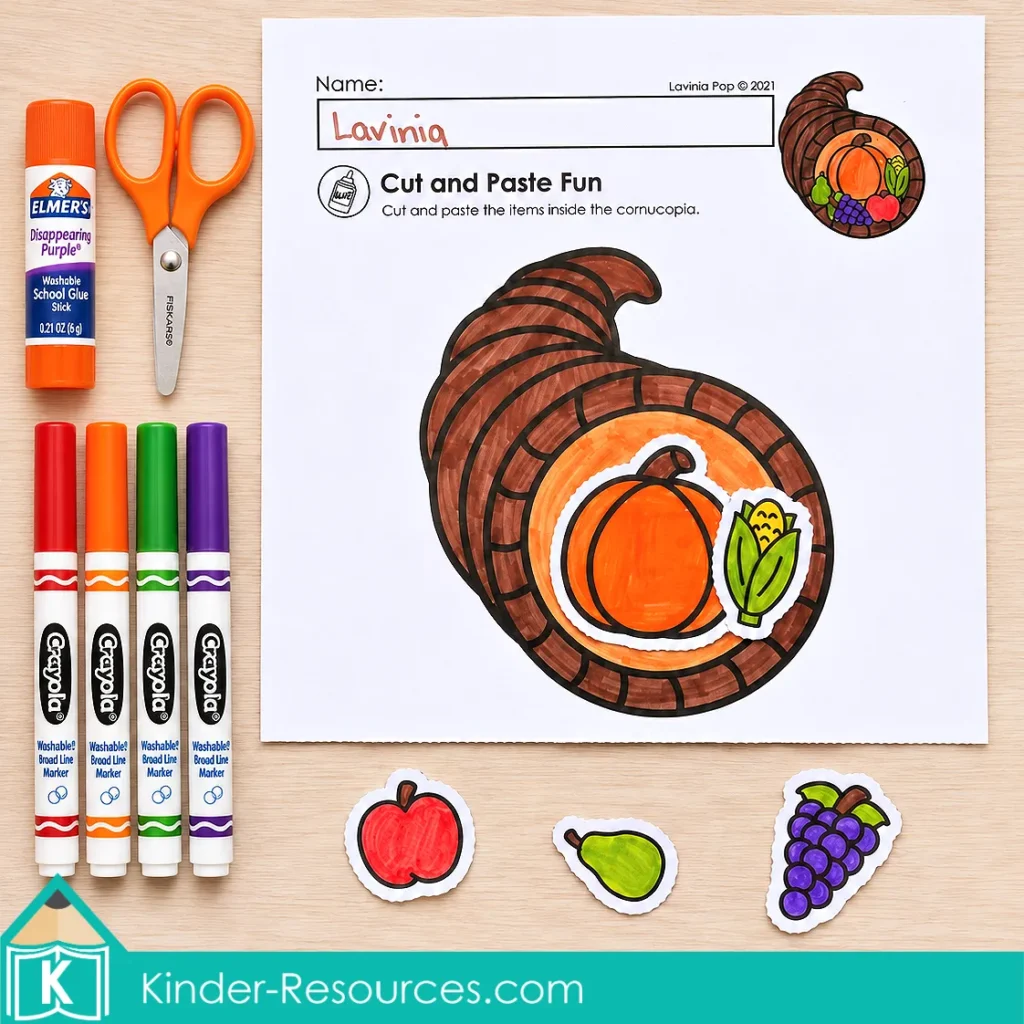
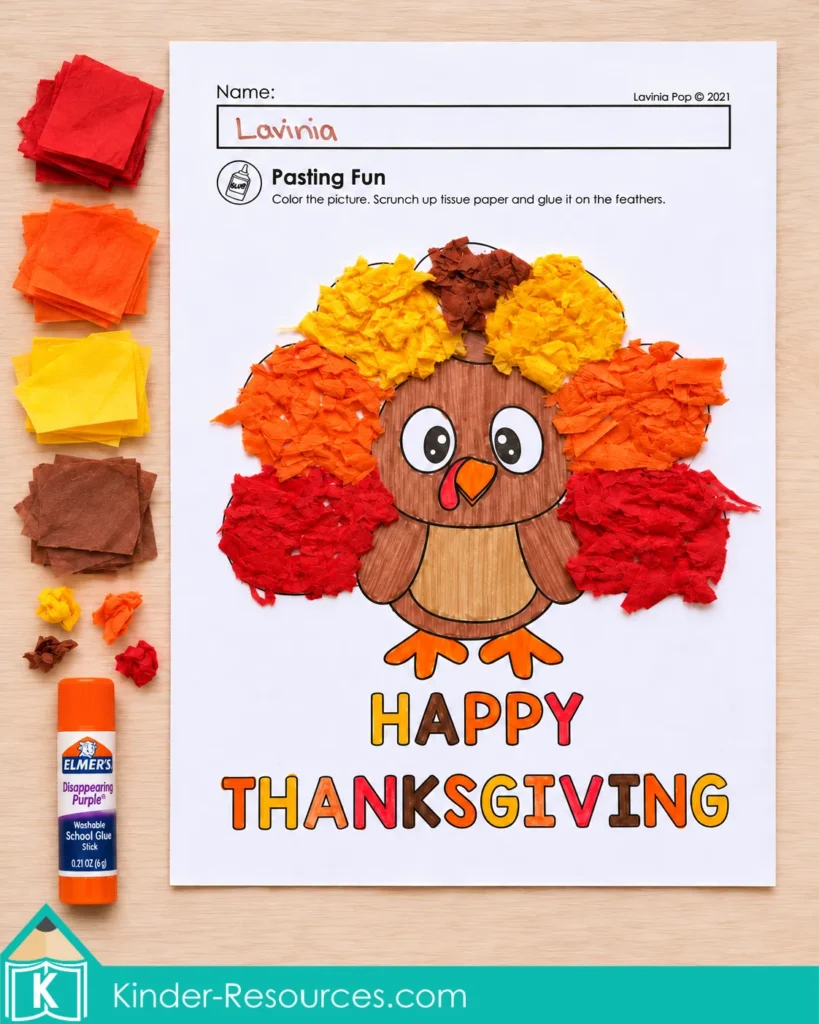
There are several ways to get little hands working with these Thanksgiving activities. Children cut along the dotted lines on the turkey’s feathers, arrange fruit and vegetable cutouts inside a cornucopia, and scrunch tissue paper to decorate a turkey. Each task provides a different opportunity to practice controlling scissors, positioning pieces, and using glue.
Encourage children to arrange their cutouts before gluing. For the tissue paper turkey, demonstrate how to scrunch a small square between their fingers before pressing it onto the page.
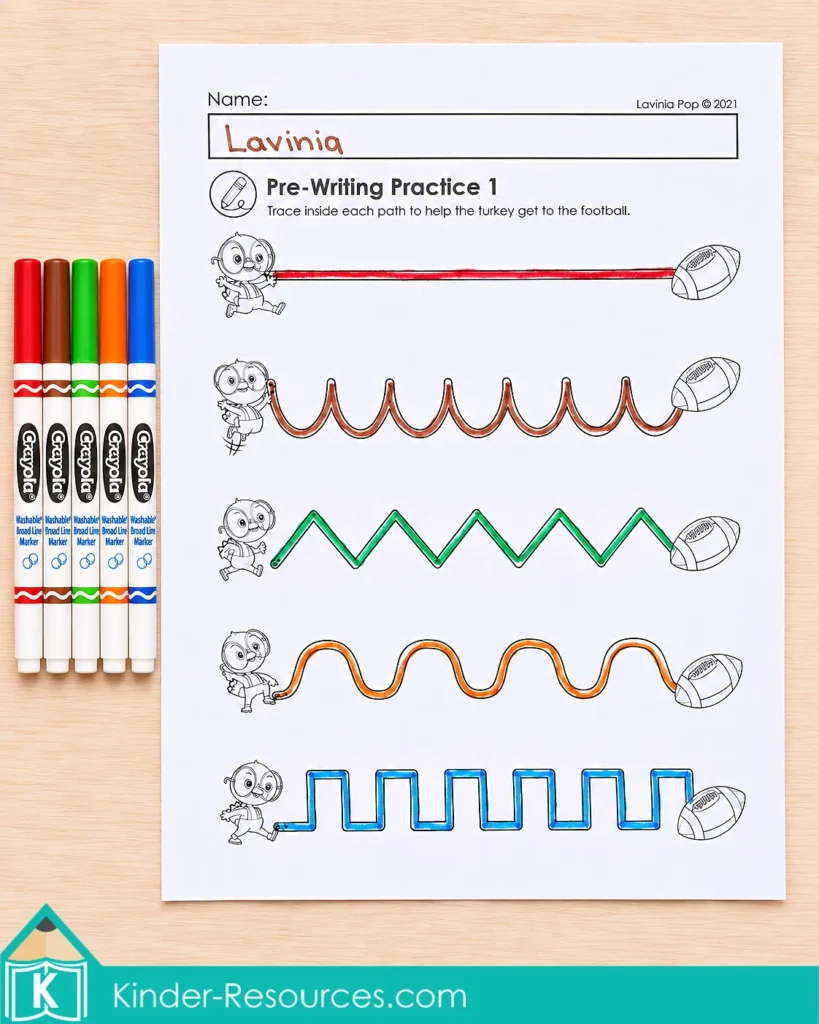
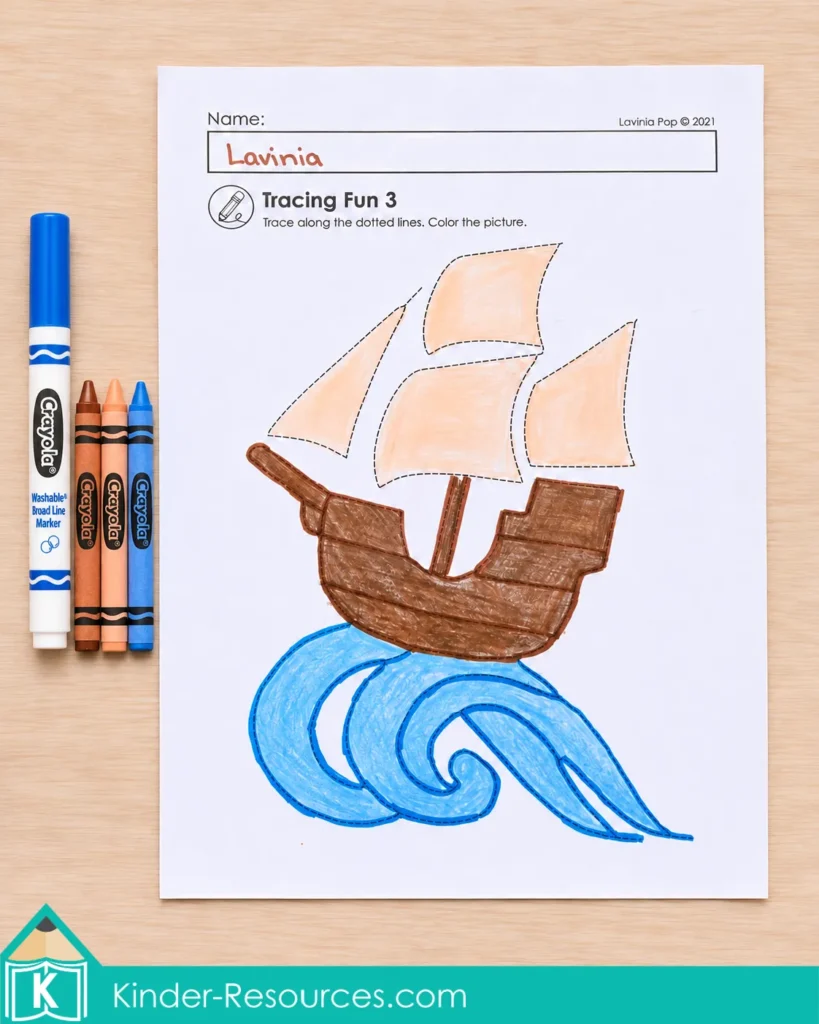
The tracing pages offer practice with straight lines, curves, zigzags, and changes of direction. Children help the turkeys reach their footballs by tracing inside each path, then explore dotted outlines on the sailing ship picture. Before using a pencil or crayon, invite them to follow a path with their finger and notice where it turns.
Alphabet and Name Activities
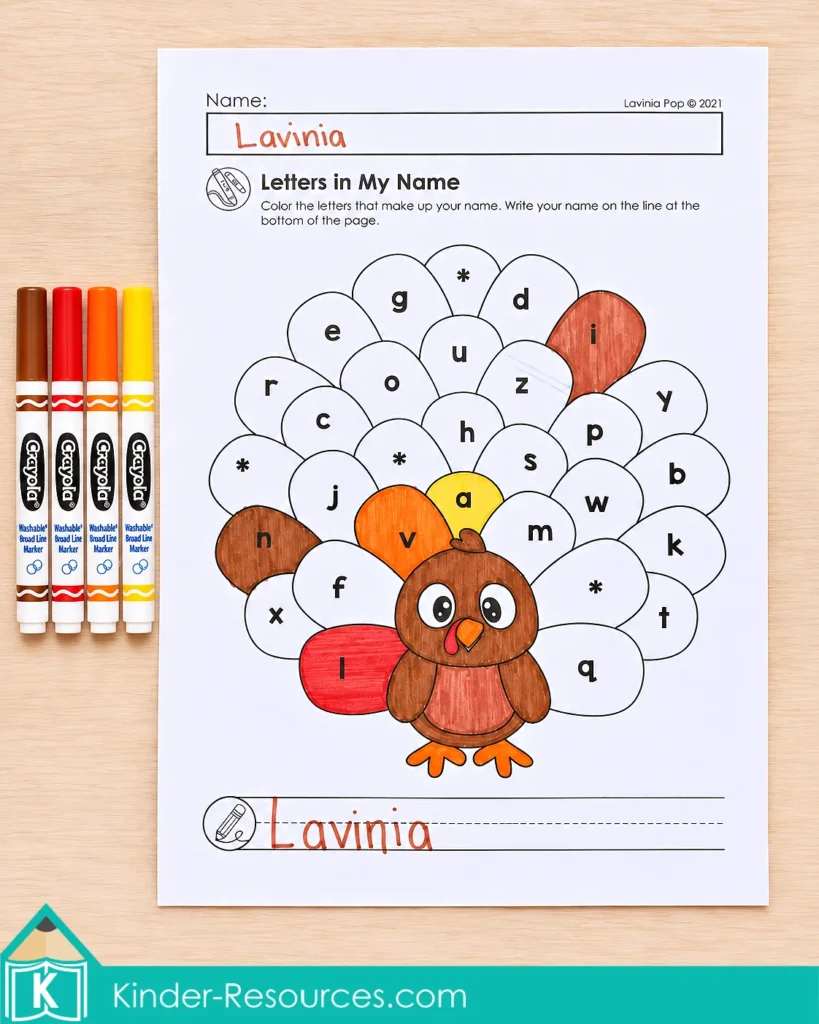
A child’s name is a meaningful place to begin exploring letters. On the turkey name page, children find and color the letters in their name, then write their name on the line below. Provide a name card for children who need a model.
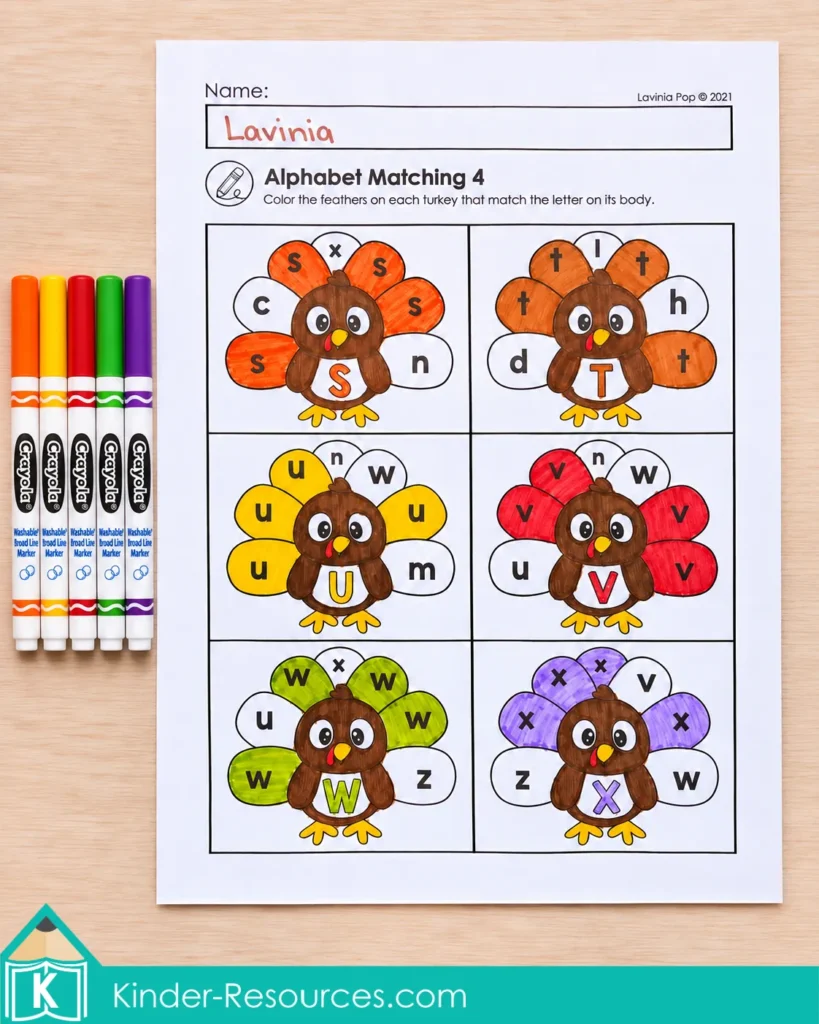
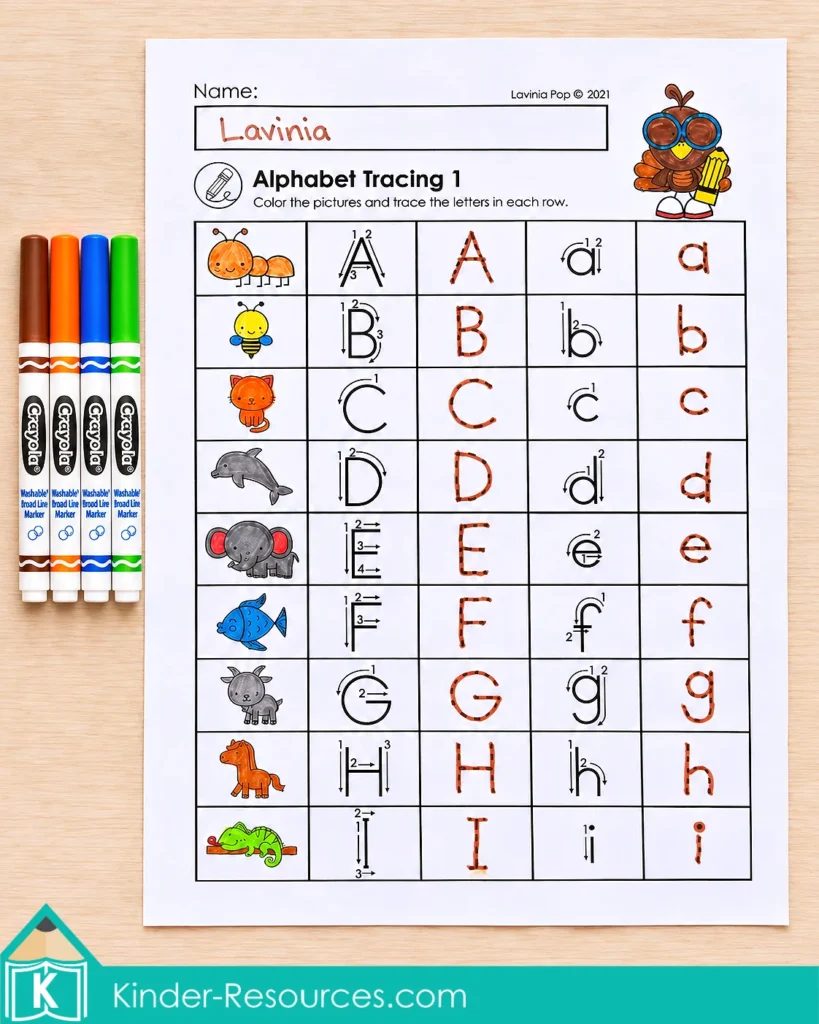
The alphabet matching and tracing pages extend this practice. Children match uppercase letters on turkey bodies with lowercase letters on their feathers, then practice letter formation using the numbered arrows and tracing models.
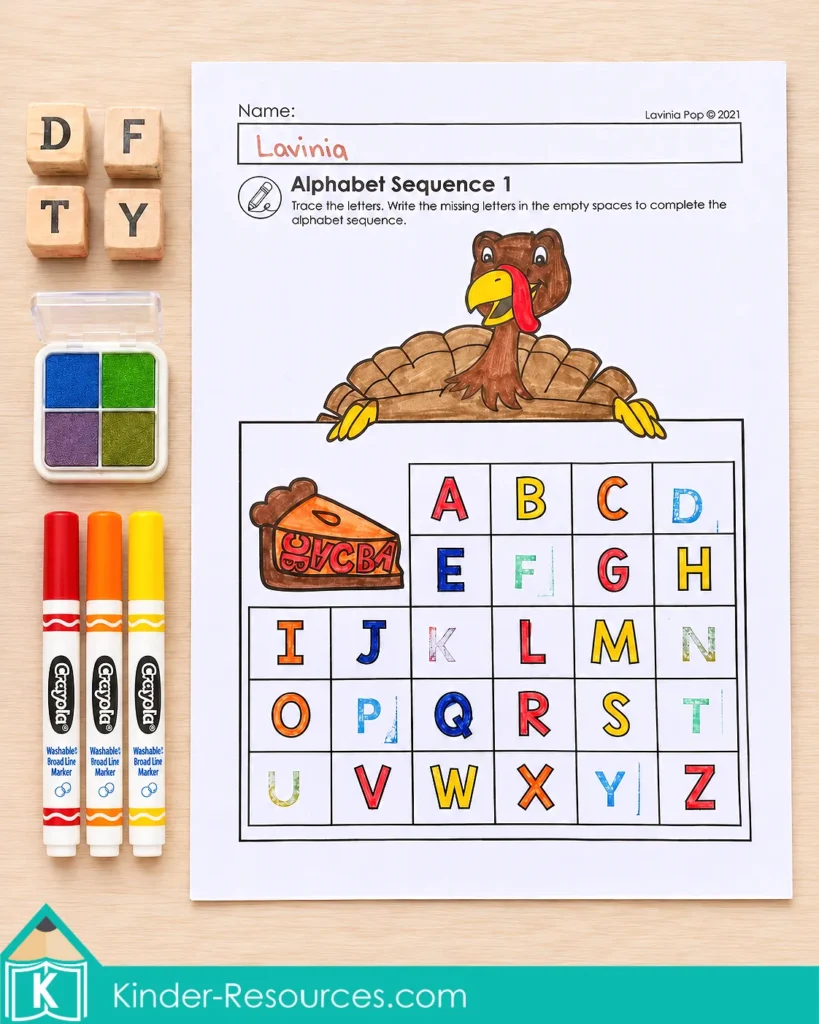
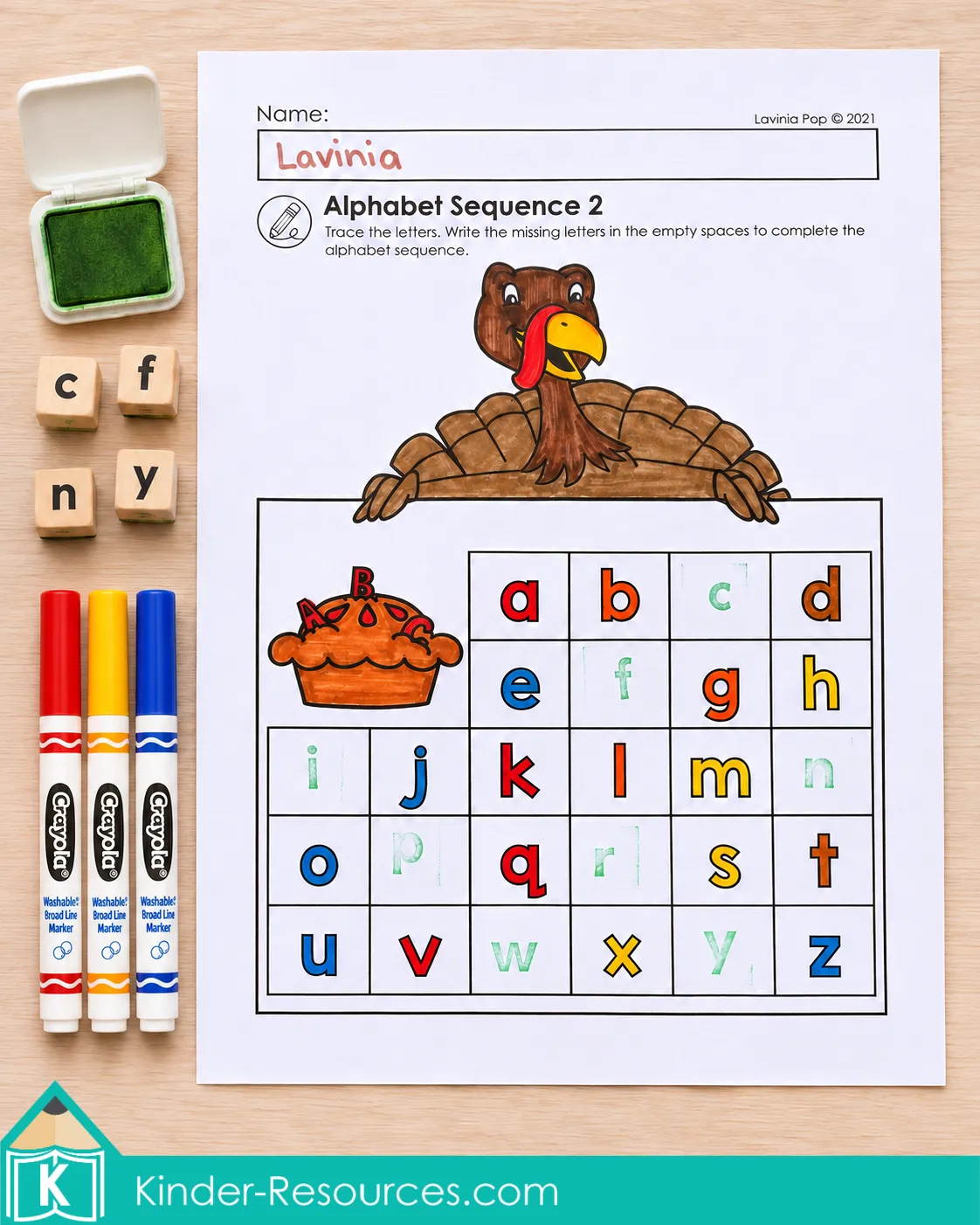
The alphabet sequence pages invite children to identify the missing letters in uppercase and lowercase sequences. Say the letters together, pause at each empty space, and work out which letter comes next. Children can write the missing letters or use alphabet stamps, as shown in the photos. Keep an alphabet strip nearby for reference.
Beginning Sounds, Rhyming, and Syllables
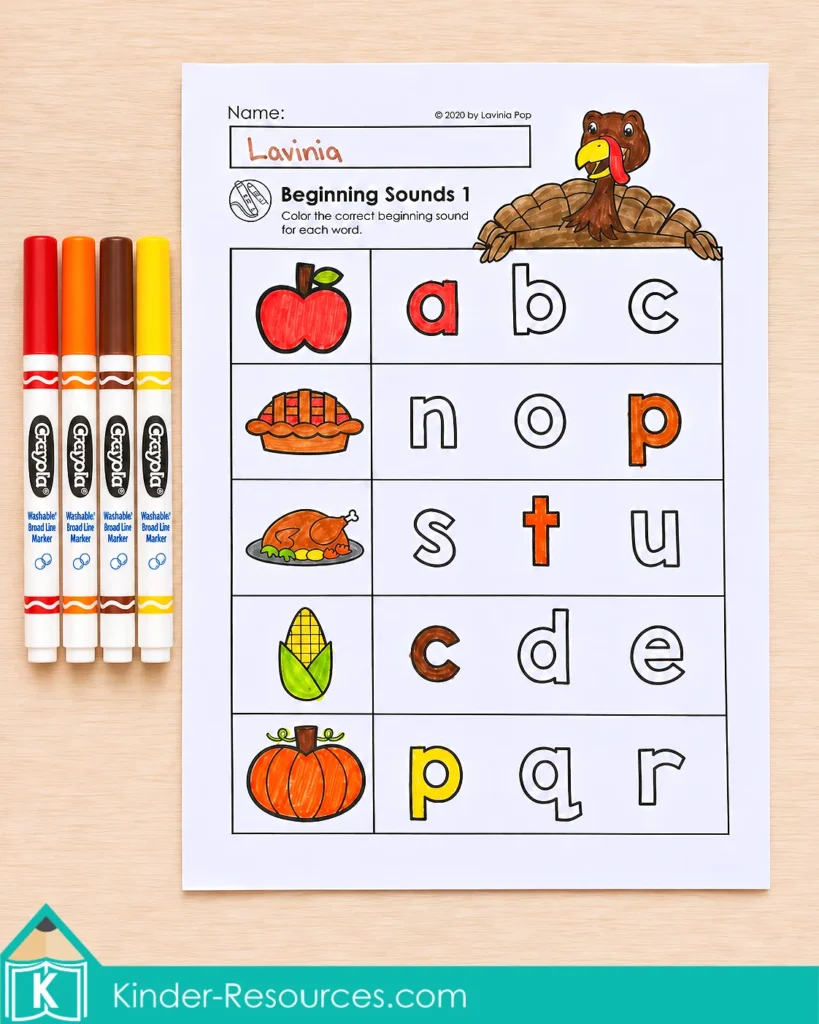
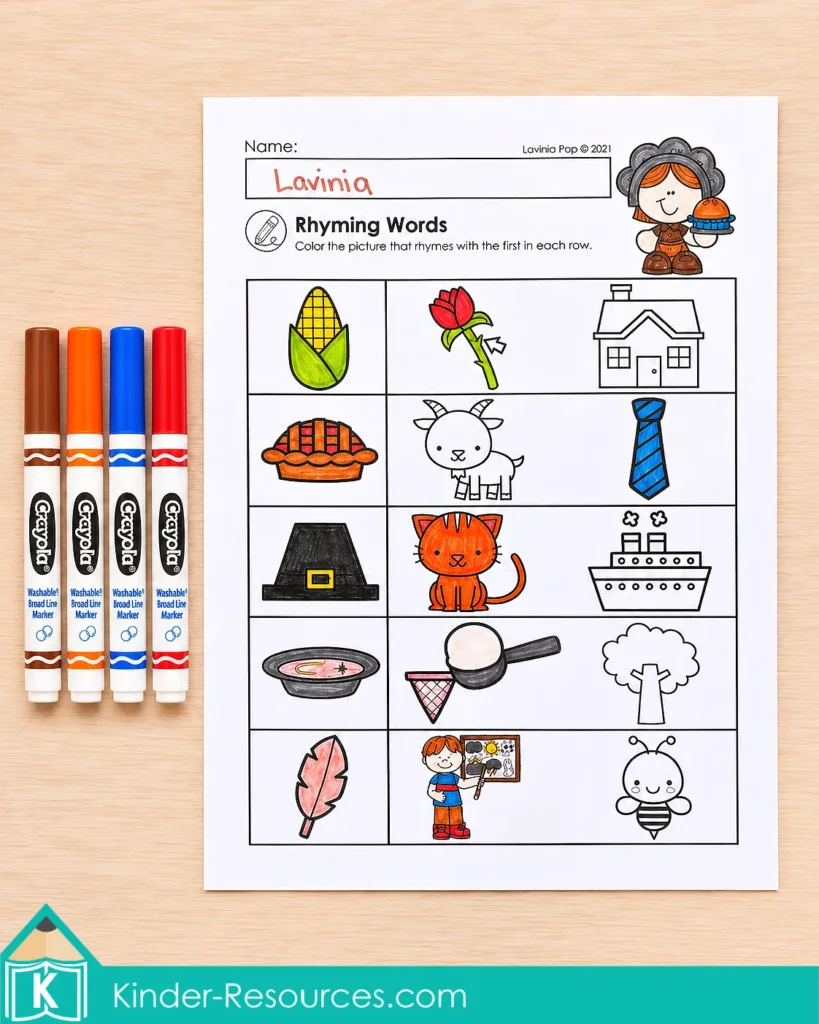
These activities give children opportunities to listen carefully to words before recording their answers. On the beginning sounds page, children name each picture and color the letter that represents its first sound. The rhyming page asks them to find a picture that rhymes with the first picture in each row.
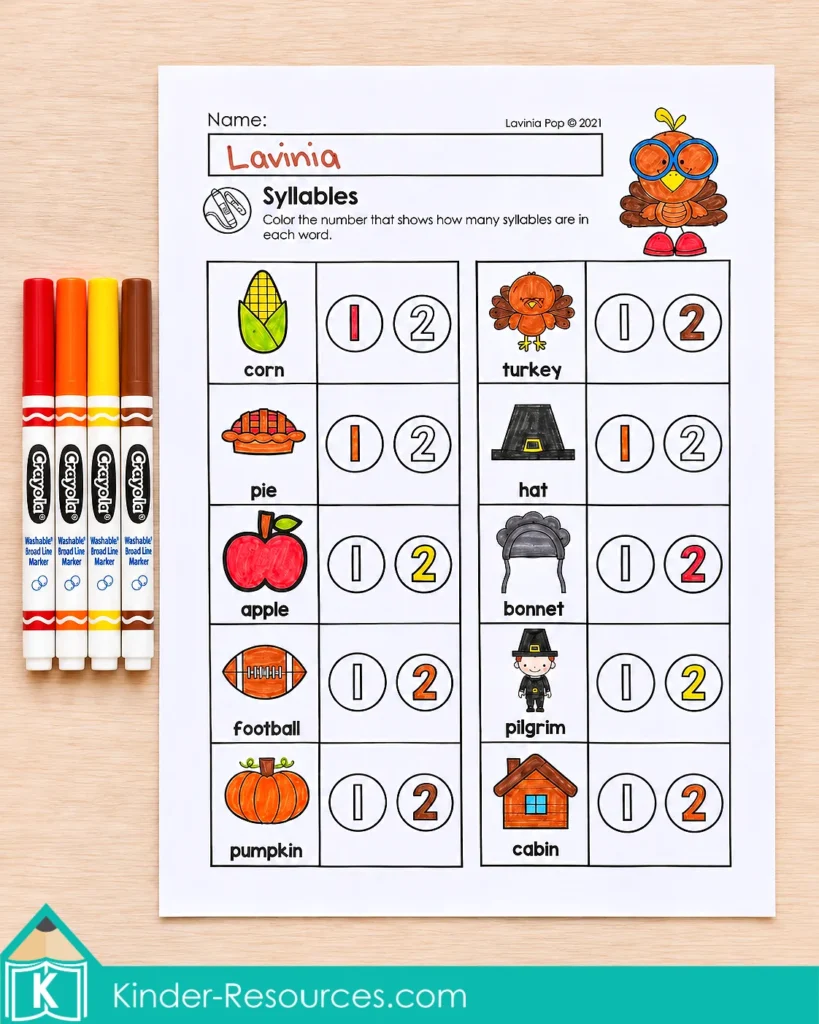
For syllables, say each word naturally, then clap its parts together. Words such as “corn” and “turkey” provide a simple starting point for comparing one and two syllables. Name unfamiliar pictures together so children can concentrate on the listening task.
Word Work and Early Reading
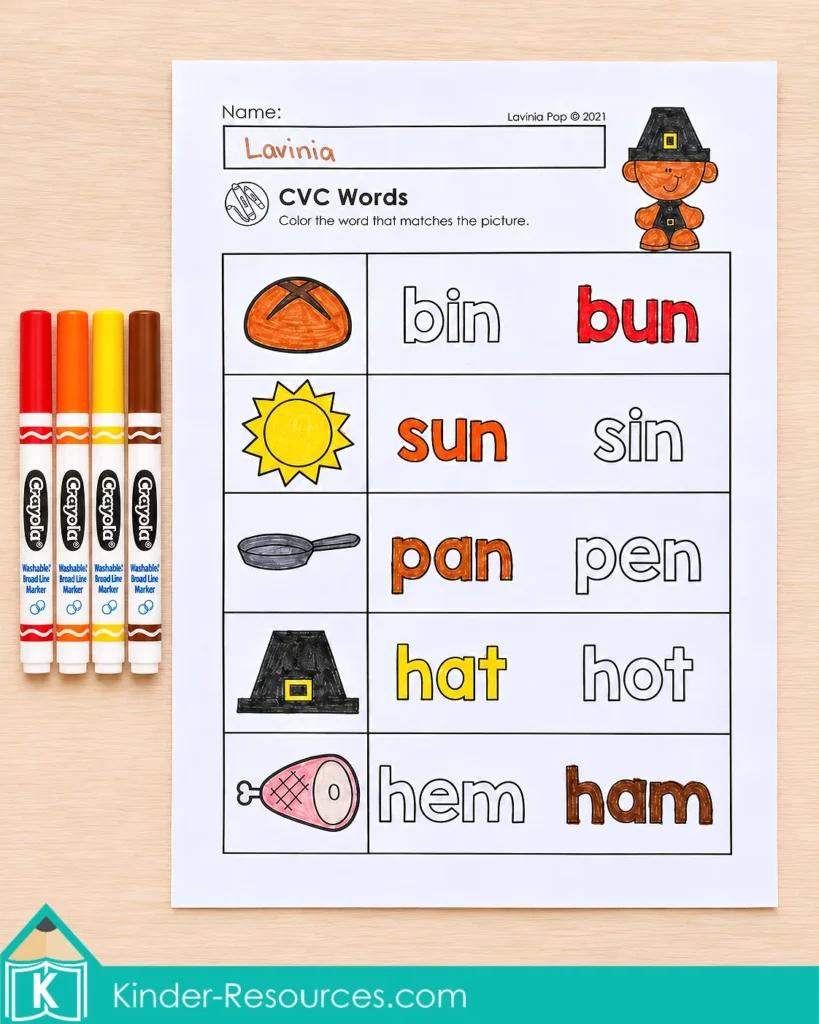
For children who are ready to blend sounds, the CVC word page provides practice reading words such as “bun,” “sun,” and “hat.” Encourage children to read both choices before coloring the word that matches the picture.
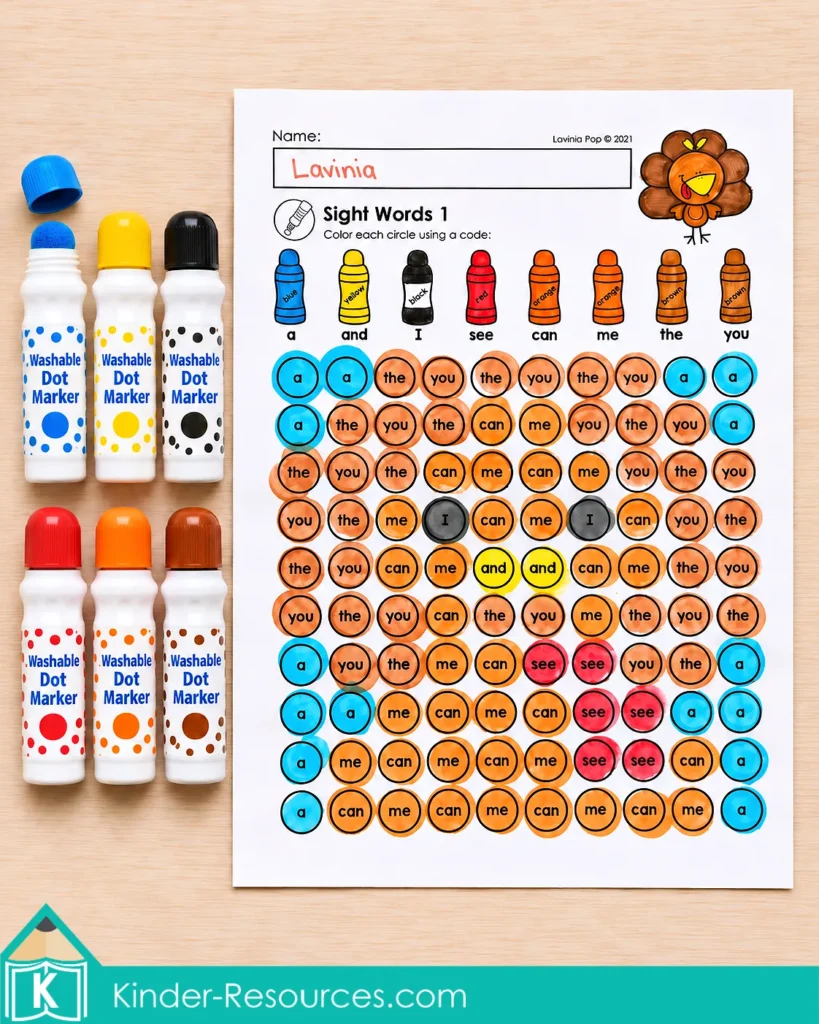
The sight word activity combines word recognition with a color code. Introduce or review the words first, then invite children to find and color matching words using crayons, markers, or dot markers.
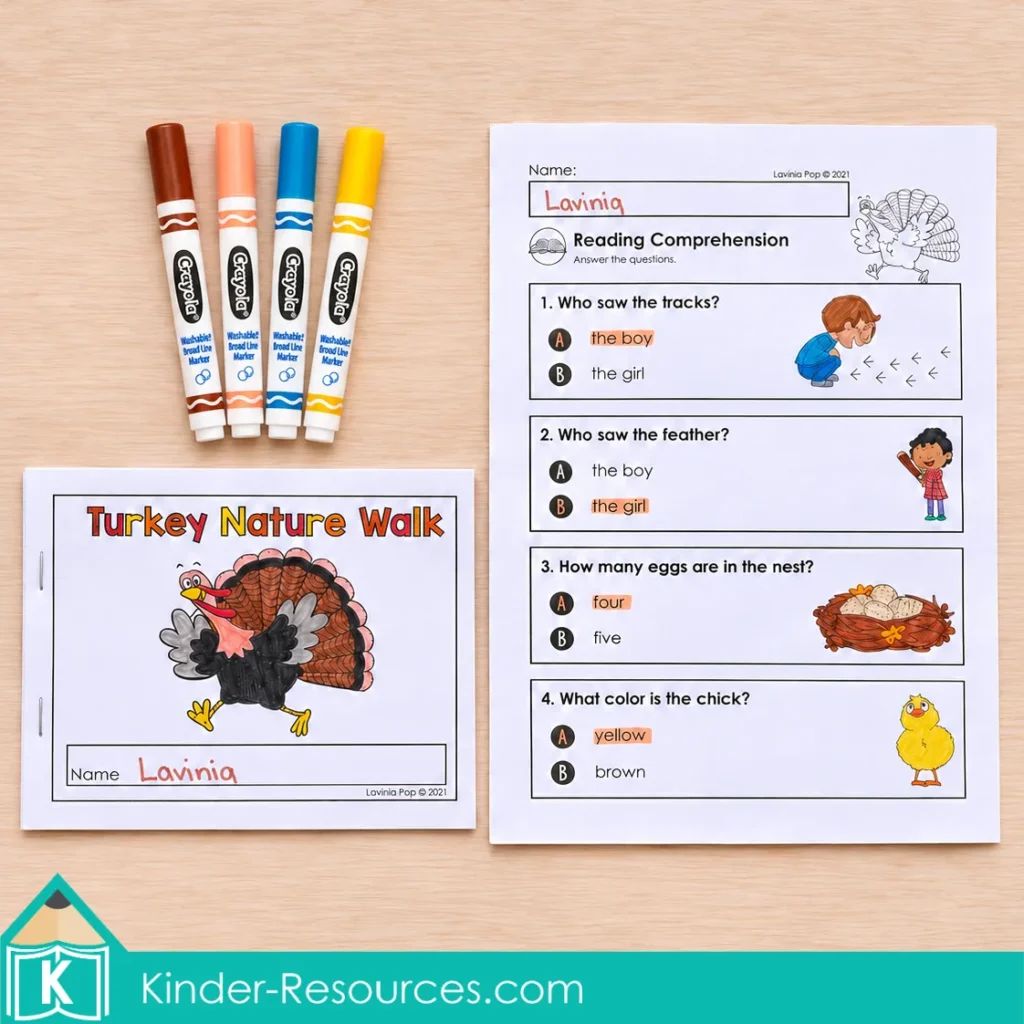
The Turkey Nature Walk reader offers another way to explore Thanksgiving vocabulary. Read it together, talk about the pictures, and return to the story when answering the comprehension questions. Younger children can respond orally while an adult reads.
Counting and Number Activities
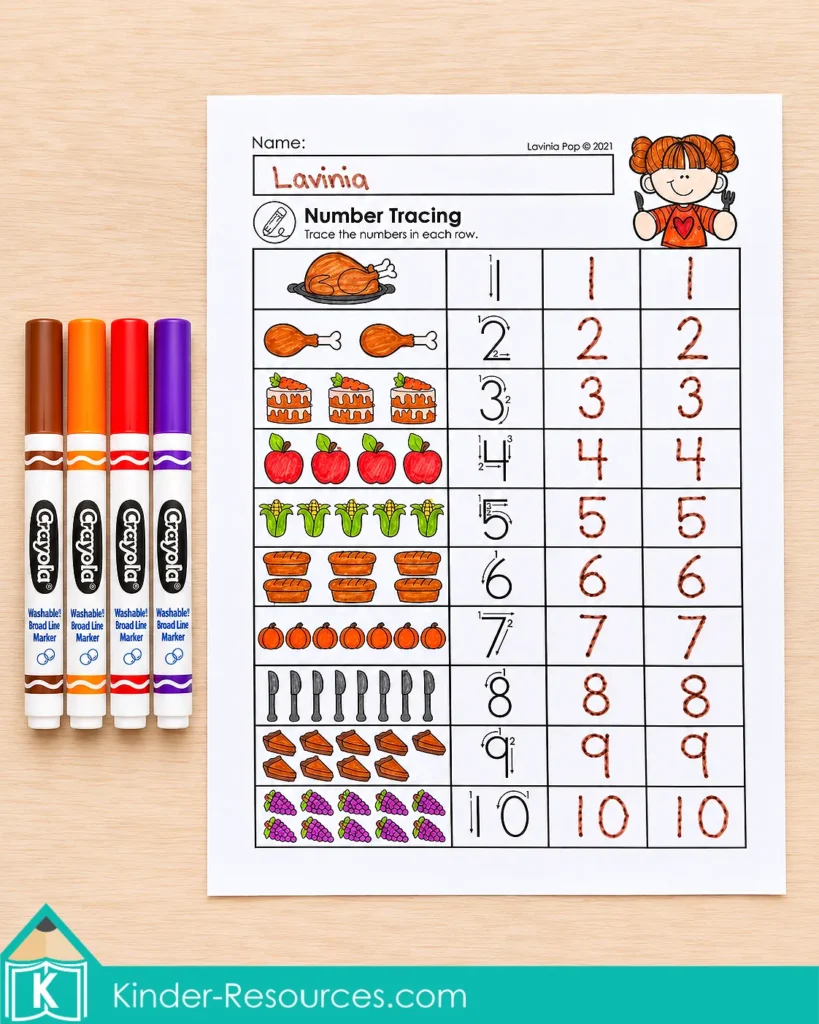
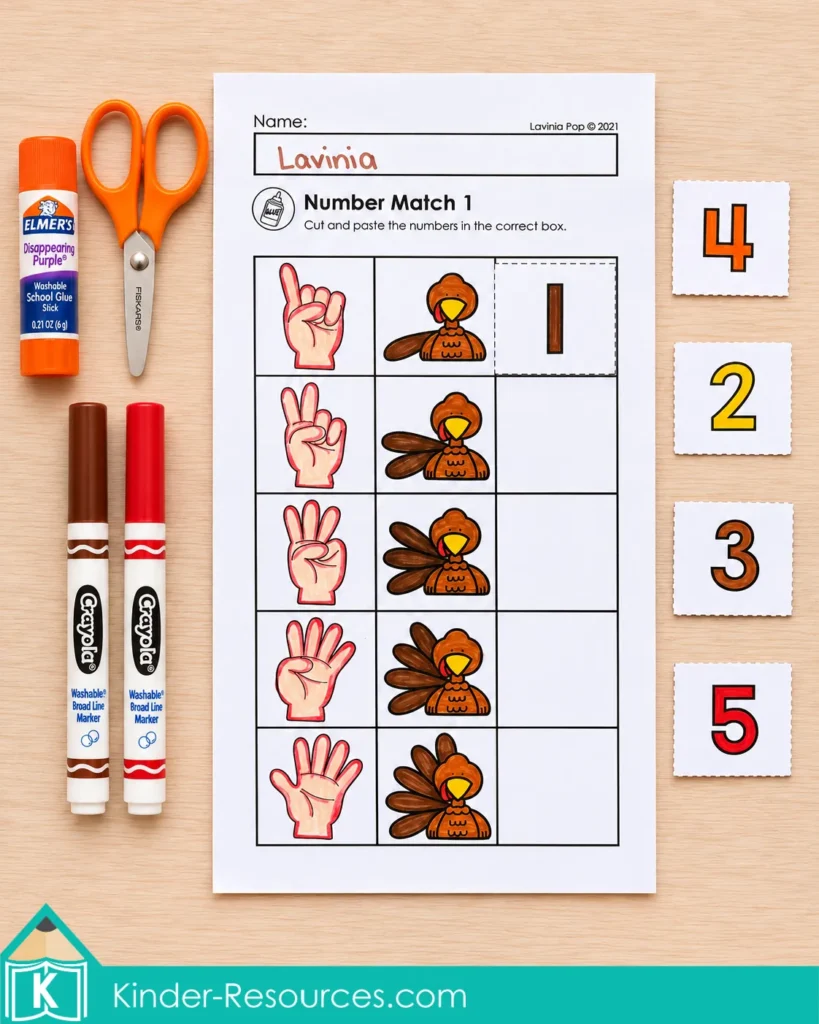
Children can explore numbers through pictures, fingers, dots, and tally marks. The number tracing page pairs numerals 1–10 with groups of objects, while the turkey feather activity connects numerals with finger patterns and feather quantities.
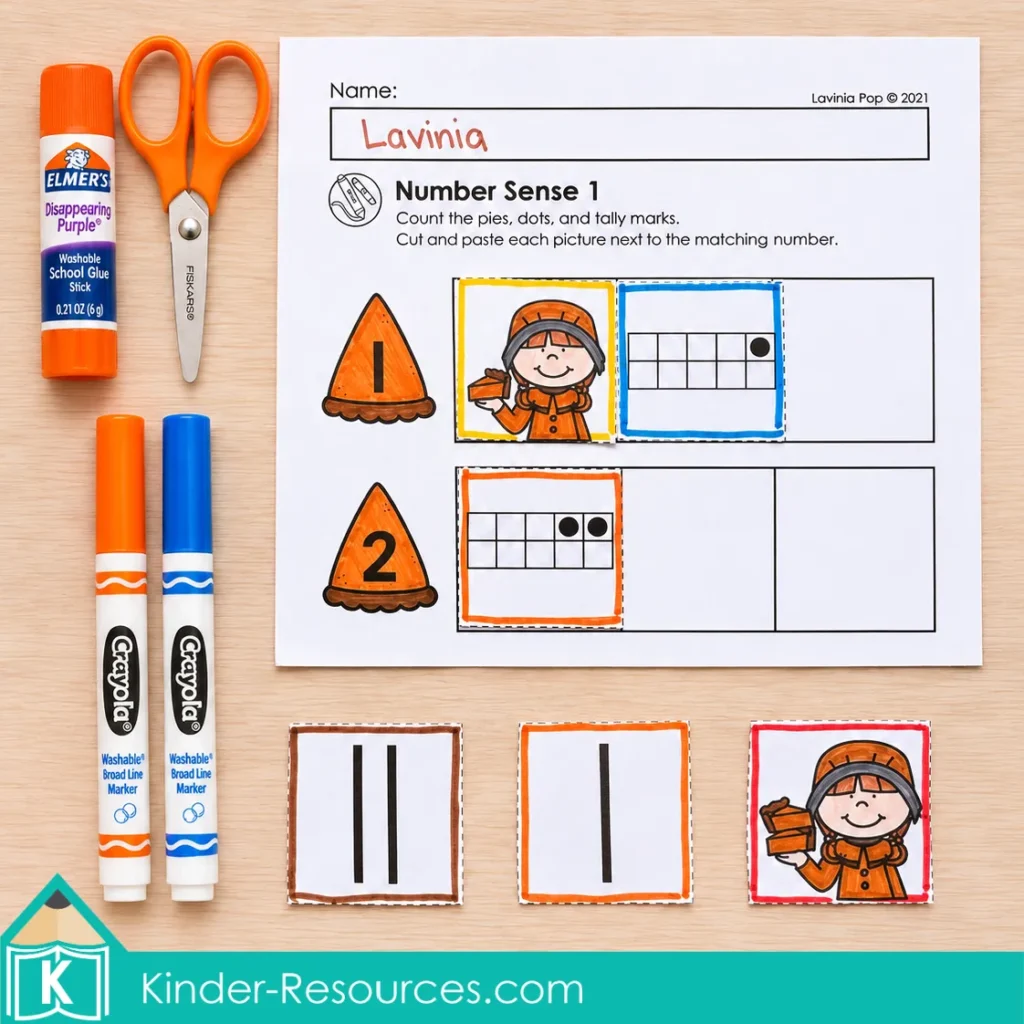
The number sense pages bring several representations together. Children count the pie slices, ten-frame dots, and tally marks, then place each picture beside the matching numeral. Invite them to show the same number on their own fingers before gluing their pieces.
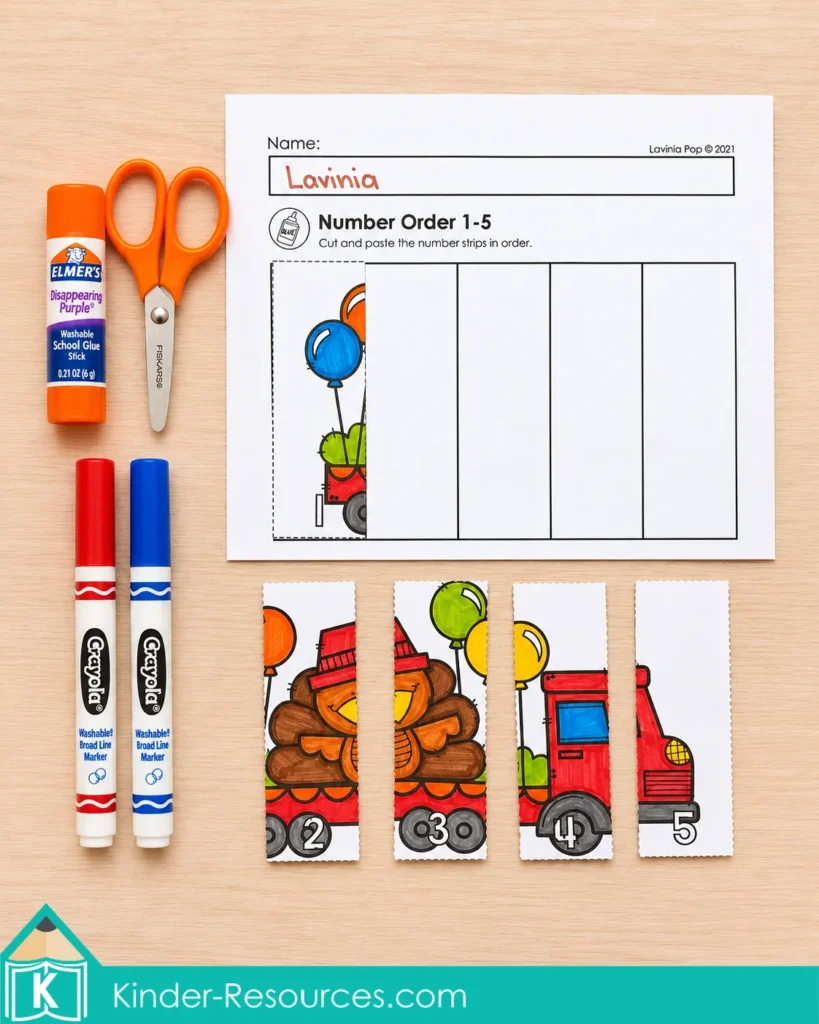
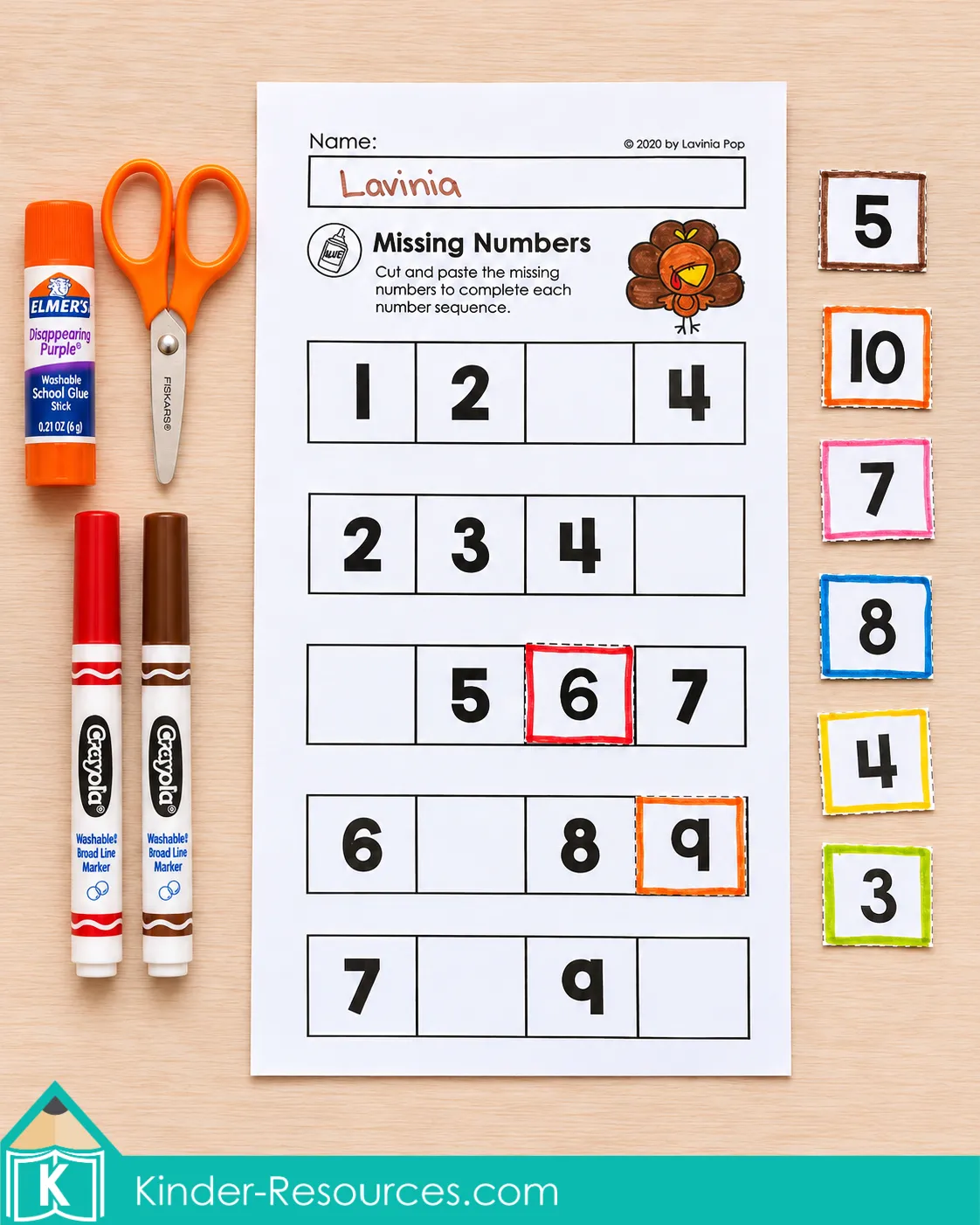
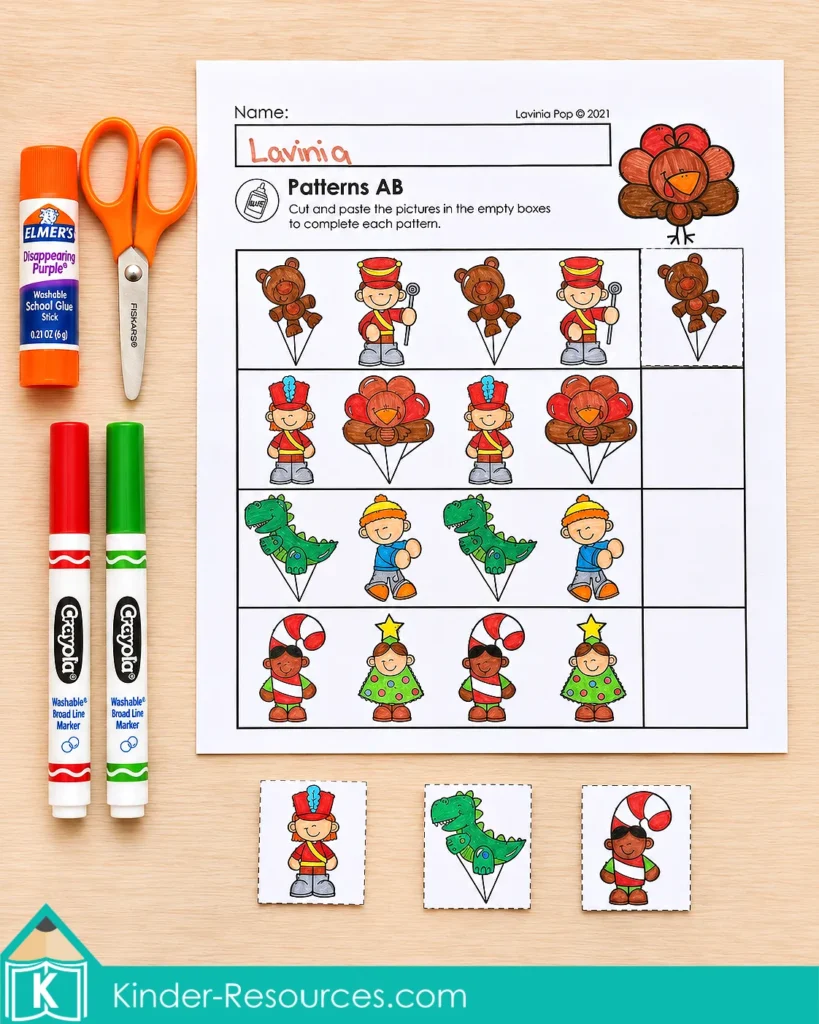
Number sequences and repeating patterns provide another kind of thinking practice. Children arrange numbered strips to complete a turkey parade picture, fill gaps in short number sequences, and continue AB patterns using parade cutouts.
Before gluing, encourage children to check their work aloud. They can count along a number row or name the pictures in a pattern: “bear, marcher, bear, marcher.” Then ask them to explain what should come next.
Shapes, Comparing, and Graphing
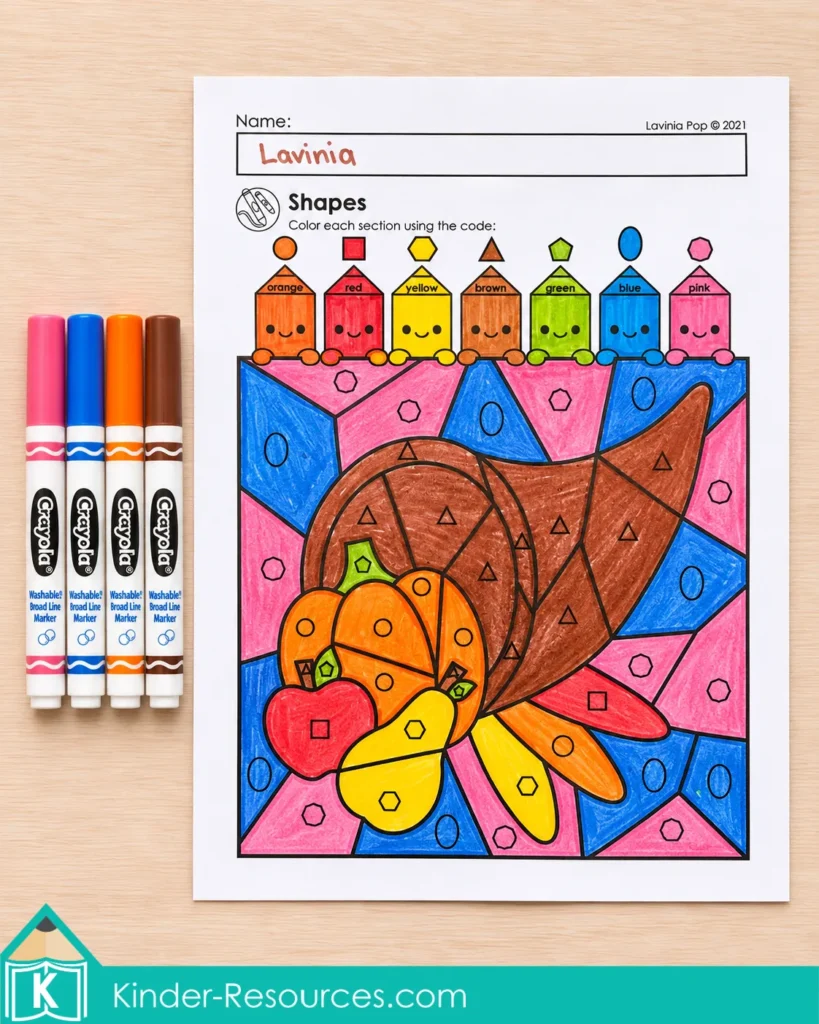
The shape coloring page combines shape recognition with following a code. Children identify the small shapes inside the picture and use the key to choose their colors, gradually completing a colorful cornucopia scene.
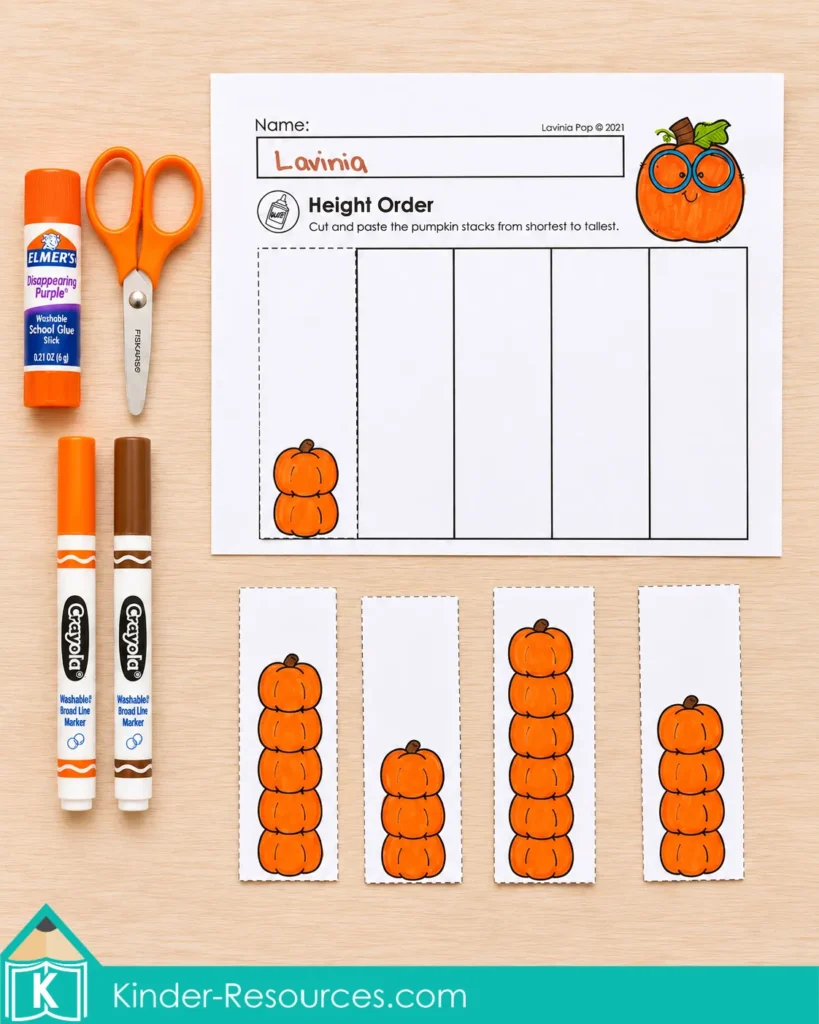
For height ordering, children compare pumpkin stacks and arrange them from shortest to tallest. Place the strips along the same bottom edge before comparing them. Use words such as “shorter,” “taller,” “shortest,” and “tallest” as children explain their choices.
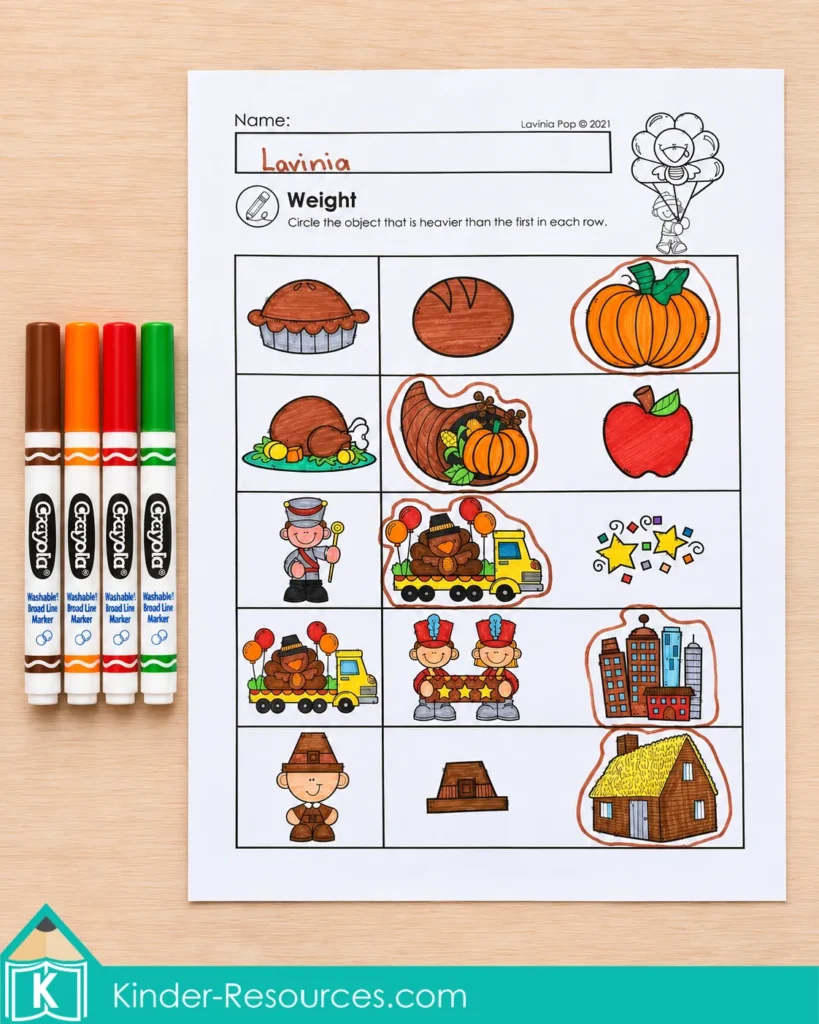
The weight page encourages children to discuss which pictured object would usually be heavier. Extend the conversation by comparing familiar classroom objects or testing predictions with a balance scale.
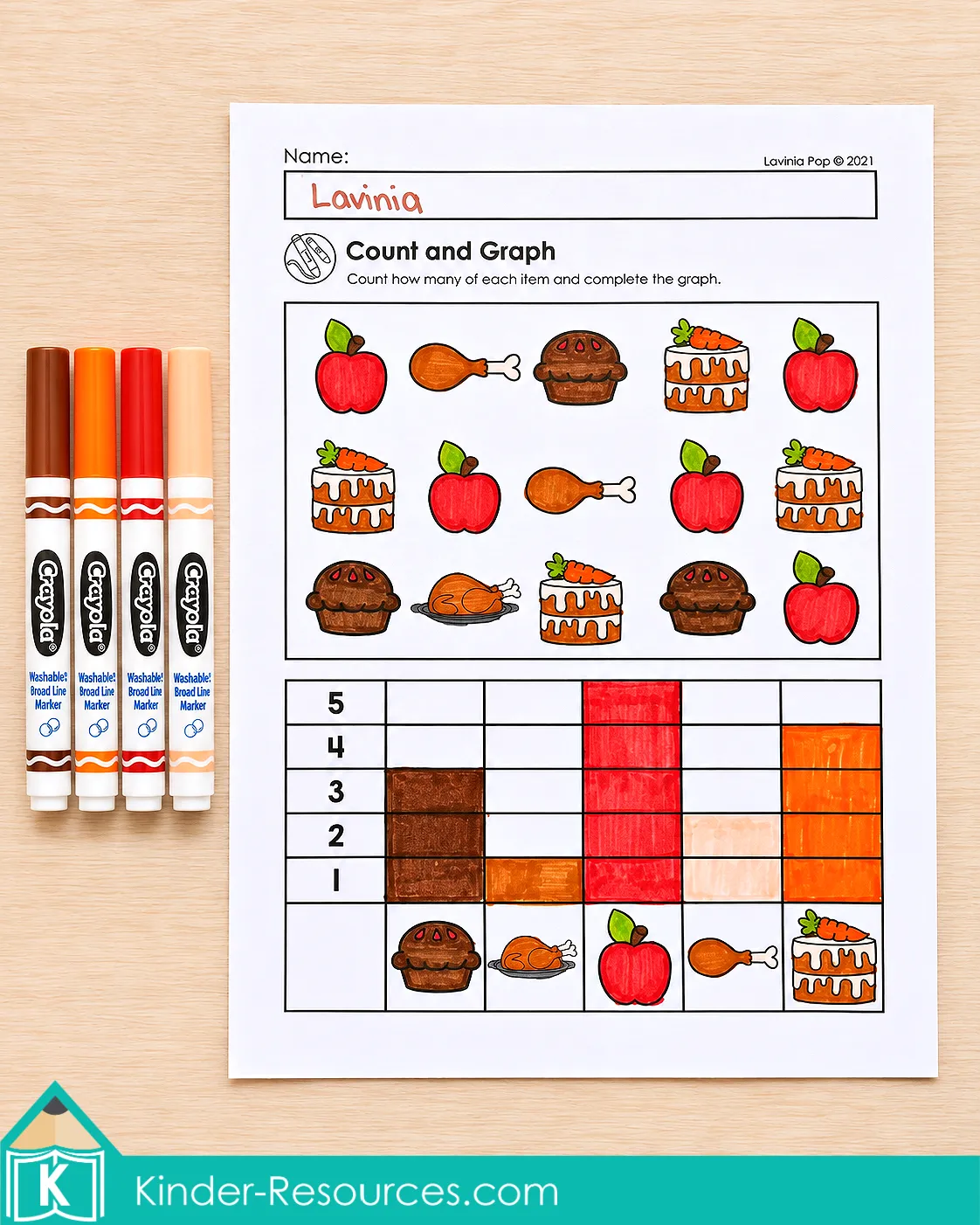
On the count-and-graph page, children count each type of food and color the matching number of boxes. Once the graph is complete, ask which food appears most often, which appears least often, and how the colored columns help them find out.
Looking Closely, Comparing, and Sorting
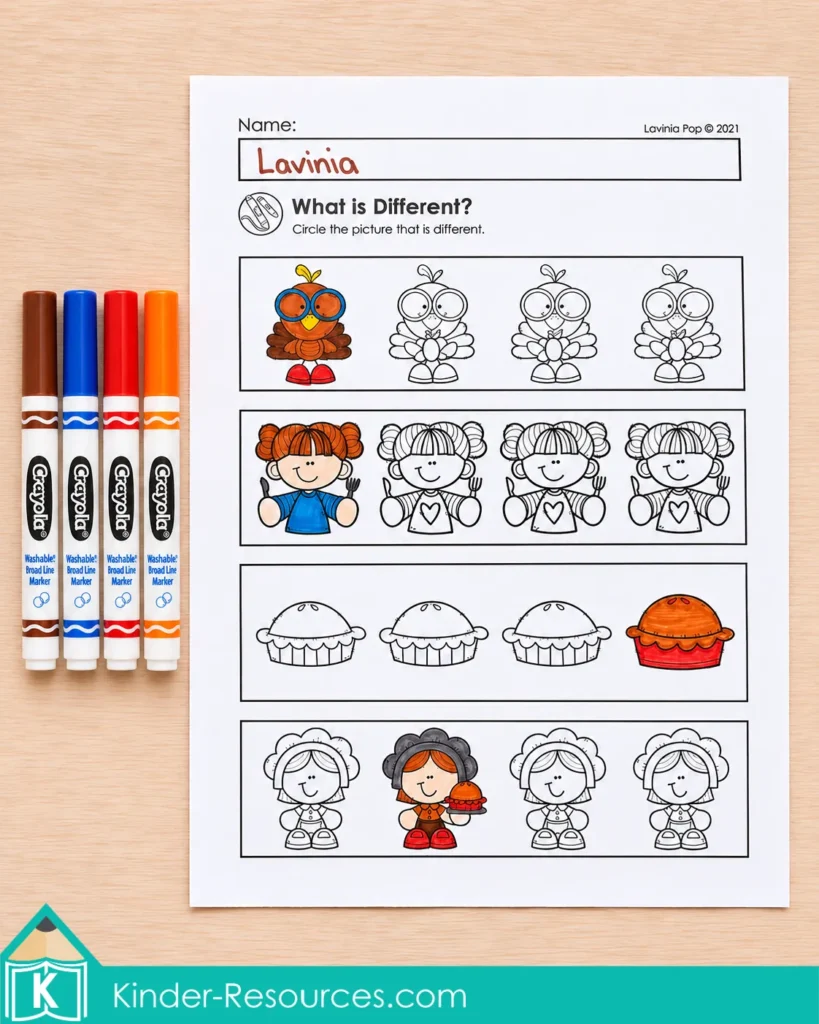
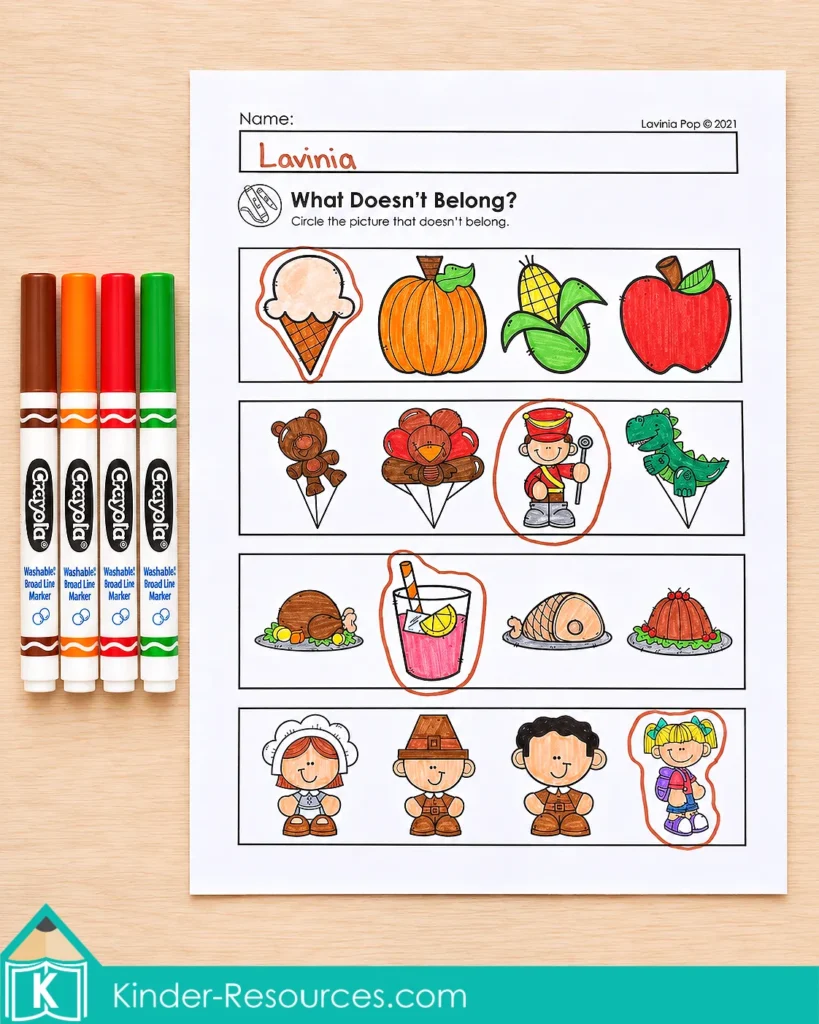
The “What Is Different?” and “What Doesn’t Belong?” pages encourage children to look carefully and explain their thinking. One asks them to spot a changed detail among similar pictures; the other asks them to identify an item that does not fit with the group. Follow up with, “What did you notice?” or “Why did you choose that picture?”
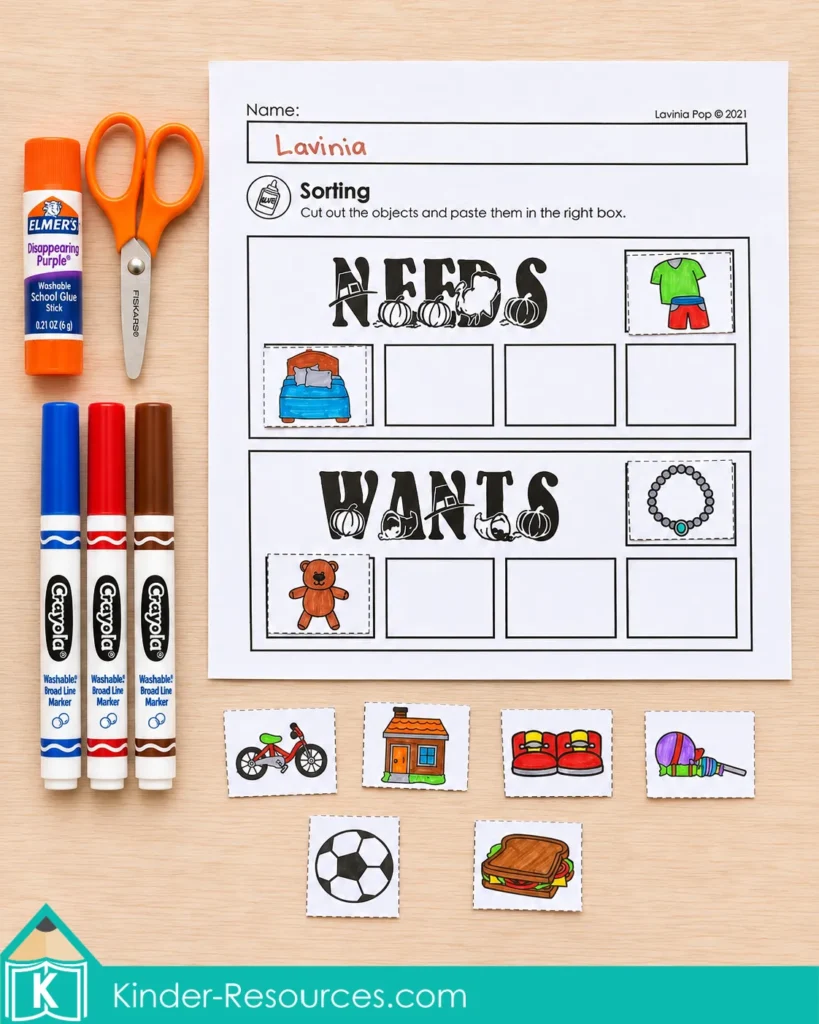
The needs and wants activity opens a practical conversation about everyday objects. Discuss how people use each item, then sort the pictures together. Give children time to explain their ideas before deciding where to paste each piece.
Positional Words, Sequencing, and Following Directions
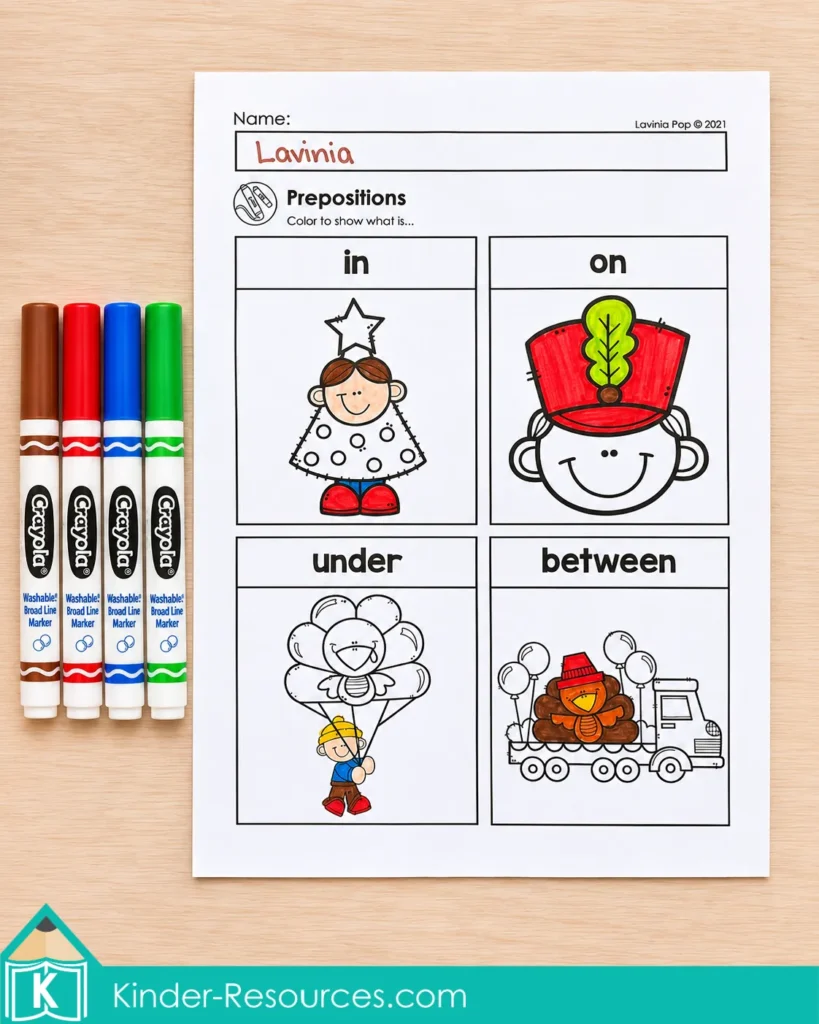
The prepositions page introduces “in,” “on,” “under,” and “between” through parade pictures. Practice these words with a toy and a box before looking at the worksheet together.
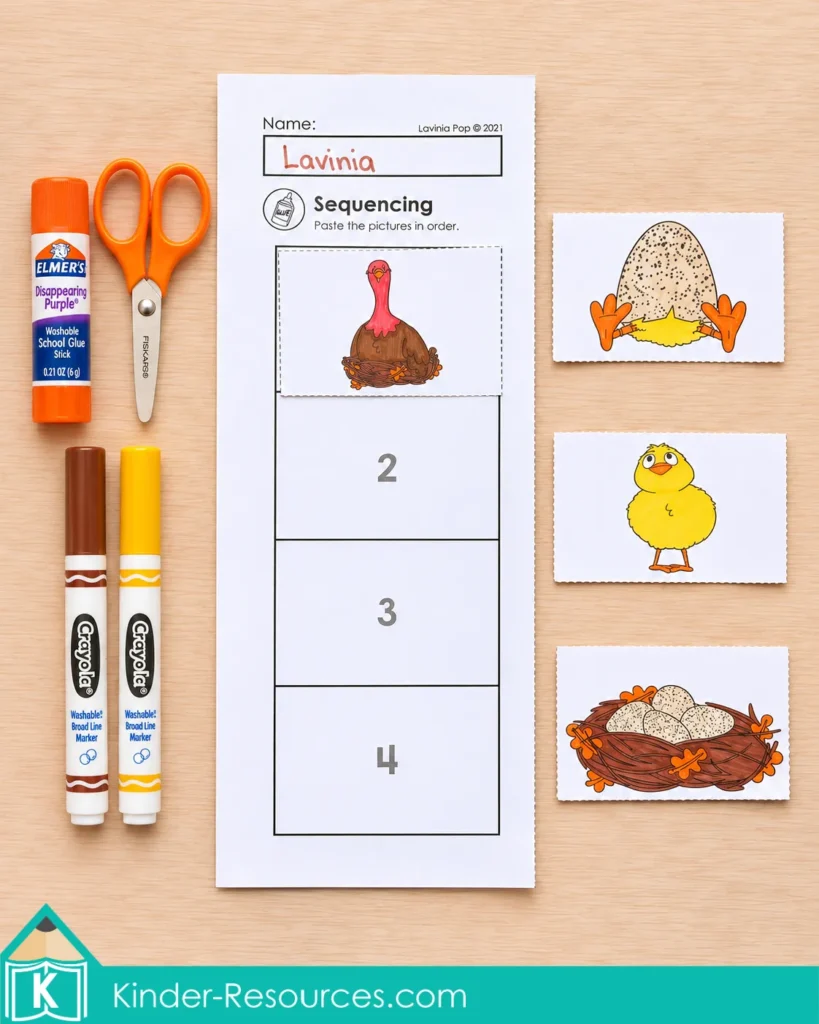
The turkey hatching sequence invites children to arrange pictures showing a turkey on a nest, eggs, a hatching chick, and a chick. Encourage them to describe the order using “first,” “next,” “then,” and “last.”
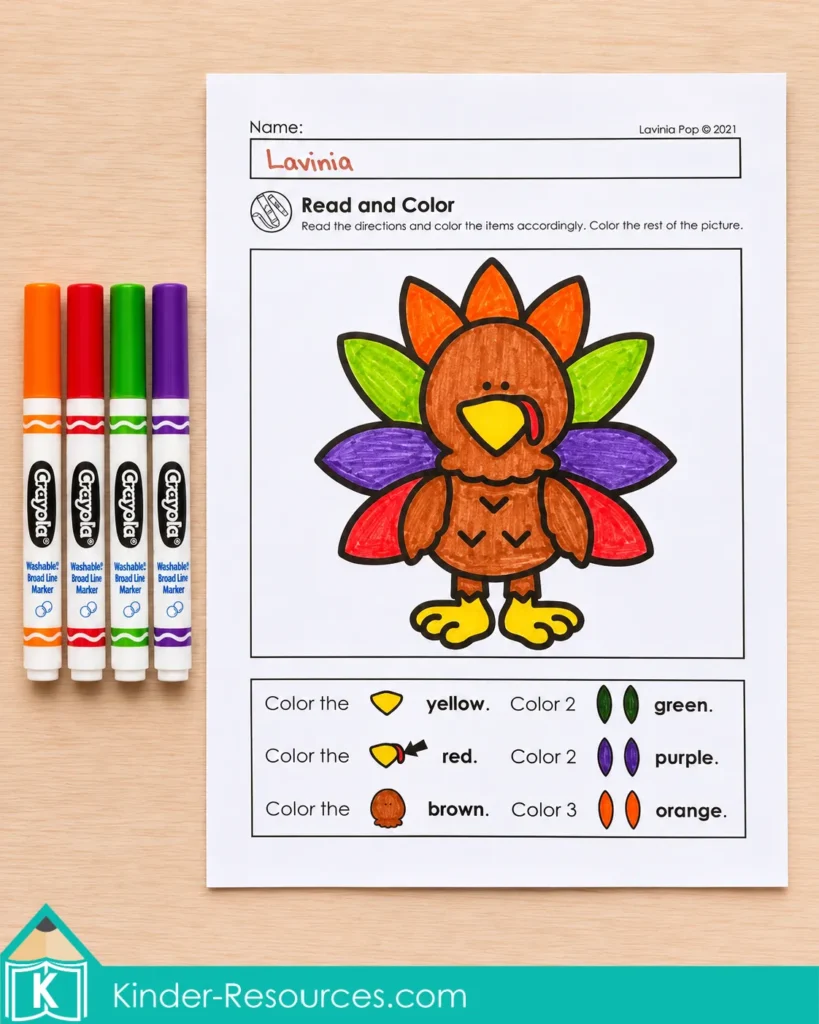
For the read-and-color turkey, read one instruction at a time and ask children to identify the body part or count the feathers before coloring. An adult can read the directions aloud so children can focus on listening and following each step.
Using the Activities in Your Classroom or at Home
Choose a few Thanksgiving preschool worksheets that connect with skills your children are already exploring. A short counting activity might follow a game with counters, while the tracing pages can follow drawing paths in sand or making large movements in the air.
Gather pencils, crayons or markers, scissors, and glue before beginning. Add tissue paper, alphabet stamps, or dot markers when you want to use the options shown in the photos.
Model unfamiliar tasks and offer support as needed. If cutting makes a counting or sequencing activity too demanding, provide precut pieces so children can concentrate on the main task. Familiar pages can then be revisited with greater independence.


Make Room for Thankful Conversations
Alongside the activities, invite children to talk about people who help them, things they appreciate, and ways they can show kindness. They might draw someone they are thankful for, dictate a short message, or share one way they helped a friend.
Leave room for children to describe their own family traditions and experiences. These conversations can become a meaningful part of your November learning.


Get the Complete Thanksgiving Preschool Worksheets and Activities
The complete Thanksgiving No Prep Preschool Worksheets & Activities packet brings together fine motor, literacy, math, and thinking activities that you can select throughout the month.
Choose the pages that suit your children, introduce them at a comfortable pace, and keep favorites nearby for another day.


Happy Teaching! 😊
You Might Also Like

I really like this content and I would love to use some of it for Special Education Classroom.
Love it
My Kindergarten will love this
Can’t wait to try
Thank you! I hope your little learners have so much fun with the Thanksgiving activities! 🦃😊