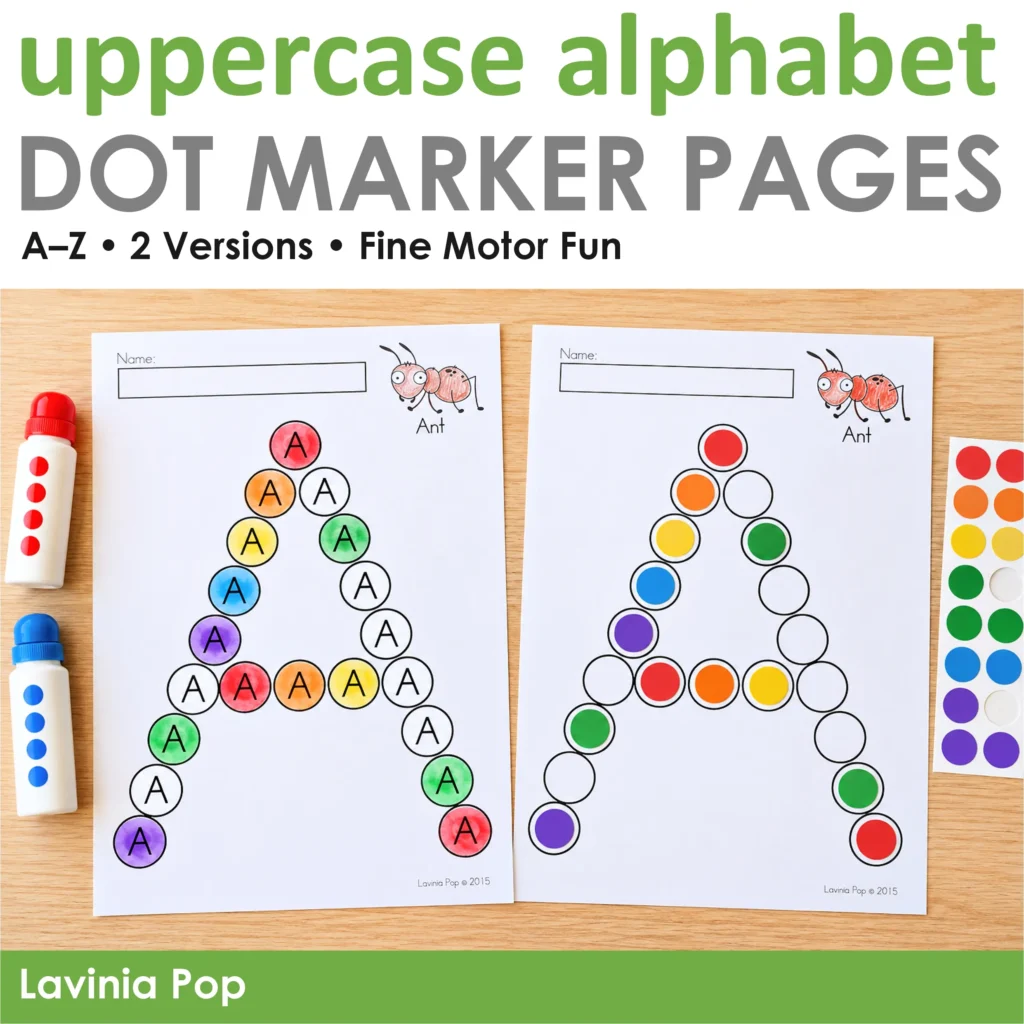
Learning to write begins with scribbles, drawings, and experimenting with different marks. As children gain experience with crayons, chalk, and pencils, they begin to control where their marks go and what they look like. These early experiences help prepare them for handwriting. My line tracing worksheets for preschool give children a simple way to practice straight prewriting strokes. Each page combines line tracing with a picture activity, so children can trace spider threads, add ladder rungs, or follow lines across a pizza before coloring their picture.
Why Practice Straight Lines?
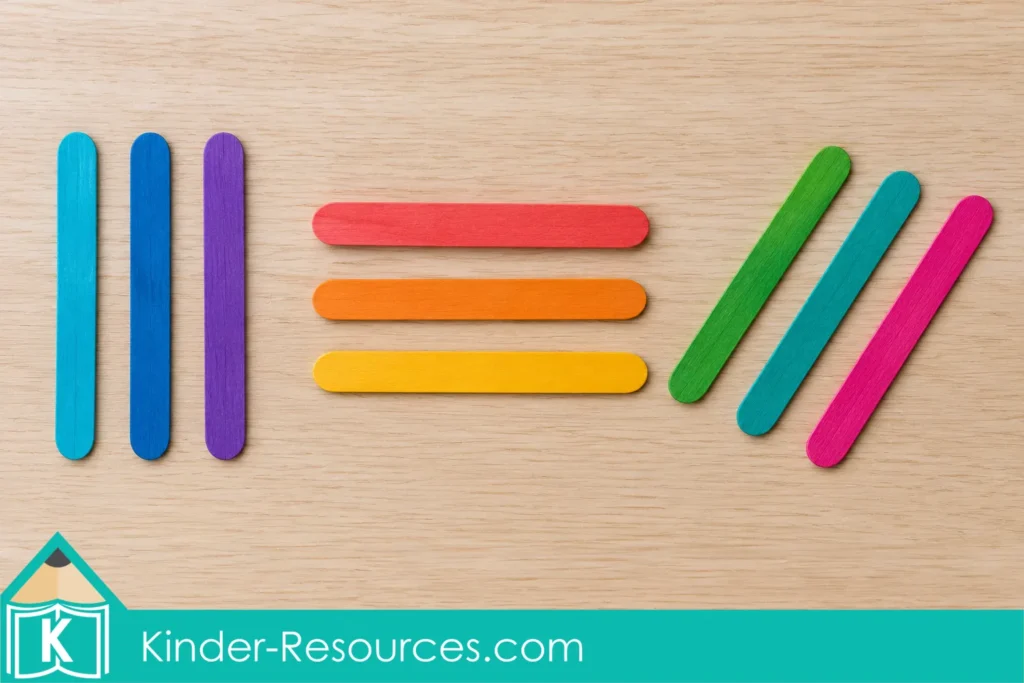
Vertical, horizontal, and diagonal lines appear in many letters and numbers. Practicing these movements helps children become familiar with some of the strokes they will use when learning to write.
For example, the uppercase letter L combines a vertical and a horizontal line, while V uses two diagonal lines. Prewriting practice gives children opportunities to explore these individual movements before combining them into more complex forms.
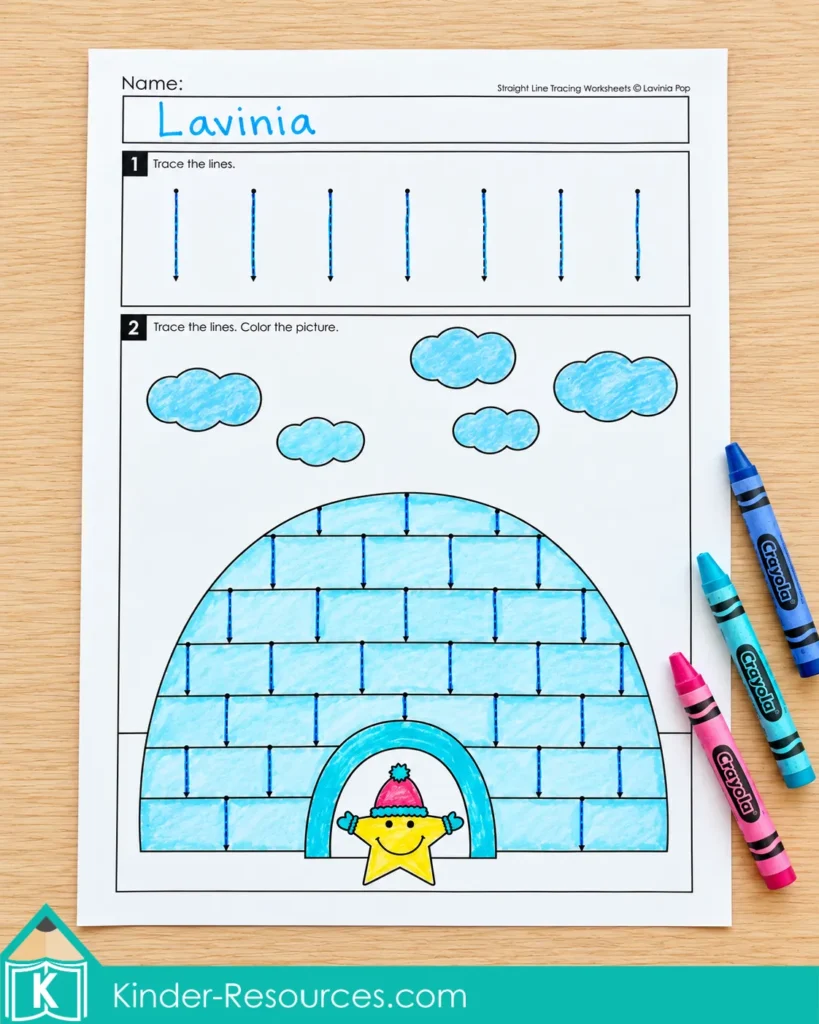
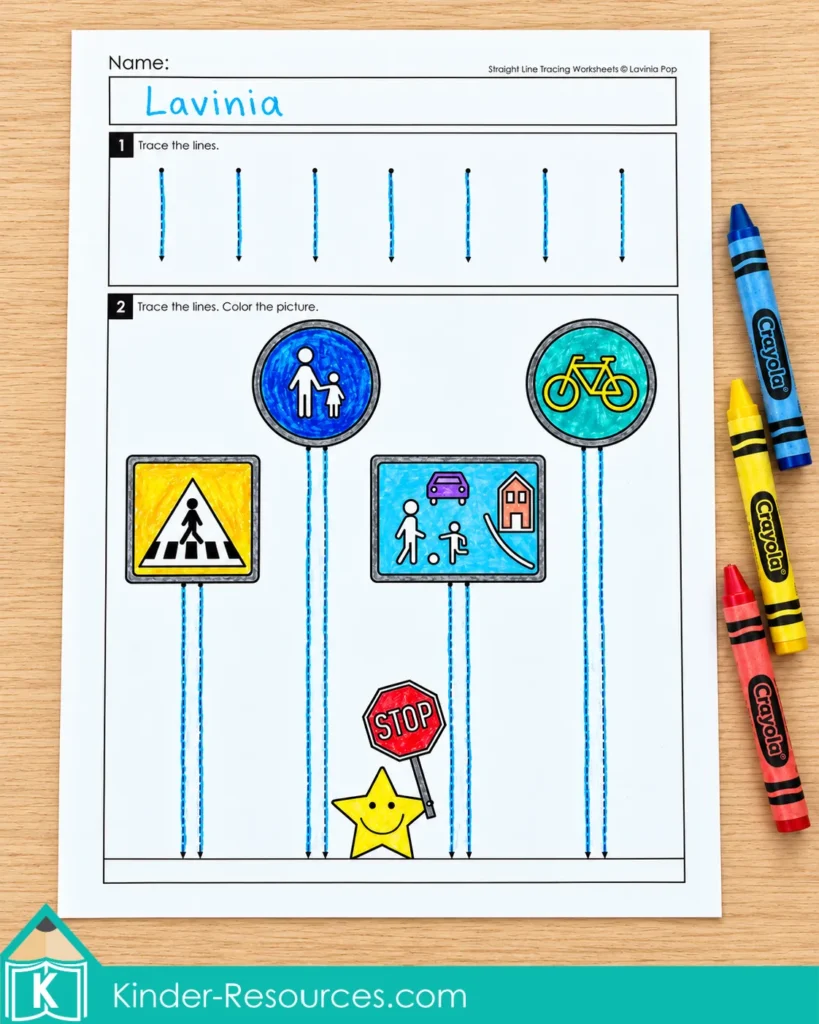
This packet focuses on straight lines in different directions. Children follow the starting dots and arrows to see where each stroke begins and where it finishes.
How Do Line Tracing Worksheets Help Children?
Each tracing line gives children several things to practice together:
- Pencil control: Moving a writing tool along a path and stopping at its endpoint.
- Hand-eye coordination: Watching the line while guiding the crayon or pencil.
- Following visual cues: Finding the starting dot and checking which way the arrow points.
- Directional language: Connecting words such as “down,” “across,” and “slant” with an actual movement.
You can make these actions easier to understand by demonstrating one line first. Point to the dot and say, “Start here. Follow the line down. Stop at the arrow.”
The goal is to help children make increasingly intentional movements. Their lines do not need to be perfectly straight.
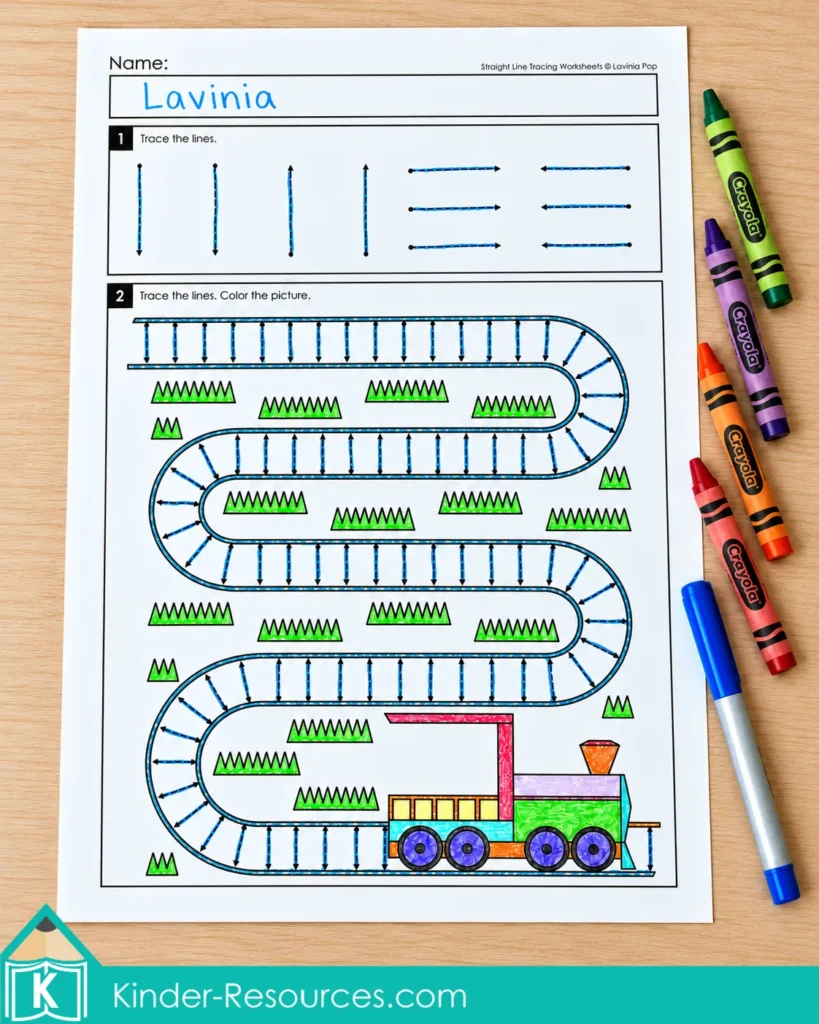
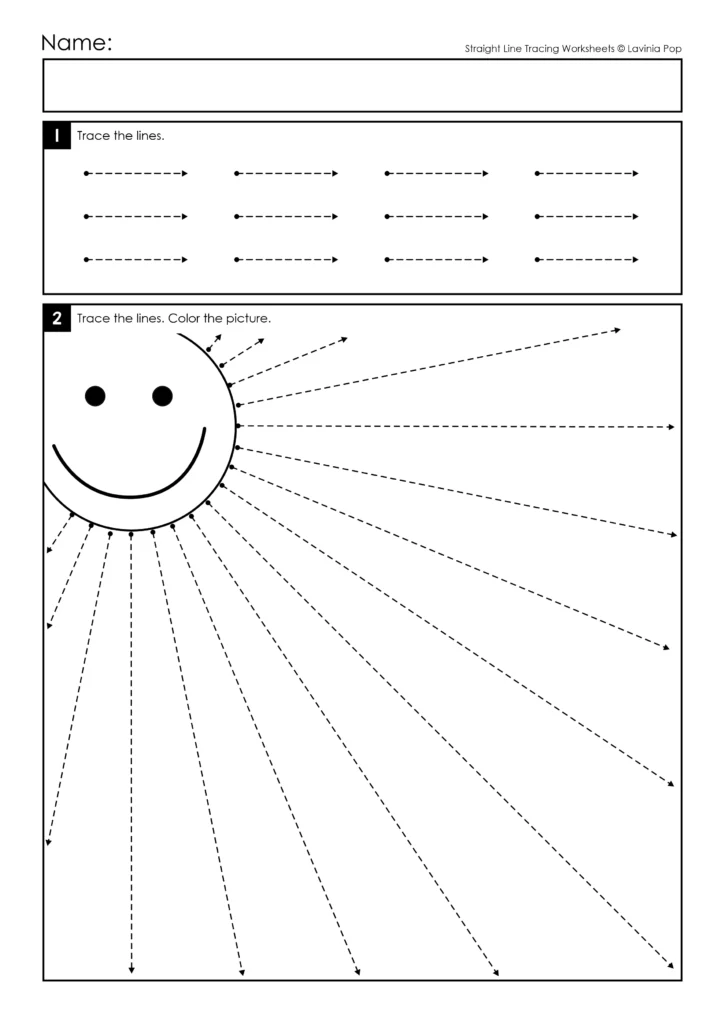
Free Line Tracing Worksheets for Preschool
Try a free sample from my Straight Line Tracing Worksheets packet! These printable pages give children practice following starting dots and directional arrows before coloring the pictures.
Print the pages for a short prewriting activity, or place them in dry-erase sleeves for repeated practice. You can use them during small-group time, in a fine motor center, or for supported learning at home.

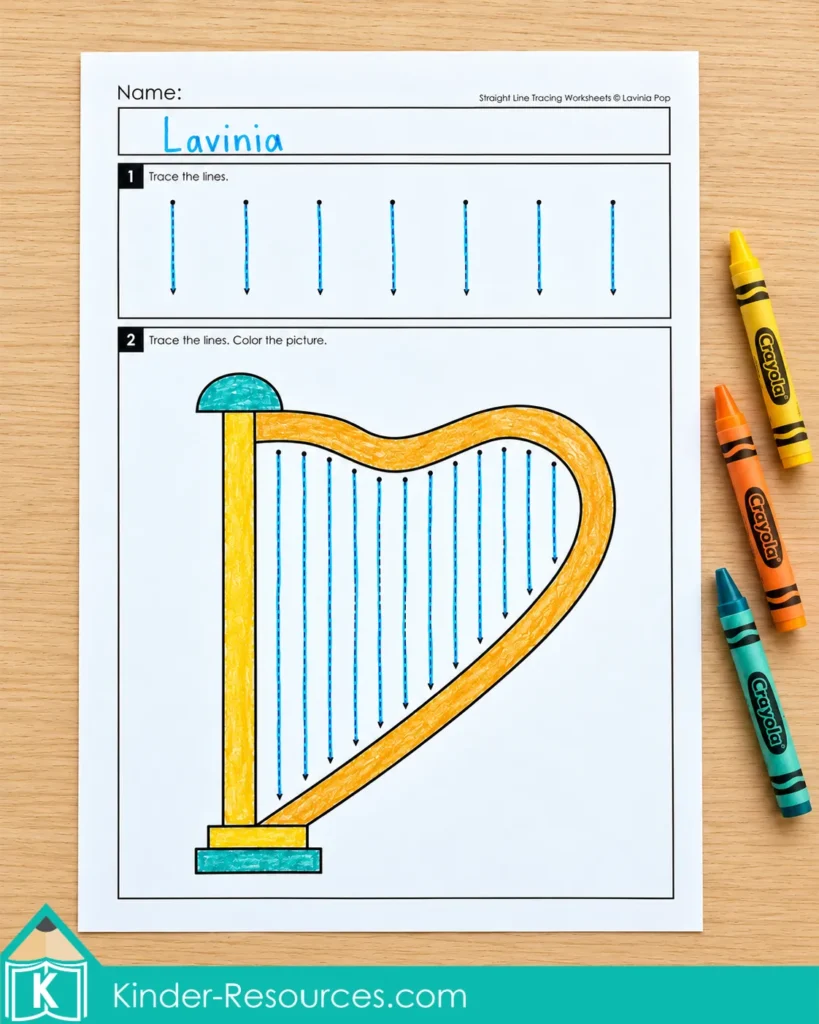
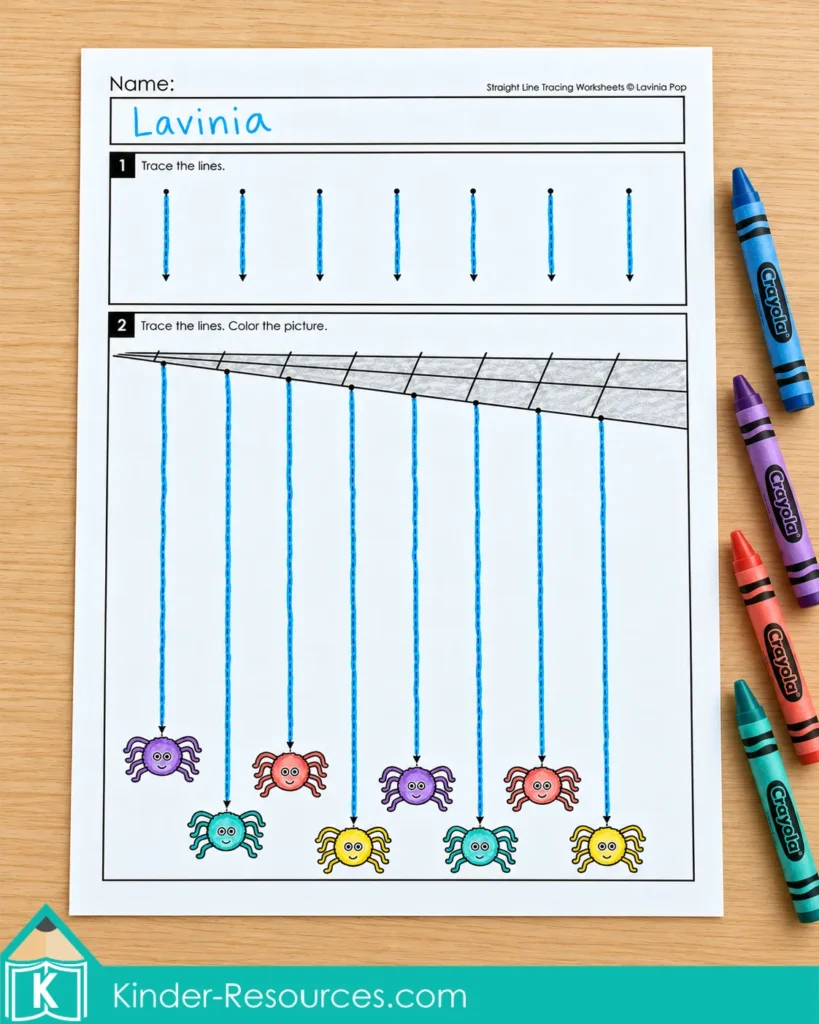
Vertical Line Tracing with Spiders and Harp Strings
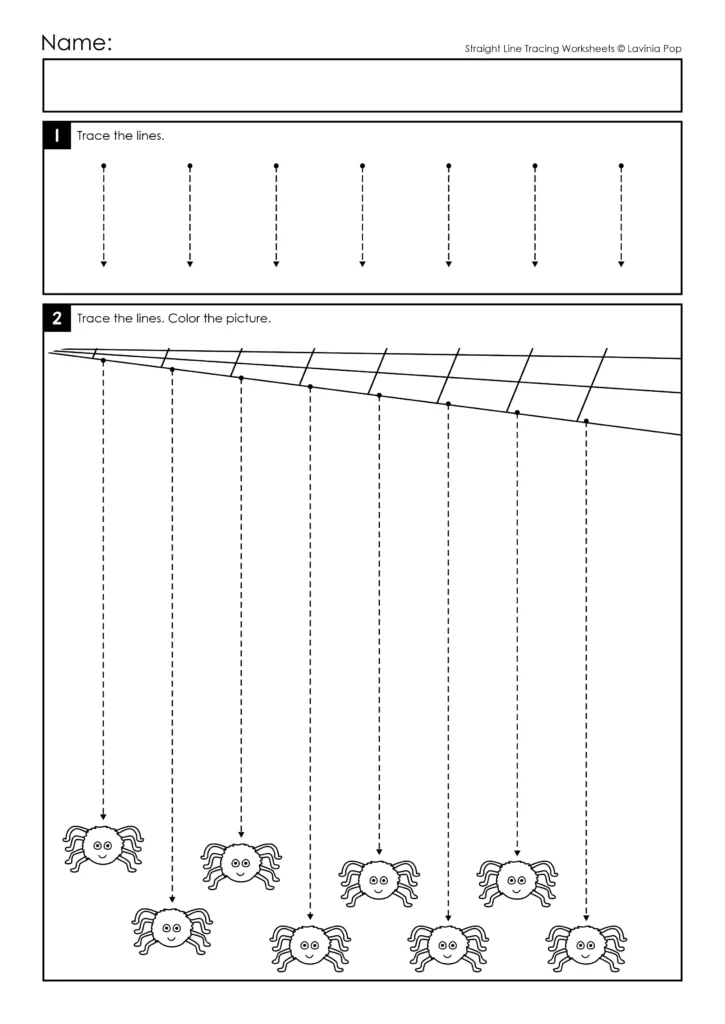
On the spider page, children begin with short vertical lines and then trace the longer threads leading down to the spiders.
This gives you a useful opportunity to compare short and long movements. A child might manage the short practice lines comfortably but need more support to stay on a longer path.
The harp page offers another version of vertical tracing, with strings of different lengths. Encourage children to notice the endpoint of each string before they begin.
Try asking, “Where does this line start?” and “Can you show me where it stops?”
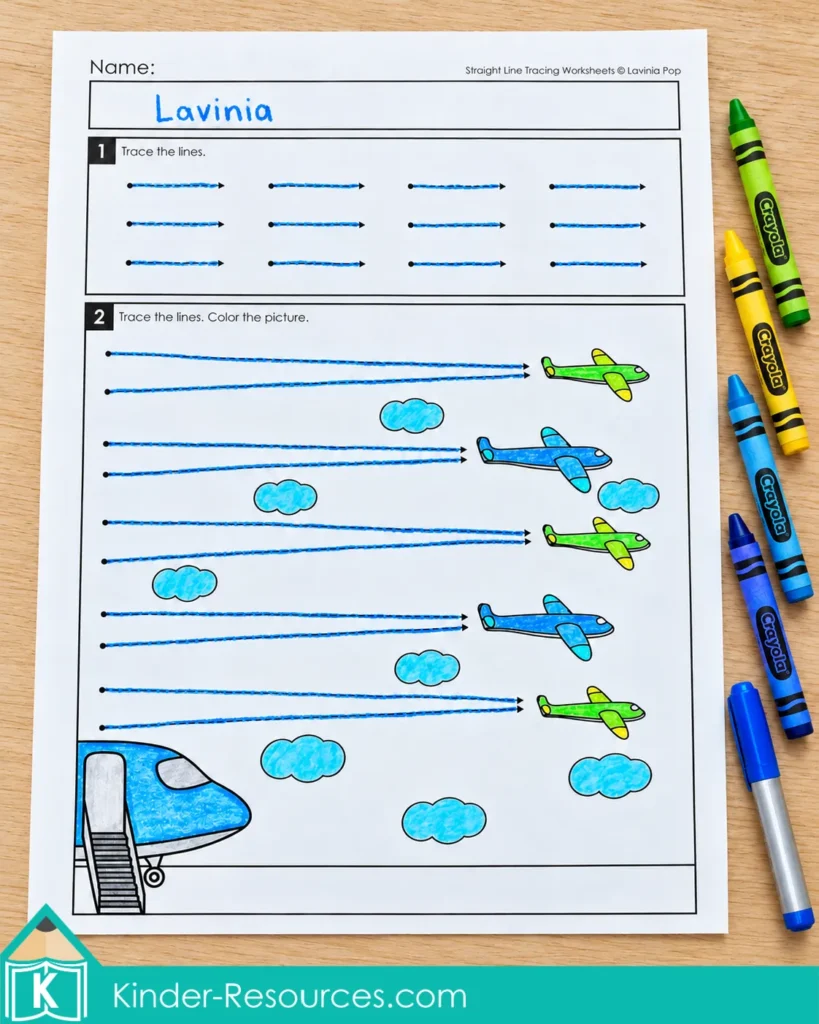
Horizontal Line Tracing with Ladders and Airplanes
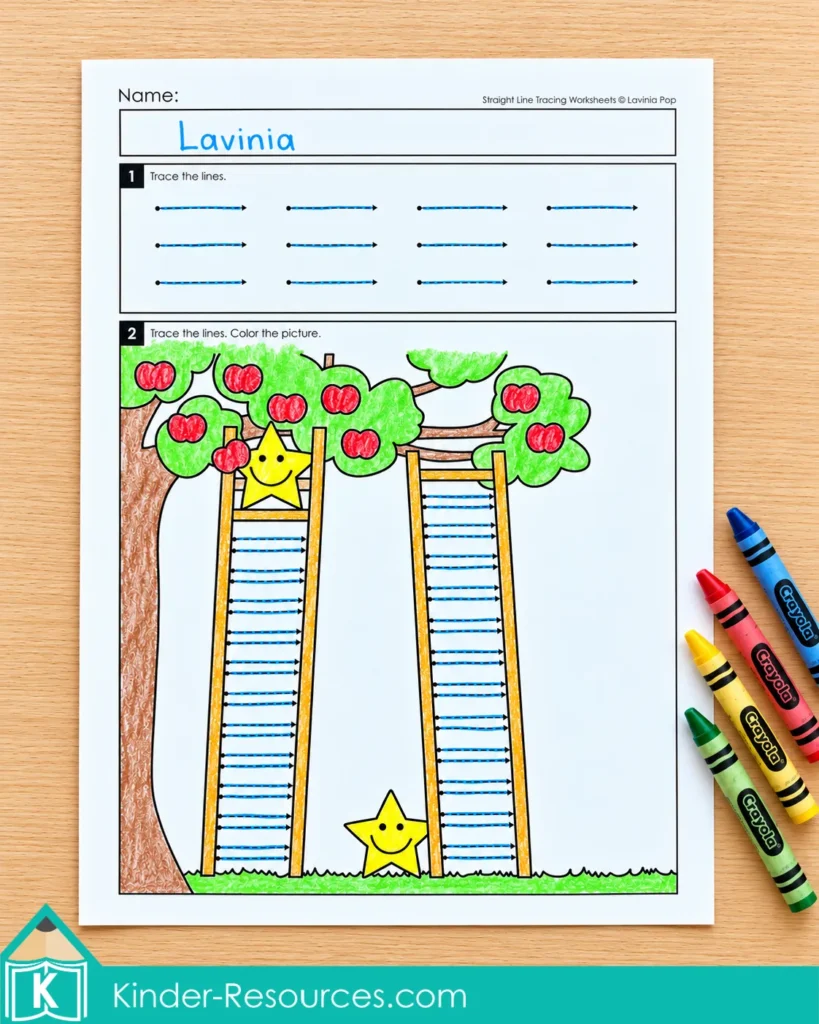
The apple-tree page gives children practice tracing horizontal ladder rungs.
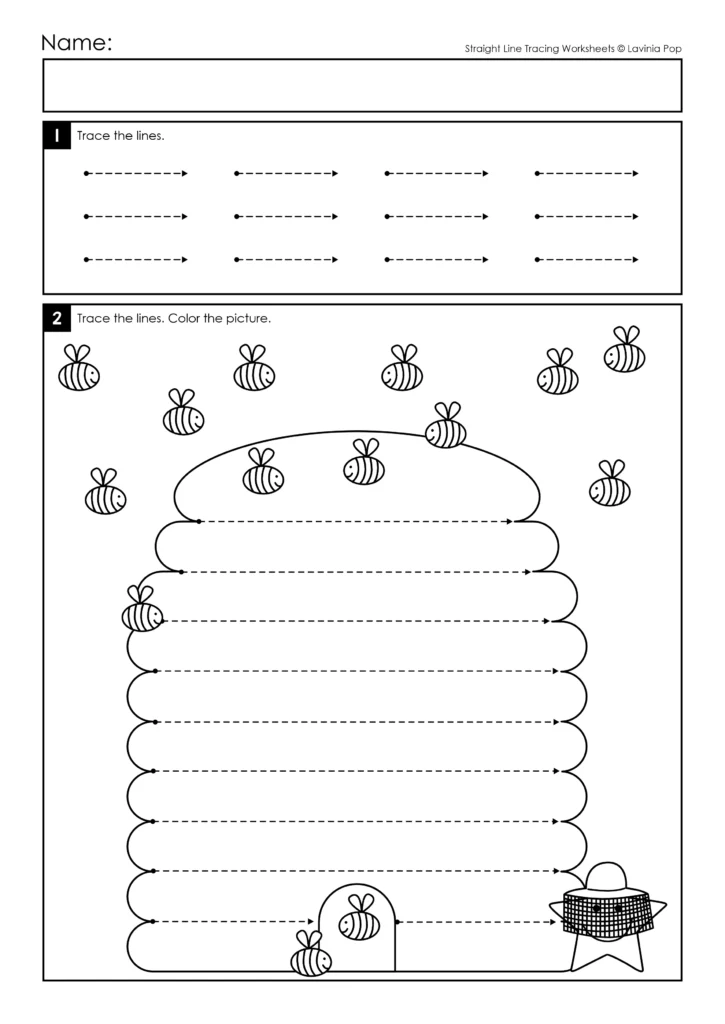
Each rung provides a clear, manageable path across the page. Children can trace one rung at a time, lifting their writing tool and finding the next starting point.
This is also an opportunity to introduce the word “horizontal” alongside the more familiar instruction “across.” Follow the arrow on each line so children notice its direction.
Exploring Different Directions with Stars and Pizza
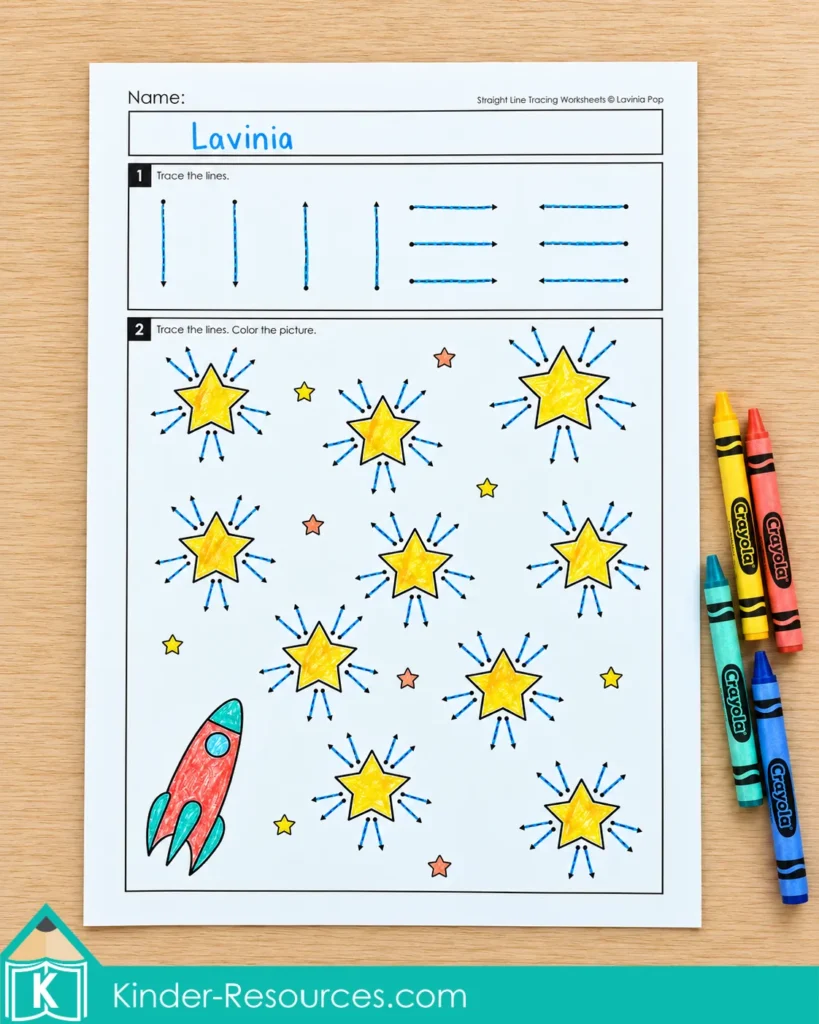
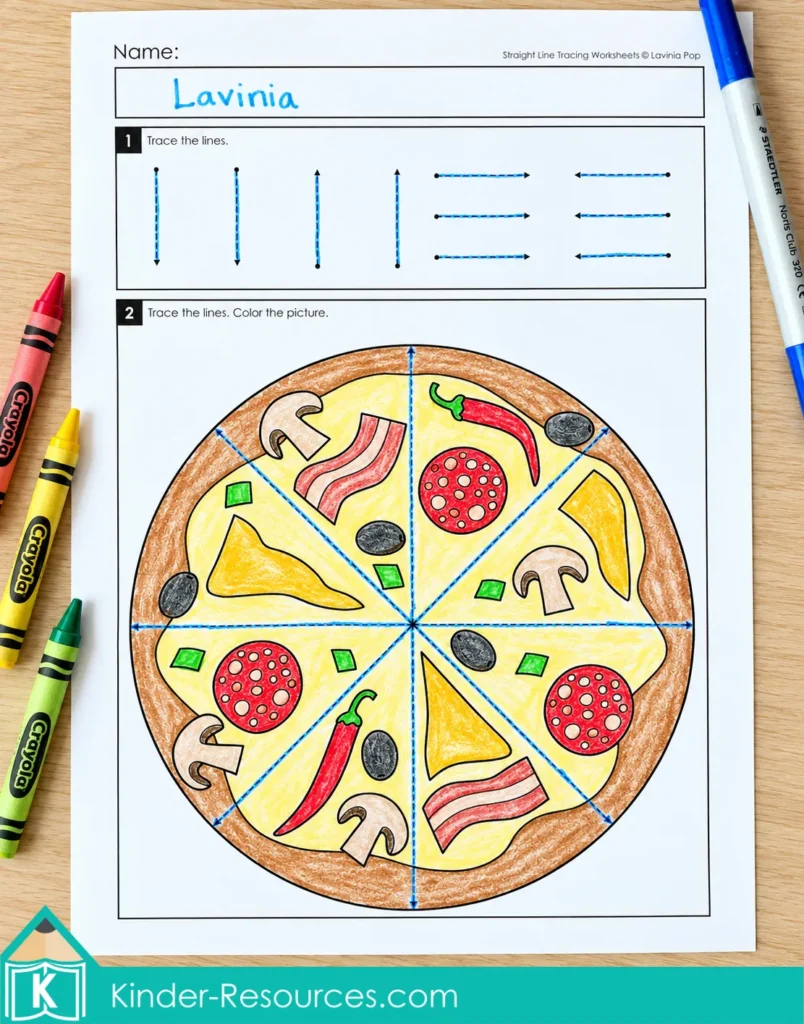
The star and pizza pages bring together lines traveling in different directions.
These pages encourage children to pause and check each starting point. Rather than repeating exactly the same movement, they need to notice whether the next line travels up, down, across, or diagonally.
Offer these pages when children are comfortable with simpler straight-line practice. You can also choose just a few lines to complete together.
How to Use These Line Tracing Worksheets
- Choose a suitable page. Start with a line type and length your child can attempt comfortably.
- Demonstrate one stroke. Show how to begin at the dot and move toward the arrow.
- Try finger tracing. Let children explore the path with a finger before using a writing tool.
- Trace the practice lines and picture. Work at a comfortable pace and pause when needed.
- Color the picture. Children can choose their own colors and enjoy completing their work.
Finger tracing followed by pencil tracing is one approach suggested by the Royal Children’s Hospital’s occupational therapy resources.
For reusable activities, laminate the pages or place them in dry-erase sleeves. For paper copies, provide pencils or crayons for tracing and coloring.
Take the Next Step: Draw a Line Without Tracing
Once a child is comfortable tracing a particular stroke, demonstrate it on blank paper and invite them to draw one beside yours.
For example, after the ladder worksheet, draw two ladder sides and ask your child to add some rungs. After the spider page, draw a spider and invite your child to draw its thread.
This gives children an opportunity to make the movement without a dotted path underneath. Copying a demonstrated line and drawing independently are useful additions to tracing practice.

Keep Prewriting Playful
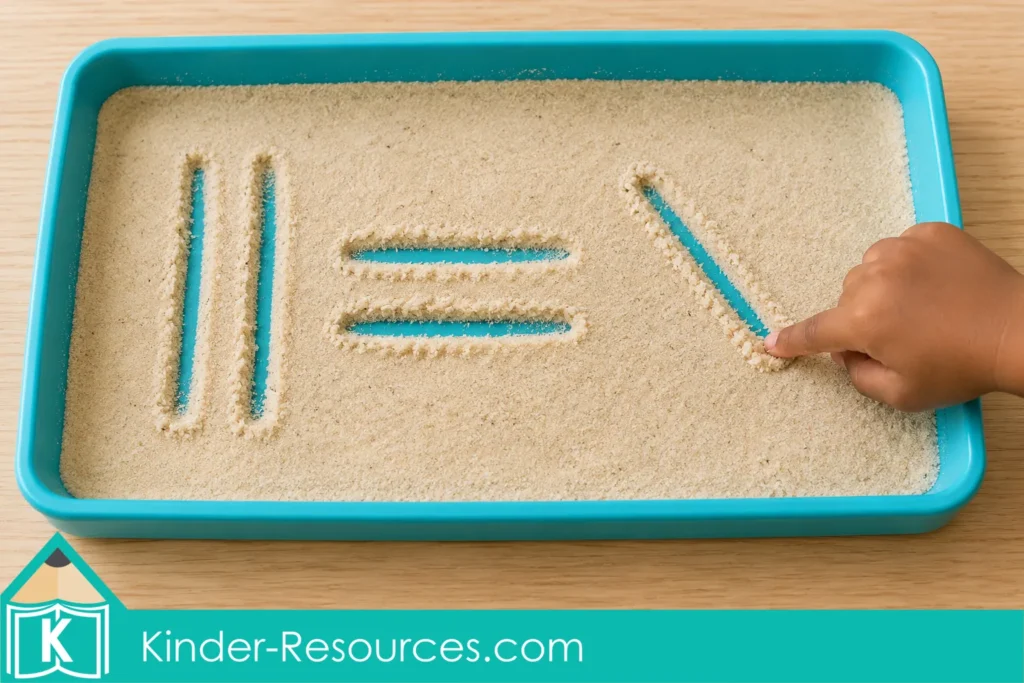
Use worksheets alongside drawing, painting, play dough, and other hands-on activities. Children can make large lines with chalk, draw in a sand tray, or create lines with their whole arm before working on a smaller page. Starting with larger movements and gradually moving to smaller work is one approach recommended by Somerset NHS children’s therapy services.
Choose activities according to each child’s readiness. If a page feels difficult, return to a shorter line, a larger drawing surface, or a familiar activity. A few comfortable attempts can be enough for one session.
What’s Included in the Packet?
The complete resource includes:
- 20 black-and-white worksheets
- Vertical, horizontal, and diagonal straight-line practice
- Starting dots and directional arrows
- Line practice followed by a picture to trace and color
- Teacher directions and suggestions for use
Use the pages during small-group instruction, in fine motor centers, or for supported practice at home.
Get the Complete Straight Line Tracing Worksheets Packet
You can find the complete Line Tracing Worksheets for Preschool packet in my Teachers Pay Teachers store.

Happy Teaching! 😊
You Might Also Like