
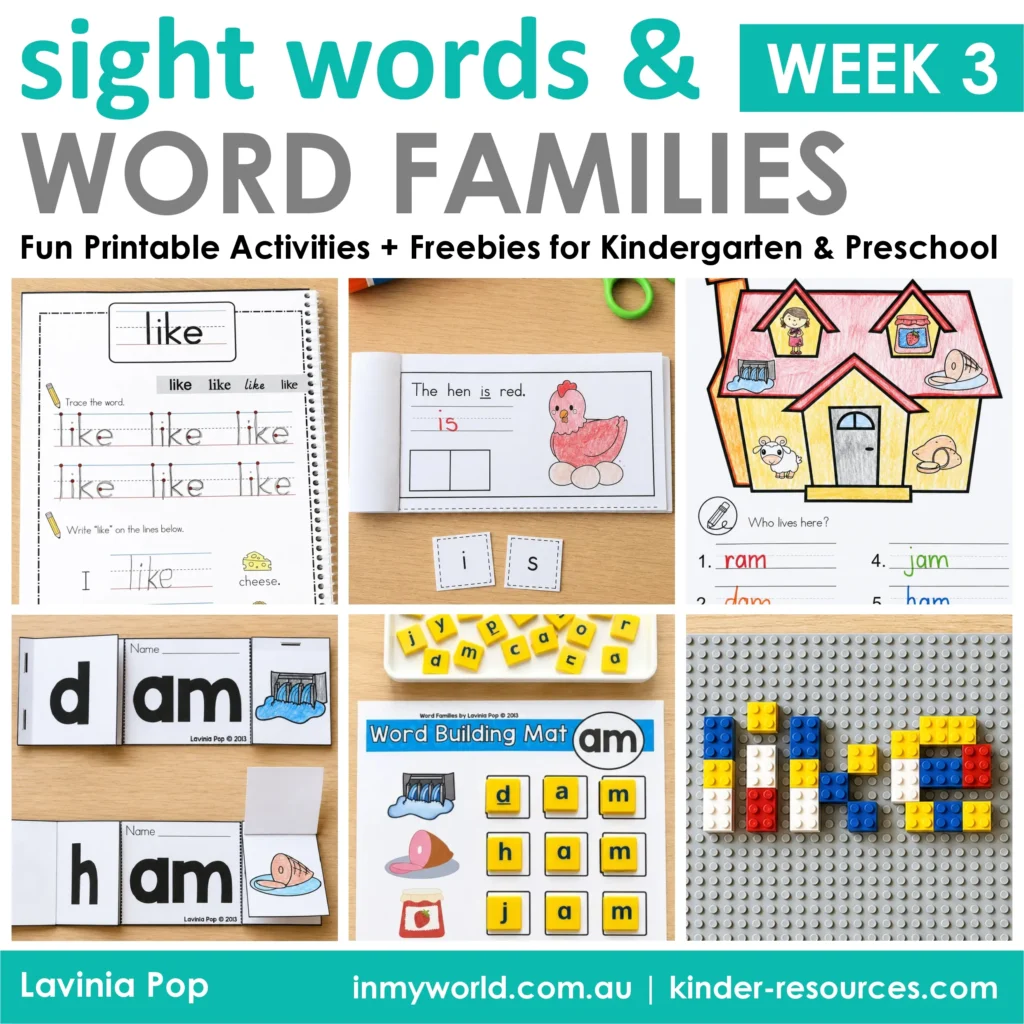
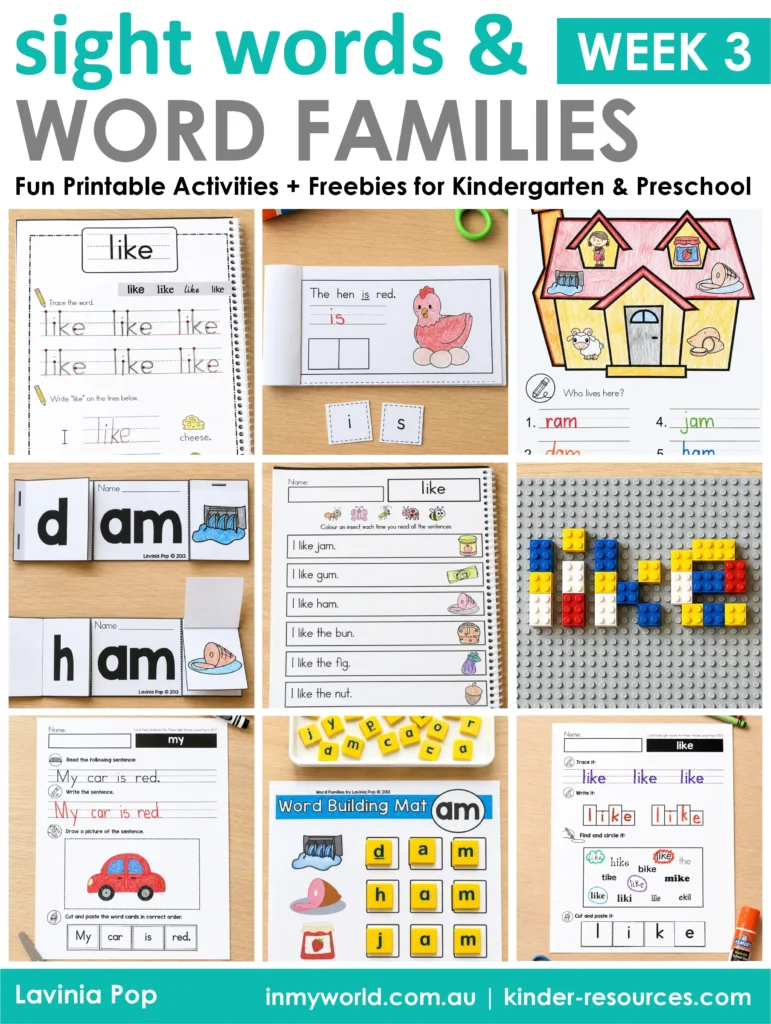
Welcome to Sight Words and Word Families Week 3! This week, I am sharing free sight word and word family activities that can help beginning readers develop confidence with reading, spelling, handwriting, and sentence building.
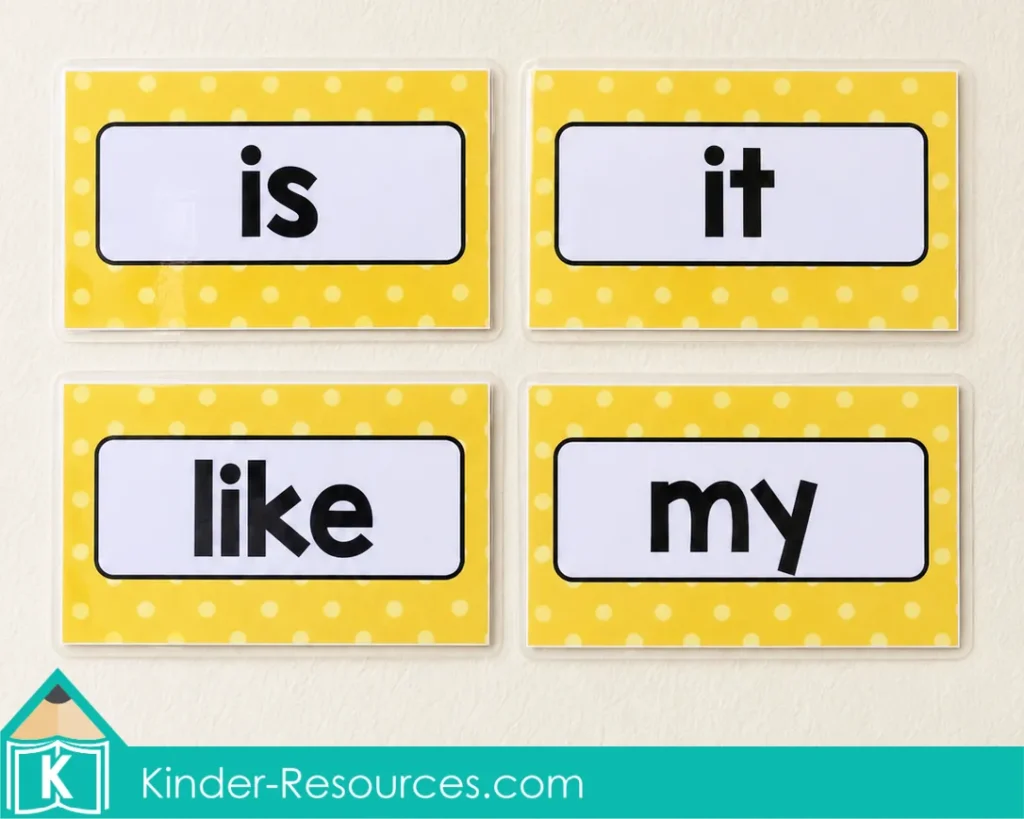
The focus sight words for Week 3 are is, it, like and my, and the focus word family is the am word family. I have gathered together some of my favorite readers, worksheets, booklets, and hands on activities for practicing these words at school or at home.
See Sight Words and Word Families Week 1 here.
See Sight Words and Word Families Week 2 here.
See Sight Words and Word Families Week 4 here.
Week 3 sight words: is, it, like, my
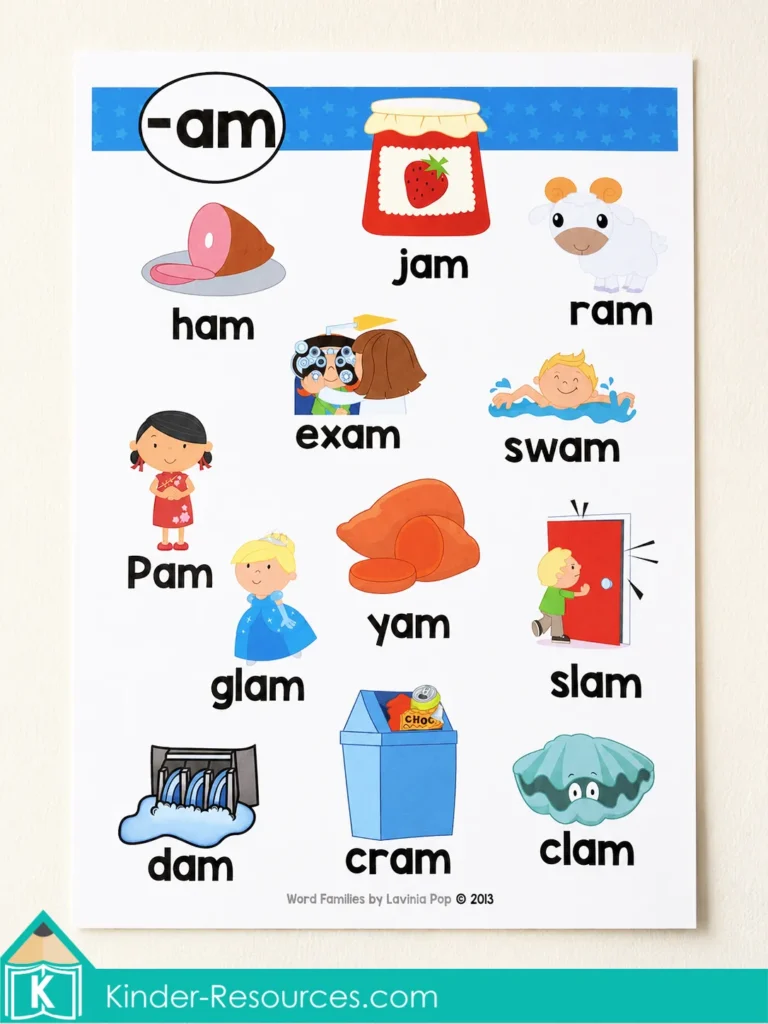
Week 3 word family: am
Sight Words and Word Families Week 3 Word Walls
For Sight Words and Word Families Week 3, I like to begin by introducing the new sight words and word family with visual word wall cards. Keeping the words on display gives children a helpful reference during reading and writing activities throughout the week.
Click each photo below to download the free sight word or word family word wall. You can also view the complete (TpT) Pre Primer Sight Words Word Wall or (KR link here) and browse the complete (TpT) Word Family Posters or (K-R link here).
Week 3 Sight Word Reading and Writing Activities
Once children have been introduced to the focus words, I like to provide plenty of opportunities for them to see, read, build, and write each word. Repeated practice is important, but it does not need to feel repetitive. Using a mixture of readers, booklets, worksheets, and hands on activities keeps the learning interesting.
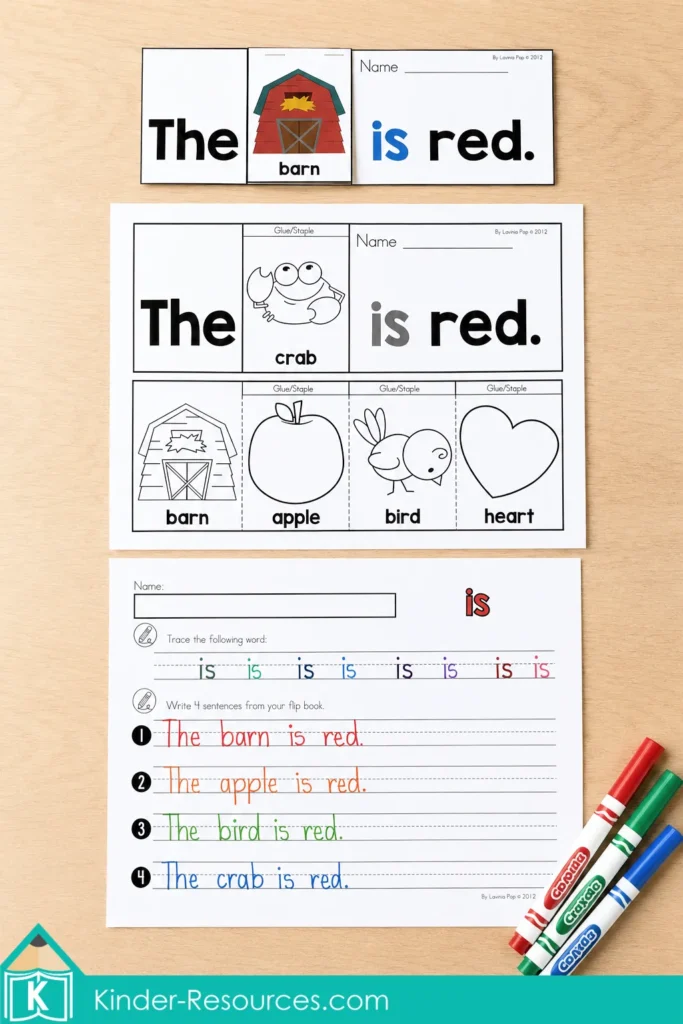
Sight Word Fluency Flip Books
Let’s begin with one of my favorite resources for beginning and struggling readers: sight word flip books. These little books give children repeated opportunities to read a focus word in simple sentences.
When the accompanying worksheet is included, children can also practice writing a complete sentence correctly. There is something very encouraging about making a little book and then discovering that you can read it independently. You can view the complete (TpT) Sight Word Fluency Flip Books (K-R link here), or click the photo below to download the free Week 3 samples.
Sight Word Fluency Reading Pages
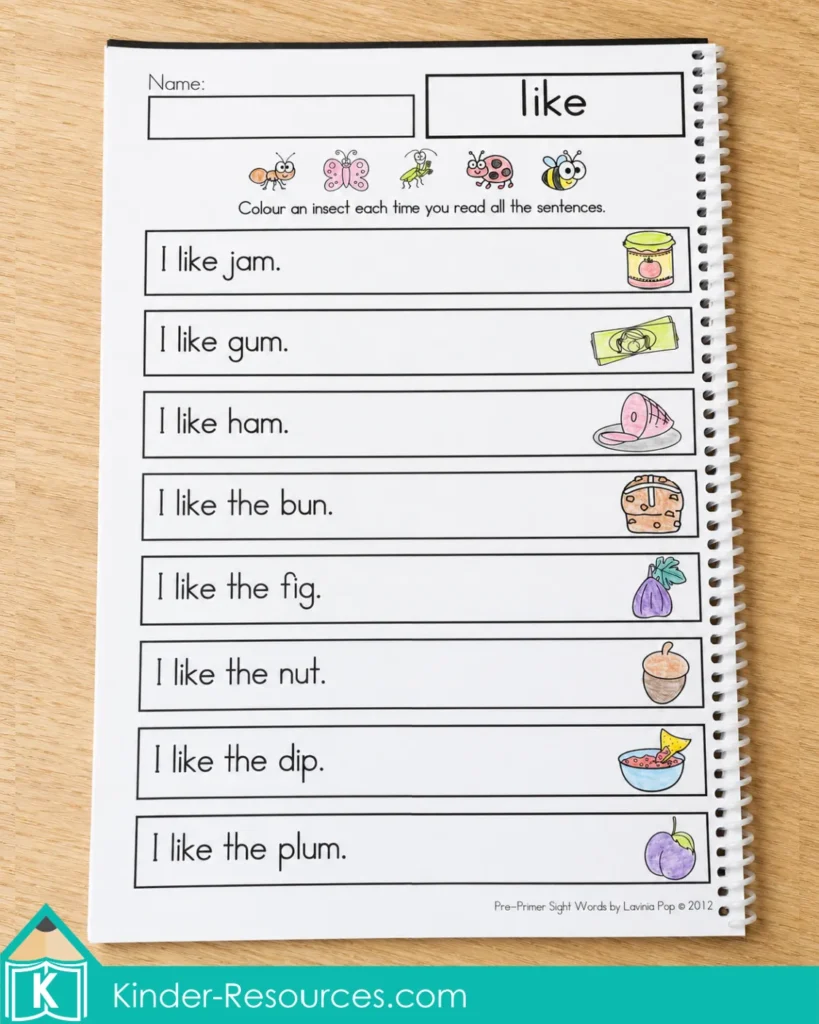
Another activity I enjoy using comes from the (TpT) Sight Words Fluency Reading Homework (K-R link here) packet. I originally created these pages to help beginning readers develop fluency, but they can also provide valuable support for children who need additional reading practice.
The predictable format allows children to concentrate on recognizing the focus word and reading each sentence more smoothly. The pages can be used during small group instruction, independent literacy practice, or at home with a parent.
Sight Word Readers with Comprehension
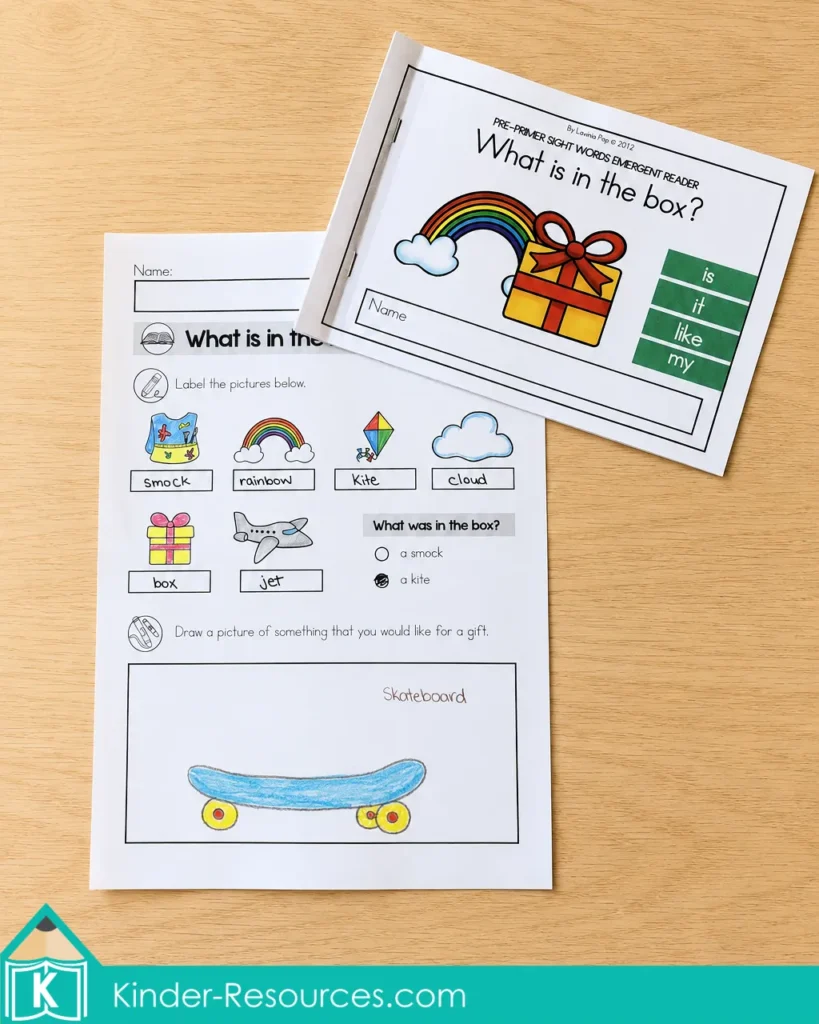
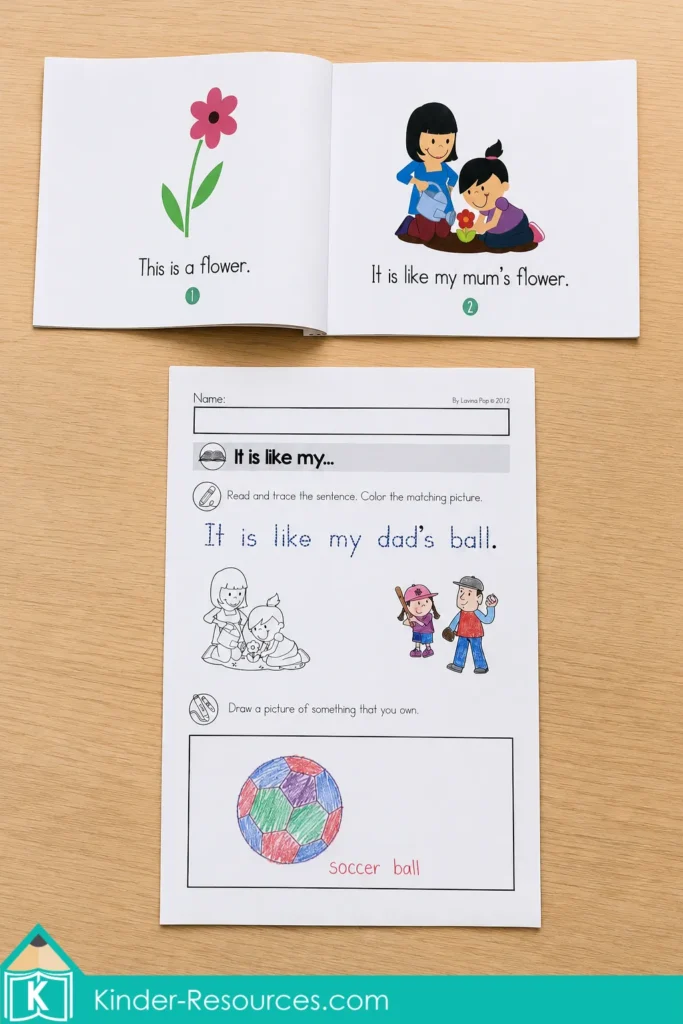
The next set of early reader books combines sight word practice with simple reading comprehension. These booklets are included in the (TpT) Reading Comprehension Sight Word Readers (K-R link here) packet.
I like that children are not only practicing the focus word. They are also learning to think about what they have read and respond to simple questions. Click either photo below to download the free samples.
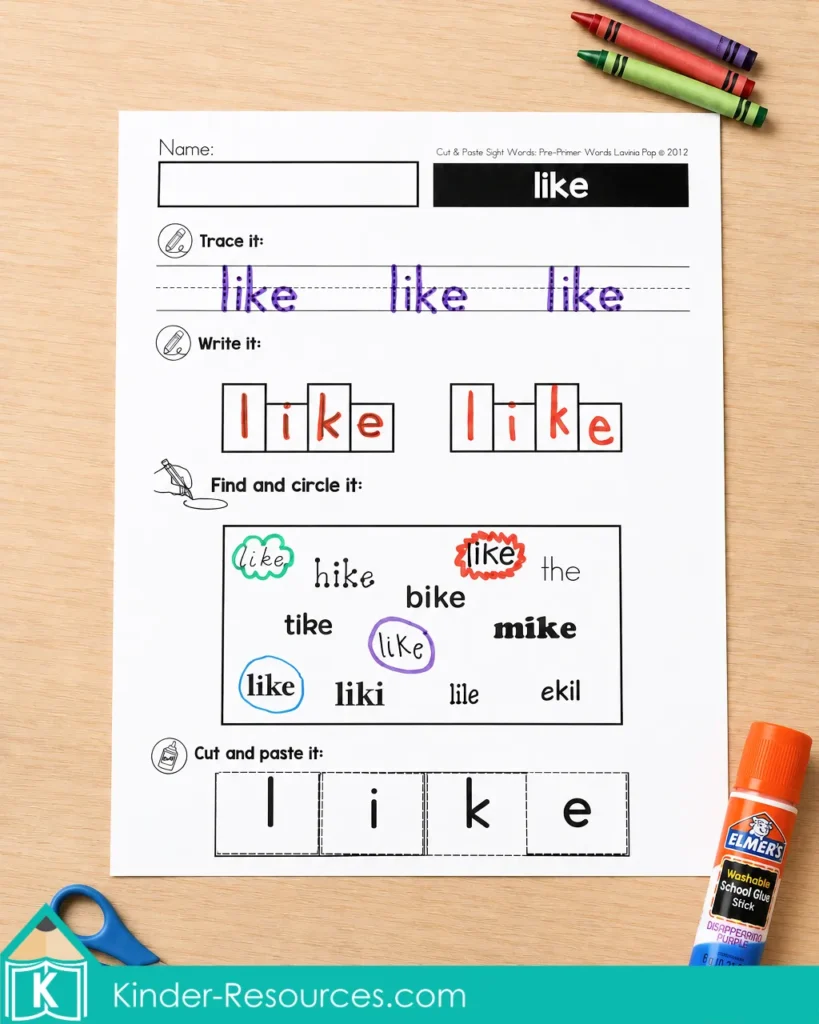
Cut and Paste Sight Word Practice
If you are looking for a simple activity to use when introducing each new sight word, this (TpT) cut and paste sight word activity (K-R link here) provides focused practice without requiring a complicated setup.
Children cut apart the letters, arrange them in the correct order, and build the focus word. This helps them look carefully at the letters within the word rather than relying only on its overall shape.
Build a Word Booklets
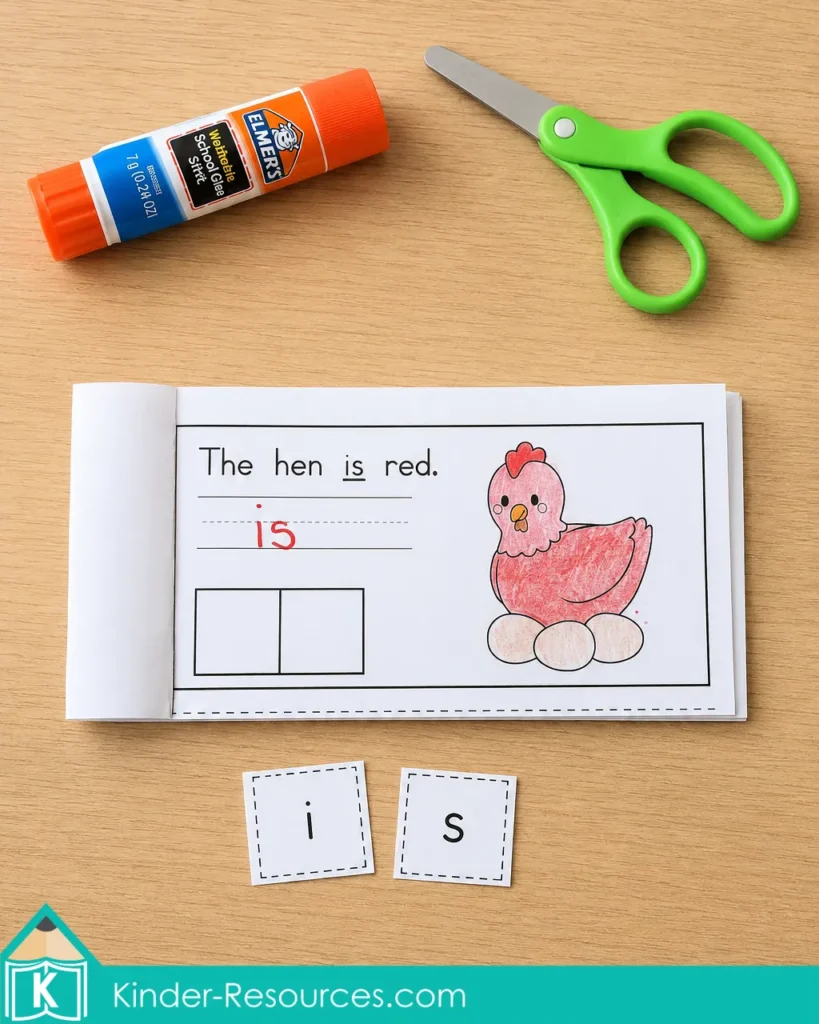
Another enjoyable way to practice building and writing each focus word is with the (TpT) Sight Words Build a Word Booklets (K-R link here).
These booklets give children several ways to interact with the same word. They can build it, trace it, write it, and read it in context. This makes them especially useful when children benefit from repeated practice in a familiar format.
Sight Word Handwriting Practice
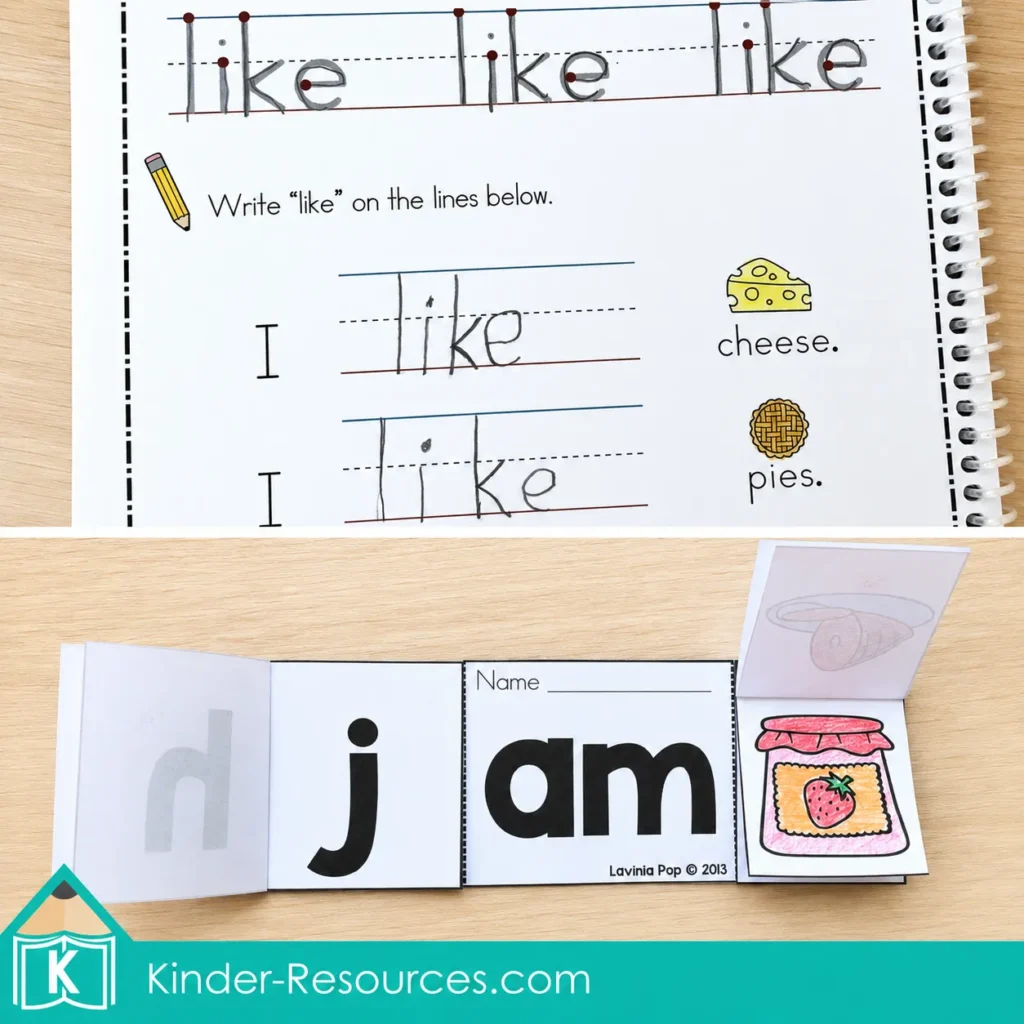
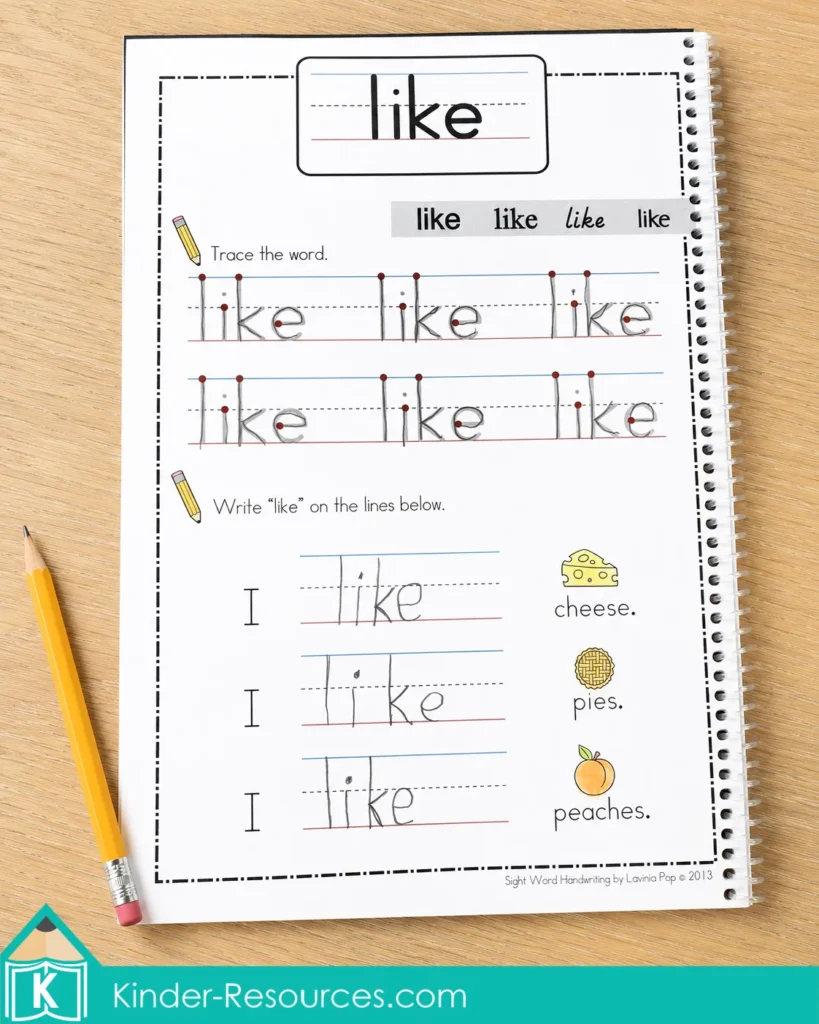
For children who need additional handwriting practice, the (TpT) Sight Words Handwriting Book (K-R link here) combines letter formation, word writing, and simple sentence reading.
I find it helpful when one activity allows children to practice several connected skills. They are learning to form the letters correctly while also becoming more familiar with the word and the way it is used in a sentence.
Sight Word Sentence Building
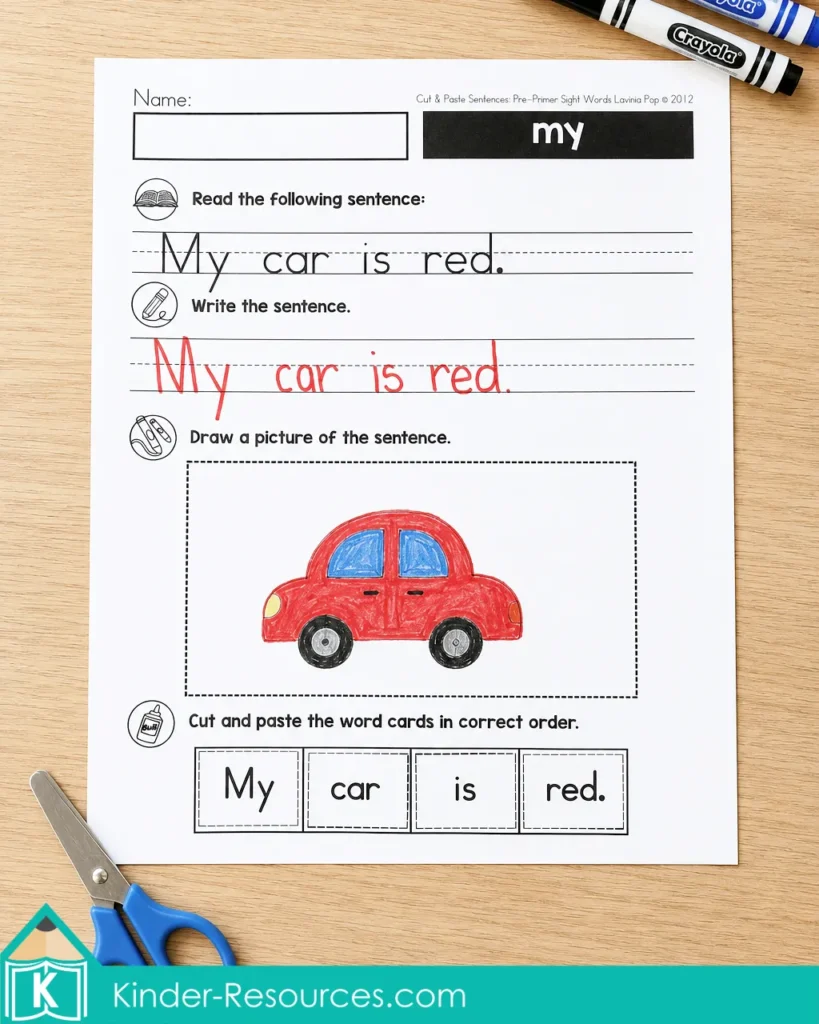
When children are ready to move beyond individual words, this (TpT) cut and paste sentence worksheet (K-R link here) provides guided sentence building practice.
Children arrange the words in the correct order before writing the complete sentence. This helps them notice spacing, capitalization, punctuation, and the way words work together to communicate an idea.
Building Brick Sight Word Activities
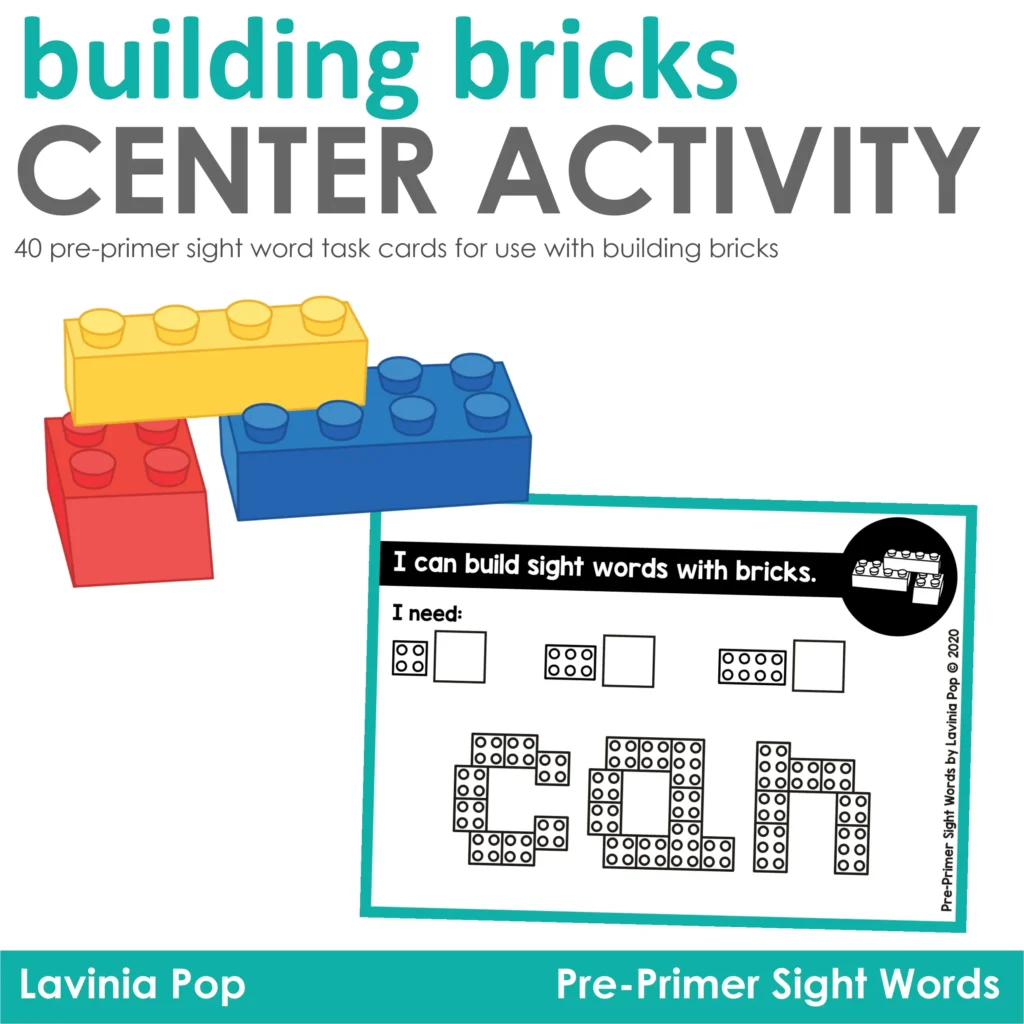
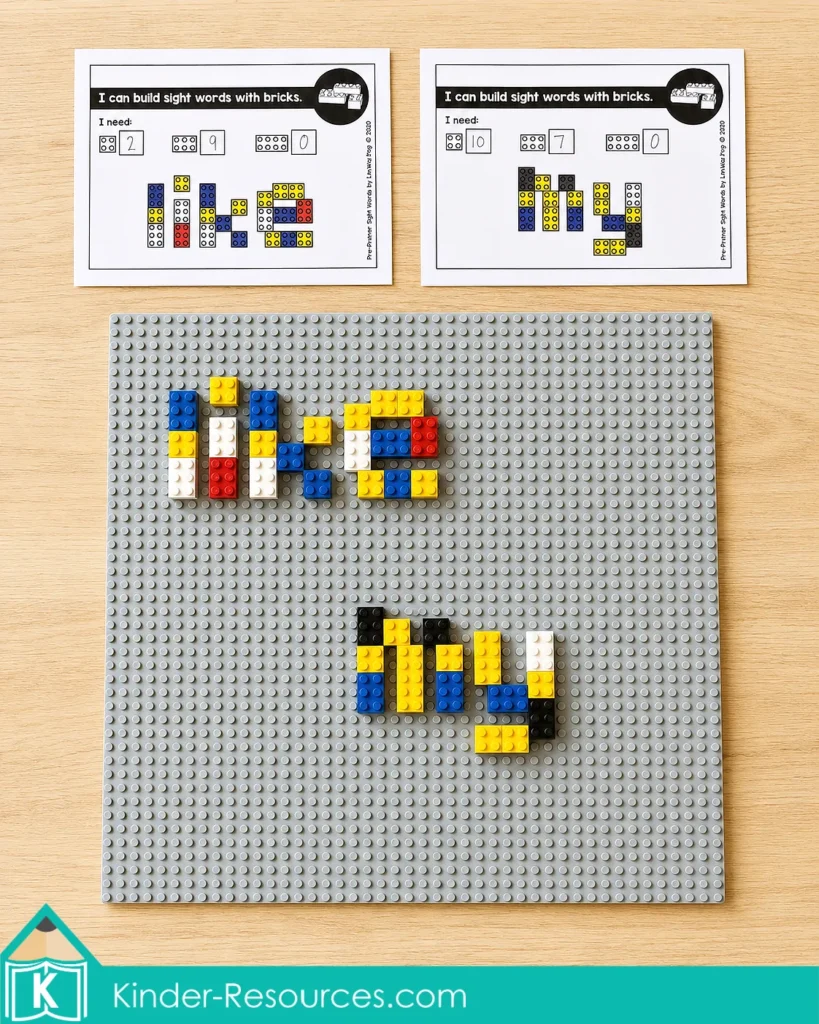
Booklets and worksheets are useful tools for teaching early reading skills, but I am also a big believer in learning through play. Building bricks have always been popular in our home. All of my children enjoyed playing with them, including my son when he was in eighth grade, so creating reading activities that used building bricks felt like a natural choice.
These task cards invite children to build each focus word with bricks. The activity adds a tactile element to sight word practice and can be used during literacy centers, morning work, or quiet learning time. You can view the complete Pre Primer Sight Word Building Bricks set here.
Am Word Family Activities
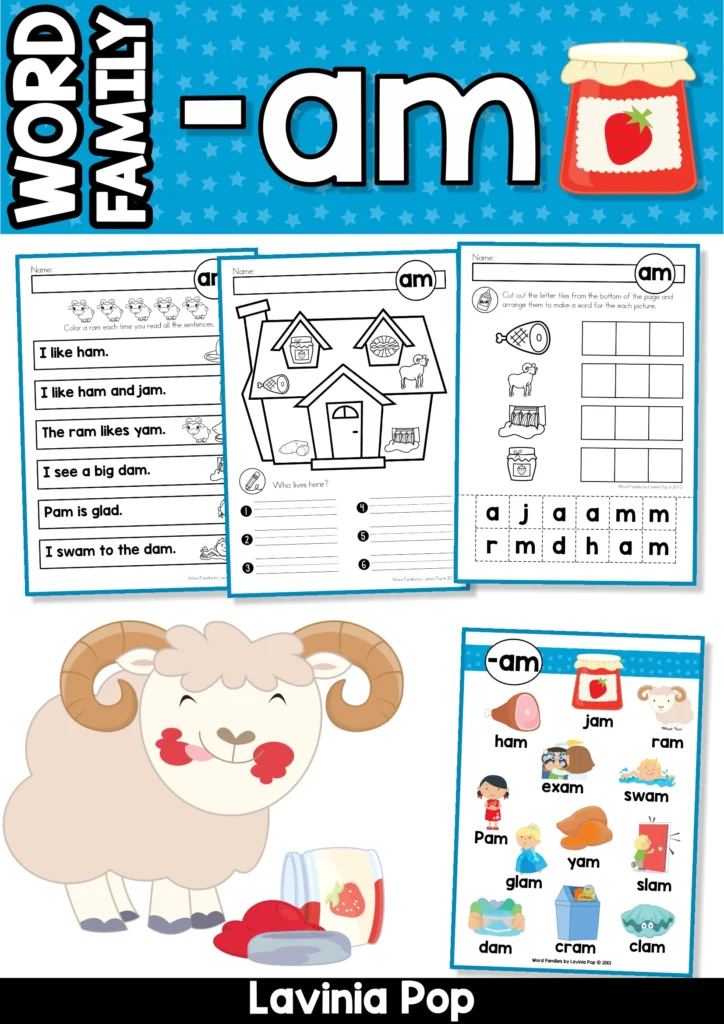
Now let’s move on to the word family focus for Sight Words and Word Families Week 3. The am word family gives children an opportunity to blend and read words such as ham, jam, ram and Sam.
When teaching a word family, I like children to see that the ending remains the same while the beginning sound changes. This helps them recognize the shared spelling pattern and use it to read and build new words.
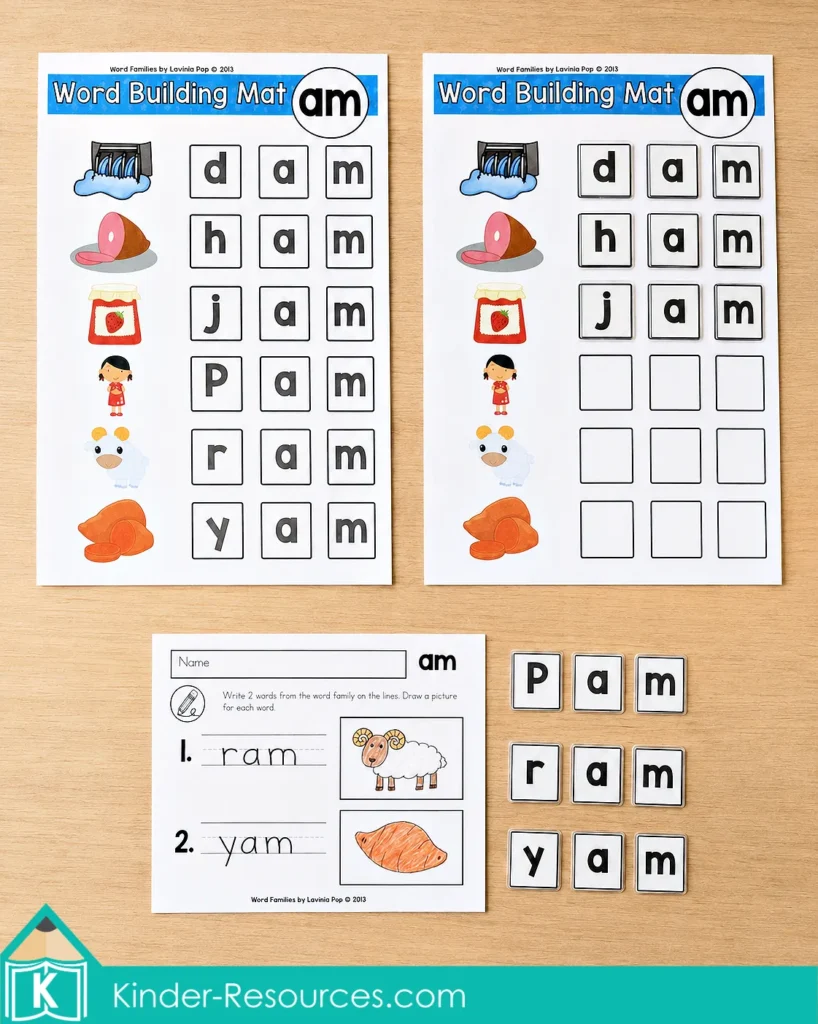
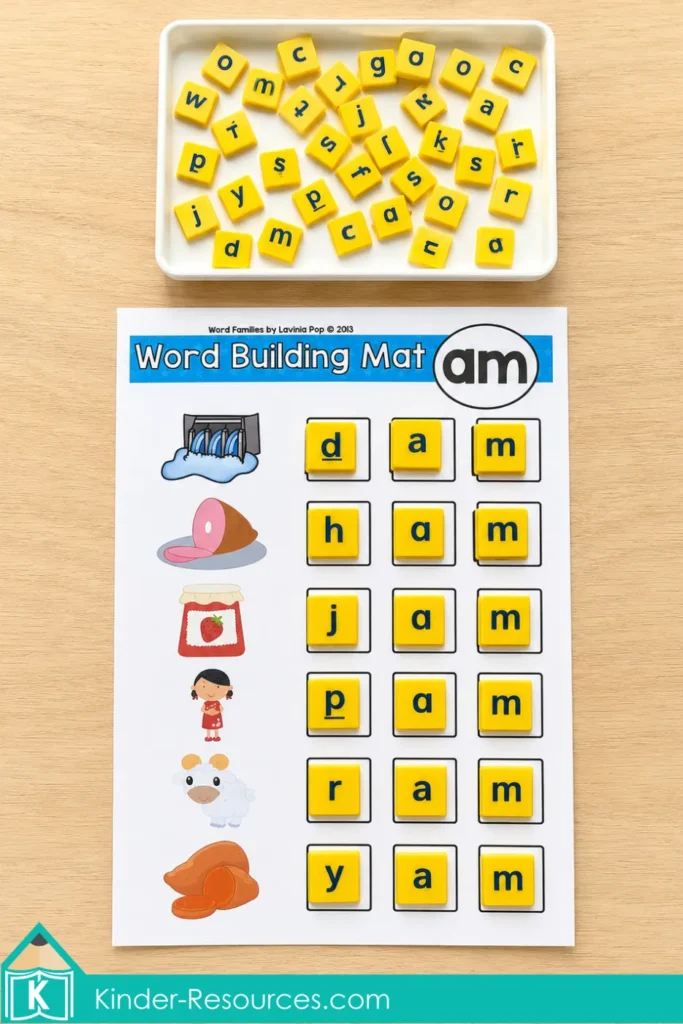
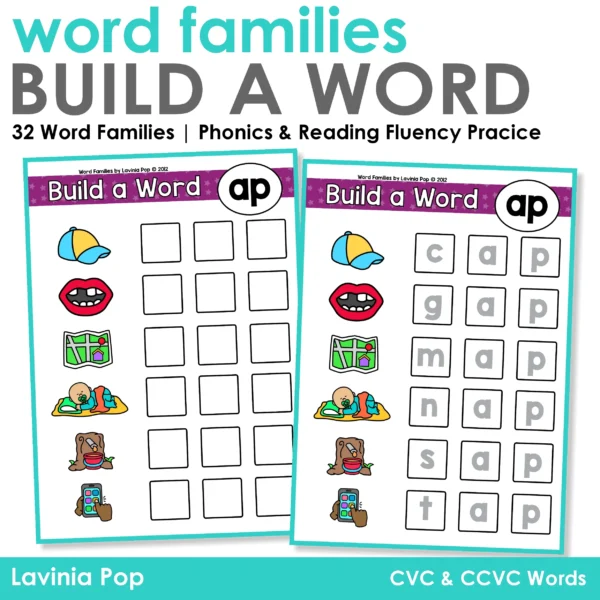
Am Word Family Building Mats
I believe one of the most effective ways to introduce a word family is (TpT) through word building (K-R link here). It provides a clear visual demonstration of how word families work. Children change the beginning letter to make a new word while the ending remains the same.
Magnetic letters, letter tiles, or other movable letters work well with these mats. Click either image below to download the free am word family activity.
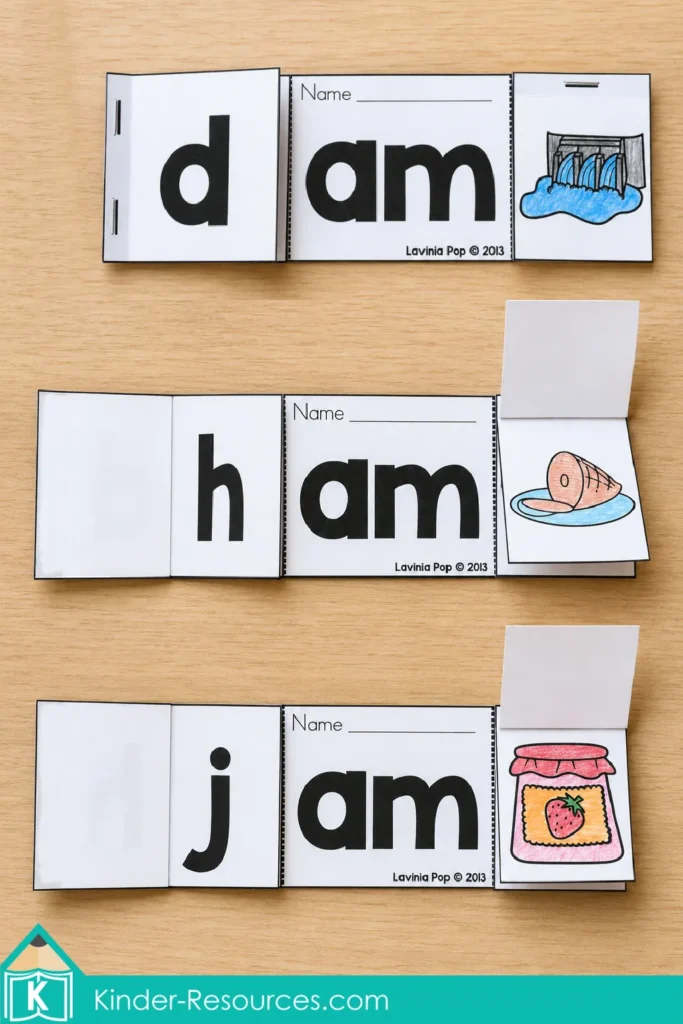
Word Family Flip Flap Book
This little (TpT) word family flip flap book (K-R link here) reinforces the same concept in a playful format. Children flip the beginning letter to make and read different words that share the am ending.
I like activities like this because children can physically see one part of the word change while the word family pattern stays in place.
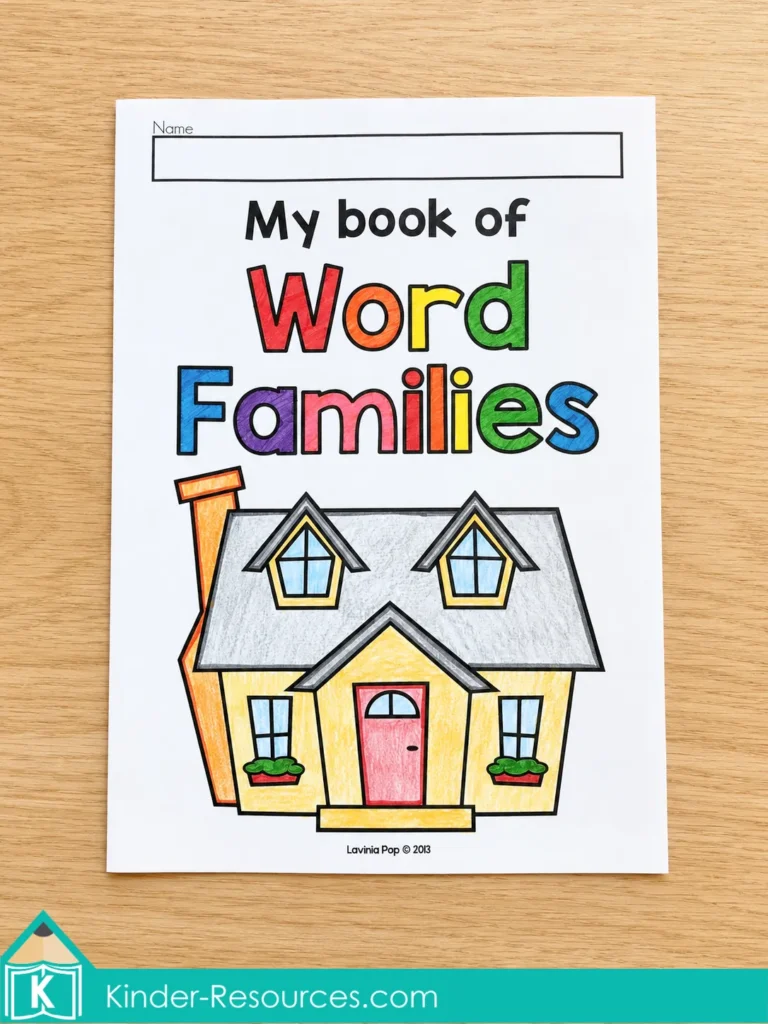
My Book of Word Families
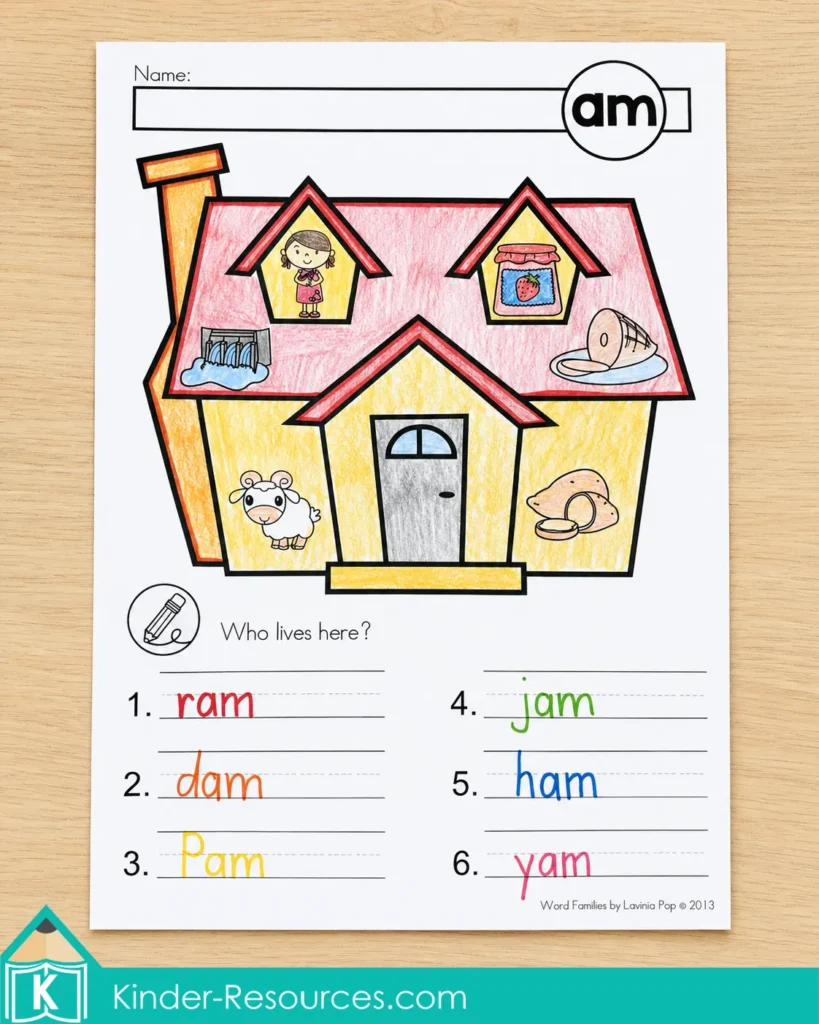
If you plan to introduce several word families, children can collect their work in a personal word family booklet. The (TpT) My Book of Word Families (K-R link here) packet includes several worksheet options, so you can choose the format that best suits your learners.
As each new word family is introduced, children can add another page to their books. Over time, the booklet becomes a useful record of the patterns and words they have learned.
Teaching Word Meanings in Context
When we teach word families, children sometimes encounter words that are unfamiliar or used differently in another country. A word such as jam may immediately make some children think of a fruit spread, while other children may know another meaning first. The word tap may refer to a faucet in one country, but children elsewhere may use it mainly as an action word. Even a word such as kin can lead to an interesting conversation about family and relatives.
I do not think we need to avoid these words. Instead, they give us an opportunity to explain vocabulary, compare meanings, and use each word in a meaningful sentence. Children need more than the ability to sound out a word. They also need to understand what it means and how it is used.
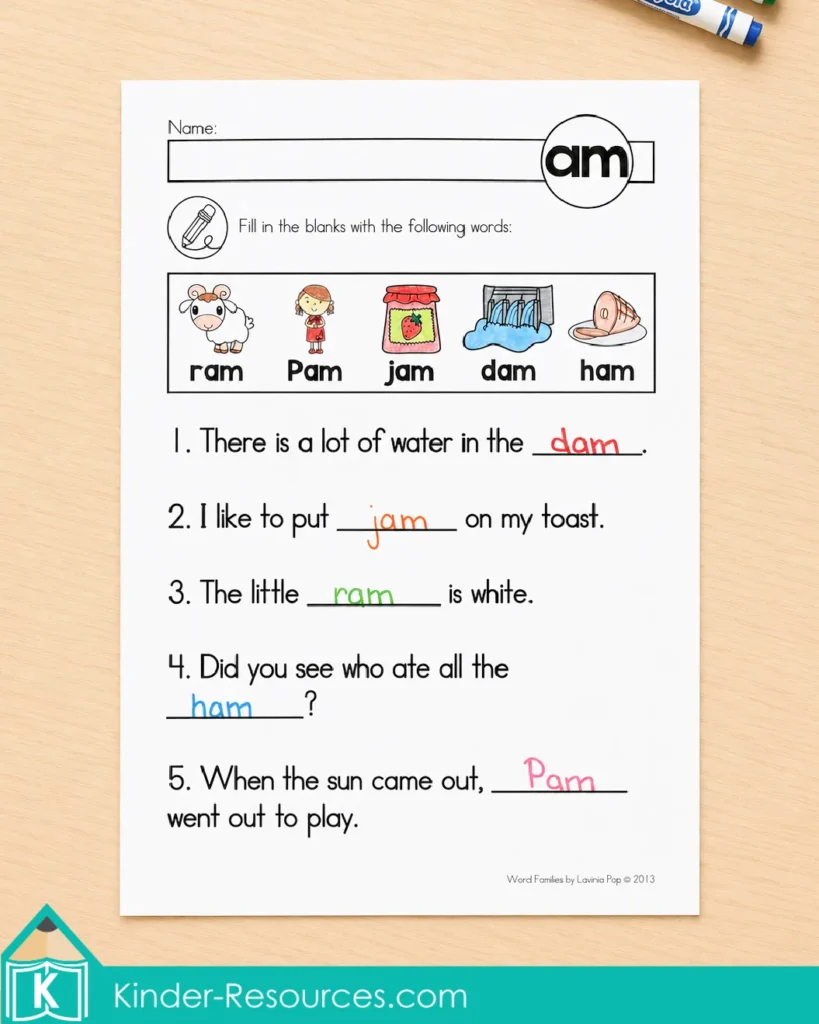
The worksheet below comes from the (TpT) Word Family Fill in the Blanks (K-R link here) packet. It encourages children to select an appropriate word family word and use meaning, as well as phonics, to complete each sentence.
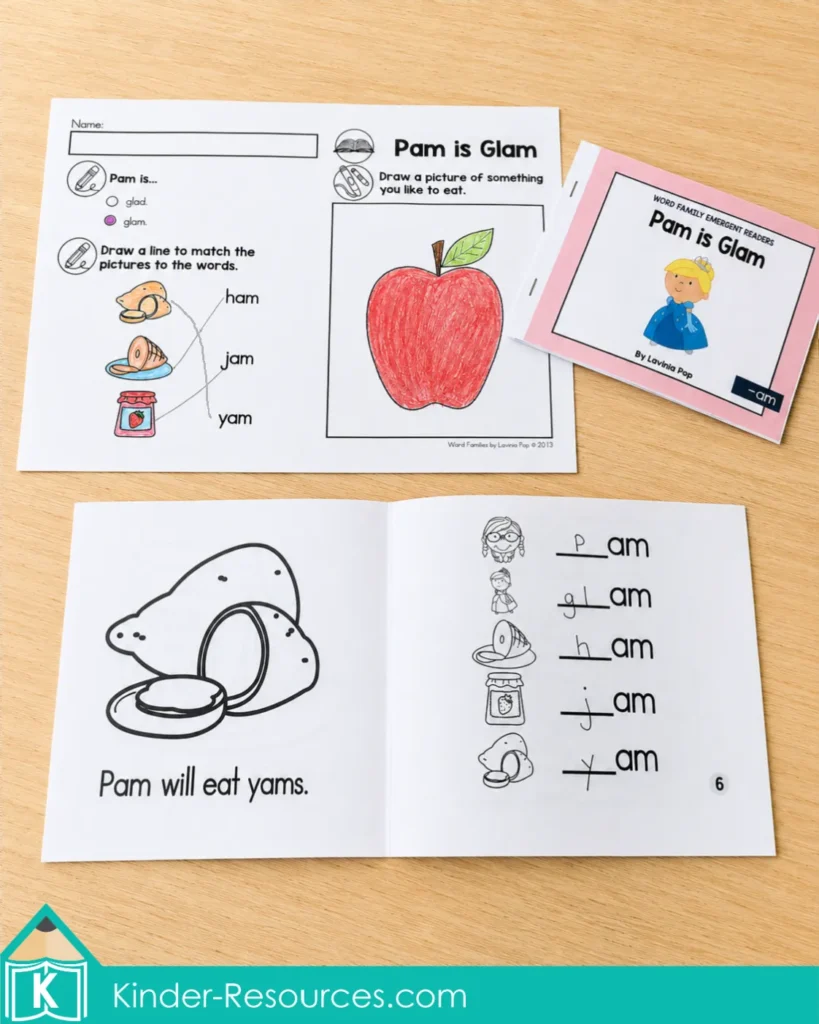
Am Word Family Reader
I like to complete a word family study with a simple reader. A (TpT) word family reader with comprehension questions (K-R link here) gives children an opportunity to apply their phonics knowledge while reading connected text.
After reading, the comprehension questions encourage children to recall details and show that they understood the story. Click the photo below to download the free am word family reader.
Am Word Family Building Brick Activities
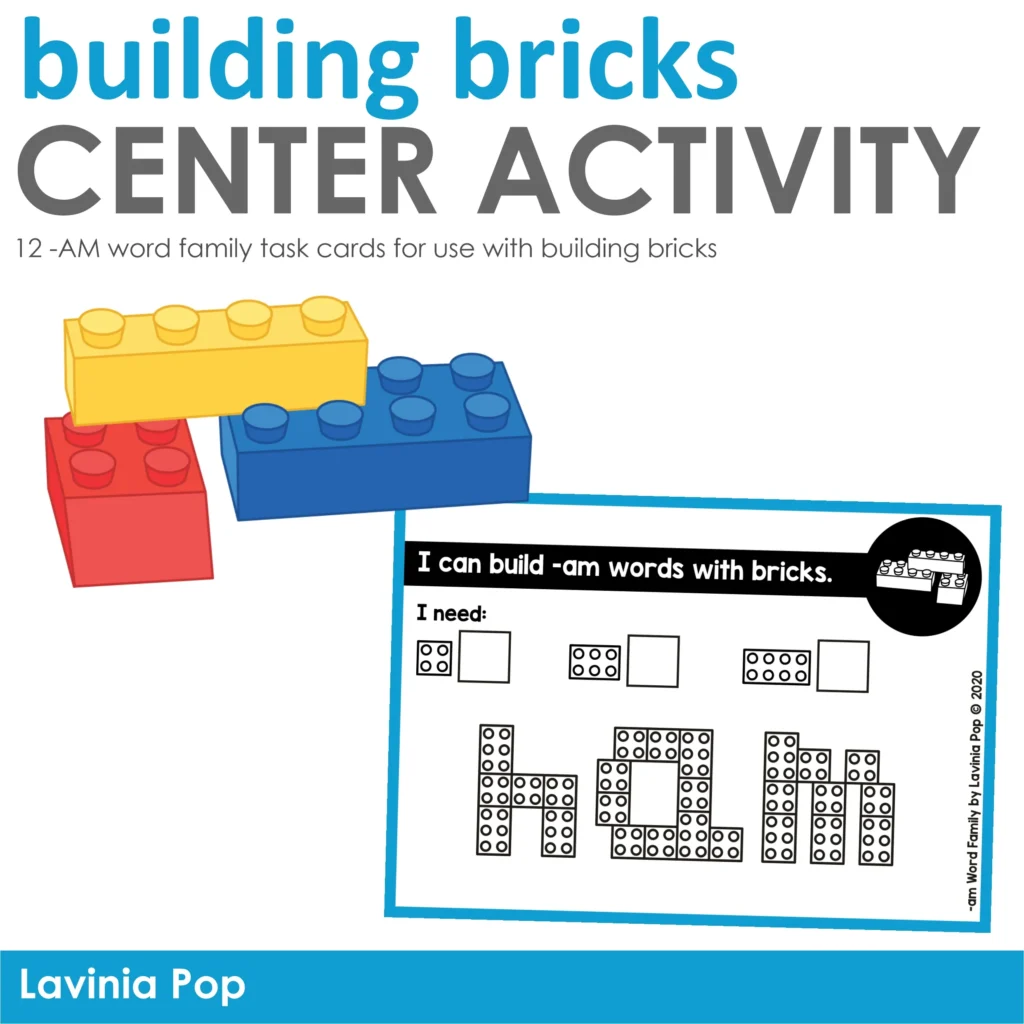
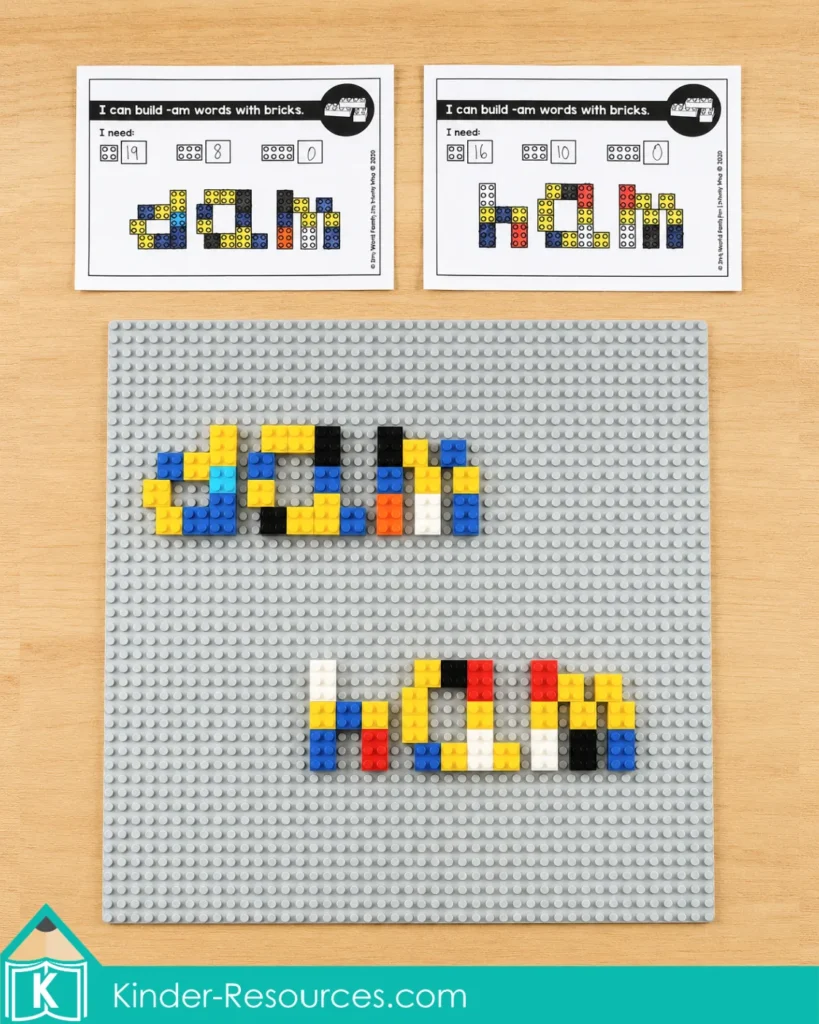
Because building bricks worked so well for sight word practice, I also created a set of task cards for the am word family. Children can use bricks to build words such as ham, jam, ram and Sam.
You can view the complete am Word Family Building Bricks packet here. The second photo links to a free sample that you can try with your children.
More Sight Words and Word Families Resources
I hope you find some useful ideas in this collection of Sight Words and Word Families Week 3 activities. You do not need to use every activity at once. Choose the ones that suit your children, and provide additional practice whenever it is needed.
If you try any of the free samples, I would love to hear which activities your children enjoyed most.
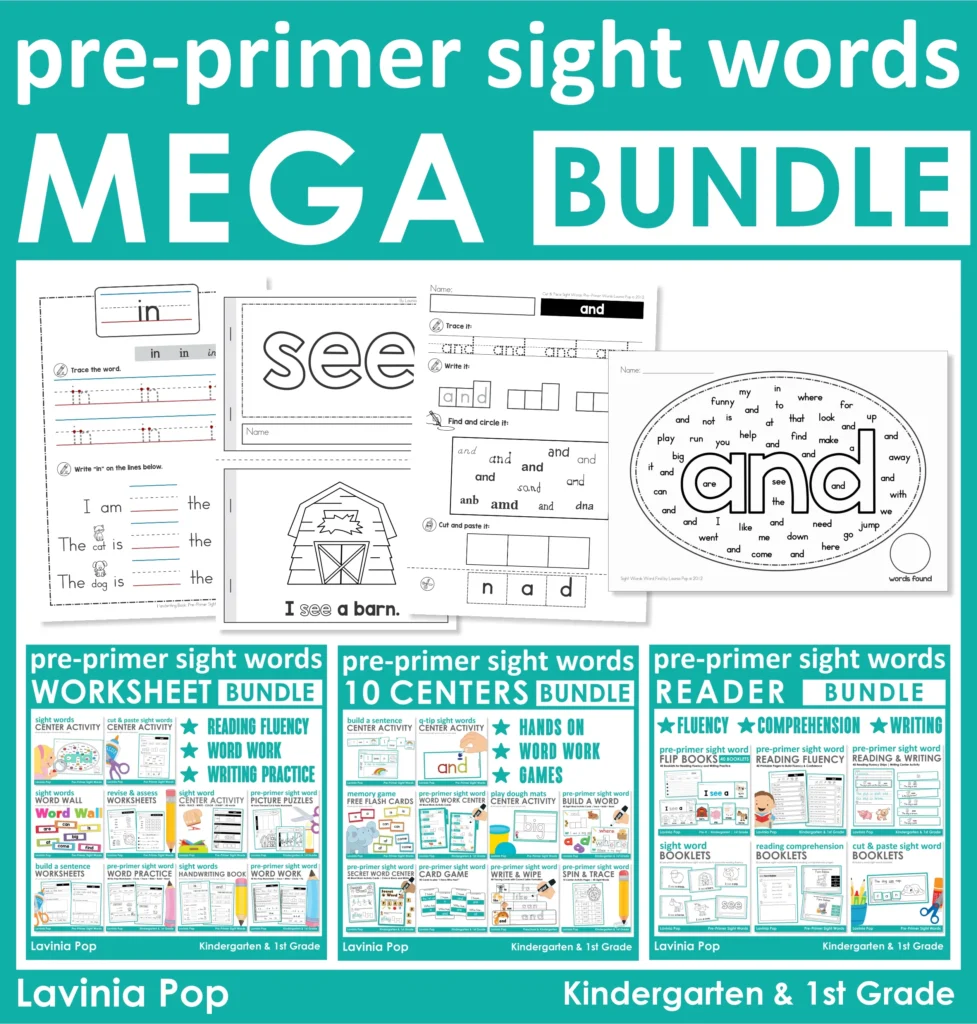
If you would like all of the Pre Primer sight word activities together, you can view the Pre Primer Sight Words MEGA BUNDLE in my TpT store. You can also view the complete am Word Family packet in my TpT store.
Happy Teaching! 😊
You might also like…
thank you