
An owl, a pumpkin, or a colorful leaf can be the beginning of both a drawing and a story. These Autumn Directed Drawing activities bring seasonal art and early writing together, with picture directions children can follow before adding their own ideas.
I created this collection to give young learners a clear starting point. You can focus on drawing and coloring, invite children to talk about their pictures, or extend the activity into sentence writing. The different page formats let you choose an approach that suits your kindergarten and 1st grade learners.
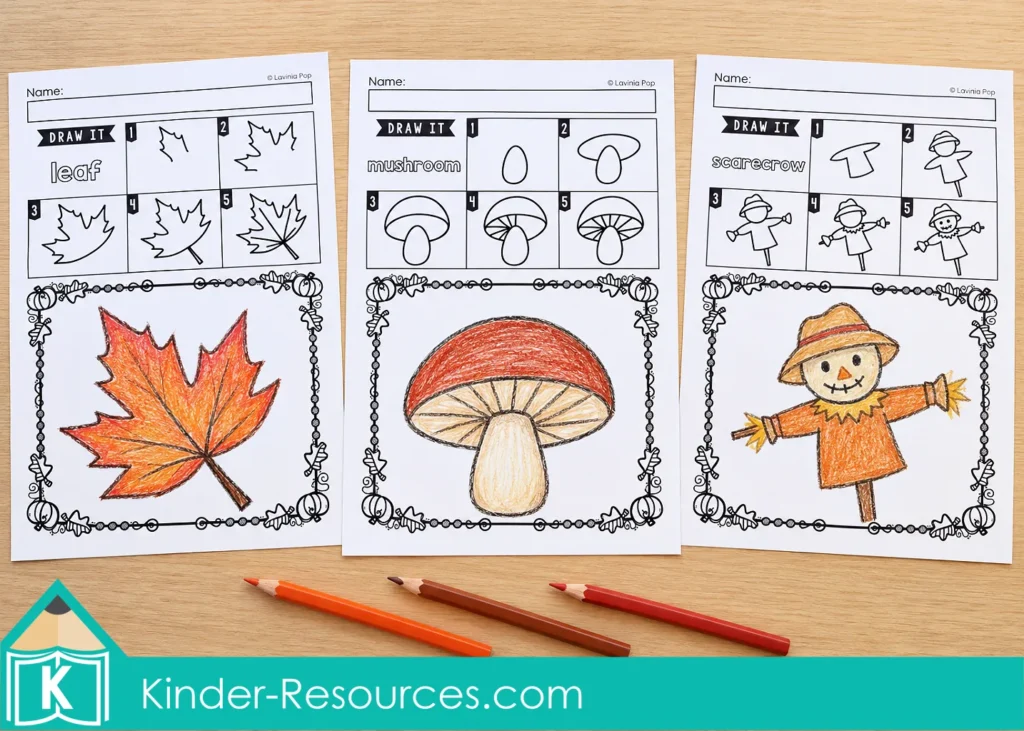
Try a Free Autumn Directed Drawing Sample
Would you like to try an activity first? Download the free sample below and introduce the drawing one step at a time. Keep pencils and coloring supplies nearby, then invite children to add their own finishing touches.

What Is Included in the Autumn Directed Drawing Pack?
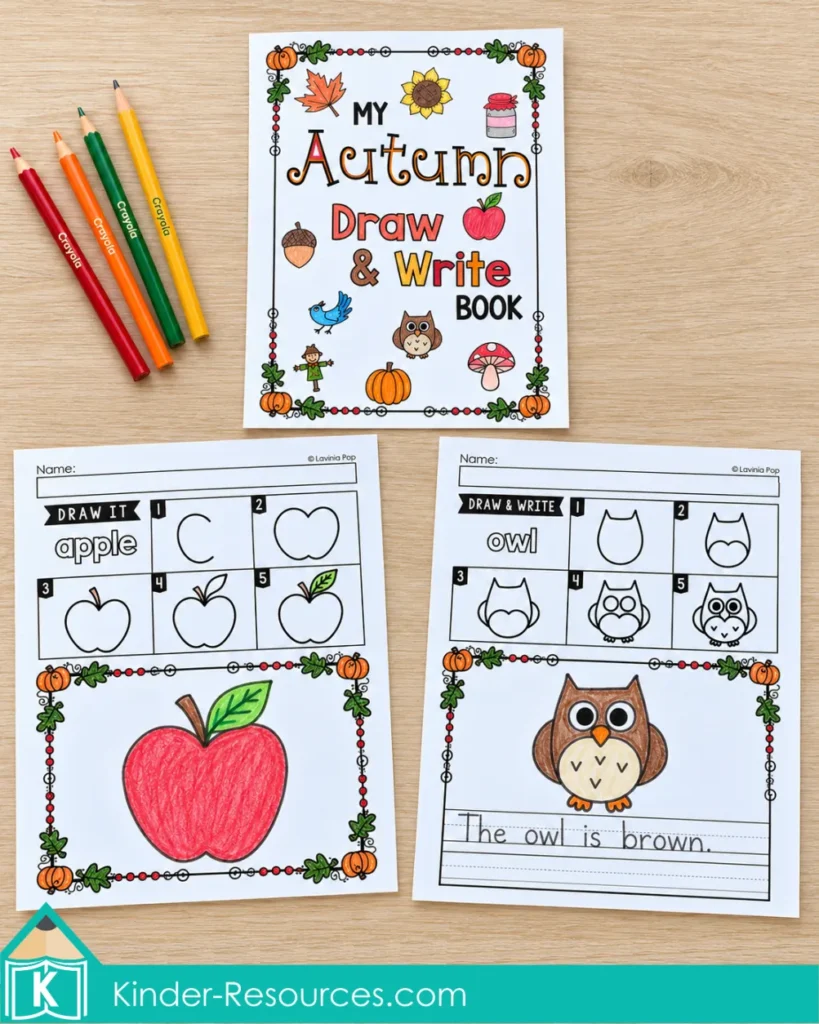
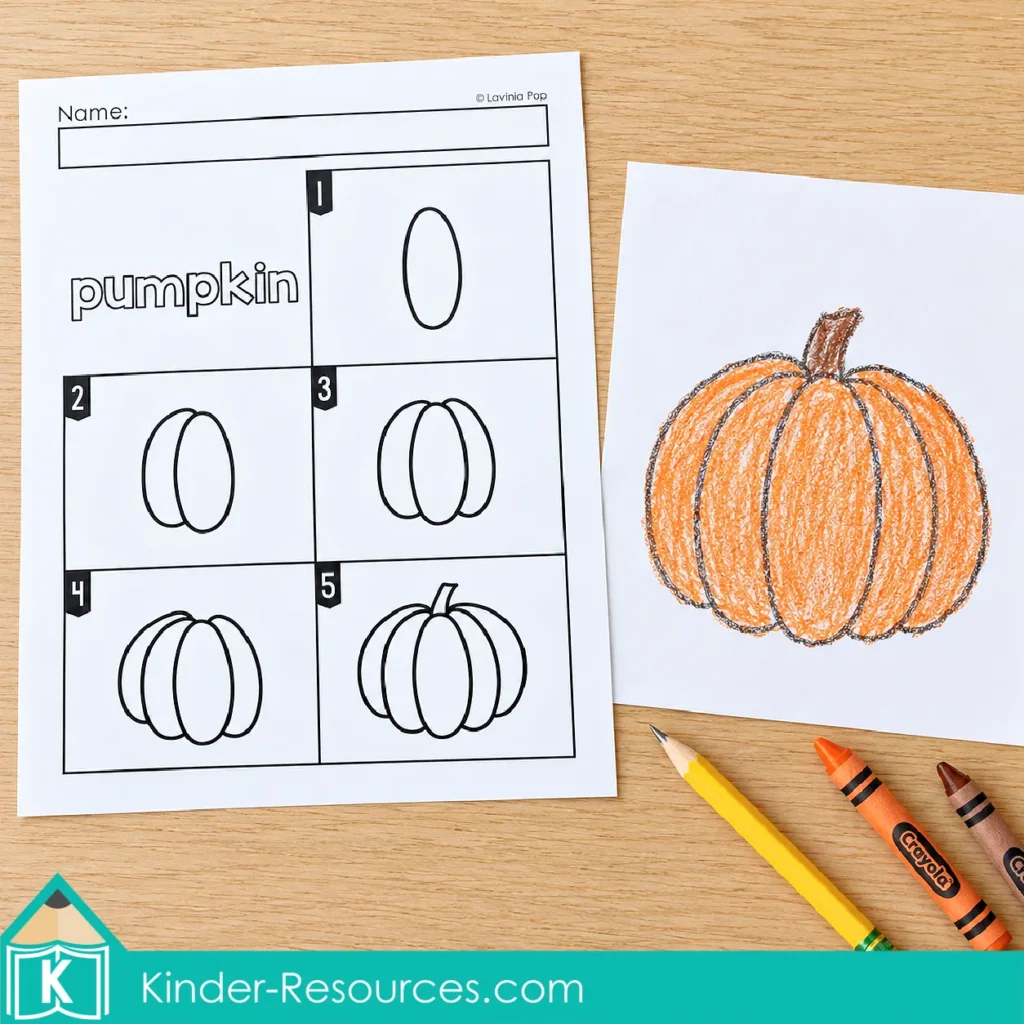
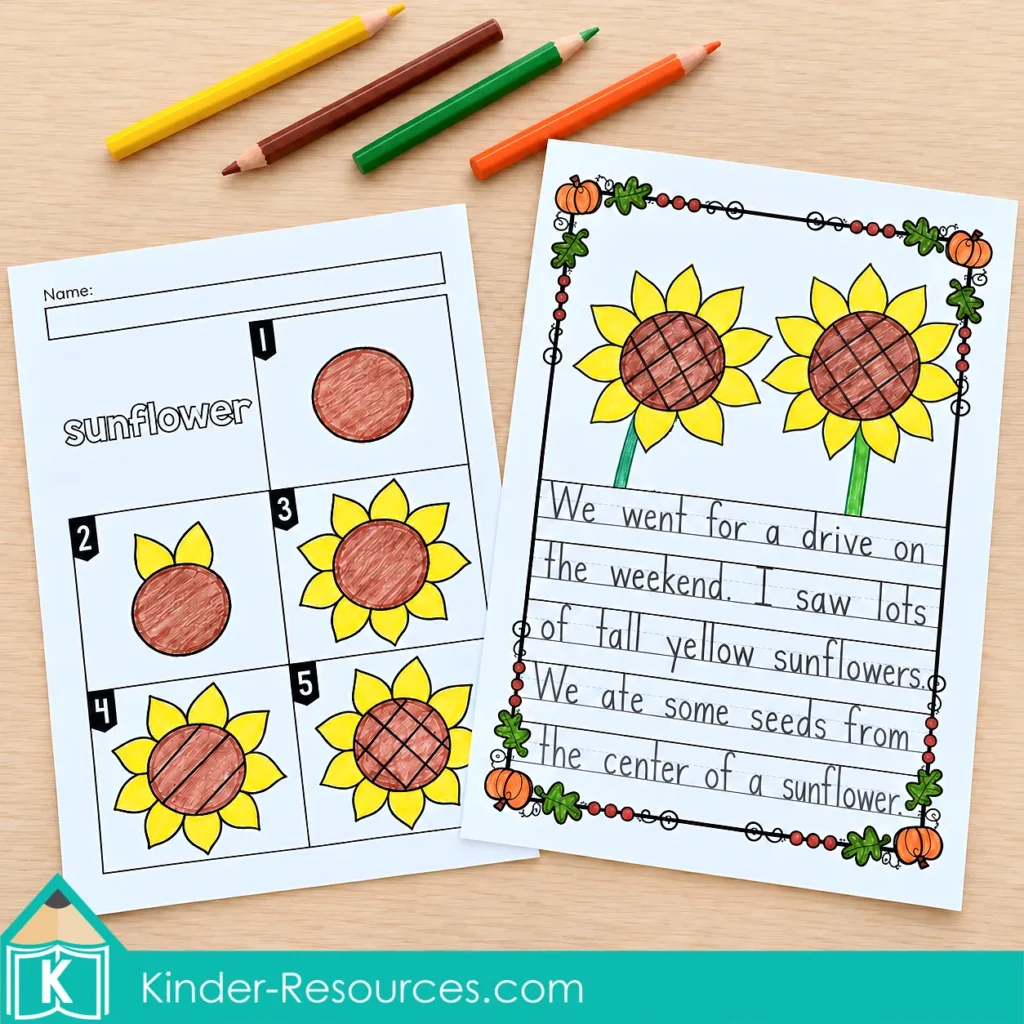
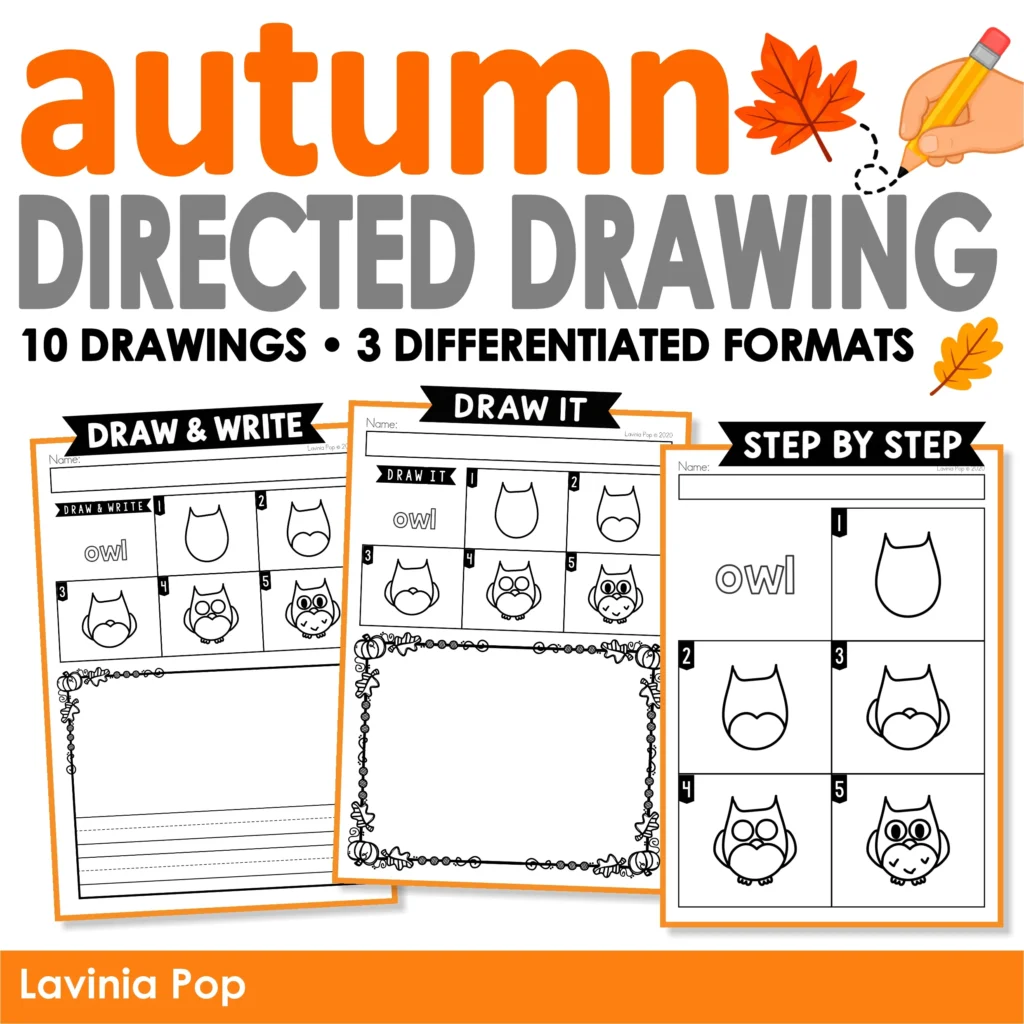
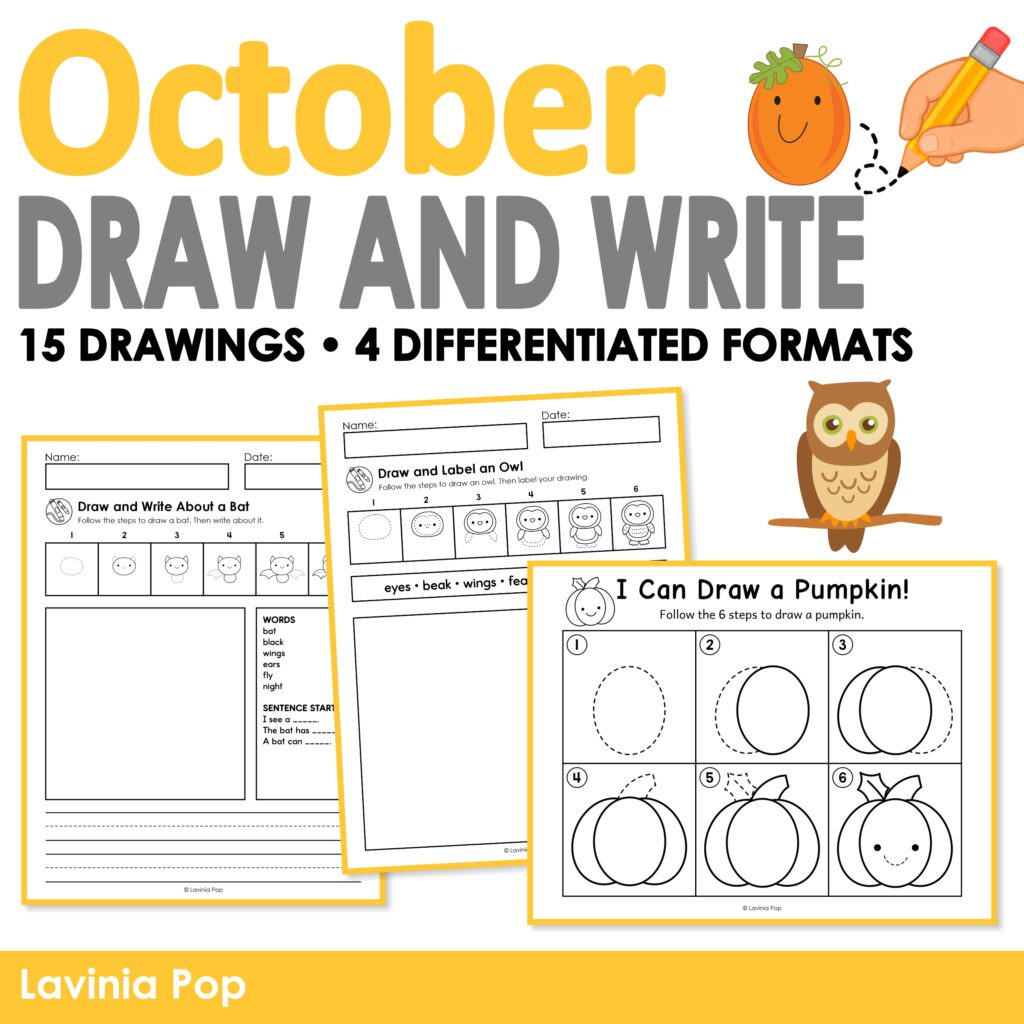
The complete 40 page resource includes 10 fall drawings: apple, acorn, crow, leaf, jam jar, mushroom, owl, pumpkin, scarecrow, and sunflower.
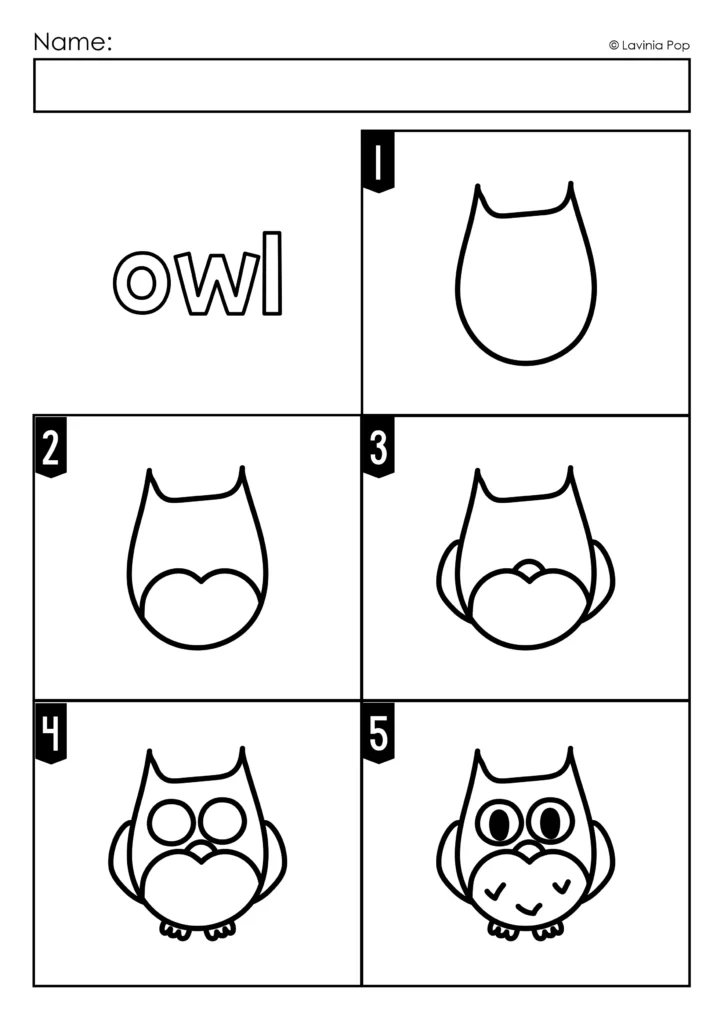
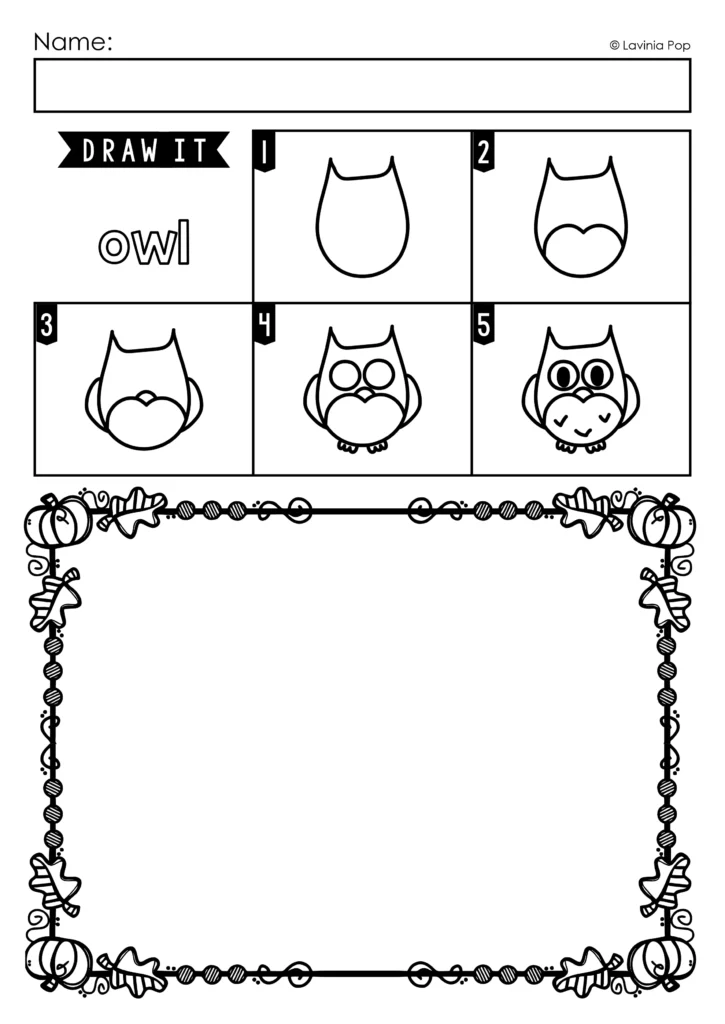
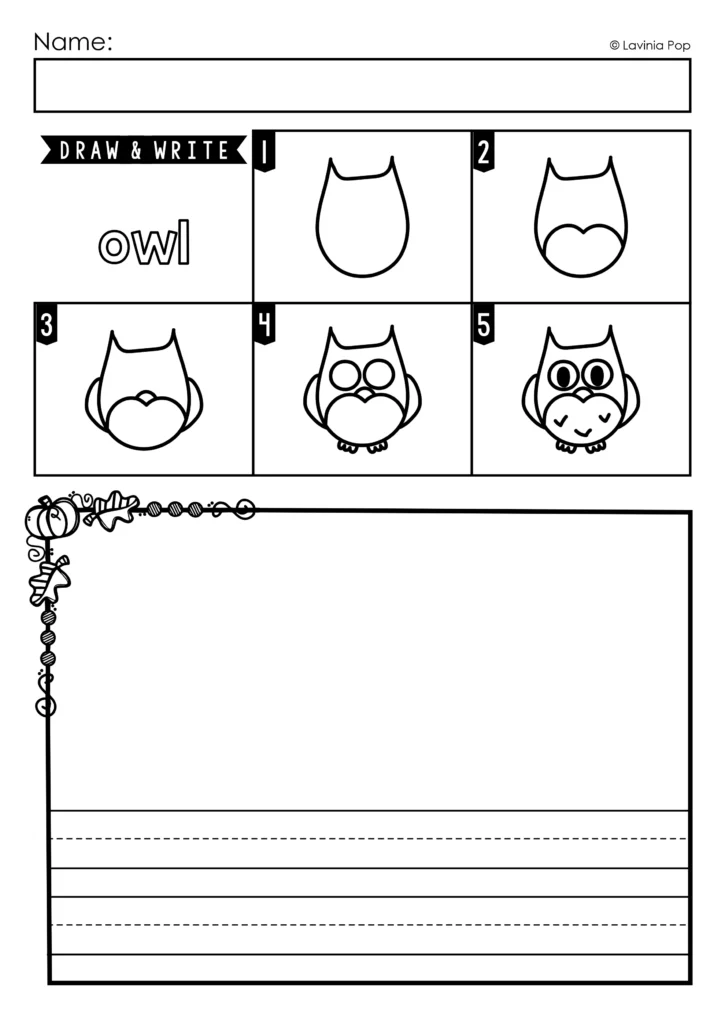
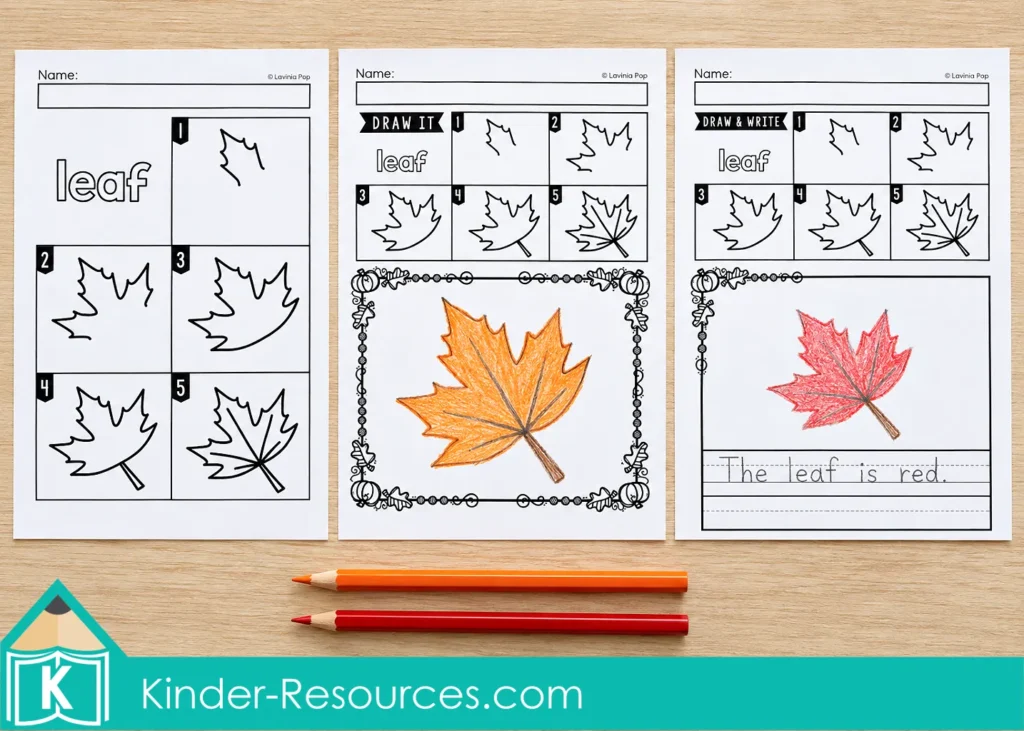
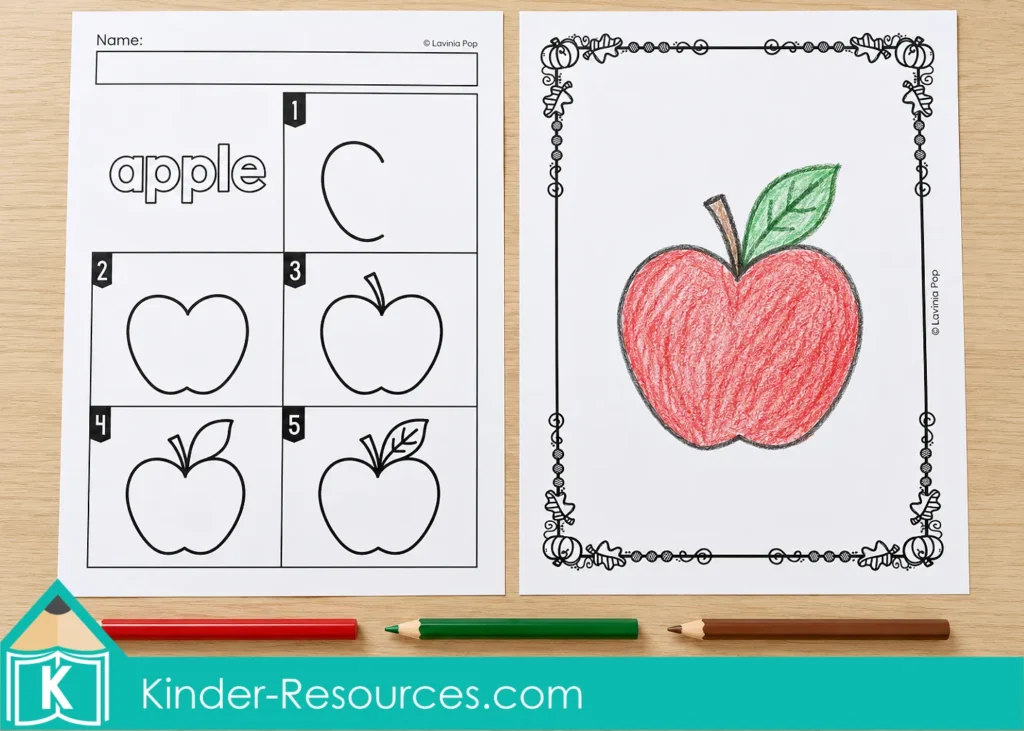
Each drawing has five picture steps and comes in three formats: Drawing Directions, Draw It, and Draw & Write. The drawing sequence stays the same, while the page layout changes to suit the task.
Three Ways to Use the Fall Drawing Pages
Drawing Directions: Follow Along on Your Own Paper
The full page Drawing Directions sheets show the drawing sequence in a larger format. Use them as a reference while children draw on separate paper. In My World
For the first activity, try drawing alongside the children. Talk about the lines and shapes you are adding, pause after each step, and look together at what changes in the next picture. Leave the directions visible so children can check their progress without needing to remember every step.
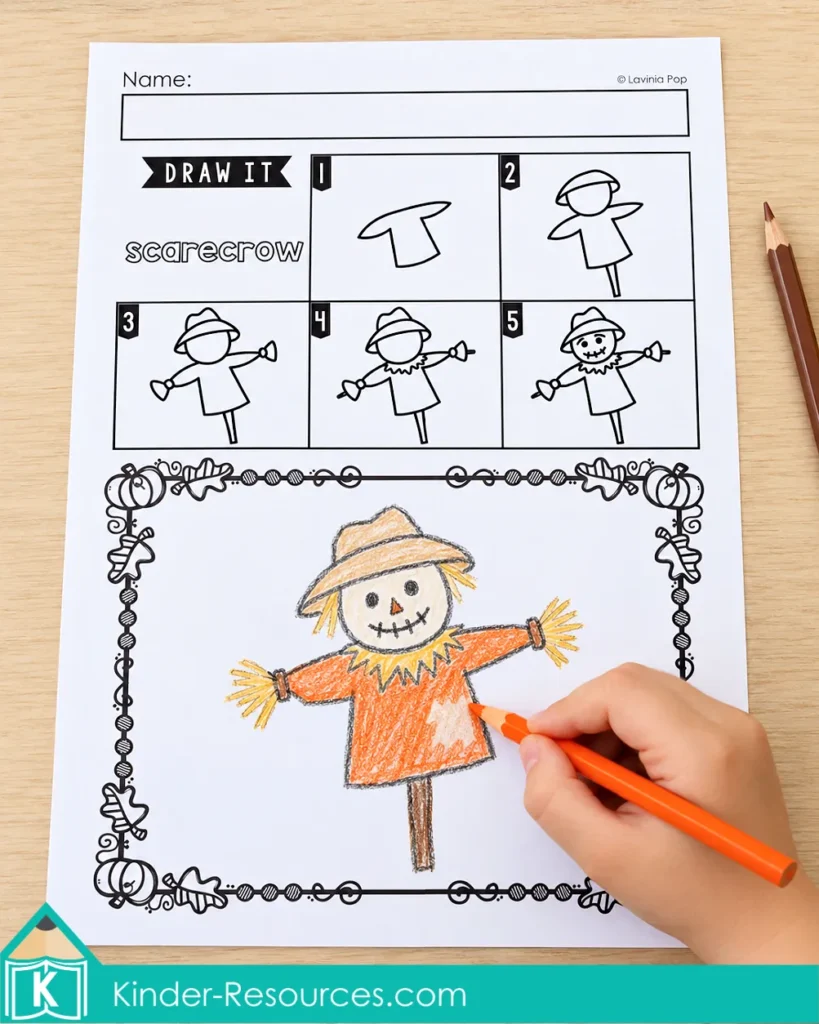
Draw It: Focus on Drawing and Creative Details
The Draw It worksheets keep the picture directions and a drawing space together on one page. Choose this format when you would like the focus to stay on drawing rather than writing. In My World
After following the steps, invite children to make the picture their own. They could add a branch beneath an owl, draw more leaves around a pumpkin, or create a garden for a sunflower. There is no need for every finished picture to look the same.
Draw & Write: Add Words to the Picture
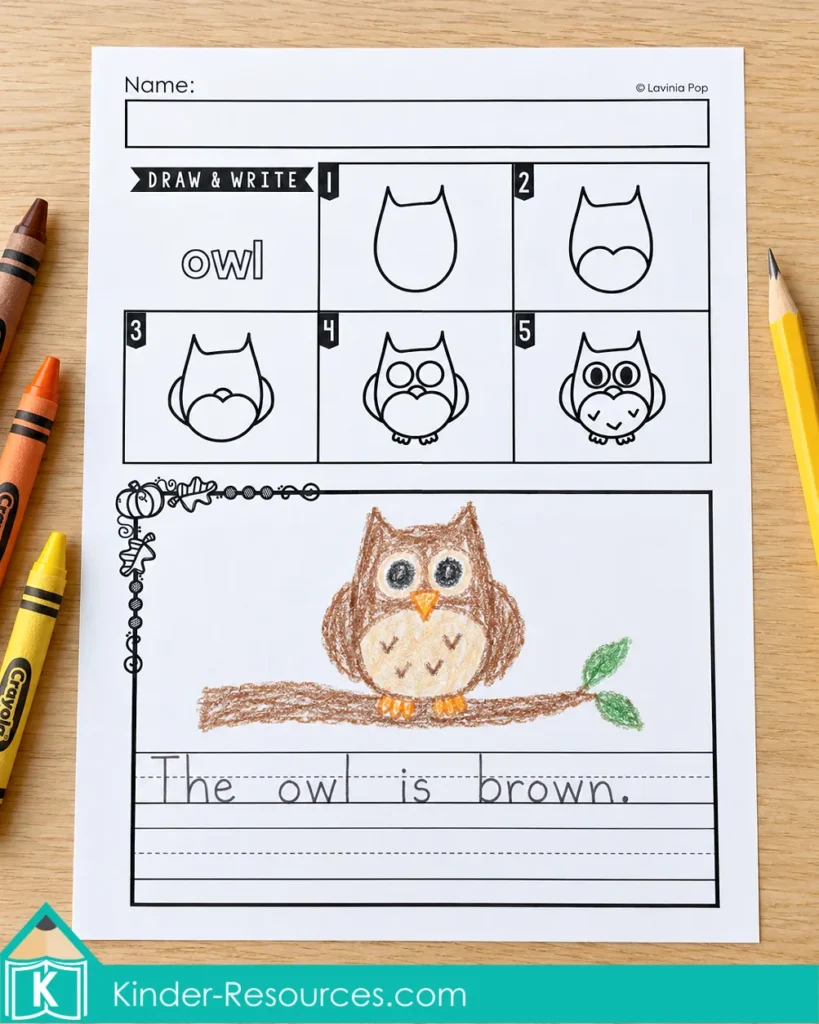
The Draw & Write pages include the drawing sequence, space for an illustration, and primary handwriting lines. Use this format to connect the finished picture with a written response. Teachers Pay Teachers
Before asking children to write, invite them to tell you about their drawing. Ask, “What did you draw?” or “What is happening in your picture?” Then help them choose one idea to record.
From an Autumn Picture to a Sentence
Try beginning with a detail the child has already included. For example, an owl drawing might lead to the sentence “The owl is brown.” A child who has added a branch could write “My owl is sitting in a tree.”
Say the sentence together before writing. Encourage children to listen for sounds they know, leave spaces between words, and reread their sentence when they finish. Choose a manageable writing goal rather than correcting every part of the page at once.
You can also offer your own spoken sentence starter, such as “I can see…” or “My picture shows…”. These are optional teaching ideas, not preprinted prompts in the packet.
For a longer response, ask what might happen next. Who could find the pumpkin? Where might the crow fly? Provide additional paper for children who would like to continue their story.
Supporting Children at Different Stages
Keep the drawing task shared, but vary the response you ask for. A child who is not ready to write a sentence can name the picture, describe a detail aloud, or dictate a sentence for you to record. Another child might add a label or write one sentence independently.
For children who need drawing support, cover the later steps and work through one picture at a time. Point out what has been added rather than redrawing the whole picture for them.
For a child who is ready for more, invite a detailed setting, two connected sentences, or an explanation of a choice they made. The goal is not a perfect copy of the example. Encourage careful looking, a willingness to try, and personal choices in the finished artwork.
Simple Preparation and Classroom Ideas
Choose the drawing and page format, print the pages you need, and gather pencils, erasers, and crayons or colored pencils. Keep separate drawing paper nearby when using the full page directions.
Begin with a shared drawing during a small group or whole group activity. Once children understand how to follow the picture sequence, try offering a familiar page during morning work, in a drawing or writing center, or as an early finisher choice.
You could also connect a drawing with your current fall theme. Try an apple during an apple investigation, a leaf after talking about seasonal changes, or a pumpkin before a descriptive writing activity. For learning at home, choose one picture and enjoy drawing together before deciding whether to add any writing.
Make an Autumn Draw & Write Book
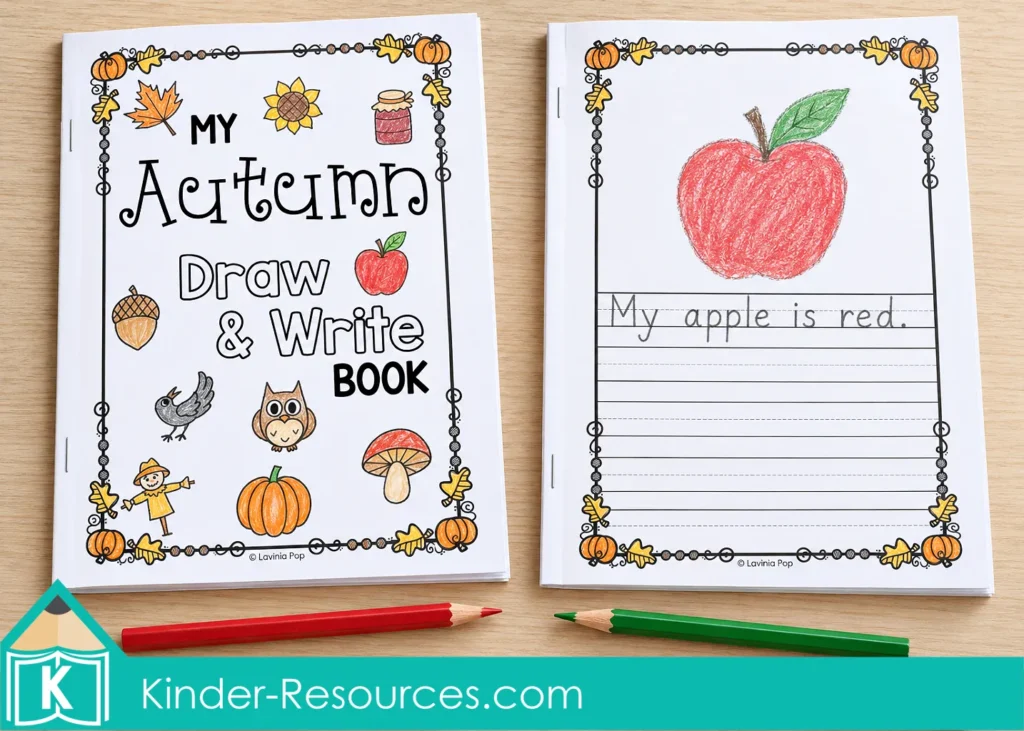
An Autumn Draw & Write Book cover is included. Gather selected pages behind the cover to create a seasonal book, or add completed work gradually as children try different drawings.
Invite children to revisit their book, read their sentences, and talk about the details they added. You could also display a selection of finished pages before sending them home.
Get the Complete Autumn Directed Drawing Pack
Ready to explore the other fall pictures? Find the complete collection in my TpT store and choose the drawing and writing pages that fit your learners.


Happy Teaching! 😊
You Might Also Like
Free Draw Autumn Pack is Amazing
Thank you!
I’m so glad you’re enjoying the Free Draw Autumn Pack, Carmen! 🍂😊
Thank you
You’re very welcome, Karoline! 😊