
A Back to School Sentence Scramble gives beginning readers a hands-on way to practise word order, sentence structure and punctuation. Children move the words, test different arrangements and reread their work until the sentence sounds right and makes sense.
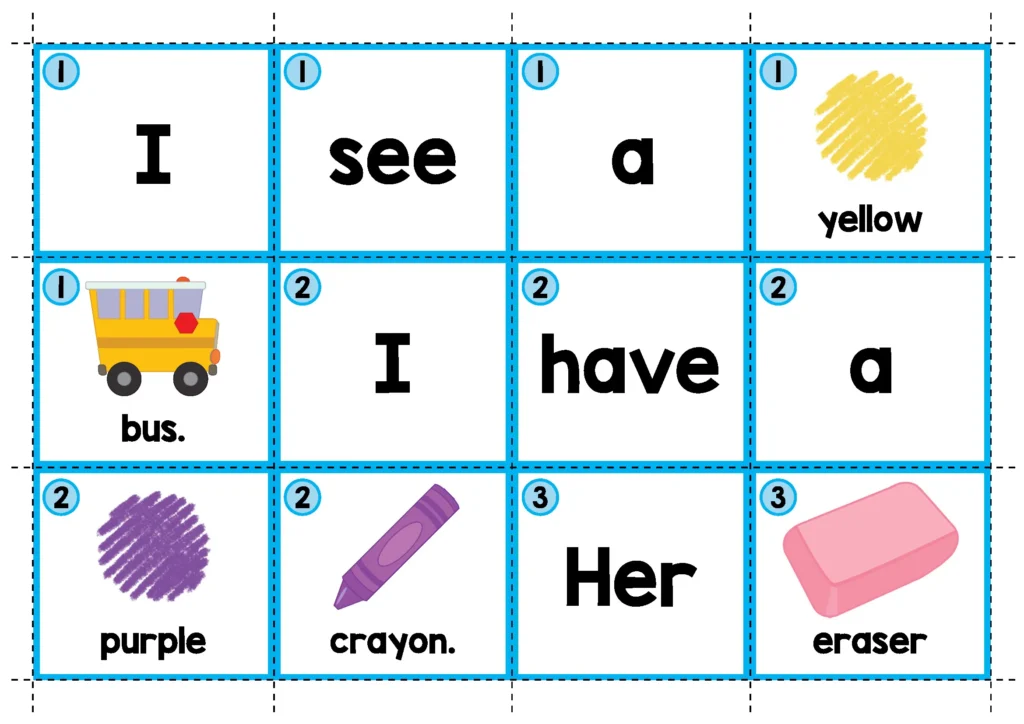
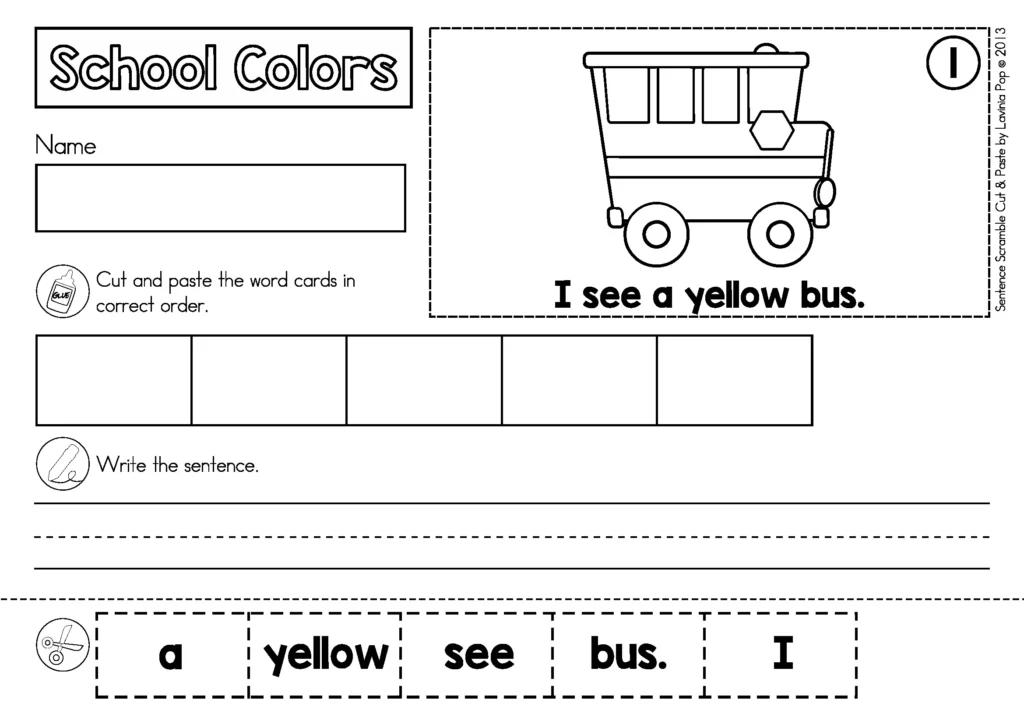
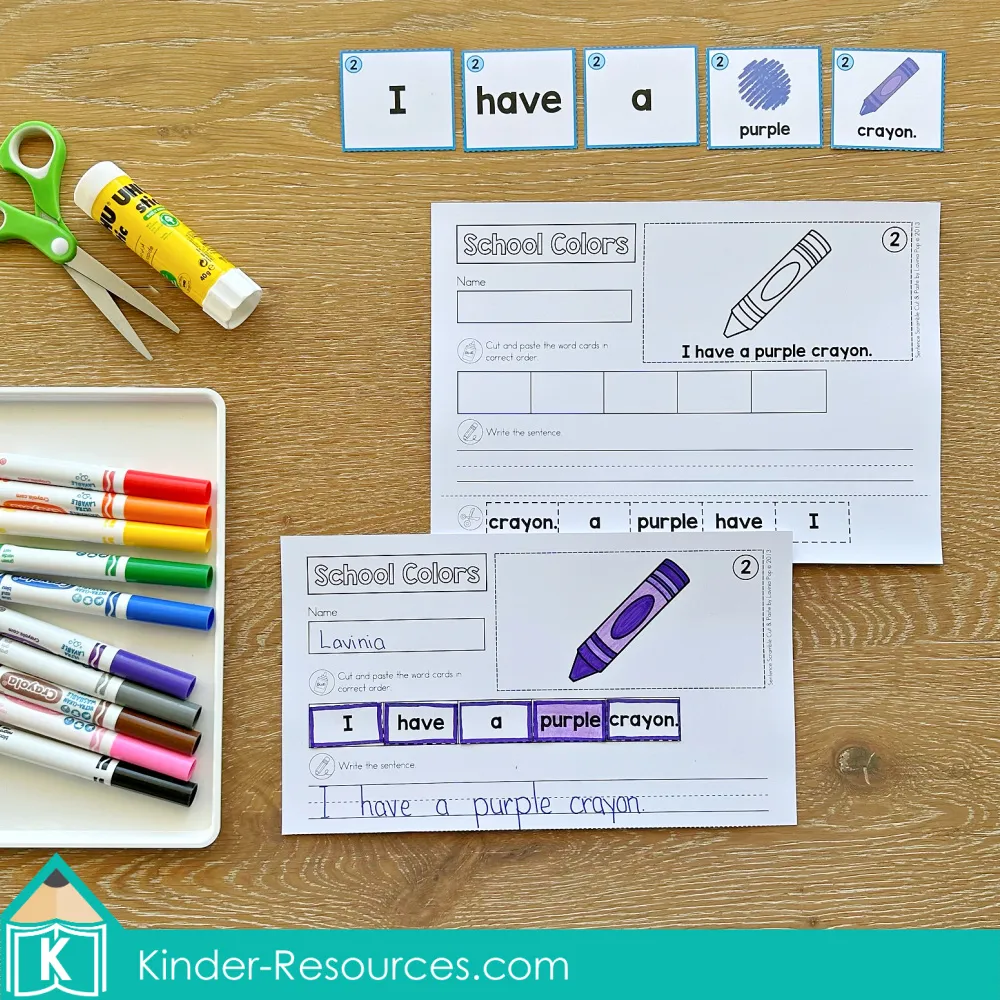
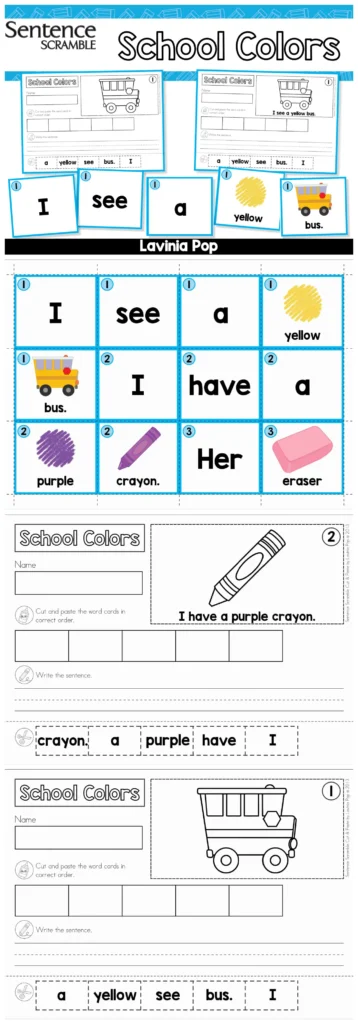
This School Colors activity combines picture-supported sentence cards with matching cut-and-paste worksheets. Children build and read each sentence with the larger cards before cutting, arranging, gluing and writing the same sentence on a worksheet.
The repeated routine connects oral language, reading, handwriting and fine motor practice while using familiar school objects and color words.
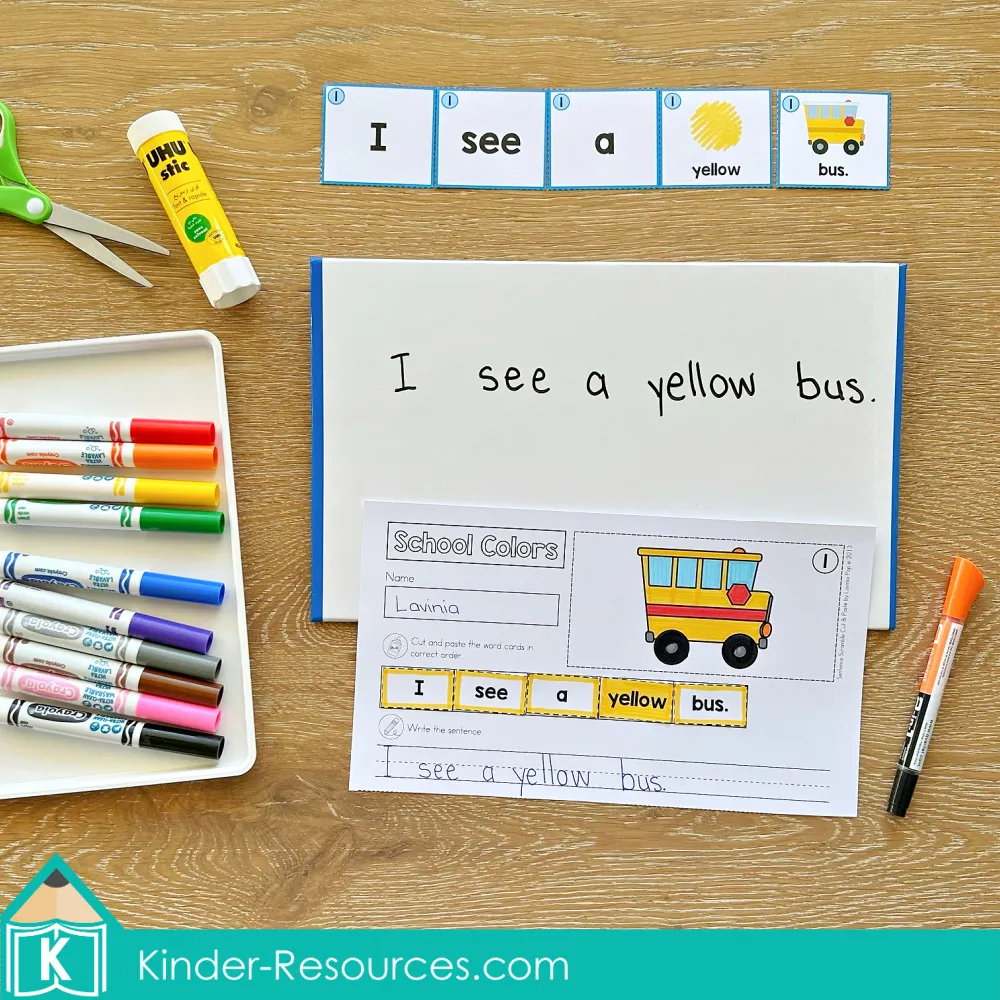
Download the Free Back to School Sentence Scramble Sample
Try the activity with the free sample pages before using the complete resource.
The sample includes sentence-building cards and matching cut-and-paste worksheets so children can practise the full cut, build, read, check, glue and write routine.
Use the sample during a small-group lesson, in a pocket chart or as a literacy-center activity. It also gives you a preview of the supported and independent worksheet formats.

Why Sentence Scrambles Support Early Literacy
Many young readers can recognise individual words but still find it difficult to combine them into a complete sentence.
A sentence scramble makes word order visible. Children can physically move each word, listen to the sentence and make corrections without needing to erase or rewrite anything.
As they work, children practise how to:
- Follow print from left to right
- Identify the word beginning with a capital letter
- Use a picture to support meaning
- Arrange words in an order that sounds correct
- Locate the final word containing the punctuation
- Read and copy a complete sentence
Picture support helps children understand what the sentence is communicating rather than arranging words only by appearance. This can be particularly helpful for emerging readers who recognise familiar words but are not yet confident building sentences independently.
What Is Included?
The complete School Colors resource includes:
- Numbered sentence-building cards for 12 complete sentences
- Picture-supported school and color vocabulary
- 12 supported cut-and-paste worksheets
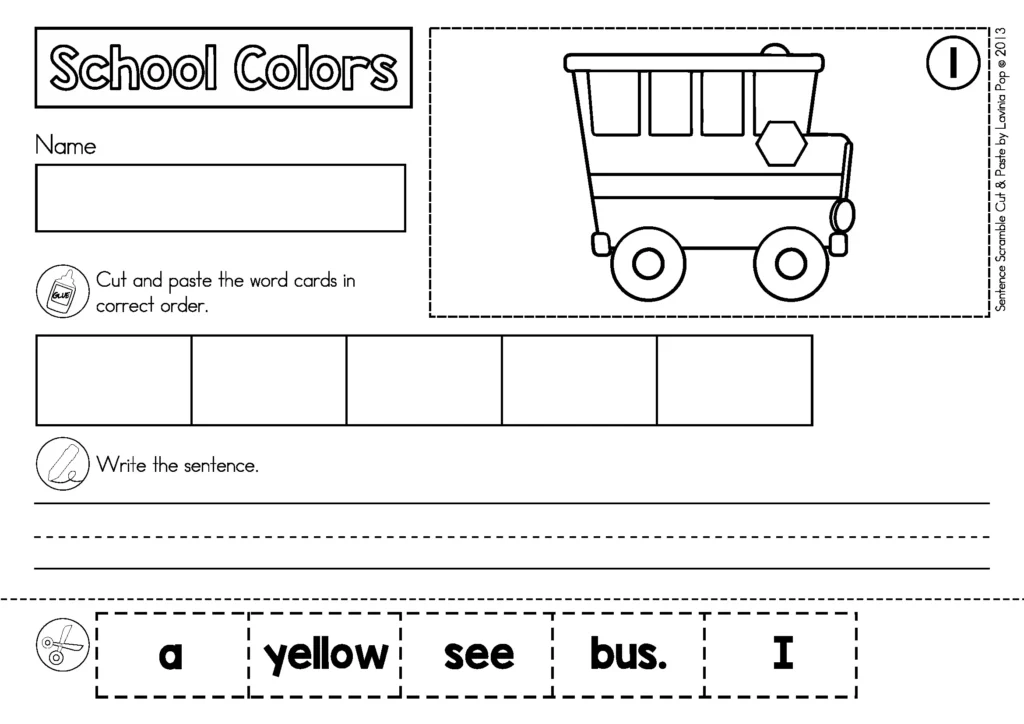
- 12 independent cut-and-paste worksheets
- Sentence boxes for arranging and gluing the words
- Handwriting lines for copying each sentence
- Black-and-white pictures for children to color
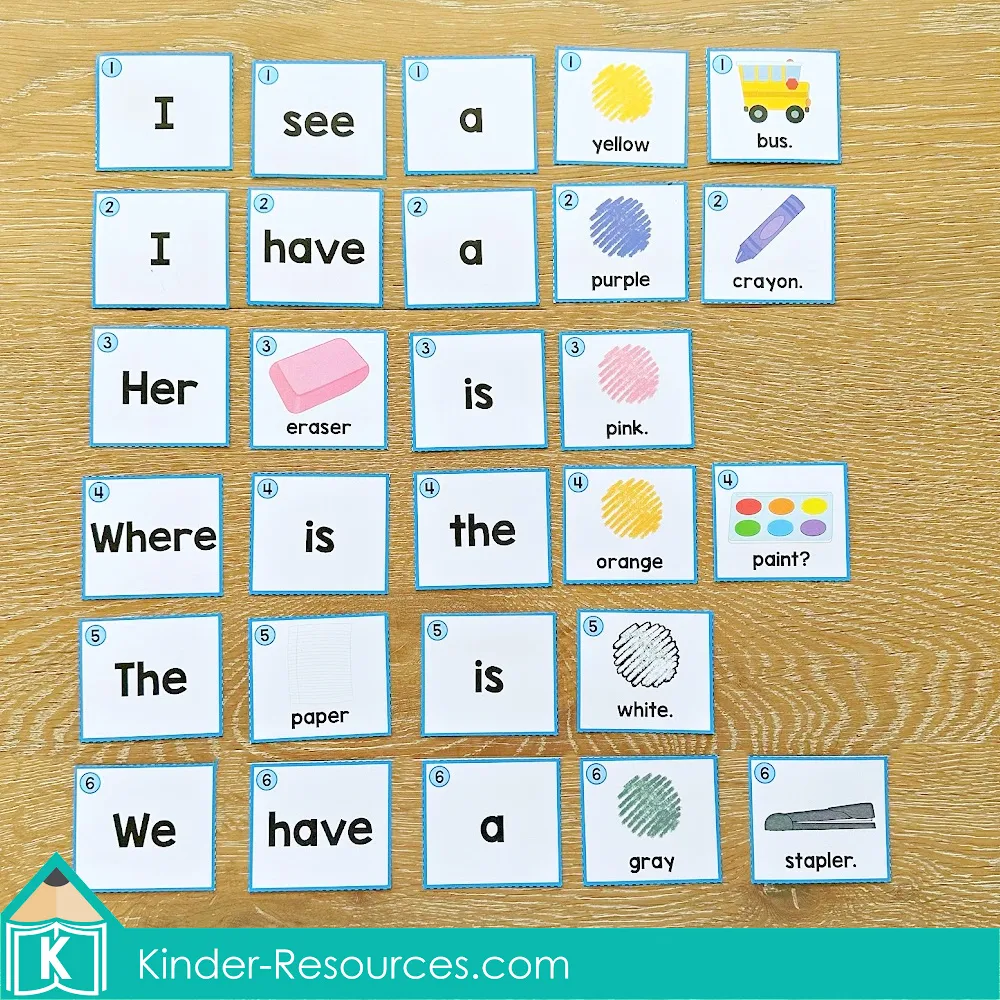
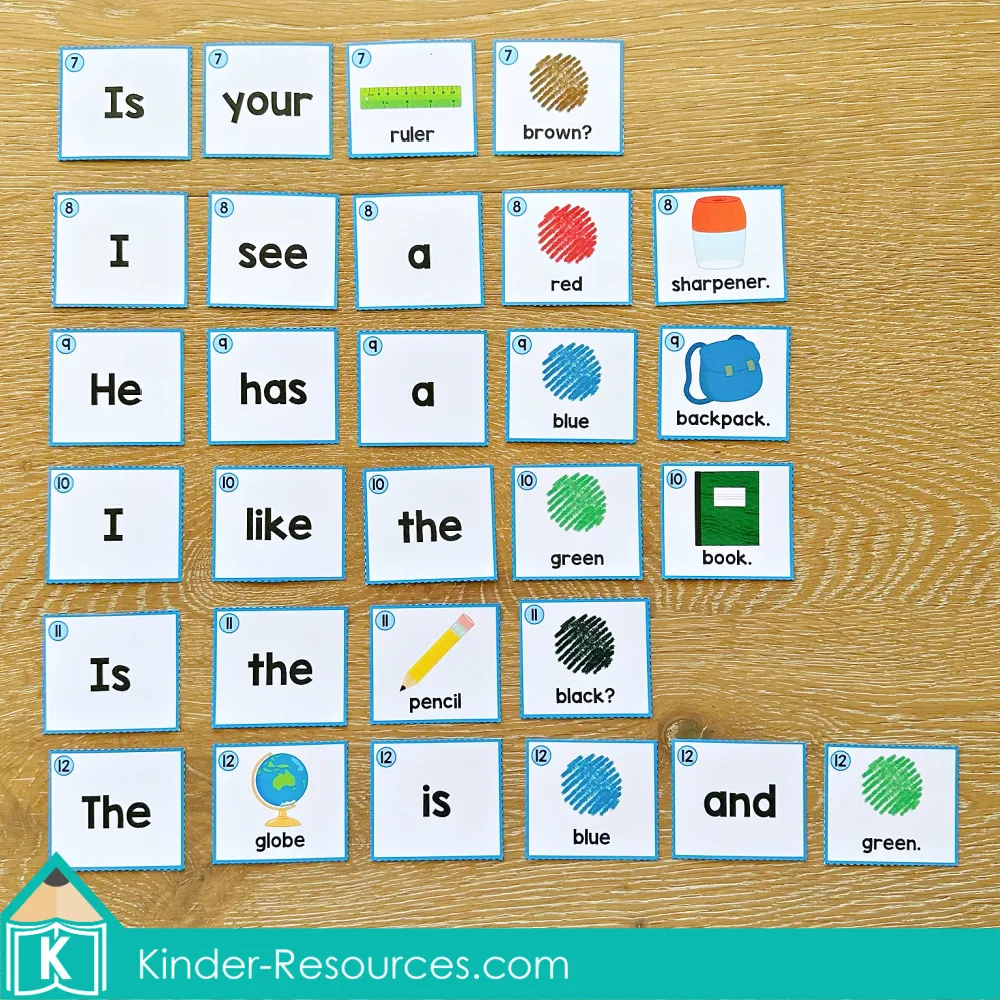
Each card set is numbered, making it easier to keep the correct words together. The two worksheet formats allow children to practise the same sentence with different levels of support.
How to Use the Sentence Scramble Activity
Using the same routine for each sentence helps children become familiar with the steps and concentrate on reading and sentence structure.
1. Discuss the Picture
Show the picture card and ask children to name the school object and describe its color.
For a picture of a yellow bus, ask:
- What do you see?
- What color is the bus?
- Can you answer in a complete sentence?
Guide children towards:
I see a yellow bus.
Say the sentence naturally and invite children to repeat it. This oral rehearsal gives them a meaningful sentence to hold in mind before working with the individual words.
2. Build and Read the Sentence
Mix the numbered word cards and ask children to look for clues:
- Which word begins with a capital letter?
- Which word names the school object?
- Which word describes its color?
- Which word has the full stop or question mark?
- Does the sentence match the picture?
Move one card at a time and reread the sentence after each change.
When the words are arranged incorrectly, ask the child to read the sentence exactly as it appears. Hearing an awkward sentence often helps children notice the problem and try a different arrangement.
Once the words are in order, read the sentence slowly while pointing to each card. Then reread it smoothly for extra fluency practice.
3. Cut, Build and Glue
After using the larger cards, children can complete the matching worksheet.
Teach this sequence:
Cut → Build → Read → Check → Glue
Before gluing, encourage children to check that the sentence begins with a capital letter, makes sense, matches the picture and ends with the correct punctuation.
A useful classroom rule is:
Read before you glue.
Keeping the glue stick closed until the sentence has been read gives children time to move the pieces and correct the word order.
4. Write and Reread the Sentence
Once the words have been glued into place, children copy the sentence onto the handwriting lines.
Remind them to include:
- A capital letter at the beginning
- Spaces between the words
- Careful letter formation
- A full stop or question mark at the end
The sentence is already familiar, so children can focus more closely on handwriting and spacing. Finish by asking them to point to each word and read the sentence one final time.
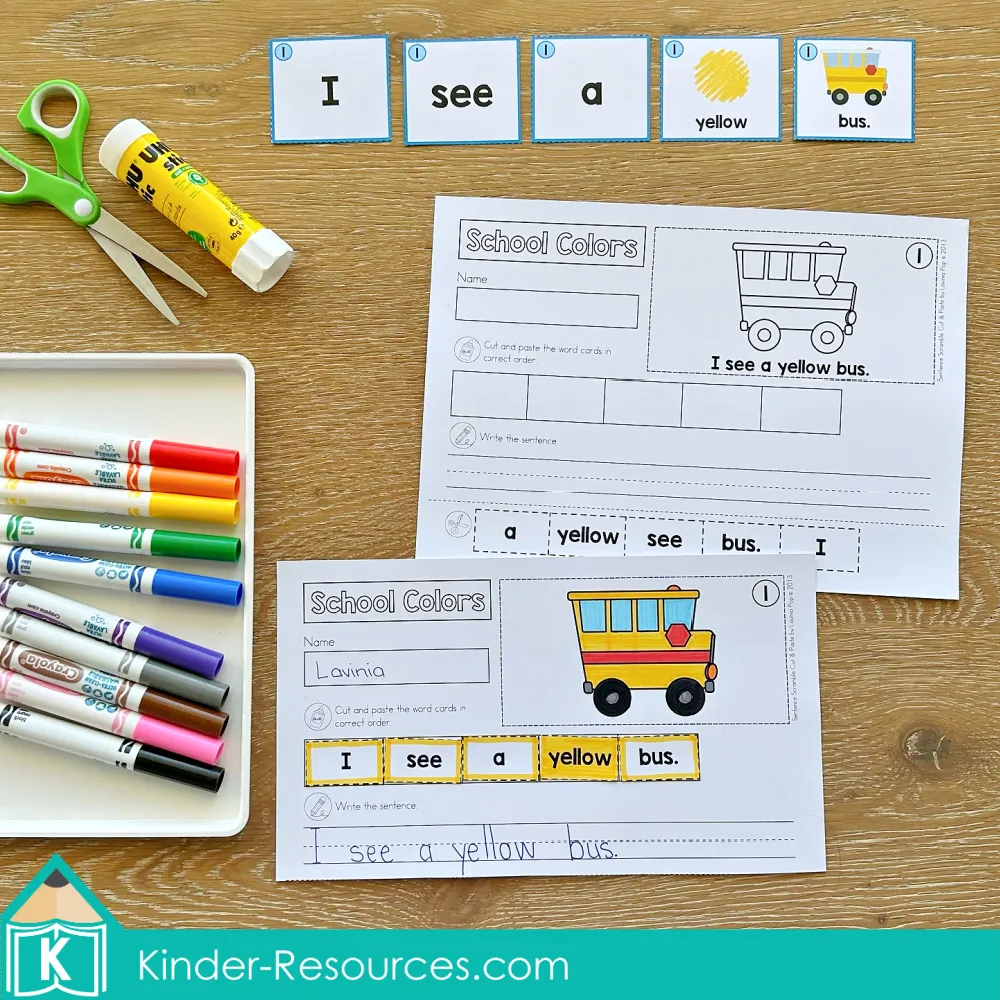
Supported and Independent Worksheets
The two worksheet formats provide different levels of support while keeping the learning goal the same.
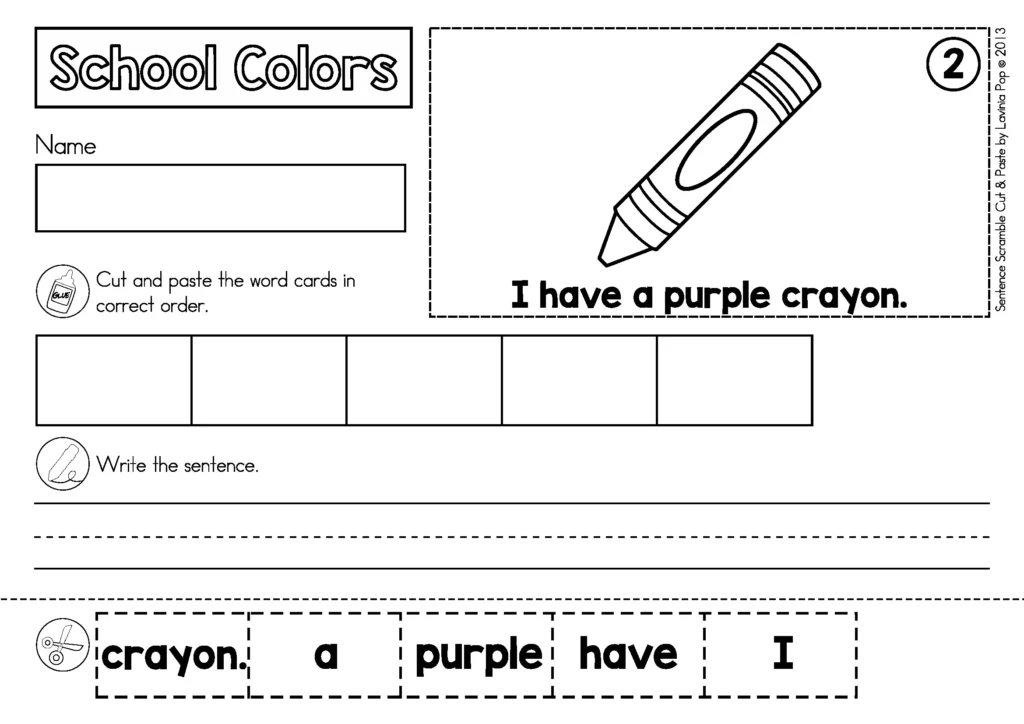
Supported Worksheets
The supported worksheets include the completed sentence beneath the picture.
Children can refer to the model while arranging the cut-apart words. This reduces the reading and memory demands while still requiring them to identify, order, glue and write each word.
Additional support may include:
- Building the sentence with the large cards first
- Reading the model sentence together
- Offering only two or three word choices at a time
- Finding the capital letter and punctuation before arranging the words
These pages are suitable for emerging readers and children who benefit from a visual sentence model.
Independent Worksheets
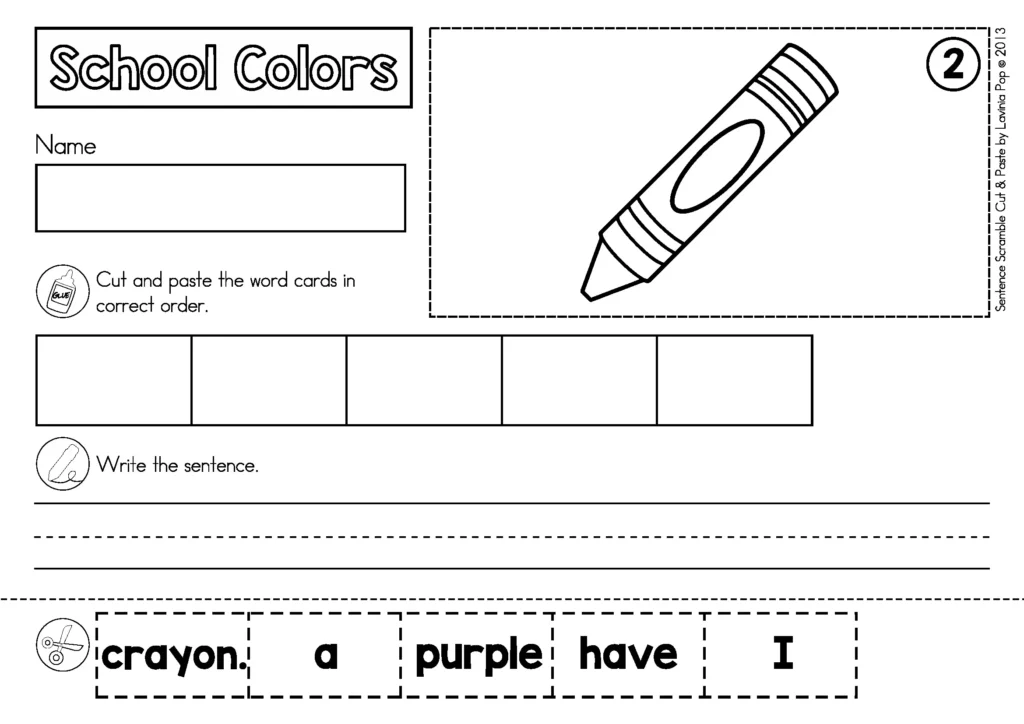
The independent worksheets do not include a completed model sentence.
Children must use the picture, capital letter, punctuation and sentence meaning to determine the correct order.
Before gluing, ask children to explain one of their choices:
- How did you know which word came first?
- Which word belongs at the end?
- How did the picture help you?
- Does your sentence sound right?
Their explanations can reveal whether they are using sentence meaning, word reading, capital letters or punctuation.
More Ways to Use the Sentence Cards
The larger cards can also be used separately from the worksheets.
Pocket Chart Sentence Building
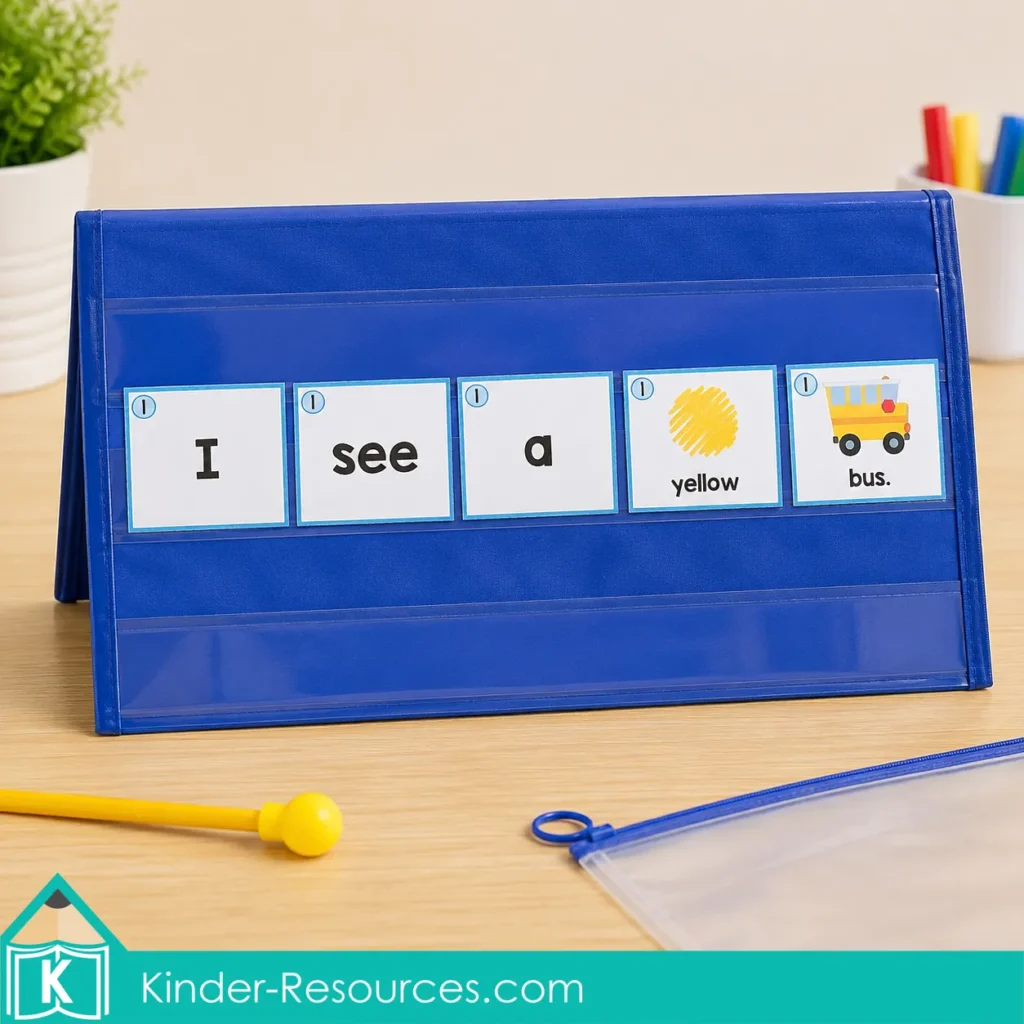
Build one sentence during a whole-class or small-group lesson. Once it is complete, remove a card and ask children to identify the missing word.
Partner Sentence Challenge
One child mixes a sentence set while a partner rebuilds it. Partners read the completed sentence together and then switch roles.
Sentence Detective
Build a sentence incorrectly on purpose. Children identify the mistake and explain how to fix it.
Try beginning with a lowercase word, placing the final word in the middle or switching two words.
Change One Word
Replace a color or school-object word and read the new sentence.
For example:
I have a red crayon.
could become:
I have a blue crayon.
Children can draw or write a sentence to match the new idea.
Using the Activity in Different Settings
Use a pocket chart during whole-class instruction to model how to find the capital letter, arrange the words and locate the ending punctuation.
In a small group, select one or two sentence sets and listen to how children explain their choices.
For a literacy center, store each set in a separate envelope or pouch. Children can build the sentence, read it, complete the worksheet and return the cards to the correct container.
The supported pages can also be used for morning work, early finishers or independent practice once children understand the routine.
Preparing and Organising the Resource
Print the sentence cards on cardstock and laminate them for repeated use.
Cut the cards apart and store each numbered set separately. Clear zip pouches, envelopes or small containers make it easier for children to return the words correctly.
Keep scissors, pencils and Elmer’s glue sticks together in a small center tray. Model the full routine before expecting children to work independently.
The cards can also be used without the worksheets when the focus is oral language, reading fluency or sentence structure.
Sentences Included in the Back to Sentence Scramble packet
- I see a yellow bus.
- I have a purple crayon.
- Her eraser is pink.
- Where is the orange paint?
- The paper is white.
- We have a gray stapler.
- Is your ruler brown?
- I see a red sharpener.
- He has a blue backpack.
- I like the green book.
- Is the pencil black?
- The globe is blue and green.
Purchase the Back to School Sentence Scramble packet
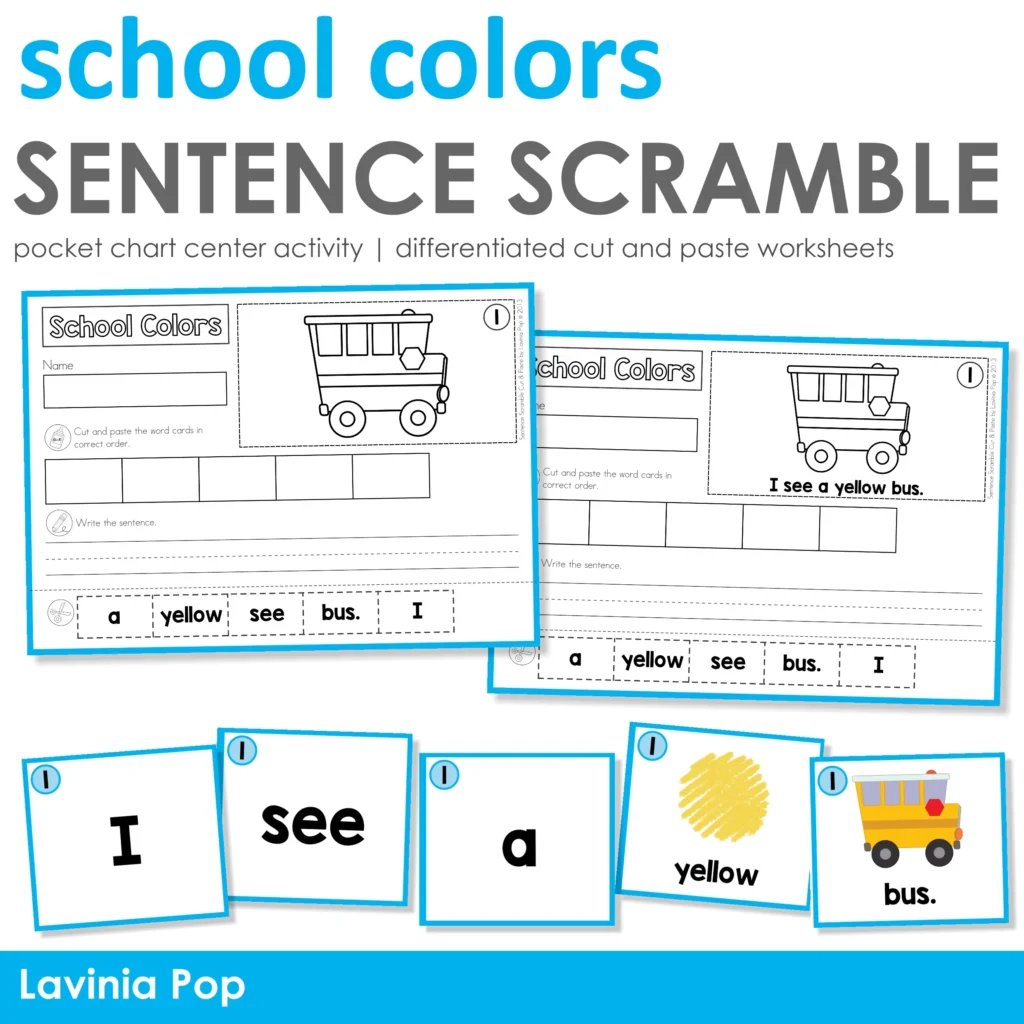
The complete resource includes 12 sentence sets with matching supported and independent worksheets.
The familiar school objects and color vocabulary make the activity especially useful at the beginning of the school year. Children practise the same sentence through speaking, building, reading, gluing and writing.
Use the activity during whole-class instruction, small groups, literacy centers, morning work or independent practice.
To purchase the complete 36-page Back to School Sentence Scramble packet, click on either store link below.


You may also like…
The resources are very useful. Thank you so much.
Thank you so much, Florencia! I’m so glad you have found the resources useful. 😊