
Kindergarten Morning Tubs Set 3 includes 22 hands-on literacy, math, fine motor, and visual thinking activities designed for Kindergarten children. These practical morning tub activities give children a purposeful way to begin the day while reviewing important skills through matching, tracing, sorting, building, and problem-solving.
The activities are also useful for early finishers, independent centers, small-group practice, or quiet learning time. Most require only a few familiar classroom materials, and the included photo instruction cards help children remember what to do.

Why Use Morning Tubs in Kindergarten?
Morning tubs provide a calm and engaging transition into the school day. Children can settle in, unpack, and begin a familiar activity without waiting for the whole class to be ready.
Because the activities are hands-on, they encourage children to work independently while strengthening fine motor control, attention, visual discrimination, early literacy, and number sense. The same activities can also be revisited throughout the year as children become more confident.
Preparing the Kindergarten Morning Tubs
To prepare the activities, print the pages, laminate them for durability, and cut along the dotted lines. Many of the cards include a hole-punch mark so complete sets can be stored neatly on key rings.
The packet also includes photo cards showing how to complete each activity. Print these and store them with the matching materials to provide children with an easy visual reminder.
Depending on the activity, you may also need:
- erasable markers and write-and-wipe pockets
- clothespins
- colored buttons
- counting cubes or other small manipulatives
- play dough or pom-poms
Before adding a new tub to the independent rotation, model the activity with the class. Once children understand the routine, they can use the photo card to complete it with less adult assistance.
Literacy and Language Morning Tub Activities
Uppercase Letter Tracing
Materials: Erasable marker and an optional write-and-wipe pocket
Children turn over a letter card, find the matching uppercase letter on the tracing page, and trace it. This simple routine combines letter recognition with repeated handwriting practice.
- Skills focus: Uppercase letter recognition, letter formation, and pencil control
- Also use for: Handwriting practice, alphabet review, or early finishers

Lowercase Letter Tracing
Materials: Erasable marker and an optional write-and-wipe pocket
Children select a card, locate the matching lowercase letter, and trace it. The reusable format provides plenty of practice with lowercase letter shapes and formations.
- Skills focus: Lowercase letter recognition, letter formation, and fine motor control
- Also use for: Alphabet centers, handwriting review, or intervention practice

Missing Uppercase Letters
Children look at each alphabet sequence, identify the missing uppercase letter, and place the correct letter card in the empty box.
- Skills focus: Alphabet order, uppercase letter recognition, and visual scanning
- Also use for: Alphabet centers, independent review, or small-group practice

Missing Lowercase Letters
Children complete each alphabet sequence by placing the missing lowercase letter into the empty box.
- Skills focus: Alphabet order, lowercase letter recognition, and visual discrimination
- Also use for: Literacy centers, alphabet assessment, or early finishers

Beginning Sounds
Children name the pictures, listen for the beginning sound they share, and place the matching letter in the empty box.
- Skills focus: Beginning sound isolation, phonemic awareness, and letter-sound correspondence
- Also use for: Phonics centers, small groups, or targeted sound review

CVC Word Puzzles
Children arrange the three puzzle strips to build a CVC word and complete its matching picture. The visual clue helps beginning readers check whether the sounds and letters make sense together.
- Skills focus: CVC word building, blending, segmenting, and vocabulary
- Also use for: Phonics centers, word work, or small-group reading practice


Rhyming Words
Materials: Clothespins
Children name the pictures and clip the two answers that rhyme with the first picture. The picture-supported format allows children to focus on listening to word endings.
- Skills focus: Rhyming, phonological awareness, vocabulary, and fine motor strength
- Also use for: Literacy centers, oral language groups, or quick informal assessment


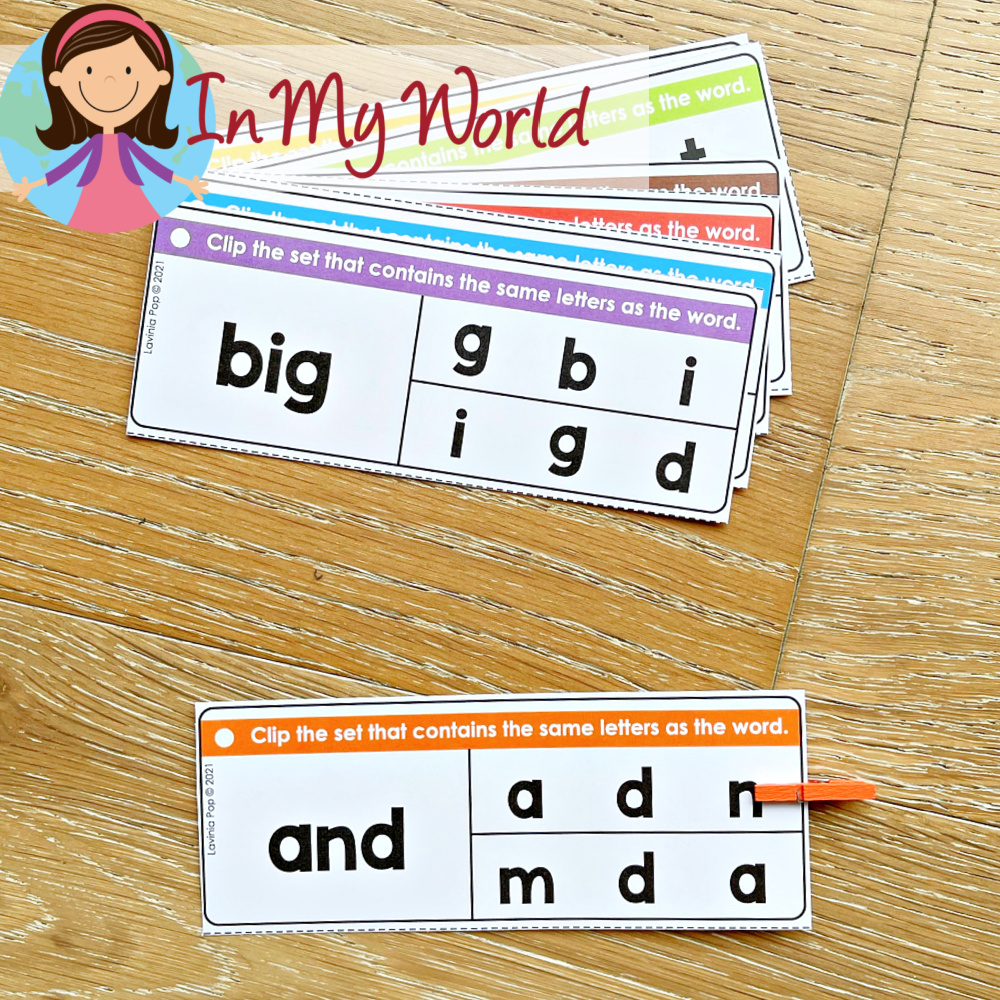
Sight Words: Scrambled Letters
Materials: Clothespins
Children study the focus sight word and clip the letter group containing the letters needed to spell it. This encourages them to look carefully at every letter rather than relying only on the shape of the word.
- Skills focus: Sight word recognition, letter sequencing, and visual attention
- Also use for: Word work, literacy centers, or sight word review
Prepositions: Hamster and Fox
Materials: Clothespins
Children look at the position of the hamster or fox and clip the matching positional word.
- Skills focus: Positional language, vocabulary, visual comprehension, and fine motor control
- Also use for: Oral language groups, English language learning, or concept review

Visual Thinking and Fine Motor Morning Tubs
Match the Color Sequence
Materials: Clothespins
Children study the colored tower and clip the sequence of circles that matches it exactly.
- Skills focus: Visual discrimination, color recognition, attention to order, and fine motor strength
- Also use for: Independent centers, memory warm-ups, or early finishers

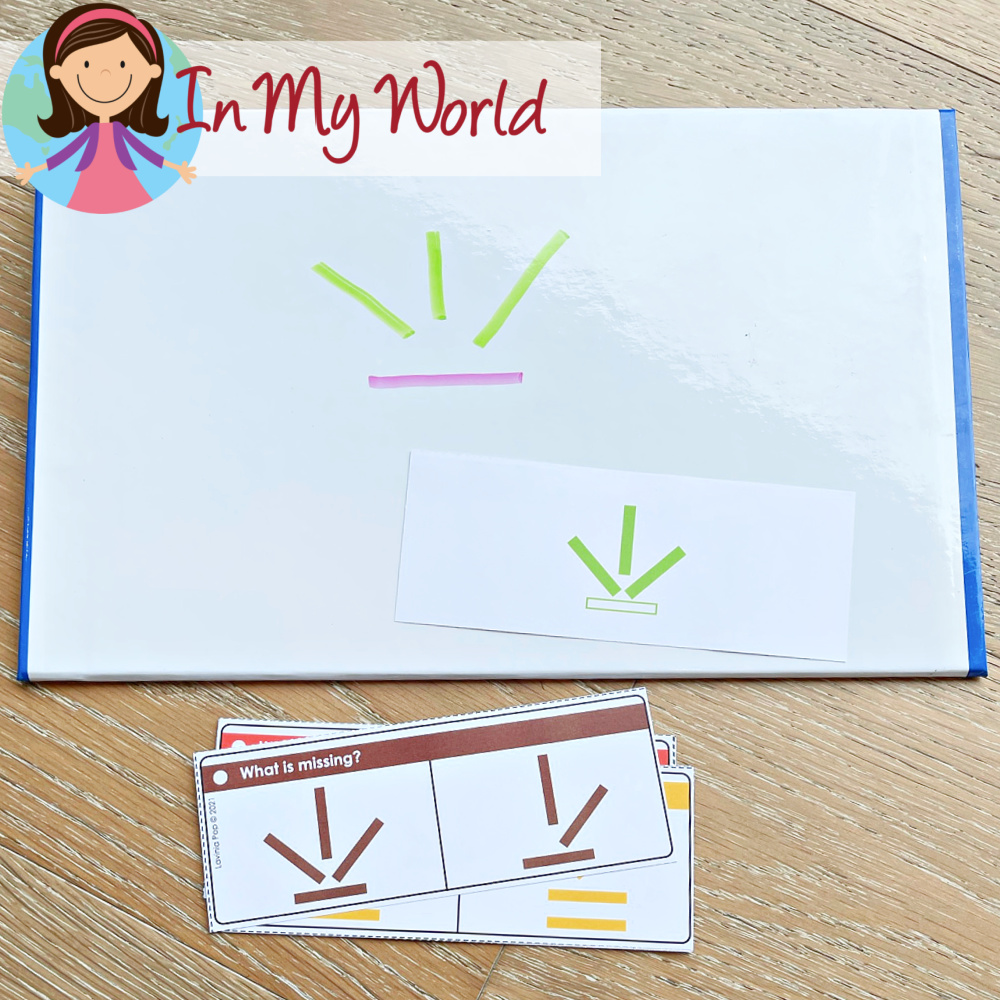
Complete the Visual Pattern
Materials: Erasable board and erasable marker
Children examine the picture pattern, determine which element is missing, and draw it on the erasable board.
- Skills focus: Pattern recognition, visual closure, reasoning, and drawing control
- Also use for: Problem-solving centers, small groups, or visual perception practice

Select the Correct Set of Directions
Materials: Clothespins
Children follow the possible direction sequences and clip the path that would take the car to the flag.
- Skills focus: Directional awareness, sequencing, spatial reasoning, and problem-solving
- Also use for: STEM tubs, logic centers, or early coding conversations

Coat and Button Color Sort
Materials: Colored buttons
Children sort the buttons by placing each one on the coat with the matching color.
- Skills focus: Color matching, sorting, one-to-one placement, and fine motor coordination
- Also use for: Color review, quiet centers, or fine motor tubs

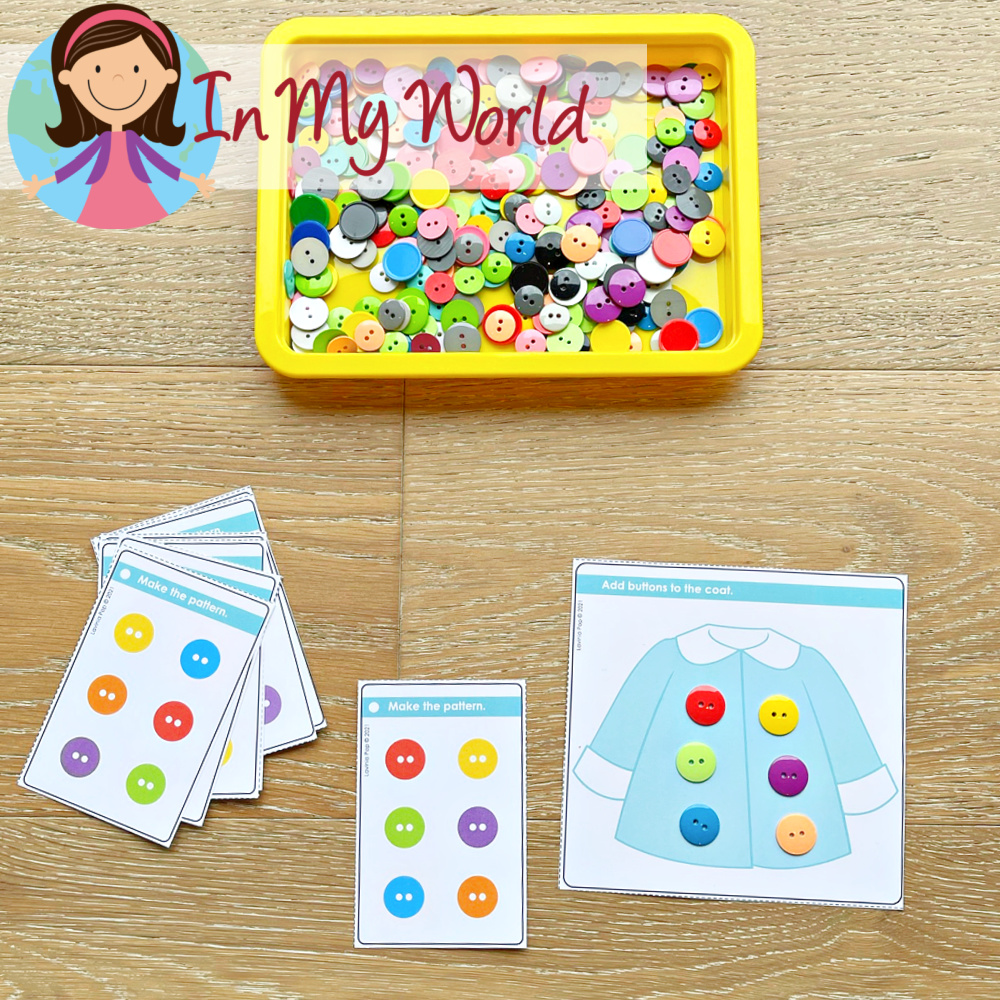
Button Patterns
Materials: Colored buttons
Children copy each pattern card by arranging colored buttons in the same order.
- Skills focus: Pattern copying, sequencing, color recognition, and visual memory
- Also use for: Math centers, fine motor practice, or pattern intervention
Picture Symmetry
Materials: Colored counting cubes or other small manipulatives
Children study the completed half of each picture and mirror it with colored cubes to create the other half.
- Skills focus: Symmetry, spatial awareness, color matching, and visual planning
- Also use for: Math centers, STEM tubs, or construction challenges


Math Morning Tub Activities
Number Tracing
Materials: Erasable marker and an optional write-and-wipe pocket
Children turn over a number card, find the matching numeral on the tracing page, and trace it.
- Skills focus: Numeral recognition, number formation, and fine motor control
- Also use for: Number centers, handwriting practice, or early finishers

Missing Numbers
Children study each number sequence, identify the missing numeral, and place the matching number card in the empty box.
- Skills focus: Number order, numeral recognition, and sequencing
- Also use for: Number sense centers, assessment, or small-group review

What Is the Number?
Children compare the number clues, identify the numeral they have in common, and place the correct number in the empty box.
- Skills focus: Number recognition, visual discrimination, and matching
- Also use for: Independent number review, intervention, or early finishers

Counting Gumballs
Materials: Play dough or pom-poms
Children read the number on a task card and place the matching quantity of play dough gumballs or pom-poms onto the gumball machine.
- Skills focus: Counting, numeral recognition, one-to-one correspondence, and cardinality
- Also use for: Number centers, fine motor practice, or hands-on assessment

Gumball Addition
Materials: Play dough or pom-poms and clothespins
Children model the two quantities on the gumball machine, combine them, and clip the correct total.
- Skills focus: Addition, counting on, combining sets, and number recognition
- Also use for: Math centers, small-group instruction, or concrete addition practice

Which Shapes Made the Picture?
Materials: Clothespins
Children examine the picture, determine which set of shapes was used to make it, and clip the matching answer.
- Skills focus: Shape recognition, composing shapes, visual analysis, and spatial reasoning
- Also use for: Geometry centers, STEM tubs, or shape review

Which Is Longer or Shorter?
Materials: Clothespins
Children compare the two pictures and clip the one that is longer or shorter, as directed on the card.
- Skills focus: Comparing length, measurement vocabulary, visual comparison, and fine motor strength
- Also use for: Measurement centers, math warm-ups, or informal assessment


A Flexible Addition to Your Kindergarten Routine
You do not need to introduce all 22 activities at once. Begin with a few familiar skills, model how to use and pack away each tub, and add new choices as children become more independent.
The variety in Kindergarten Morning Tubs Set 3 makes it easy to rotate activities across literacy, math, fine motor, and visual thinking. Children receive meaningful review, while teachers can begin the day with a smoother and more purposeful routine.
Purchase Kindergarten Morning Tubs Set 3
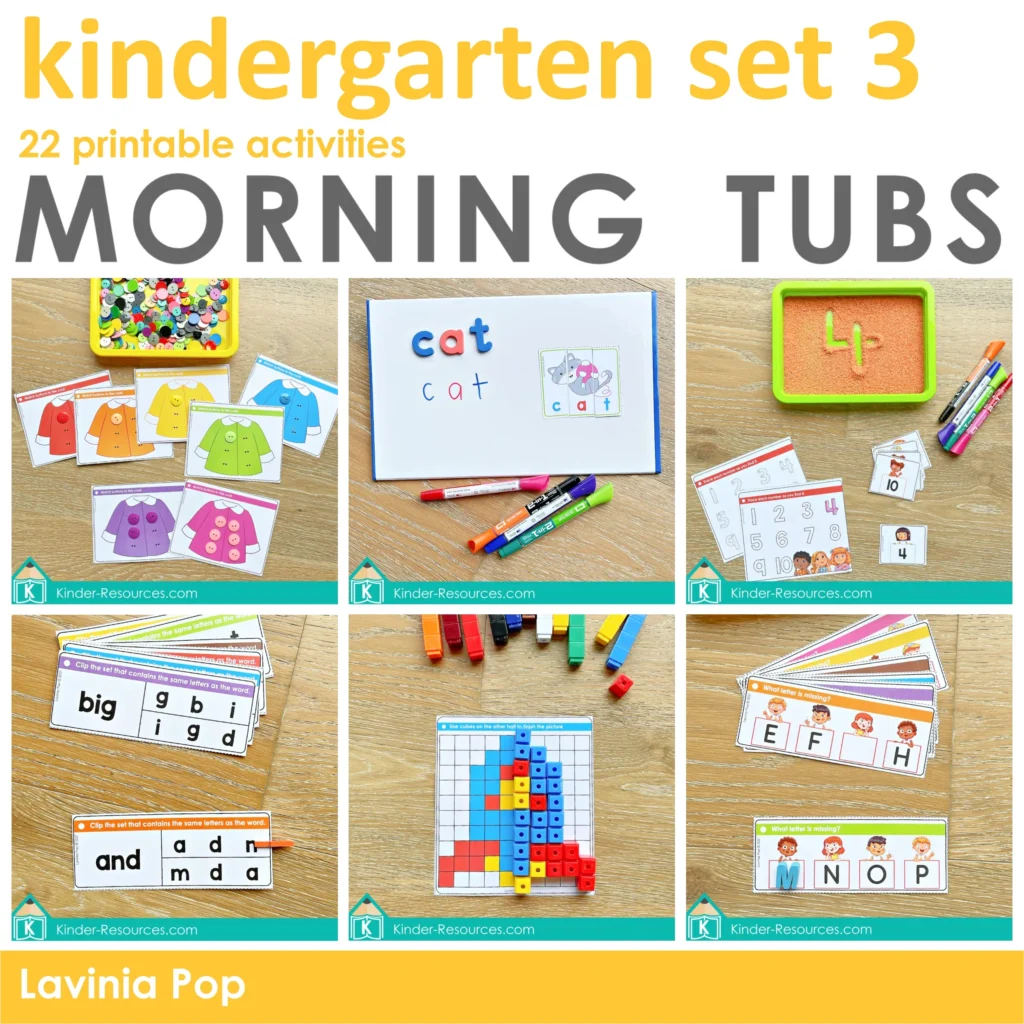
The complete resource includes all 22 printable activities and photo instruction cards. You can purchase Kindergarten Morning Tubs Set 3 from my Kinder Resources store by clicking the image below.
Explore More Kindergarten Morning Tubs
If you would like even more hands-on activities to rotate through your morning routine, you can also explore the first two sets in this series:
Happy Teaching!