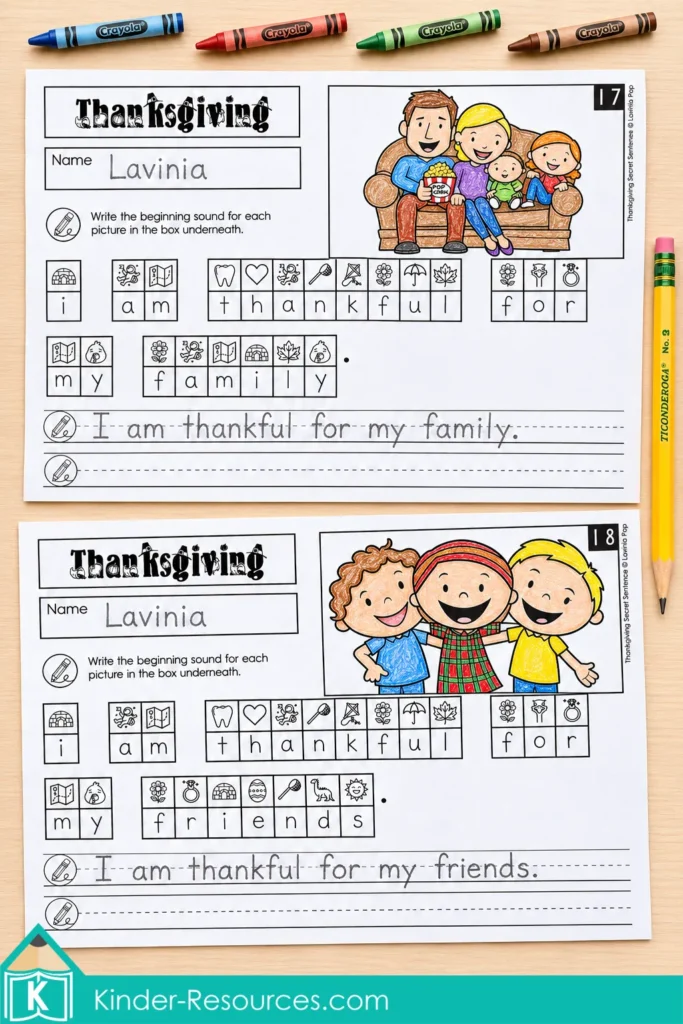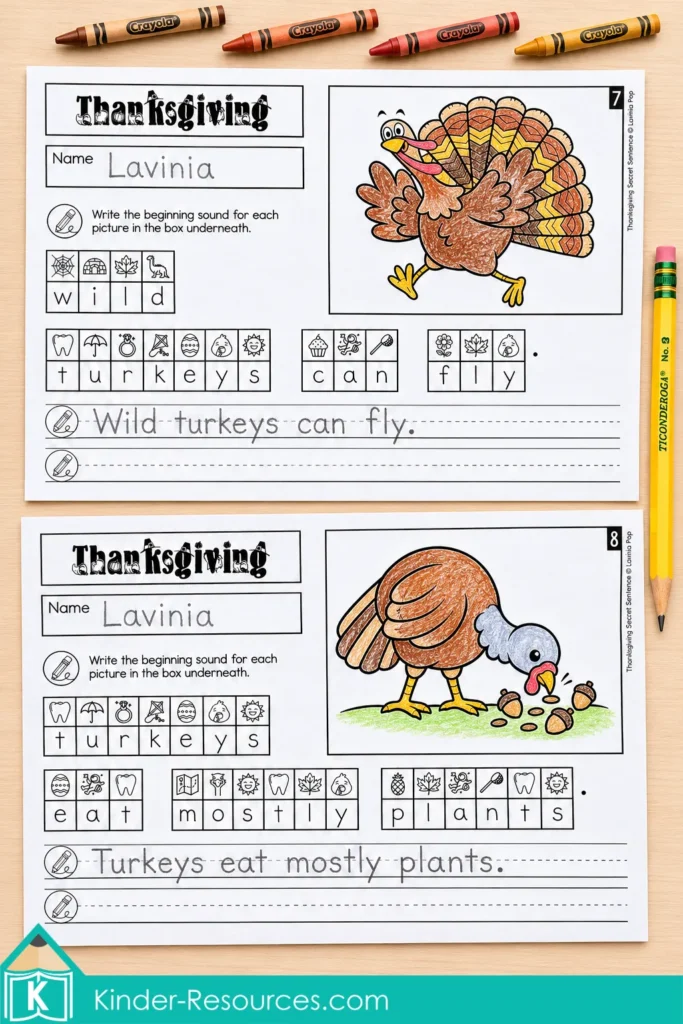
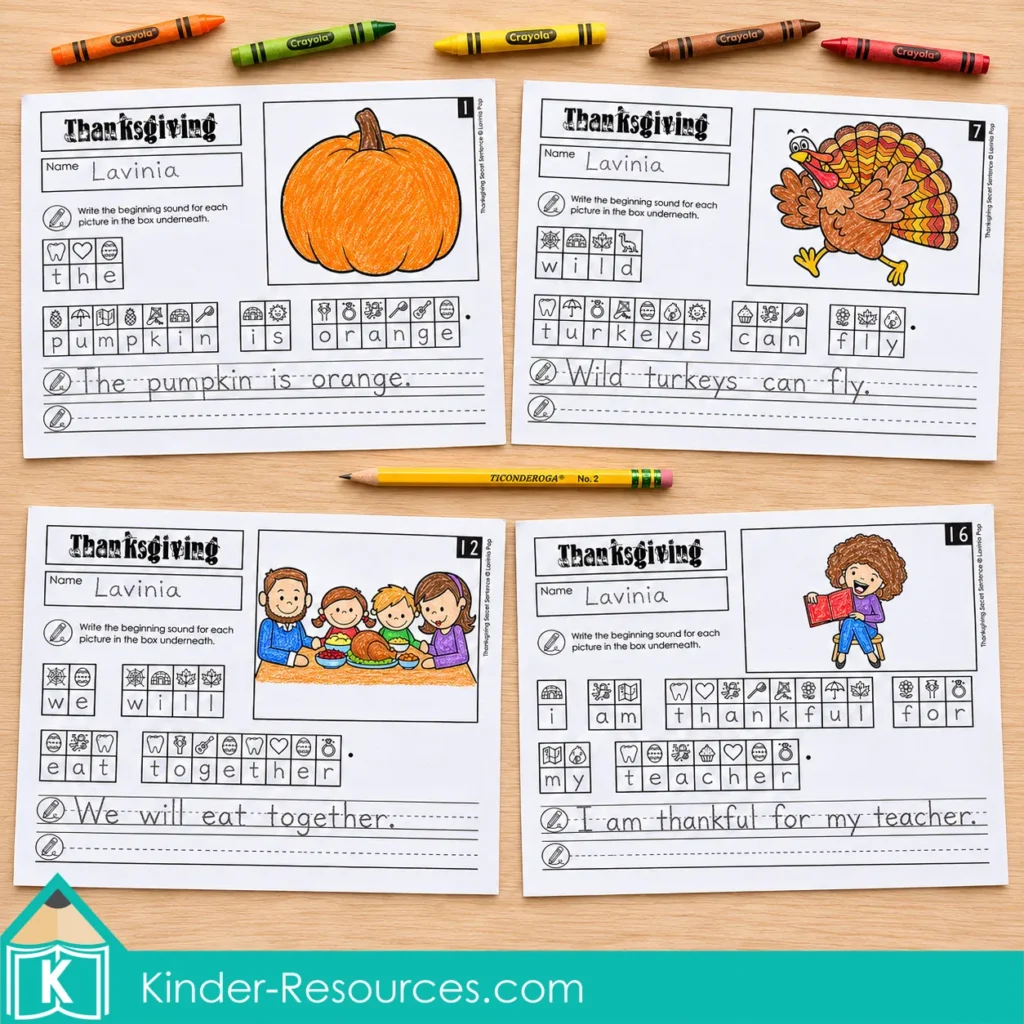
A row of little pictures can hide a whole sentence! These Thanksgiving secret sentence worksheets invite kindergarten and first grade children to name each picture, listen for its beginning sound, and write the matching letter. As the letters appear, children uncover a sentence to read and write, then color the matching illustration.
I created this packet to bring beginning sounds and sentence writing together in one simple November activity. With turkey facts, Thanksgiving foods, family activities, and thankful sentences, you can choose a page that fits your learning focus.
Try a Free Thanksgiving Secret Sentence Sample
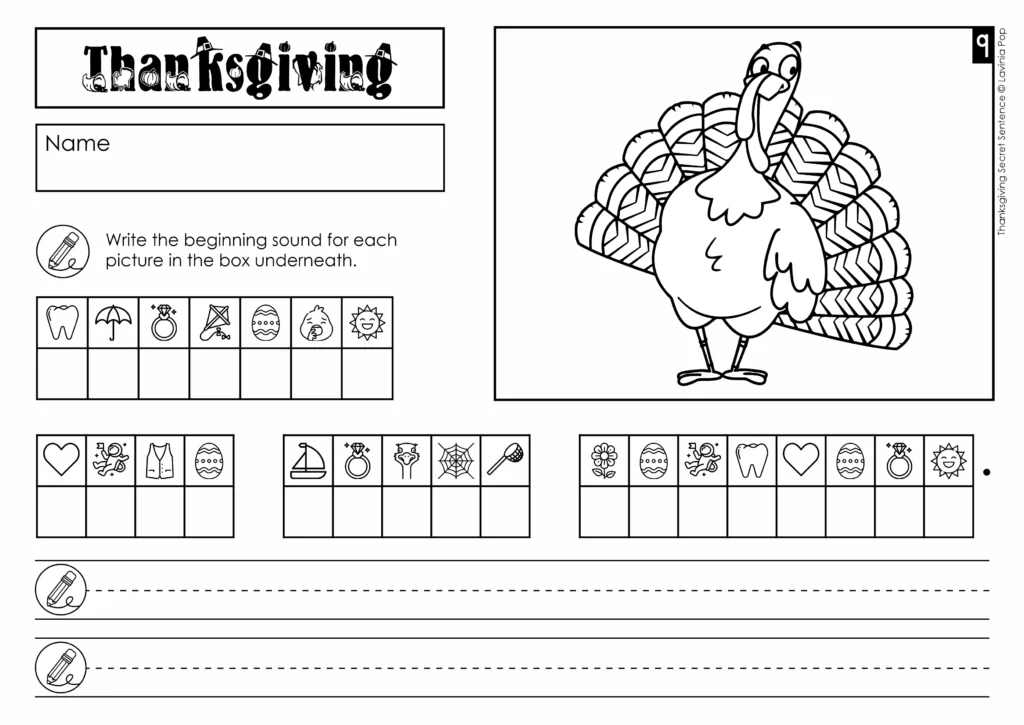
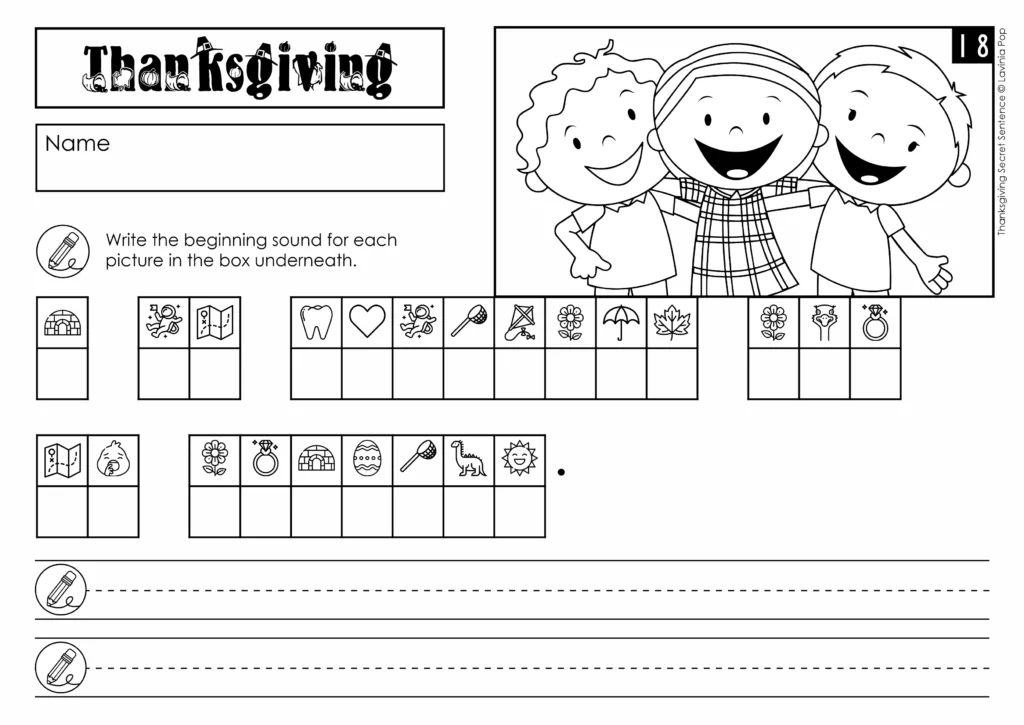
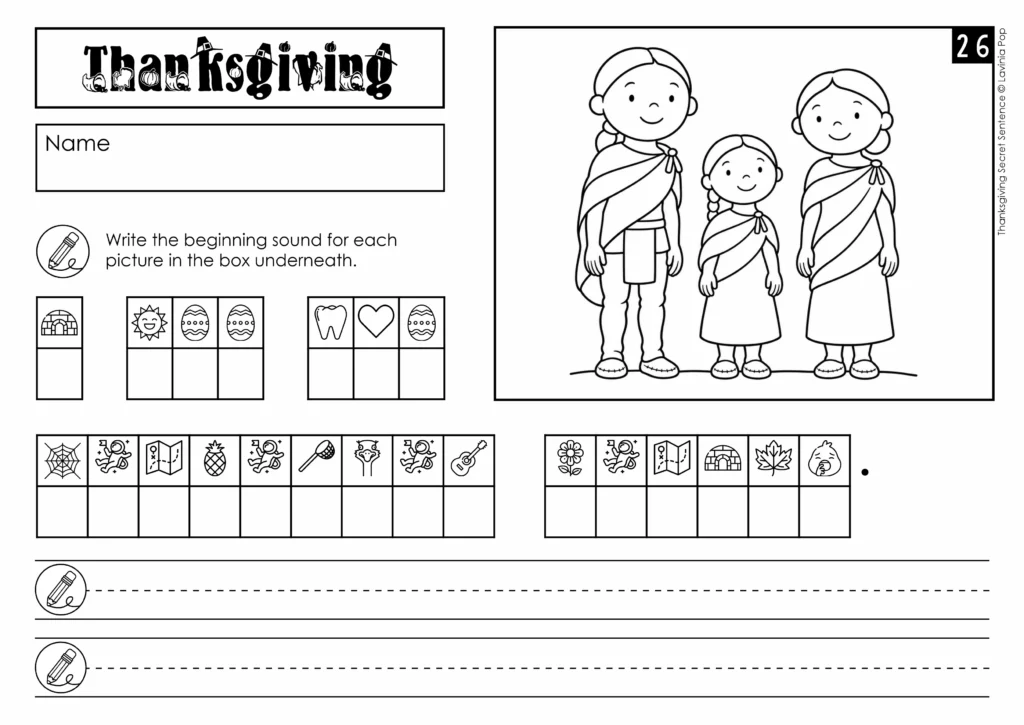
Would you like to try the activity with your children? Start with the free sample pages below. Model how to solve a word together, then see how much support your learners need with the picture clues, reading, and writing.
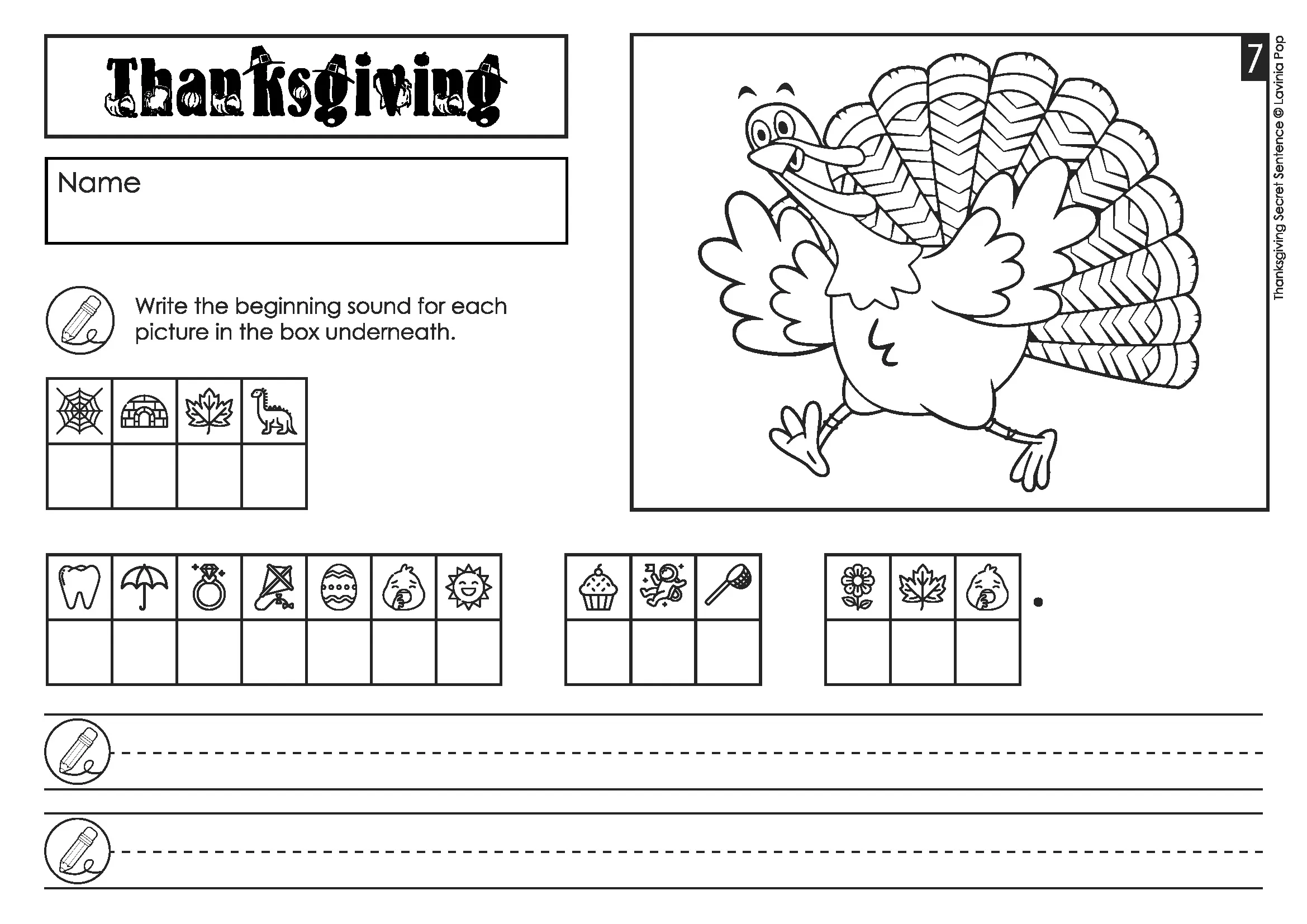
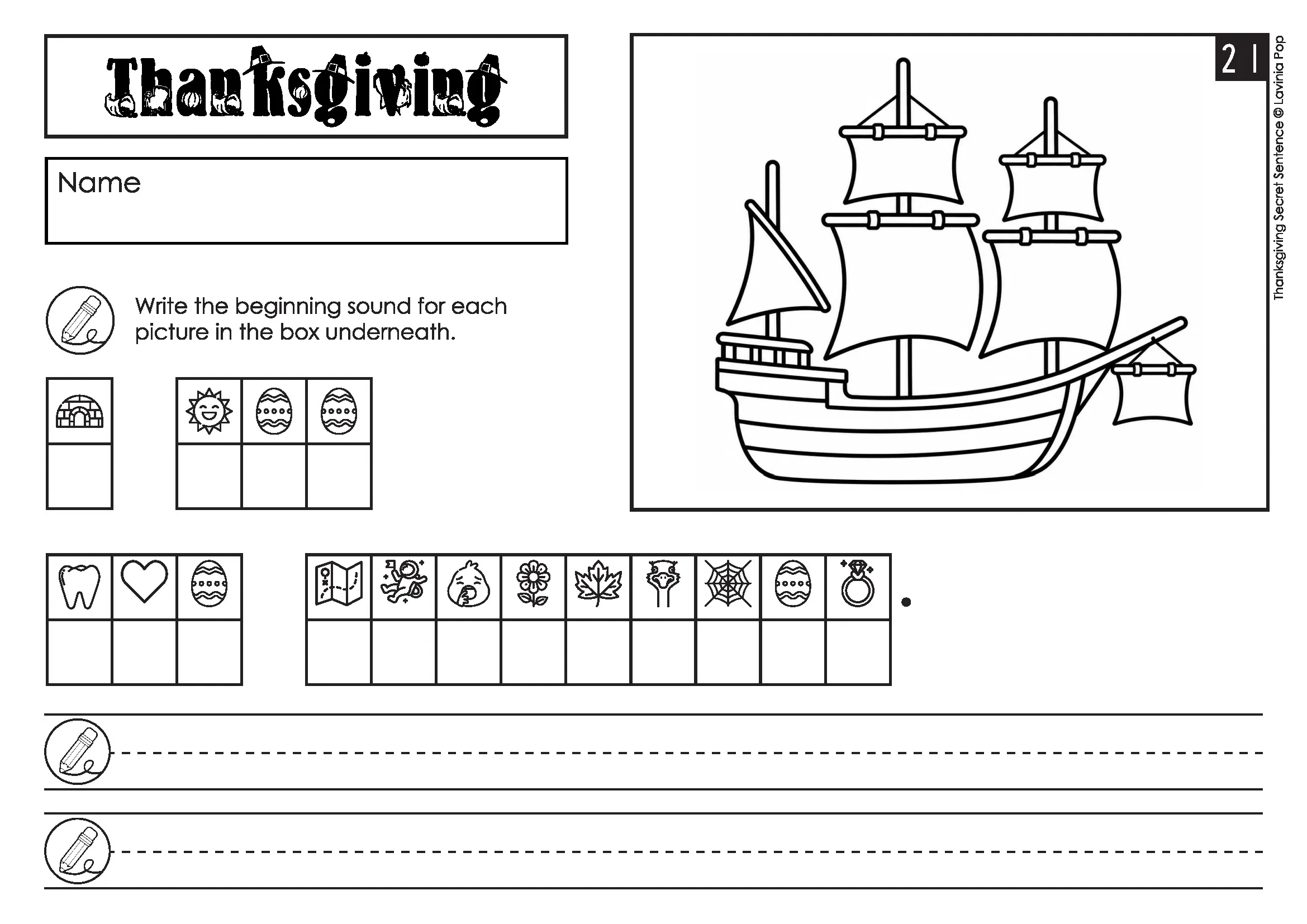
What’s Included in the Complete Packet?
The complete printable PDF includes:
- 30 Thanksgiving Secret Sentence worksheets
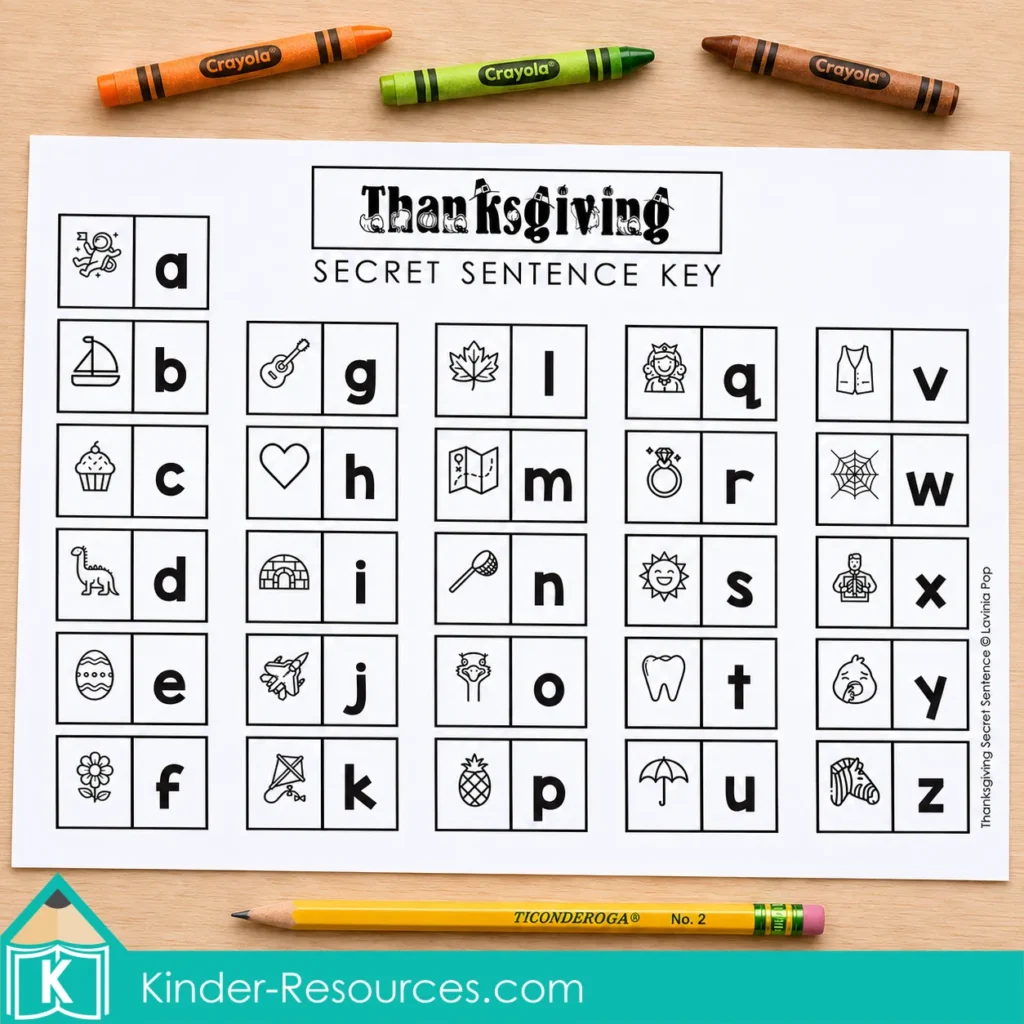
- A picture-letter key for student reference
- A complete sentence list for teacher reference
- Teacher directions and suggestions for differentiation
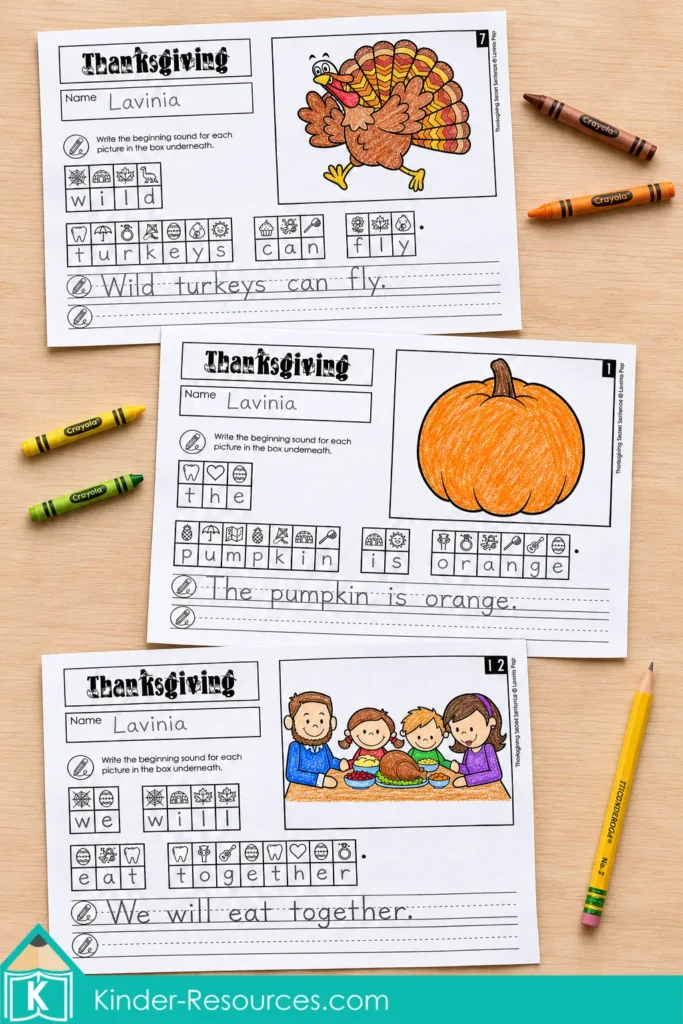
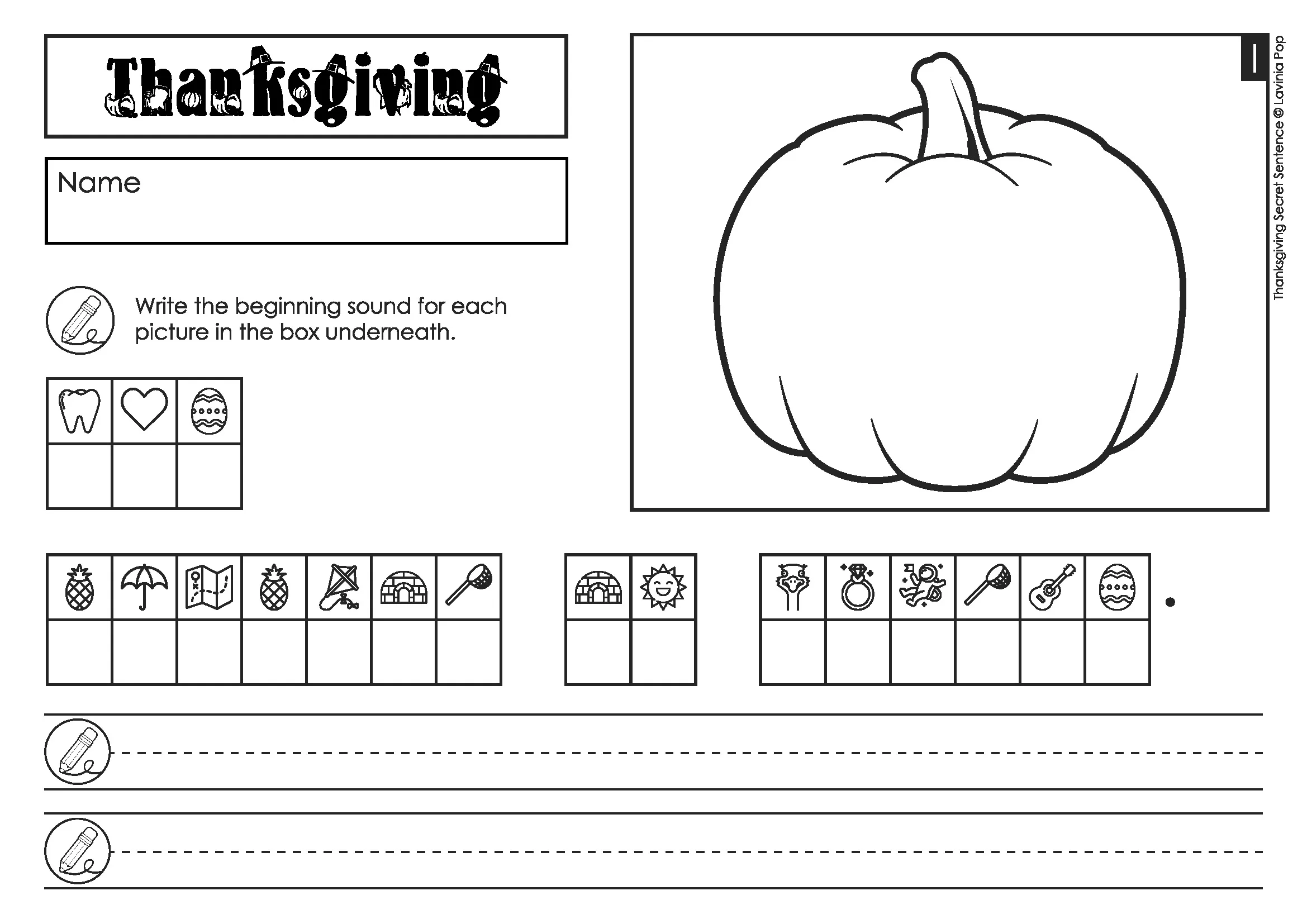
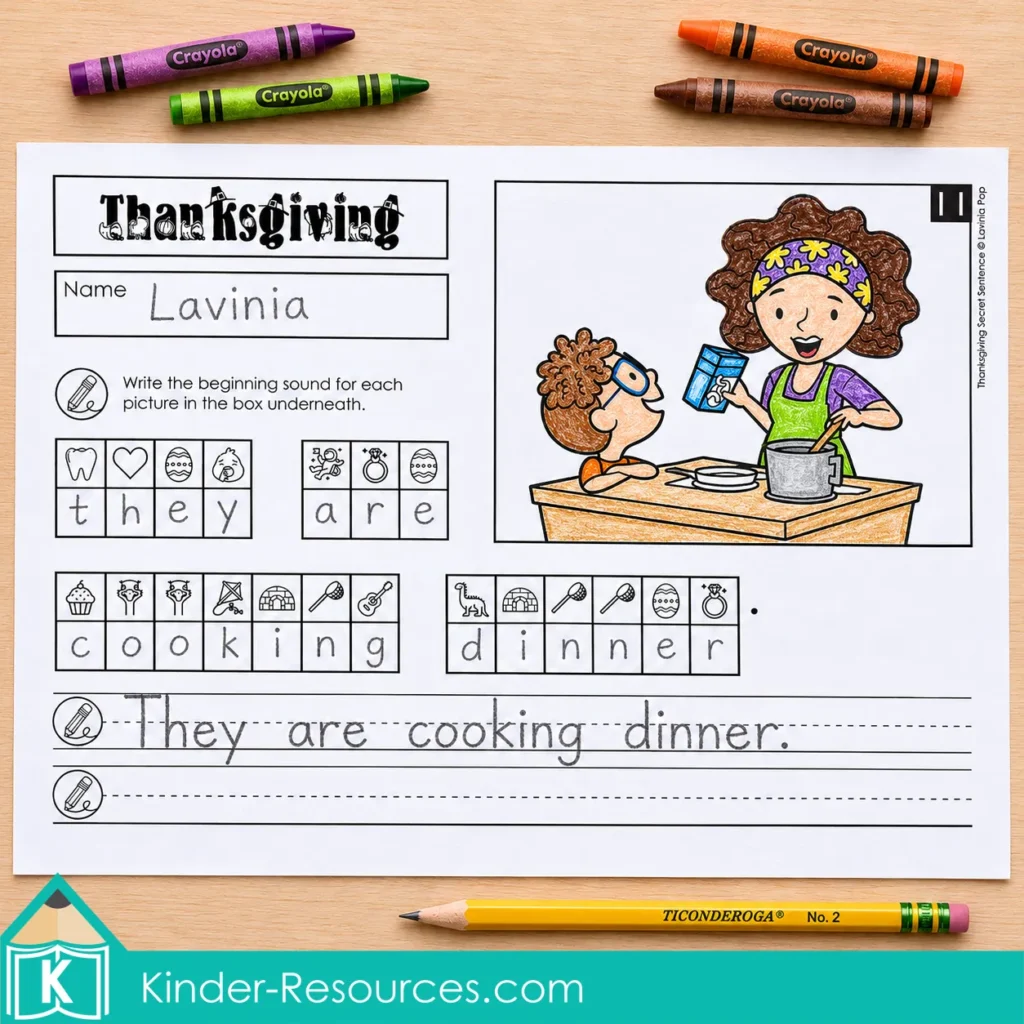
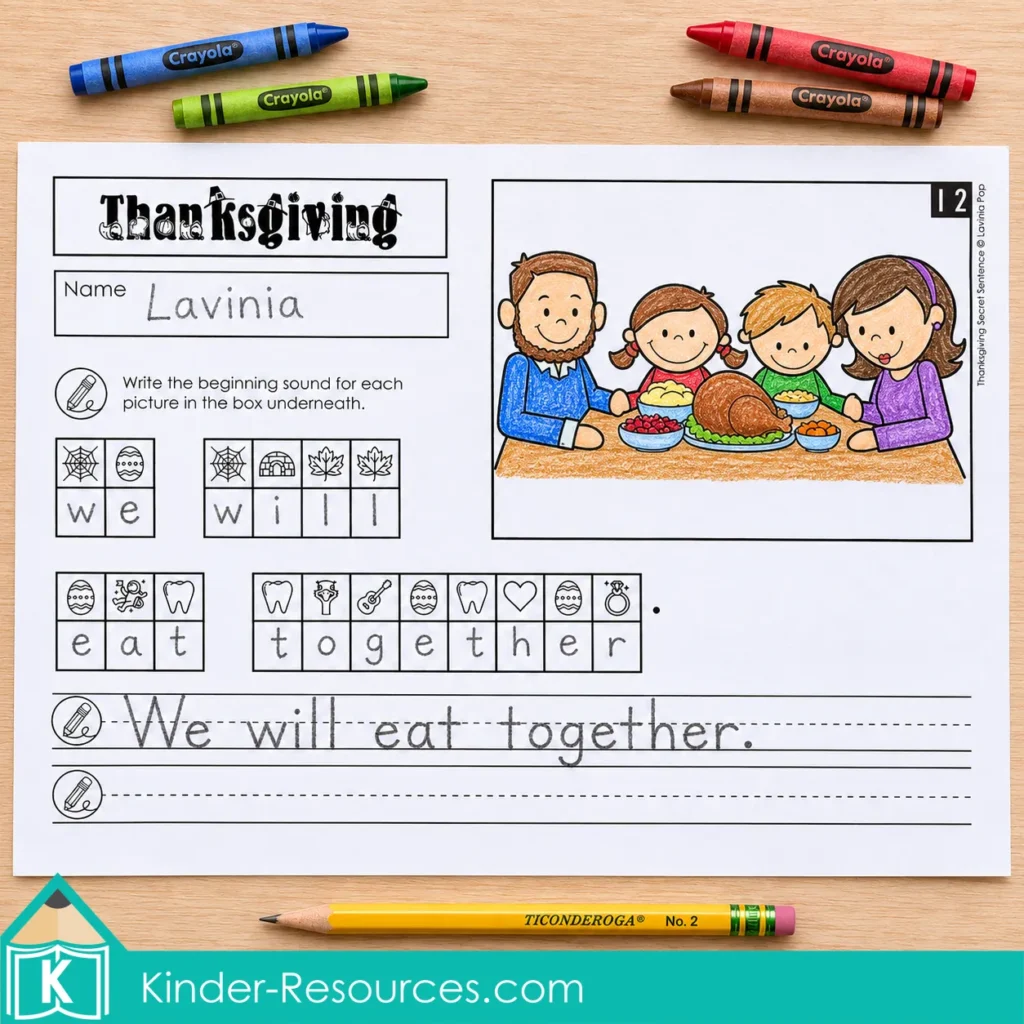
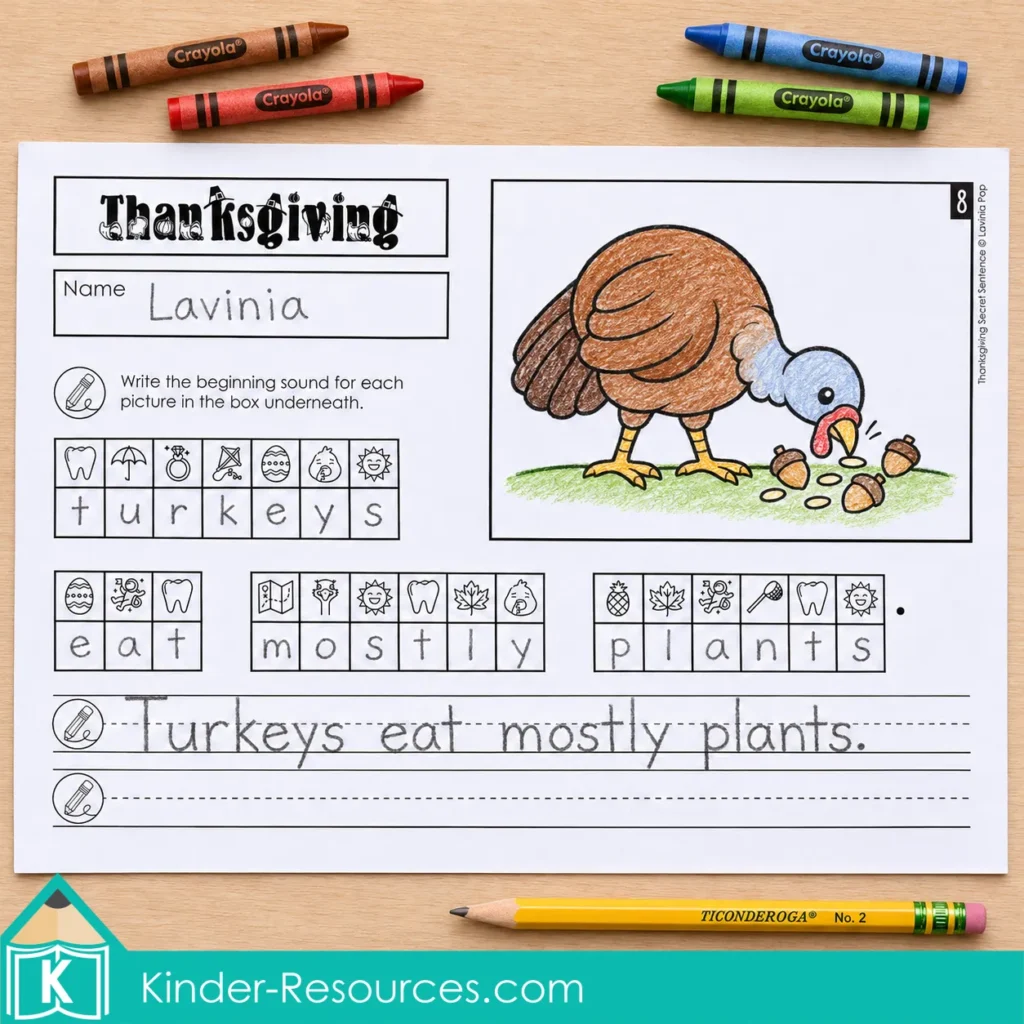
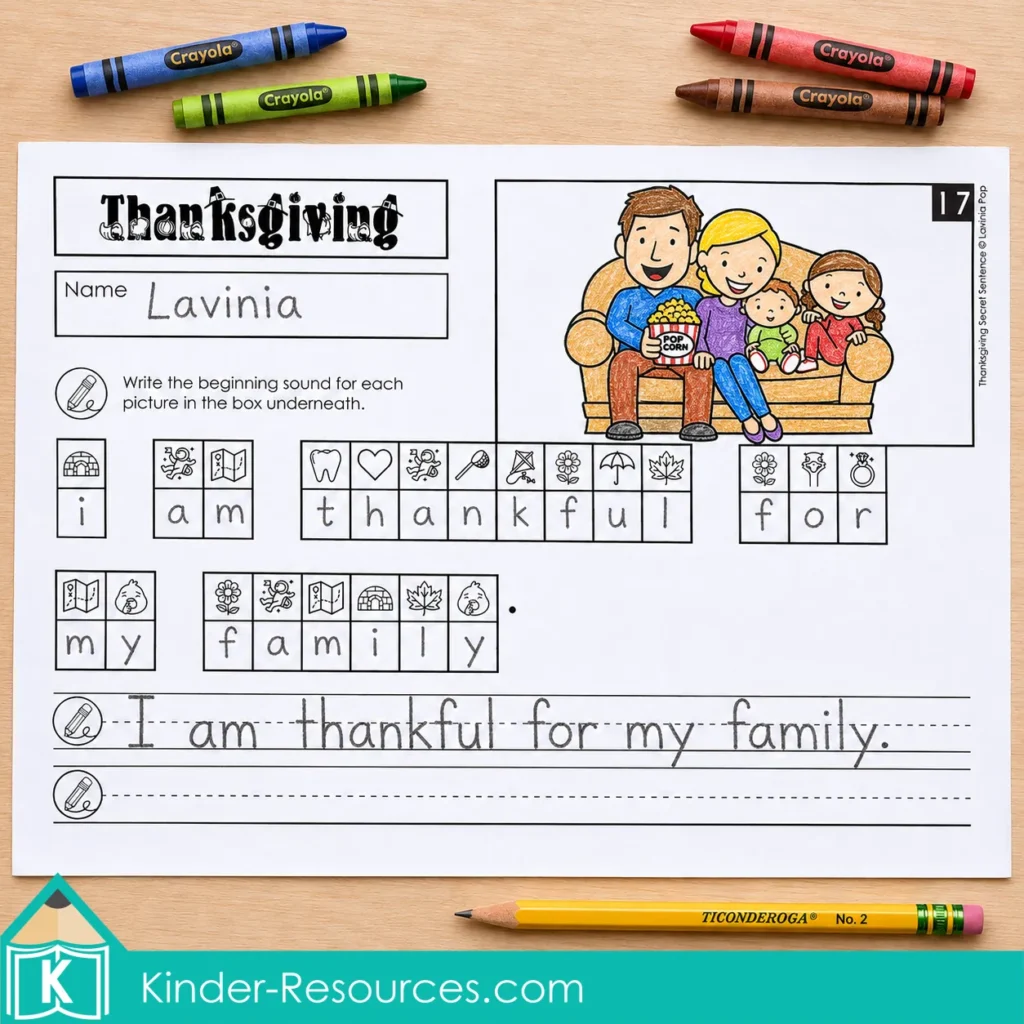
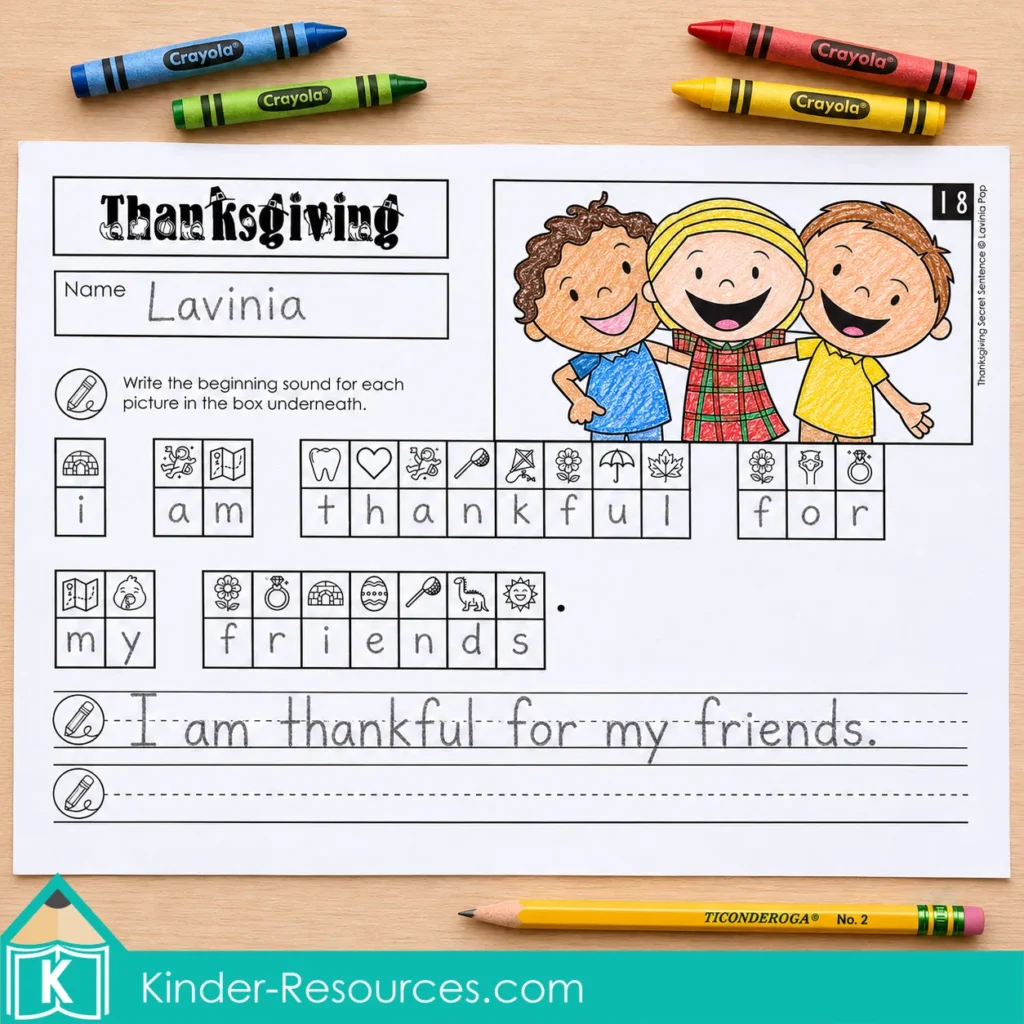
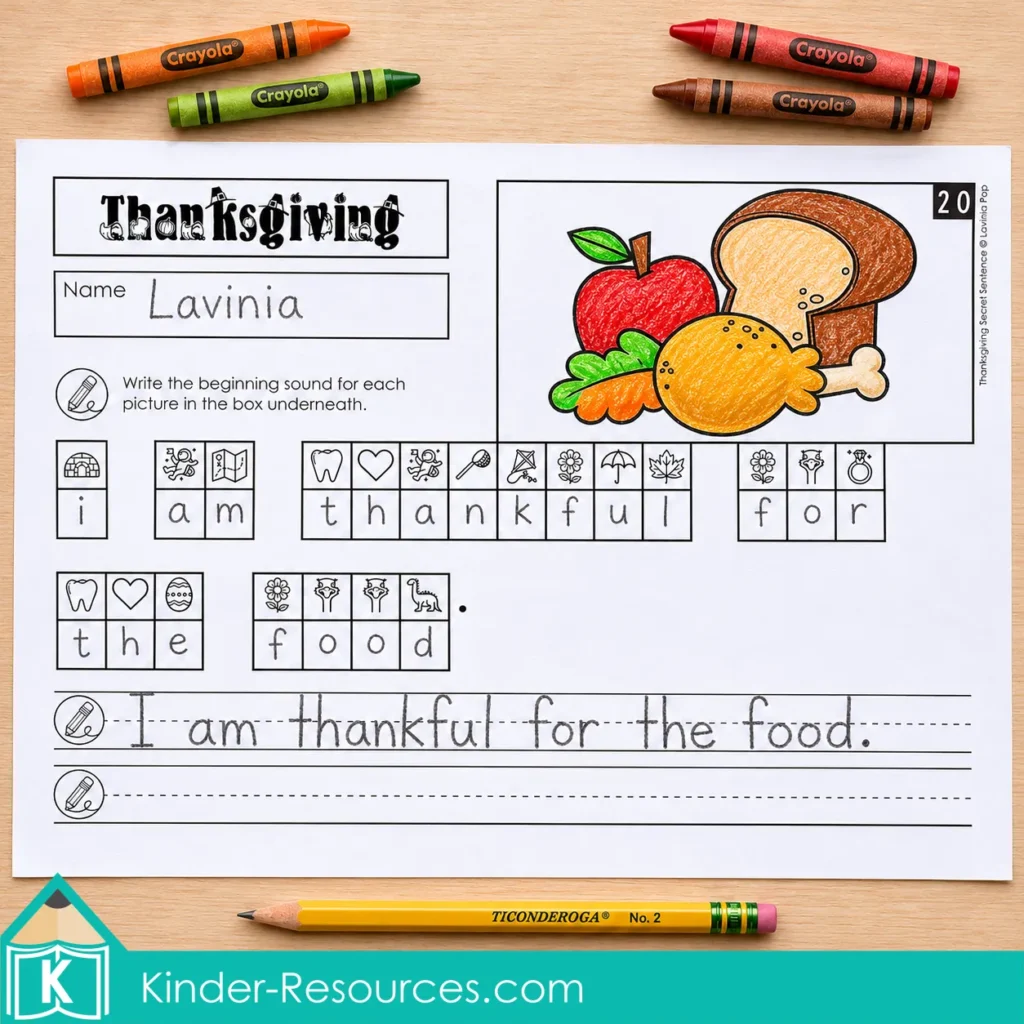
Each activity page has picture clues, letter boxes, two rows of handwriting lines, and an illustration to color. All 30 worksheets are supplied as black and white versions for children to complete. The images in this post show completed examples with pencil writing and crayon coloring.
The packet is designed for kindergarten and first grade. Choose pages according to the letter sounds, vocabulary, and reading skills your children have already learned.
How Do the Secret Sentence Worksheets Work?
You only need a printed page, a pencil, and crayons. Keep the picture-letter key nearby when children need a reference.
- Name the picture. Review unfamiliar picture names before beginning. For example, children need to know that a picture represents a net to identify its first sound.
- Listen and write. Say the picture’s name, identify the beginning sound, and write the matching letter in the box underneath.
- Read the revealed words. Work from left to right. Help children use the sound-spelling patterns they know, and explain unfamiliar words or spelling patterns.
- Write the sentence. Copy it onto the handwriting lines, adding an initial capital letter, spaces between words, and the correct ending punctuation.
- Color and reread. Color the illustration, following any color clues in the sentence, then read the completed sentence again.
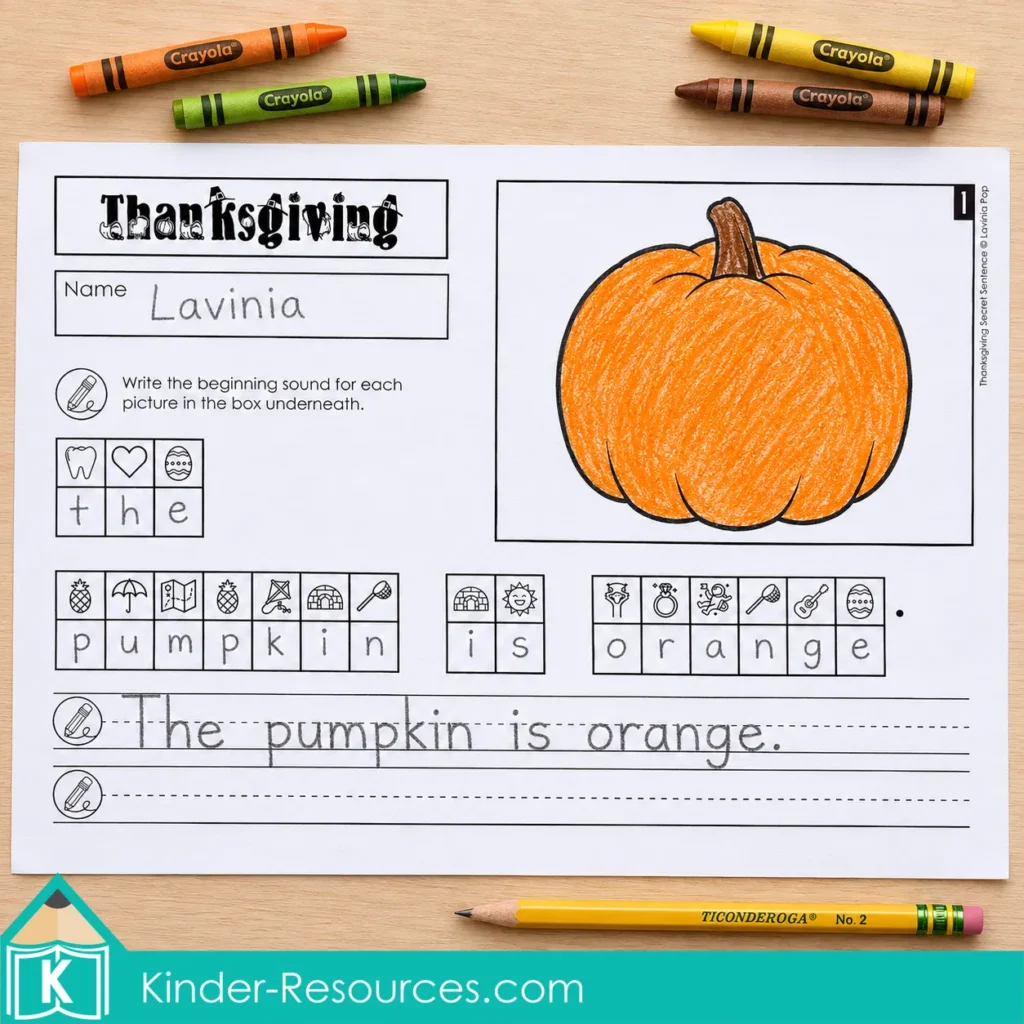
On the pumpkin page, the pictures of a tooth, heart, and egg reveal the letters t, h, and e. Those letters form the word the. Read the word together, then continue until the sentence says, “The pumpkin is orange.”
Children can then write the sentence and color the pumpkin orange. That final step gives them a small reason to think about what they have read.
Tip: Model letter placement before children begin writing. Short lowercase letters sit on the solid baseline and reach the dashed midline; tall letters reach the headline, and the tails of letters such as p and y extend below the baseline.
Read for Meaning and Notice Punctuation
The packet includes statements, questions, and exclamations, so the finished sentences give you something to discuss:
- “Wild turkeys can fly.” Find the period and talk about the fact the sentence tells us.
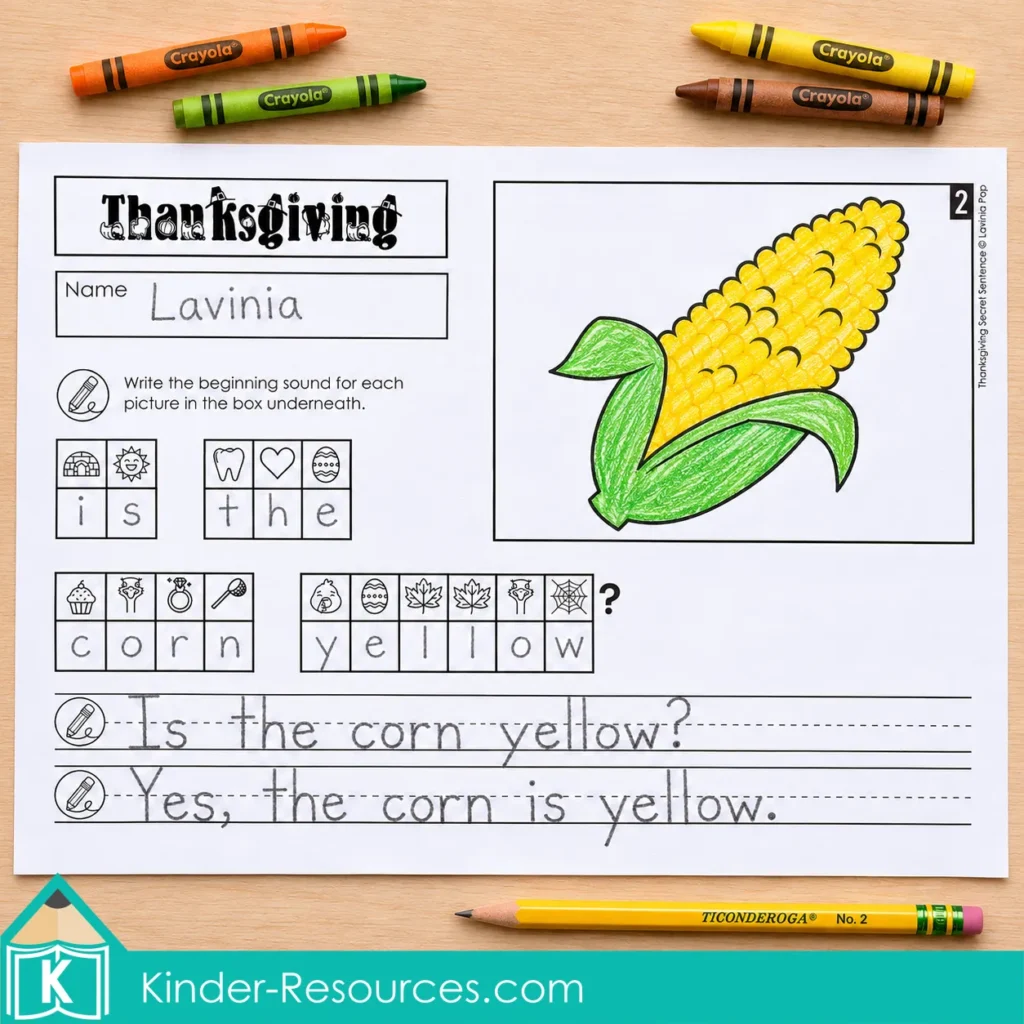
- “Is the corn yellow?” Find the question mark, read the question aloud, and answer it.
- “Apple pie is the best!” Notice the exclamation point and invite children to share their own favorite foods.
After reading a question, children can answer orally or, when ready, add a short written answer. This is an optional extension you can introduce after they have solved and copied the original sentence.
Choose Thanksgiving Topics to Talk About
Food, Family, and Turkeys
Sentences such as “They are cooking dinner.” and “We will eat together.” invite children to talk about meals and activities they share with people who care for them. The turkey pages add another topic, with sentences such as “Turkeys eat mostly plants.”
Let children share their own experiences. Families enjoy different foods and traditions, and everyone can contribute to the conversation.
Things to Be Thankful For
The gratitude pages include sentences about family, friends, a teacher, toys, and food. Read one together, then invite children to finish this sentence aloud: “I am thankful for…”
Children who are ready can draw their idea and write a new sentence on separate paper. Others can share their idea orally while an adult helps record it.
Introducing Historical Vocabulary
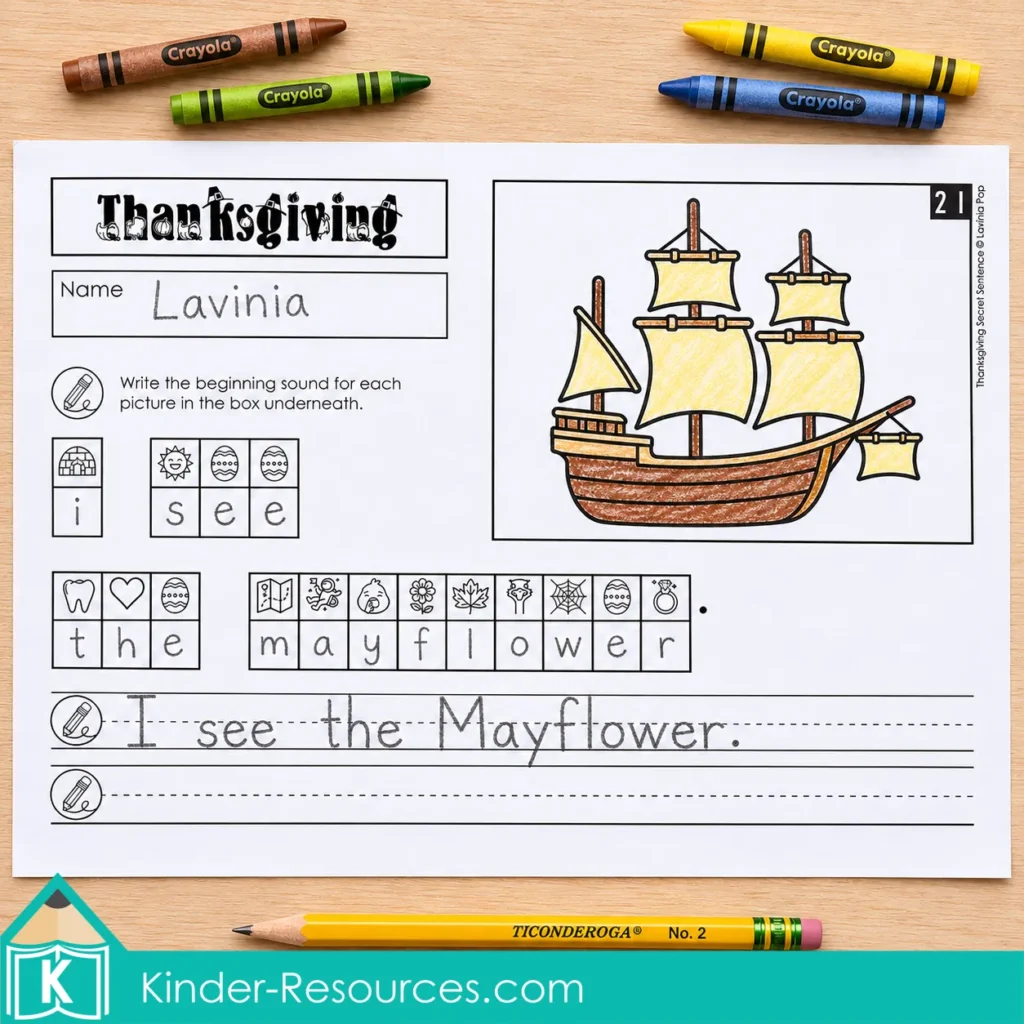
Some pages include the Mayflower, English colonists, and Wampanoag people. Introduce unfamiliar words before using these worksheets, and explain that the historical illustrations show life in the 1600s. Wampanoag people and communities are part of life today.
Pair these pages with age-appropriate history learning. Plimoth Patuxet Museums’ teacher resources offer useful background and materials showing Wampanoag life in the past and present.
On the Mayflower page, read the ship’s name together and point out the capital M before children copy the sentence.
Simple Ways to Support Different Learners
For children who need help with the clues: Name the pictures together, provide the picture-letter key, and complete one word at a time. You can cover the rest of the page temporarily to make the task feel more manageable.
For children who can solve the code but need reading support: Read the revealed words together. A child may identify each beginning sound successfully and still need help reading a word such as thankful or Mayflower. Use the worksheets alongside the phonics and reading skills you are teaching.
For children ready for more: Invite them to work without the key, explain what the sentence means, or write another sentence about the illustration on separate paper.
Use Them in Your November Literacy Routine
Print only the pages you plan to use. The worksheets need no cutting or assembly, and you can laminate a copy of the picture-letter key for repeated use.
- Small groups: Model the routine and listen as children identify sounds and read the revealed words.
- Literacy centers: Offer familiar pages and the key after children understand the activity.
- Morning work or early finishers: Choose a page children can complete with the support available.
- Home practice: Send a page with the key and a short explanation of how to name the pictures, reveal the letters, and read the sentence together.
Get the Complete Thanksgiving Secret Sentence Packet
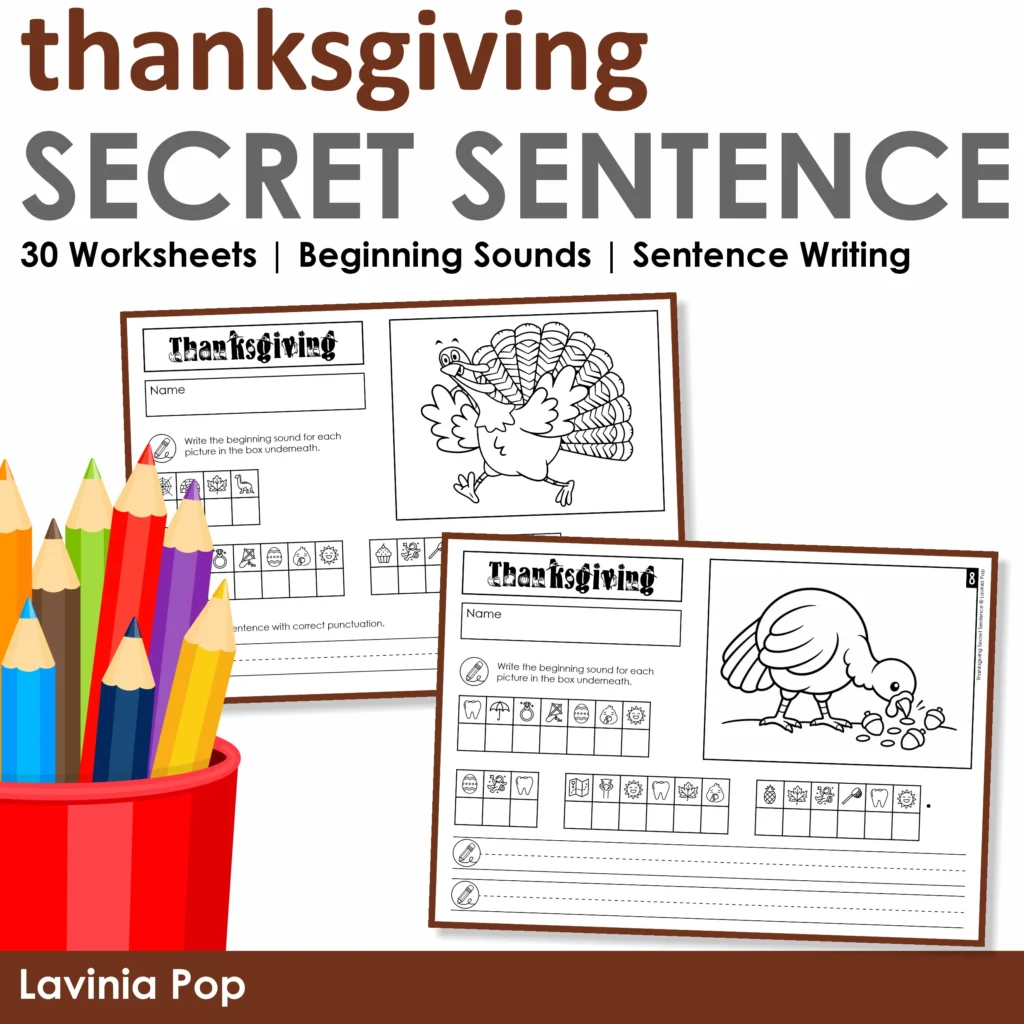
If your children enjoy the free sample, the complete packet gives you 30 worksheets to choose from throughout November. Use the food and family pages, explore turkey facts, or add a thankful sentence to your literacy plans.

Happy Teaching! 😊
You Might Also Like