
he beginning of a new school year is an exciting time for young learners, but writing can feel overwhelming for children who are still learning how to put their ideas on paper. A blank page may leave beginning writers unsure of what to draw, what to write, or where to begin.
These August Writing Journal Prompts provide the structure and visual support young writers need to get started. With drawing spaces, picture choices, sentence starters, and primary handwriting lines, learners can focus on sharing their ideas while building confidence in their writing abilities.
The journal includes a variety of writing activities for Kindergarten and 1st Grade, making it easy to introduce different writing genres throughout August.
Download Free Pages from the August Writing Journal Prompts
To download some free sample pages from the August Writing Journal Prompts packet, the image below.
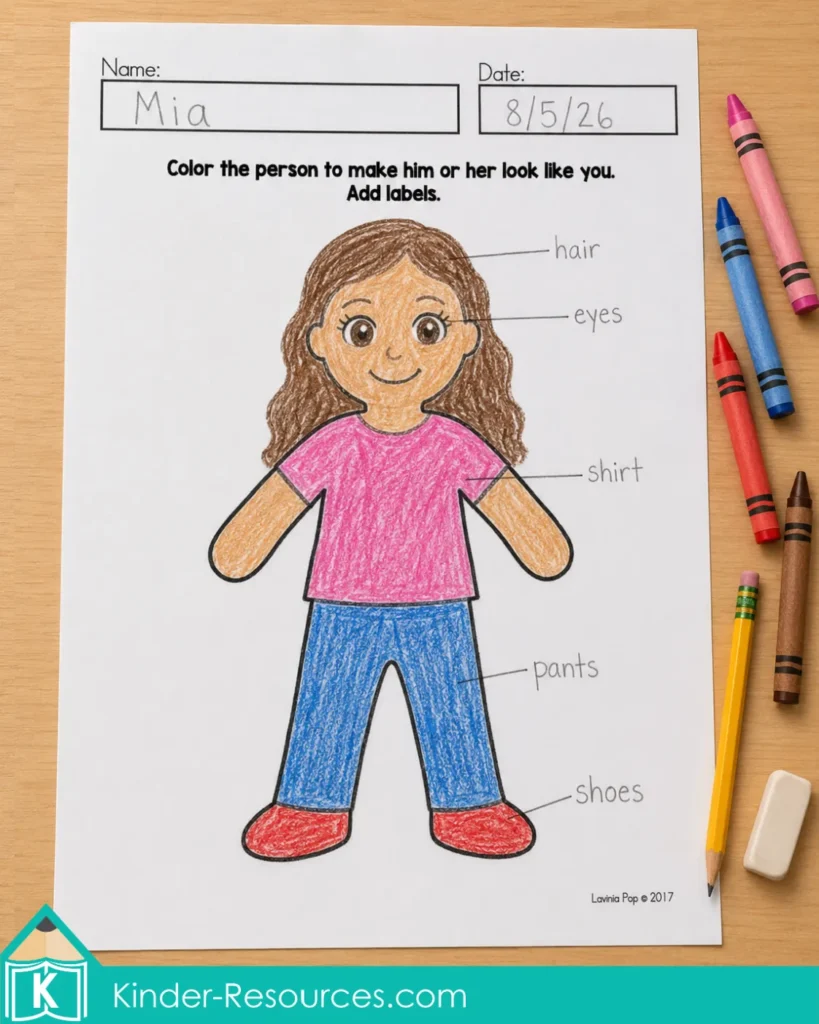
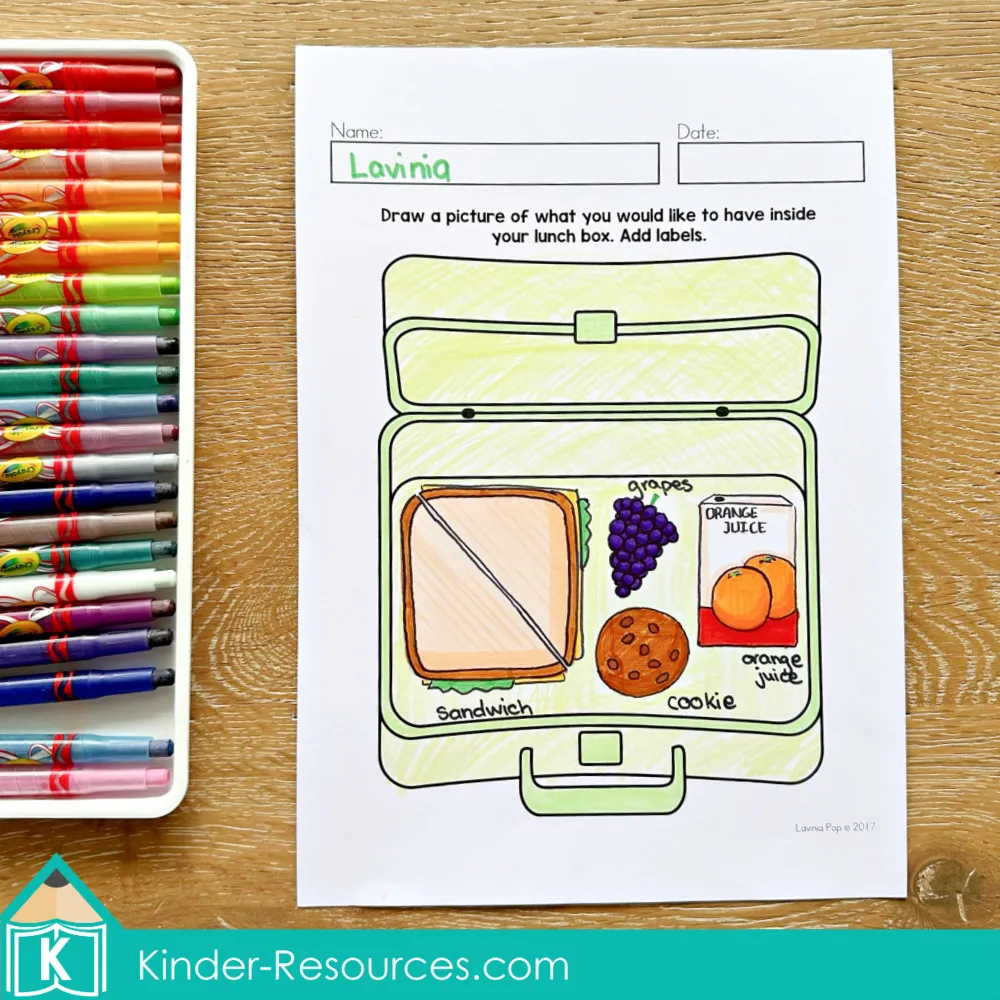
Begin with Drawing and Labeling
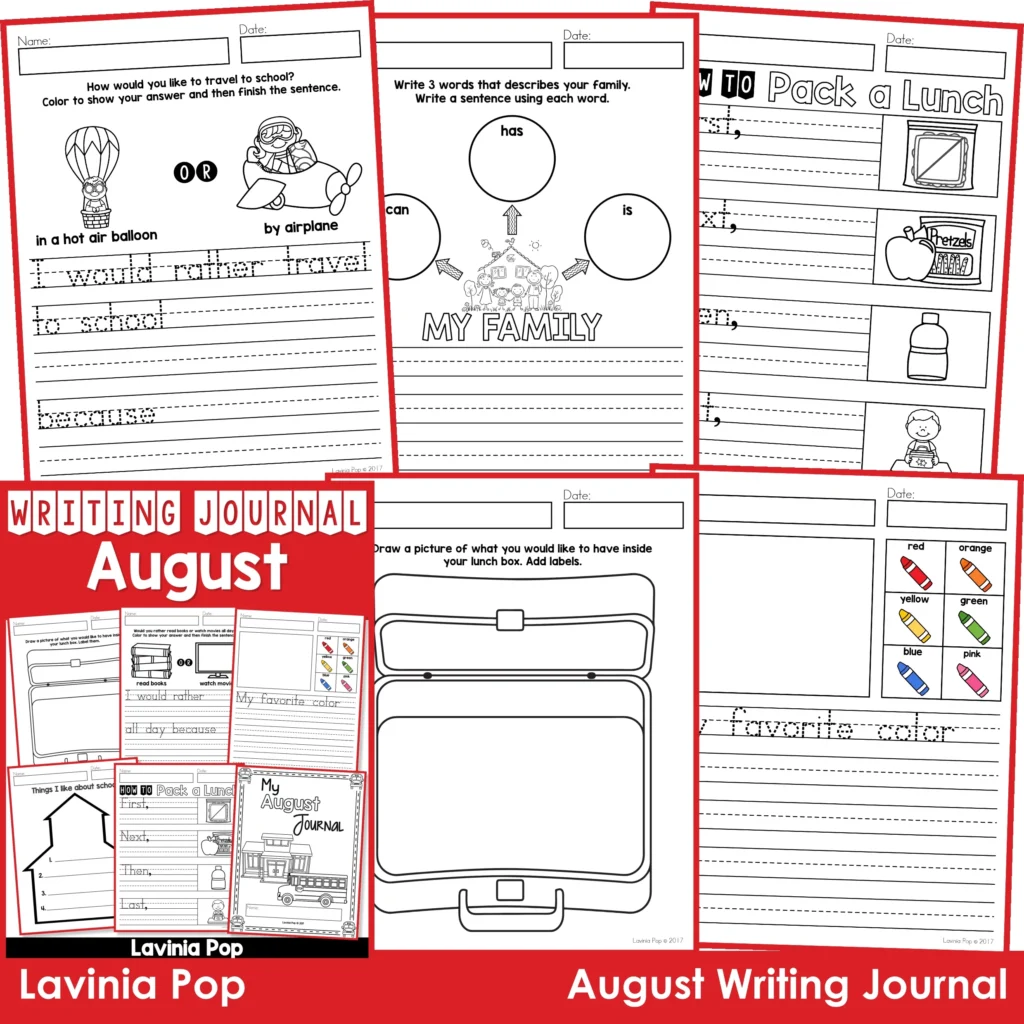
Drawing and labeling activities are a comfortable starting point for beginning writers. Children can communicate an idea through a picture before adding words.
The August journal includes activities that invite learners to:
- Create and label a picture of themselves
- Draw things they will need for school
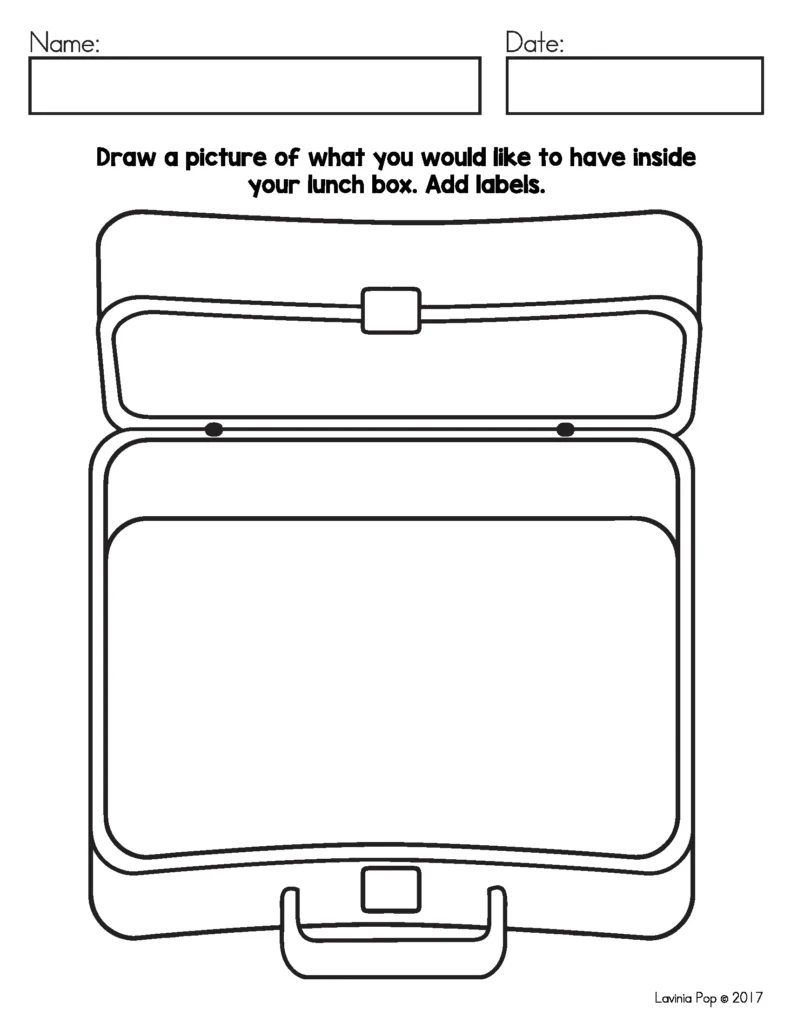
- Draw what they would like inside their lunchbox
These pages can also help teachers learn more about their new students. As children draw and label themselves, their belongings, and their favorite foods, teachers gain insight into their interests, vocabulary, and current writing abilities.
Encourage learners to say each label aloud before writing it. They can listen for the sounds they hear and record as many as they can.
Develop Ideas with List Writing
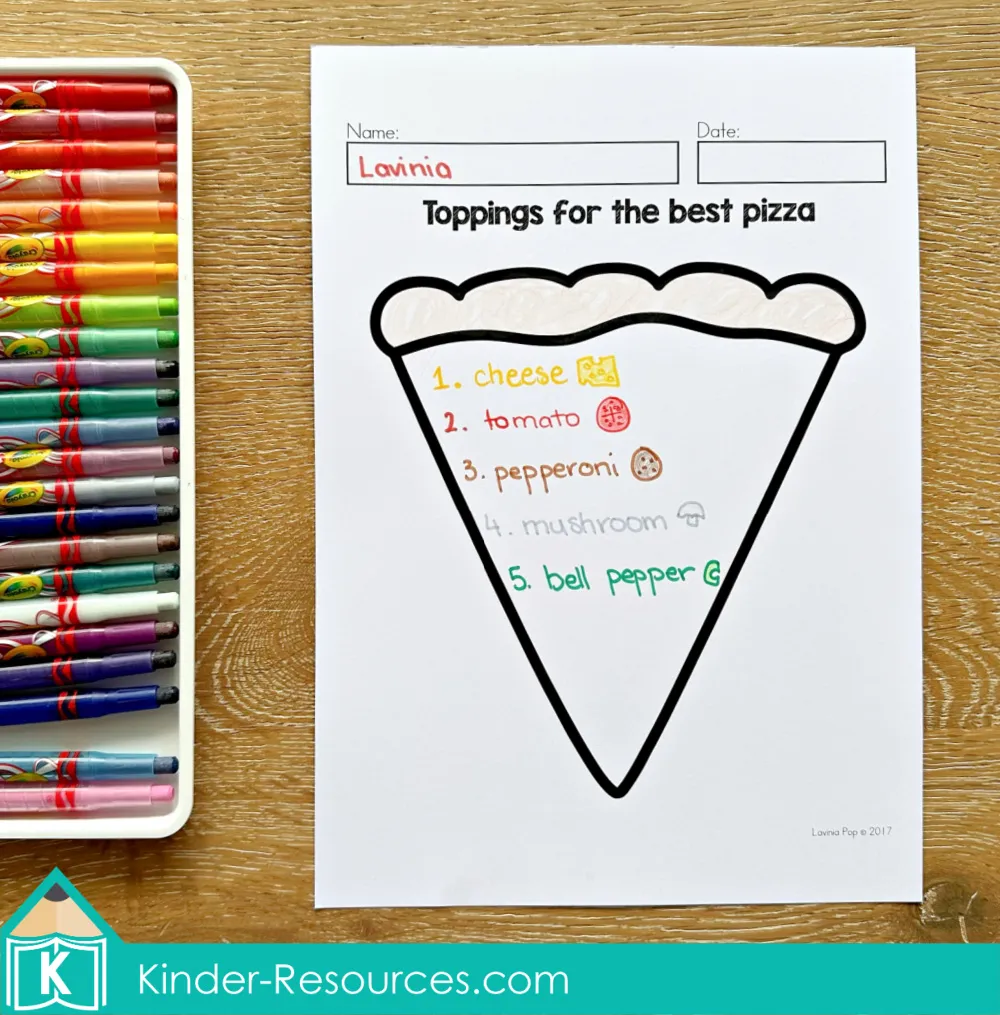
List writing allows young learners to practice recording words and short ideas without needing to create complete sentences.
The journal includes prompts such as:
- My favorite things
- Toppings for the best pizza
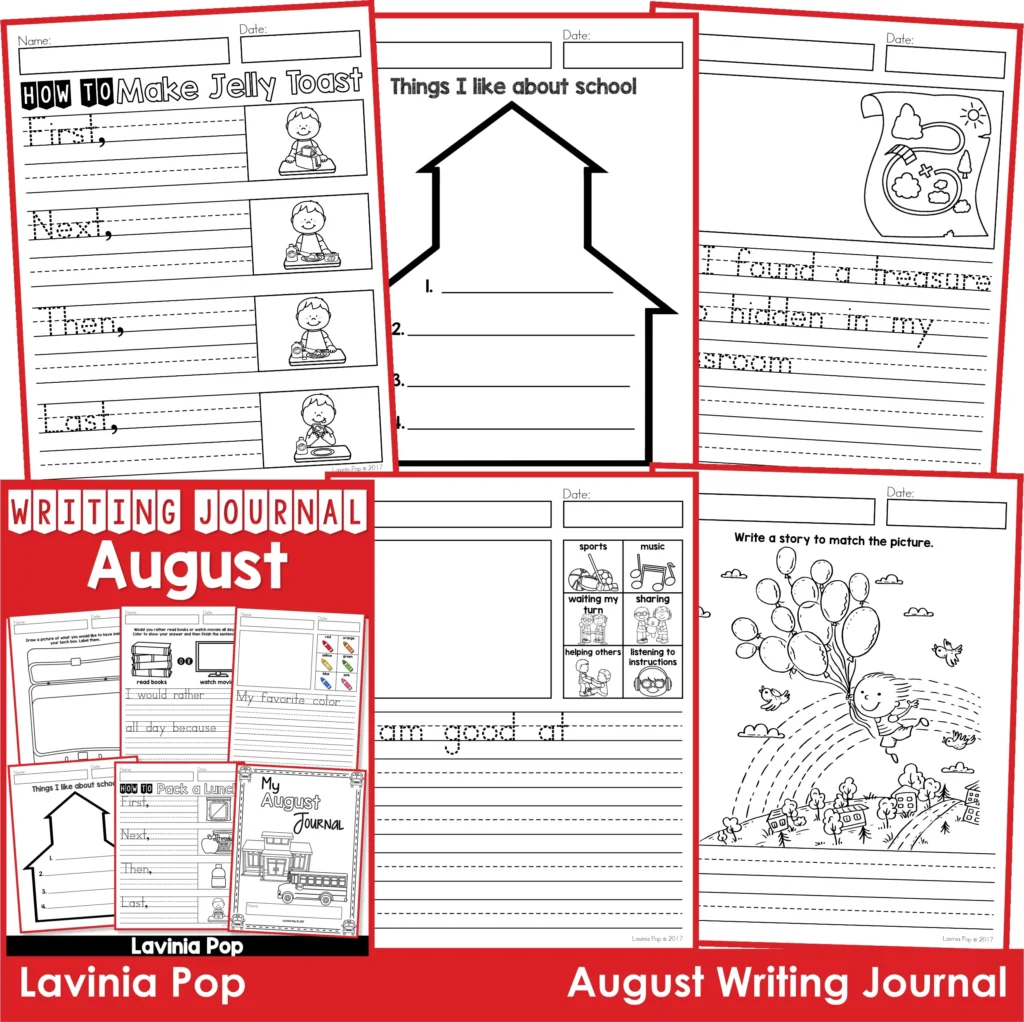
- Things I like about school
Before students begin, brainstorm a few possible answers together. Record examples where everyone can see them, but remind learners that their lists can be different.
List writing is also a useful informal assessment. Teachers can observe letter formation, sound knowledge, spelling attempts, vocabulary, and the ability to work independently.
Introduce Procedural Writing
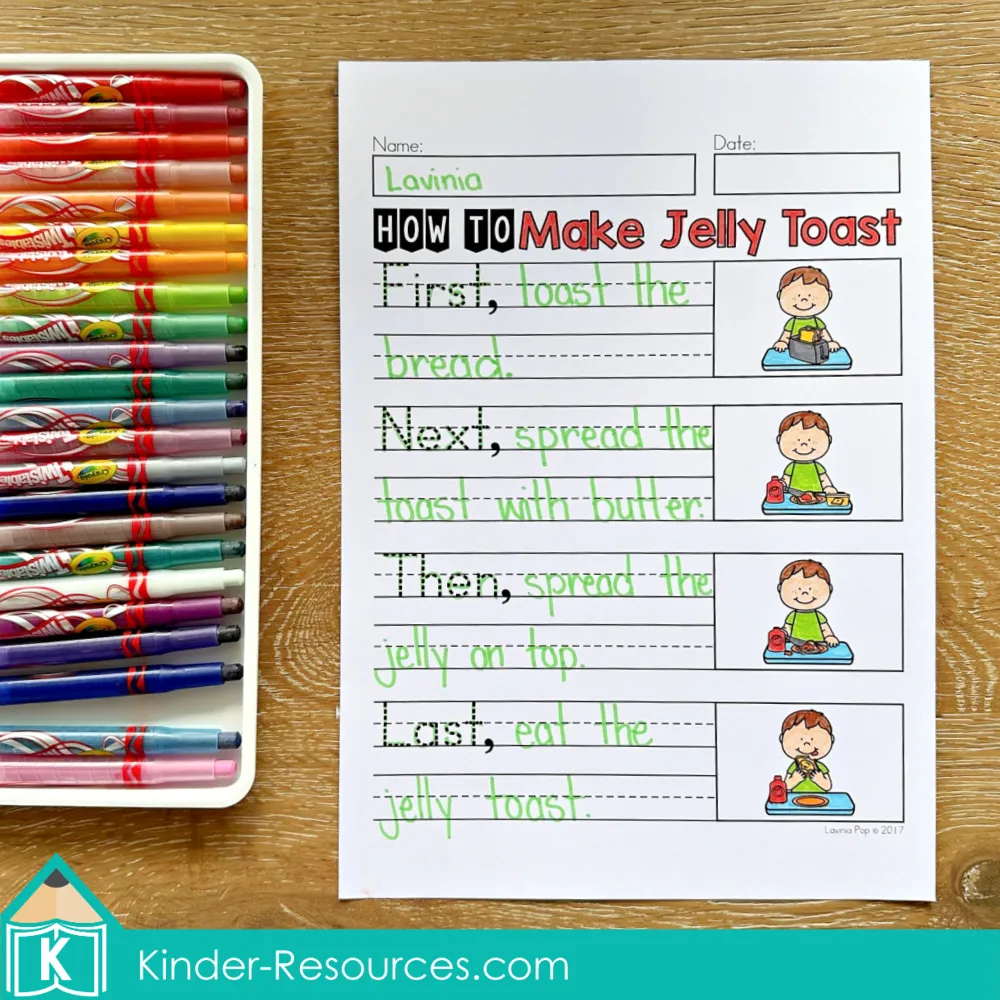
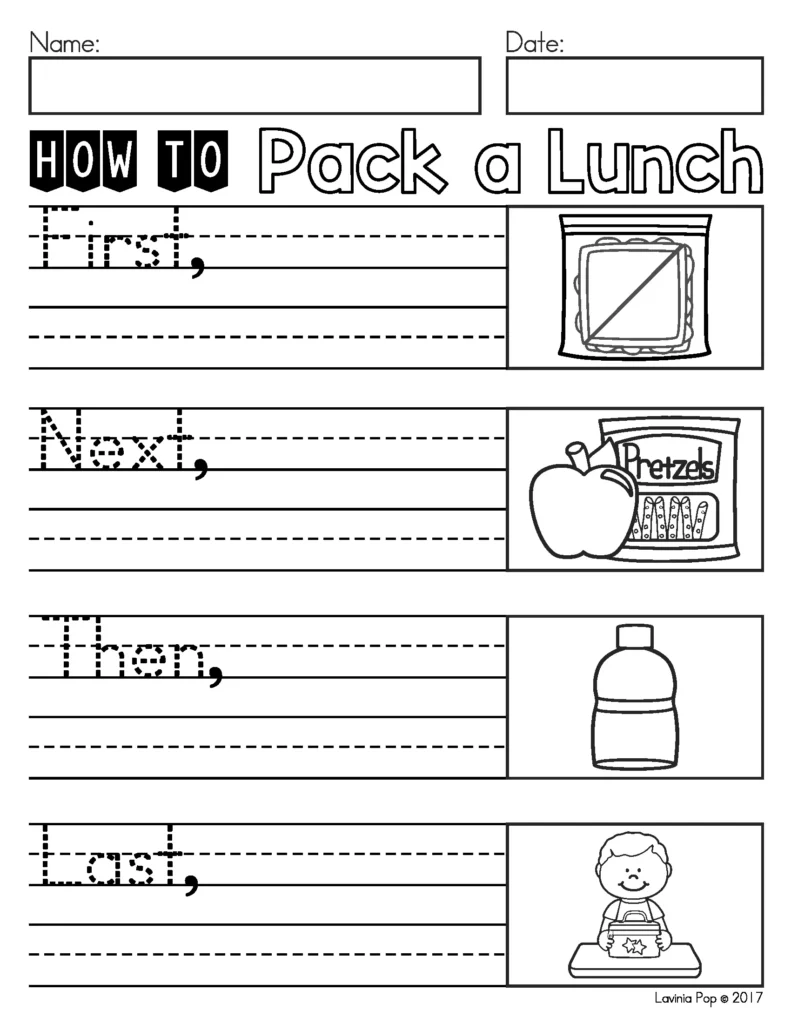
Procedural writing teaches learners to place events in a logical order. The journal includes simple topics that are familiar and meaningful to young children:
- How to Make Jelly Toast
- How to Start the School Day
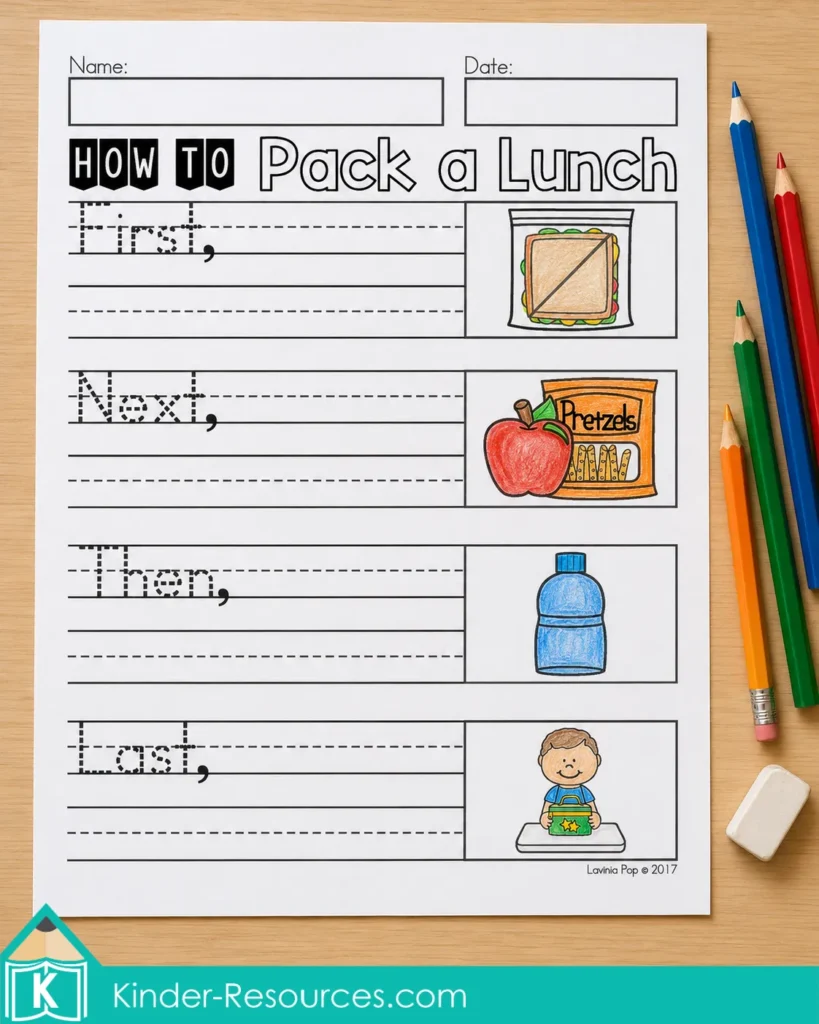
- How to Pack a Lunch
Each activity includes a version with picture supports and a version without pictures. This makes it easy to provide different levels of support within the same classroom.
The sequencing words First, Next, Then, and Last help children organize their ideas. Before writing, invite learners to act out the procedure or explain the steps to a partner. Oral rehearsal can help them decide what they want to write.
Support Beginning Writers with Picture Choices
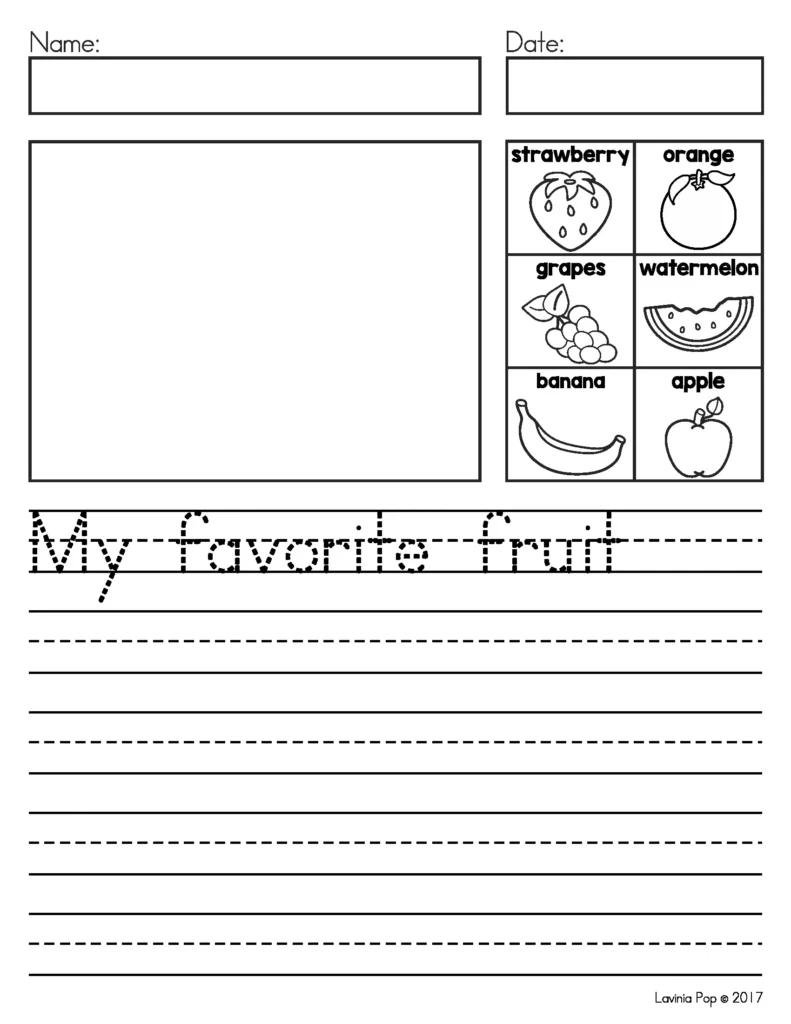
Picture supports give children a clear starting point and reduce the pressure of generating every idea independently.
The August journal includes picture supported prompts about:
- Favorite colors
- Favorite foods
- Favorite fruits
- Favorite animals
- Breakfast foods
- Favorite activities
- Personal strengths
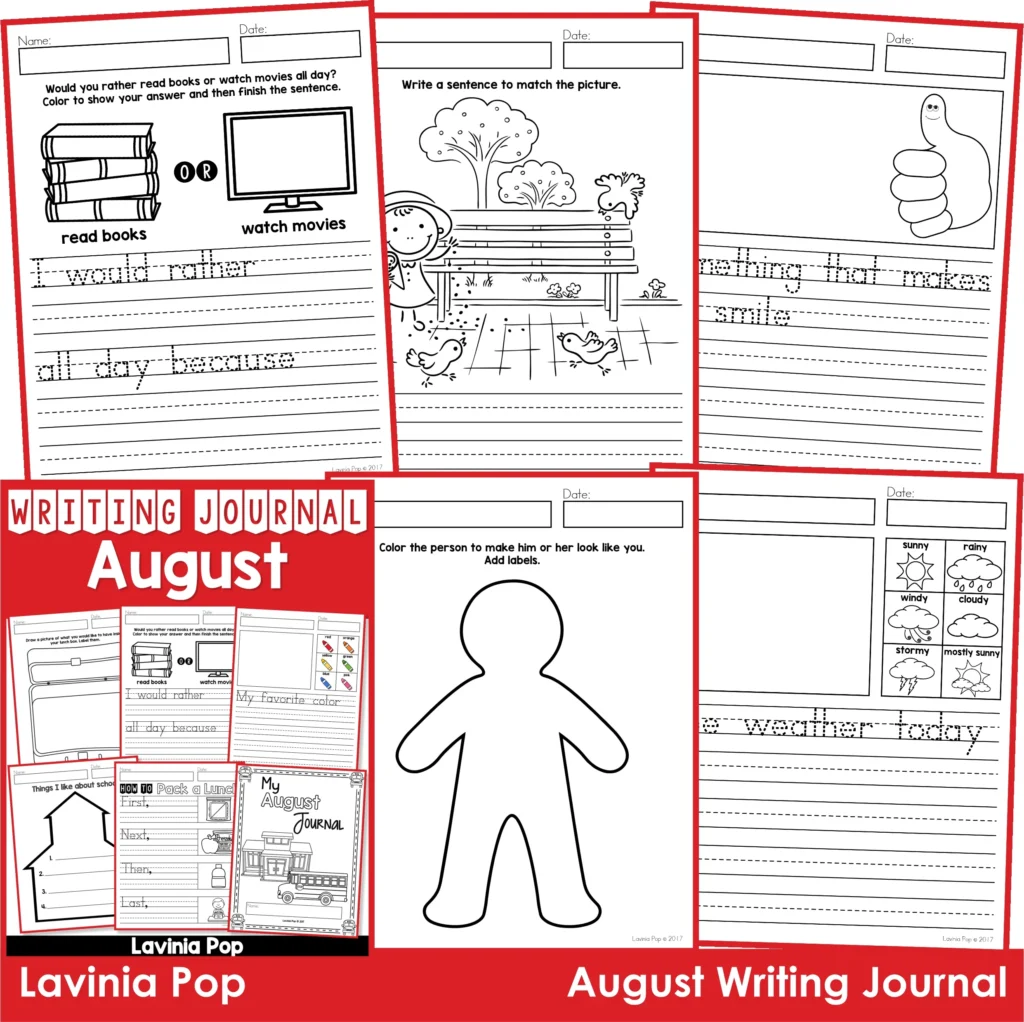
- Weather
- School supplies
- Feelings about returning to school
Learners can select a picture, draw their own response, trace the sentence starter, and complete the writing. These pages are especially helpful for beginning writers, English language learners, and students who benefit from additional visual support.
Encourage Opinion Writing
Young children usually have plenty of opinions. The challenge is helping them explain why they made a particular choice.
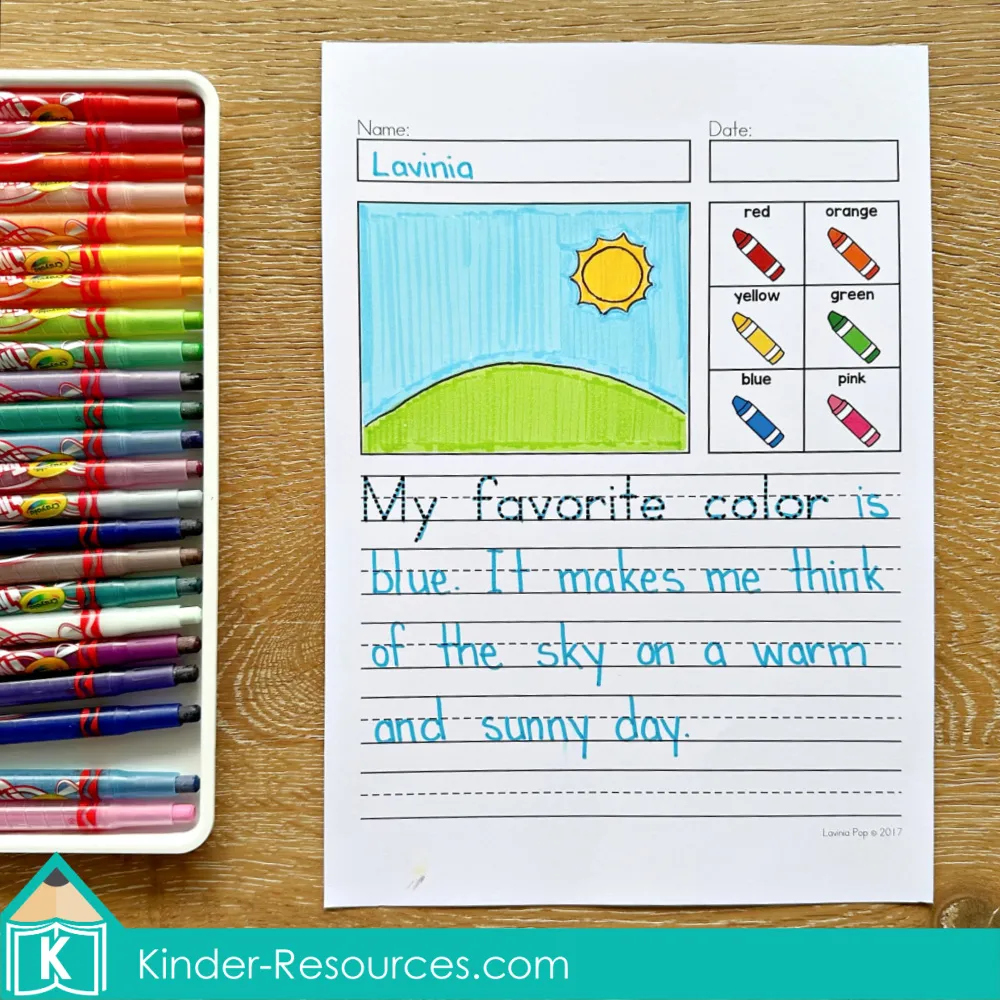
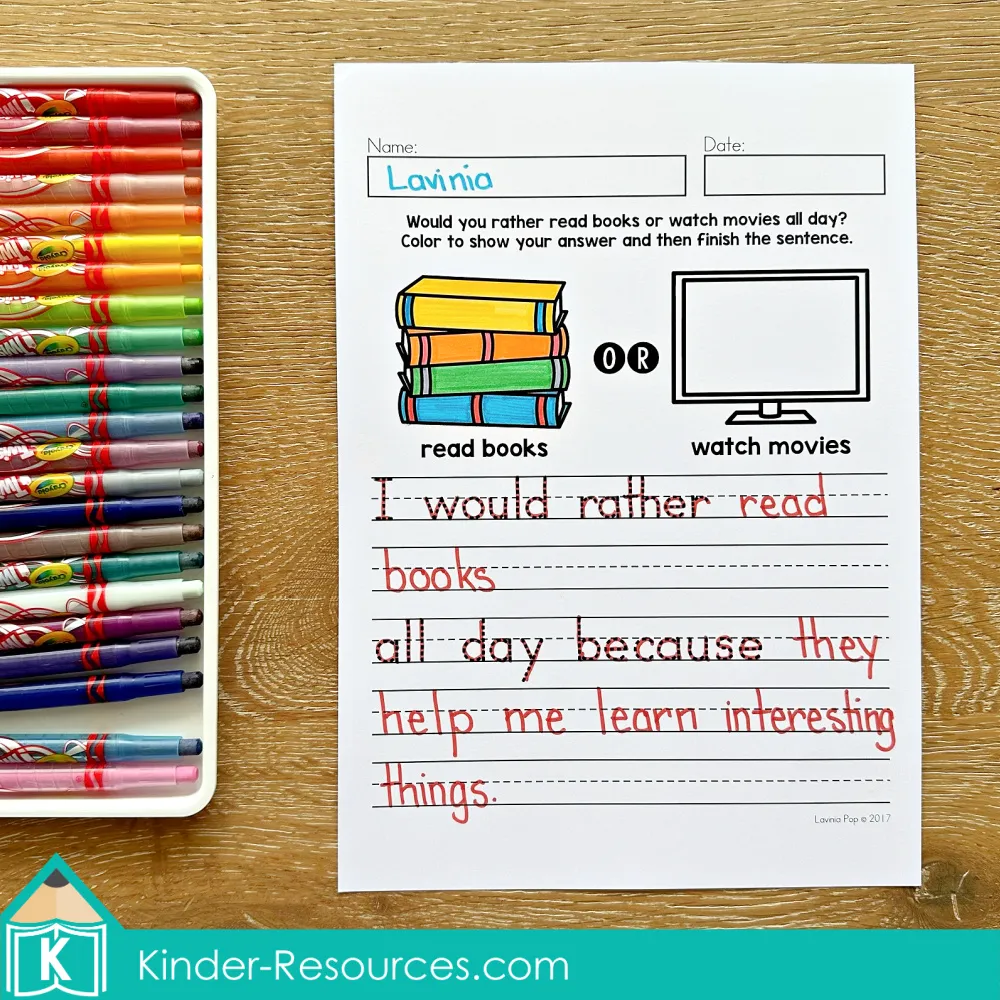
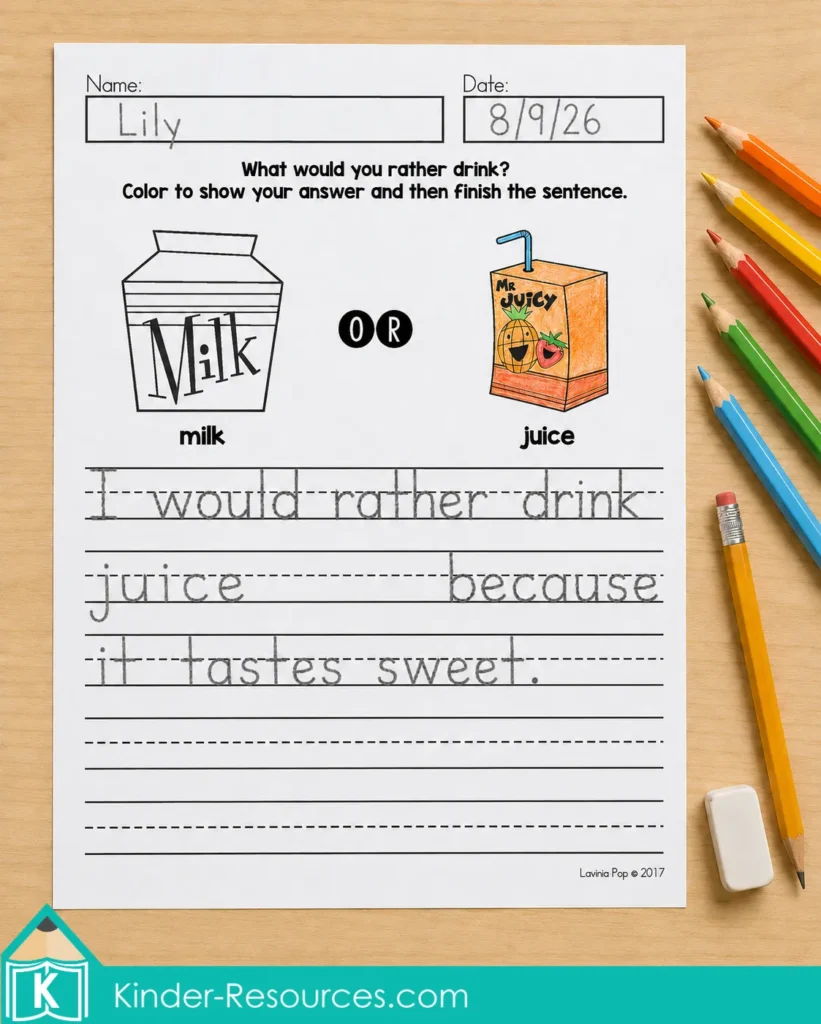
The pictured opinion prompts ask learners to choose between familiar options, including:
- Reading books or watching movies
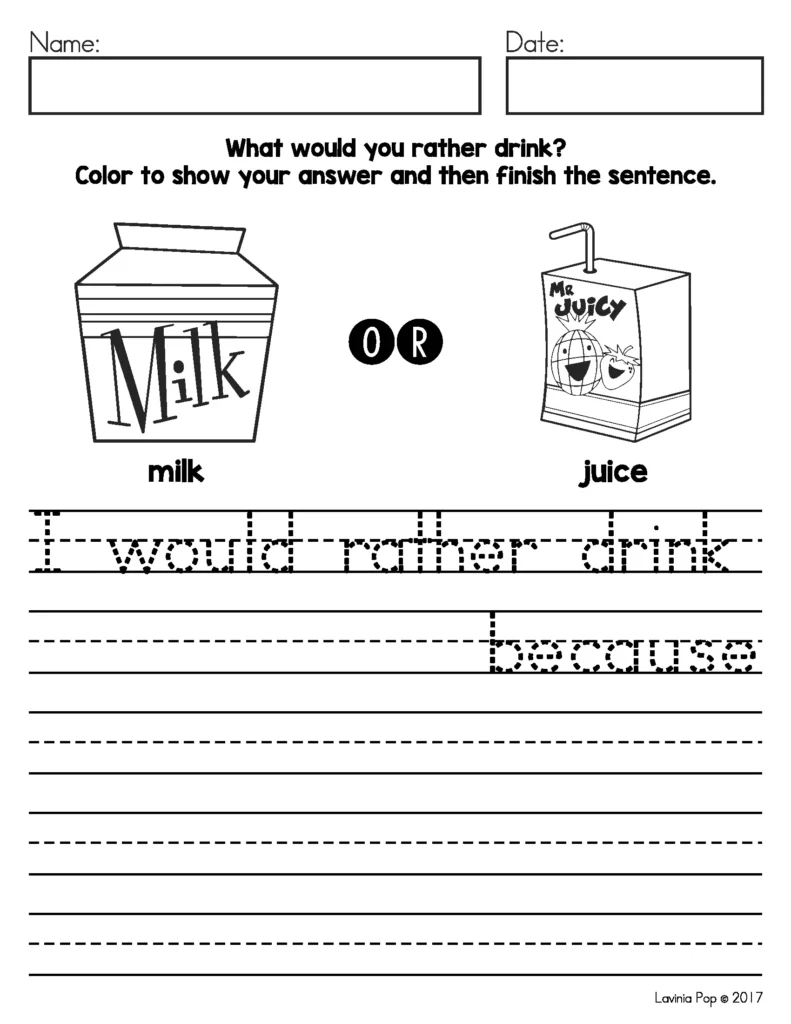
- Drinking milk or juice
- Traveling to school in a hot air balloon or by airplane
After making a choice, learners complete a sentence using the word “because.” This encourages them to support their opinion with a reason.
Model the difference between stating a choice and explaining it:
“I would rather drink juice.”
“I would rather drink juice because it tastes sweet.”
Both sentences communicate an opinion, but the second sentence provides the reader with additional information.
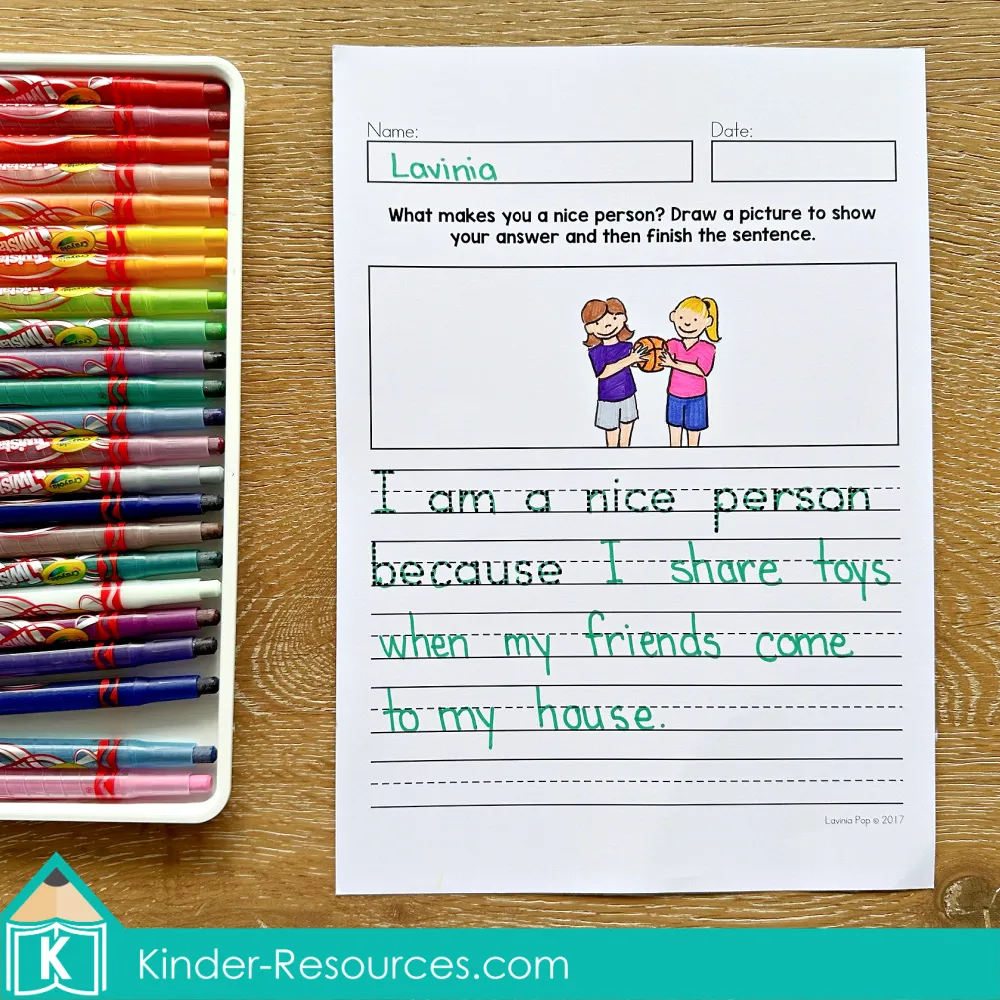
Additional opinion prompts encourage children to write about being kind, spending time alone, and getting to know their new teacher.
Build Narrative Writing Skills
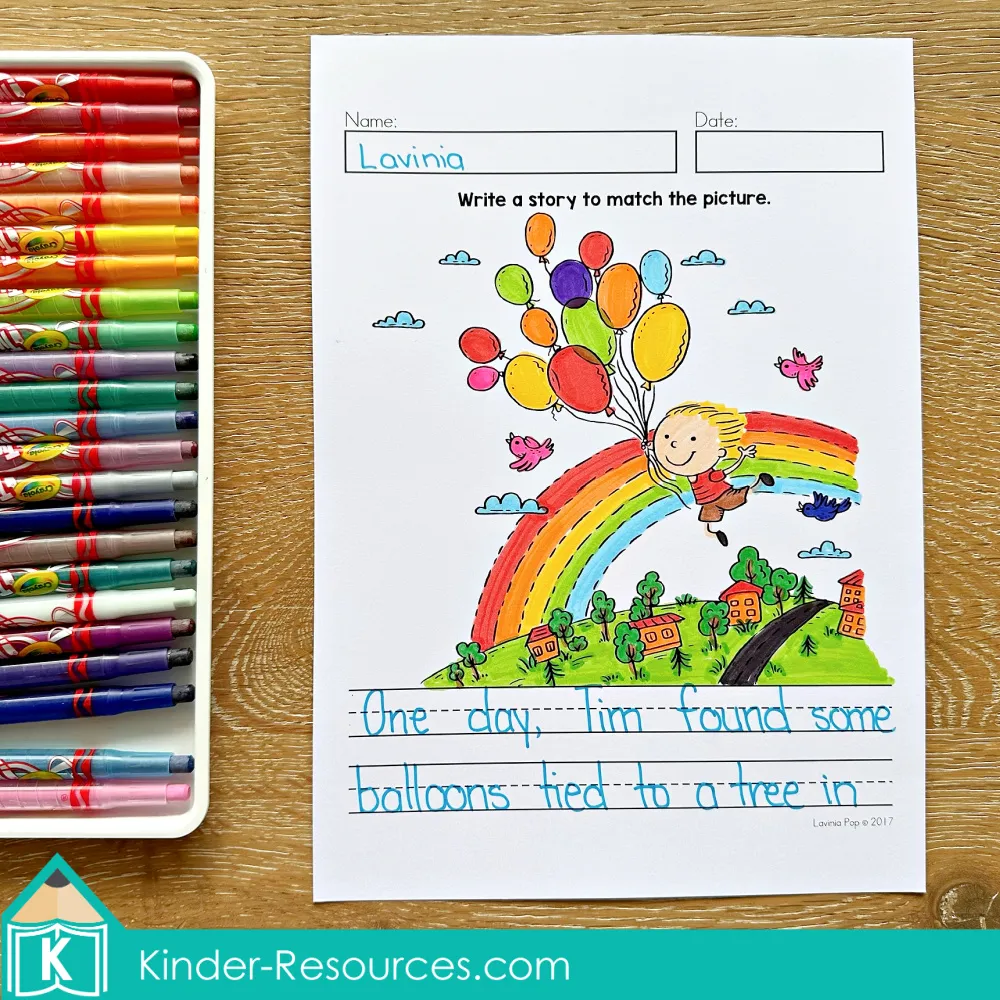
Narrative prompts help learners write about experiences, feelings, and imaginative possibilities.
The journal includes prompts such as:
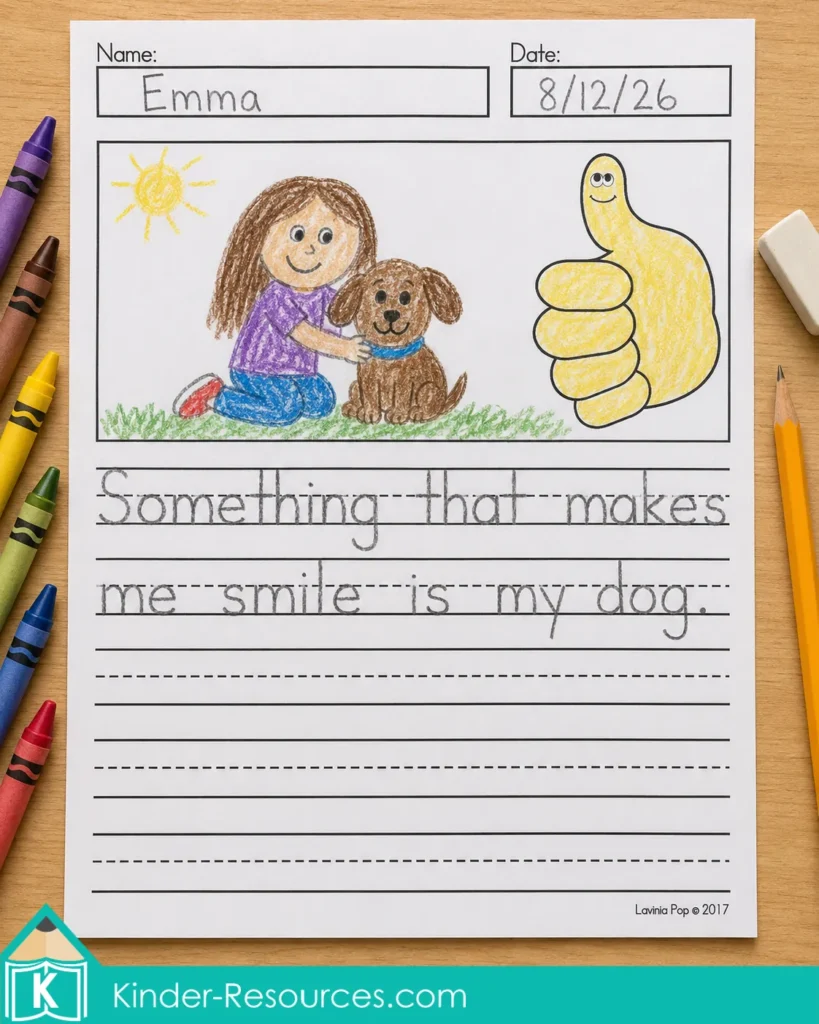
- Something that makes me smile
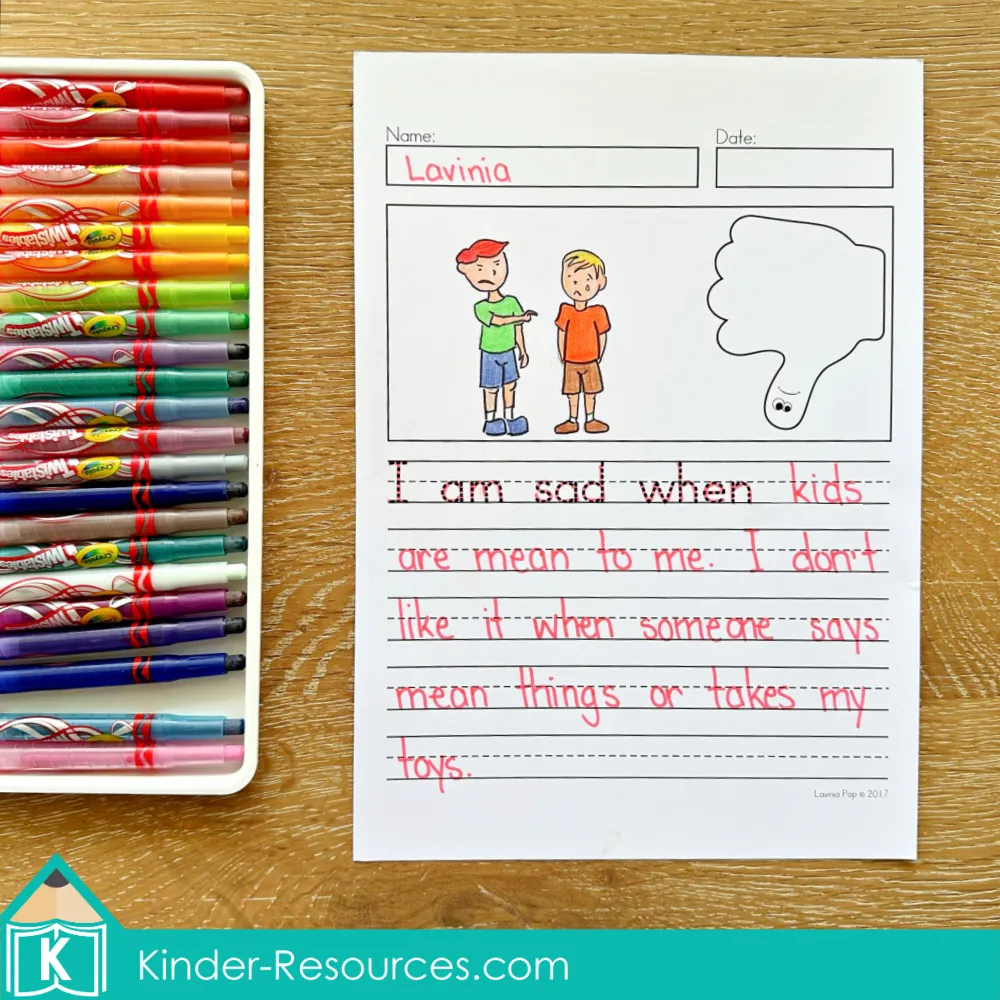
- I am sad when
- If I had a magic school chair
- If I found a treasure map hidden in my classroom
- If I could be any book character
Children can begin by drawing their ideas in the picture box. Ask them to describe the picture aloud before writing. Simple questions can help them add details:
- Who is in your picture?
- Where are they?
- What is happening?
- How does the character feel?
- What might happen next?
Learners do not need to write long stories immediately. A clear picture and one meaningful sentence are valuable starting points for beginning writers.
Explore Poetry and Sensory Language
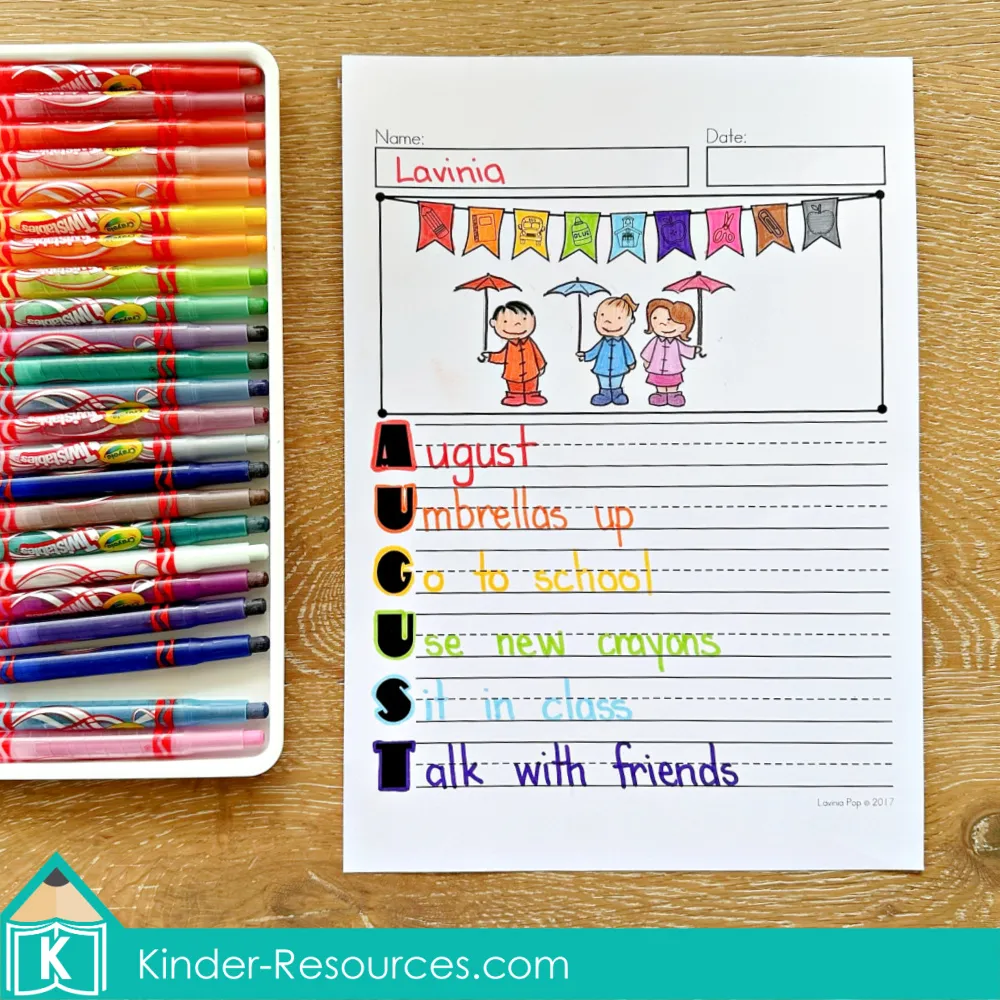
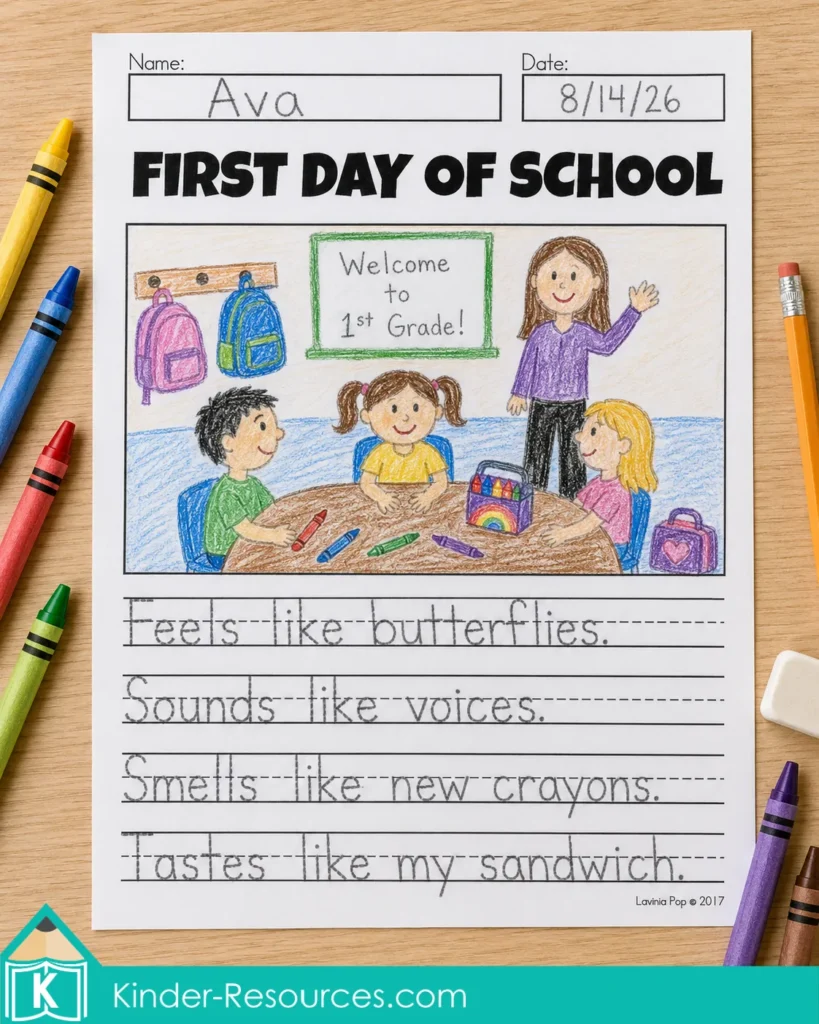
he August journal introduces poetry through an acrostic poem and a First Day of School sensory poem.
The sensory poem encourages learners to think about what the first day of school:
- Feels like
- Sounds like
- Smells like
- Tastes like
Discussing each sense before writing will help children generate ideas. You could bring out crayons, school supplies, a lunchbox, or a backpack and invite learners to describe what they notice.
There is no single correct response. One child may think the first day sounds like voices, while another may think it sounds like chairs moving or a school bell ringing.
Practice Letter Writing
The Letter to My New Teacher activity provides a meaningful way to introduce the parts of a friendly letter.
The page includes clearly labeled spaces for:
- Date
- Greeting
- Body
- Closing
- Signature
Learners can tell their teacher about their family, favorite activity, pet, favorite food, or something they are excited to learn.
This activity also gives teachers an opportunity to learn more about their students while informally assessing sentence writing and handwriting skills.
Ways to Use the August Writing Journal
The August Writing Journal Prompts can be used in several ways:
- Morning work
- Writing centers
- Literacy centers
- Independent writing
- Small group instruction
- Early finisher activities
- Homework
- Writing assessment
- Homeschool learning
You can print the complete journal or select the pages that best suit your learners. Add the personalized cover and staple the selected pages together to create individual August writing journals.
There is no need for every learner to complete every page. Choose prompts based on your teaching goals, classroom schedule, and students’ writing abilities.
Supporting Different Writing Abilities
Some learners may be ready to write several complete sentences, while others may communicate primarily through pictures and labels. Both are meaningful stages of writing development.
To support beginning writers:
- Allow oral rehearsal before writing
- Model one example together
- Provide access to a classroom word wall
- Encourage children to stretch words and record the sounds they hear
- Accept pictures and labels as early writing
- Use the picture supported pages first
- Focus on communicating an idea before correcting every spelling attempt
For learners who need an additional challenge:
- Ask them to add descriptive details
- Encourage them to provide more than one reason
- Invite them to extend their writing onto the additional handwriting page
- Ask them to reread and improve a sentence
- Encourage them to add a beginning, middle, and ending to a story
Continue Writing Throughout the Year
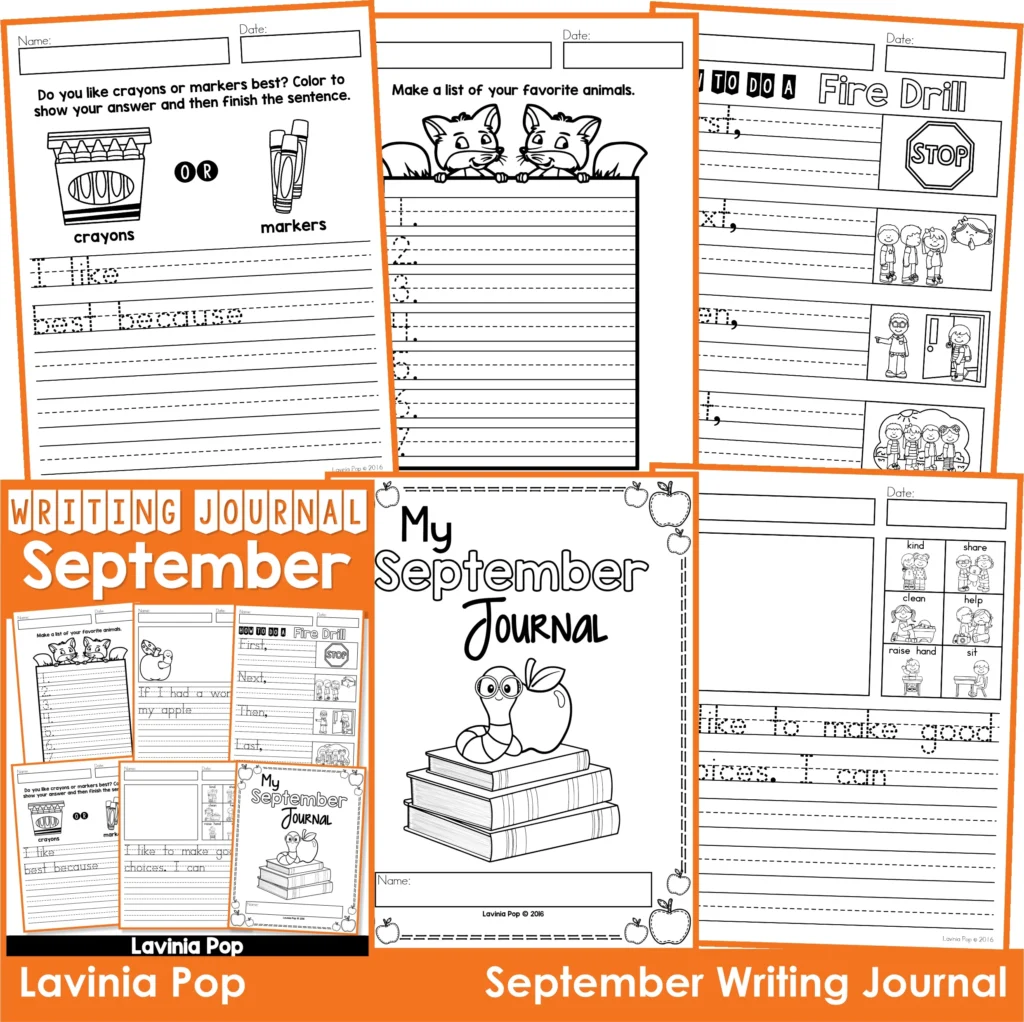
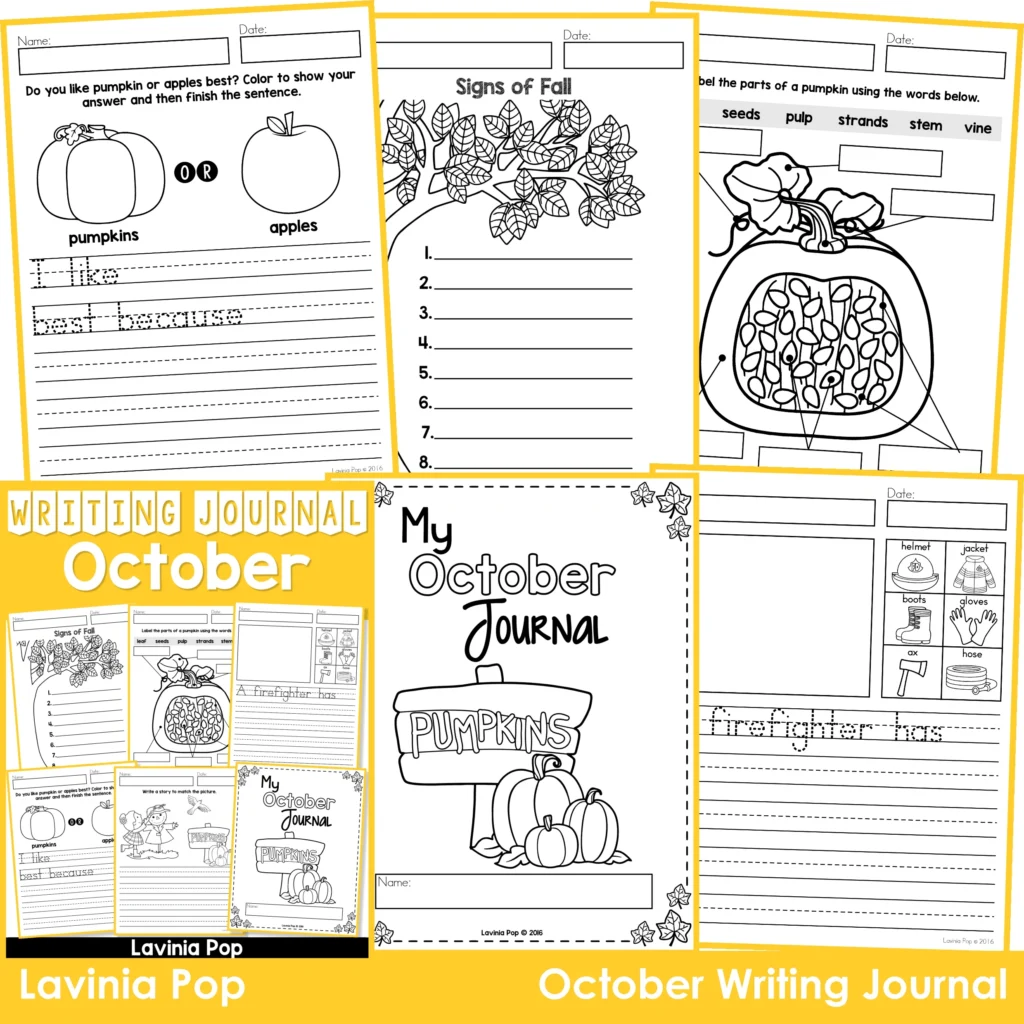
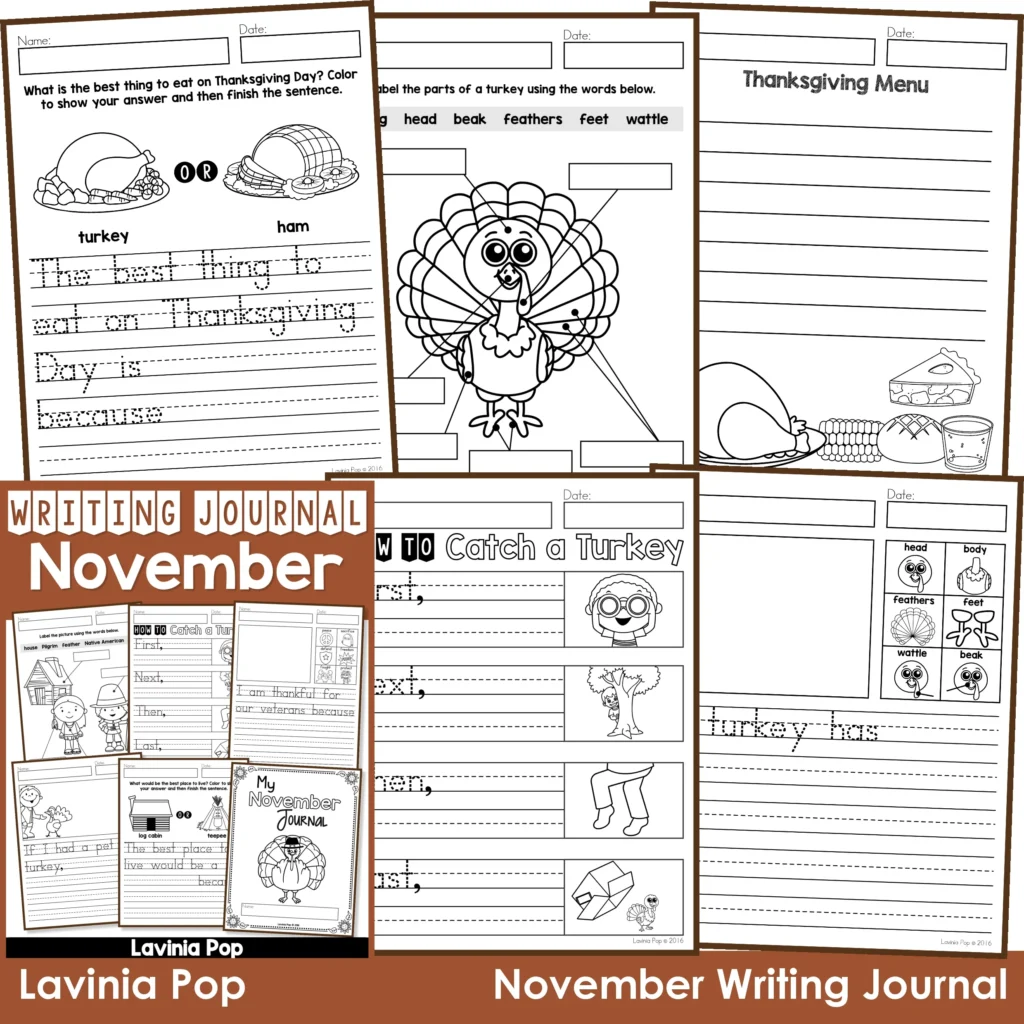
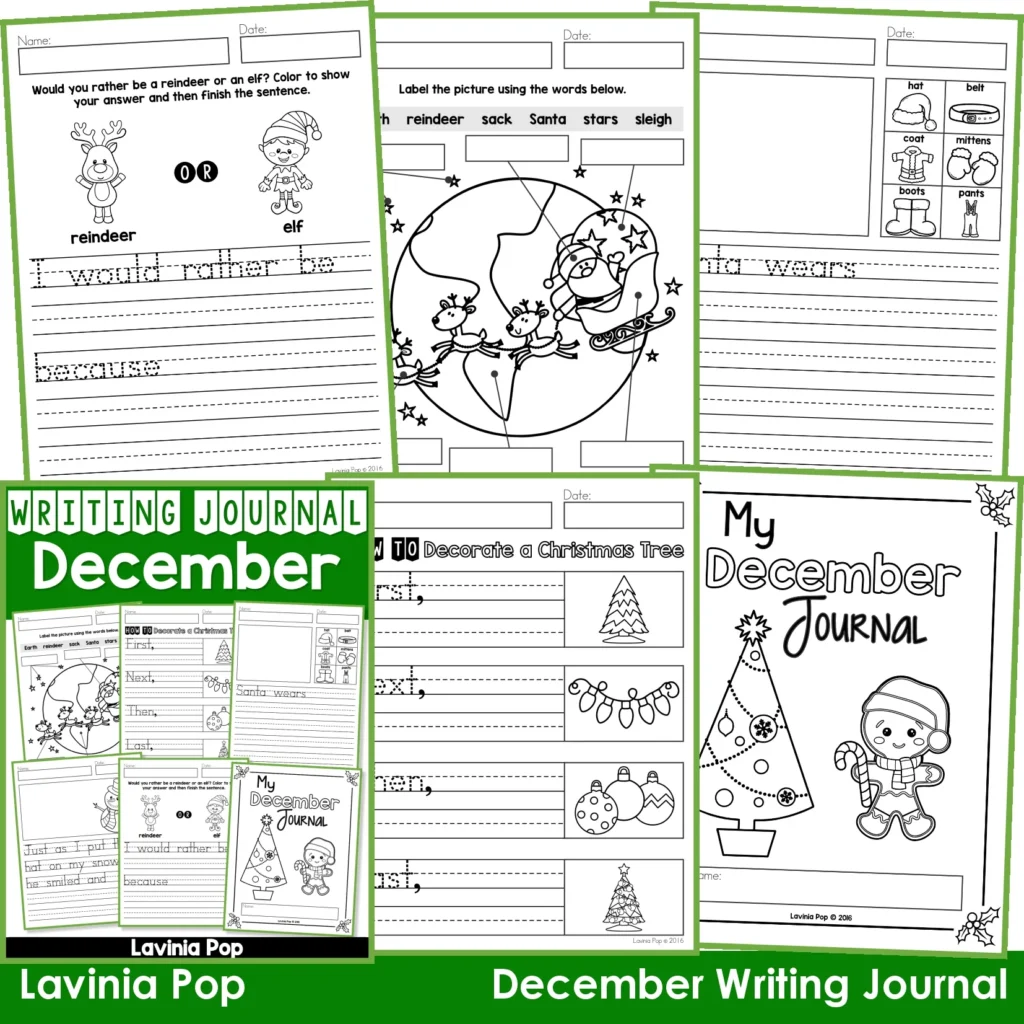
If you would like to provide consistent writing practice beyond August, the Writing Journal Prompts Bundle includes monthly writing activities to keep learners writing throughout the school year.
Using a familiar journal format each month allows children to concentrate on developing their ideas, handwriting, sentence structure, and writing confidence.
Make August Writing Meaningful
Writing at the beginning of the school year should feel inviting and achievable. The August Writing Journal Prompts give young learners clear starting points while still allowing them to express their own experiences, preferences, and imaginations.
Whether you use the pages for morning work, writing centers, assessment, or independent practice, these prompts provide a gentle and engaging introduction to writing in Kindergarten and 1st Grade.
Happy Teaching! 😊
Purchase the August Writing Journal Prompts
Ready to make writing more engaging and achievable at the beginning of the school year?
The August Writing Journal Prompts for Kindergarten and 1st Grade include 42 student pages featuring drawing and labeling, list writing, procedural writing, opinion writing, narrative writing, poetry, and letter writing.
Picture supports, sentence starters, drawing spaces, and primary handwriting lines help beginning writers organize and express their ideas with confidence.
Purchase the August Writing Journal Prompts here.

You may also like…
I think this is so awesome. Thank you so much
Thank you, Melissa! I’m so happy you like the resource and appreciate your lovely comment. 😊