
These Thanksgiving sight word readers give children a simple way to practice reading short sentences and tracing a focus word while exploring family activities, thankfulness, food, and things from the past and present.
I created six printable mini books, each built around one word: we, am, eat, see, had, and have. Use them for supported reading with preschool and kindergarten children, then return to familiar pages for more practice throughout November.
Download a Free Thanksgiving Sight Word Reader
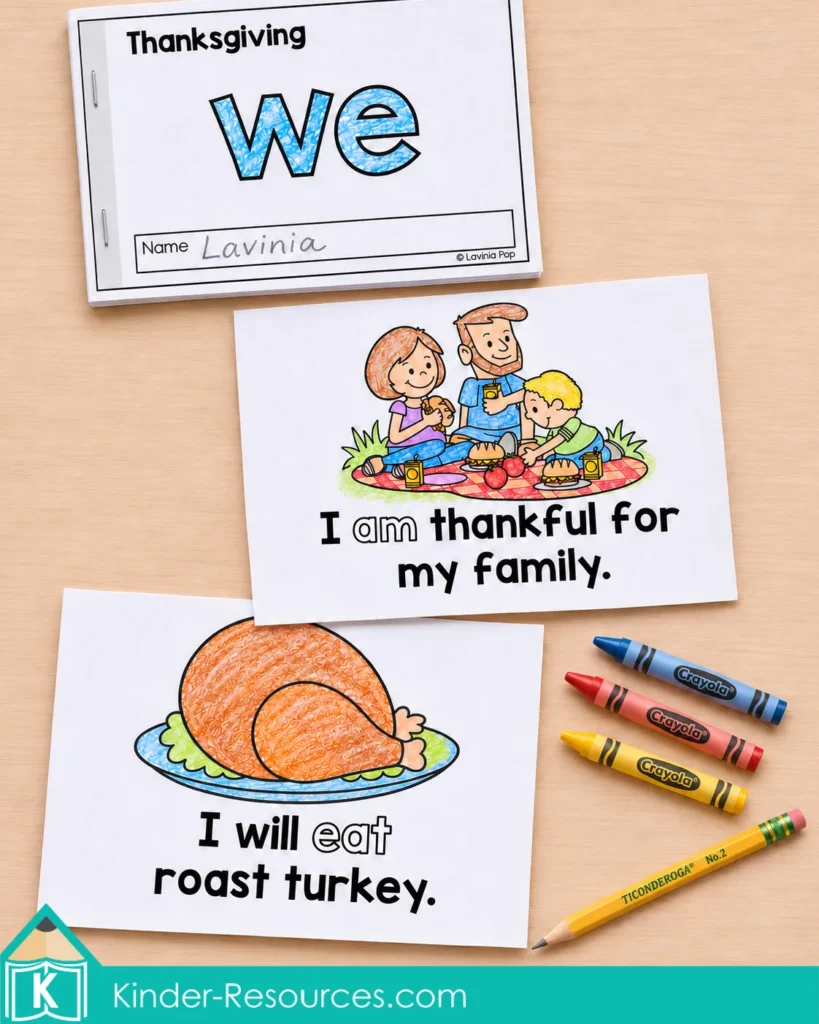
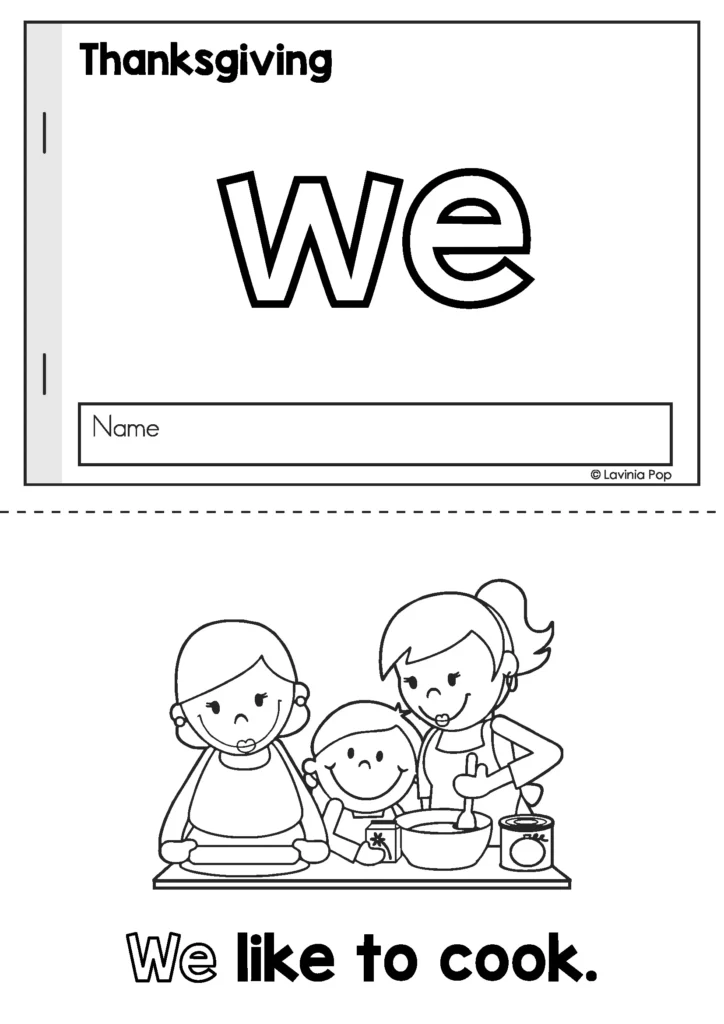
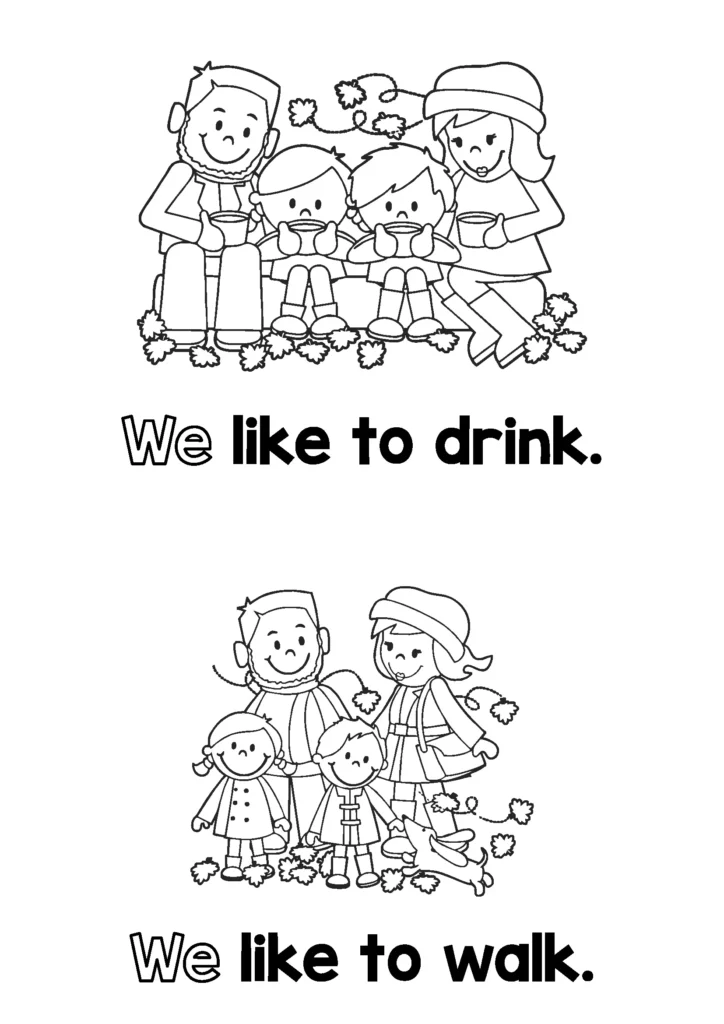
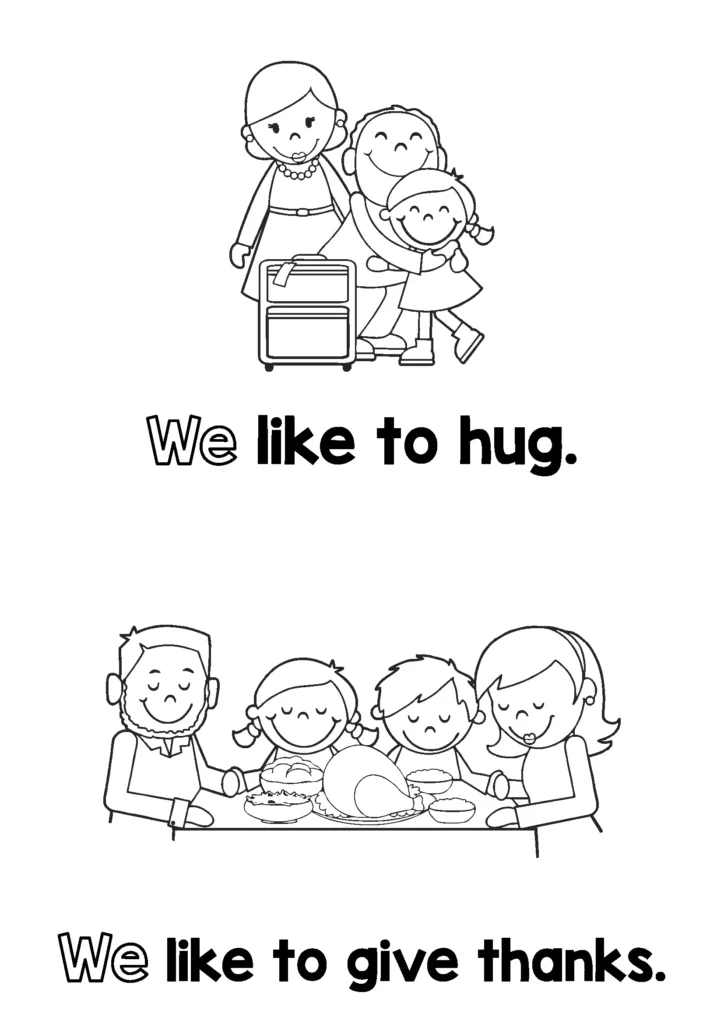
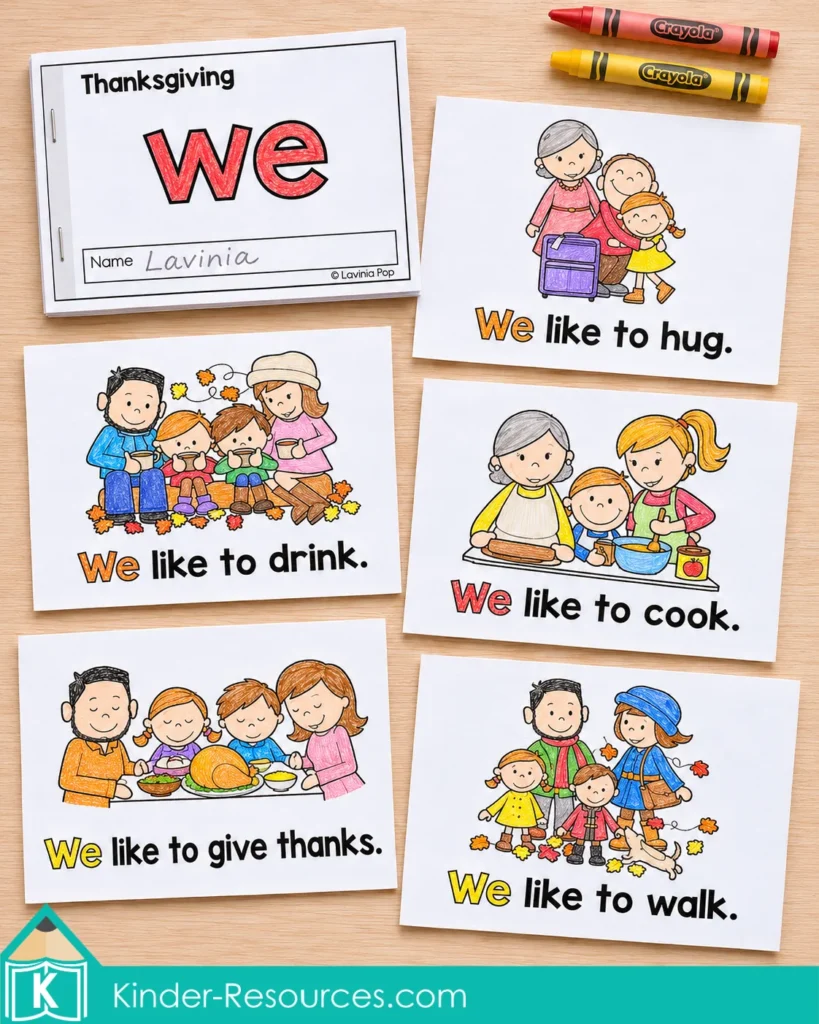
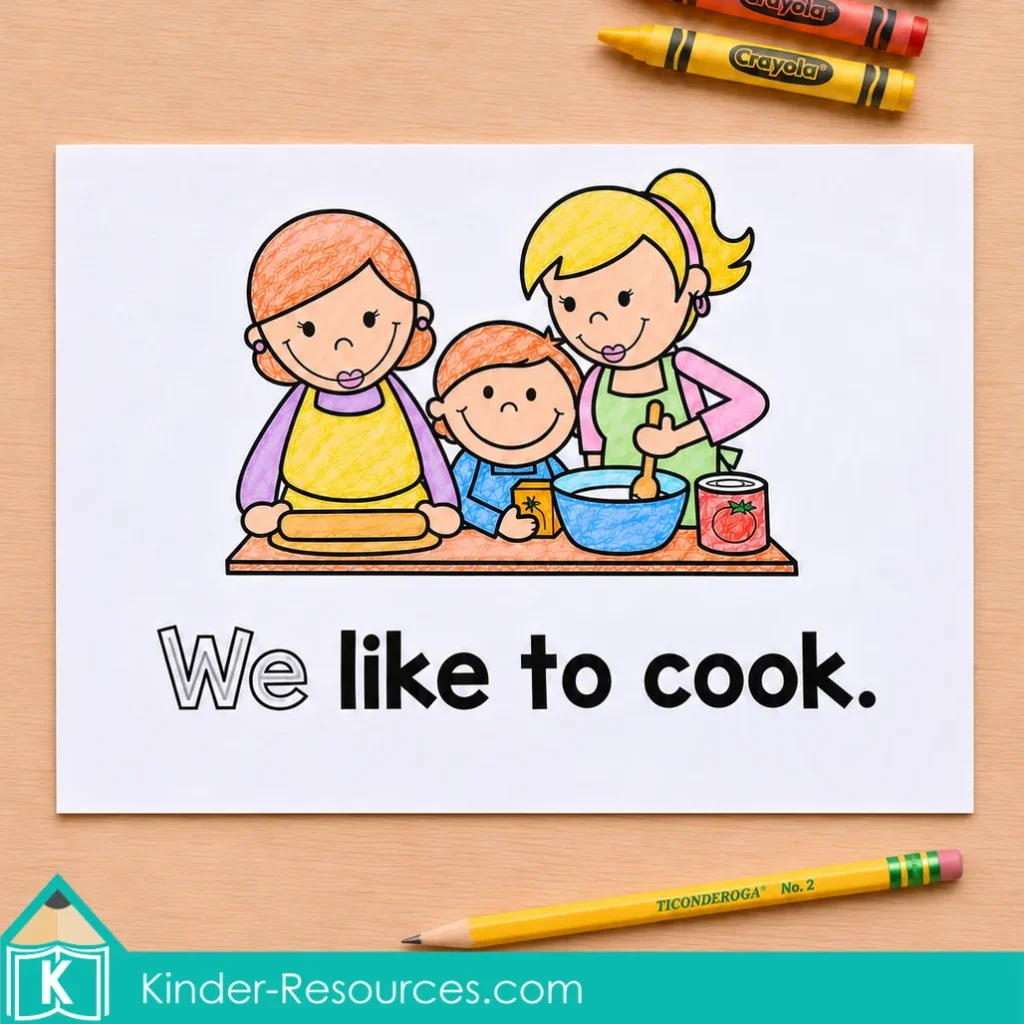
Start with the free “we” booklet. Children read about cooking, drinking, walking, hugging, and giving thanks using the sentence starter “We like to…” Each reading page includes an outlined focus word to trace and a picture to color.
Try the booklet during a short reading session to see how the format works for your learners.

What’s Included in the Thanksgiving Sight Word Readers?
The complete packet includes six mini books, each with a cover and five reading pages. The black and white versions are ready for children to complete; the photos in this post show colored examples.
Each booklet uses a repeated sentence starter, with the focus word appearing in outline for tracing. The different themes also give you a starting point for short conversations before and after reading.
“We” — Activities to Share
The “we” booklet includes cooking, drinking, walking, hugging, and giving thanks. Read a page together, then invite children to share an activity they enjoy with their family or other people who care for them. This helps connect the sentence to something meaningful in their own lives.
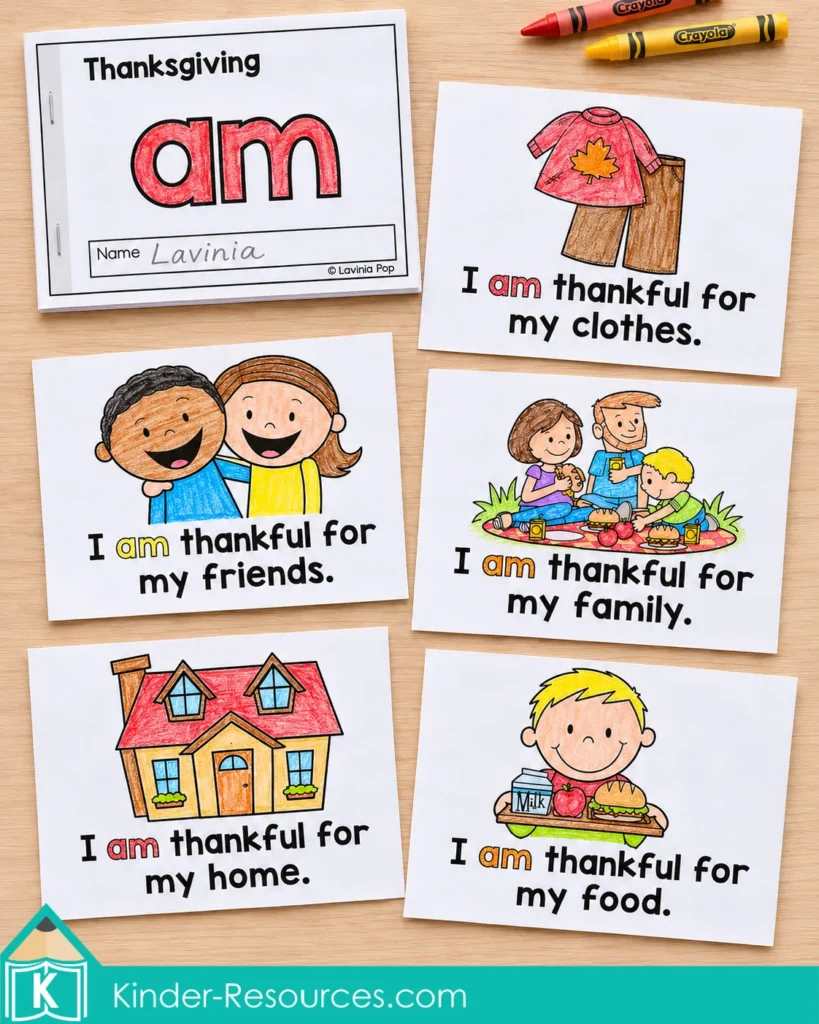
“Am” — Things to Be Thankful For
Children read “I am thankful for my…” and explore family, friends, food, clothes, and home. Pause after a page and invite children to add their own ideas. Accept a spoken answer or a drawing so everyone can take part, including children who are not yet writing sentences.
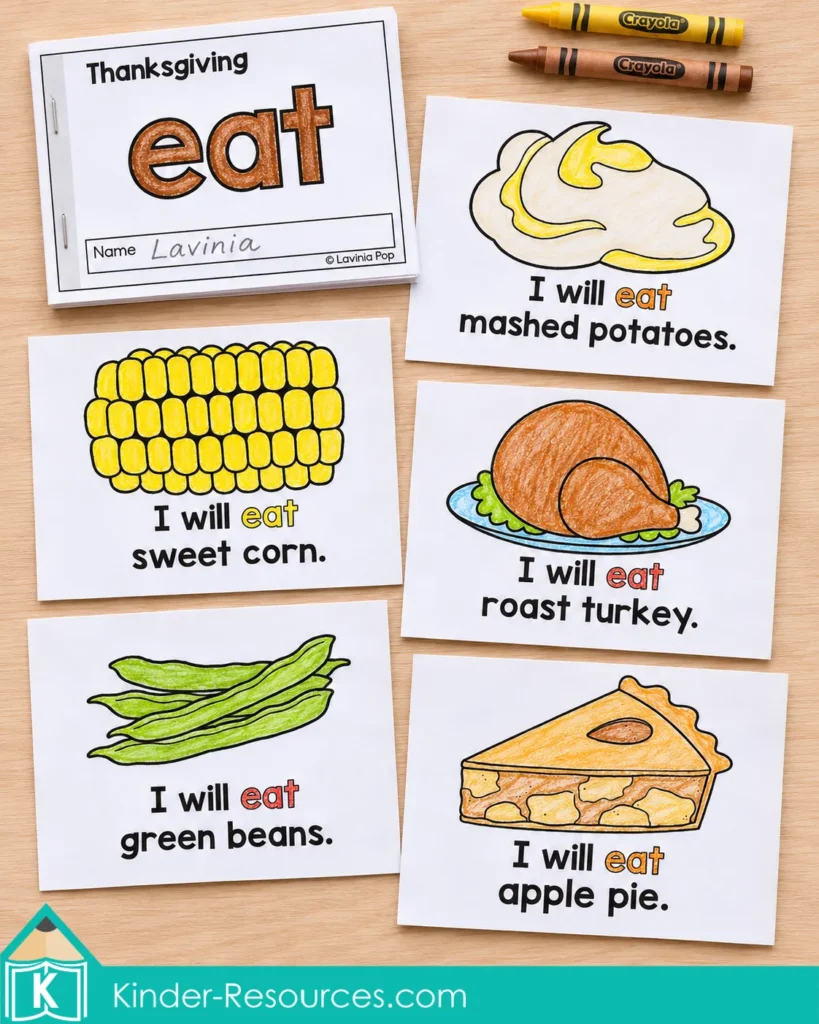
“Eat” — Thanksgiving Foods
The “eat” booklet features roast turkey, mashed potatoes, green beans, sweet corn, and apple pie. Introduce any unfamiliar food names before reading, then use “I will eat…” to practice the focus word in a sentence. Children can also talk about foods their own families enjoy.
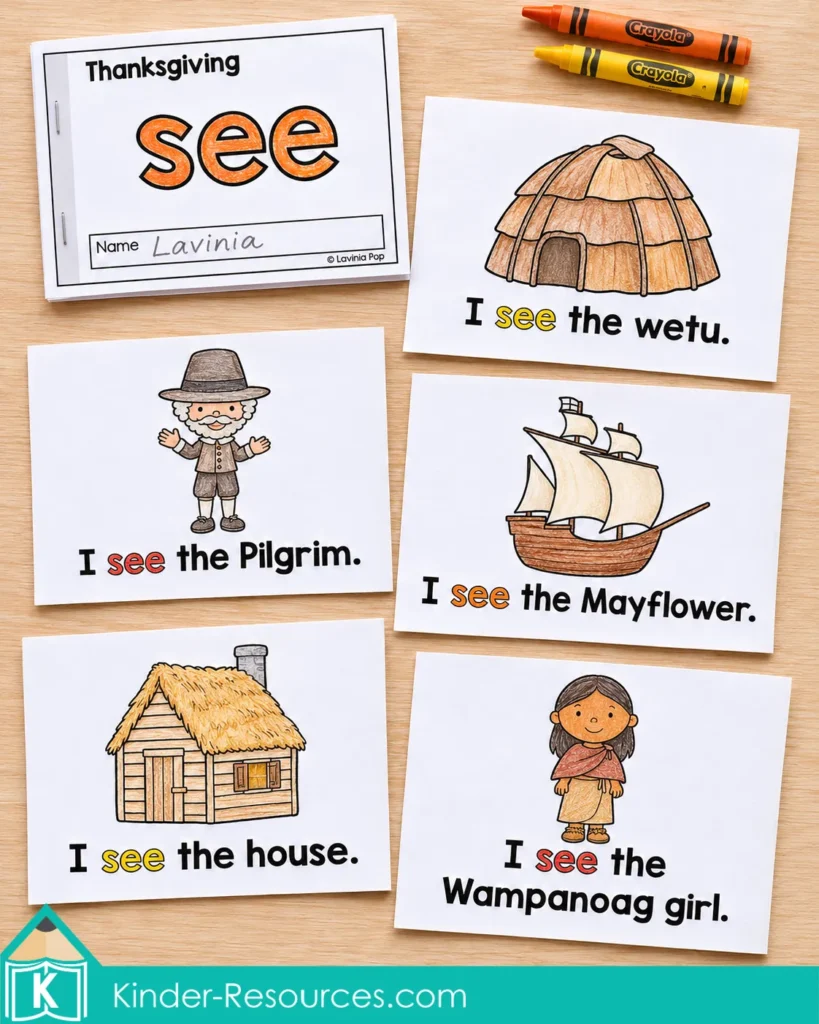
“See” — Historical Vocabulary
The “see” booklet introduces the Mayflower, a Pilgrim, a Wampanoag girl, a wetu, and a house. Say the unfamiliar names together before reading so children can connect each word with its meaning.
Use these pages alongside age-appropriate learning about Wampanoag people and the English colonists. Explain that a wetu is a traditional Wampanoag home and that Wampanoag communities are part of life today. Plimoth Patuxet’s information about Wampanoag and English homes is a useful background resource for adults.
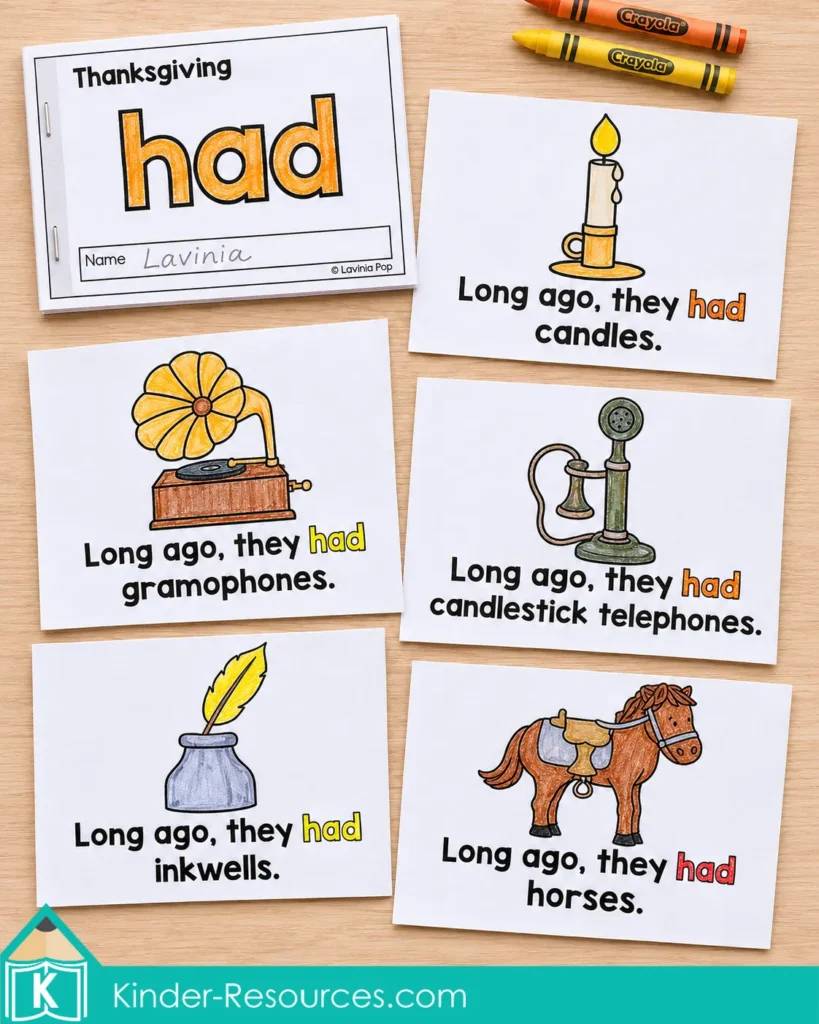
“Had” — Objects from the Past
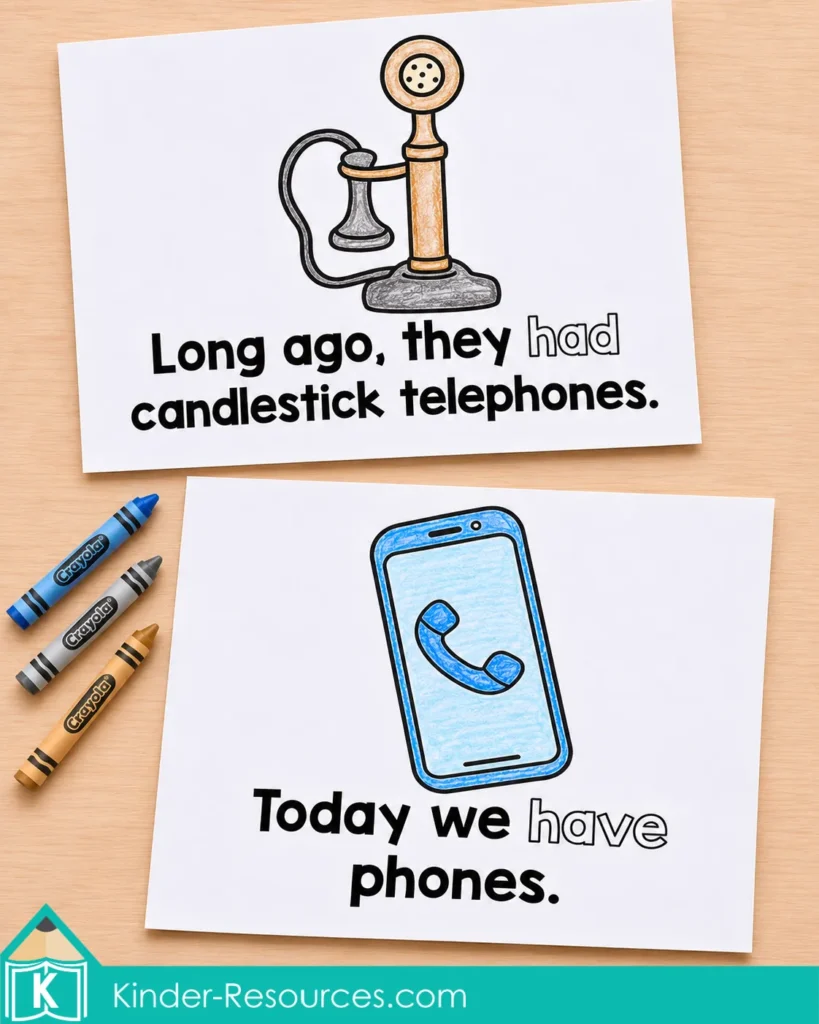
Children read about inkwells, gramophones, candlestick telephones, candles, and horses using “Long ago, they had…” Talk about what each object was used for. These examples come from different periods of the past, so introduce them as a general past-and-present comparison.
“Have” — Familiar Objects Today
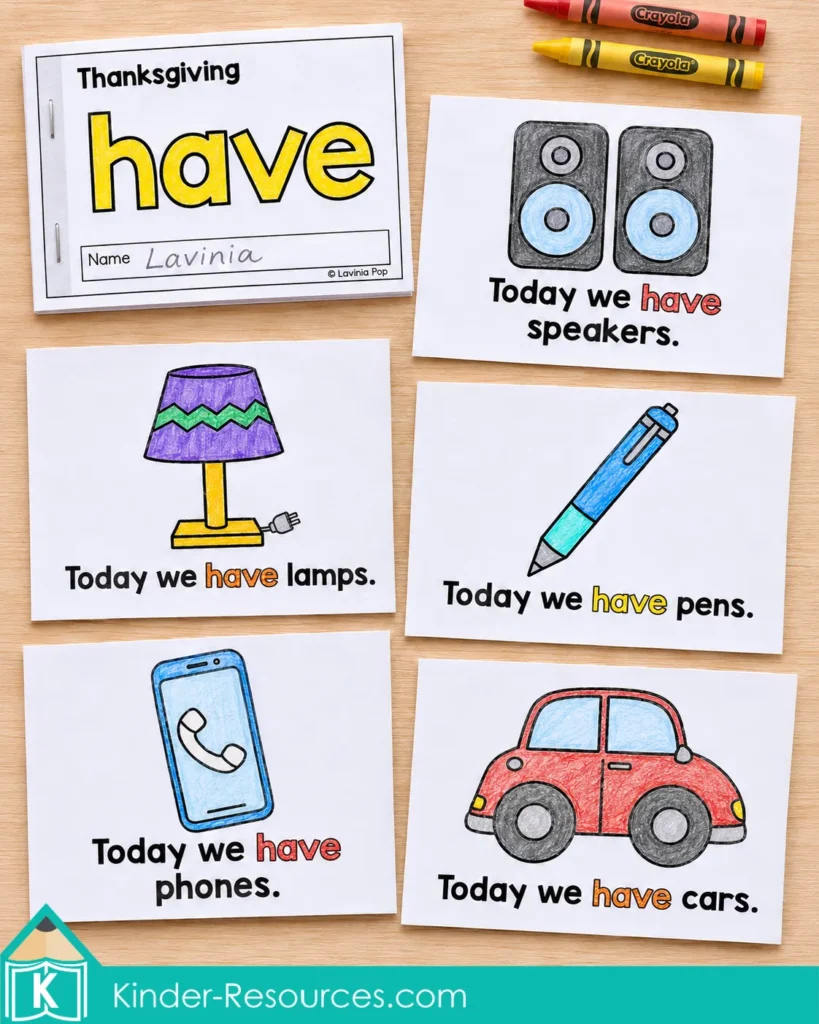
The “have” booklet includes pens, speakers, phones, lamps, and cars. Pair it with the “had” booklet to compare ways people write, listen to music, communicate, light their homes, and travel. Remind children that some older objects, such as candles, are still used today.
How to Prepare the Mini Books
Each booklet prints on three sheets, which become six half-page booklet pages.
- Print the three sheets for the booklet you want to use.
- Cut each sheet in half along the dotted line.
- Place the cover first and stack the reading pages behind it.
- Staple along the left edge using the printed placement guides.
Prepare one booklet at a time to keep the reading session focused. Children can add their names to the cover before beginning.
A Simple Read, Trace, and Reread Routine
Introduce the focus word. Say the word, look at its letters, and connect the sounds and spelling using the phonics knowledge children have learned. Explain any part they have not yet been taught.
Read the sentence together. Model pointing to the printed words from left to right. Help children work through words they can decode and provide unfamiliar vocabulary, such as “gramophones” or “Mayflower.” These booklets are best used with adult support alongside your regular phonics instruction.
Trace the focus word. Children trace the outlined letters with a pencil, then read the completed word in the sentence. They can color the illustration afterward. In the booklet overview photos, the focus words are colored to make them stand out; tracing is the activity provided on the printable pages.
Reread and talk. Return to the sentence, help with any errors, and ask a brief question about its meaning. Revisit the completed booklet on another day so children get more practice reading the actual words.
Ways to Use the Readers
Small groups: Introduce one booklet with a few children at a time so you can hear them read and offer help with unfamiliar words.
Literacy centers: Place a previously introduced booklet in a familiar reading center. Children can revisit the text, finish tracing, and color the pictures after the reading routine has been taught.
Take-home reading: Send a completed booklet home for rereading with a family member. A simple note asking an adult to listen, help with tricky words, and discuss one page gives families a clear starting point.
Extra writing practice: Invite children who are ready to draw and write a related sentence on separate paper. Younger children can dictate their sentence to an adult.
A Paper Saving Alternative with Writing Pages
If you prefer a smaller format, explore my Thanksgiving Sight Word Fluency Flip Books.
Each flip book prints on one sheet and practices one of the same six focus words. The separate flip book packet includes color and black and white versions, six matching sentence writing recording pages, and an “I am thankful” writing page. It is a useful option when you want to save paper on the readers and add a writing activity.

Get the Complete Thanksgiving Read and Trace Readers
Bring the six themes together with the complete packet of Thanksgiving sight word readers. Choose a focus word, prepare a booklet, and use the pages for supported reading, tracing, coloring, and rereading.


Happy Teaching! 😊
You Might Also Like