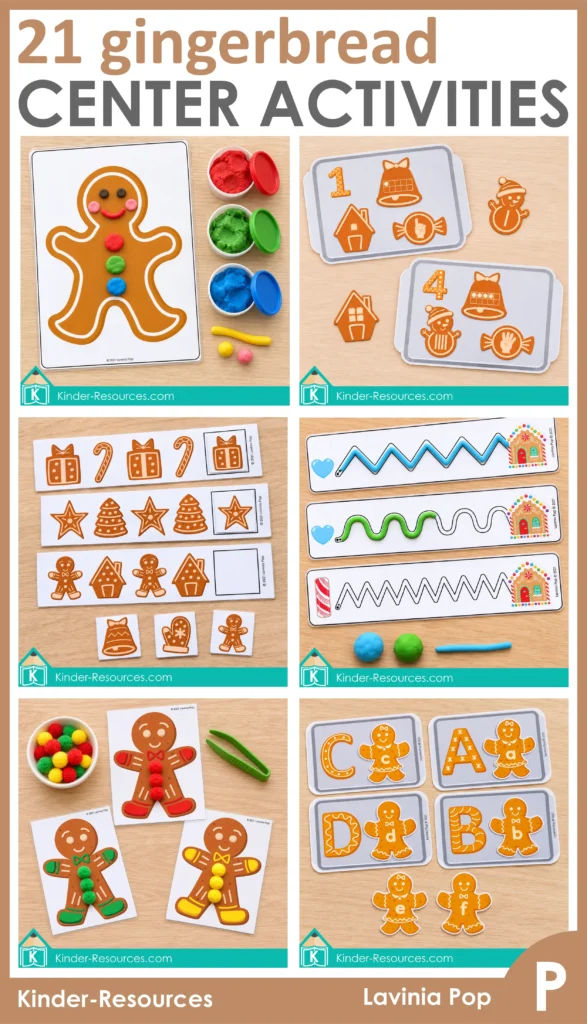
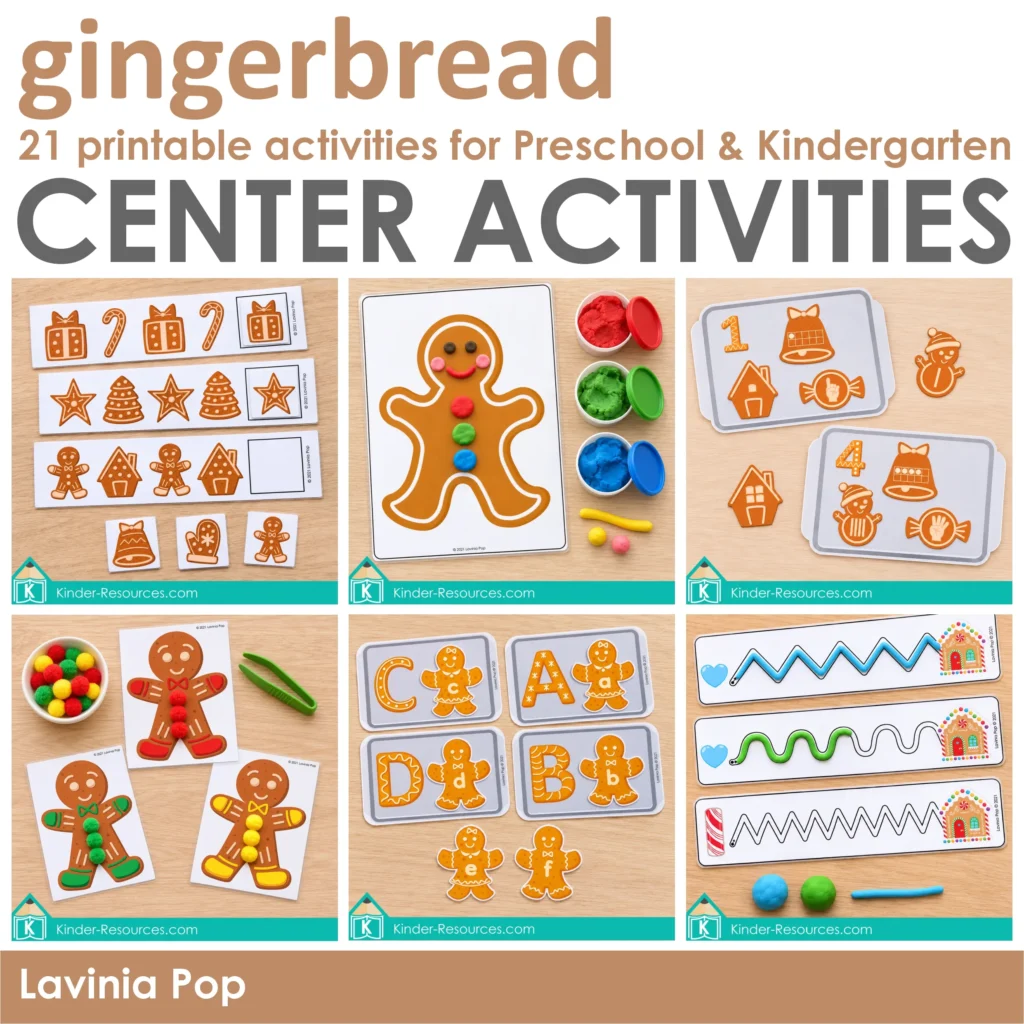
These gingerbread preschool centers bring a little cookie fun to early math, literacy and fine motor practice. Children can decorate play dough gingerbread people, match letters, count cookies, sort shapes and explore patterns using familiar materials.
I created this collection of 21 printable activities so you can choose the skills your learners are ready to practice and rotate them through your December centers, morning tubs or homeschool activities.
The activities offer a range of starting points for Preschool, Pre-K, TK and Kindergarten. Begin with matching, sorting and hands on counting, then introduce sound and word activities as children are ready.
Try the Free Gingerbread Preschool Centers Sample Pages
Would you like to try a few activities first? Download the free sample pages and choose a starting point for your gingerbread theme.
The photos throughout this post show activities from the complete packet. The free download contains a selection of sample pages. You’ll find the link to the complete resource near the end of this post.



Preparing Your Gingerbread Preschool Centers
Print the pages you plan to use, laminate them for repeated practice, and cut out the cards and matching pieces where needed. Keep each activity in a labeled bag or tub with its materials so it is easy to bring out again.
You can prepare a few centers at a time and introduce new ones throughout your gingerbread theme.
Depending on the activities you choose, gather:
- Printed activity mats, cards and matching pieces
- A laminator or reusable dry erase sleeves for suitable pages
- Play dough and dry erase markers
- Clothespins, buttons or pom poms
- Optional tongs and gingerbread mini erasers
- Small trays, containers or bags for organizing the pieces
Use the printable pieces on their own or add the manipulatives you already have. The play dough, markers and loose materials shown in the photos are setup ideas to use with the printables.
Fine Motor and Prewriting Activities
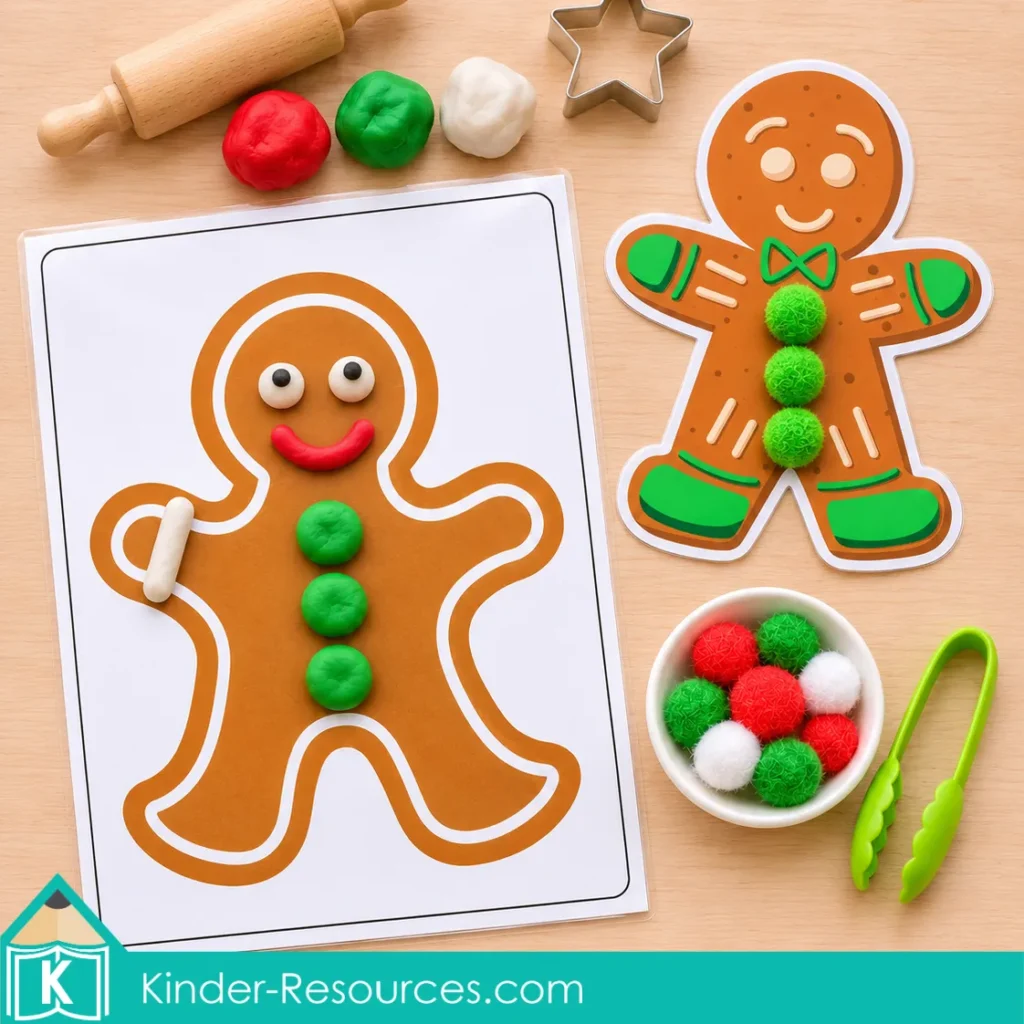
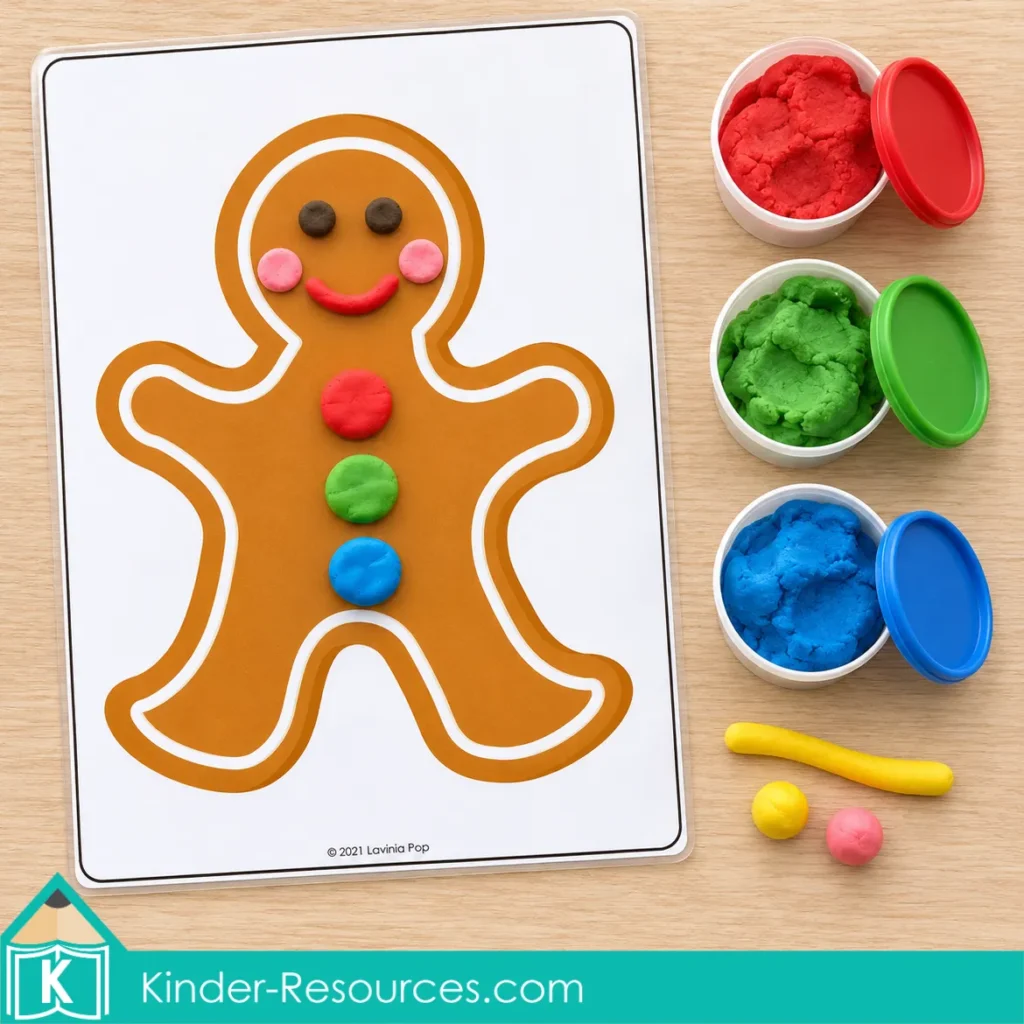
The gingerbread play dough mats invite children to roll, pinch and press dough to make eyes, a smile, buttons and icing. There are five mats in the packet, giving children different pictures to decorate while practicing controlled hand movements. Invite them to describe the details they add, too!
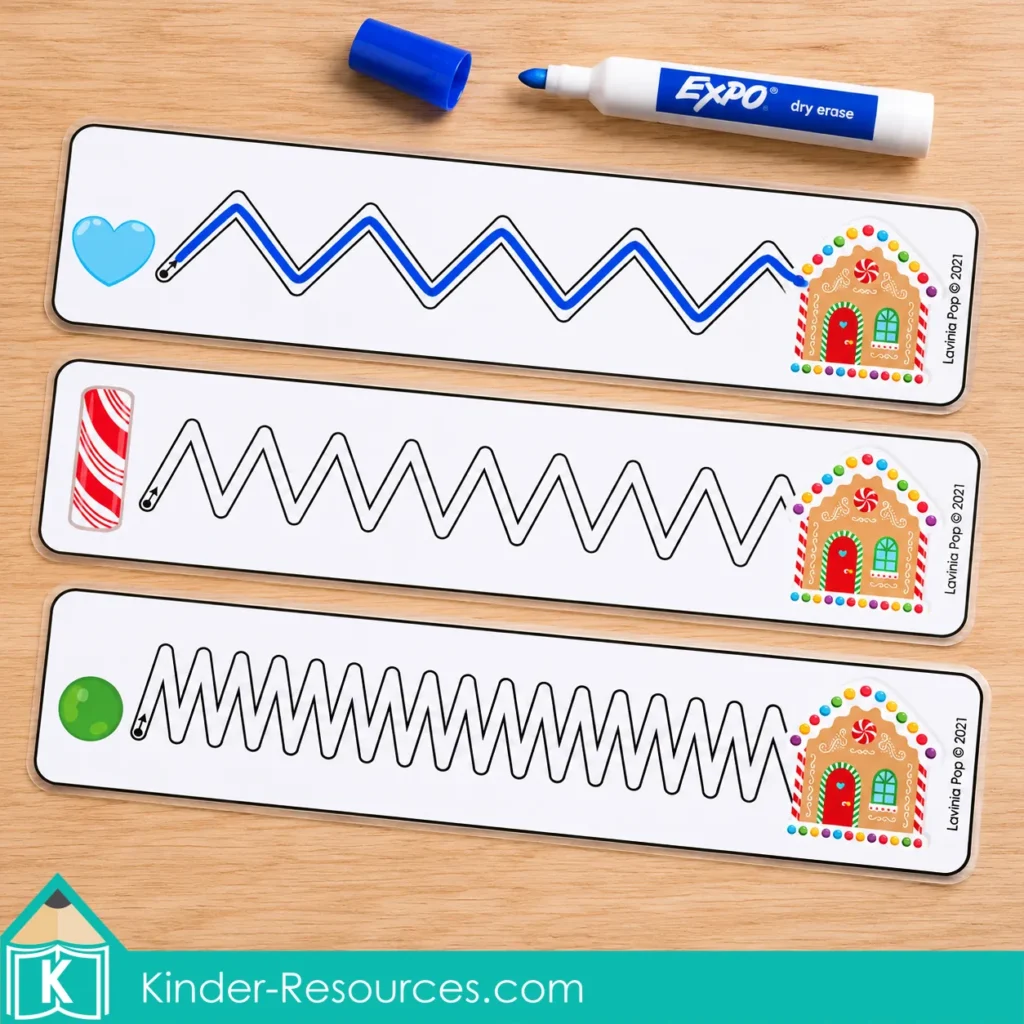
The gingerbread house prewriting strips offer another way to practice hand control. Children follow the paths with a finger and then trace them with a dry erase marker.
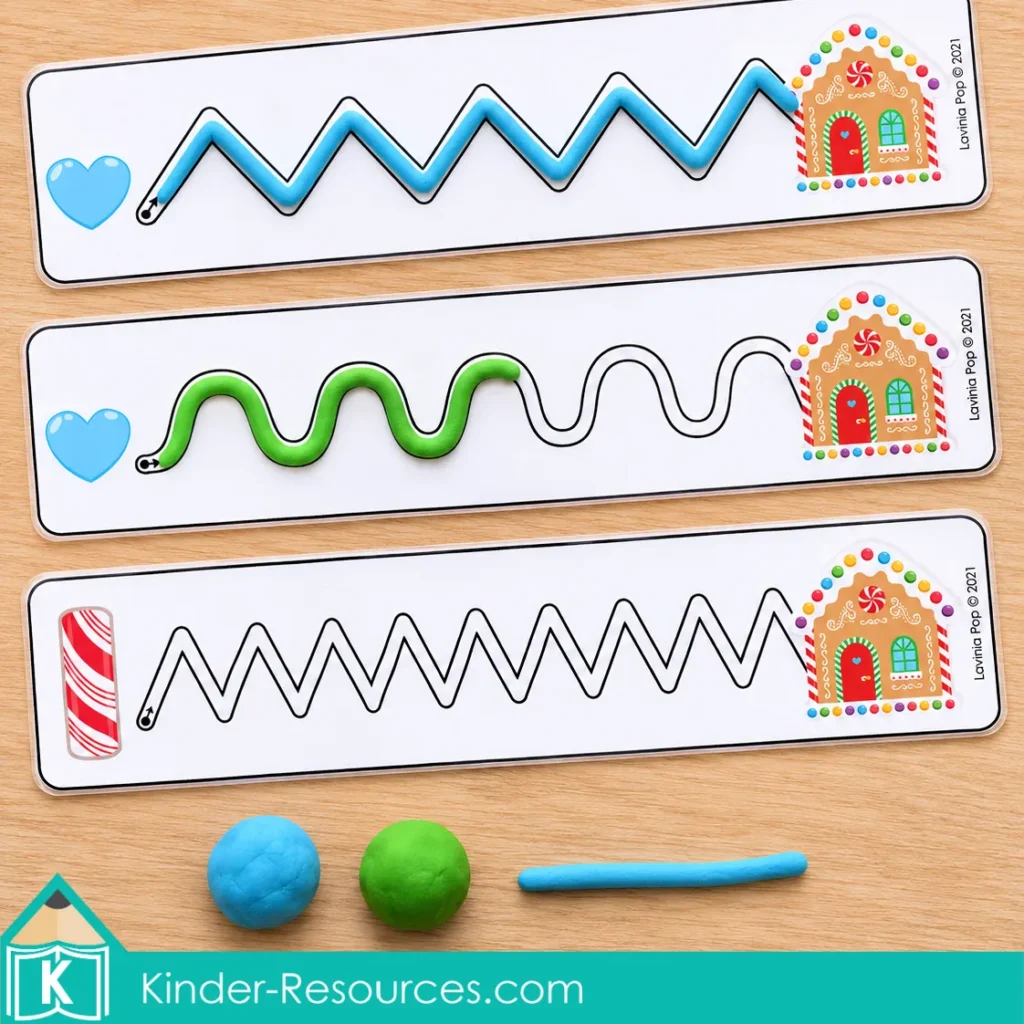
For a different approach, roll play dough into thin pieces and place them along the lines. Curves and zigzags give children a reason to slow down and follow a path carefully.
Tip: Start with one path and model where to begin. Offer the marker and play dough versions on different days so children can revisit the same skill in a familiar way.
Alphabet Recognition and Beginning Sounds
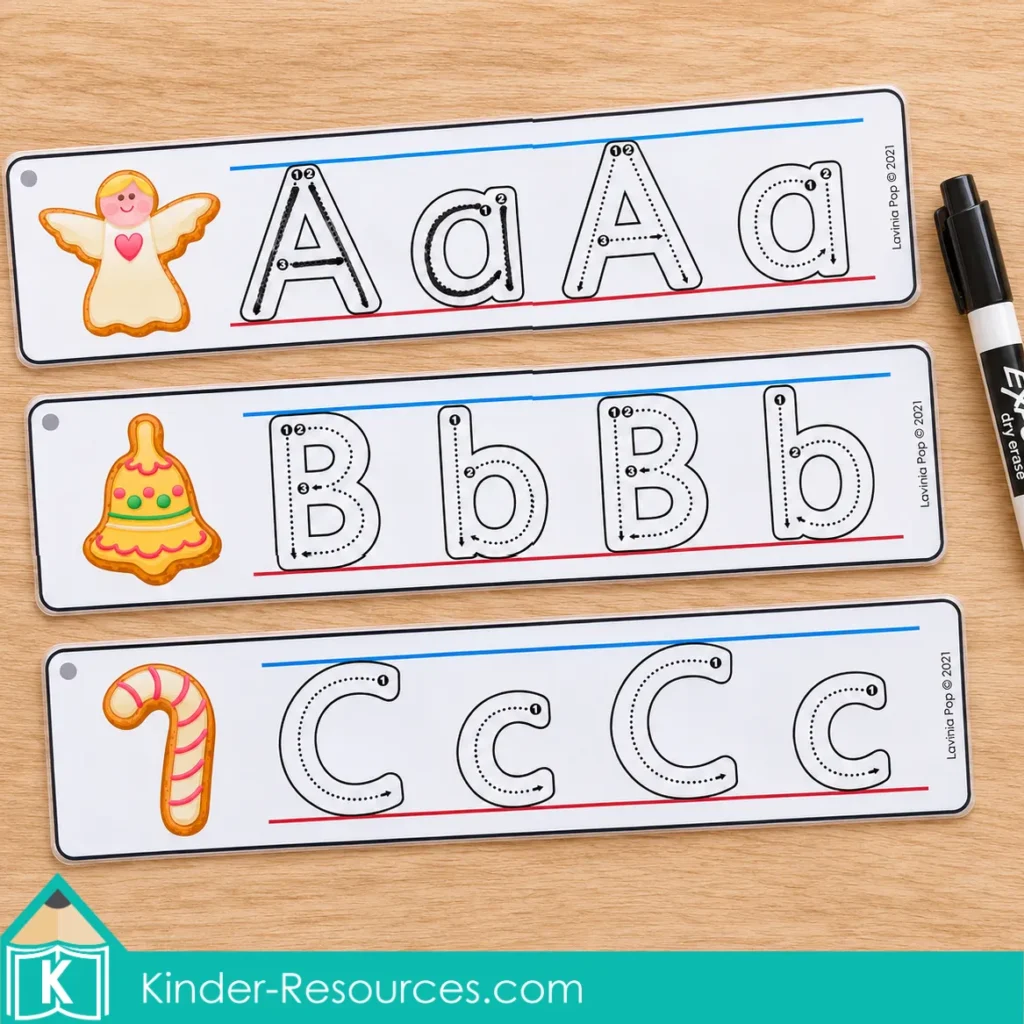
The alphabet tracing strips introduce uppercase and lowercase letter formation with dotted paths and direction cues. Choose a few familiar letters, such as those in a child’s name, and model how to form each one before offering independent practice.
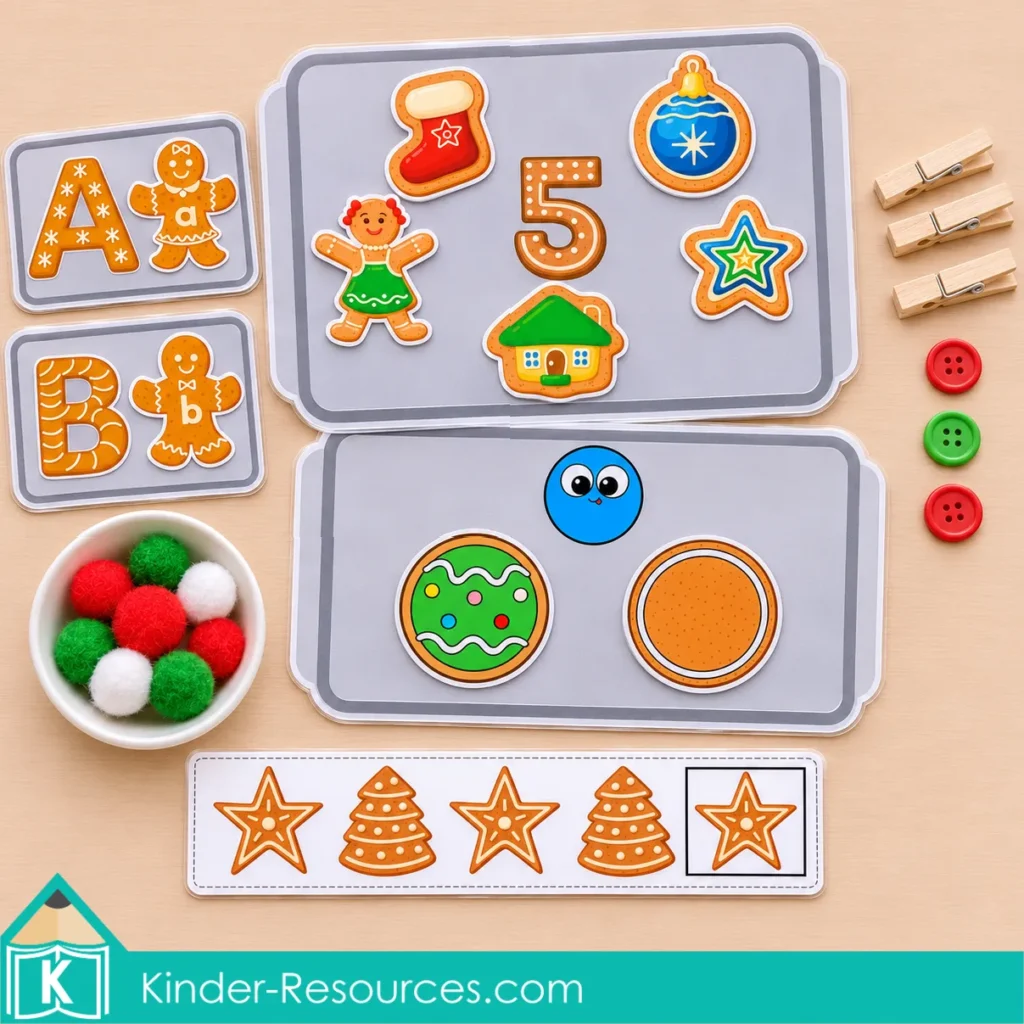
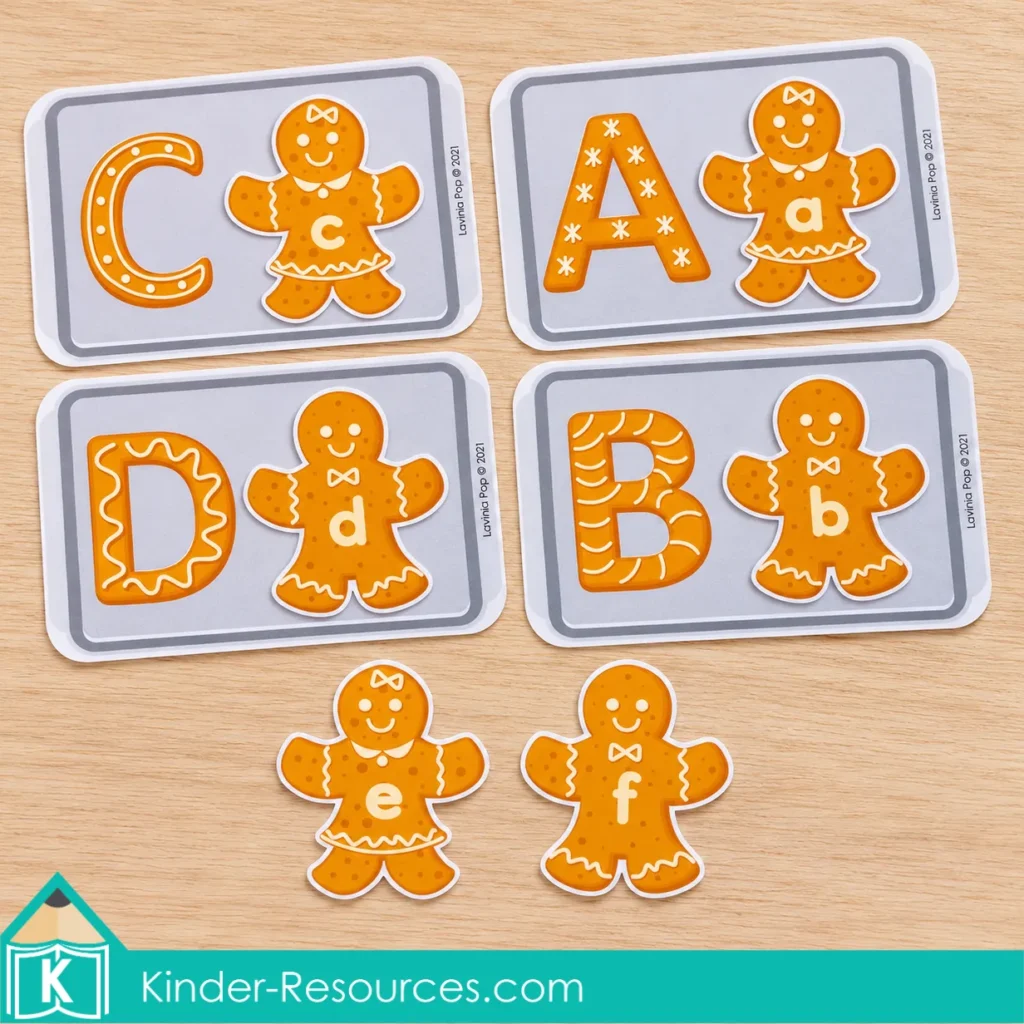
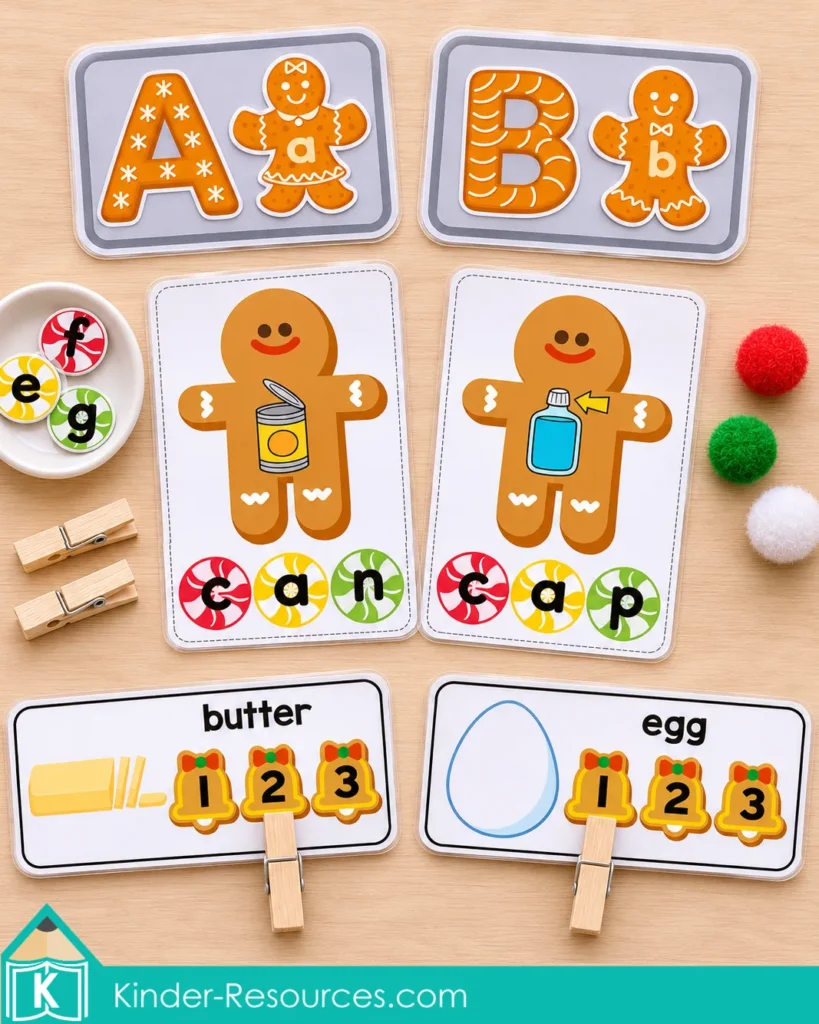
With the alphabet matching trays, children find the lowercase gingerbread letter that belongs with each uppercase cookie letter. Begin with just a few pairs and add more as children become comfortable identifying the letters.
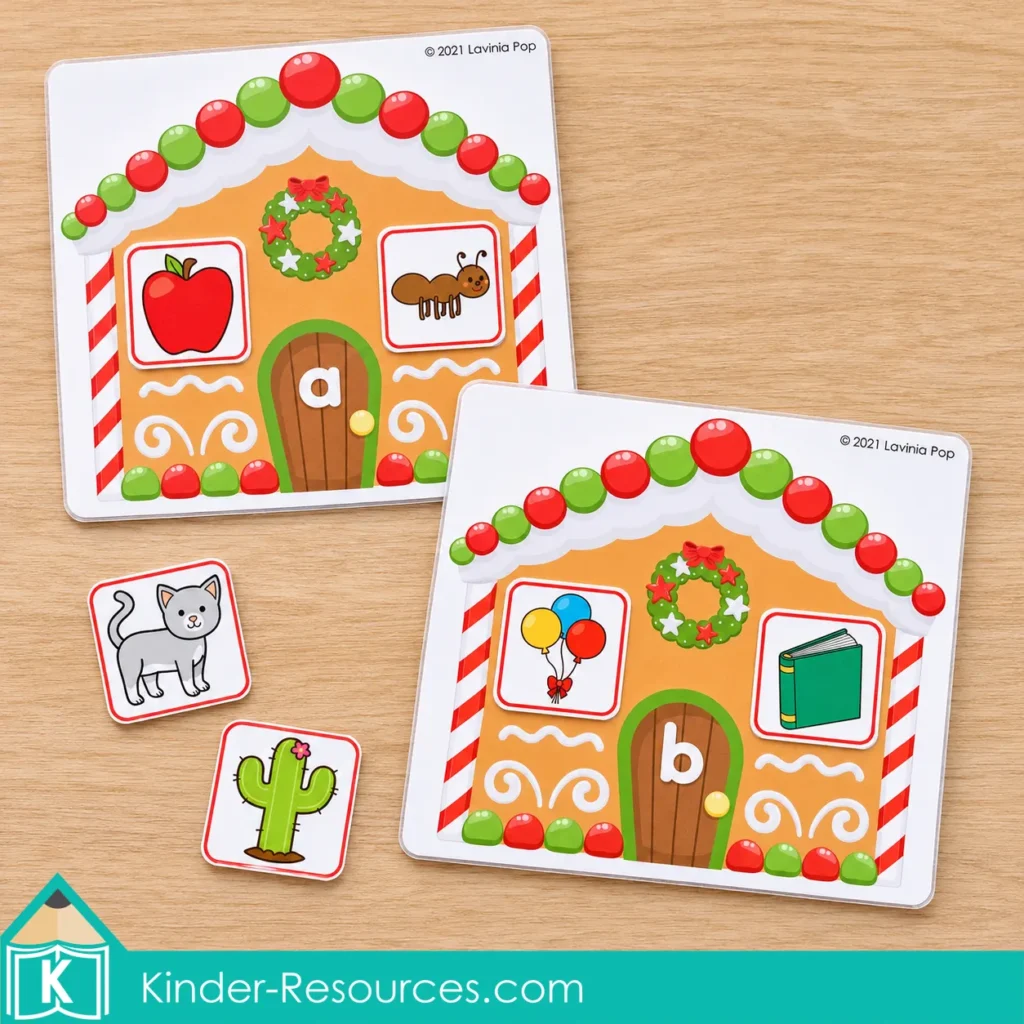
The beginning sound houses connect letters with picture names. Say each word together, listen for its beginning sound, and place the picture on the matching house. For example, the apple and ant pictures belong with the letter a.
Tip: Introduce the picture names before asking children to sort them. Start with two clearly different sounds and offer more houses when they are ready.
Listening Skills: Syllables and Rhyming
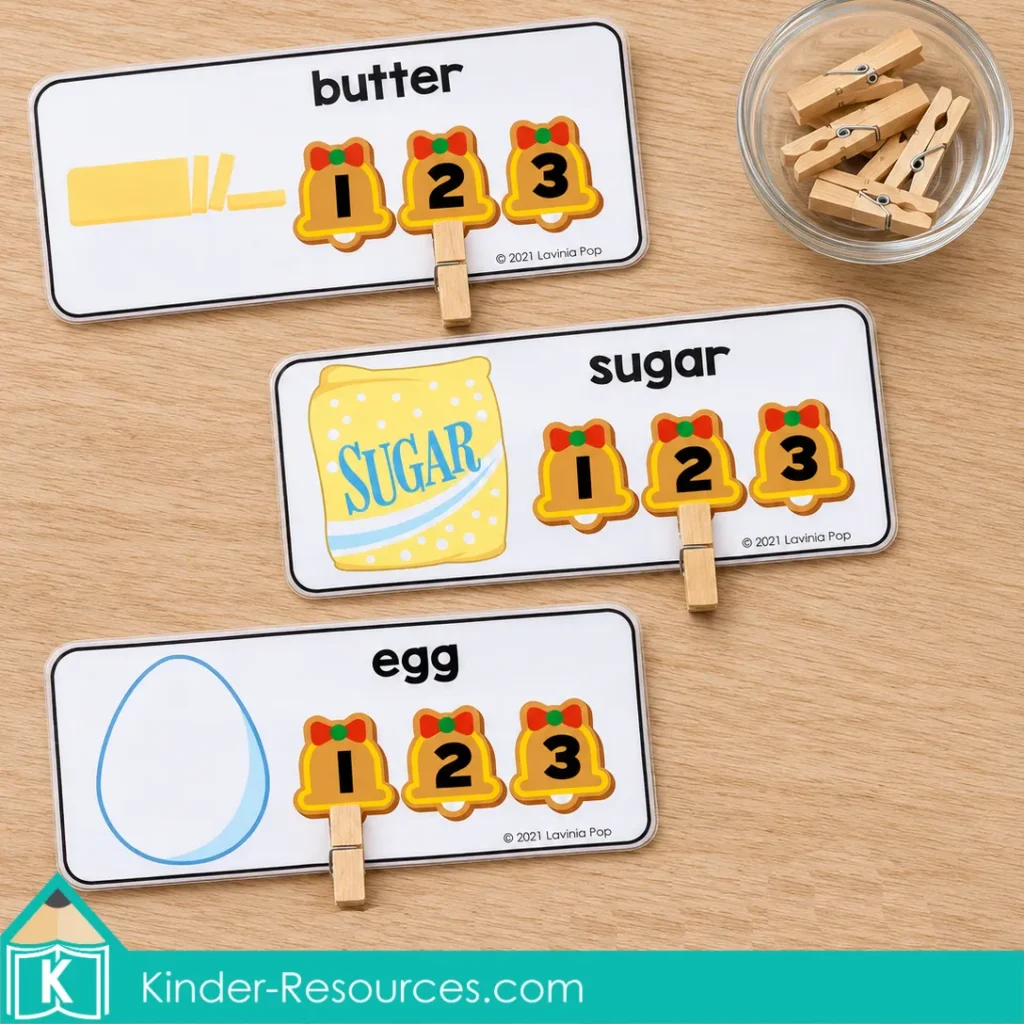
The syllable clip cards encourage children to listen to the parts in spoken words. Say the picture name, clap or tap its syllables, and clip the matching number.
In the cards shown here, butter and sugar each have two syllables, while egg has one. Opening the clothespin adds fine motor practice.
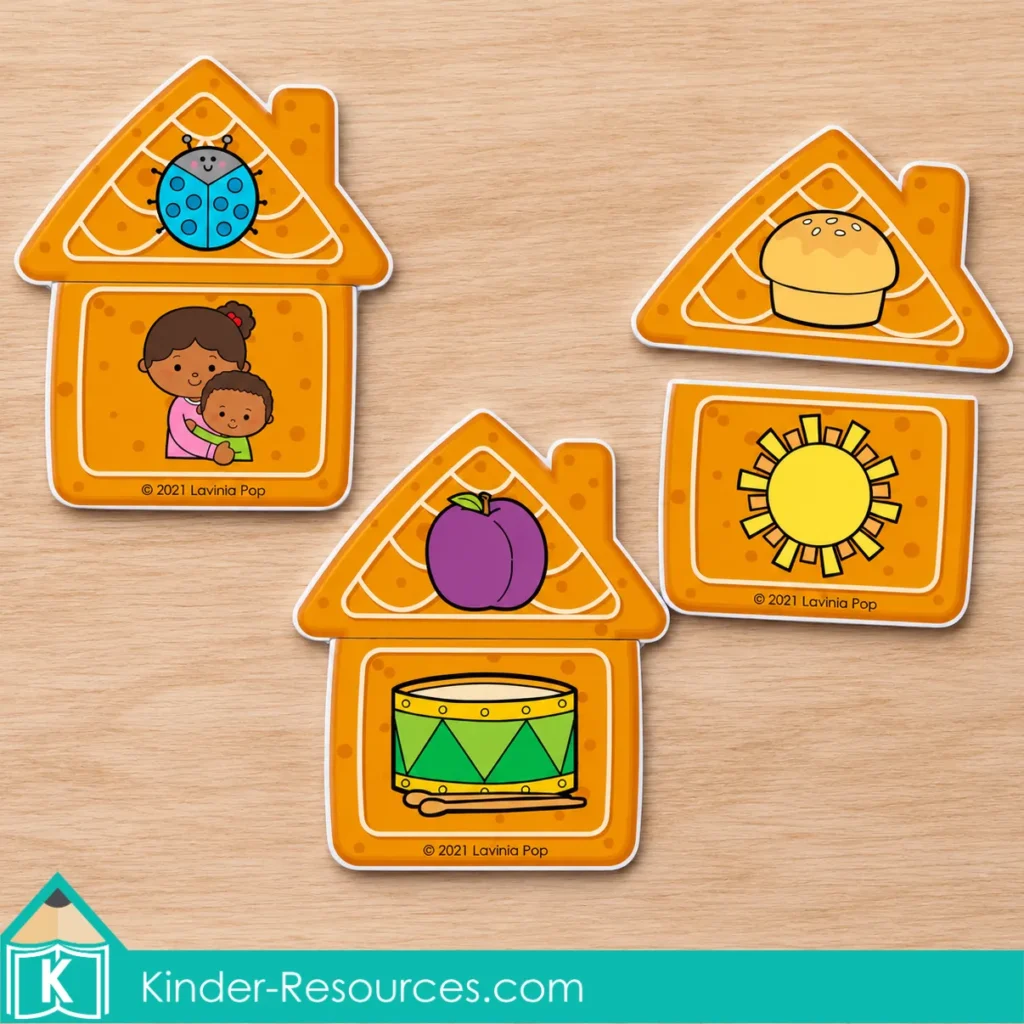
The rhyming house puzzles ask children to join picture pairs that rhyme. Say both words aloud and listen to their endings. The pictures provide a way to explore rhymes before children can read the words themselves.
Tip: Keep this practice oral and playful. Name the pictures consistently, model a rhyme pair first, and offer two possible matches if a child needs support.
Early Word Building and Word Matching
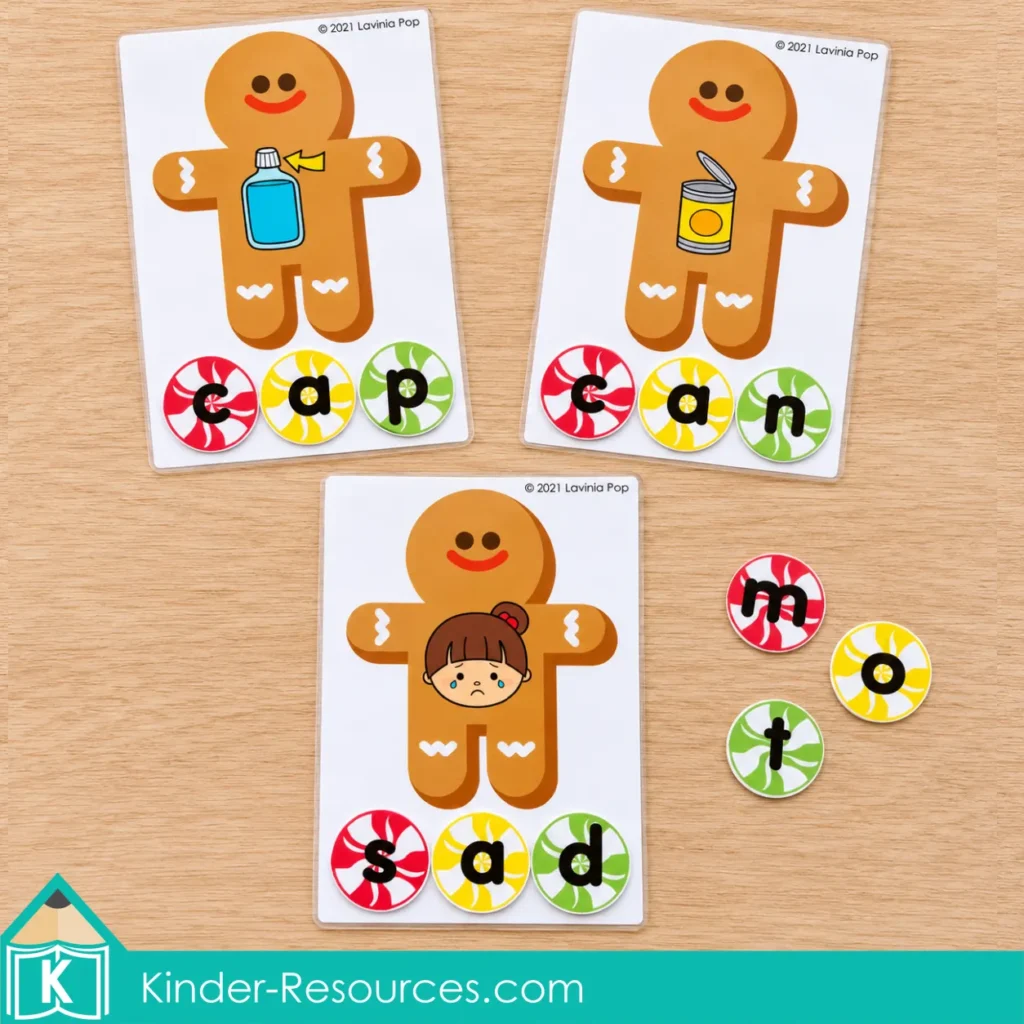
For children who are ready to connect sounds with letters, the CVC word building mats provide picture prompts and candy letter pieces. Say a word such as can, stretch it into its three sounds, and help children choose a letter for each sound. Then blend the sounds to read the completed word.
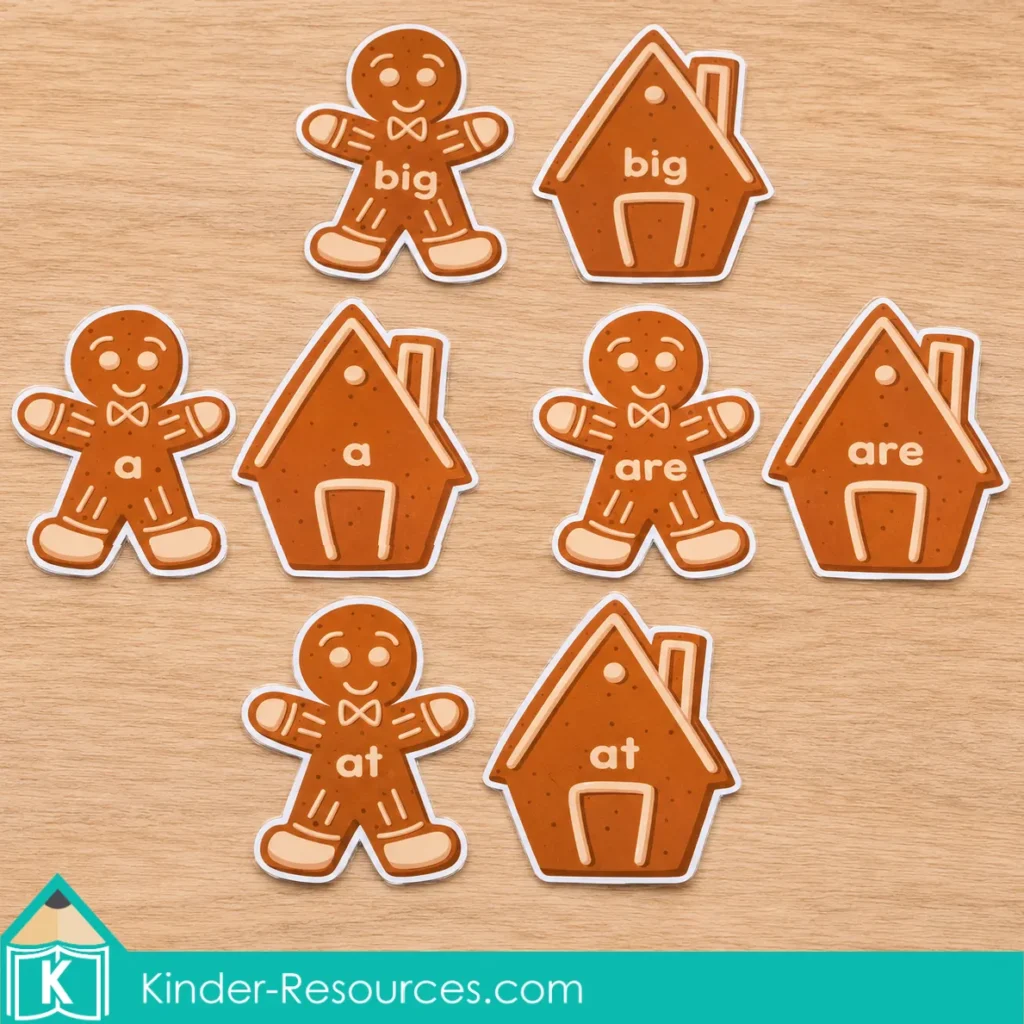
The sight word matching activity pairs gingerbread people with houses displaying the same word. Choose a small set of familiar words and read them together before matching.
This can be a useful extension for beginning readers while younger children continue practicing letters, sounds and picture matching.
Tip: Match the task to the child’s current learning. Offer only the letters needed for one CVC word at first, and revisit words children have already been taught in the word matching activity.
Counting, Number Formation and Number Sense
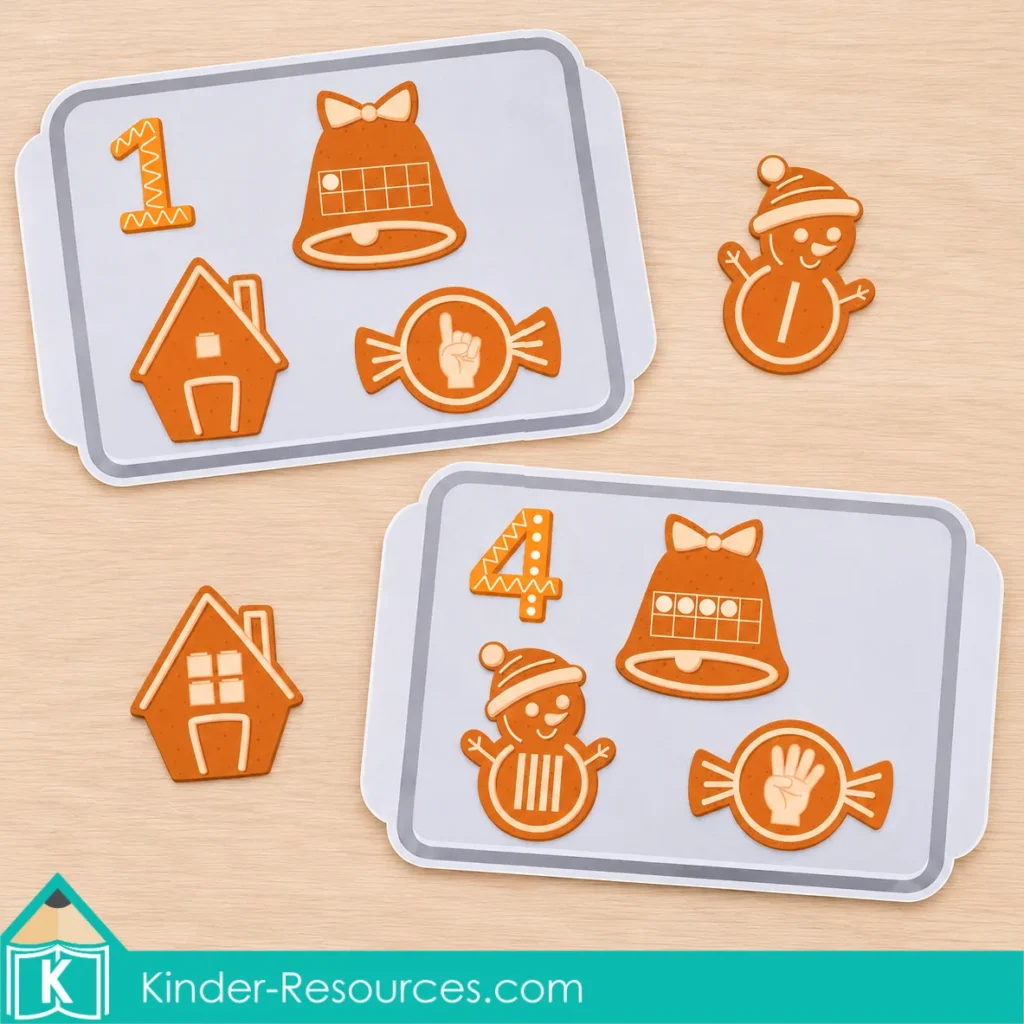
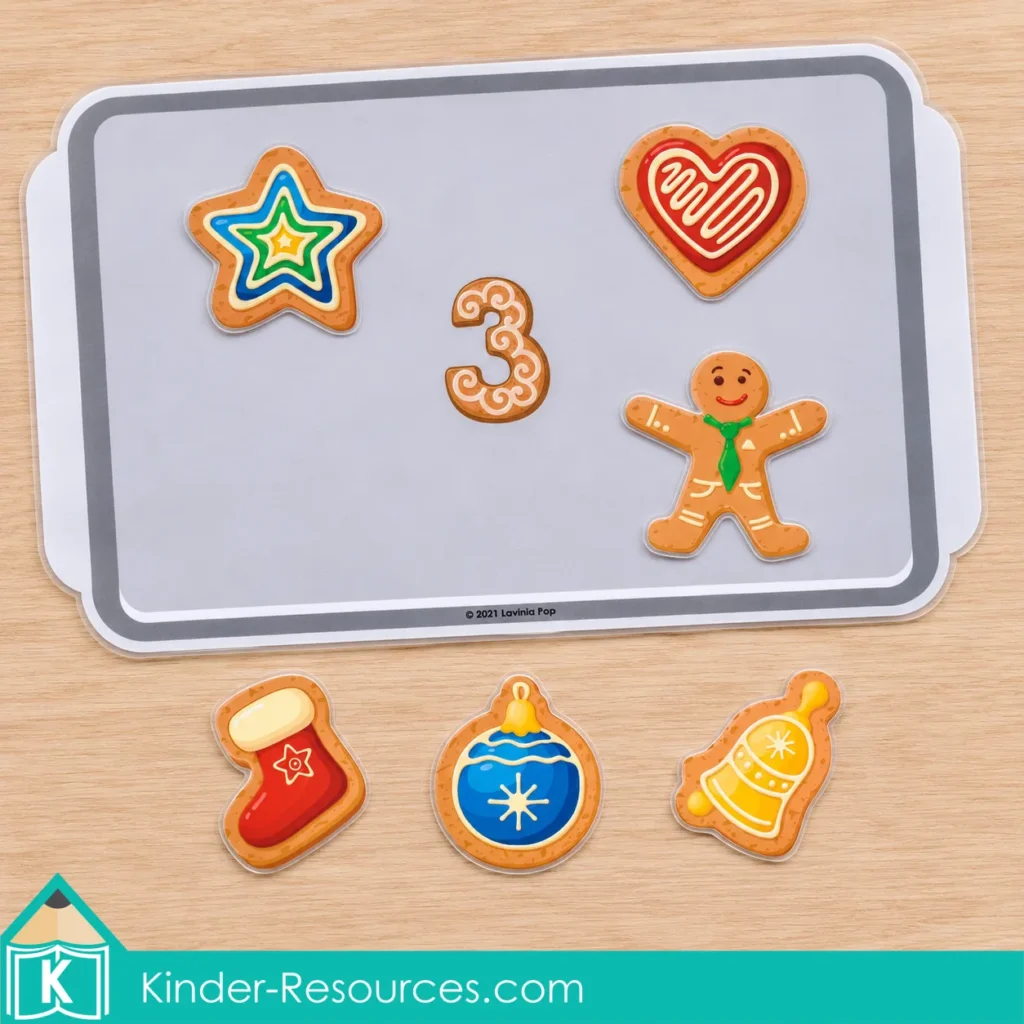
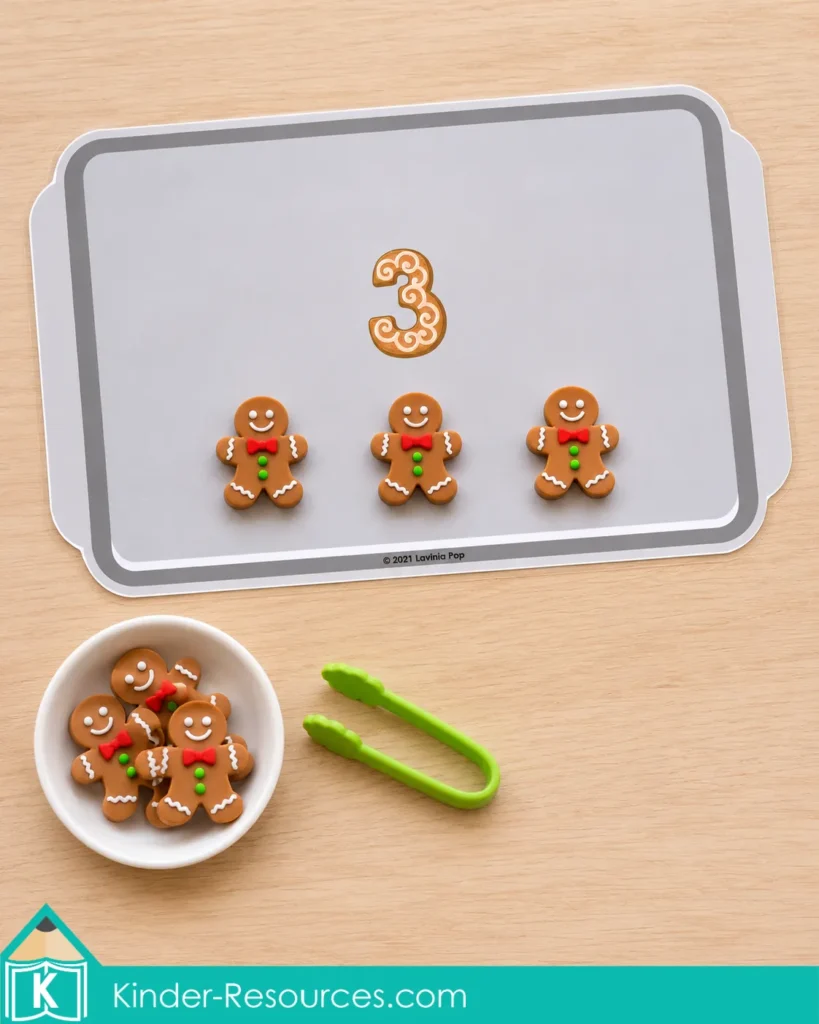
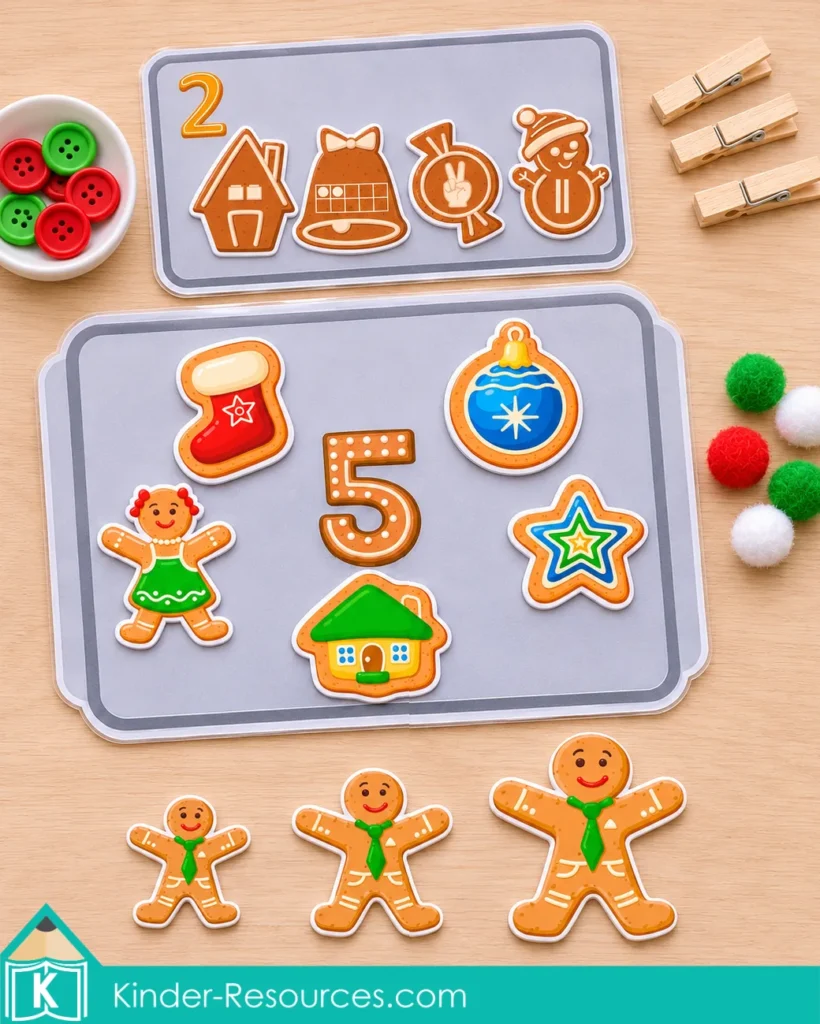
The baking trays make a playful setting for early math. Children can count cookie pieces onto a tray, explore different ways to show a number, and practice forming numerals.
Start with smaller quantities and introduce more numbers as children become confident counting each object once.
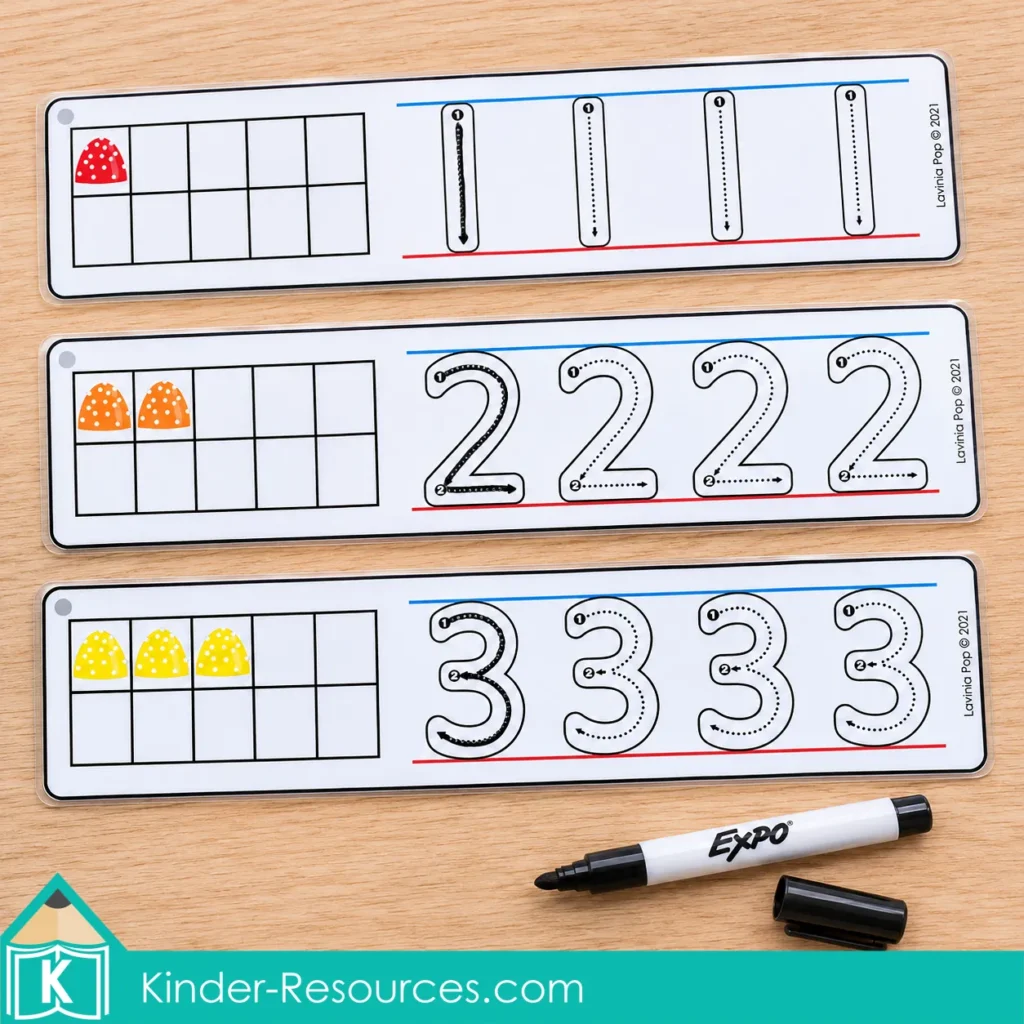
The number tracing strips cover numbers 1–10 and pair numeral formation with ten frames. Count the gumdrops together, name the number, and follow the tracing cues with a dry erase marker.
The number sense sorting activity helps children connect numerals 1–10 with quantities shown in different ways. They match ten frames, fingers, tally marks and house windows to the corresponding number tray.
Pause to count each representation together instead of rushing to finish the matches.
For the gingerbread counting activity, children place the correct number of printable cookies on each numbered tray. You can also use gingerbread mini erasers or other counters.
The photos show the same counting idea with two different materials, so you can choose the version that suits your supplies and learners.
Tip: Encourage children to move one cookie at a time as they count. Ask, “How many cookies are on your tray?” after the count to connect the final number with the whole group.
Color, Size, Shape and Attribute Sorting
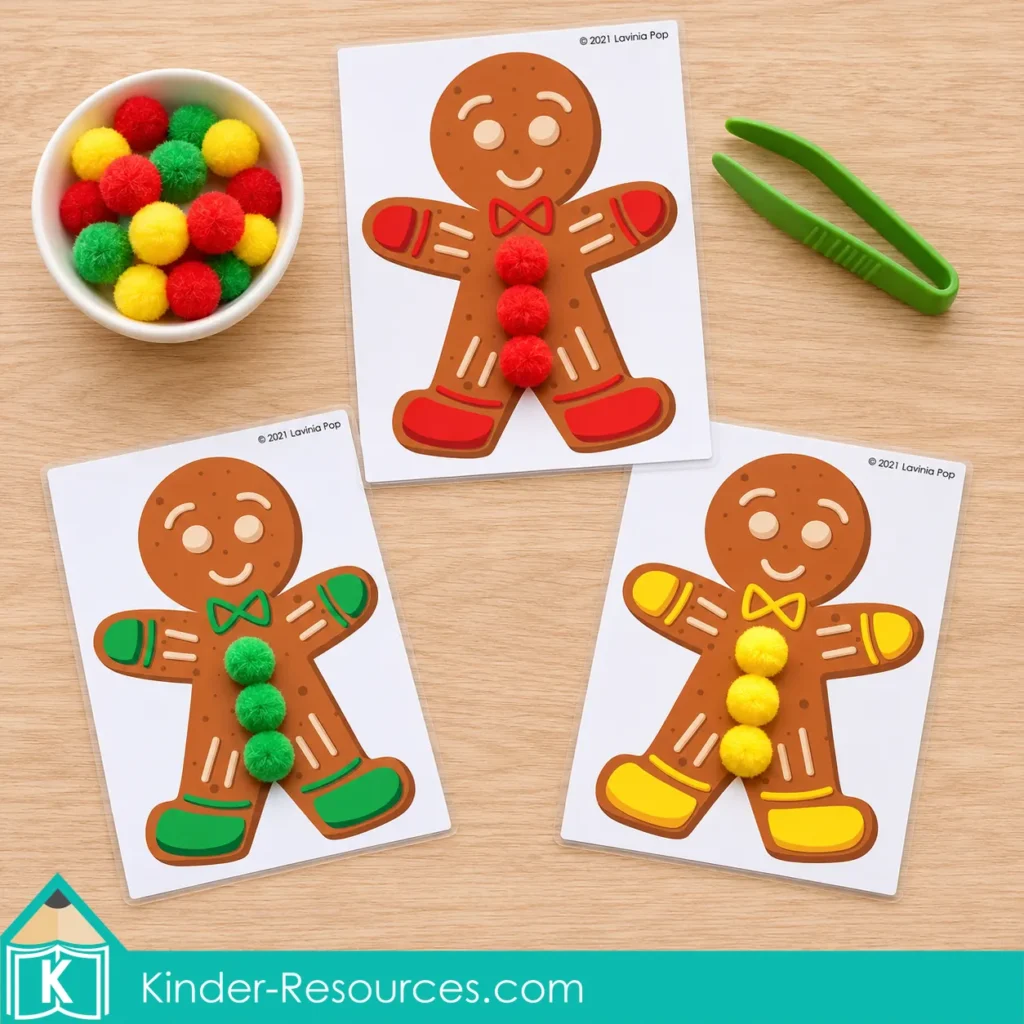
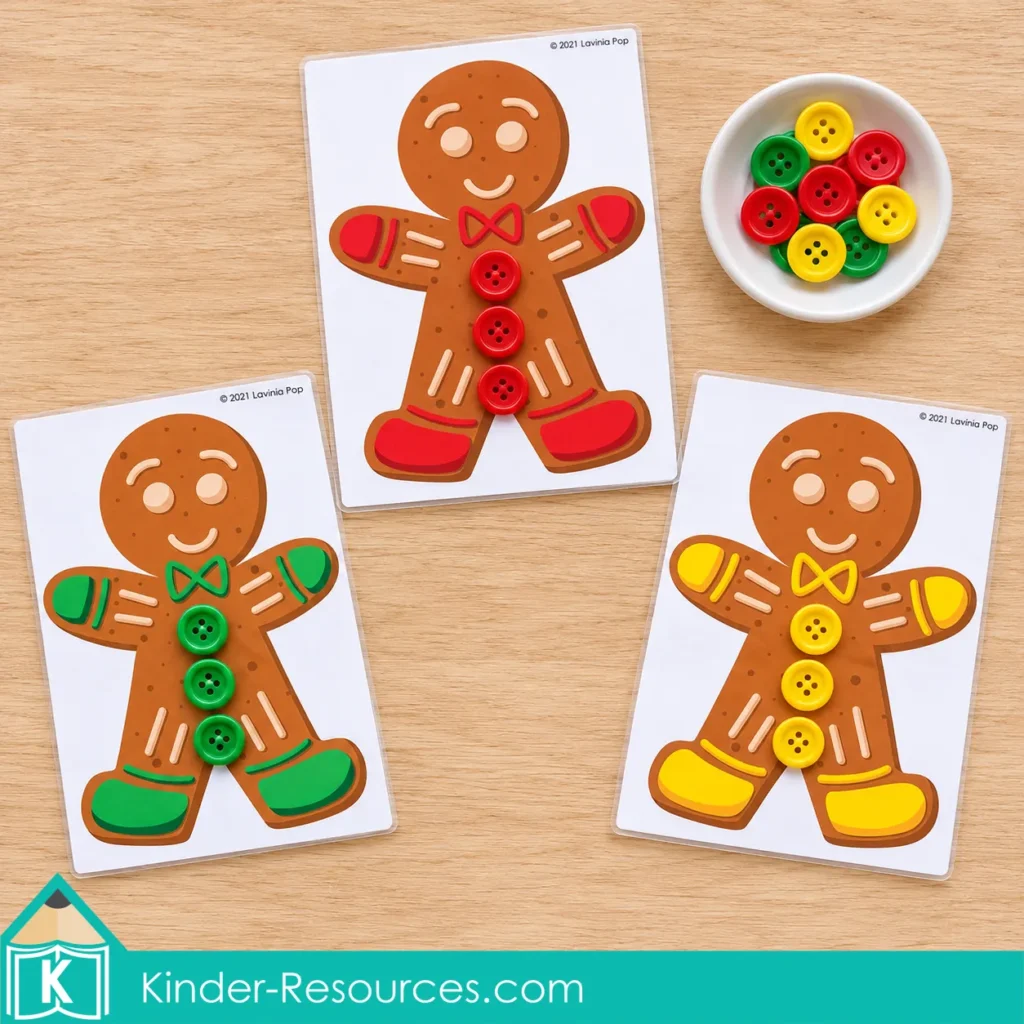
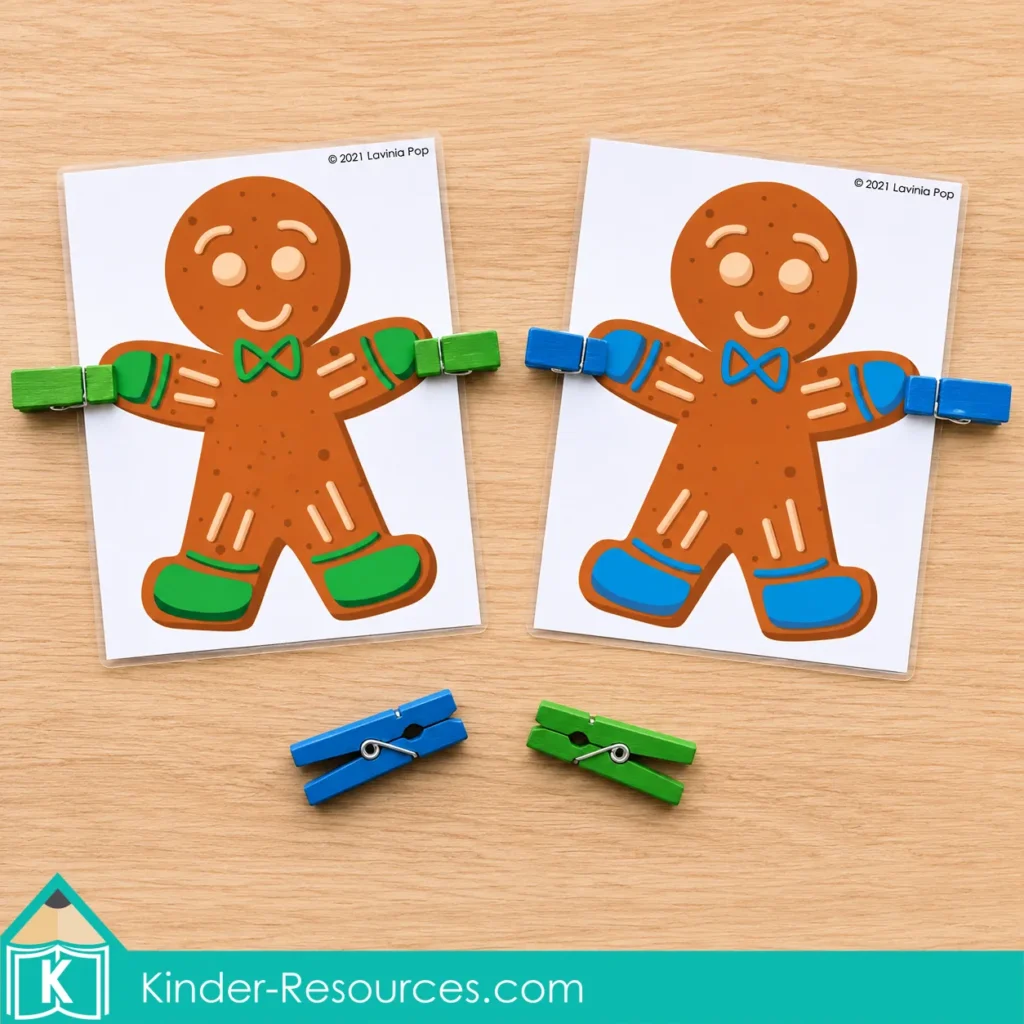
The gingerbread color matching mats work with several everyday materials. Children can place matching pom poms or buttons on the gingerbread figures, or clip matching colored clothespins to the cards.
Adding tongs offers another way to practice picking up and placing objects carefully.
These three photos show alternatives for the same color matching activity. You can change the materials while keeping the task familiar, giving children more opportunities to name colors, compare objects and practice hand coordination.
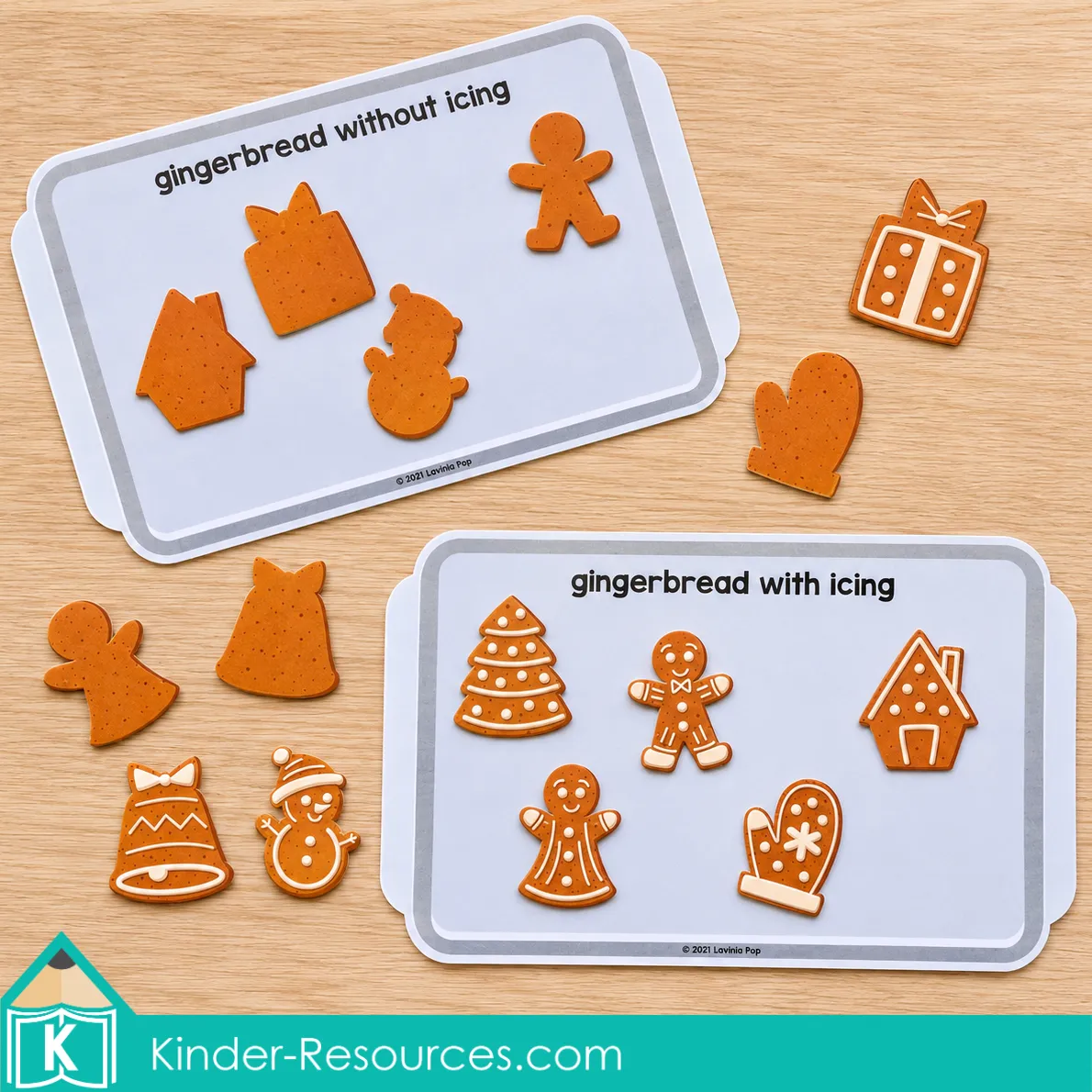
The with and without icing sort introduces a simple sorting rule: look for icing and decide which tray the cookie belongs on. Encourage children to explain their choices using phrases such as “This one has icing” or “This one has no icing.”
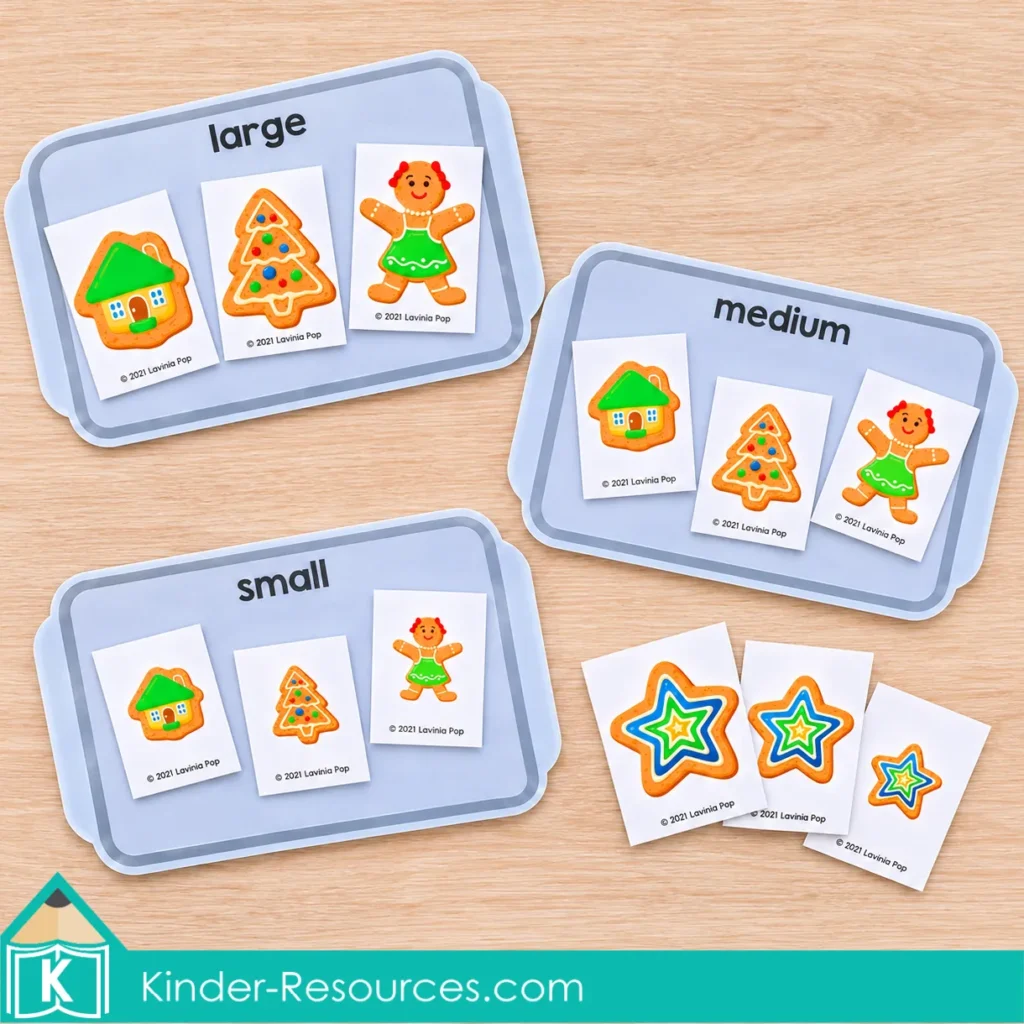
The size sorting trays invite children to compare small, medium and large cookie pictures. Place different sizes of the same picture beside one another first so children can see the differences clearly.
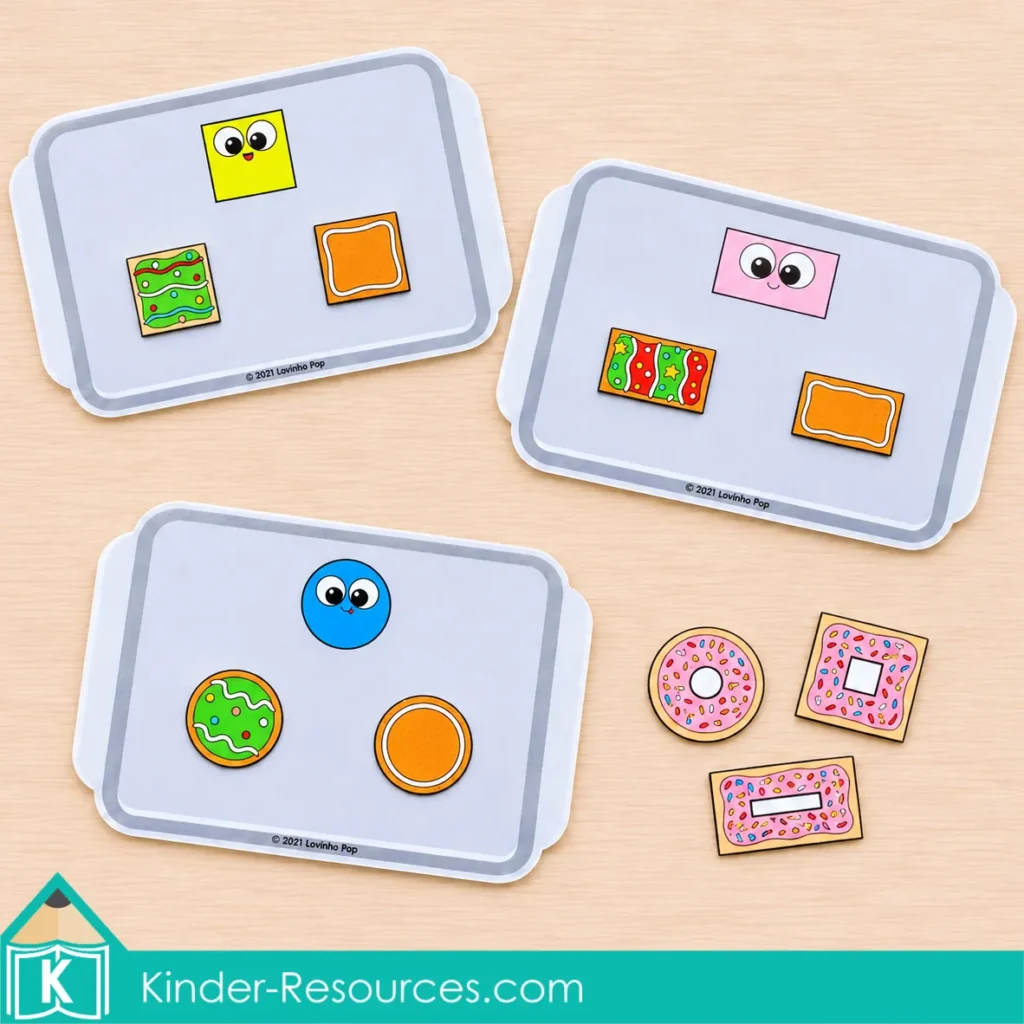
With the shape sorting trays, children match cookies to the corresponding shape. Talk about the sides and corners they notice while comparing circles, squares, rectangles and the other shapes included in the activity.
Tip: Begin with two sorting groups if needed. Once children understand the rule, add a third group or mix in more picture cards.
Visual Discrimination and Picture Matching
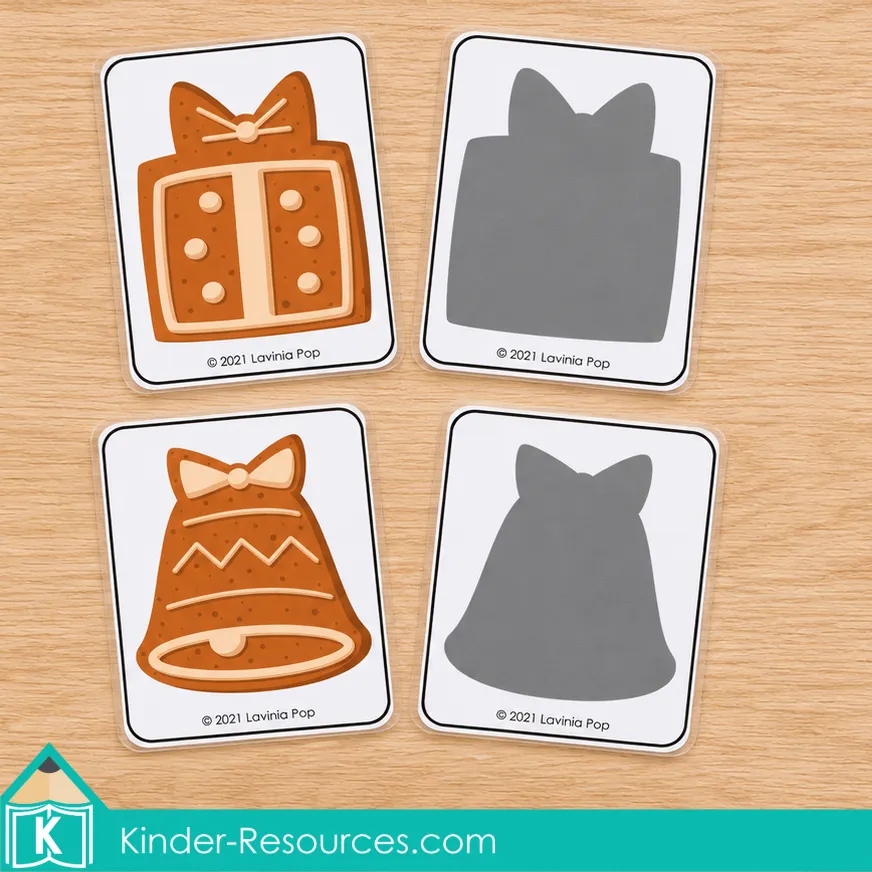
The shadow matching cards encourage children to look closely at outlines as they pair each cookie picture with its silhouette. Start with clearly different pictures, then add more pairs to make the search a little more challenging.
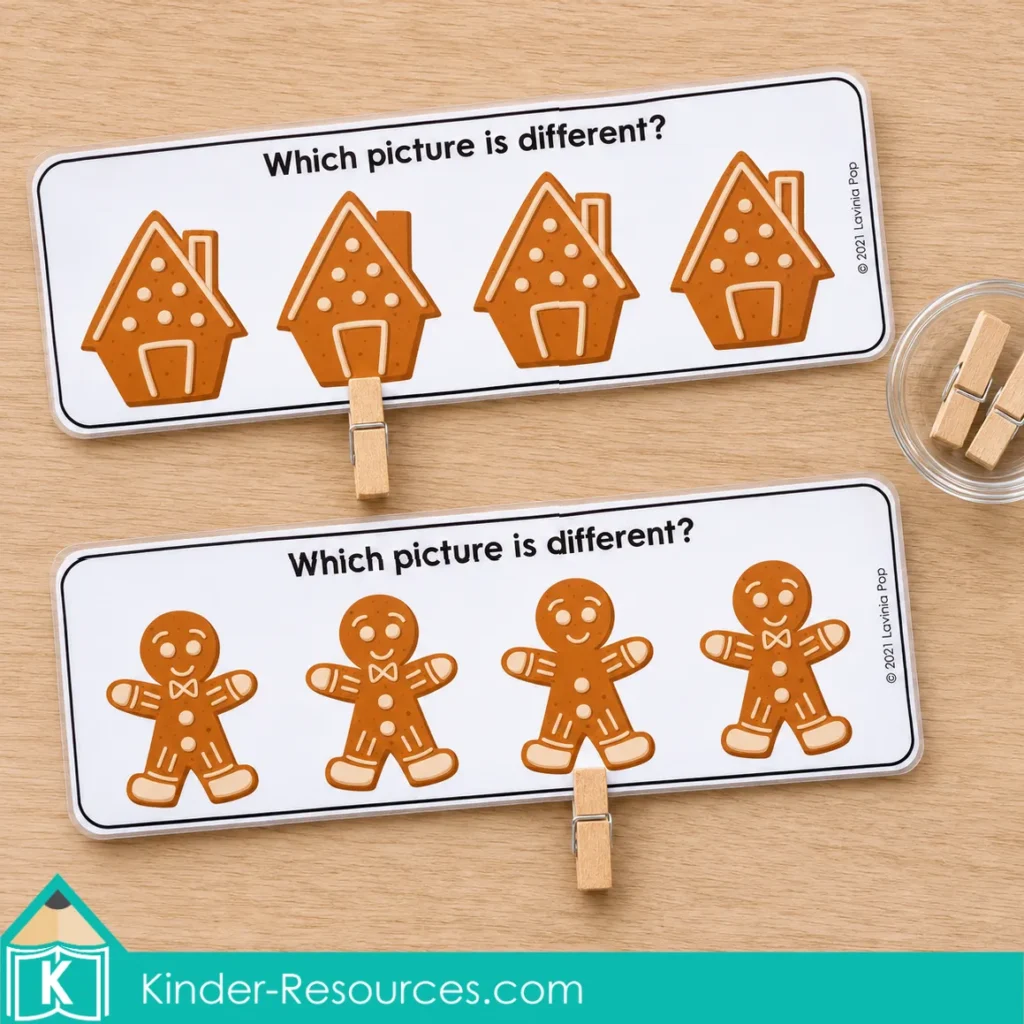
The “Which picture is different?” cards ask children to compare similar pictures and notice a changed or missing detail.
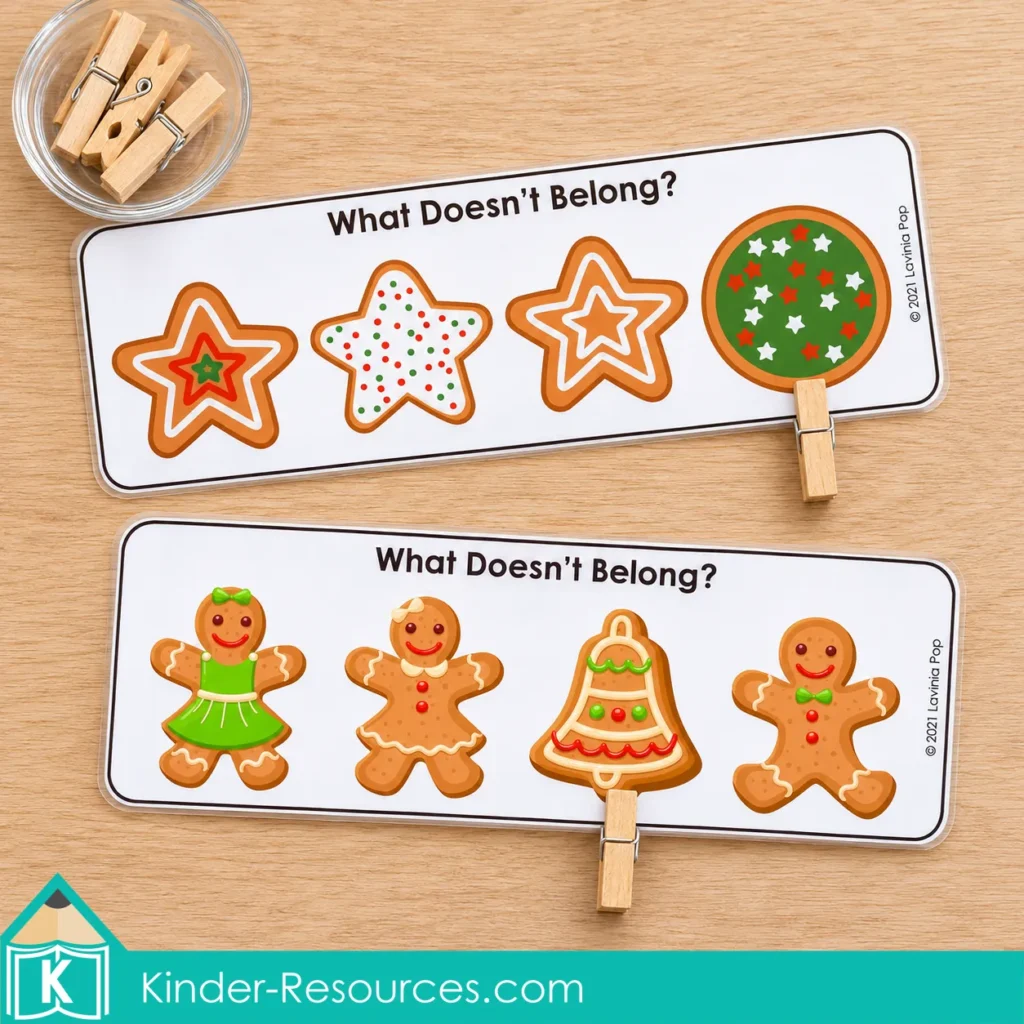
The “What doesn’t belong?” cards focus on grouping. Children identify the picture that does not share the same feature as the others.
Both clip card activities offer opportunities to explain a choice. Ask, “What did you notice?” or “How is this one different?” Children can point to their answer before using a clothespin to mark it.
Tip: Model looking from left to right across the card. Naming the feature together can help children describe why they chose a particular picture.
Patterns, Sequencing and Oral Language
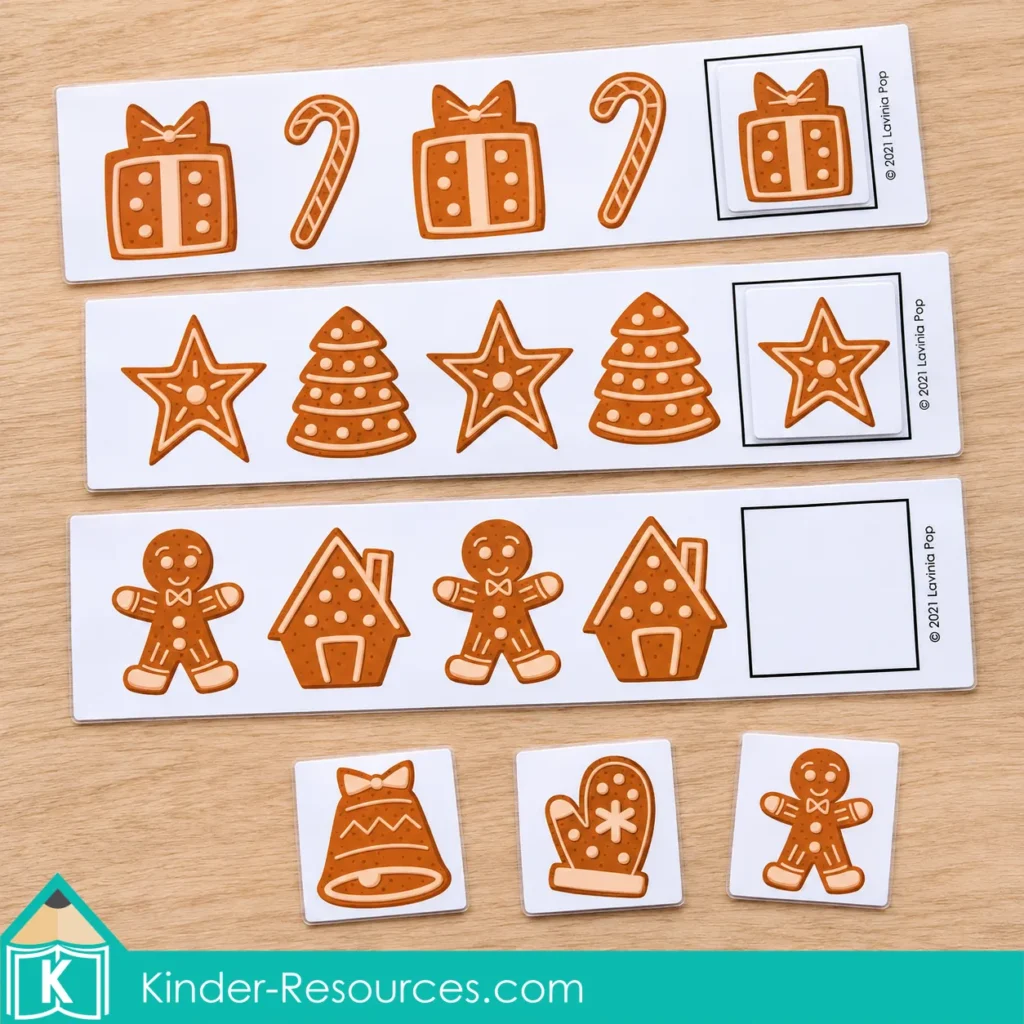
The AB pattern strips use alternating cookie pictures to help children recognize a repeating unit and decide what comes next.
Read each strip aloud together, such as “star, tree, star, tree,” before selecting the missing piece.
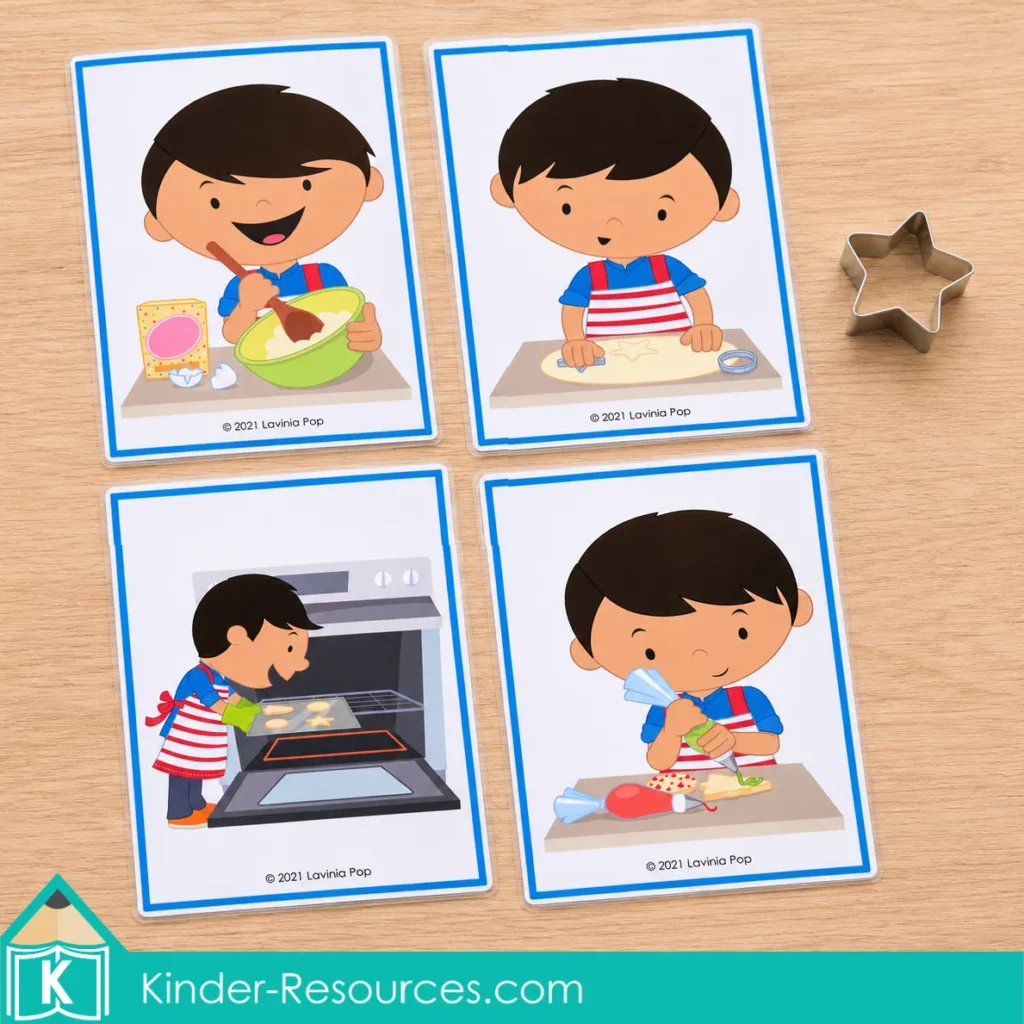
The cookie sequencing cards show four steps: mixing the dough, cutting the cookies, baking them and decorating them.
Children put the pictures in order and retell the process using words such as first, next, then and last. This makes a useful small group conversation activity alongside your gingerbread theme.
Tip: Ask children to explain what comes next and why. For sequencing, model the whole process first, then let children arrange and describe the pictures.
Skills Covered in the Gingerbread Preschool Centers
Choose from activities that give children practice with:
- Fine motor control, hand coordination and prewriting
- Letter recognition, formation and uppercase and lowercase matching
- Beginning sounds, syllables and rhyming
- CVC word building and familiar word matching
- Counting, number formation and quantity matching
- Color, shape and size recognition
- Visual discrimination, classification and AB patterns
- Sequencing, describing and explaining choices


Gingerbread Preschool Centers: Center Management Tips
These printables can be used for morning tubs, small group lessons, math and literacy centers, or short homeschool activities.
A few simple routines help keep the focus on learning:
- Introduce each task first. Demonstrate what to do and where to return the pieces before children use a center on their own.
- Keep the first setup small. Offer a few letter pairs, lower numbers or two sorting categories, then add more as children are ready.
- Repeat familiar activities. Swap buttons for pom poms or printable cookies for counters to refresh a task without changing its purpose.
- Use the photos for organization. Keep the matching activity photo with each set so the materials are easy to identify.
- Choose a balanced selection. A fine motor activity, a familiar literacy task and a counting or sorting activity make a manageable starting point.
Get the Complete Gingerbread Preschool Centers Packet
The complete Gingerbread Preschool Centers packet includes 21 activities in a 148-page PDF, with preparation directions and activity photos.
You can prepare the activities you need now and return to the others as children develop new skills.

Happy Teaching! 😊
You Might Also Like