
Are you looking for free alphabet charts to support letter recognition, beginning sounds, reading, and writing? These printable Alphabet and Letter Sounds Posters provide children with a clear visual reference as they learn to connect letters with sounds.
I created several versions because children need different kinds of support at different stages of learning. Some children benefit from a simple alphabet chart with pictures, while others are ready to read the picture words or explore long vowel and alternative consonant sounds.
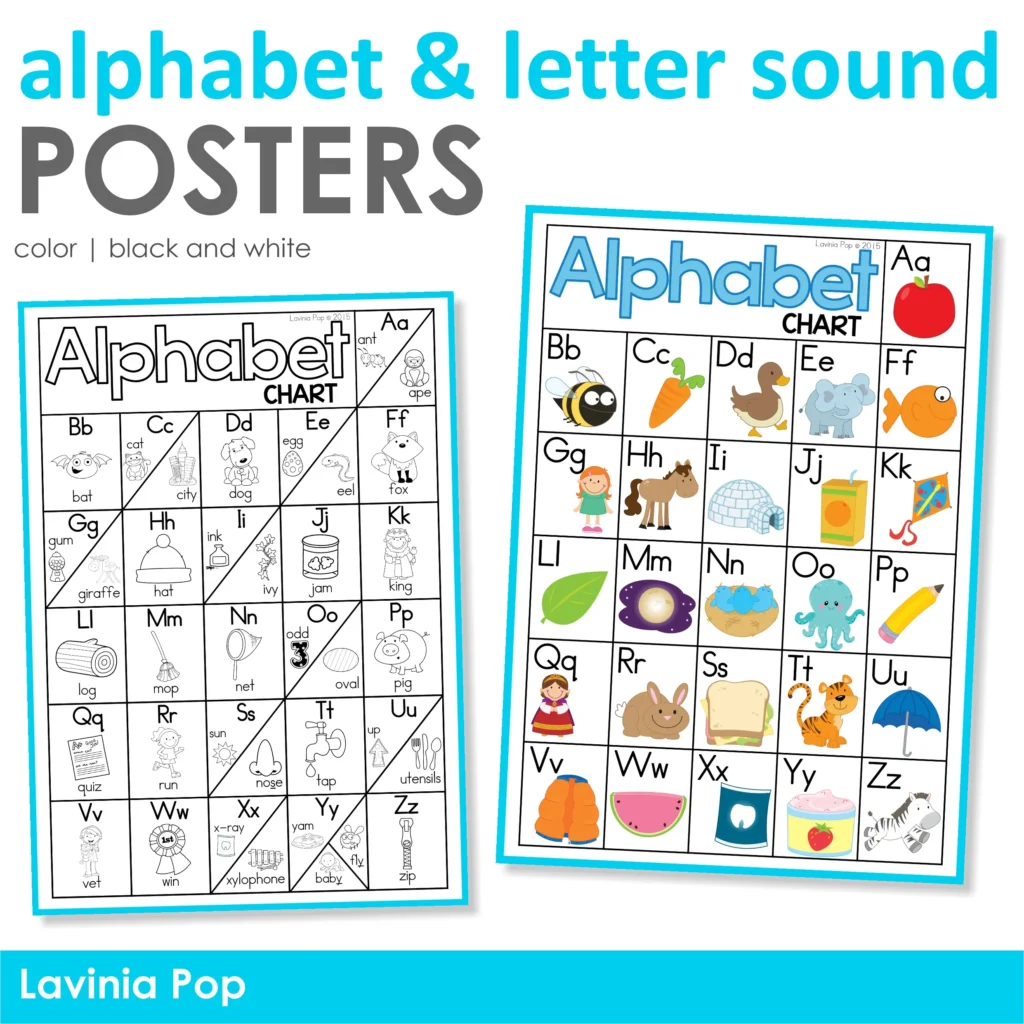
The free download includes 14 printable A4 alphabet charts. There are seven different chart options, and each one is included in both color and black and white.
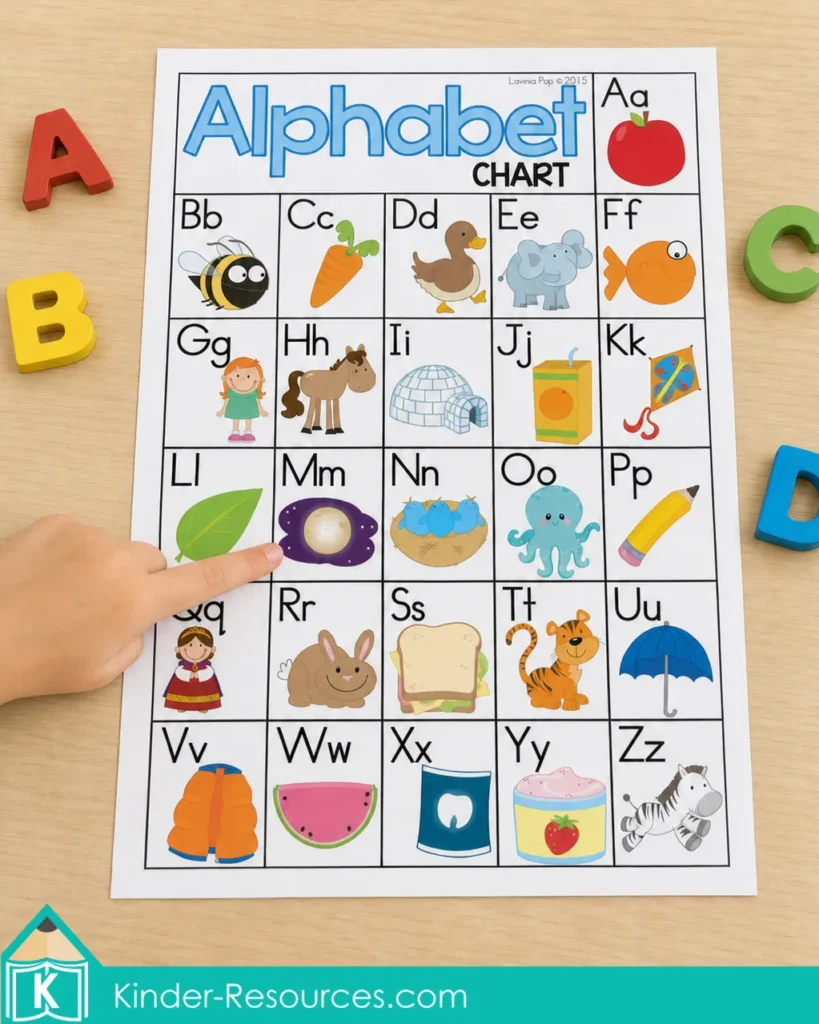
FREE Alphabet and Letter Sounds Posters | Anchor Charts
Each alphabet chart displays uppercase and lowercase letters together. The letters are arranged in alphabetical order, with a picture representing the sound associated with each letter.
The clear grid layout makes it easy for children to find a letter quickly. The pictures provide helpful visual cues without making the charts feel crowded or overwhelming.
You can select the chart that best matches the phonics knowledge of your students.
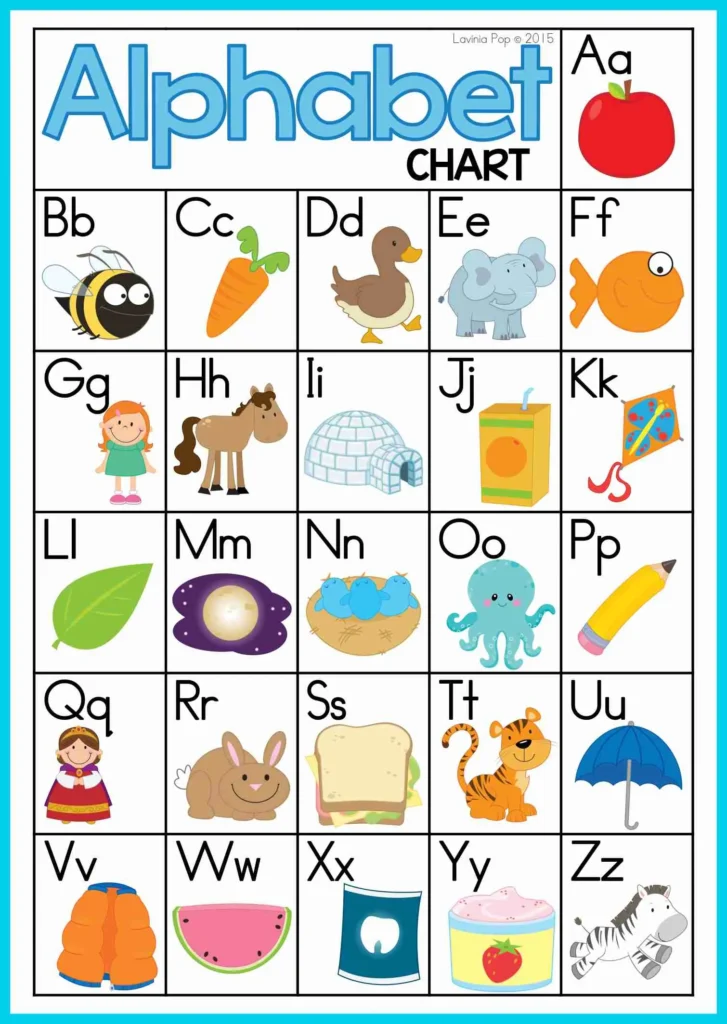
1. Alphabet Poster with Picture Cues
The first chart provides uppercase and lowercase letters with a picture cue for each letter. The pictures are not labelled, keeping the chart simple for children who are beginning to recognize letters and connect them with sounds.
This is a helpful option for preschool, Pre K, kindergarten, and children beginning formal phonics instruction.
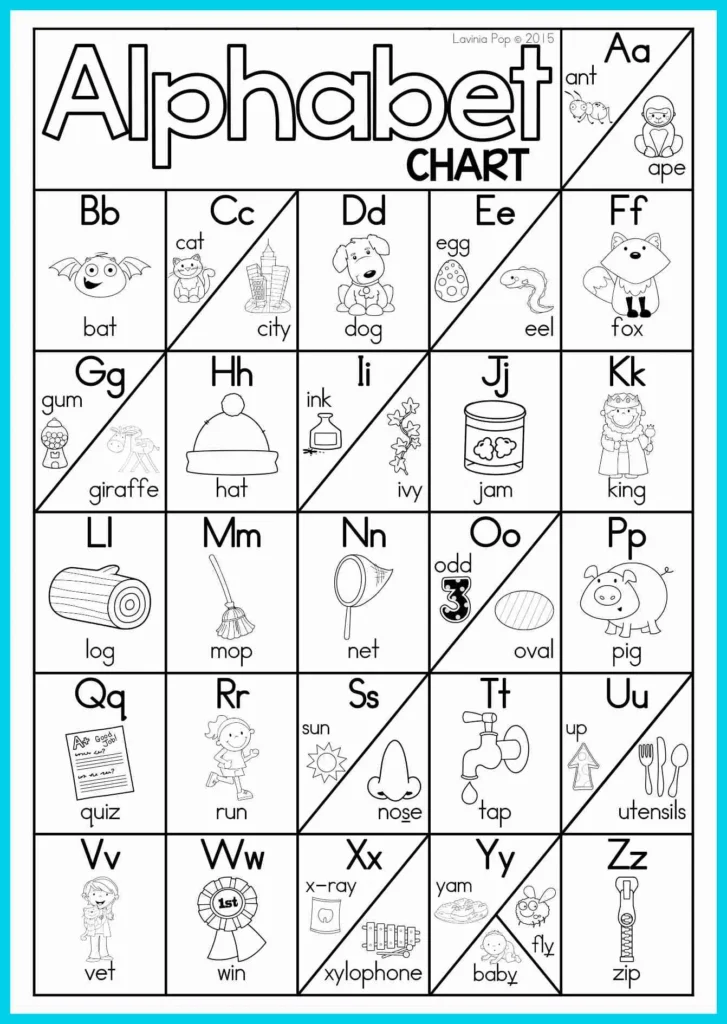
2. Alphabet Poster with Long Vowel Pictures
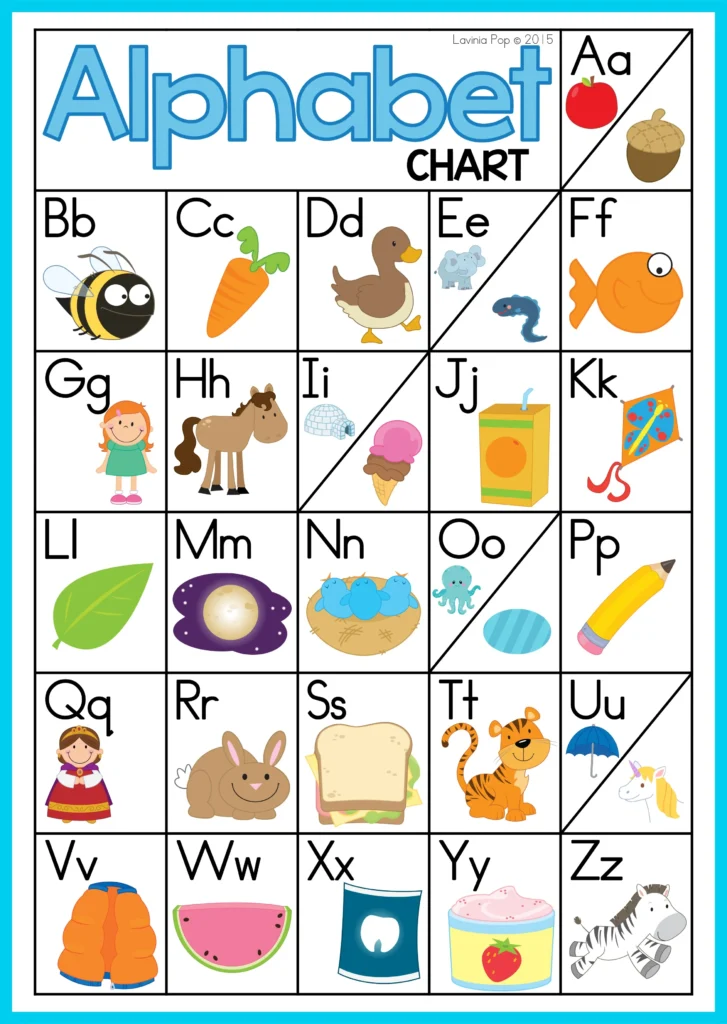
This version includes the same alphabet and picture layout, with additional pictures showing the long vowel sounds.
The vowel spaces are divided to show both a short vowel picture and a long vowel picture. This gives children a visual reminder that each vowel can represent more than one sound.
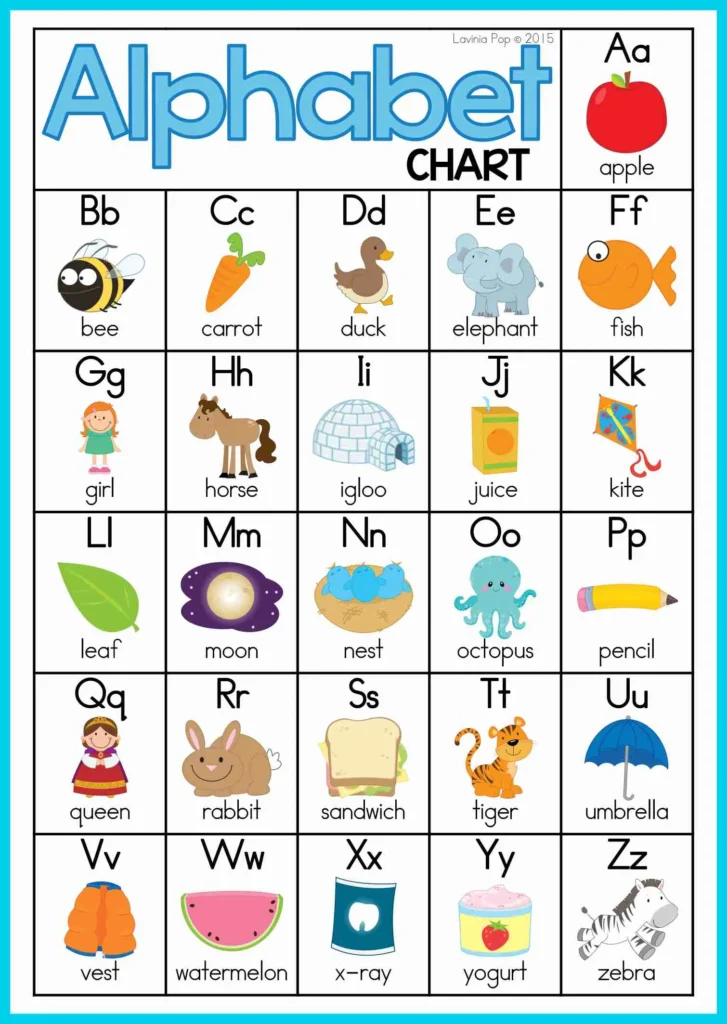
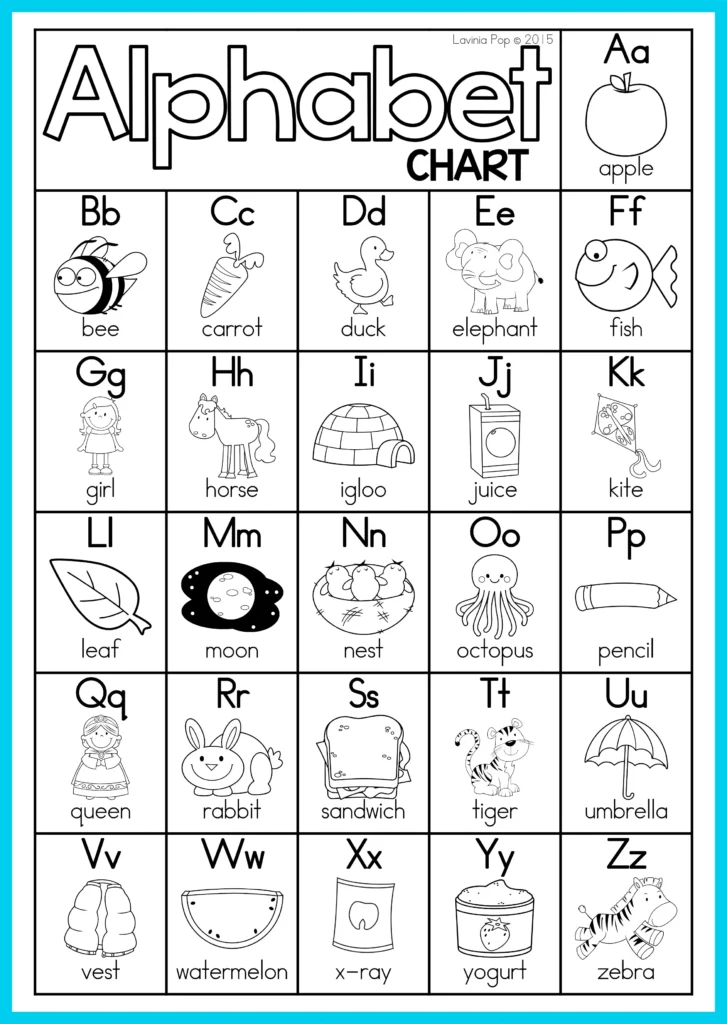
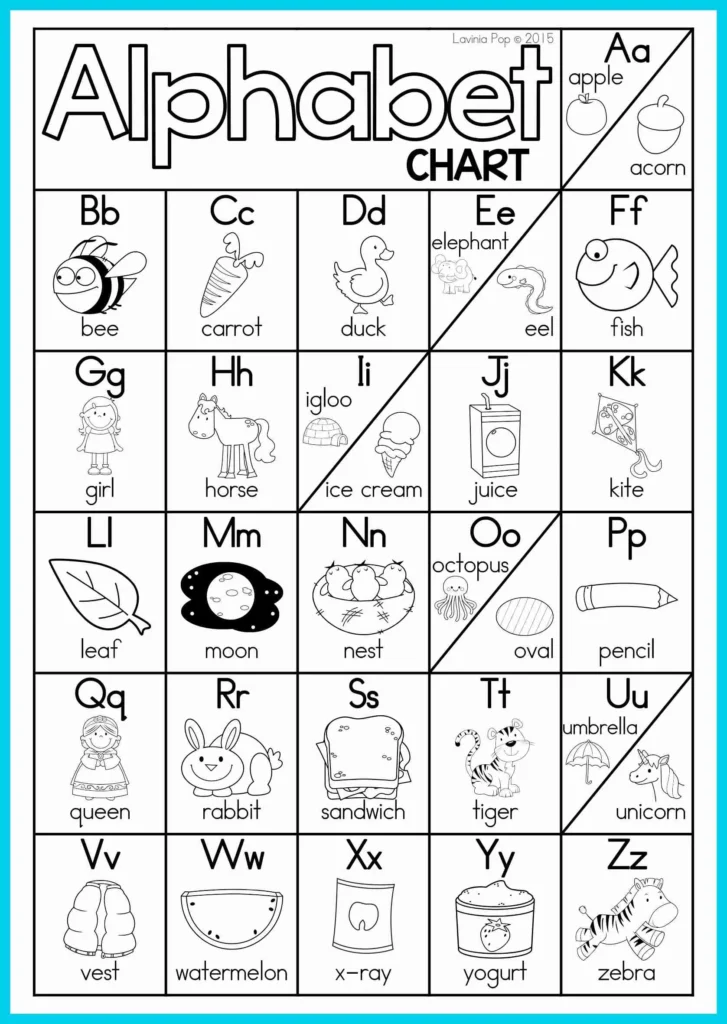
3. Alphabet Poster with Common Picture Words
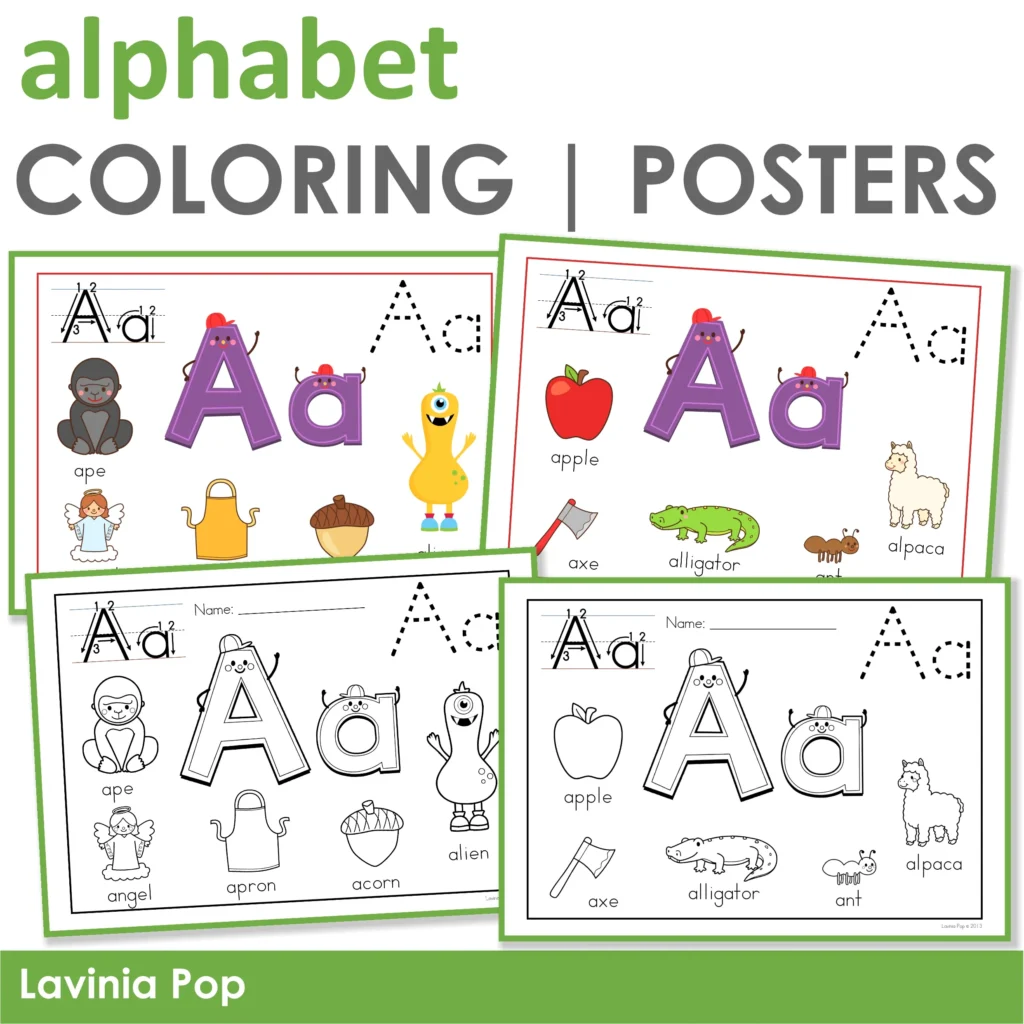
The third option includes a written word beneath each picture. These familiar picture words can help children connect the letter, sound, picture, and printed word.
Children can also use this chart when writing independently. If they want to write a word beginning with a particular sound, they can find the letter and use the picture word as a reminder.
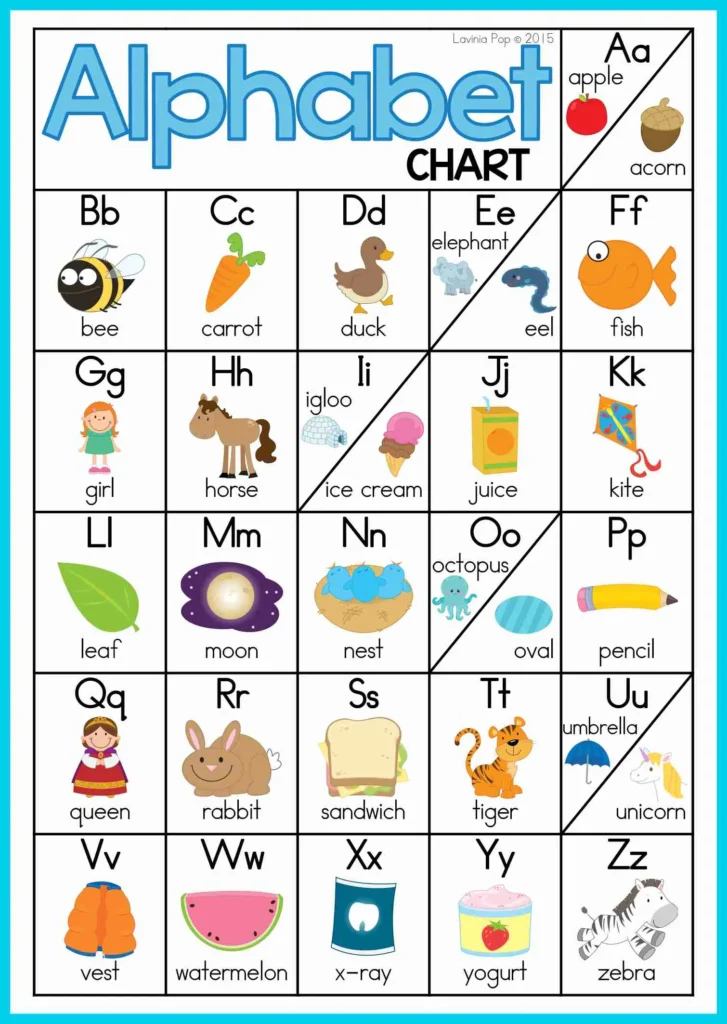
4. Common Picture Words and Long Vowels
This alphabet chart combines labelled picture words with additional long vowel examples.
It is useful for children who are confident with common letter sounds and are beginning to notice the difference between short and long vowel sounds.
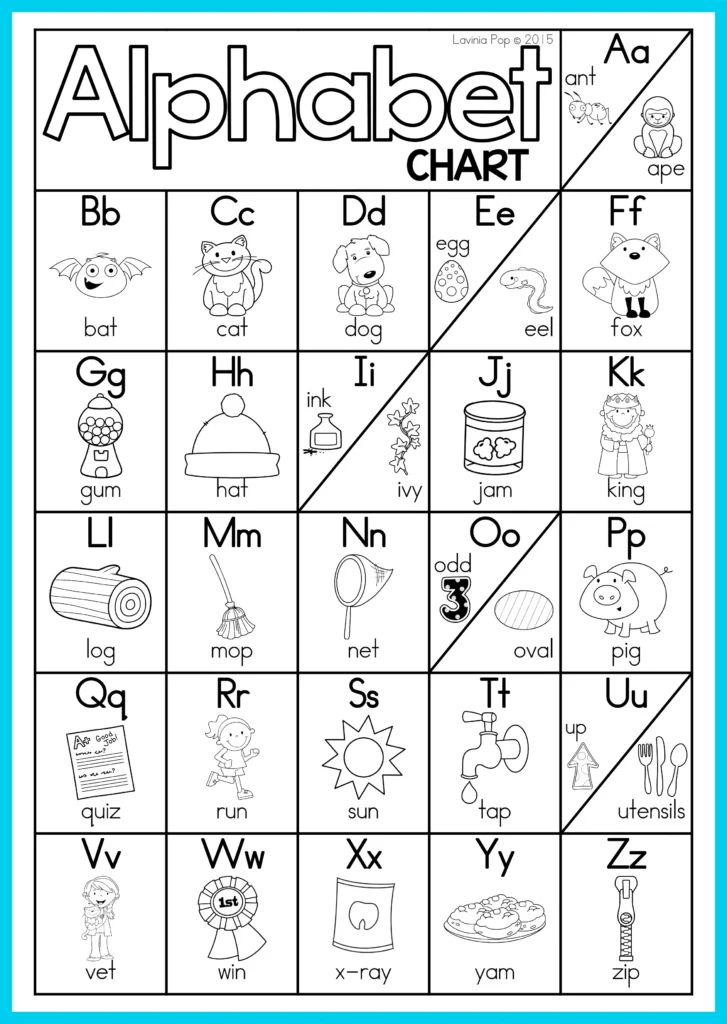
5. Alphabet Poster with Decodable Picture Words
This version uses simple, mostly CVC picture words whenever possible. Words such as bat, cat, dog, egg, fox, map, net, pig, sun, and win allow children to practise applying their developing decoding skills.
Using decodable examples helps children see how the sounds represented by letters work together to form words.
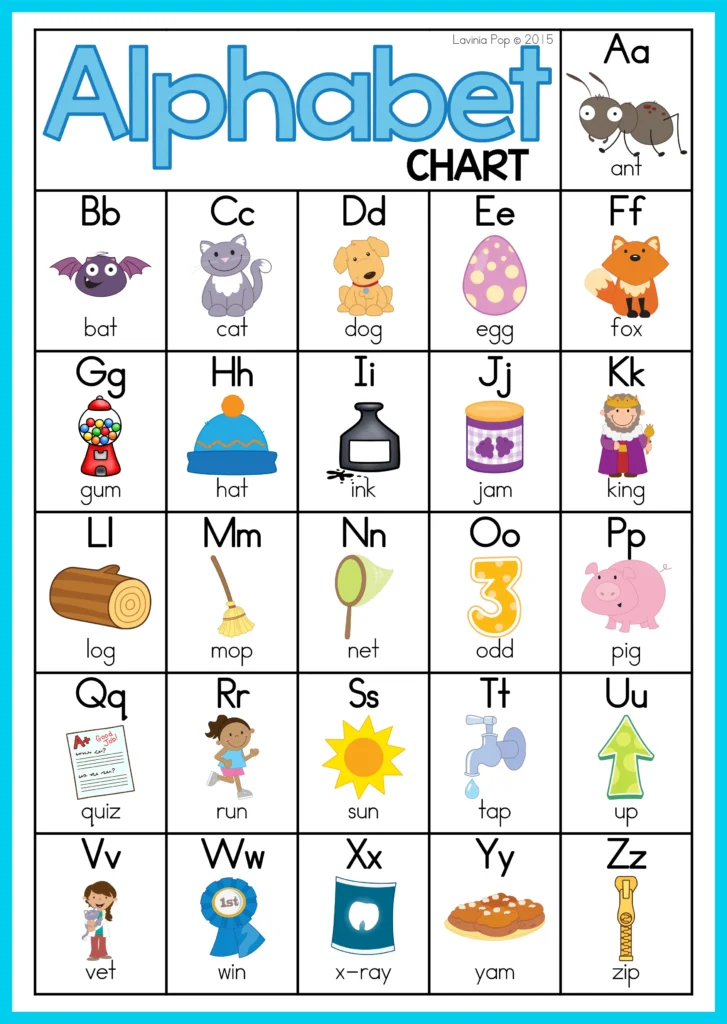
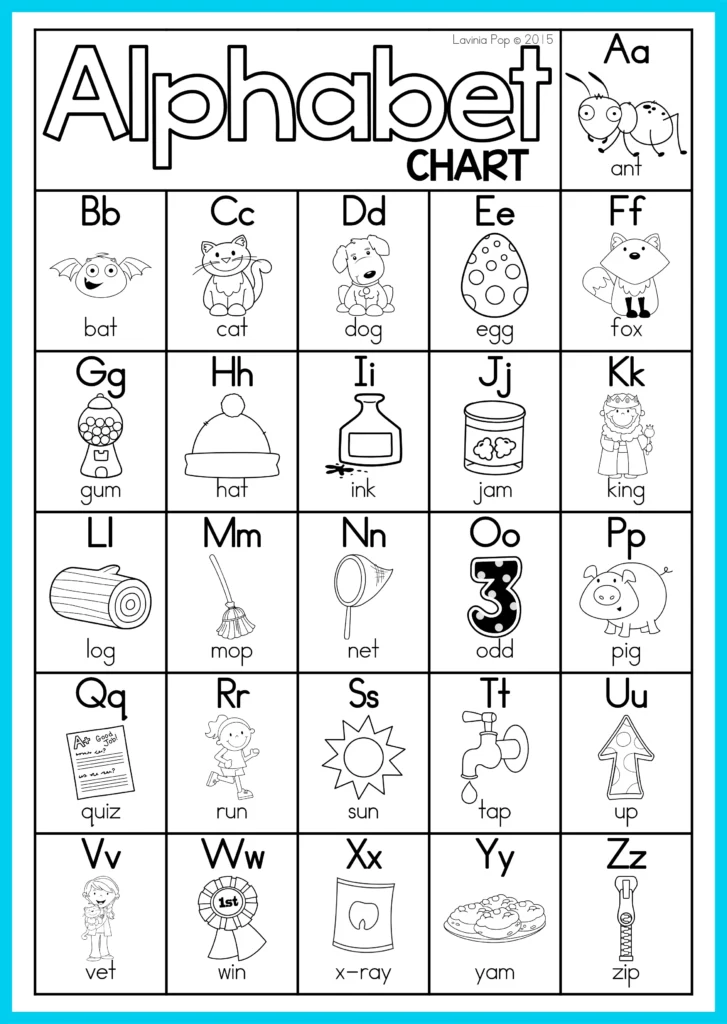
6. Decodable Picture Words and Long Vowels
This chart includes the mostly decodable picture words from the previous version, along with examples of long vowel sounds.
It can be introduced as children progress from reading simple short vowel words to learning common long vowel patterns.
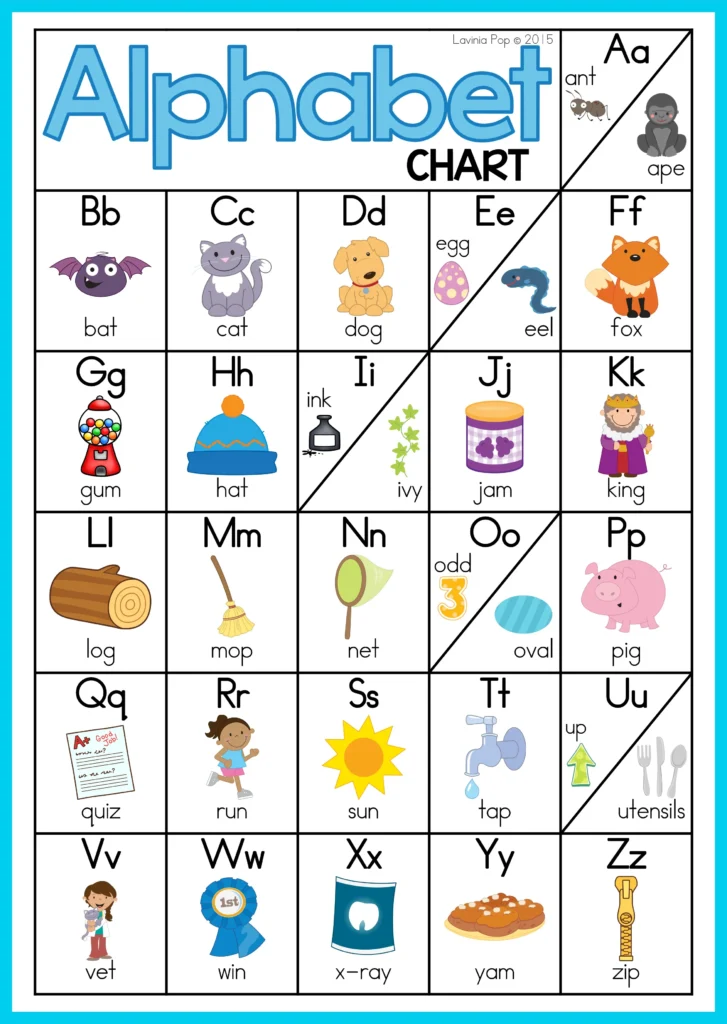
7. Expanded Alphabet and Letter Sounds Posters
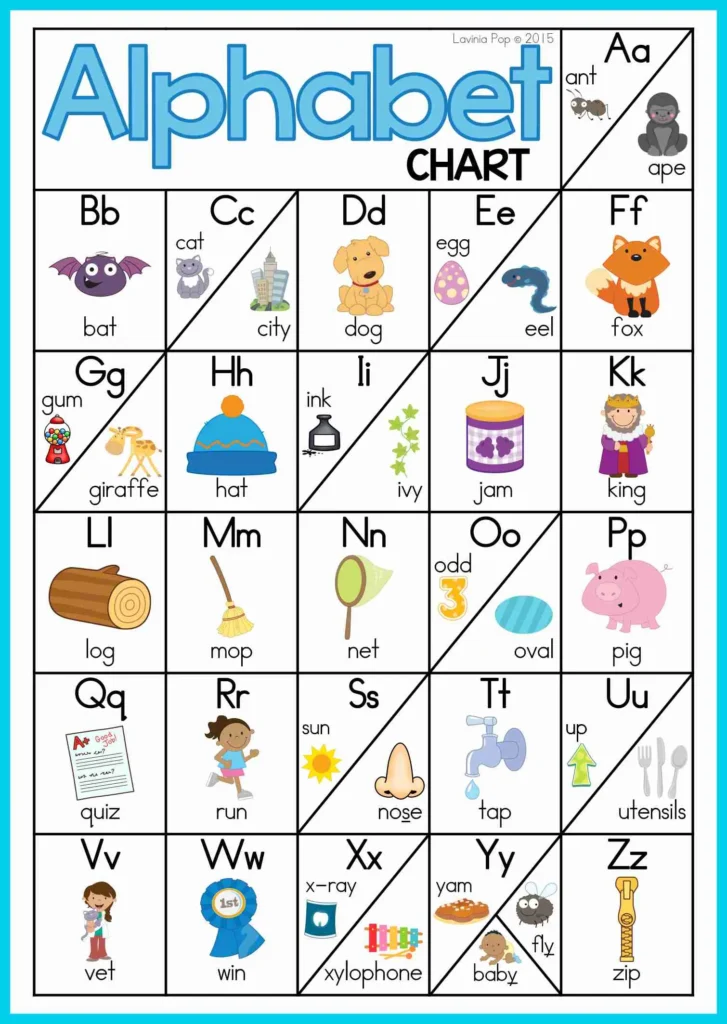
The final chart is the most detailed option. It includes mostly decodable picture words, short and long vowel examples, and additional sounds that can be represented by the letters c, g, s, x, and y.
This chart is suitable for children who already understand the most common letter sounds and are ready to explore some of the other sounds letters can represent.
Why Are There Different Alphabet and Letter Sounds Posters?
There is no single alphabet chart that will be the best choice for every child or every stage of learning.
A simple chart is usually easier for children who are just beginning to recognize letters. Too many pictures and words can be distracting when children are still learning where each letter appears in the alphabet.
As children develop stronger letter sound knowledge, you may wish to introduce one of the labelled or decodable versions. The more detailed charts provide additional information without requiring you to replace the familiar overall layout.
You can also use different charts in different areas of your classroom. A simple version may be displayed near your group teaching area, while a labelled or decodable version can be placed in the writing center.
How to Use the Alphabet and Letter Sounds Posters
Display the Chart in Your Classroom
Print and display an alphabet chart where children can see and reach it easily. Encourage children to point to letters and pictures during phonics lessons, shared reading, and writing activities.
The chart can be displayed on a classroom wall, bulletin board, magnetic board, or near your literacy teaching area.
These Alphabet and Letter Sounds Posters for Kindergarten and First Grade are a must-have resource for any teacher or parent looking to make phonics learning exciting and effective.
Add It to a Writing Center
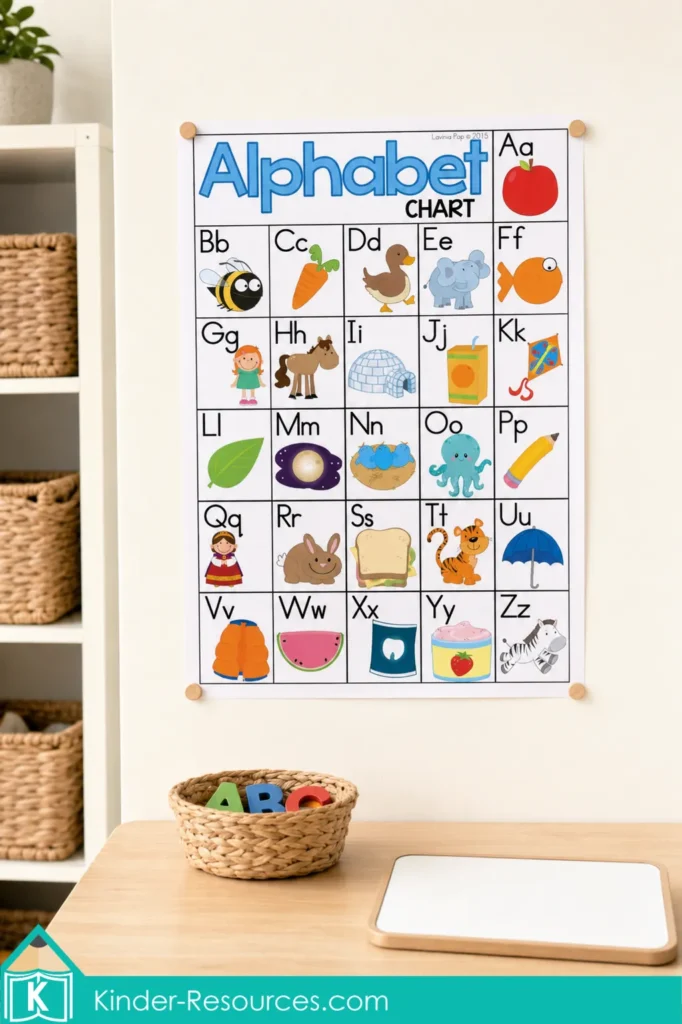
Place a laminated alphabet chart in your writing center. Children can use it to find letters, recall beginning sounds, and locate picture words while writing.
You could also place the chart beside magnetic letters, alphabet stamps, word-building materials, or dry erase boards.
Include It in Student Writing Folders
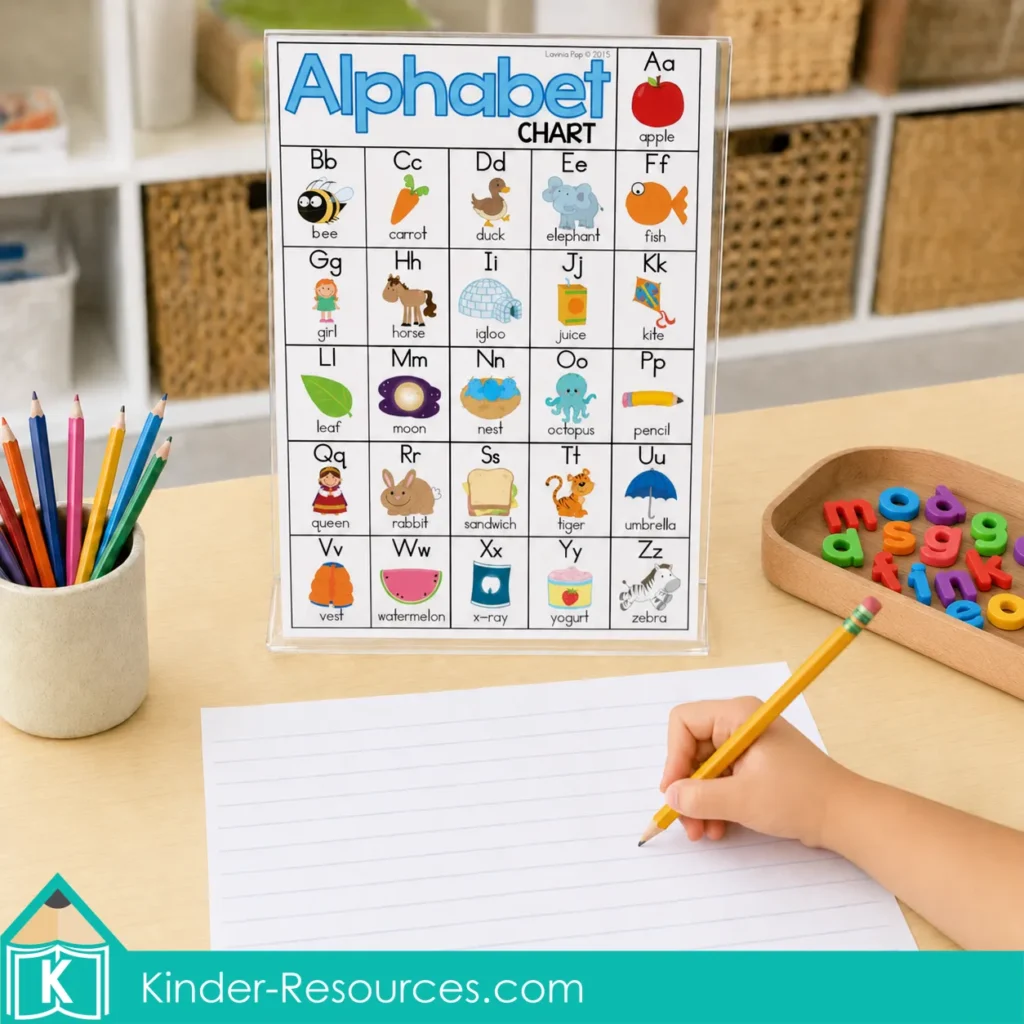
Print the chart at a reduced size and add it to children’s writing folders, phonics folders, or learning binders. This gives every child an alphabet reference they can use independently.
Children can refer to the chart when identifying a beginning sound or remembering how a letter looks.
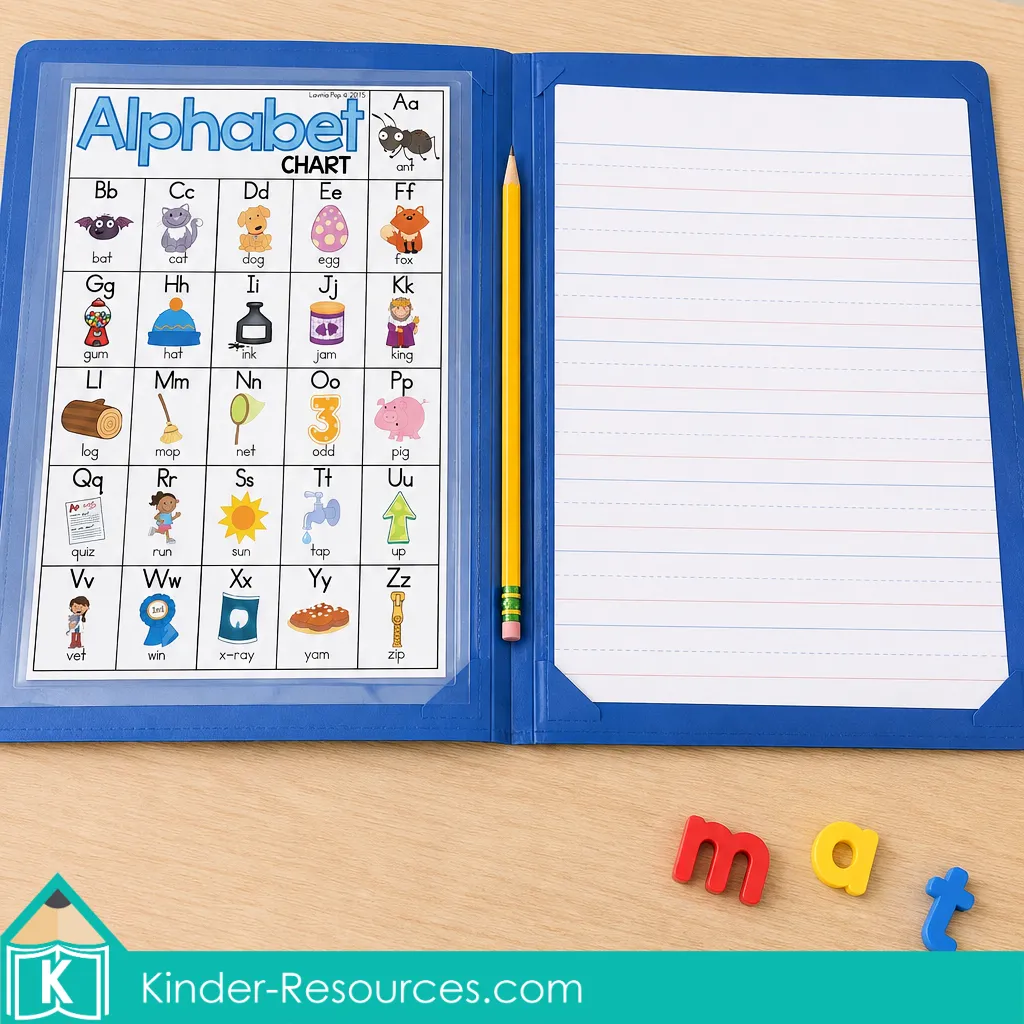
Use It During Small Group Phonics Lessons
Keep a copy of the chart beside you during small group lessons. Ask children to find a letter, say its most common sound, and identify the matching picture.
You can also say a sound and ask children to point to the letter that represents it. As children progress, compare the short and long vowel pictures or discuss the additional sounds shown on the expanded chart.
Use the Black and White Charts as Learning Pages
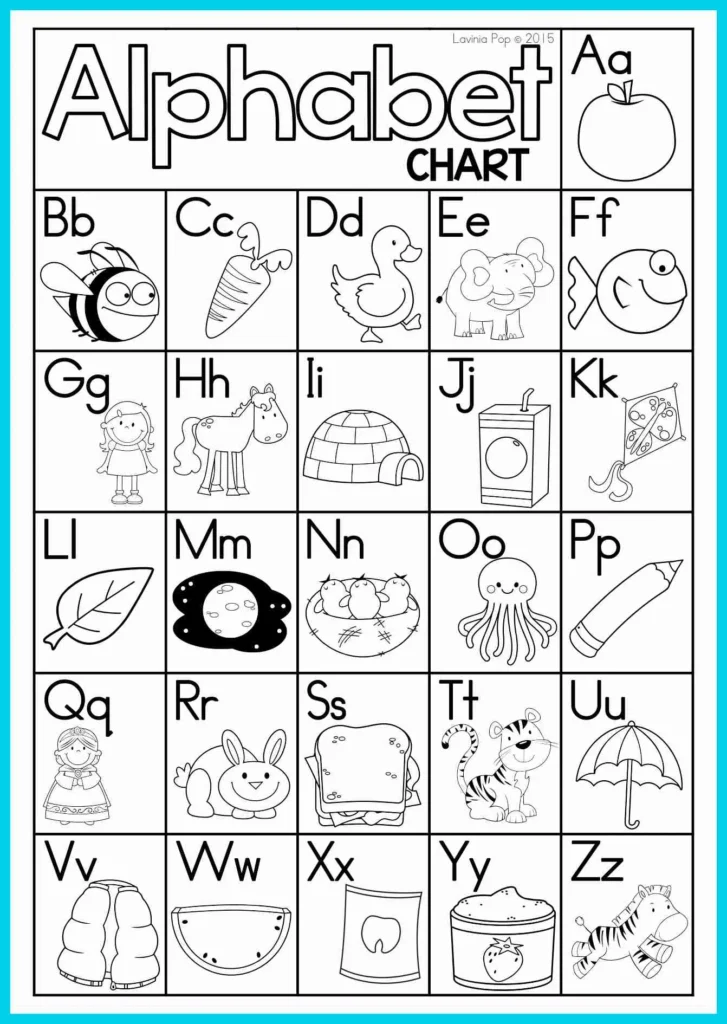
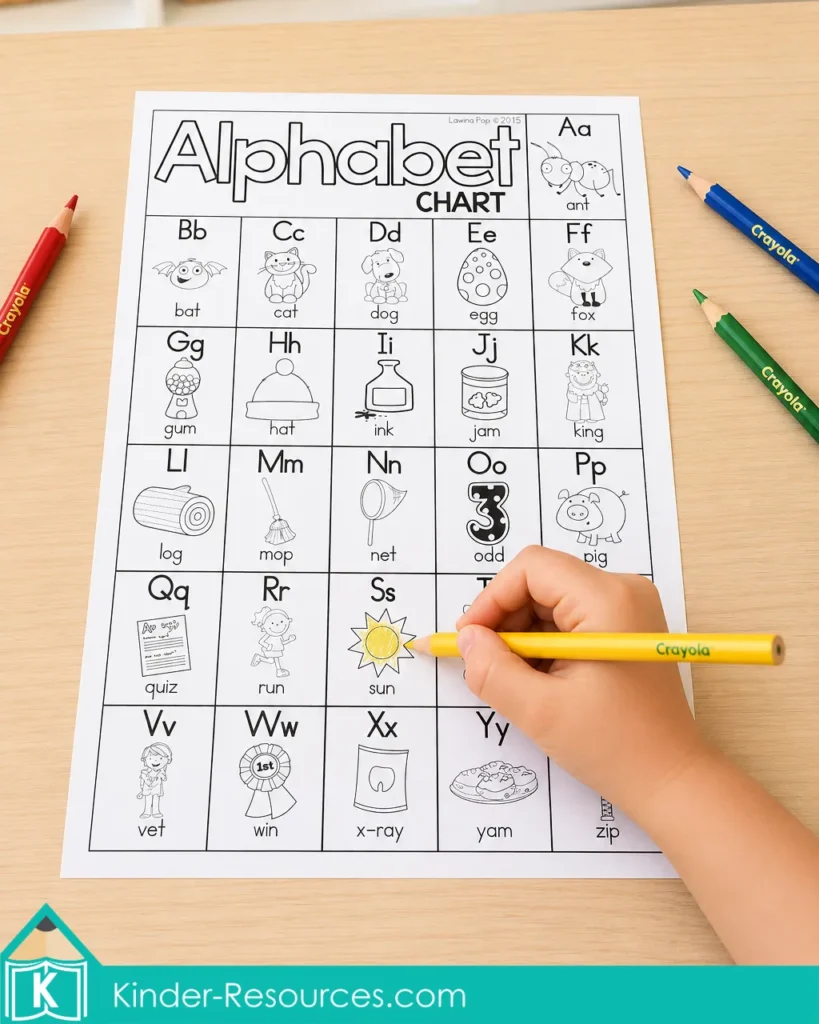
The black and white alphabet charts are useful when children need individual copies. Children can color the pictures as they learn each letter or highlight the letters that have been introduced.
They can also circle vowels, locate the letters in their names, or cover letters with counters during alphabet games.
Support Learning at Home
These free alphabet charts can also be used by parents, homeschoolers, tutors, and intervention teachers. A copy can be placed near a child’s homework area or used during short phonics and writing activities.
Skills Supported by Alphabet and Letter Sounds Charts
Regularly using an alphabet chart can help children:
- Recognize uppercase and lowercase letters
- Learn alphabetical order
- Connect letters with their most common sounds
- Use picture cues to recall sounds
- Identify beginning sounds in words
- Develop early decoding and spelling skills
- Find letters independently during writing
- Notice short and long vowel sounds
- Explore some alternative consonant sounds
The pictures act as memory cues, but the chart is most effective when it is used alongside explicit phonics teaching. Teachers and parents can model each sound clearly and show children how to use their letter sound knowledge when reading and spelling words.
Download the FREE Alphabet and Letter Sounds Posters | Anchor Charts
Click on any of the store links to download your copy!

You may also like…
Happy Teaching!
Dear Ms.Pop I am interested in your letter of the week from 2013.
This is great for my struggling readers to identify their letter sounds.
Thank you for all of your wonderful resources! I have purchased many from the TPT store and my kids love them.
I’m delighted to hear that your kids love them, Sasha! ❤️
Thanks.
I love these. Thank you. My kids needed an anchor chart for the multiple sounds each letter can make.
Thank you!!
You’re welcome! 🙂