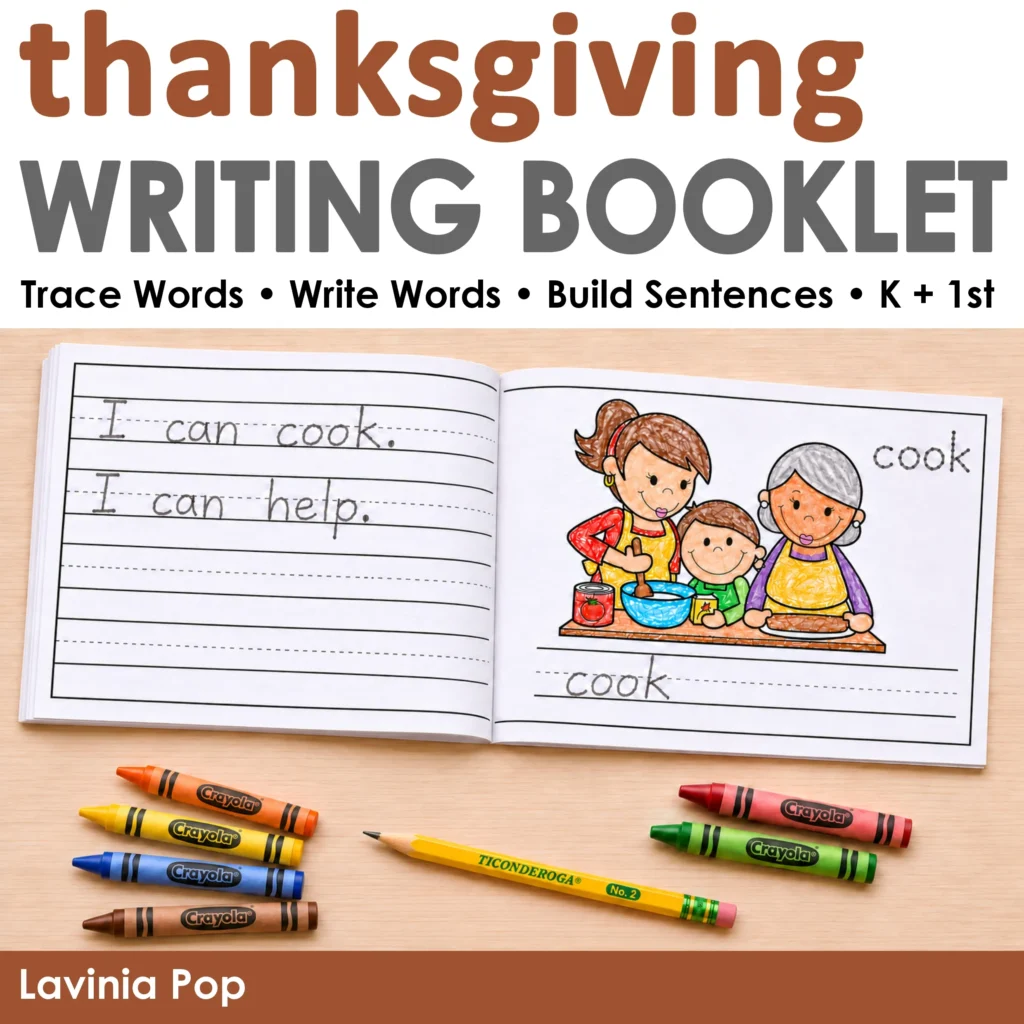
Turkey, pumpkin, family, and apple pie—Thanksgiving brings plenty of words for young children to explore! Those words can also provide a starting point for handwriting practice and simple sentences.
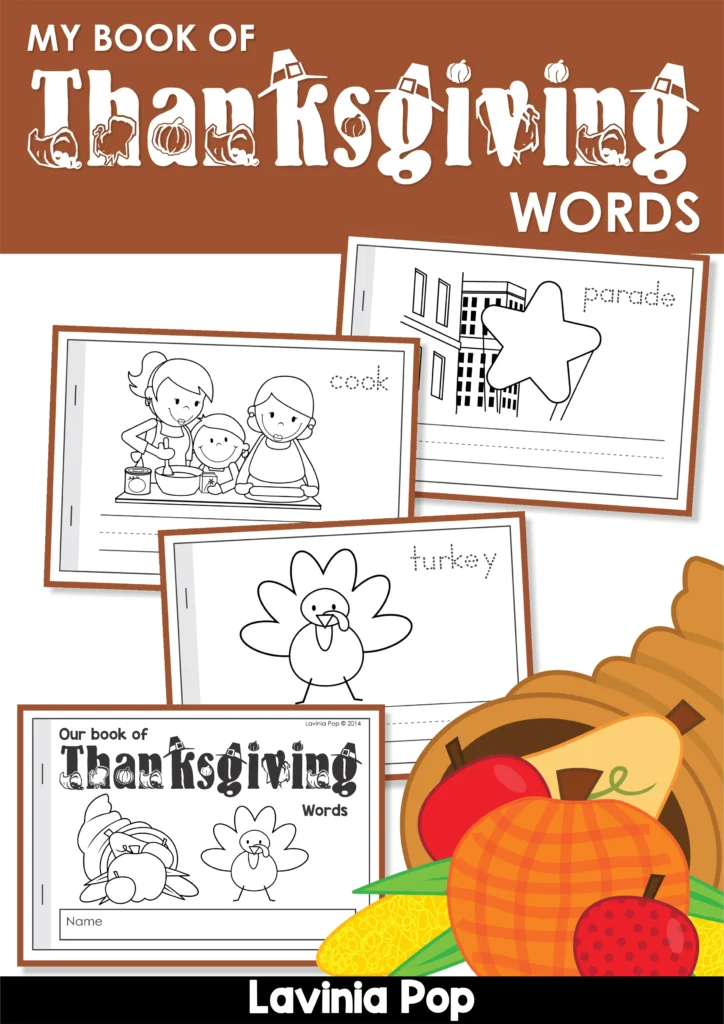
I created this Thanksgiving Vocabulary Booklet to help Kindergarten and first grade children practice seasonal vocabulary through pictures, word tracing, and writing. Children can begin with a few familiar words, then use the additional lined page when they are ready to write sentences of their own.
You can make individual booklets, put together a shared class book, or use selected pages during small-group lessons and writing activities.
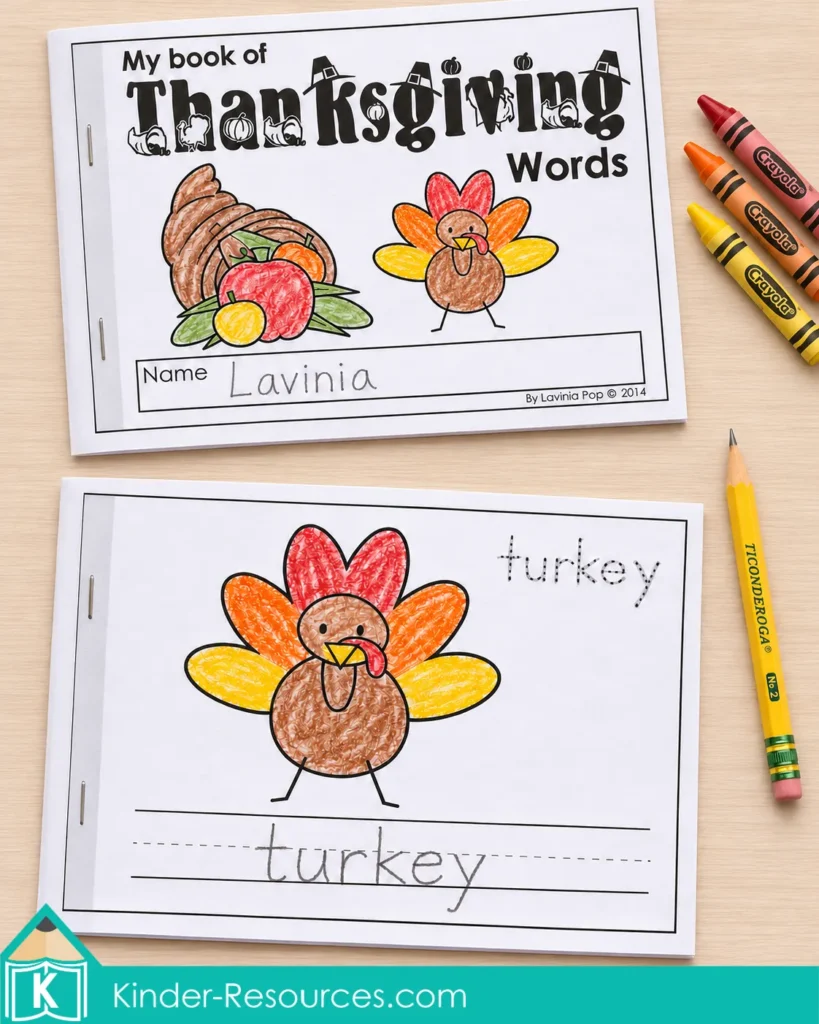
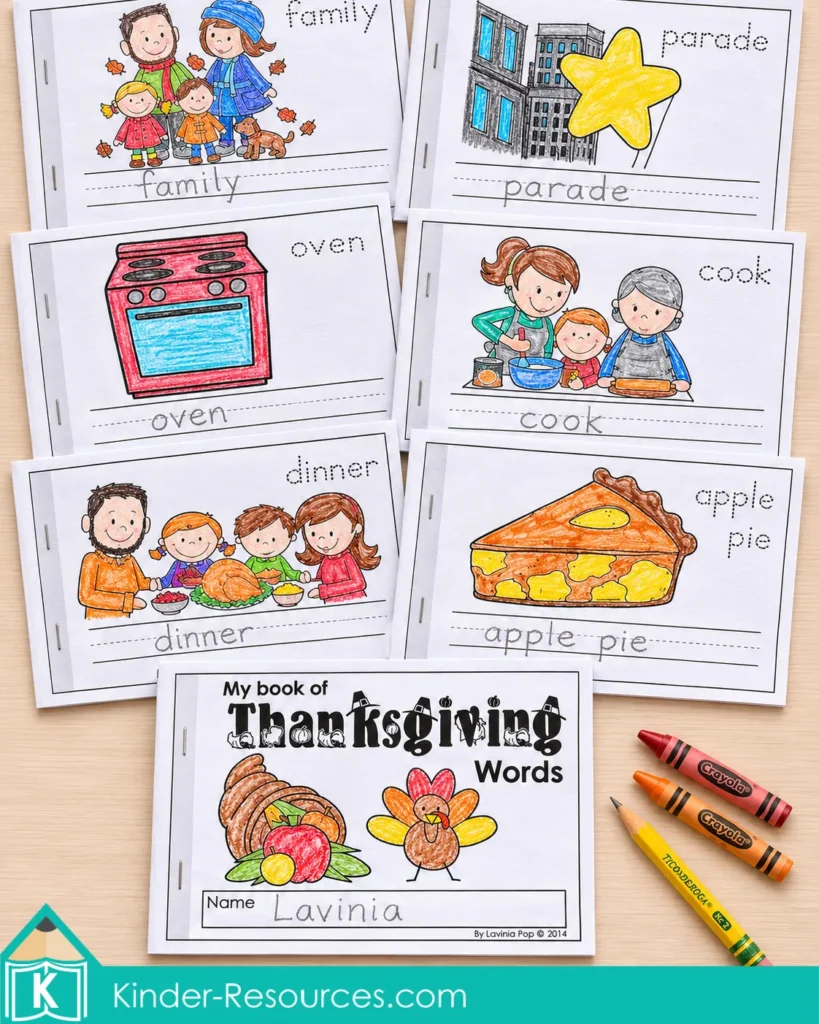
Download Free Thanksgiving Vocabulary Booklet Sample Pages
Would you like to try the activity with your children? Download the free sample pages below to explore the format before choosing the complete booklet.
Talk about the pictures and introduce the words together. Children can then practice tracing, writing, and coloring at a pace that suits them.

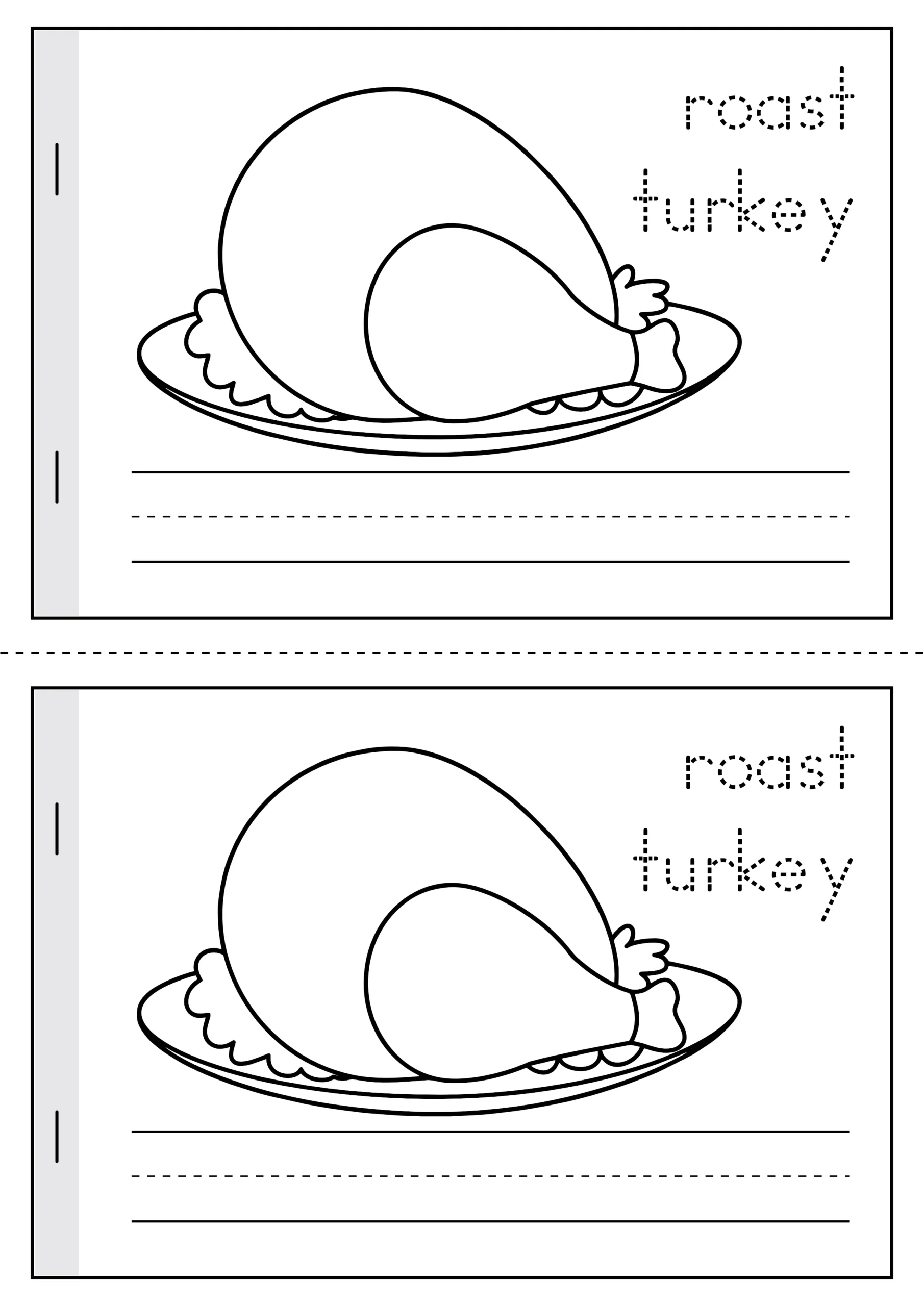
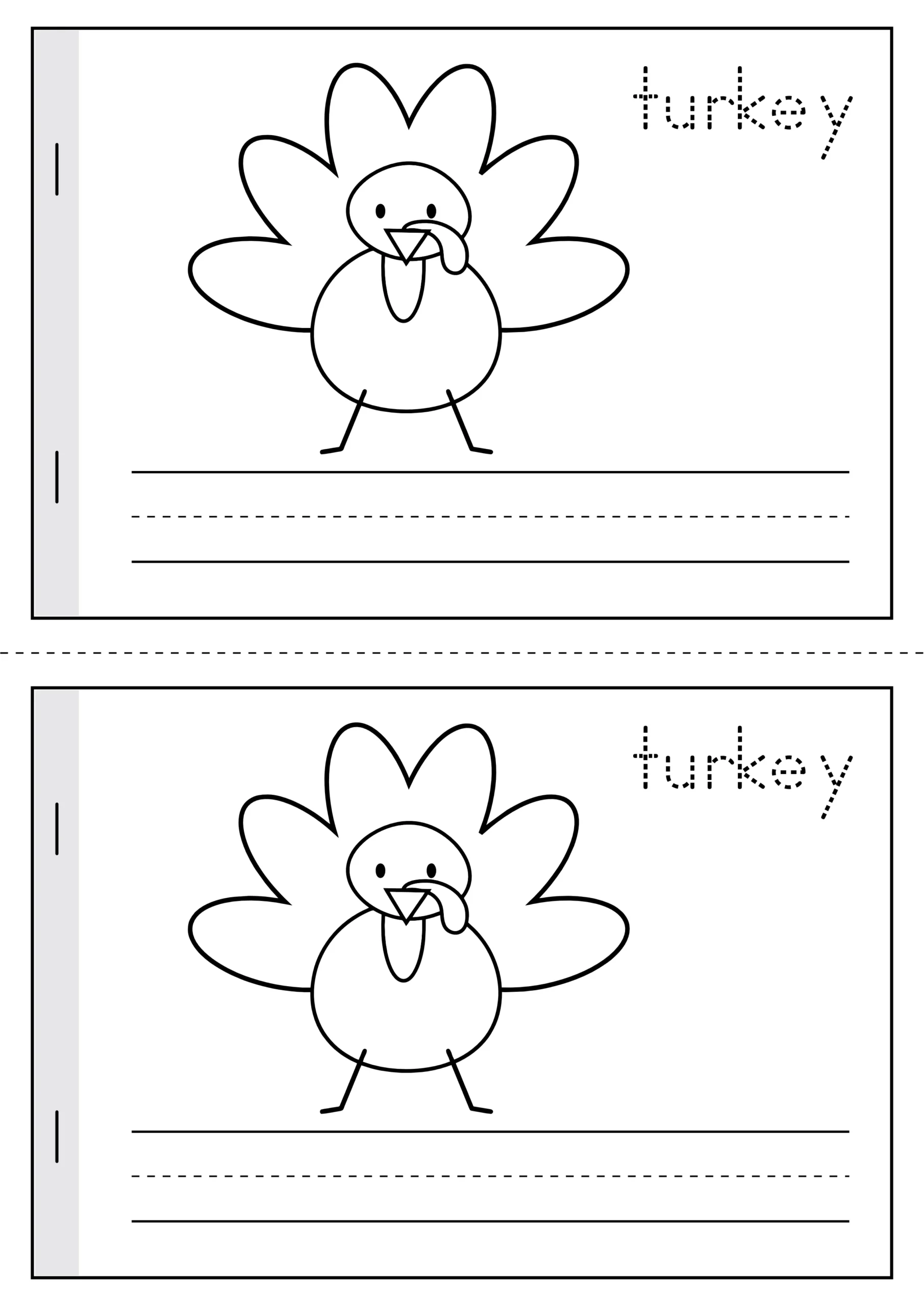
What’s Included in the Thanksgiving Vocabulary Booklet?
The complete resource includes 45 illustrated vocabulary pages, along with individual and class booklet covers and an additional lined writing page.
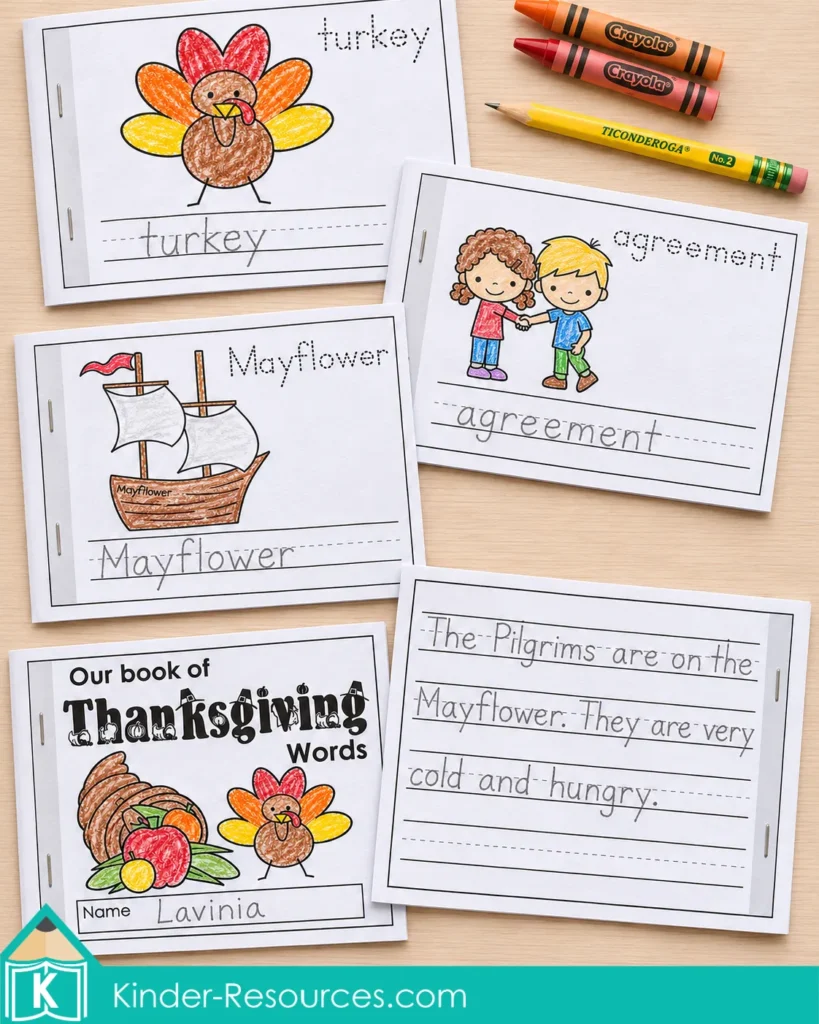
Each vocabulary page includes:
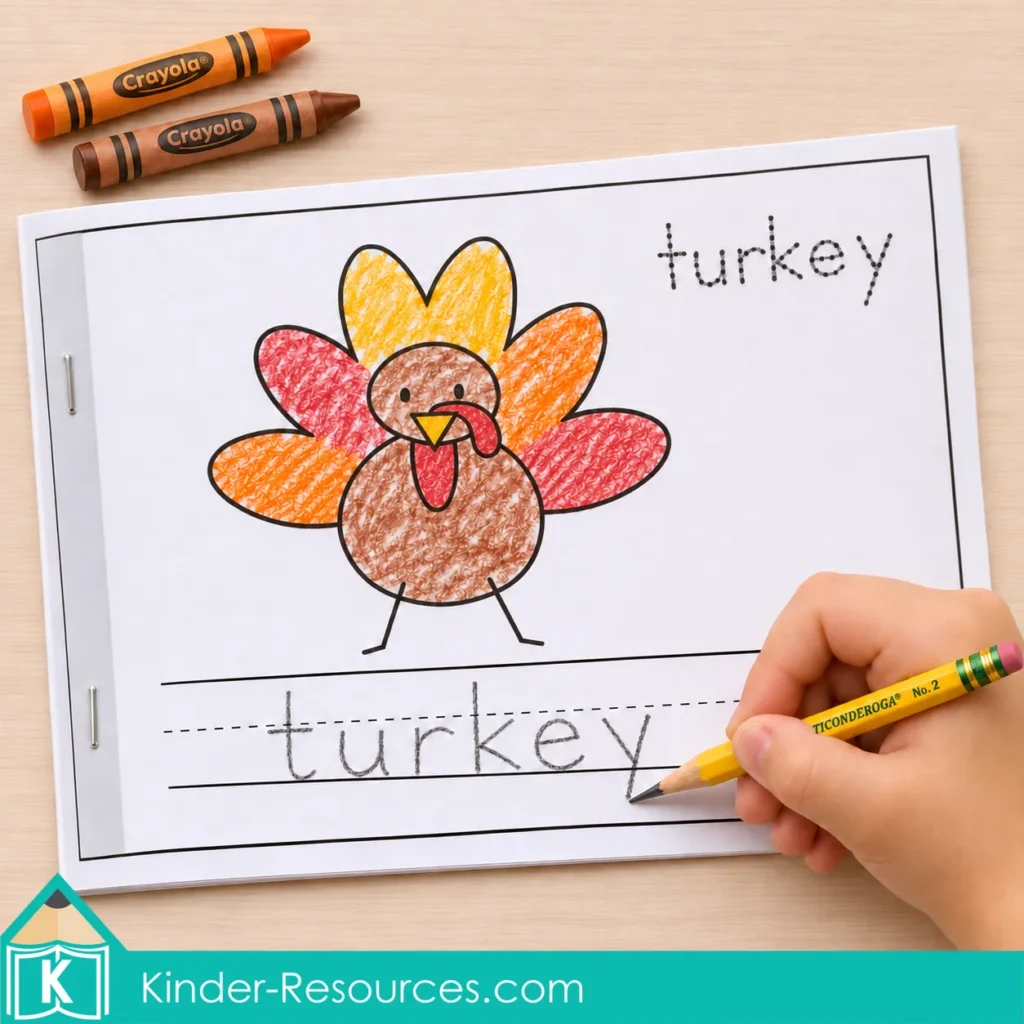
- A black-and-white picture to color.
- A dotted vocabulary word to trace.
- Primary handwriting lines for writing the word.
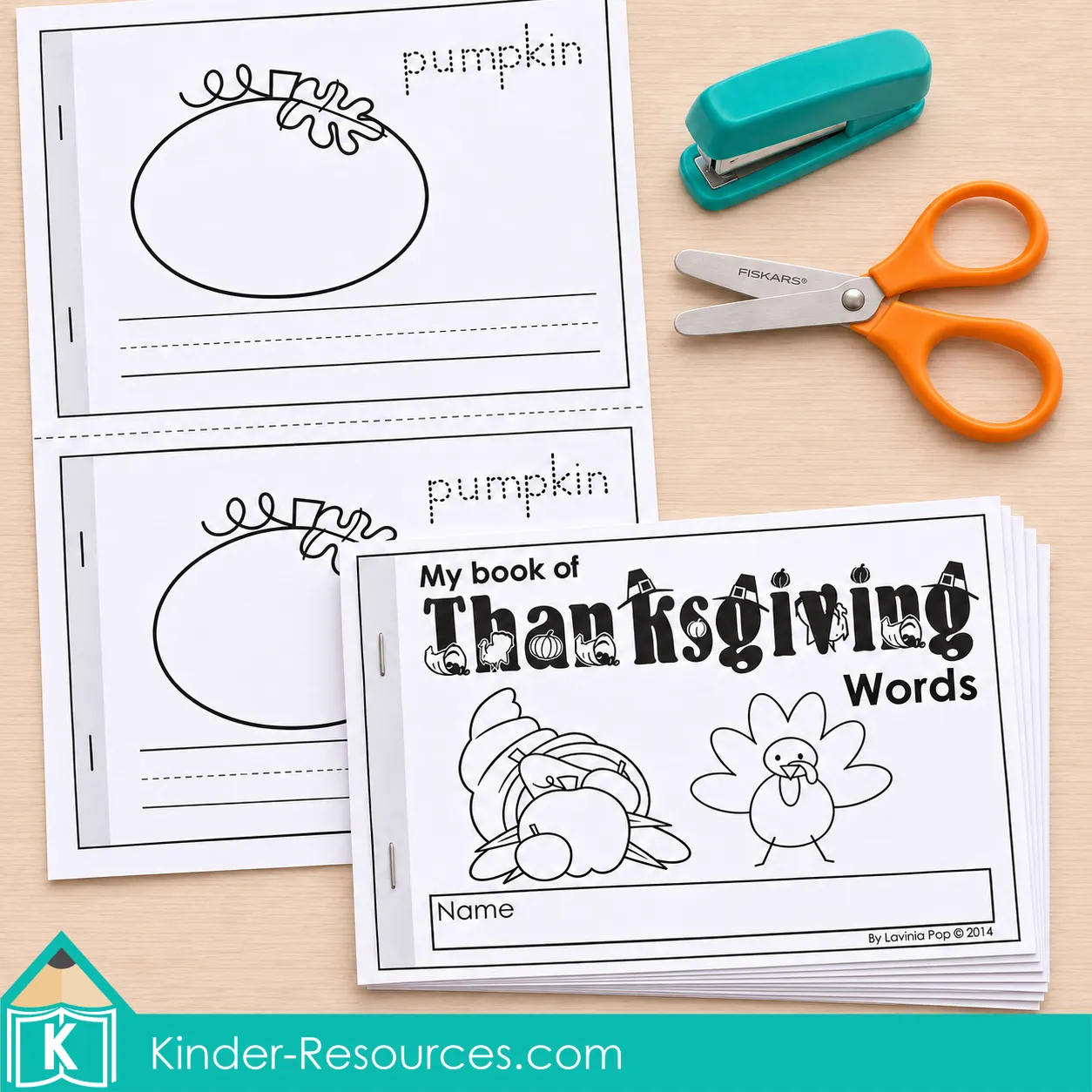
The vocabulary pages are arranged two per sheet to create small booklets. You can select a handful of words for a short activity or add more pages as you introduce new vocabulary.
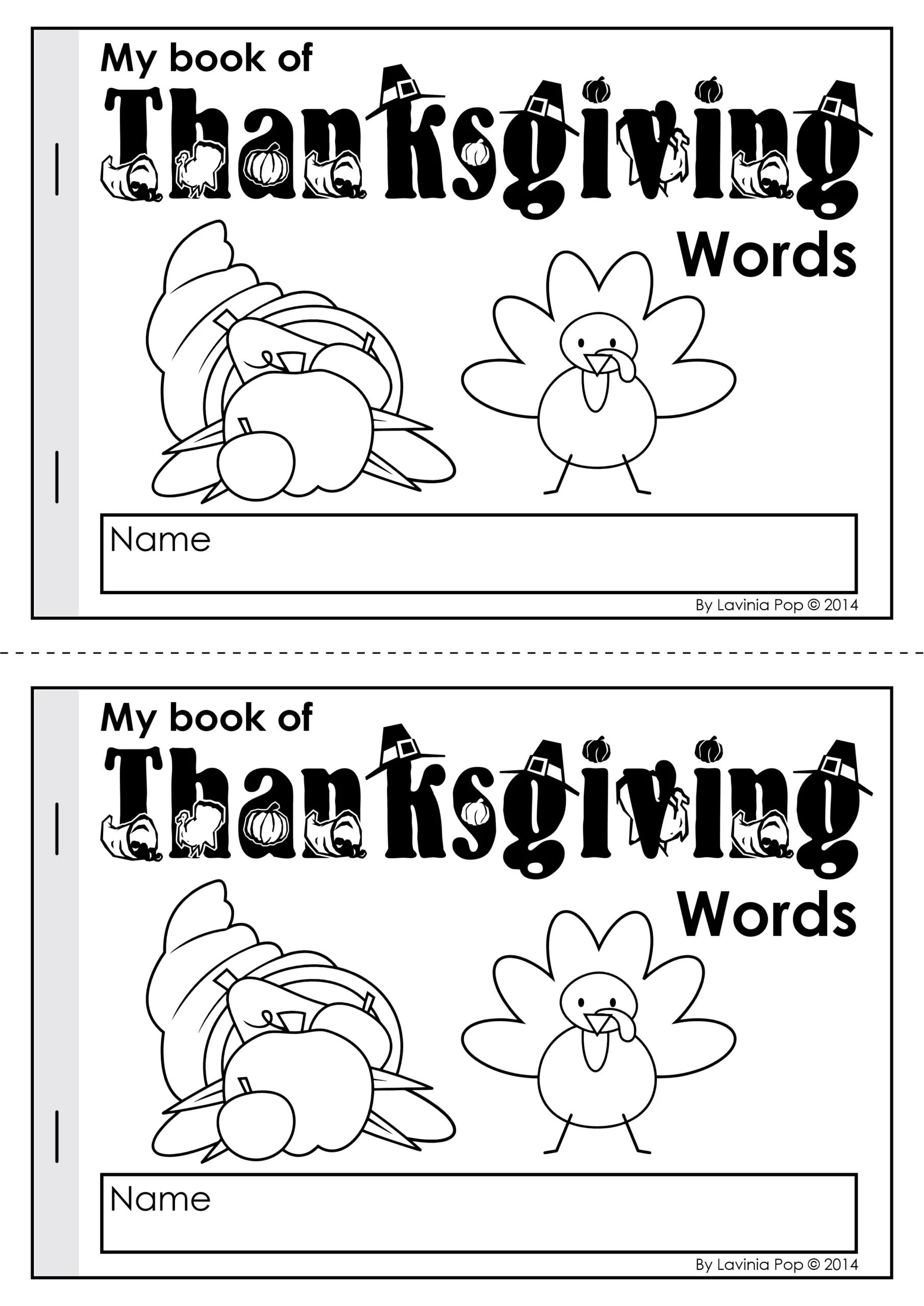
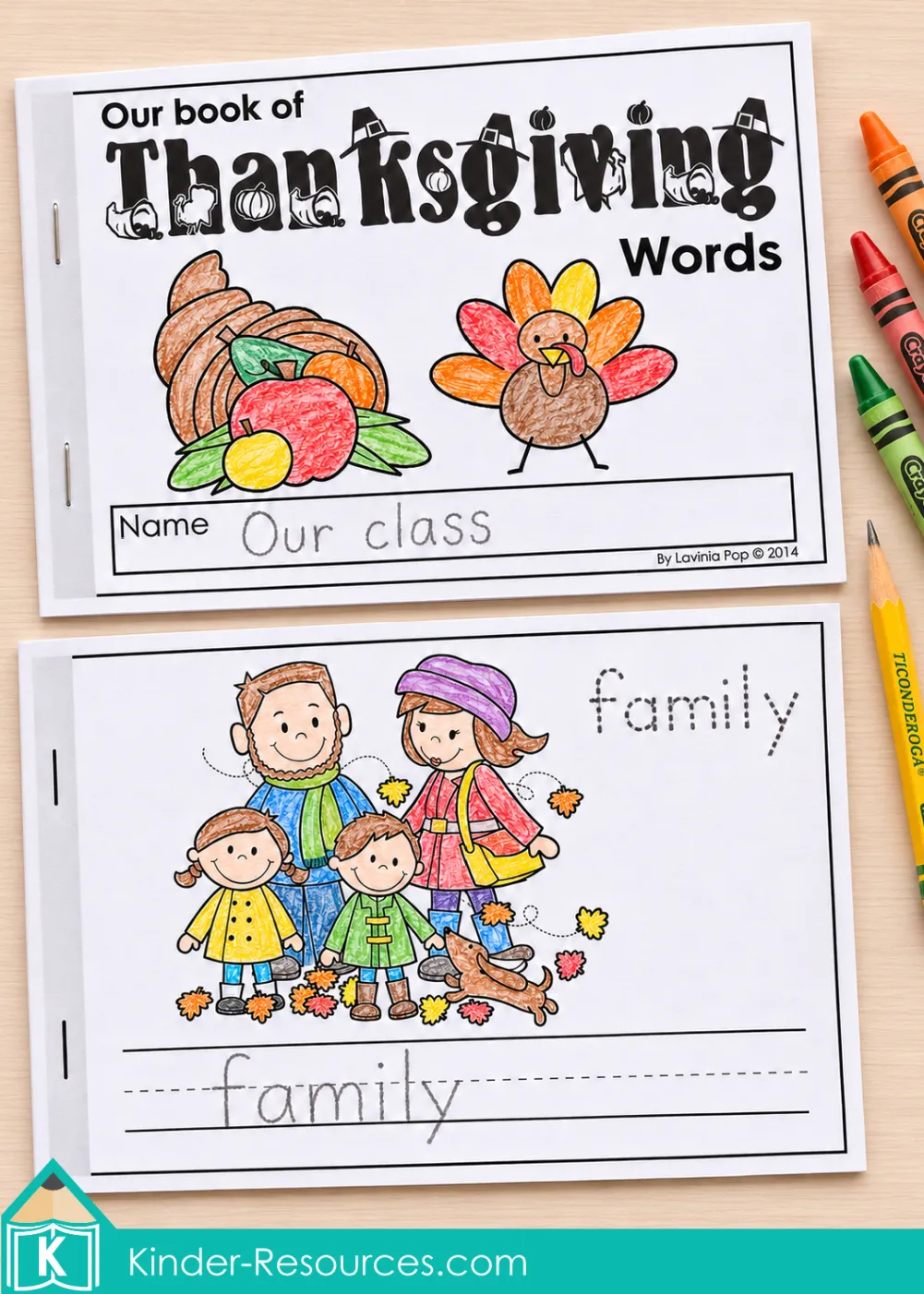
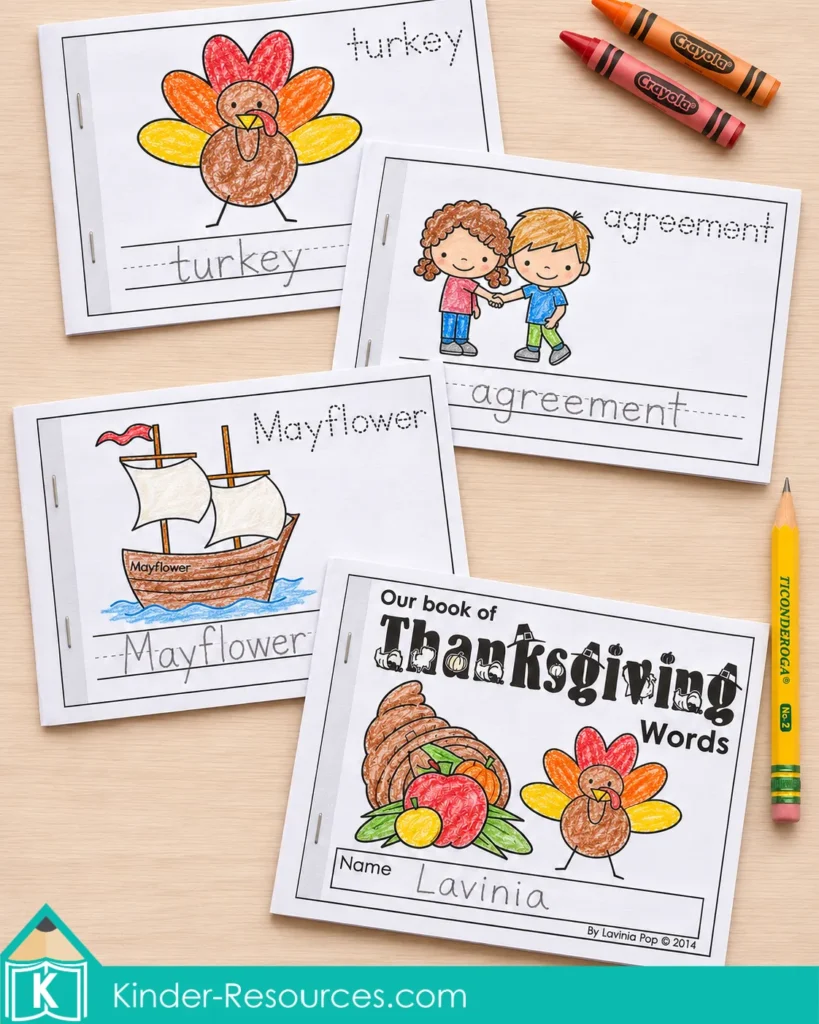
The “My book of Thanksgiving Words” and “Our book of Thanksgiving Words” covers give you options for individual and shared books.
Preparing Individual and Class Booklets
Print the cover and vocabulary pages you would like to use, cut the sheets in half, and arrange the pages in your chosen order. Staple the booklet along the shaded side margin.
For an individual booklet, children can write their names on the cover and complete their own collection of words. There is no need to include every vocabulary page at once. A small selection lets you focus on the words you are discussing that day.
For a class book, invite children to contribute different completed pages. Put them together behind the “Our book” cover, then revisit the collection during vocabulary discussions or shared reading with adult support.
Keep pencils and crayons nearby so children can move between writing and coloring.
Talk About the Word, Then Trace and Write
Begin by looking at the picture together. Name the object or action, explain any unfamiliar vocabulary, and invite children to talk about it.
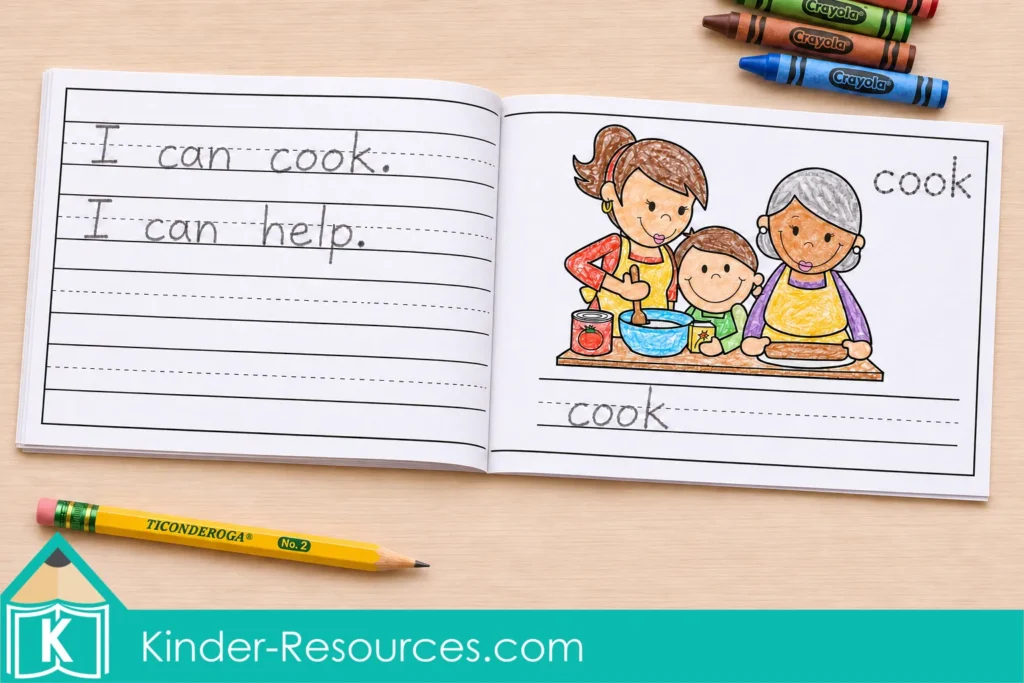
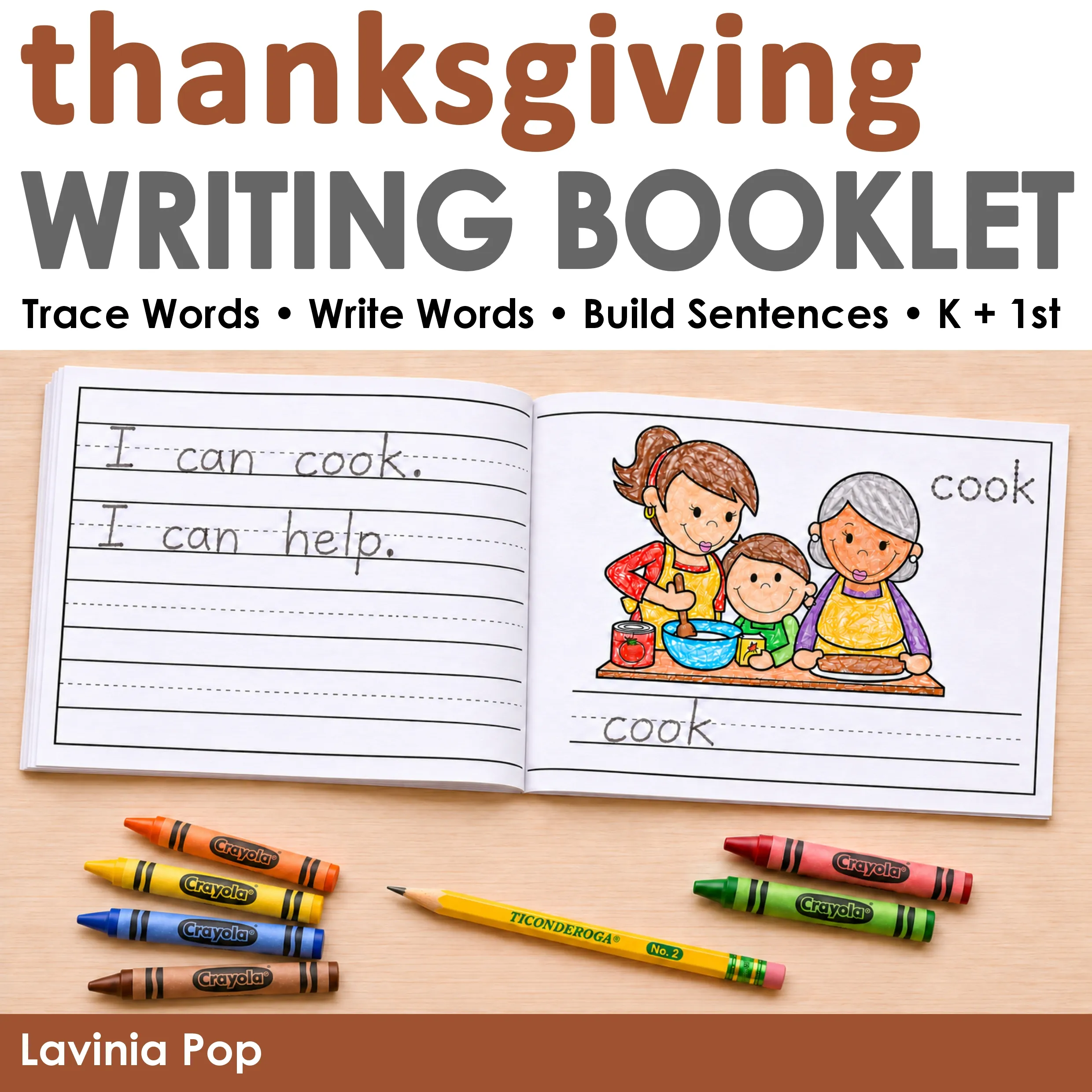
For example, the cook page can start a conversation about preparing food. You might ask, “What are the people making?” or “What could you help stir?” The family page can lead to children naming people in their own families.
Point to the printed word as you say it. Draw attention to letters and sound–spelling patterns children already know, and provide support with unfamiliar parts of the word.
Children can then trace the dotted word and write it on the handwriting lines below. Keep the printed word available as a reference while they practice forming the letters.
After writing, children can color the picture and revisit the word with you.
Tip: Introduce a few words together before inviting children to work more independently. Familiarity with the vocabulary gives them more attention to devote to the writing task.
Moving from Thanksgiving Words to Sentences
I included an additional lined page so children can use their vocabulary words in sentences.
Start with talking. Invite a child to choose a word, say a sentence aloud, and repeat it before beginning to write. This gives them a chance to organize their idea before concentrating on letter formation and spelling.
The cook page provides a simple example:
I can cook.
I can help.
These short sentences connect to the picture and give beginning writers a manageable amount of writing. You can model one sentence together, then invite children to suggest another.
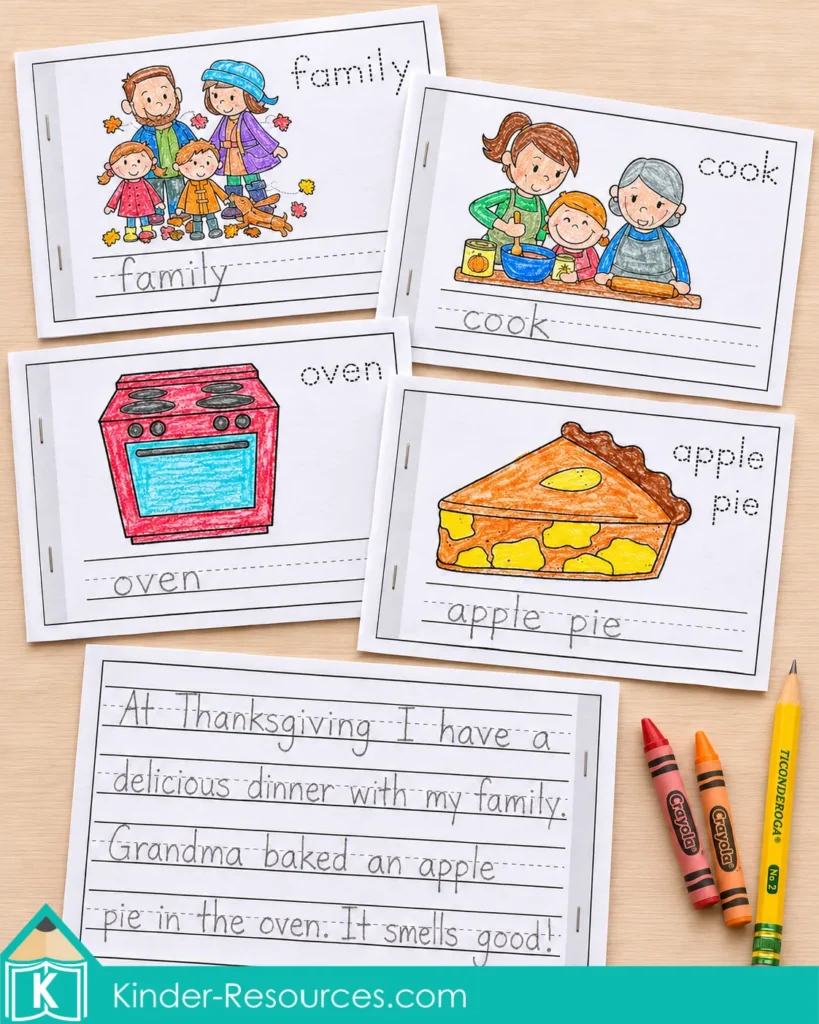
Children who are ready for more can combine several vocabulary words in a longer piece of writing. Words such as family, dinner, apple pie, and oven work well together.
For example:
“At Thanksgiving I have a delicious dinner with my family. Grandma baked an apple pie in the oven. It smells good!”
Use this as an example to discuss, then encourage children to share their own ideas. Some may write one sentence about a favorite food, while others may write several connected sentences about helping prepare a meal.
The lined page is blank, so you can adjust the writing task to your children’s needs. The completed sentences in the photos are examples of how the pages can be used.
Tip: After writing, invite children to read their sentence back to you. Look together for a capital letter, spaces between words, and ending punctuation.
Choose Vocabulary to Match Your Lessons
You can organize the booklet around a small group of related words.
For a family-and-food activity, choose pages such as family, cook, oven, dinner, and apple pie. Children can discuss how the words connect, then choose one or two to use in their writing.
Other pages, including Mayflower and agreement, can accompany relevant lessons or read-alouds. Introduce the meaning and background of these words before asking children to write about them.
For agreement, you might begin with a familiar example of two children deciding on a game they both want to play. This gives children a concrete situation to discuss before exploring the word in another context.
Choose the pages that support what your children are learning, and keep the amount of writing appropriate for each learner.
Get the Complete Thanksgiving Vocabulary Booklet
If you would like more vocabulary choices for your November writing activities, the complete Thanksgiving Vocabulary Booklet includes all 45 illustrated word pages, both cover options, and the additional lined writing page.
Use it for guided vocabulary practice, handwriting activities, individual booklets, or a shared class writing project. You can return to the same familiar format while introducing different words and gradually extending the writing.

Happy Teaching! 😊
You Might Also Like