
The Fire Safety Kindergarten Worksheets and Activities give you a practical way to connect safety conversations with reading, math, and fine motor practice. Children can talk about classroom fire drills, sequence Stop, Drop, and Roll, label firefighter gear, and make a paper firefighter hat.
I’ve refreshed the packet with new safety illustrations, including boy and girl Stop, Drop, and Roll pictures. In this post, I’ll walk you through some of the activities and share simple ways to use them during Fire Prevention Week, a community helpers theme, or your classroom fire safety lessons.
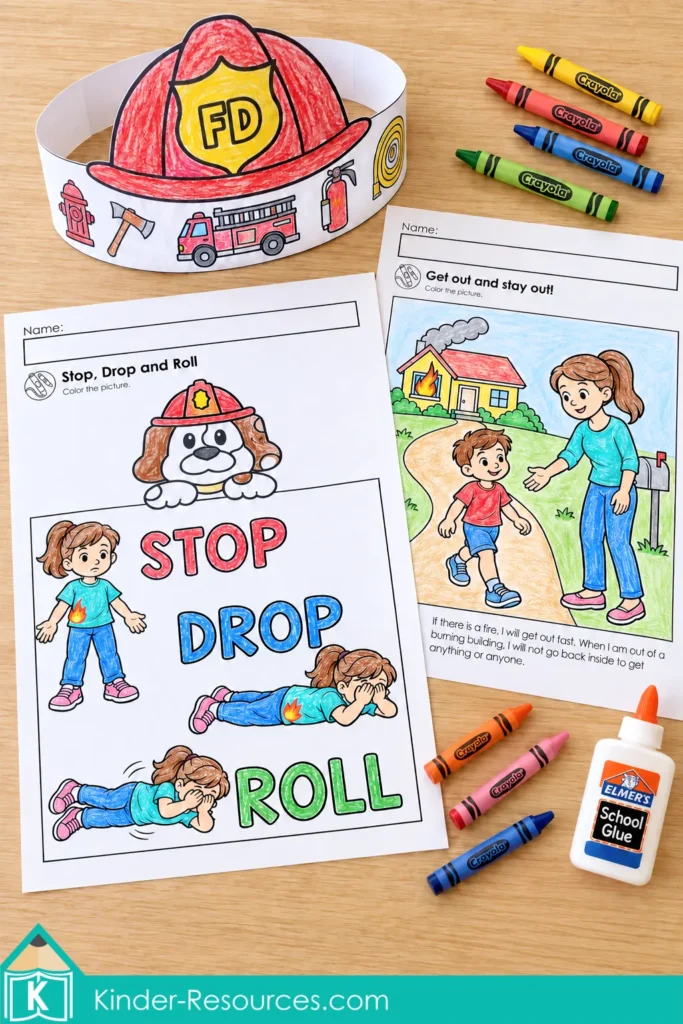
Free Fire Safety Kindergarten Worksheets and Activities
To give you a feel for what’s included, I’ve put together a set of free fire safety sample pages you can download and try with your students. These pages will help you see how the activities work in action.

Start with a Fire Safety Conversation using the Fire Safety Kindergarten Worksheets and Activities
Before handing out a worksheet, introduce one safety idea through a short discussion. Look at the picture together, explain the message, and give children time to ask questions. Keep your language calm and connect the conversation to the procedures children practice at your school.
The safety posters and coloring pages give you pictures to return to throughout the unit. You might introduce a poster during morning meeting, revisit it before a drill, and use the matching activity afterward to talk about what children remember.
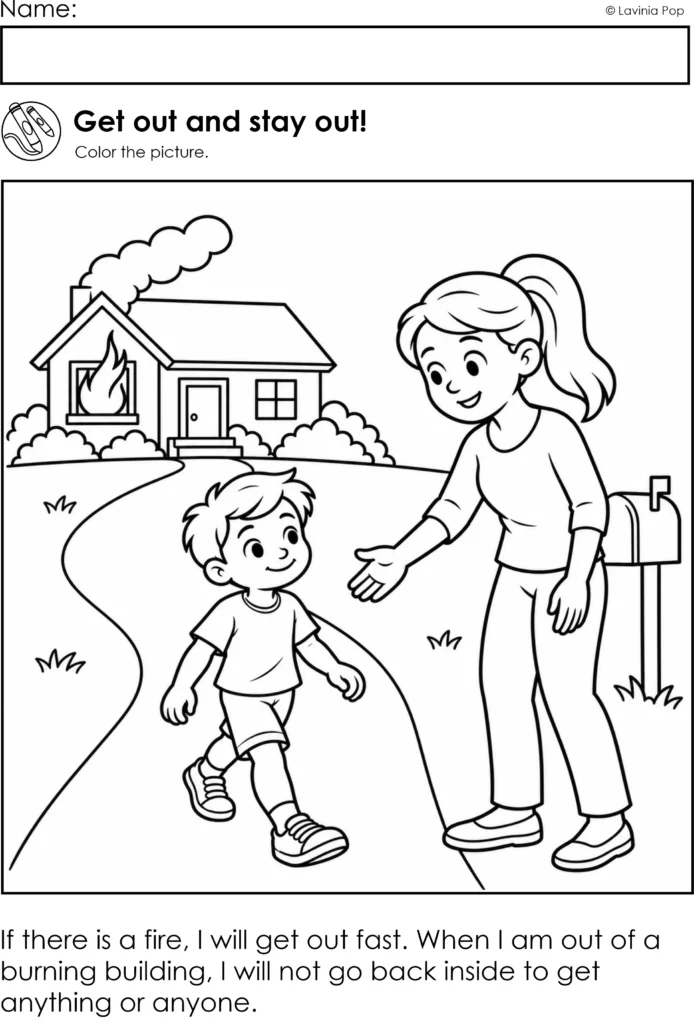
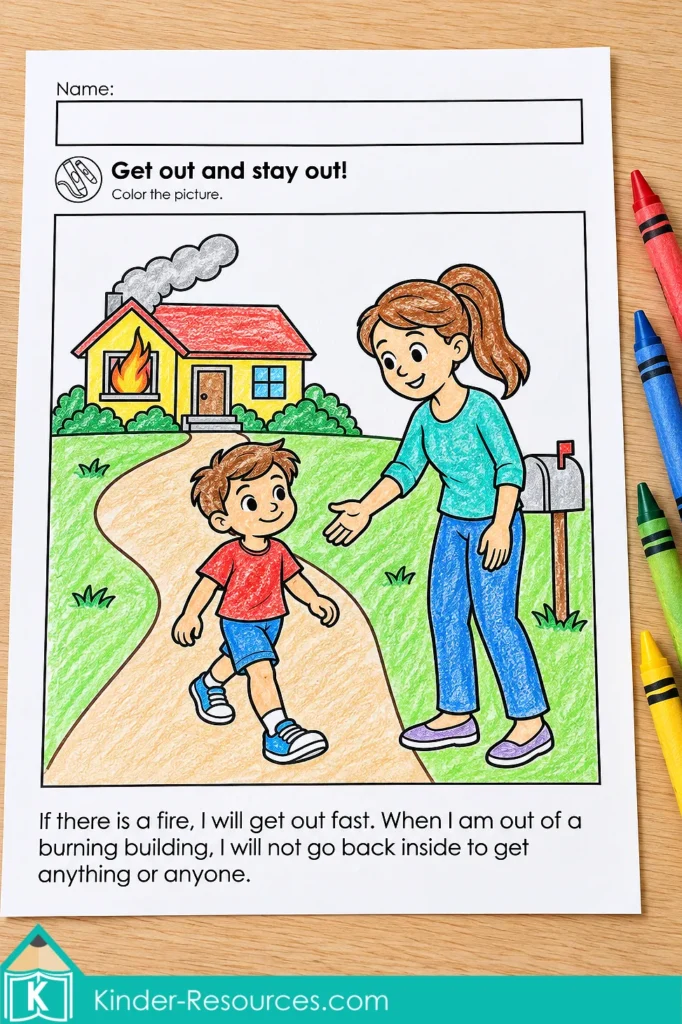
Get Out and Stay Out
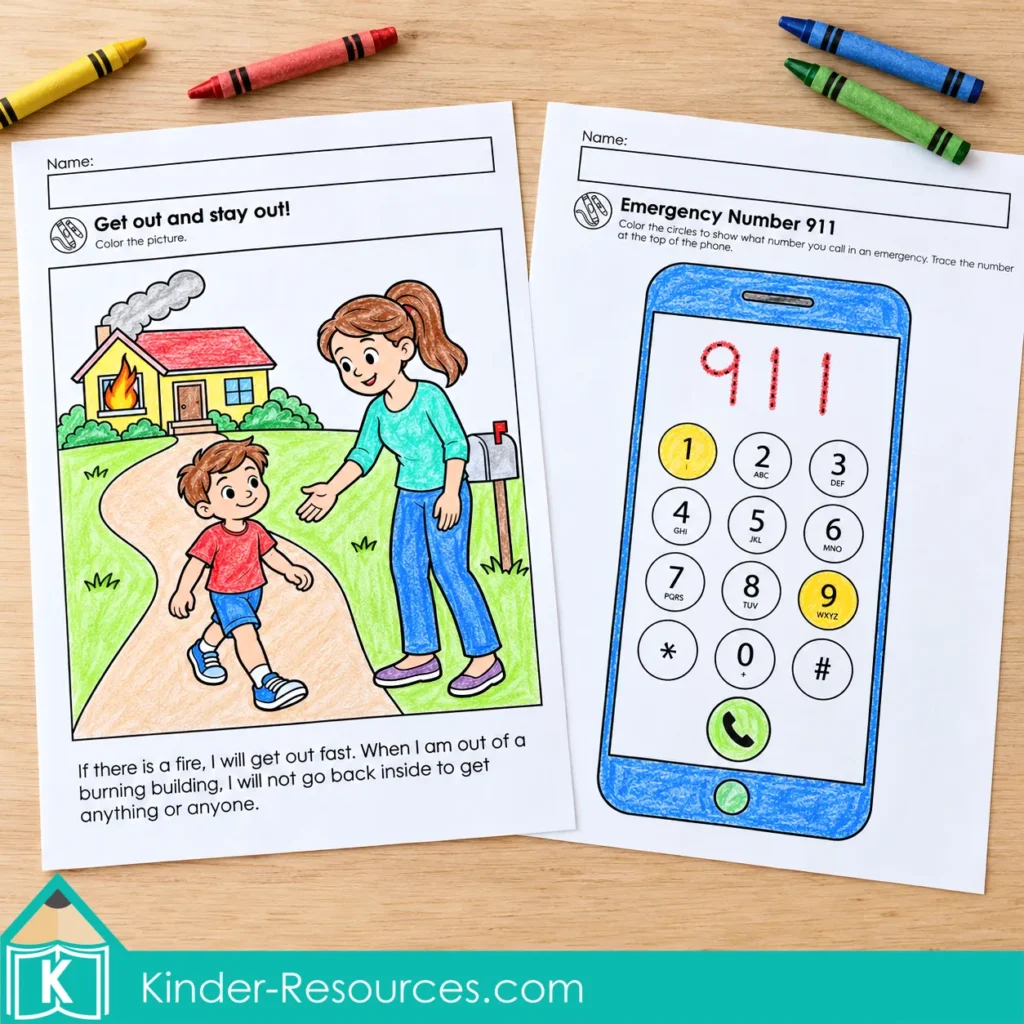
The coloring page shows a child leaving a house and walking toward an adult outside. Read the message aloud and invite children to describe what they notice. Reinforce that once they have escaped a fire, they stay outside and do not return for toys, pets, or other belongings.
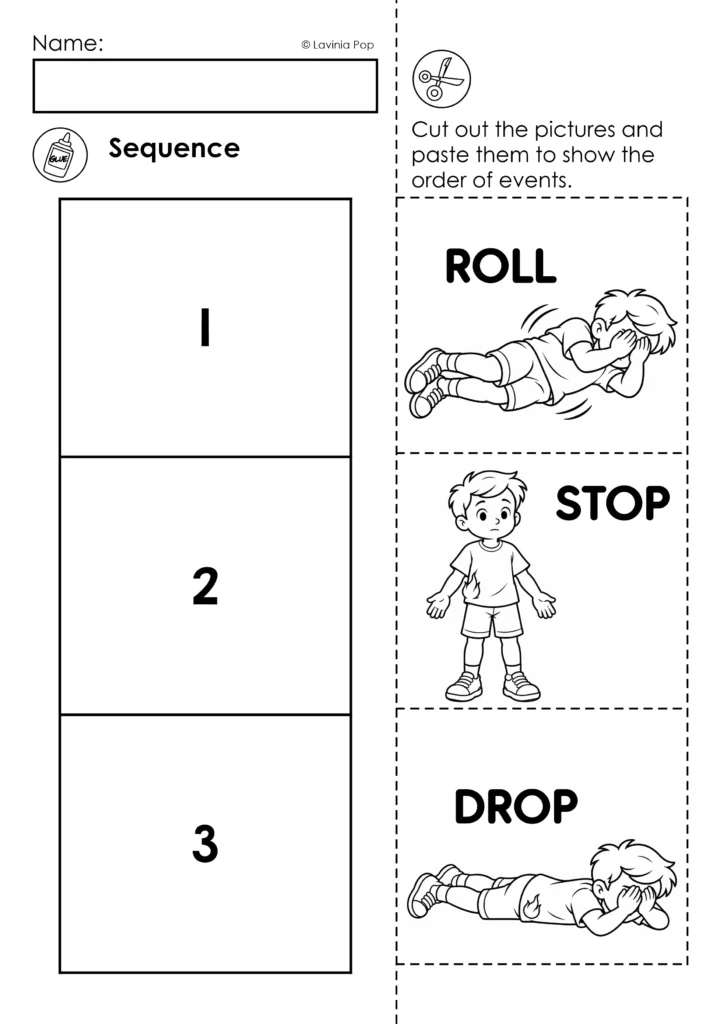
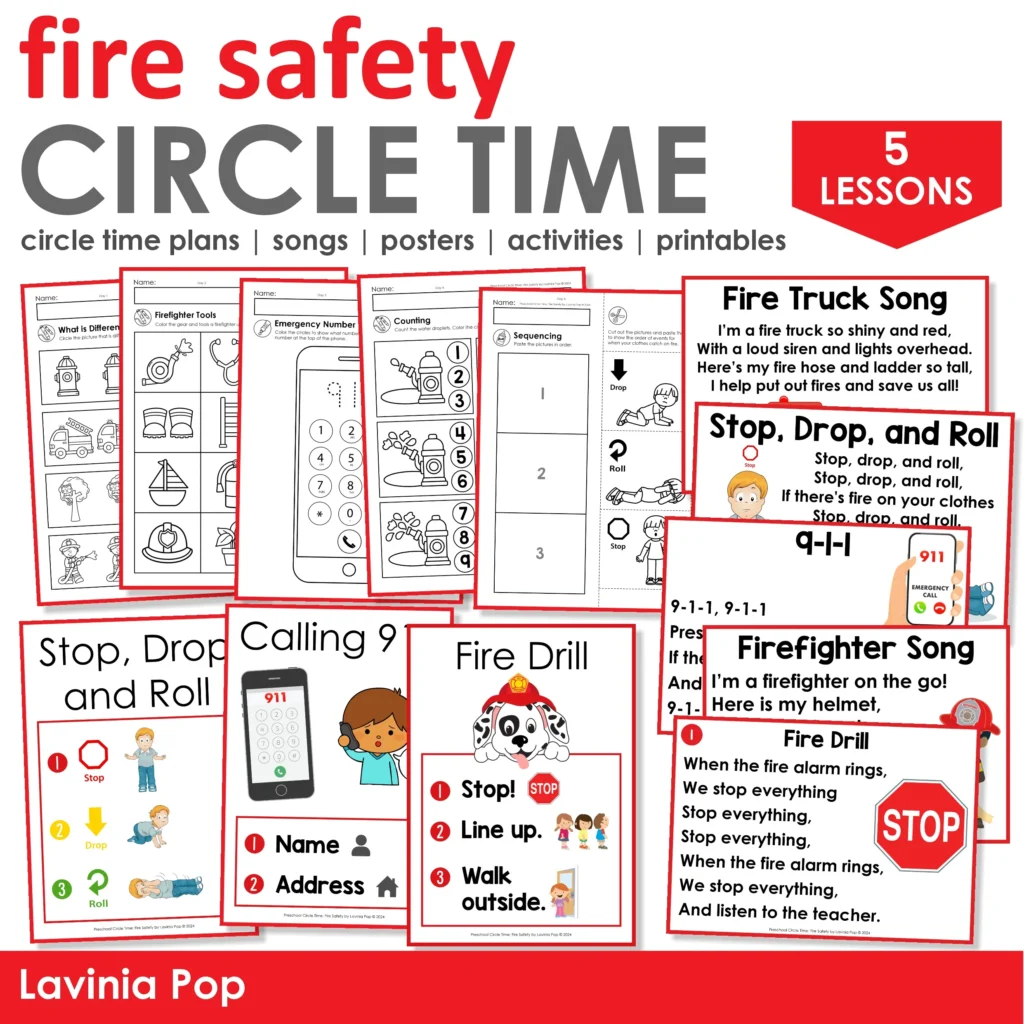
Stop, Drop, and Roll
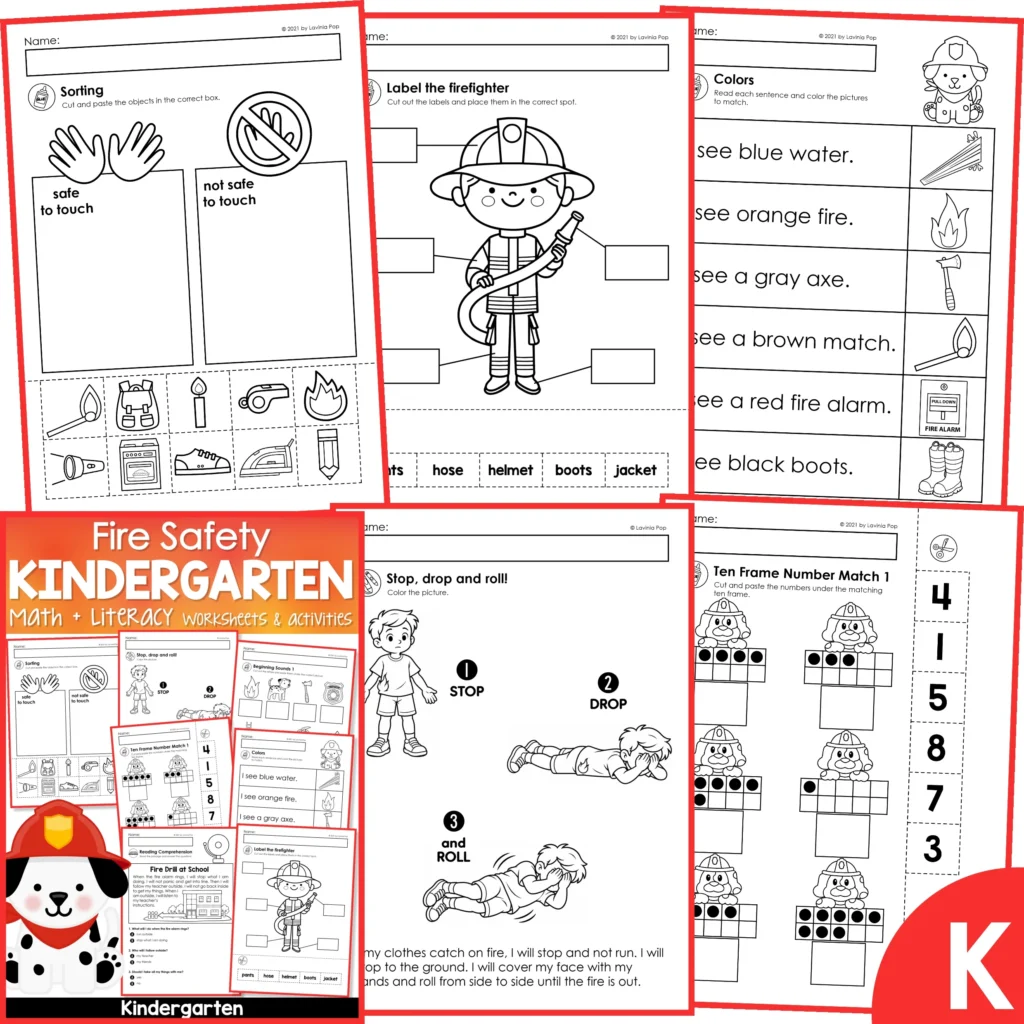
The packet includes boy and girl posters, along with a cut and paste sequencing activity. Explain that Stop, Drop, and Roll is for clothing that catches fire. Use the pictures to introduce the sequence, including covering the face with the hands while rolling.
After your demonstration, children can arrange the sequencing pictures before gluing them down. Ask them to retell the steps using “first,” “next,” and “last.” This gives you a chance to listen for understanding while practicing sequencing language.
For additional teaching guidance, the U.S. Fire Administration’s fire safety information for children and Stop, Drop, and Roll guidance are helpful references.
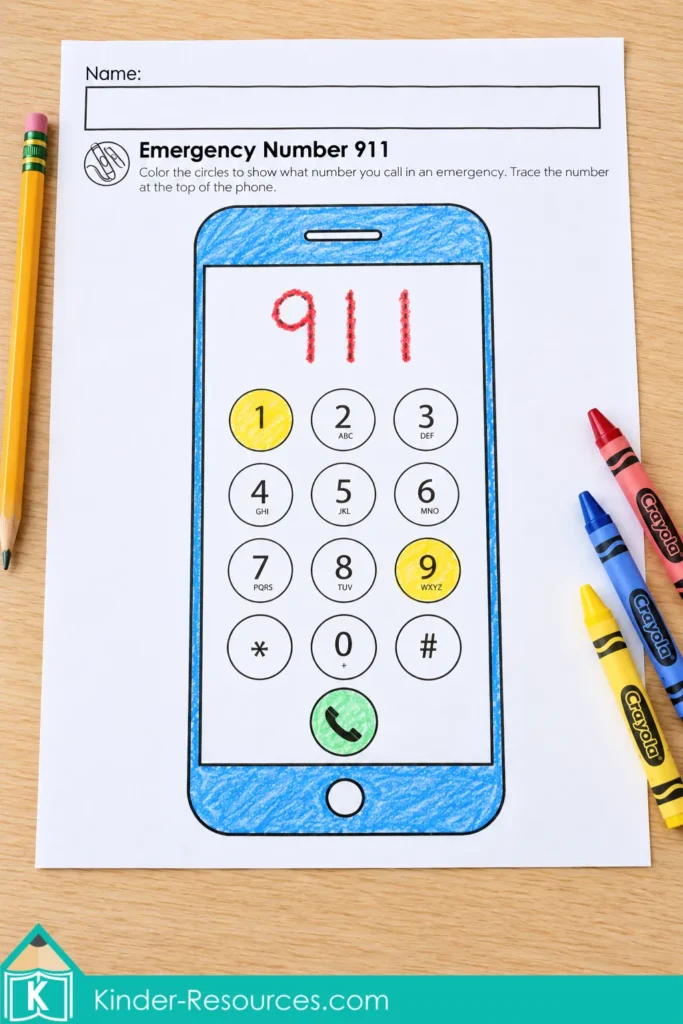
Emergency Number Practice
The phone worksheet shown here uses 911. Children trace the emergency number and color the keypad numbers they would press. Point to the numbers in sequence so children notice that the number 1 is used twice.
Use a paper phone for this practice, and connect the lesson to the emergency number used where your students live. The packet also includes a page for practicing personal emergency information, such as a name and address.
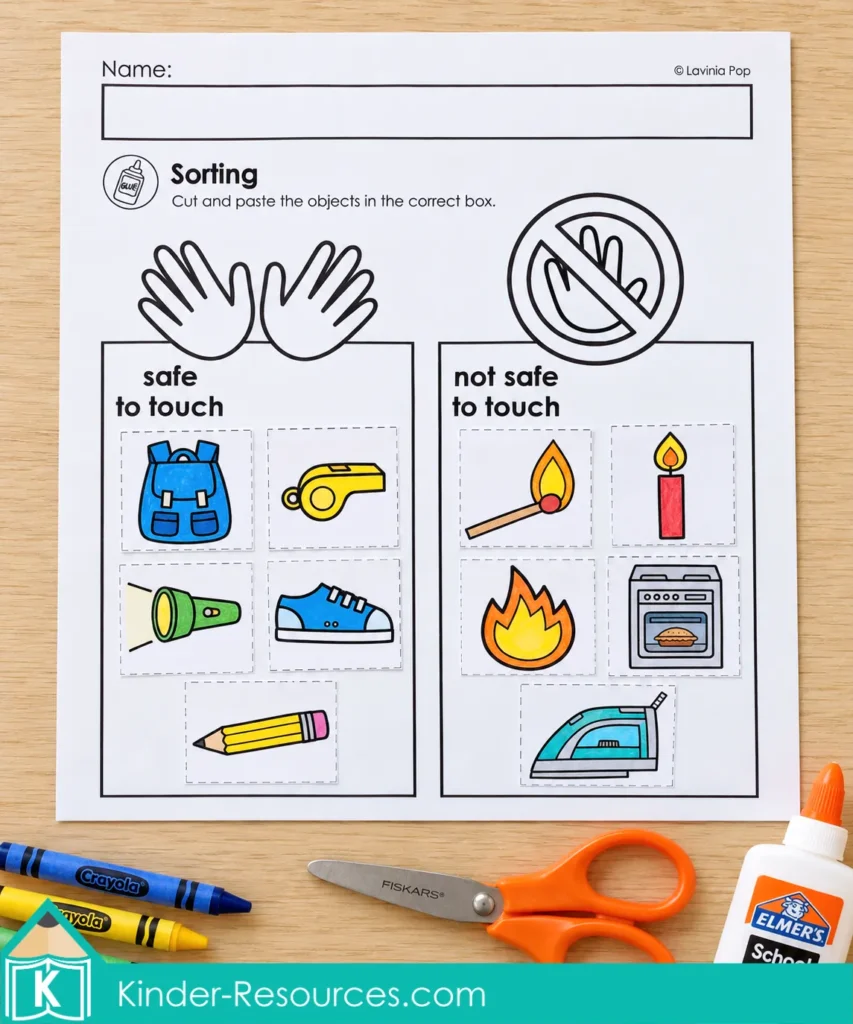
Safe and Not Safe to Touch
The sorting activity encourages children to look closely at everyday objects. Name each picture together before children sort it into the “safe to touch” or “not safe to touch” column.
Ask children to explain one choice before they paste the pictures. A prompt such as “Why does the lit match belong here?” helps you hear their reasoning and revisit the safety message when needed.
Fire Safety Kindergarten Worksheets and Activities: Firefighter Crafts and Vocabulary Activities
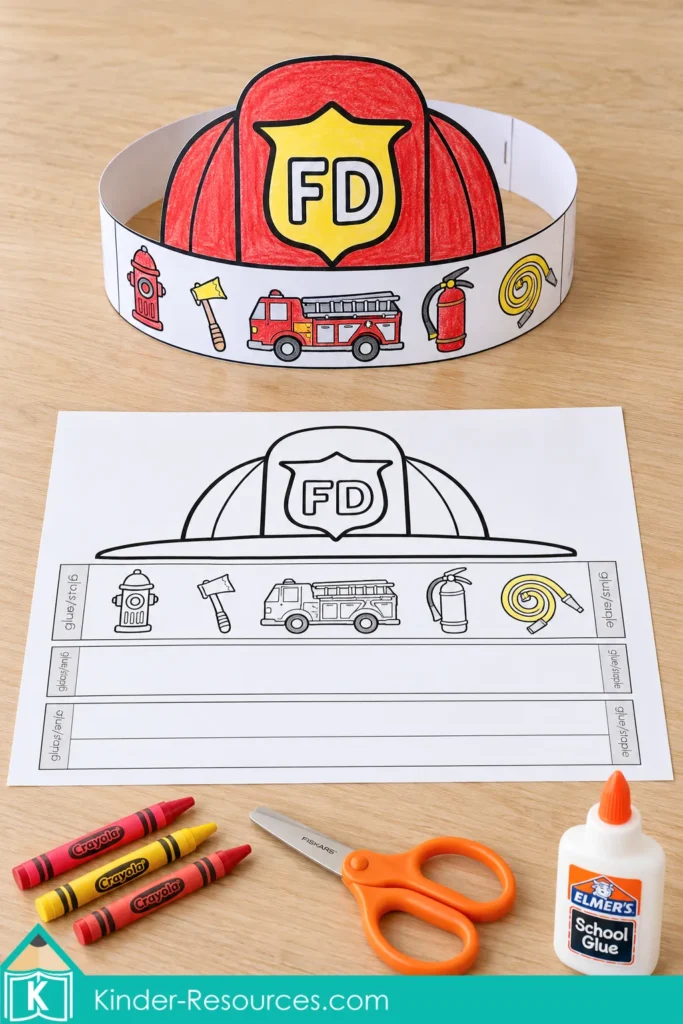
Make a Paper Firefighter Hat
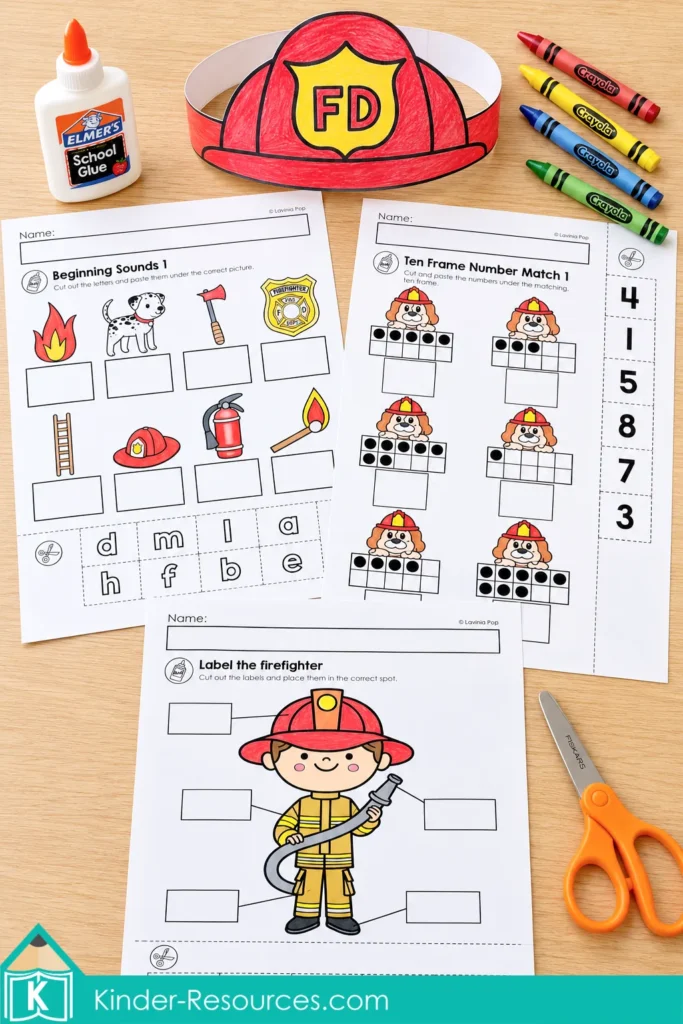
The firefighter hat is a simple craft to include after a story or a discussion about community helpers. Children color the hat and illustrated band, then cut out the pieces. Help them join the band and add extension strips as needed for a comfortable fit.
Talk about the pictures around the band as children work. They can name the fire truck, hydrant, hose, and other equipment while practicing coloring and cutting skills.
Label the Firefighter
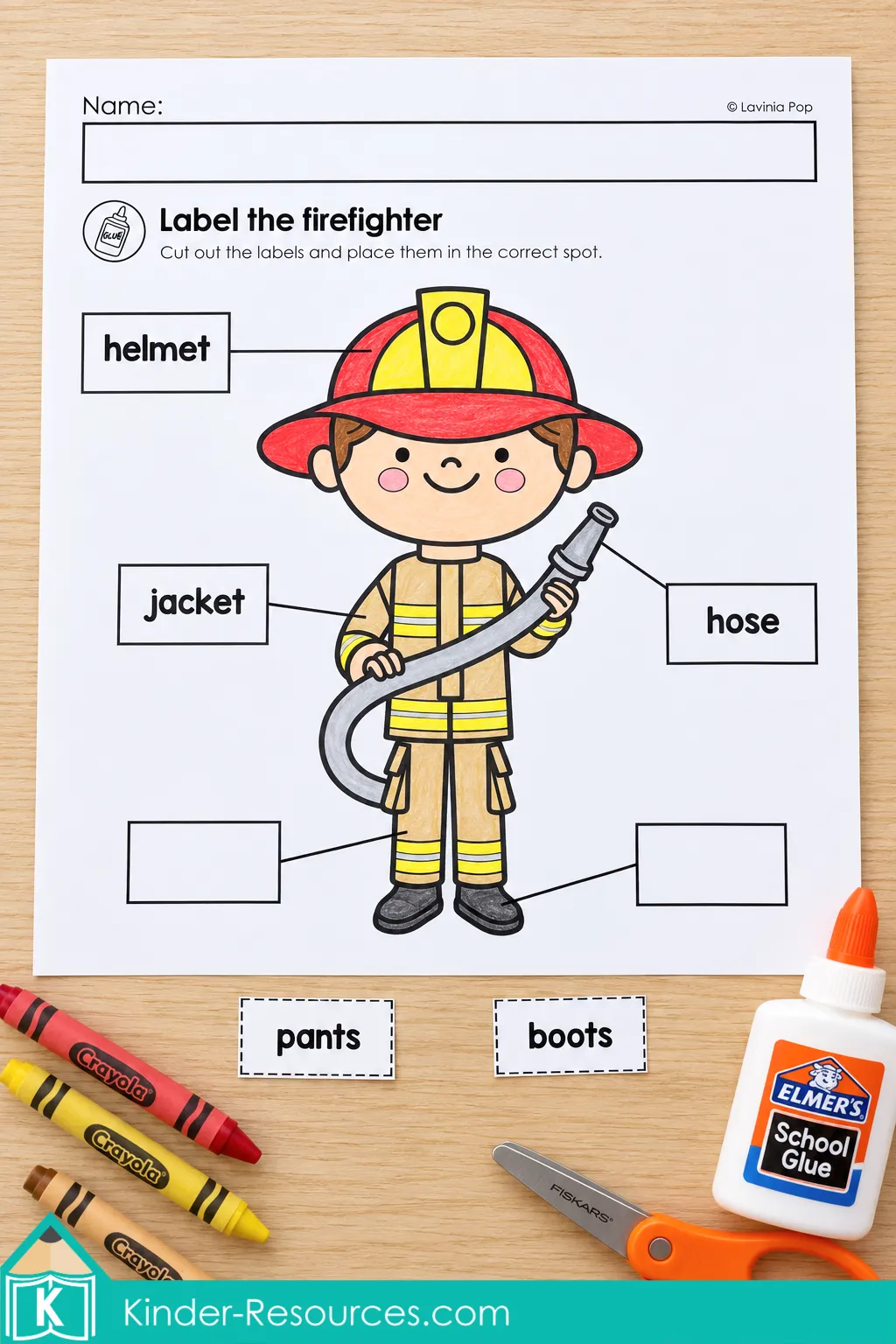
This cut and paste worksheet introduces the words helmet, jacket, hose, pants, and boots. Read the labels together, point to each item in the picture, and then let children match the words to the correct boxes.
For children who need more support, work with one label at a time. Children who are ready for an extra step can choose a word and use it in an oral sentence, such as “The firefighter wears boots.”
Fire Safety Kindergarten Worksheets and Activities: Literacy
Match Beginning Sounds
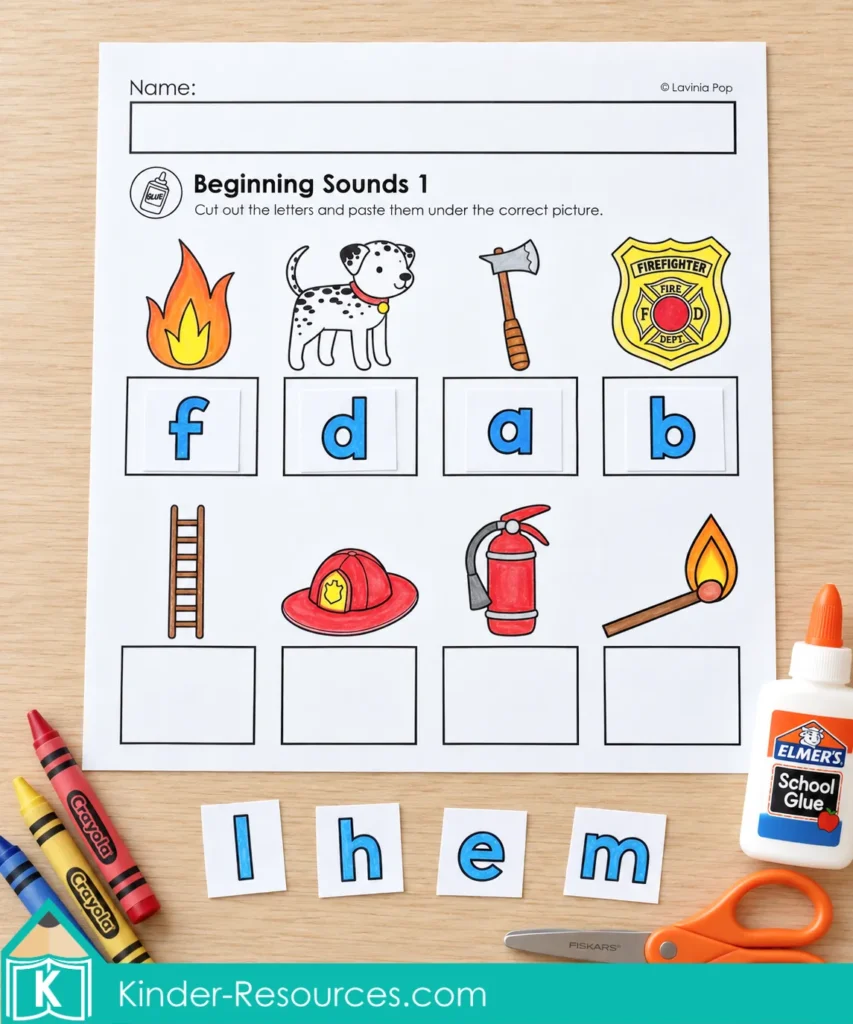
Children name each picture, listen for its first sound, and find the matching letter. The pictures include familiar fire safety vocabulary such as fire, axe, helmet, and ladder.
Name the pictures together before children begin. This is especially helpful for less familiar words, such as extinguisher. Children can place all their letter cards first, check the matches with you, and then glue them down.
Read Color Word Sentences
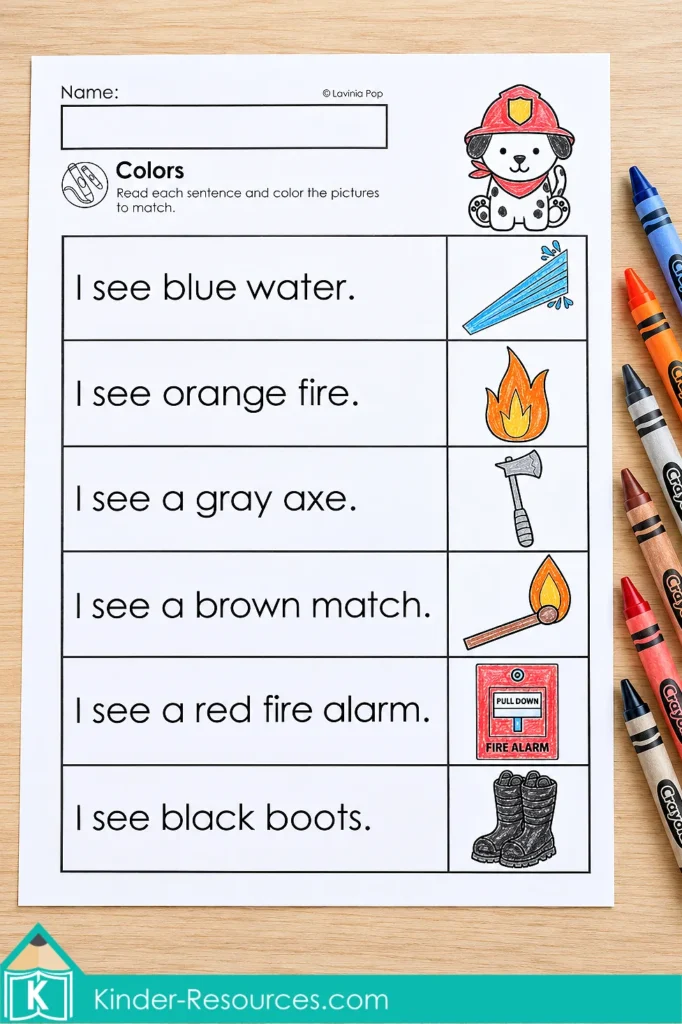
The color word page uses short sentences such as “I see blue water” and “I see black boots.” Children read each sentence and color the picture to match.
Read the sentences together when students need support, or invite more confident readers to work through them independently. Ask children to point to the color word before choosing a crayon.
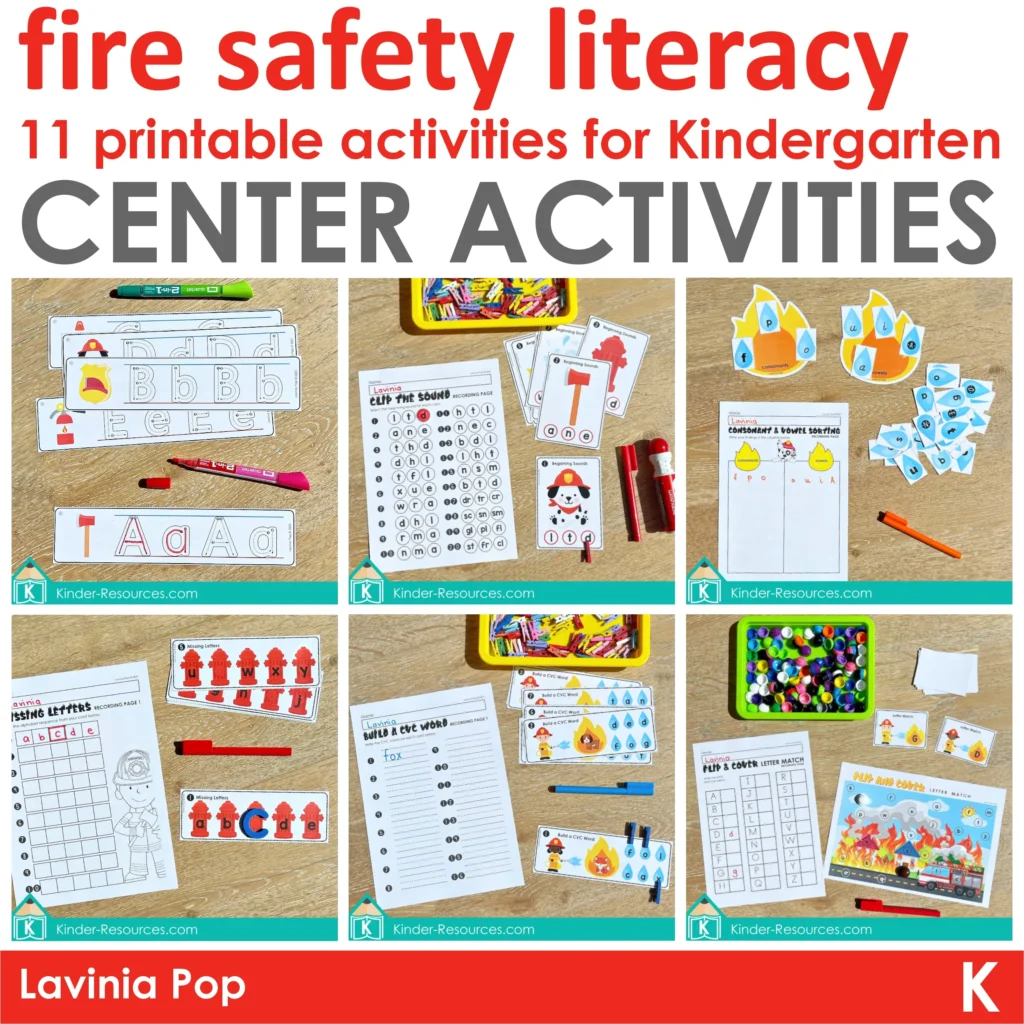
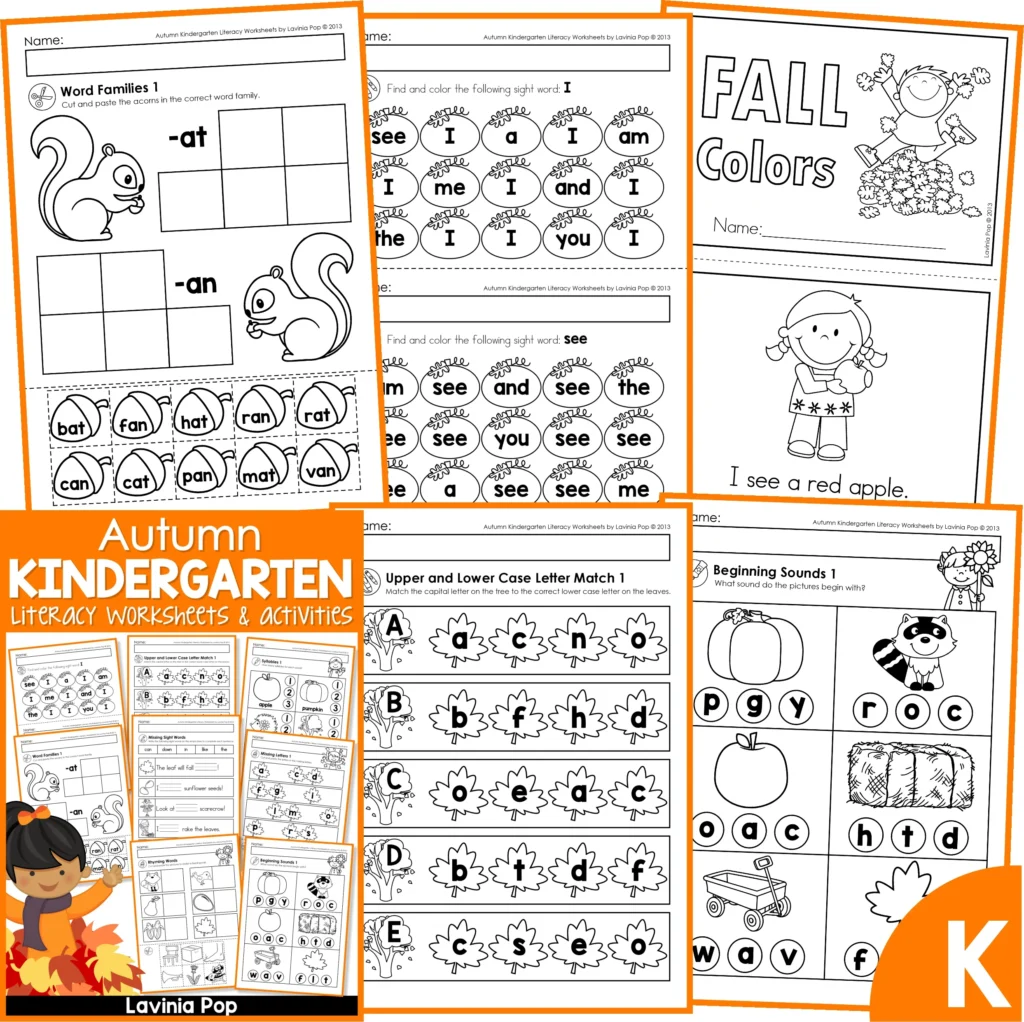
The full packet also includes alphabet sequencing, uppercase and lowercase letter matching, rhyming, beginning blends, sight word scrambles, syllables, sentence matching, sentence correction, prepositions, and a fire drill reading passage. Choose pages that give your students practice with skills you have already introduced.
Fire Safety Kindergarten Worksheets and Activities: Math
Count and Match Ten Frames
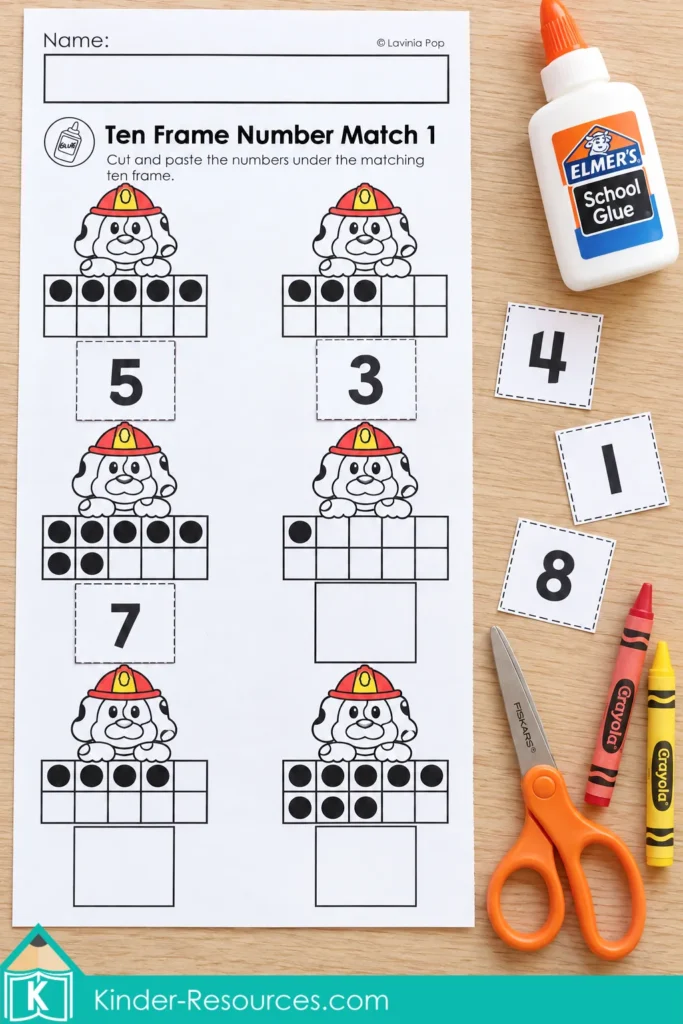
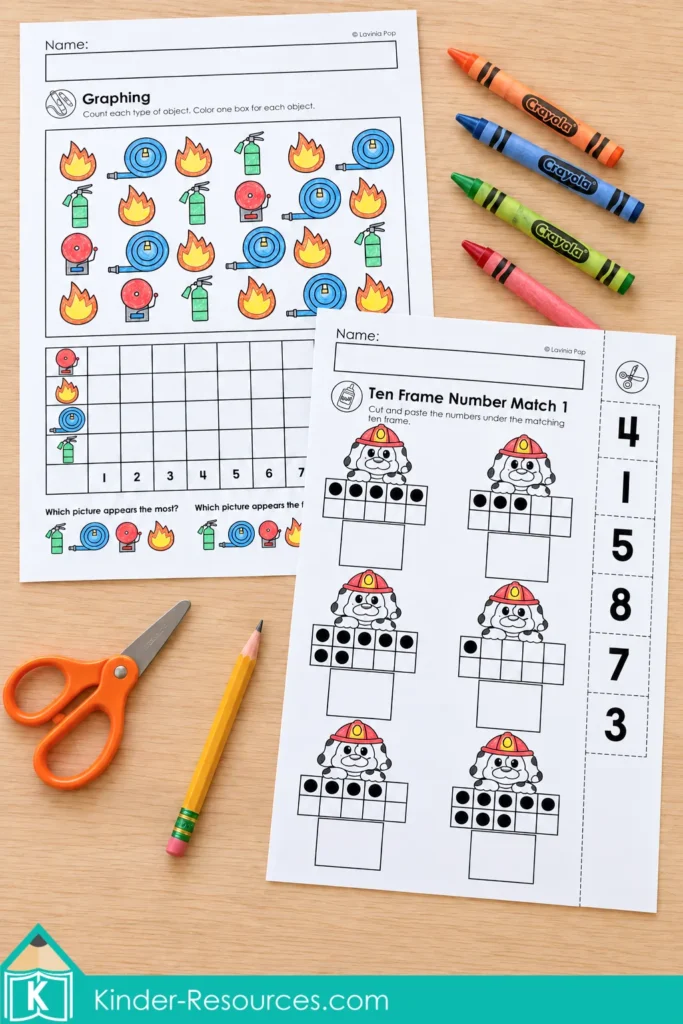
The firefighter dog ten frames combine counting with number recognition. Children work out how many dots are shown, find the matching numeral, and paste it beneath the frame.
Invite children to explain how they found the amount. Some may count each dot, while others may notice a full row of five and count on. Letting them talk through their thinking makes this a useful small group activity.
Count, Graph, and Compare
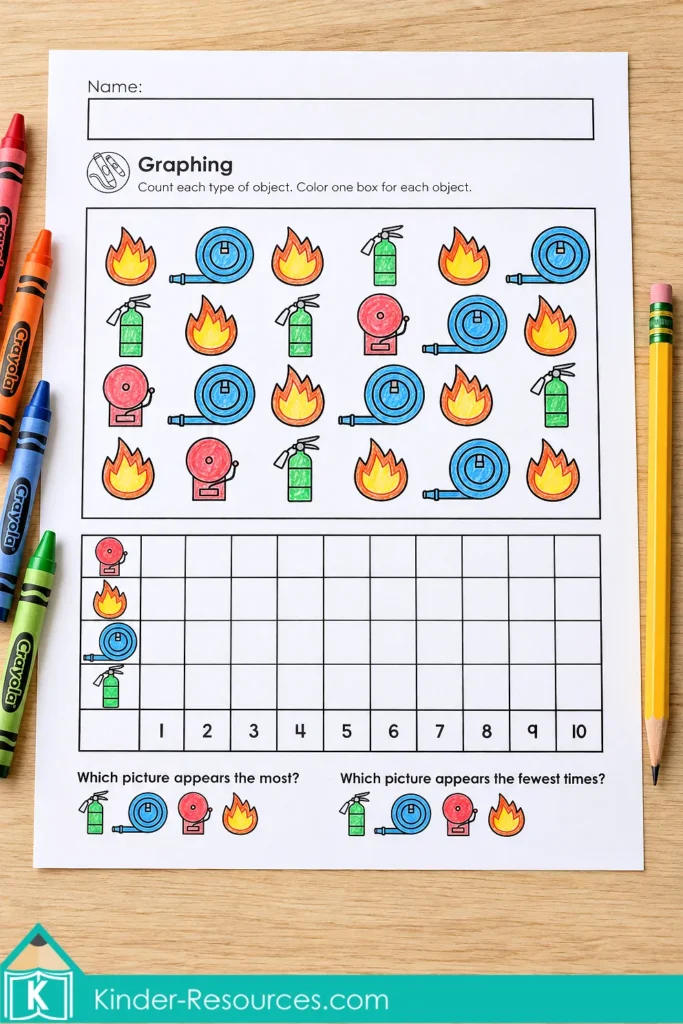
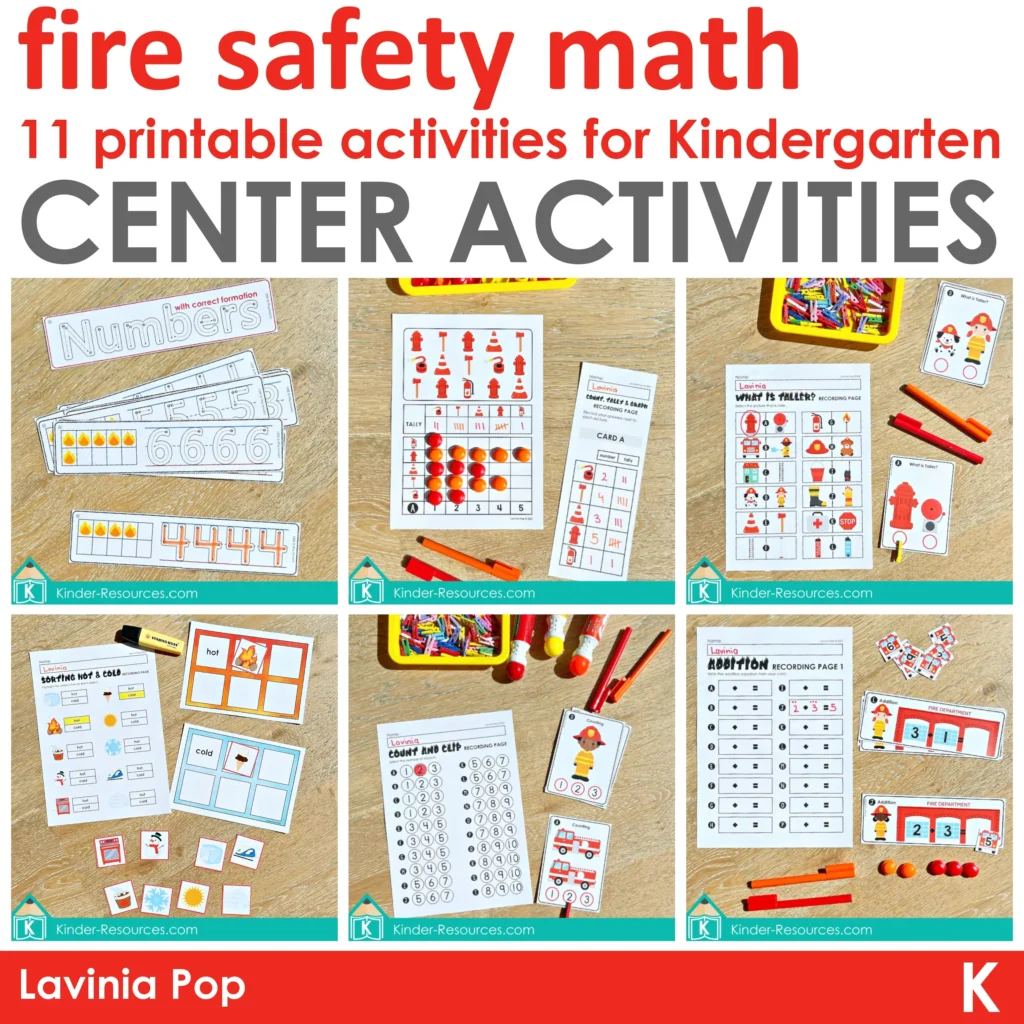
The graphing page features bells, flames, hoses, and fire extinguishers. Children count each type of picture and color one box on the graph for each object.
Work through one category together before children continue. A small pencil mark beside each counted picture can help them keep track. When the graph is finished, compare the rows and discuss which picture appears most often and which appears fewest times.
Other math pages cover counting 0–10, numbers before and after, missing numbers, tally marks, comparing numbers, addition within 10, 2D shapes, and patterns. You can spread these activities across the week or select a few that match your current math lessons.
How to Use Fire Safety Worksheets for Kindergarten
You do not need to complete every page during one unit. Start with your safety learning goals, then choose a manageable selection of literacy, math, and fine motor activities.
- Whole class lessons: Introduce a safety poster and talk about the pictures together.
- Small groups: Work on beginning sounds, labeling, ten frames, or graphing with support.
- Morning work: Offer a familiar activity after you have modeled the directions.
- Early finishers: Set out selected skill practice pages that children can manage independently.
- Homeschool lessons: Pair a safety discussion with a short worksheet activity and the firefighter hat craft.
Preparation is straightforward: print your chosen pages and gather pencils, crayons, scissors, and glue. If cutting is difficult for a child, prepare the small pieces ahead of time so they can focus on matching, counting, or sequencing.
Purchase the Fire Safety Kindergarten Worksheets and Activities
If you would like to purchase the complete 63-page Kindergarten Worksheets and Activities, click on one of the stores links below.


Happy Teaching! 😊
You may also like…
Great packet!