
Helping young learners understand how sentences work is an important part of early literacy instruction. Spring Sentence Building Puzzles give children a simple and engaging way to practice sentence structure while also building confidence with reading and writing.
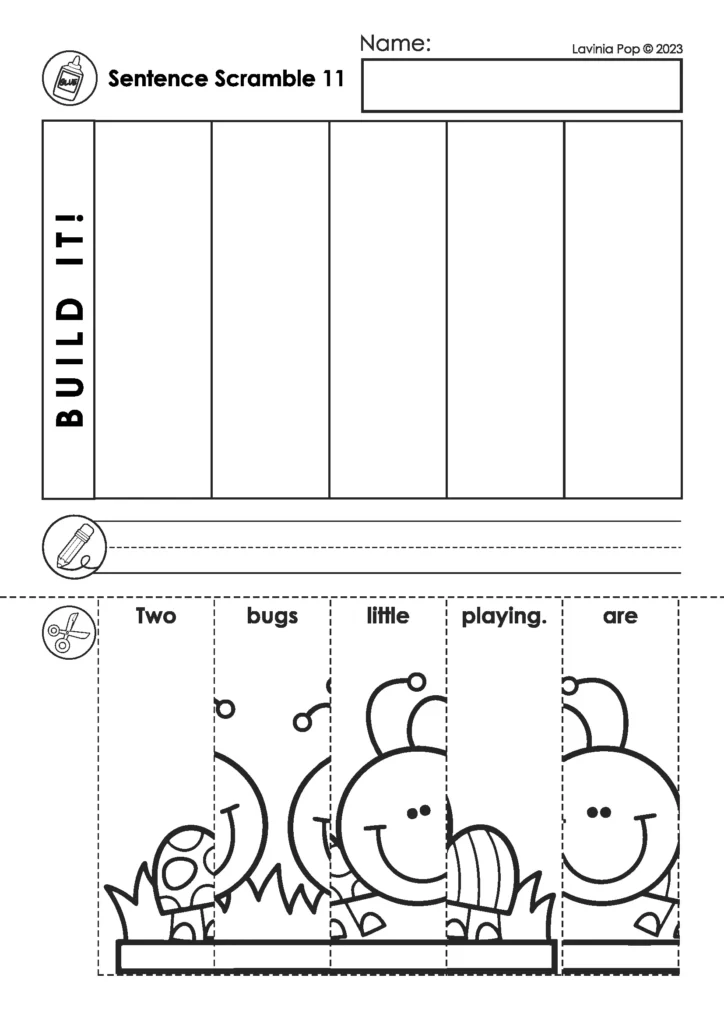
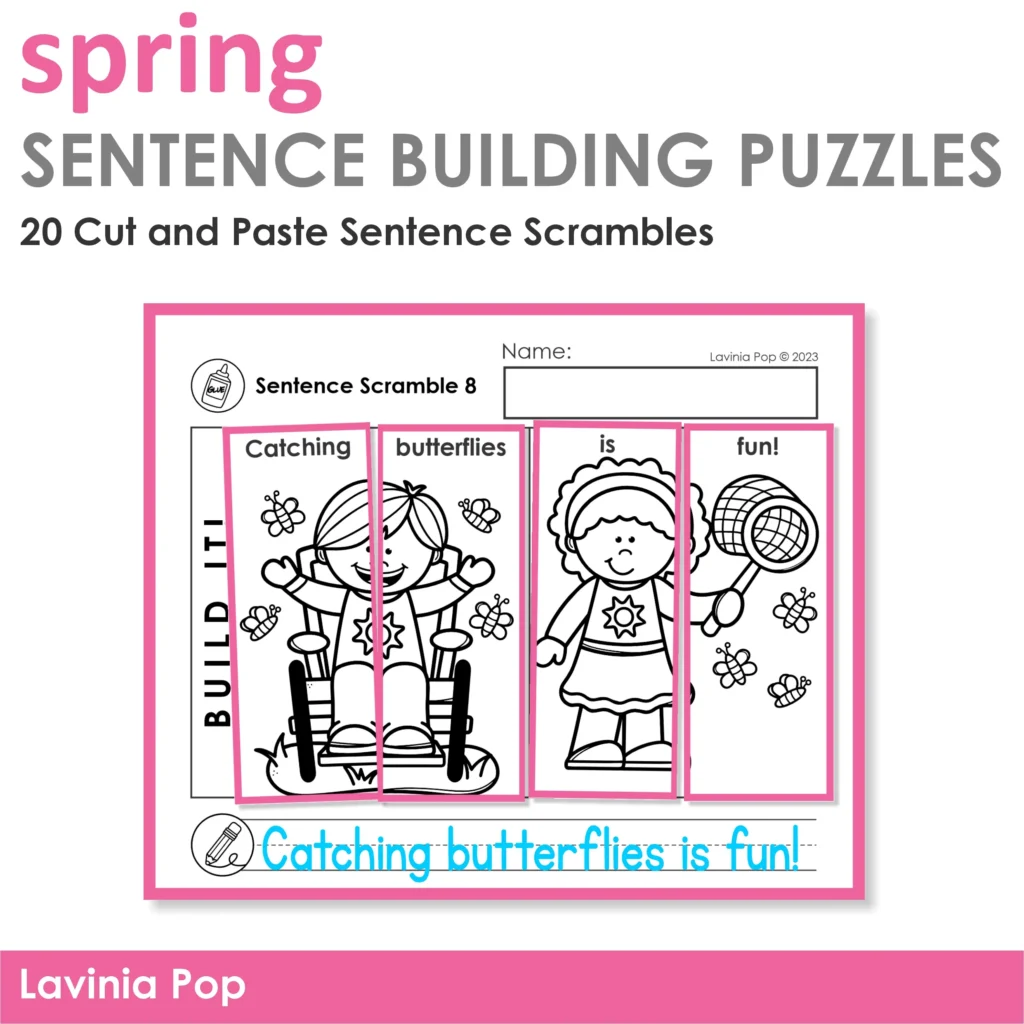
In this activity, students cut and paste words to build a complete sentence. When the sentence is arranged correctly, the puzzle pieces connect to form a spring themed picture. This visual feedback helps children quickly recognize whether their sentence makes sense. Because the activity combines reading, writing, and problem solving, Spring Sentence Building Puzzles work especially well for kindergarten literacy centers and independent practice.
In this post you will learn how this activity works, why it supports early literacy development, and how to use it successfully with young learners.
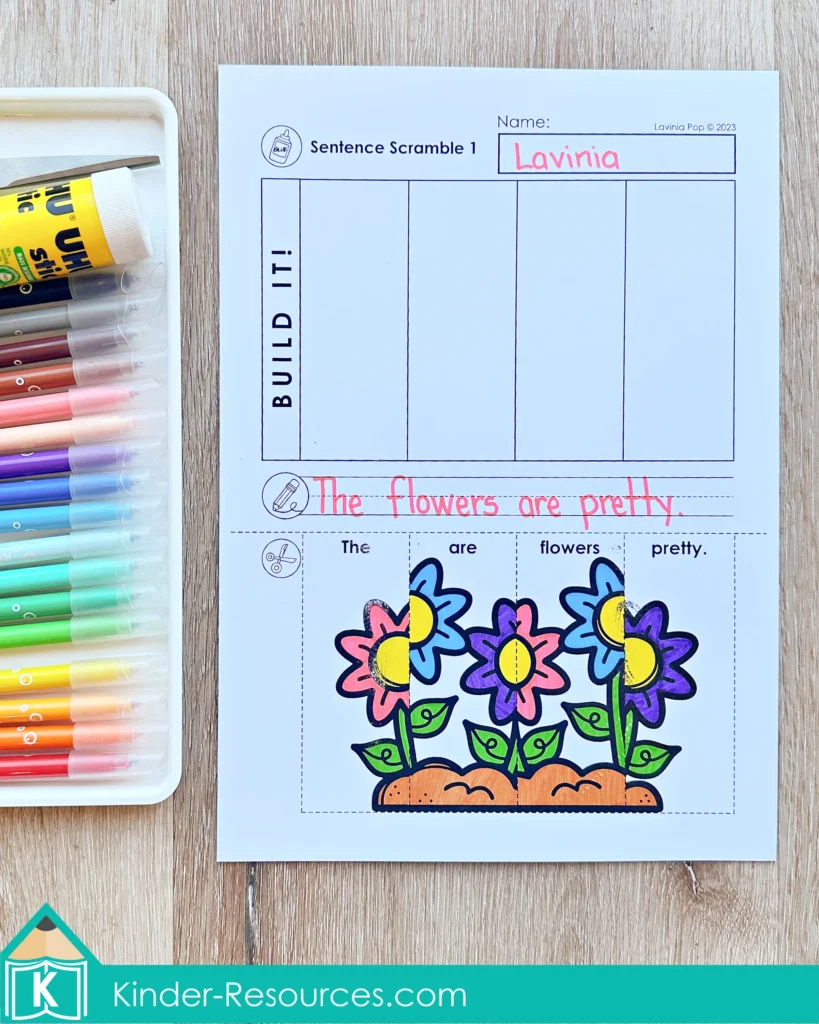
FREE Spring Sentence Building Puzzles Sample
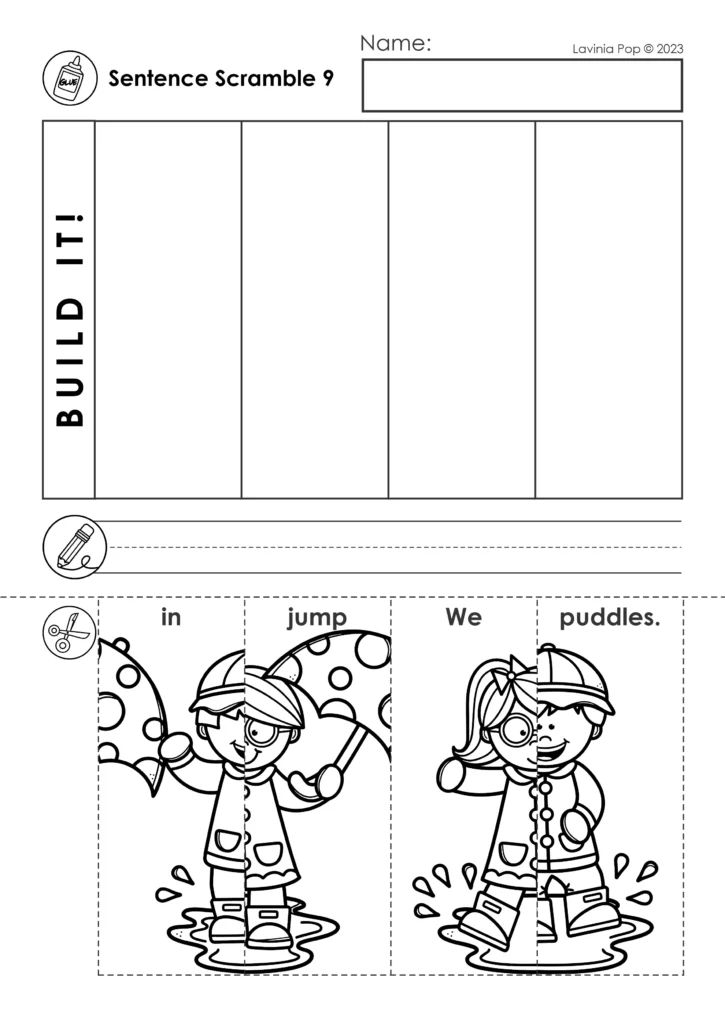
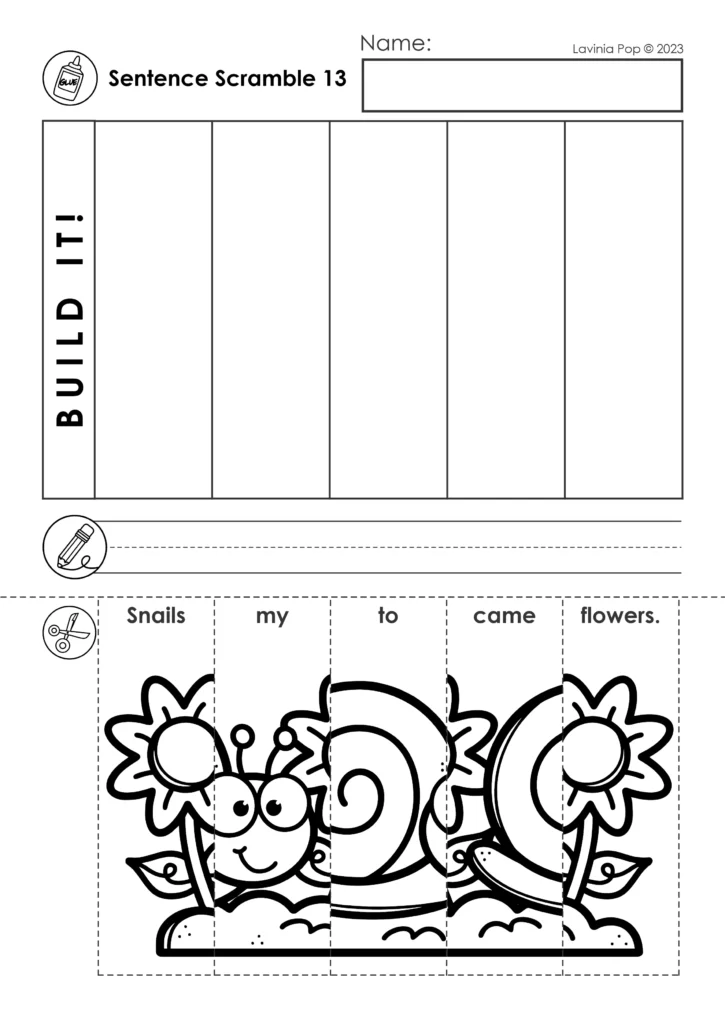
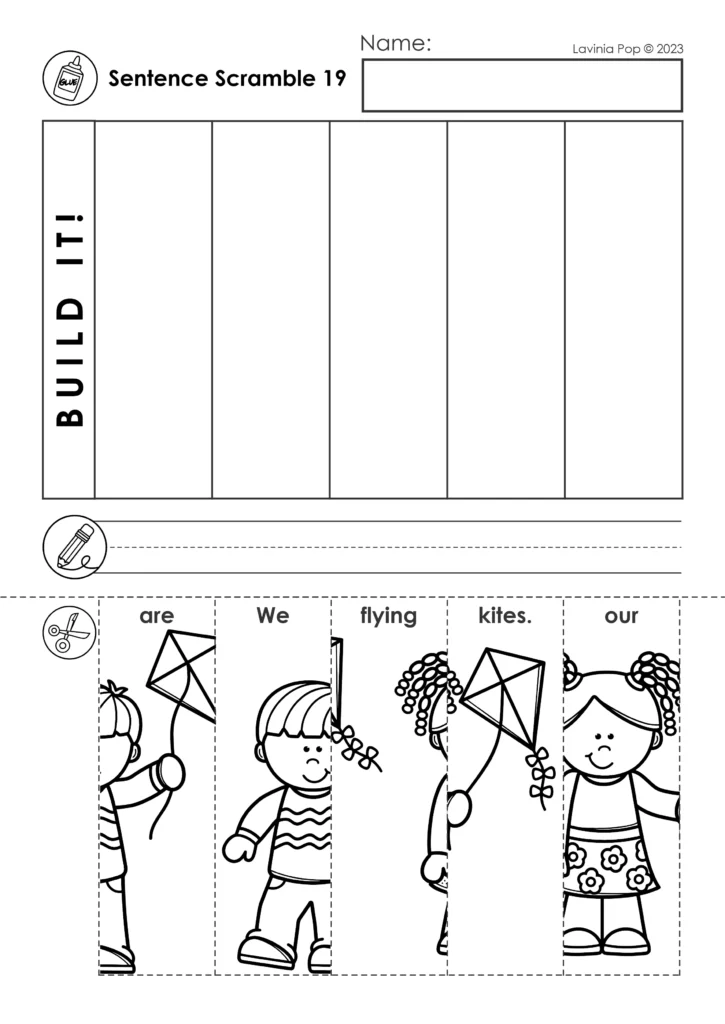
If you would like to try the activity with your students, you can download some free sample pages from the Spring Sentence Building Puzzles set. Students cut out the sentence pieces, arrange the words in the correct order, glue the pieces into the boxes, and write the completed sentence. This free sample is a great way to introduce spring themed sentence building during literacy centers.

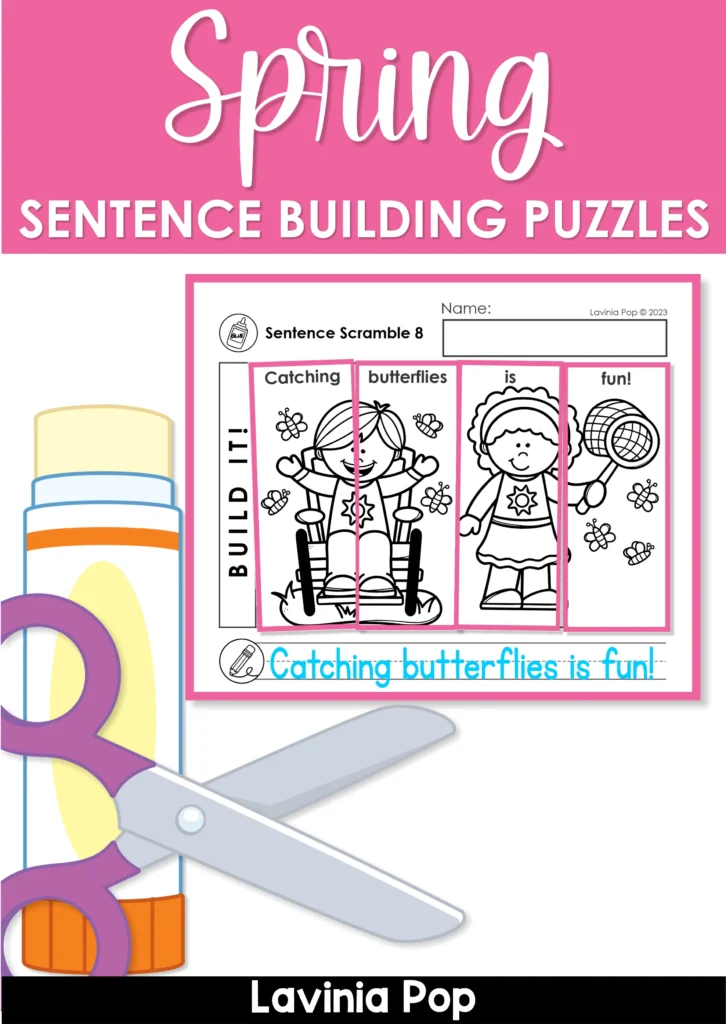
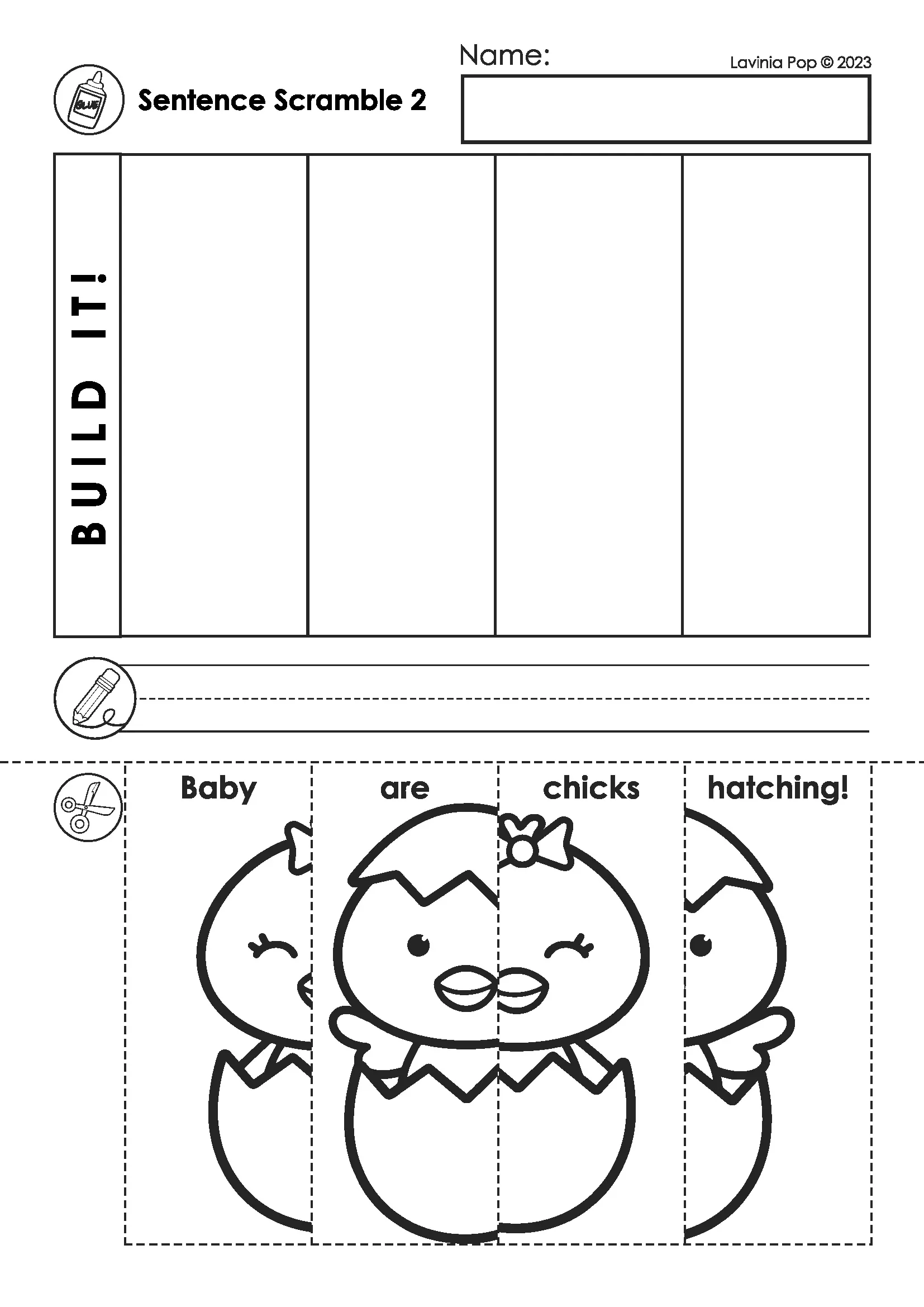
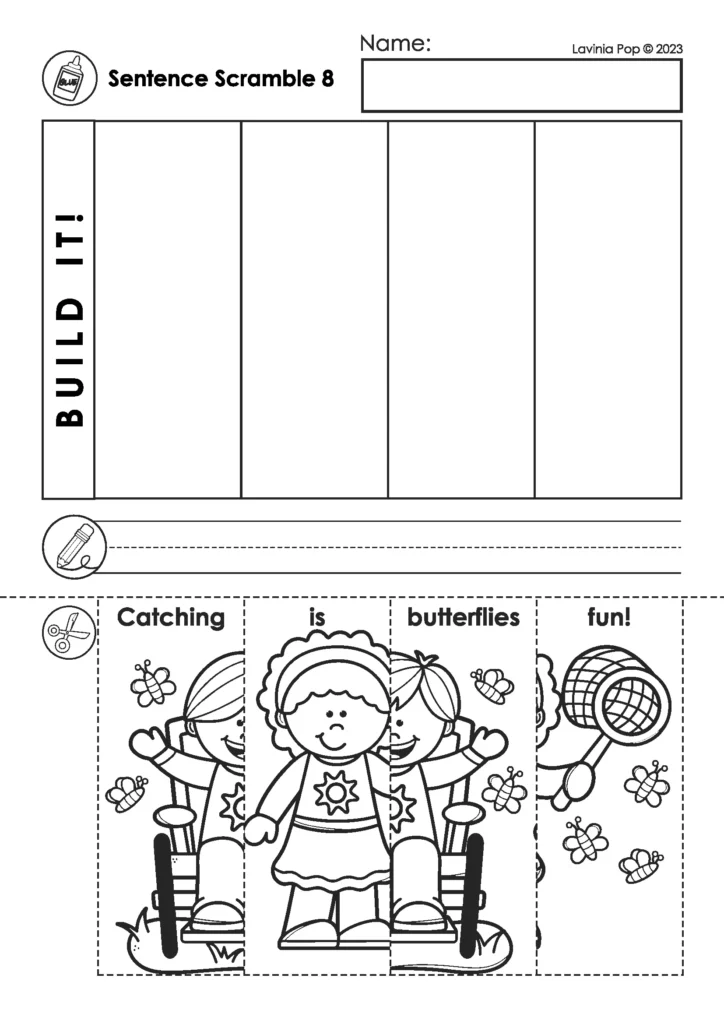
Why Spring Sentence Building Puzzles Support Early Writing
Many young learners can read individual words but still struggle to understand how sentences are structured. They may place words in the wrong order or forget to include punctuation. This activity help students see how sentences are formed in a concrete way. Instead of only reading a sentence, students actively build it by arranging the words.
As children move the pieces into order, they begin to notice patterns such as:
- capital letters at the beginning of sentences
- punctuation marks at the end
- words that naturally fit together
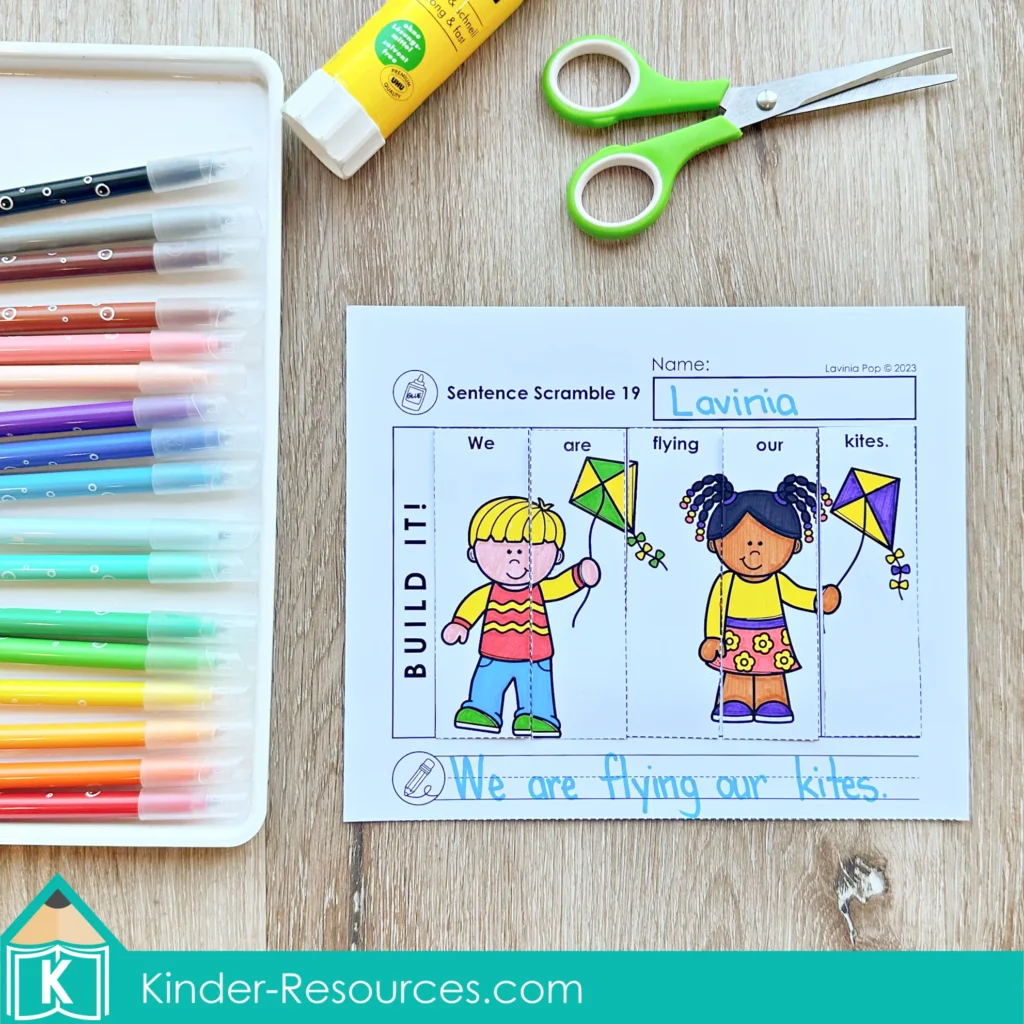
The puzzle image provides immediate feedback. When the sentence is correct, the picture pieces connect to form a complete illustration. If the sentence is incorrect, the puzzle does not align. This encourages students to reread the sentence and think about the correct word order.
How to Use Spring Sentence Building Puzzles in Literacy Centers
The Spring Sentence Building Puzzles are easy to prepare and simple for students to understand.
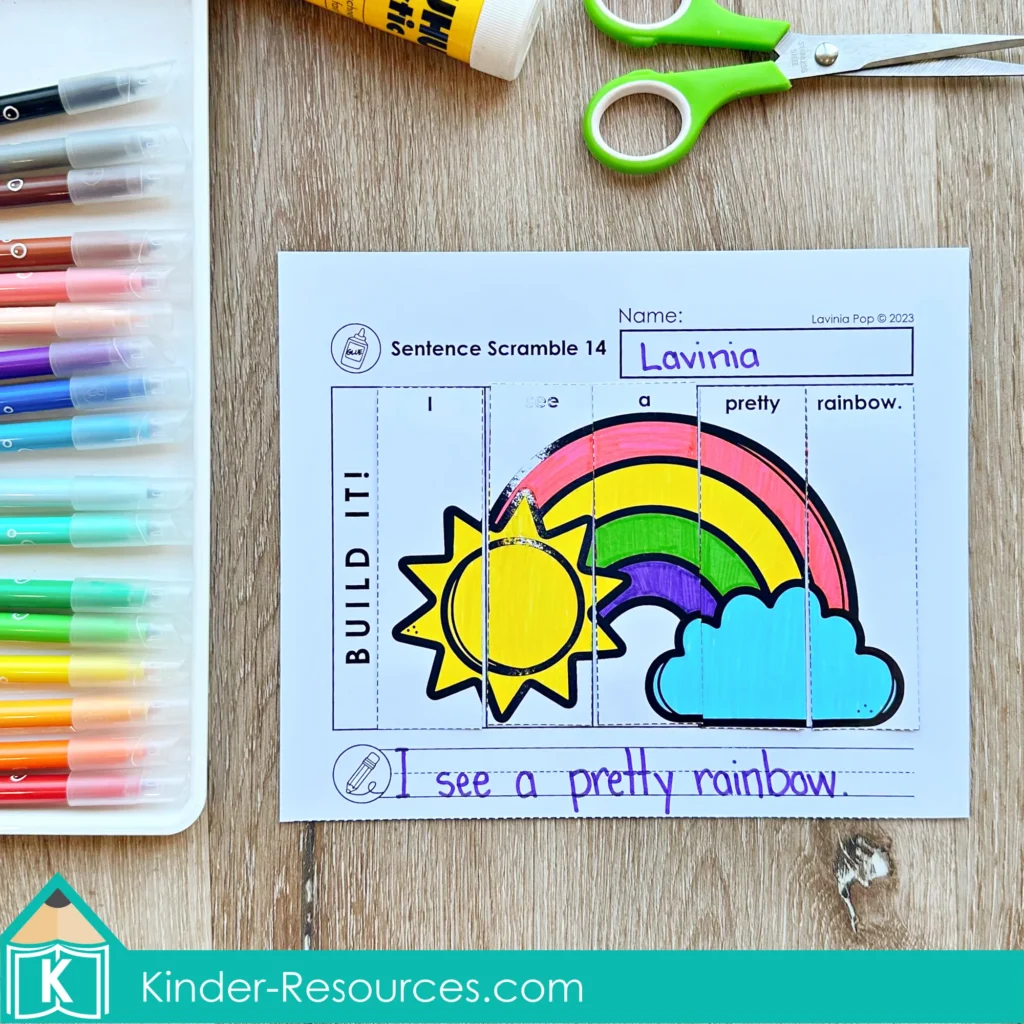
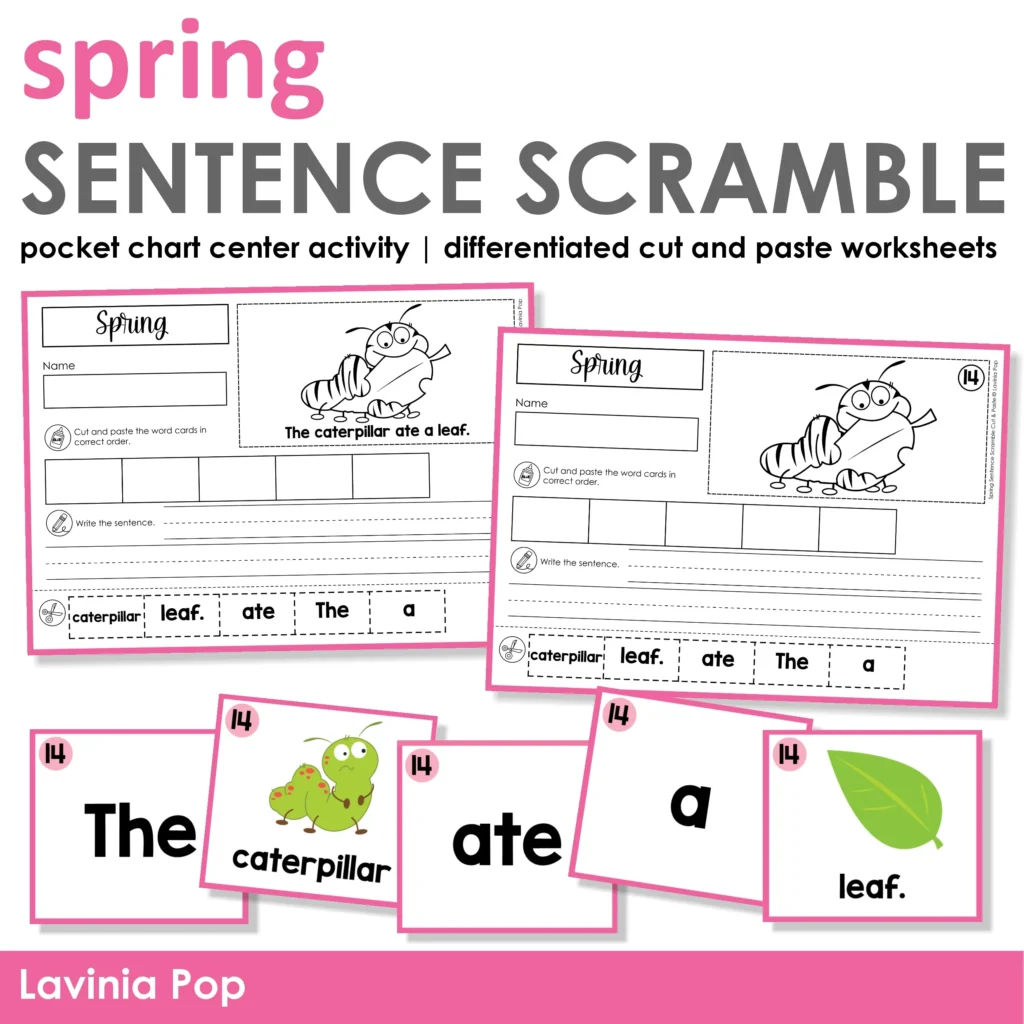
Start by giving each student a worksheet. At the bottom of the page, students will find the sentence puzzle pieces.
Students first cut out the pieces. Each piece includes a word and a section of the picture.
Next, students read the words and arrange the pieces in the correct order to build the sentence. They can check their work by looking at the picture pieces to see if the puzzle forms a complete image.
Once the sentence is correct, students glue the pieces into the boxes on the page. Finally, they write the completed sentence on the writing line.
This sequence encourages students to read, analyze sentence structure, and practice writing.
Literacy Skills Students Practice
This activity helps strengthen several foundational literacy skills. Students practice:
- sentence structure
- recognizing capital letters
- identifying ending punctuation
- reading simple sentences
- writing sentences
- word order
- fine motor skills through cut and paste
Because multiple skills are practiced at once, the activity is both efficient and engaging for young learners.
Troubleshooting Tips for Sentence Building Activities
Some students may need extra support when first learning how to build sentences.
- One helpful strategy is to ask students to look for the word that begins with a capital letter. This often helps them identify the beginning of the sentence.
- Students can also look for punctuation such as a period or exclamation mark, which usually appears at the end.
- Encouraging students to read the sentence aloud can also help them hear when the word order does not sound correct.
These small strategies help children build confidence with sentence structure.
Adjusting Spring Sentence Building Puzzles for Different Learners
Sentence building activities can easily be adapted to support different reading levels.
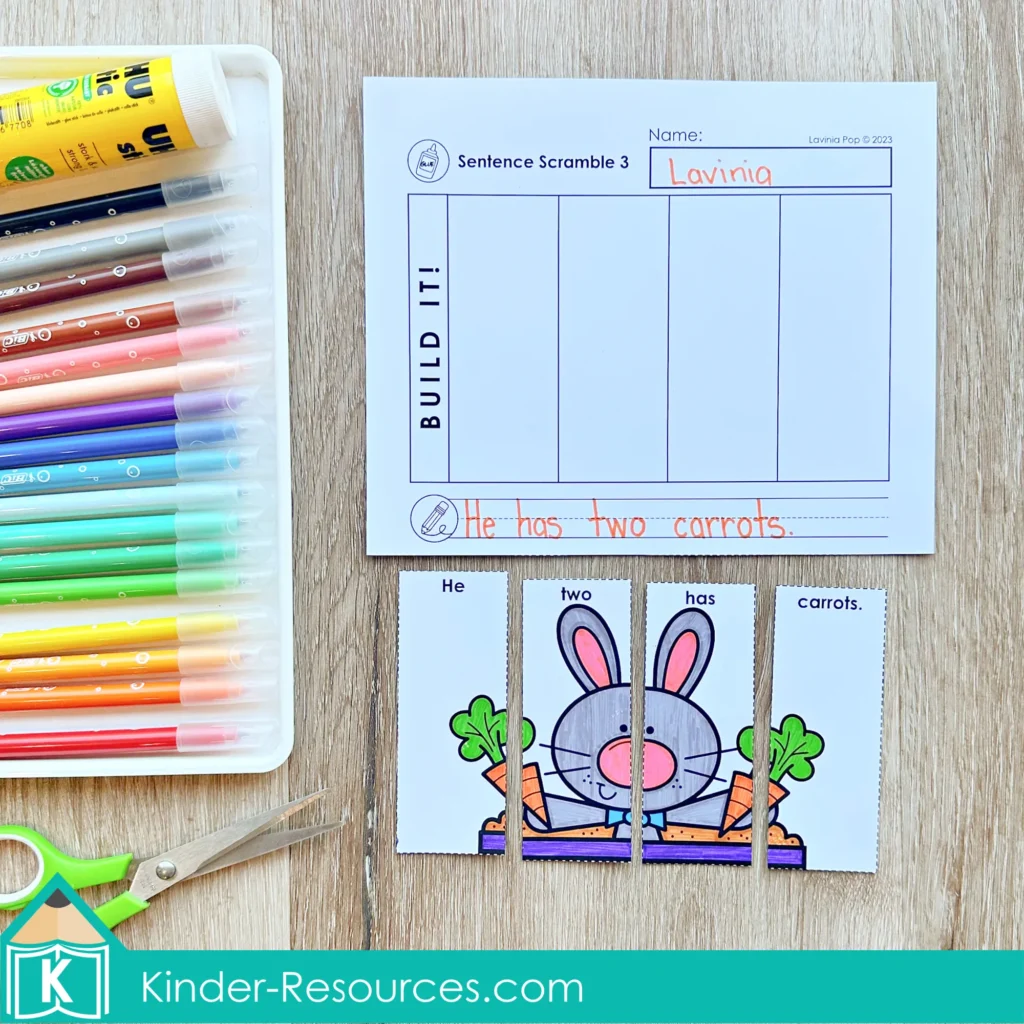
- Beginning readers often benefit from four word sentences, which are shorter and easier to decode.
- As students gain confidence, they can move on to five word sentences that require more careful reading and attention to word order.
- Some teachers also extend the activity by asking students to write an additional sentence about the picture after completing the puzzle.
This simple extension adds meaningful writing practice.
Quick Teacher Preparation Checklist
Before introducing Spring Sentence Building Puzzles, a quick preparation checklist can make the activity run smoothly.
- Print the worksheets you plan to use
- Provide scissors and glue
- Model one example with the class
- Encourage students to read the sentence aloud
- Have students write the completed sentence
Once students understand the routine, this activity becomes easy to use during centers or independent work time.
Spring Sentence Building Puzzles make sentence practice interactive, engaging, and meaningful for young learners while helping them develop strong reading and writing skills.
Happy Teaching! 😊
Purchase the Spring Sentence Building Puzzles Resource
If you would like a ready to use set of printable puzzles, the Spring Sentence Building Puzzles resource includes:
- 20 sentence building puzzles
- four word and five word sentence scrambles
- cut and paste sentence activities
- writing lines for sentence practice
- spring themed illustrations
These puzzles are perfect for kindergarten literacy centers, morning work, early finishers, and small group instruction.
You can find the full resource here:


You might also like…
💕💕💕
thanks a lot
Thank you
My students love these!