
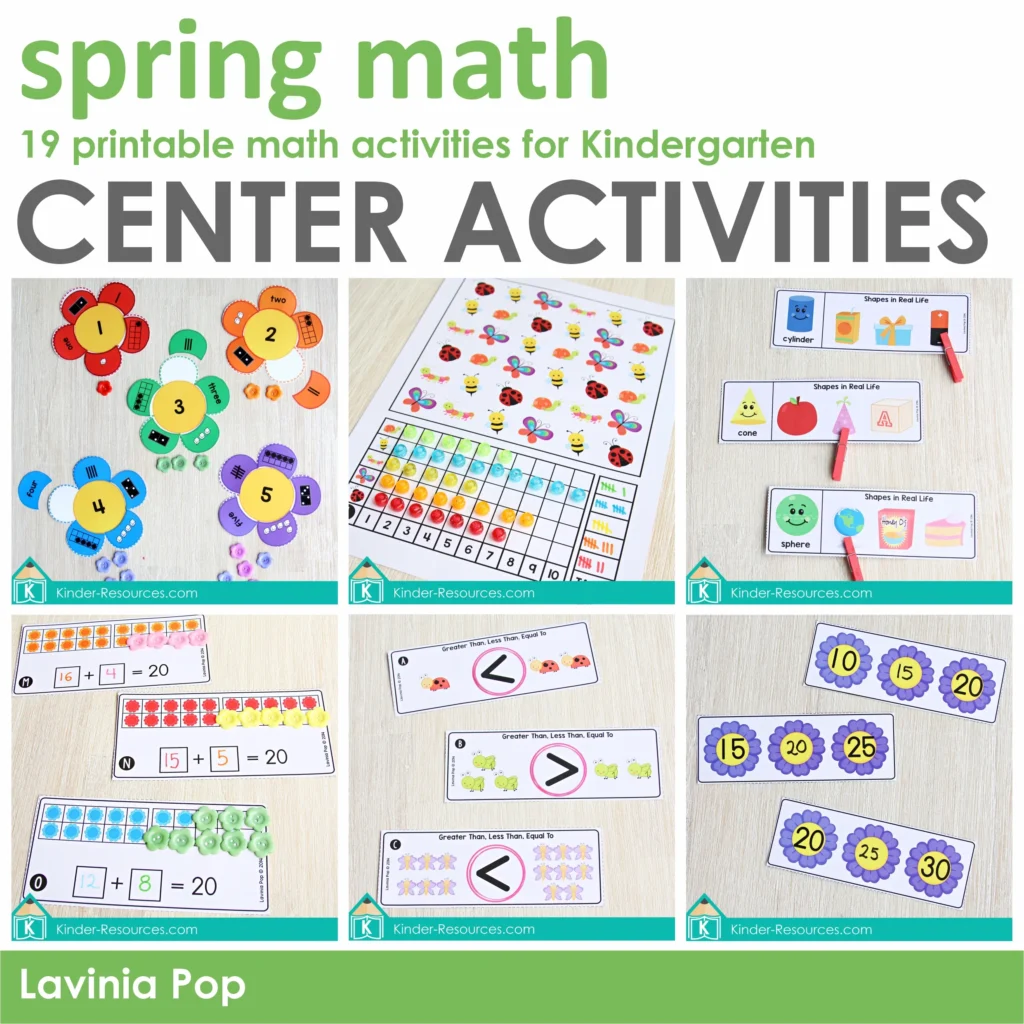
Spring is the perfect time to refresh your math routine with engaging, hands on activities that keep young learners motivated. These Spring Math Centers for Kindergarten are designed to help children build essential math skills through interactive, meaningful practice that feels like play.
Whether you are supporting learning in the classroom, at home, or in a homeschool setting, these activities make math simple, visual, and easy to manage. Each center is structured to encourage independence while still providing meaningful skill practice.
FREE Sample Pages from the Spring Math Centers for Kindergarten
Want to try a few activities first? These samples give you a clear idea of how the activities work and how easily they can fit into your daily routine. Download FREE sample pages here:
Why Use Spring Math Centers for Kindergarten
These Spring Math Centers for Kindergarten go beyond simple worksheets by giving children the opportunity to explore math concepts in a hands on way.
Children are not just writing answers. They are:
- Building
- Matching
- Counting
- Comparing
- Exploring patterns
This helps children truly understand what numbers mean, rather than just memorizing them.
Each activity includes clear “I Can” cards and structured layouts, making it easier for children to work independently while you focus on guiding small groups.
What Skills Are Covered in the Spring Math Centers for Kindergarten
These centers support a wide range of early math skills:
- Number recognition and number formation
- Counting and cardinality
- Skip counting
- Place value (tens and ones)
- Addition and subtraction
- Comparing numbers
- Graphing and tally marks
- Shapes (2D and 3D)
- Time to the hour
- Patterns and sorting
- Sequencing and positional words
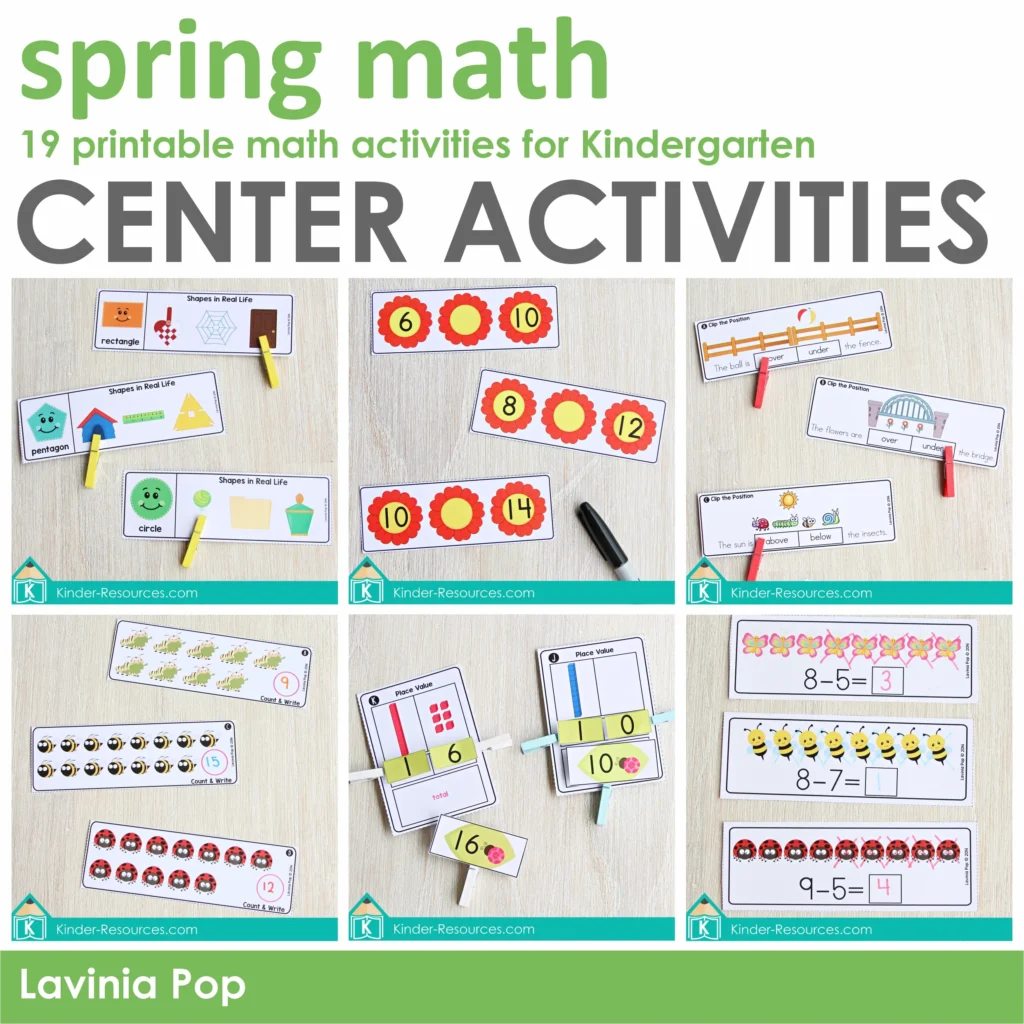
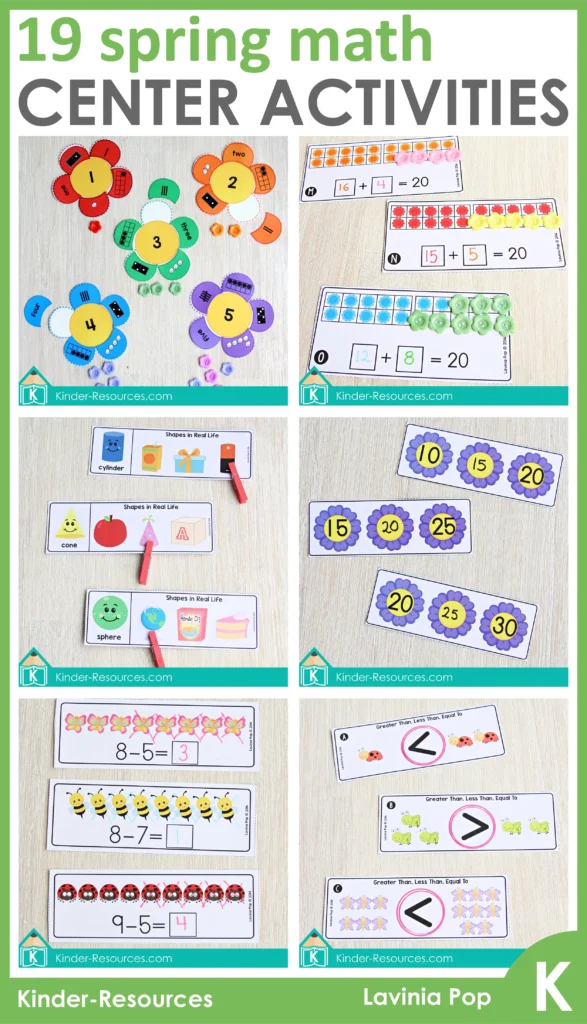
Spring Math Centers for Kindergarten Activities
Below you will find each activity included in the resource. Add your photos under each section to show how the activity looks in use.
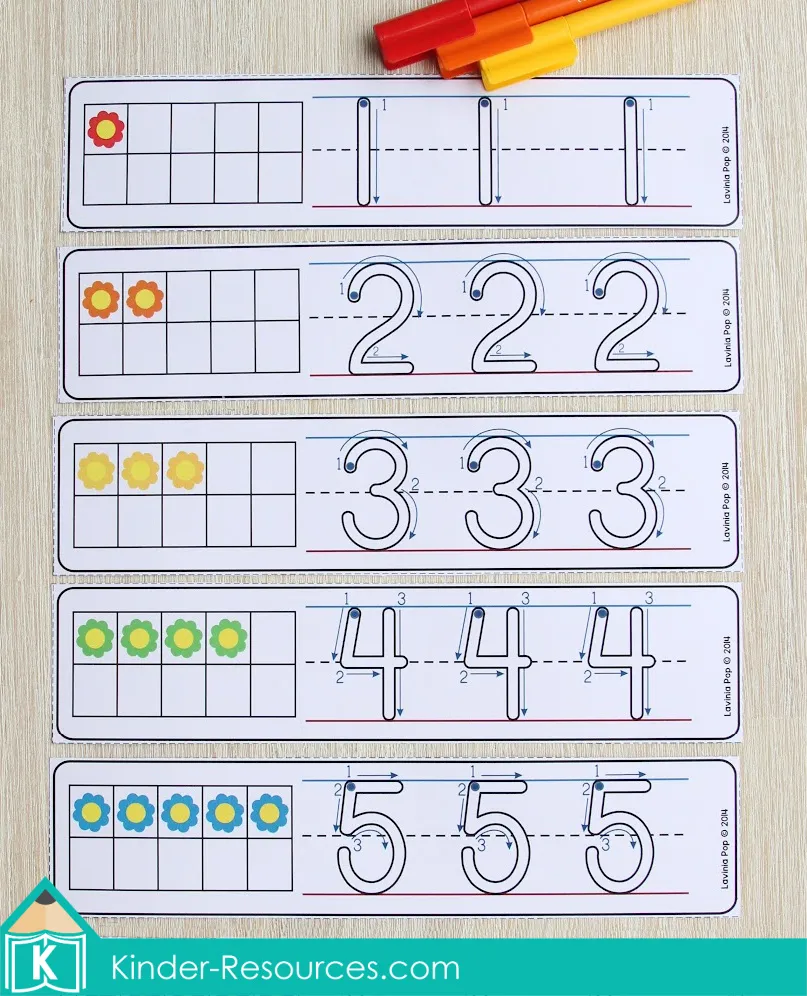
1. Spring Write and Wipe Number Tracing (1–20)
Children trace numbers using a dry erase marker to practice correct number formation. This is a simple and effective way to introduce numbers or reinforce proper formation during centers or independent work.
Educational Benefits:
- Builds number formation and handwriting skills
- Strengthens number recognition
- Supports fine motor development
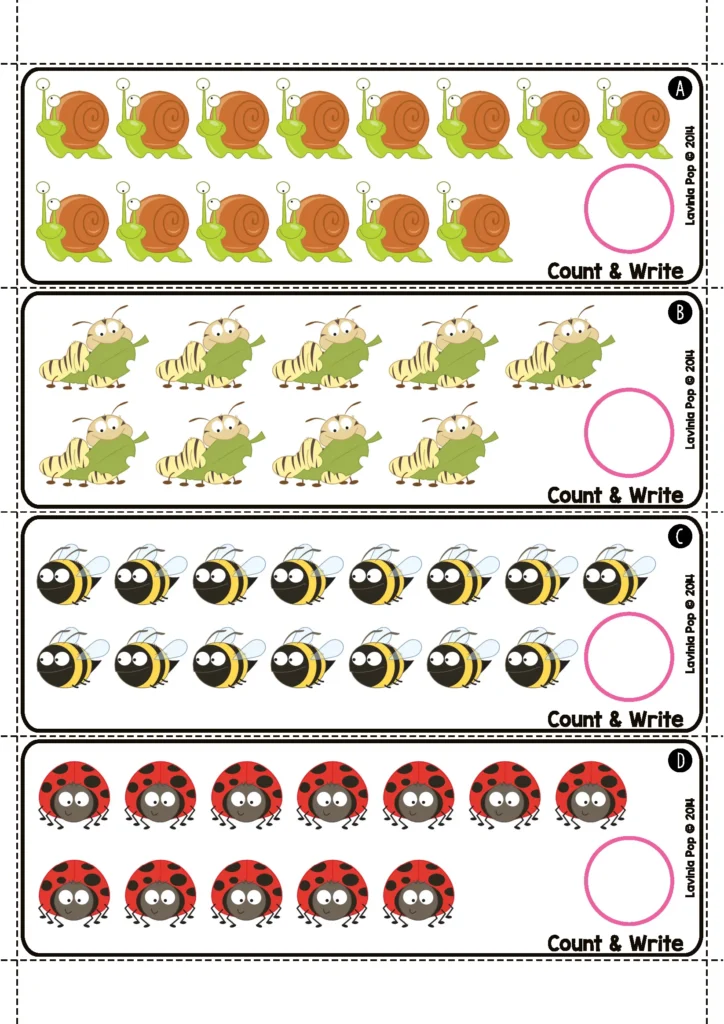
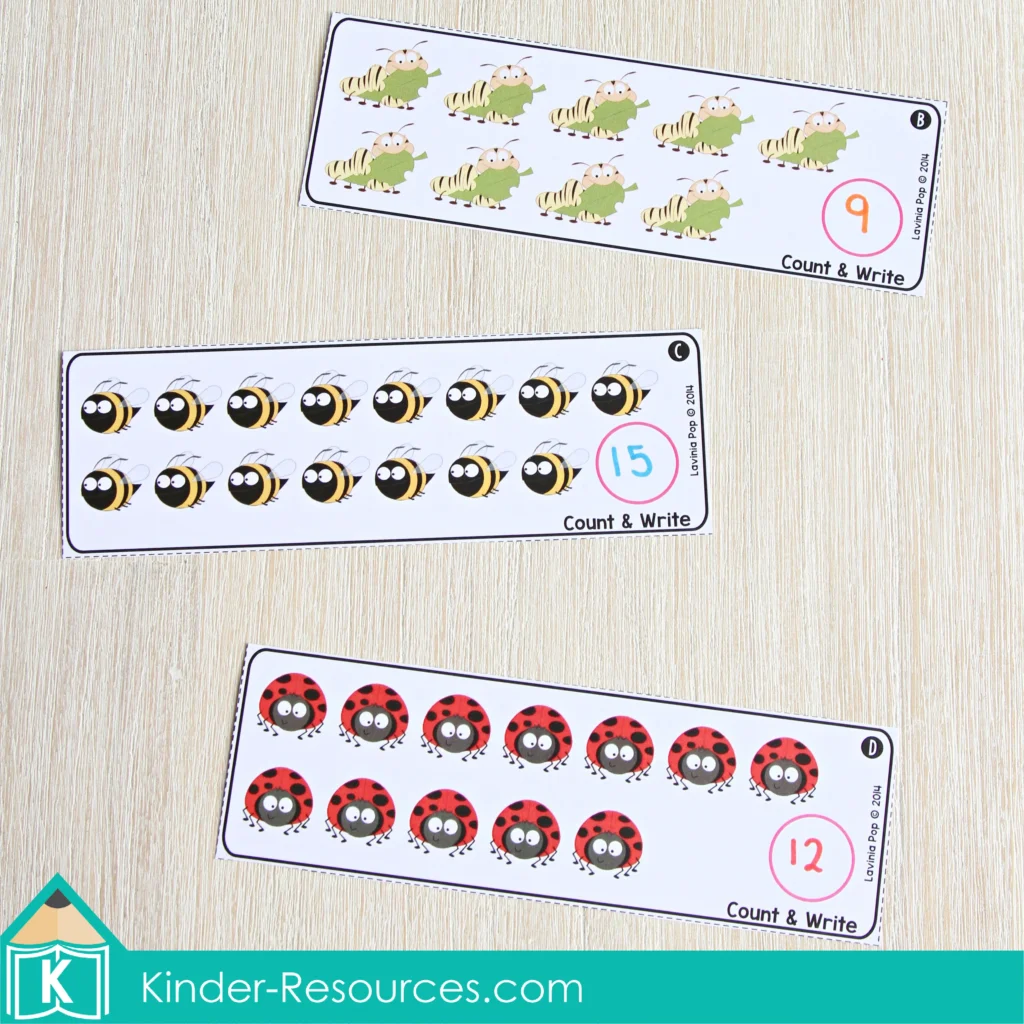
2. Spring Count and Write
Children count the objects on each card and write the correct number. This activity helps connect counting with written numbers in a clear and visual way.
Educational Benefits:
- Develops one to one correspondence
- Reinforces counting accuracy
- Builds confidence in writing numbers
To prepare the cards for use in a write and wipe center, print, laminate them, and then cut them apart. The aim of this activity is for children to count the items on the card and write their answer in the circle provided.
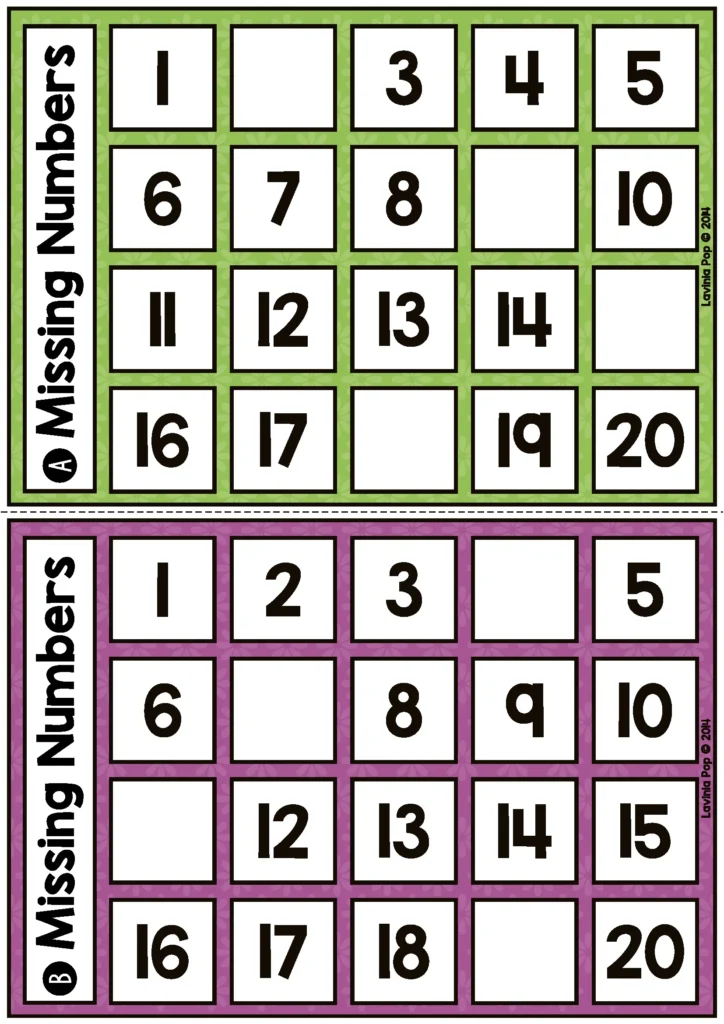
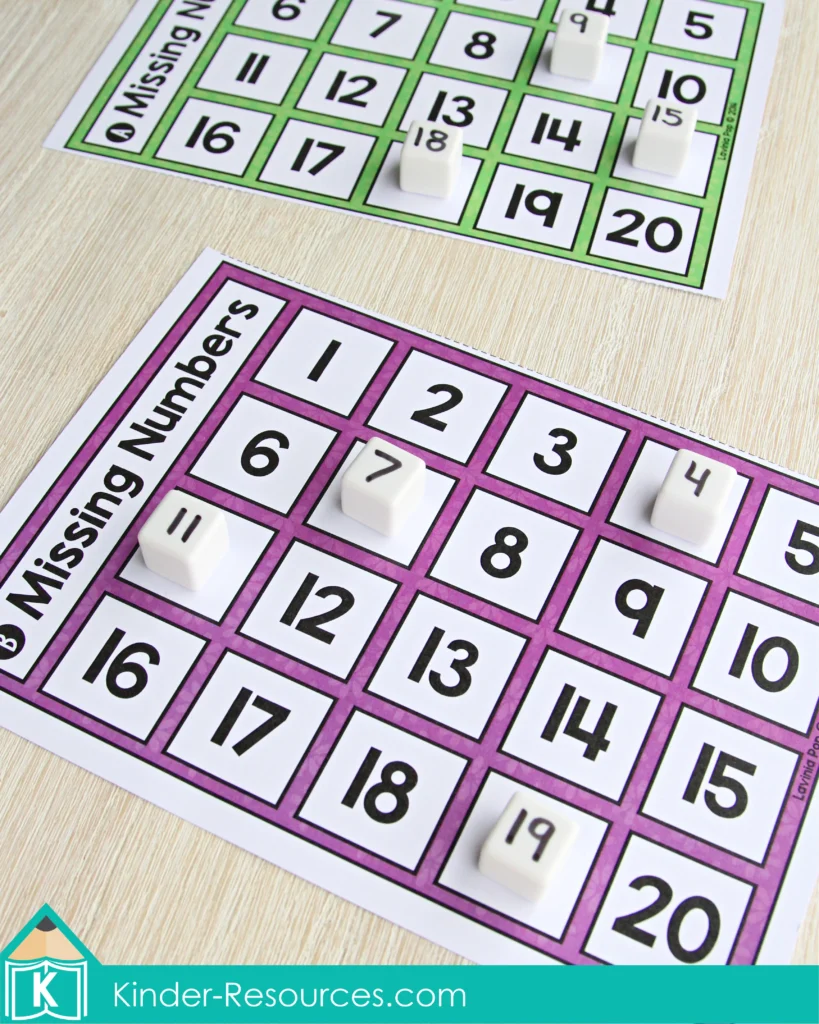
3A. Spring Missing Numbers (1–20)
Children identify and complete missing numbers in a sequence. This activity is great for reinforcing number order in a simple and structured way.
Educational Benefits:
- Strengthens number order understanding
- Builds sequencing skills
- Supports number fluency
3B. Spring Missing Numbers (1–50)
Children extend their number knowledge by completing larger number sequences. This helps build confidence as they move beyond basic number ranges.
Educational Benefits:
- Expands number range understanding
- Builds confidence with larger numbers
- Supports early number patterns
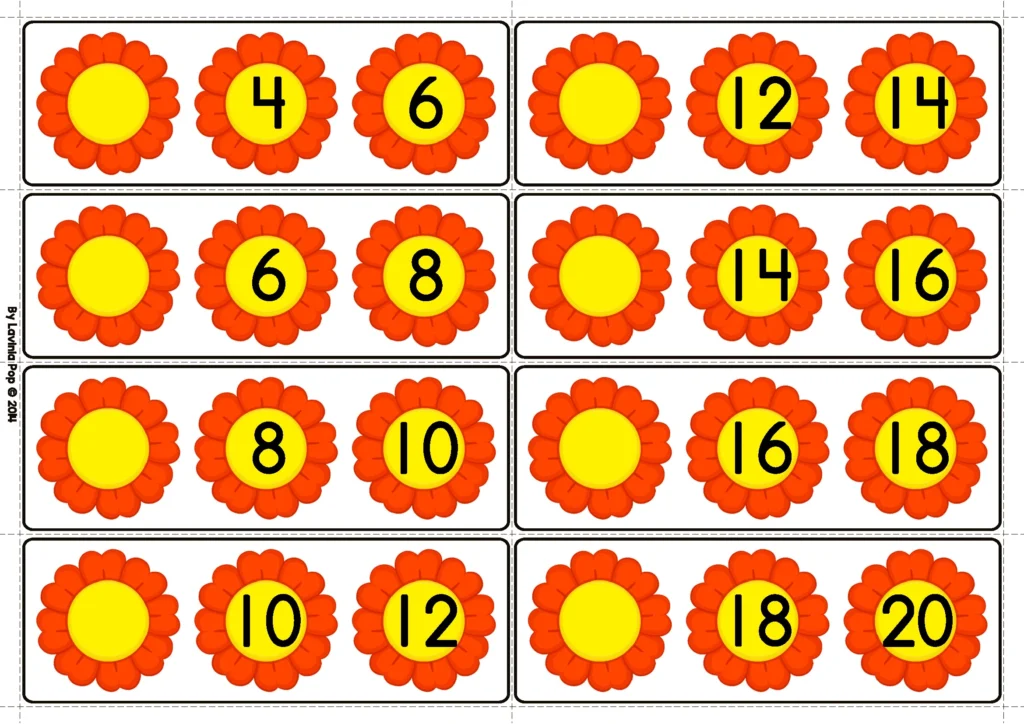
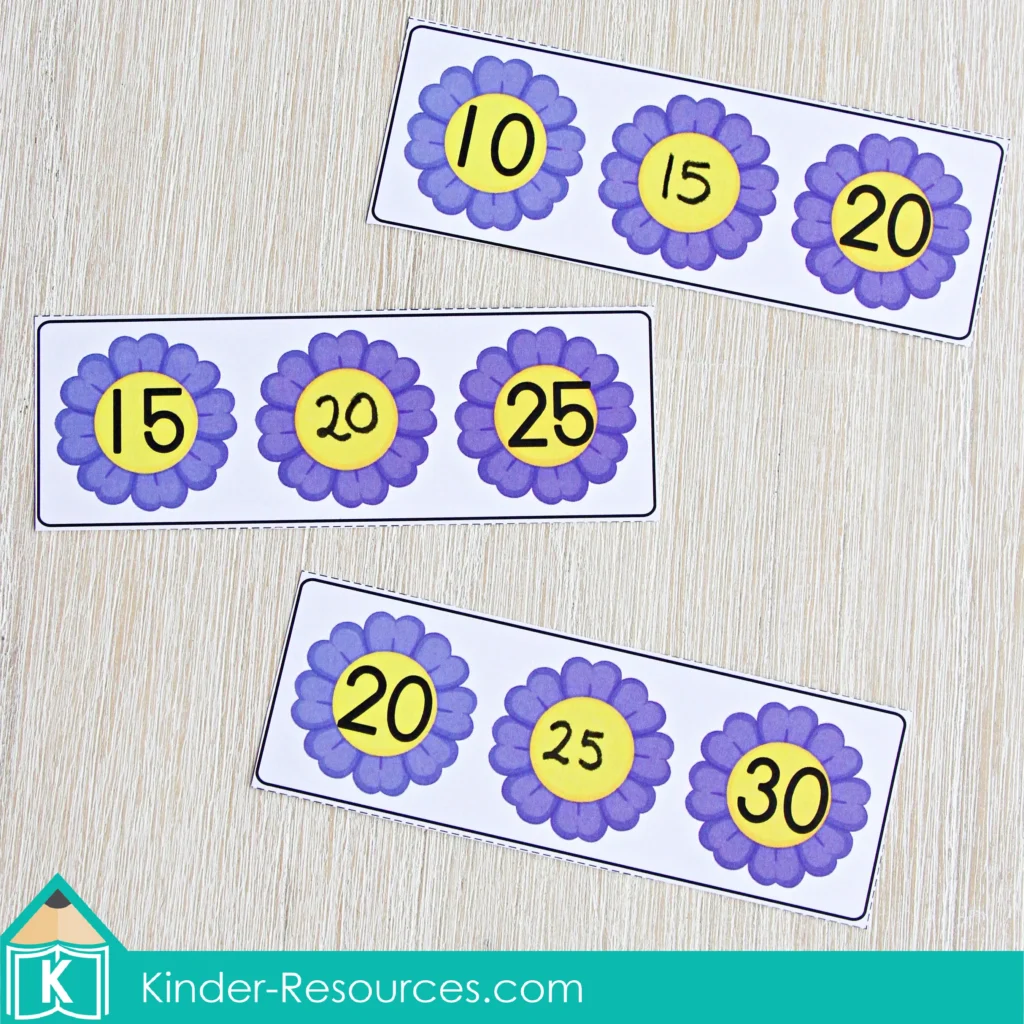
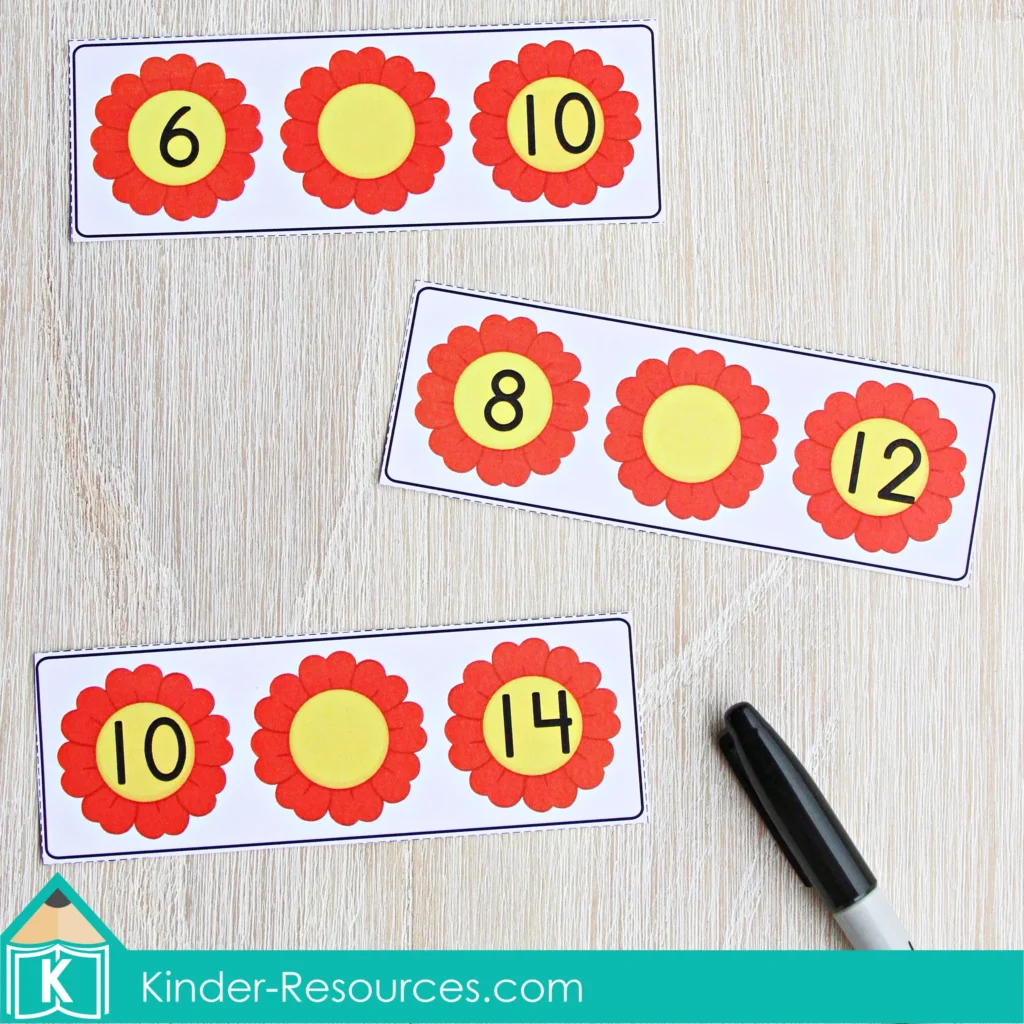
4A. Skip Counting by 2s (Write and Wipe)
Children complete skip counting sequences by 2s using a dry erase marker. This is a great introduction to number patterns.
Educational Benefits:
- Builds early multiplication foundations
- Strengthens number patterns
- Improves counting fluency
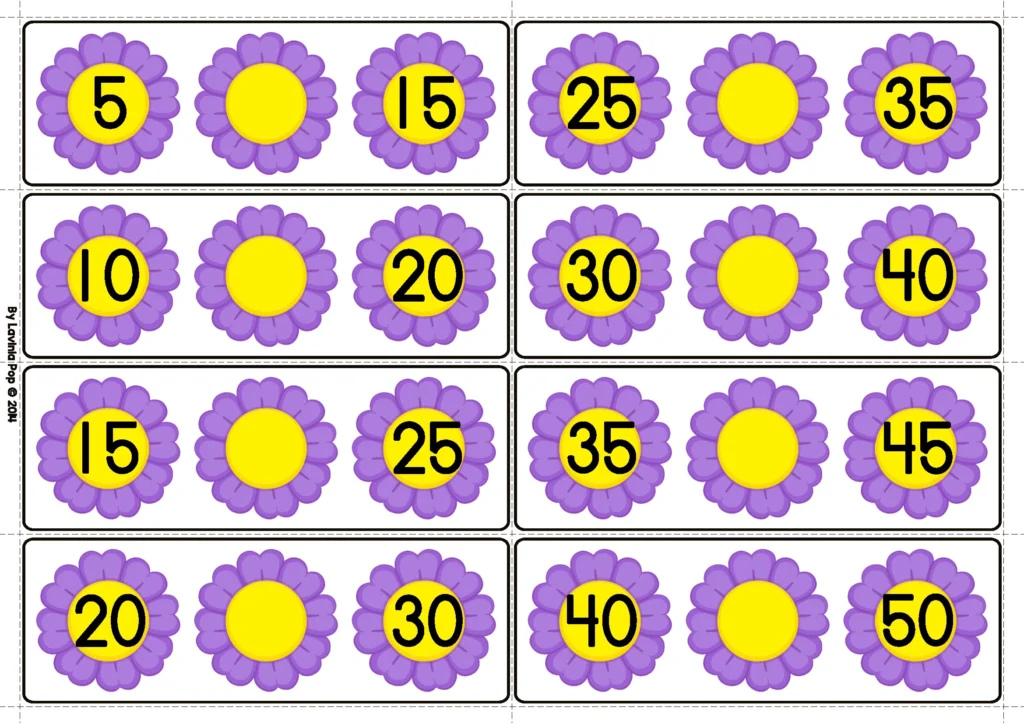
4B. Skip Counting by 5s (Write and Wipe)
Children practice counting by 5s in a structured and visual format. This skill connects well to real life math situations.
Educational Benefits:
- Supports counting in real life contexts
- Reinforces pattern recognition
- Builds number confidence
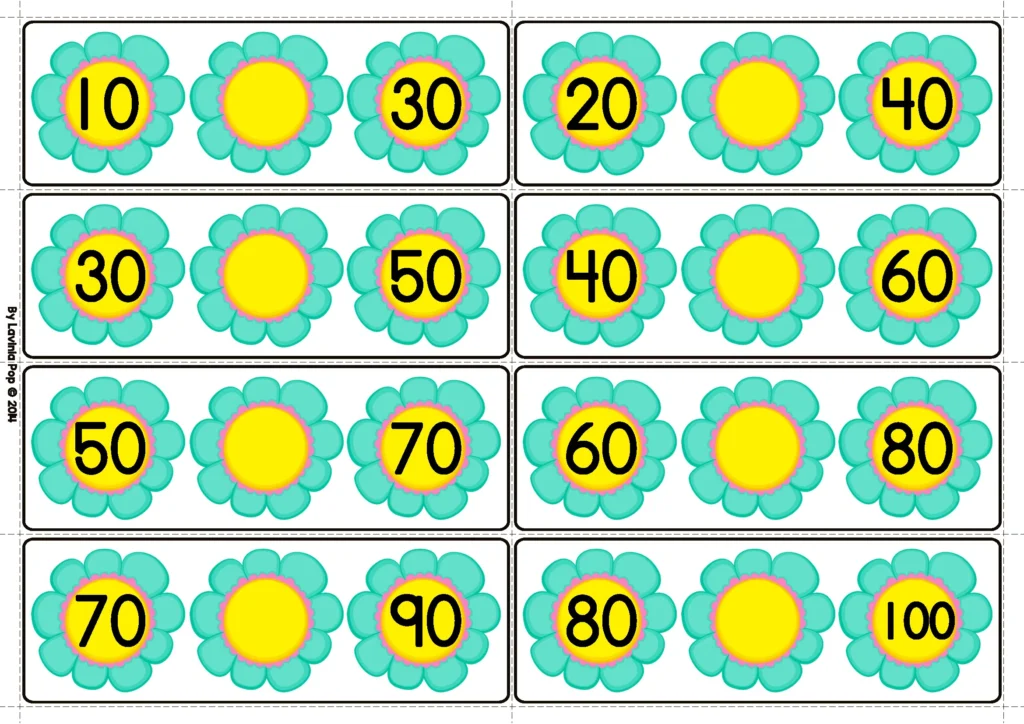
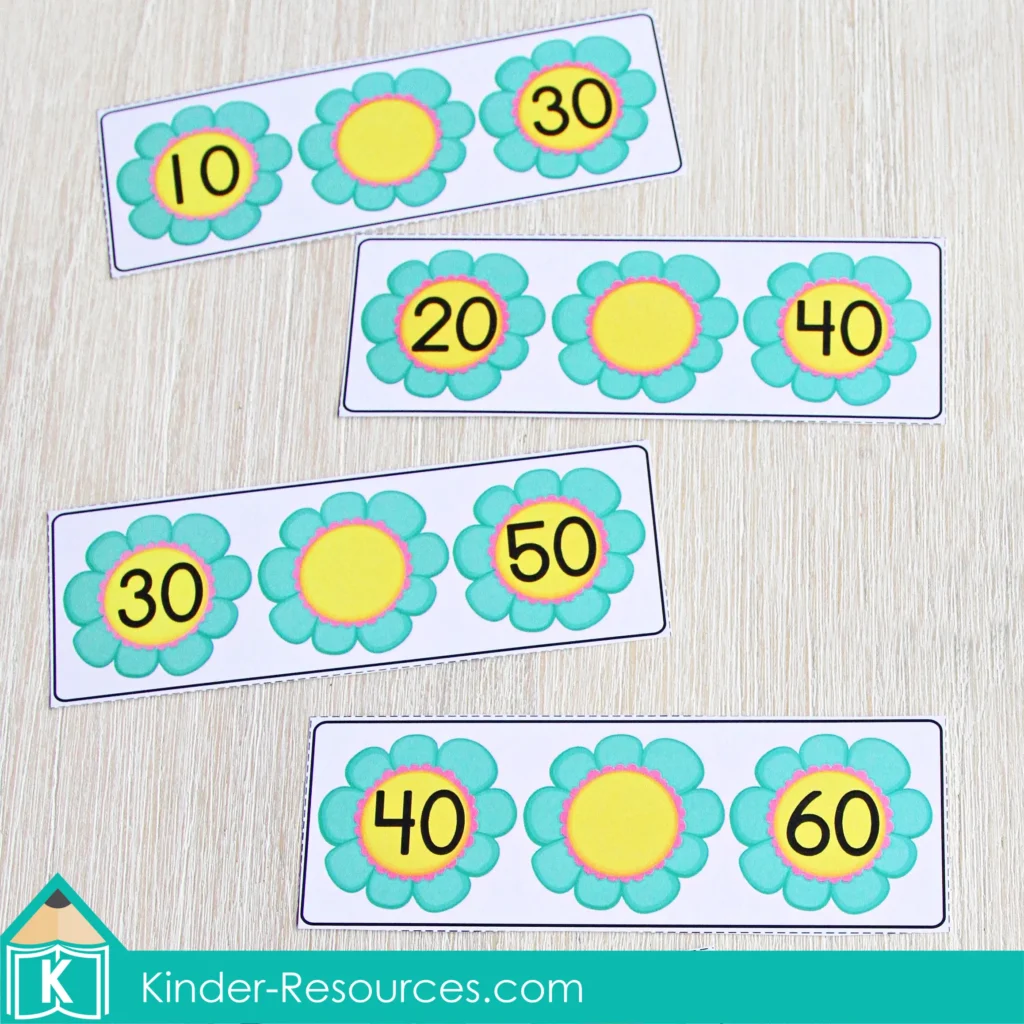
4C. Skip Counting by 10s (Write and Wipe)
Children complete skip counting sequences by 10s. This activity supports understanding of number structure and grouping.
Educational Benefits:
- Builds place value awareness
- Strengthens counting efficiency
- Prepares for working with larger numbers
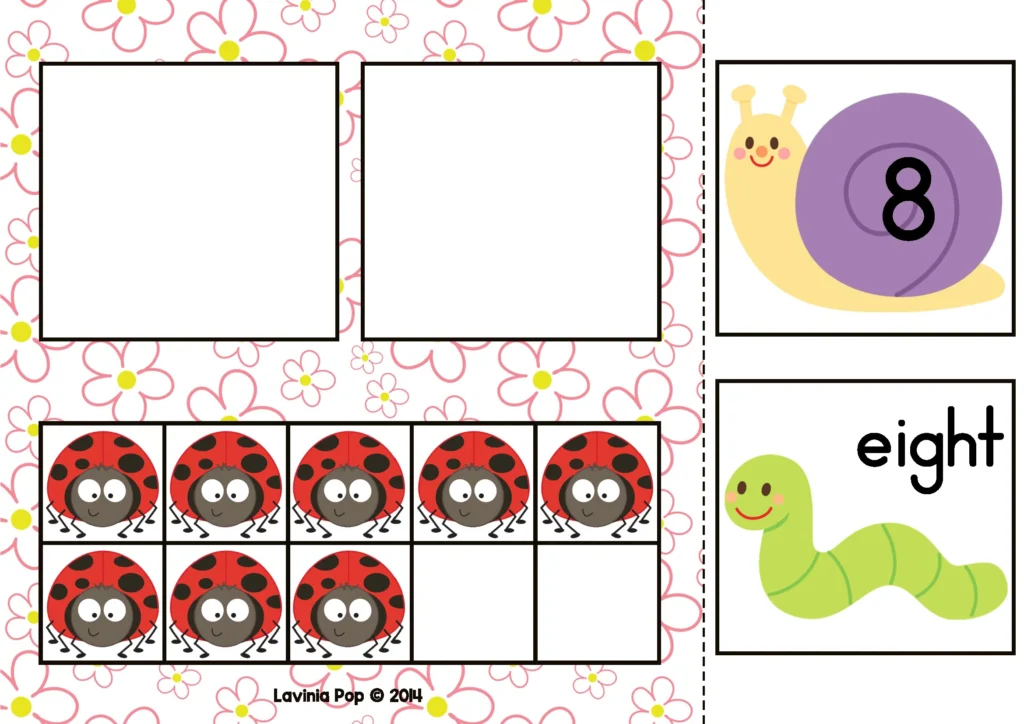
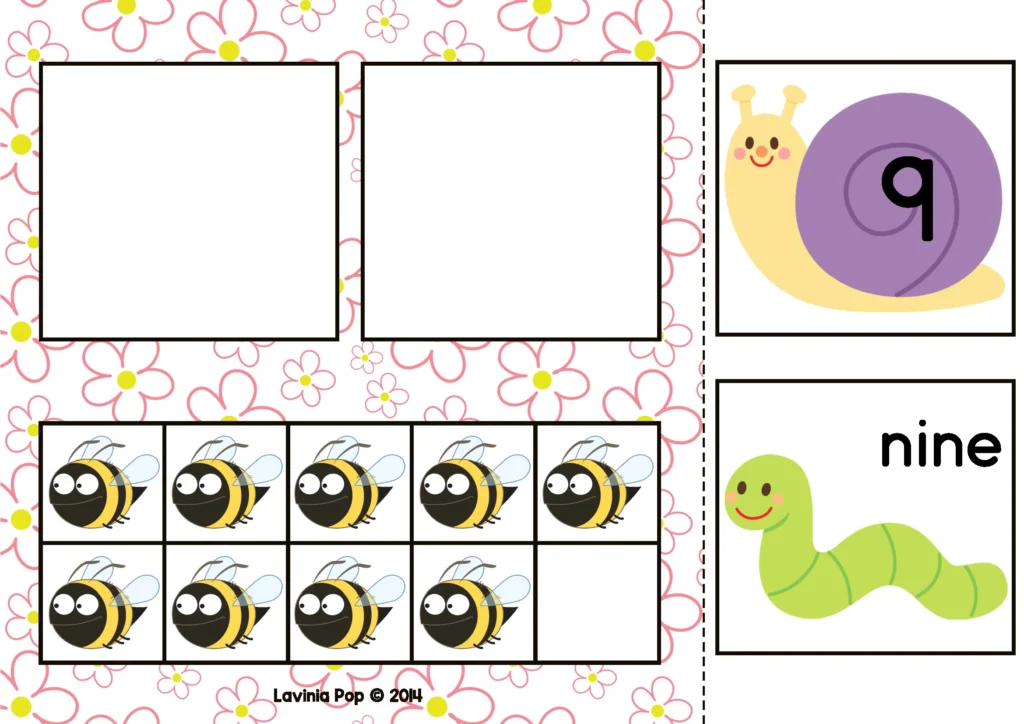
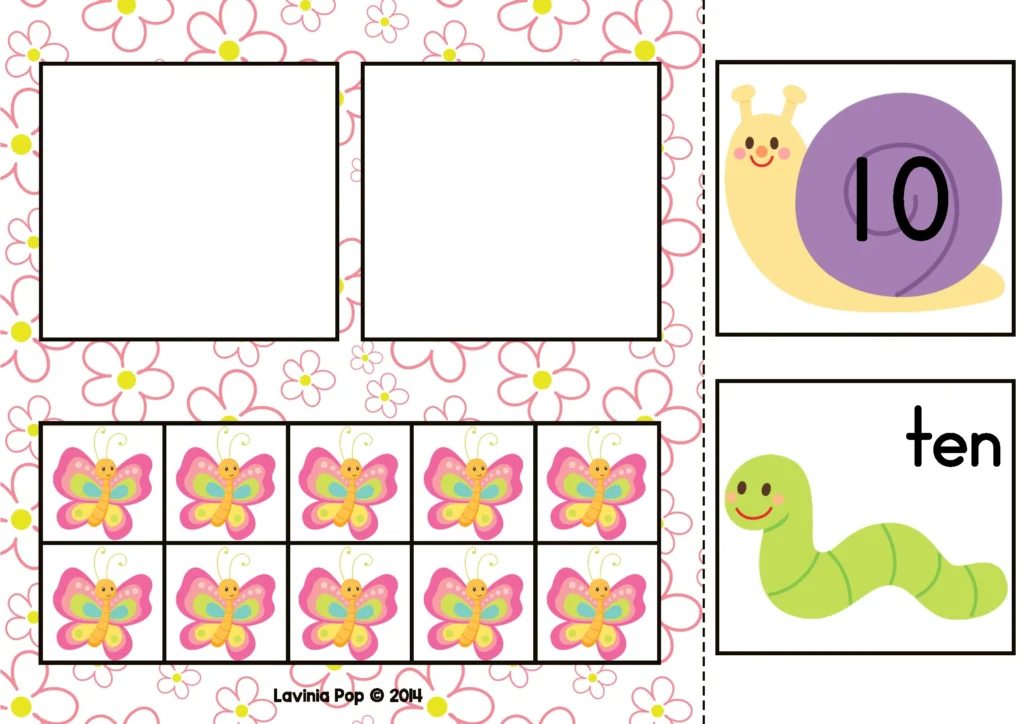
5. Ten Frame Match (Up to 20)
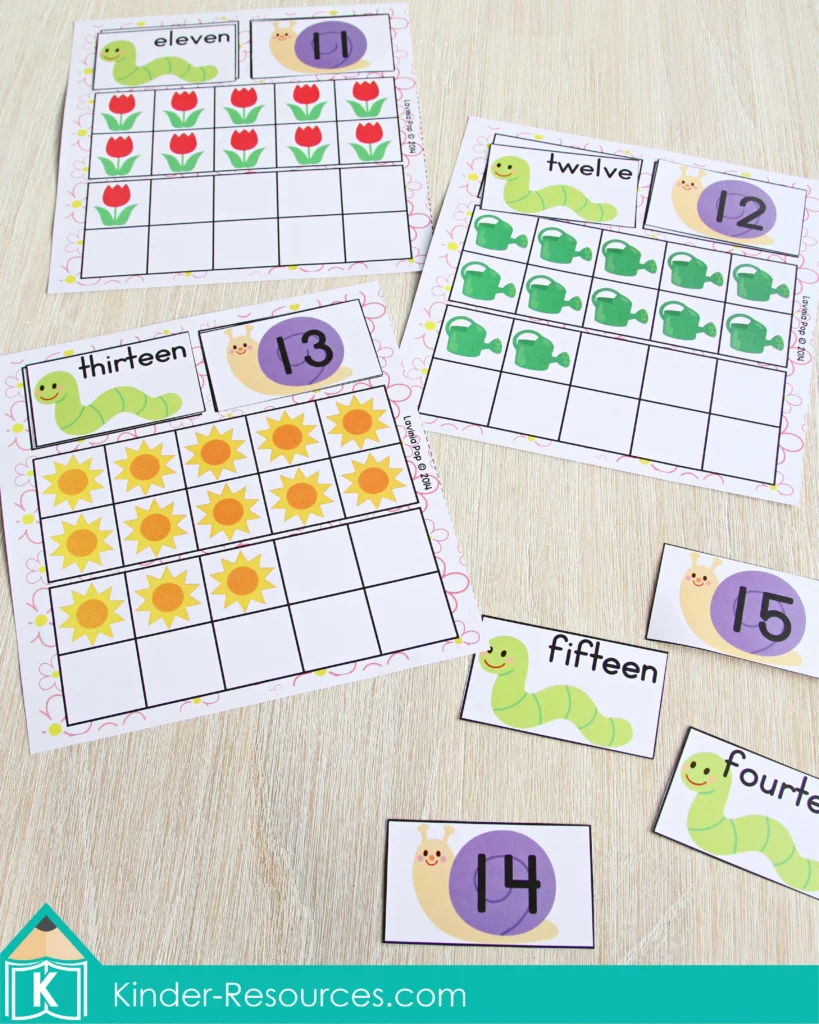
Children match ten frames with the correct numbers. This helps them visualize how numbers are built.
Educational Benefits:
- Builds strong number sense
- Supports visual understanding of numbers
- Prepares for addition strategies
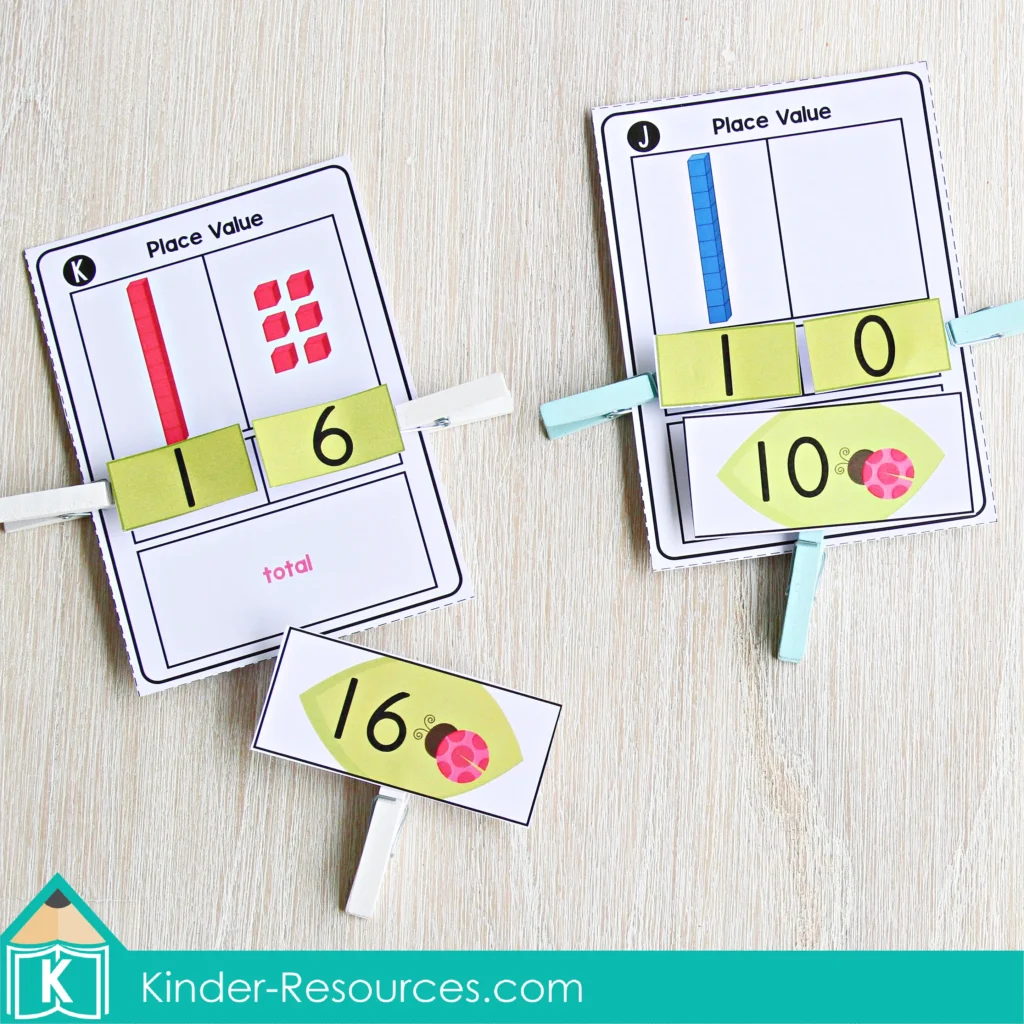
6. Place Value (Tens and Ones to 20)
Children identify tens, ones, and the total number. This activity introduces how numbers are made up.
Educational Benefits:
- Introduces place value concepts
- Strengthens number understanding
- Builds foundation for future math skills
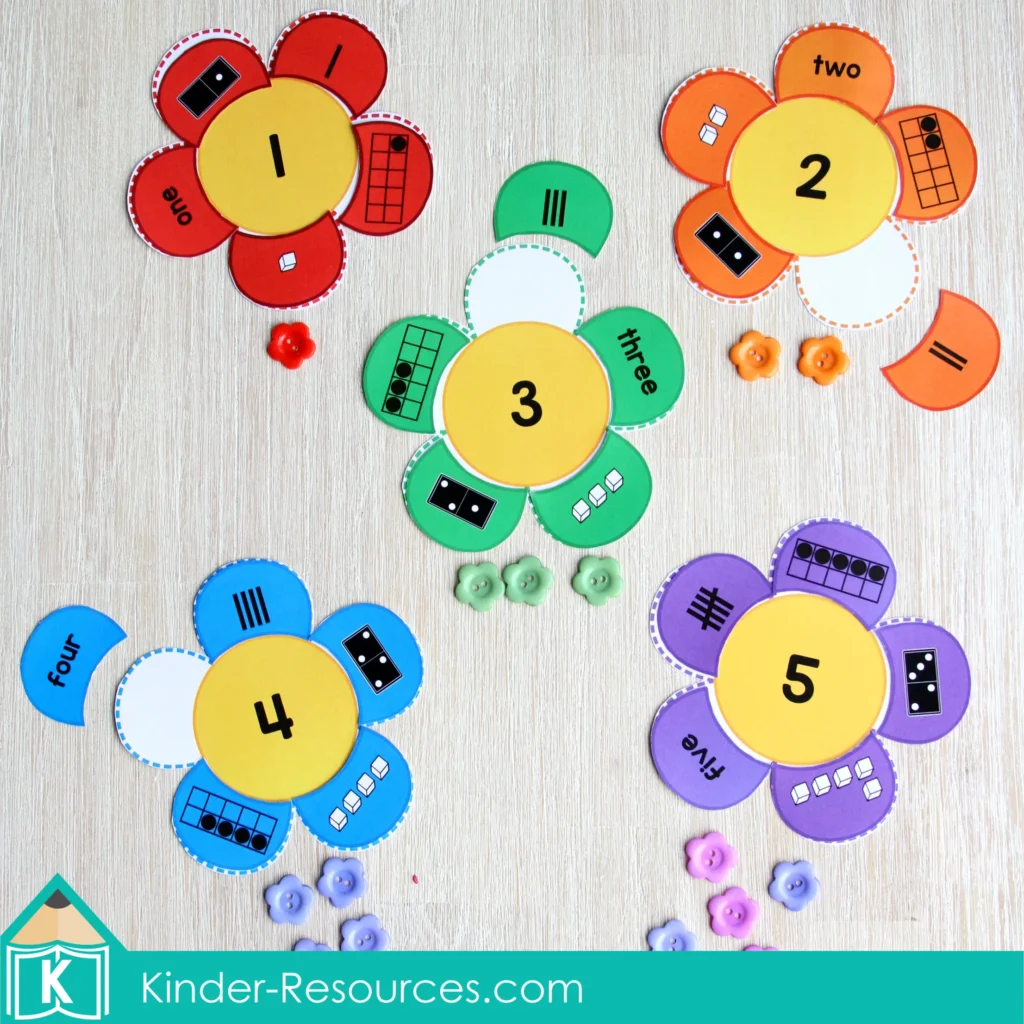
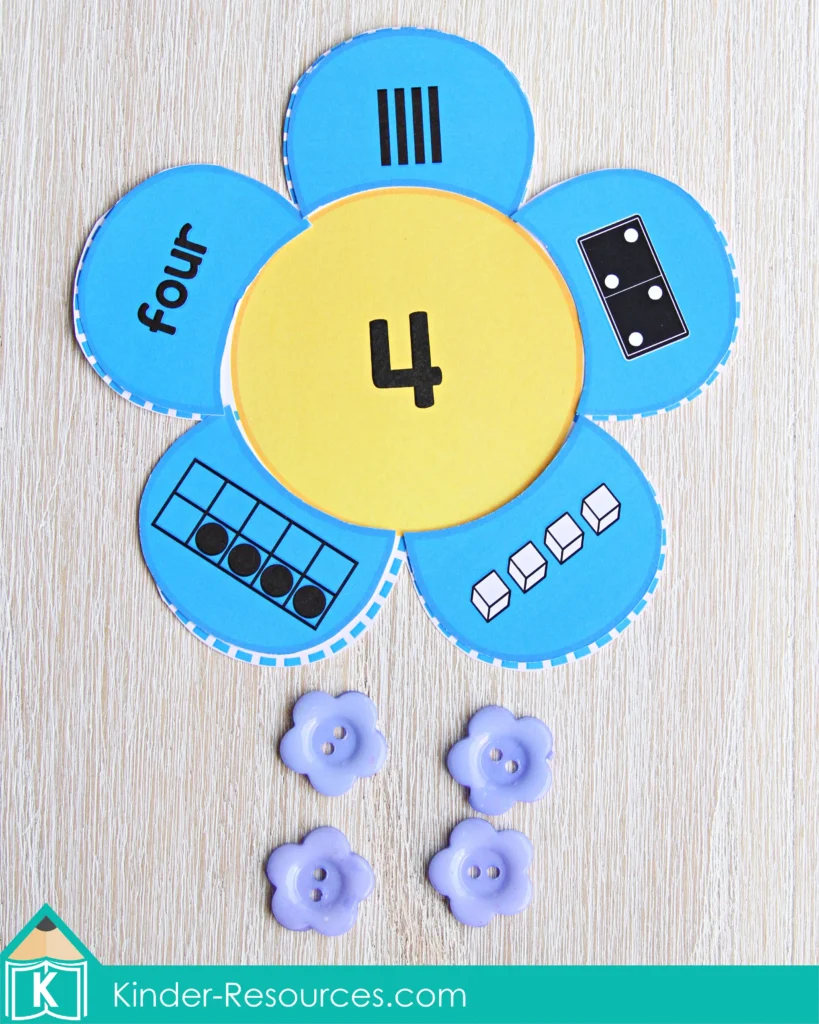
7. Number Match (1-20)
Children match numbers shown in different forms, such as numerals, words, or pictures. This helps deepen understanding.
Educational Benefits:
- Connects different number representations
- Builds flexible thinking
- Reinforces number recognition
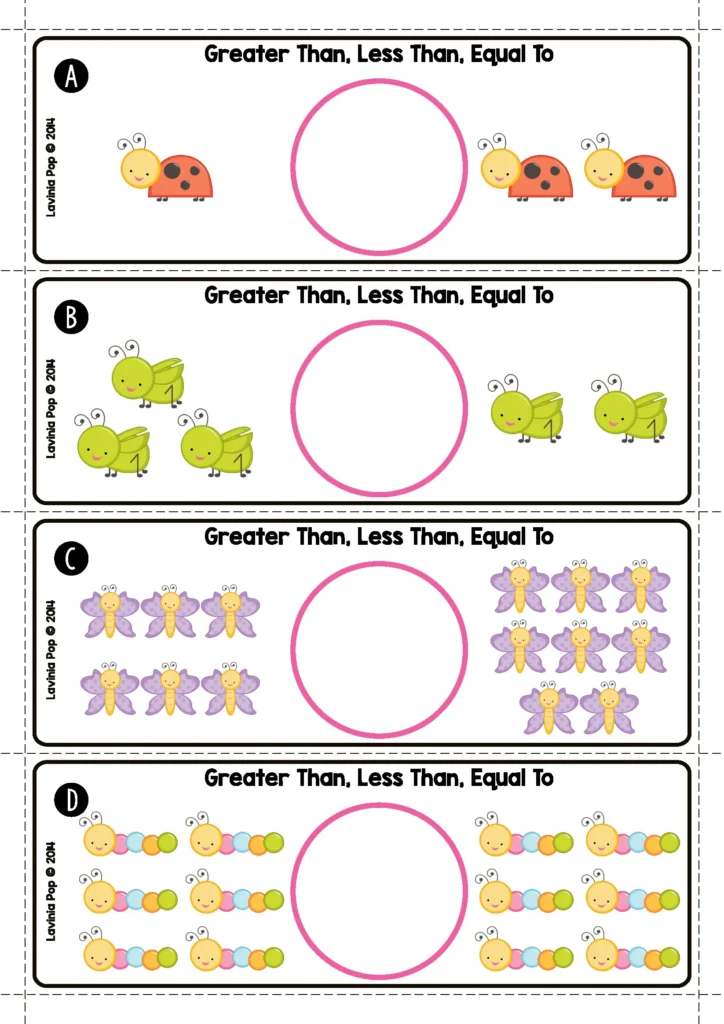
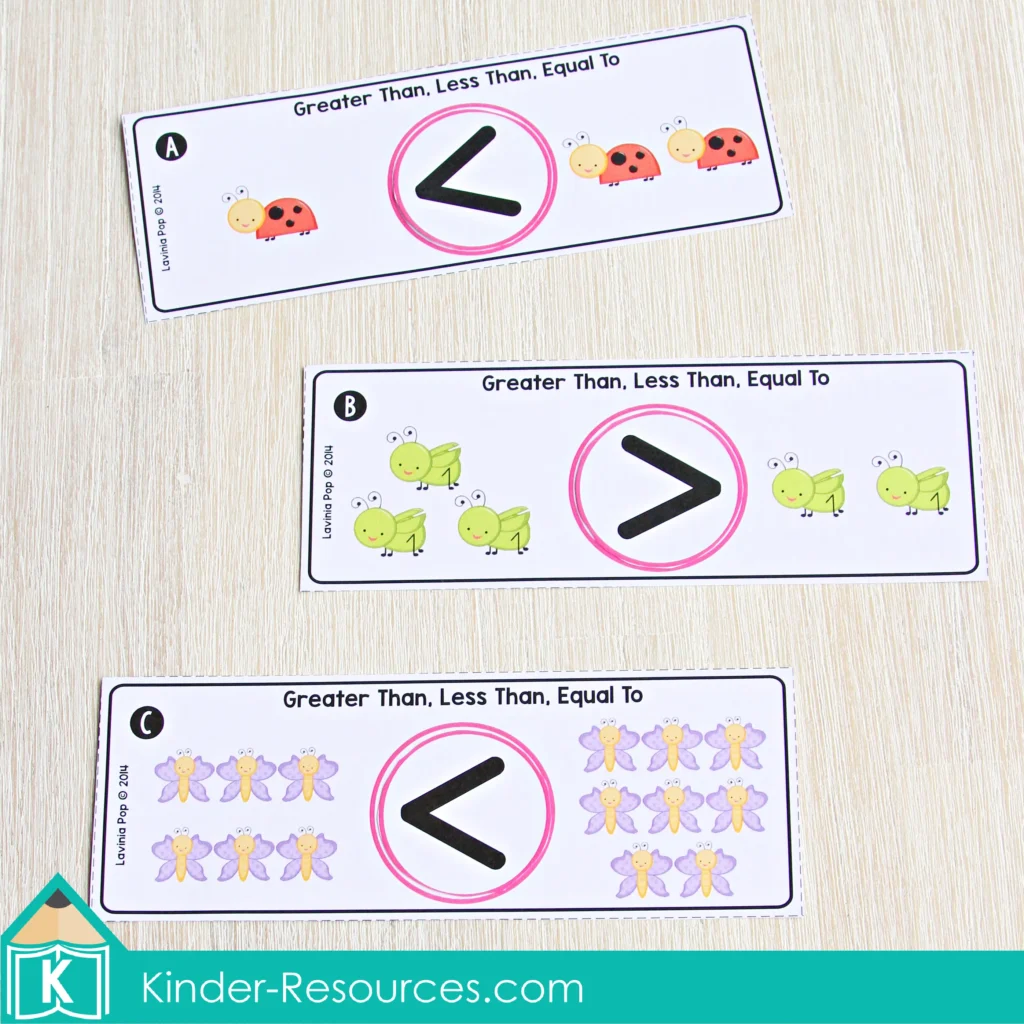
8. Greater Than, Less Than, Equal To (Pictures)
Children compare groups of objects to determine which is greater, less, or equal. This is a visual way to introduce comparison.
Educational Benefits:
- Builds comparison skills
- Develops math vocabulary
- Strengthens visual reasoning
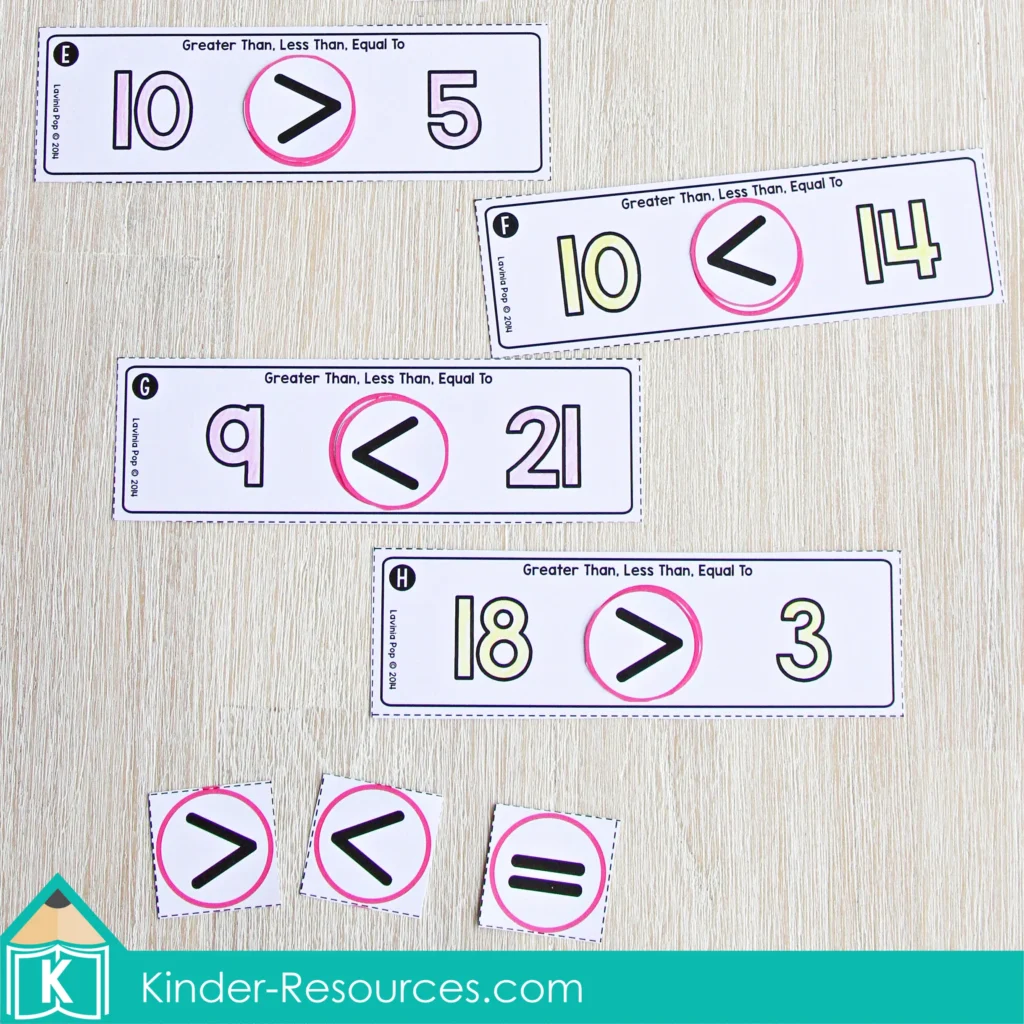
9. Greater Than, Less Than, Equal To (Numbers)
Children compare numbers up to 100. This extends comparison skills to larger values.
Educational Benefits:
- Reinforces number magnitude
- Builds logical thinking
- Prepares for more advanced math concepts
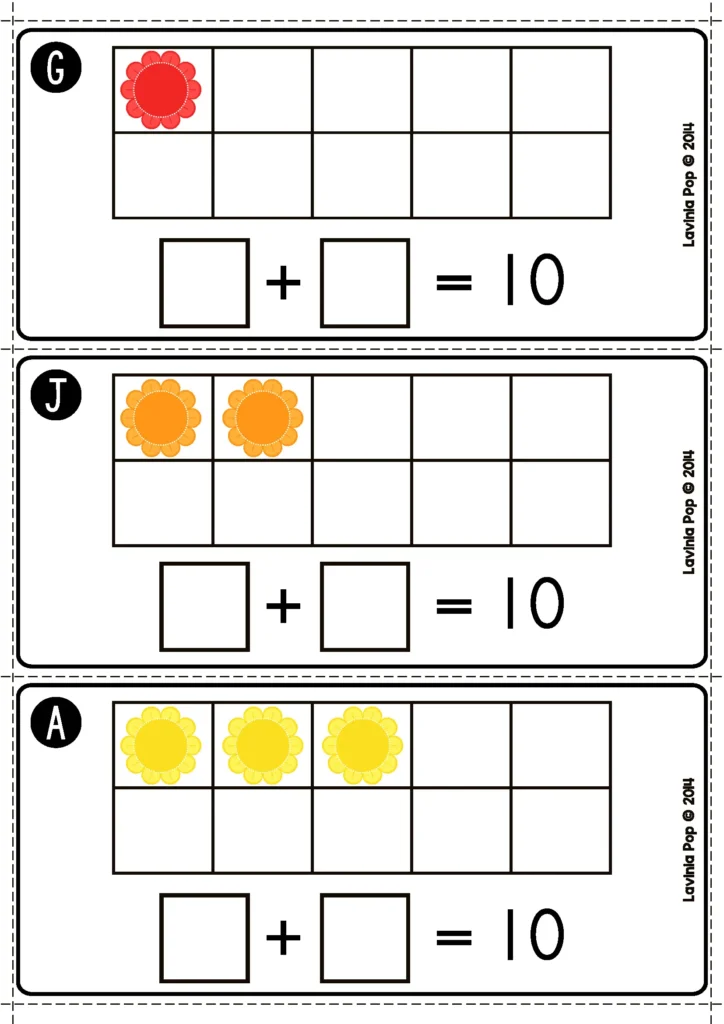
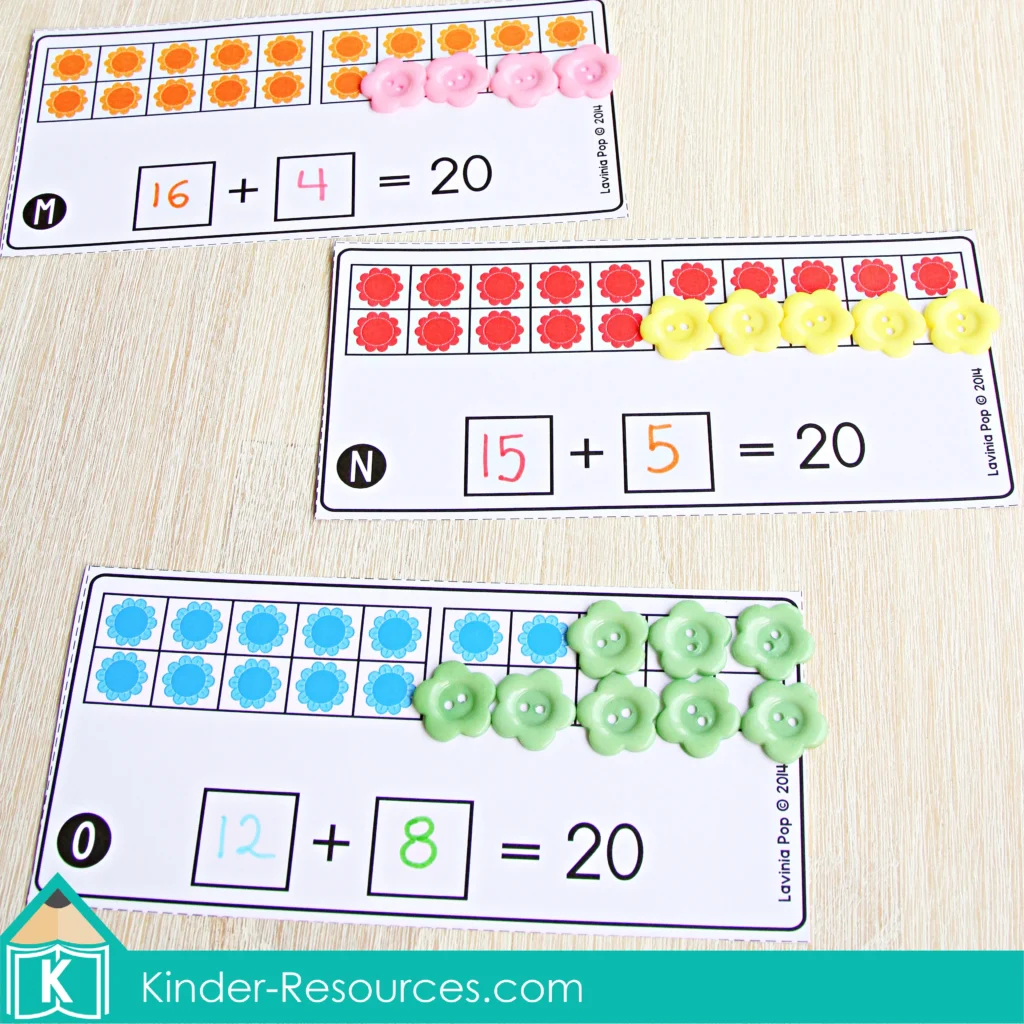
10. Ten Frame Addition (Make 10 and 20)
Children explore different ways to make 10 and 20 using ten frames. This builds strong addition understanding.
Educational Benefits:
- Builds addition strategies
- Strengthens number bonds
- Supports mental math
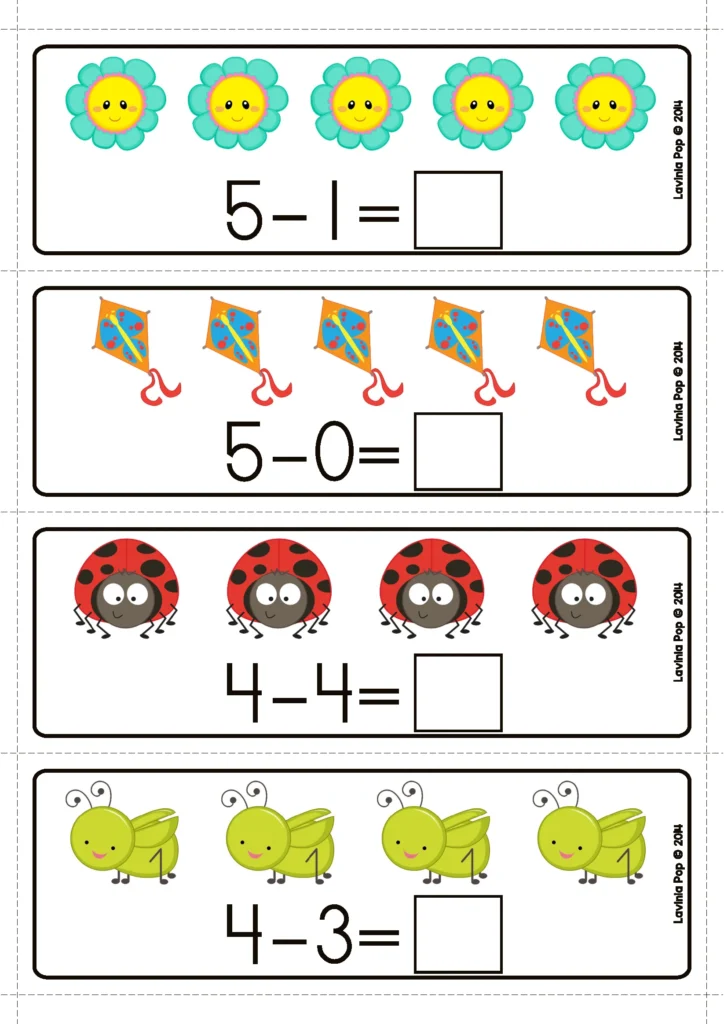
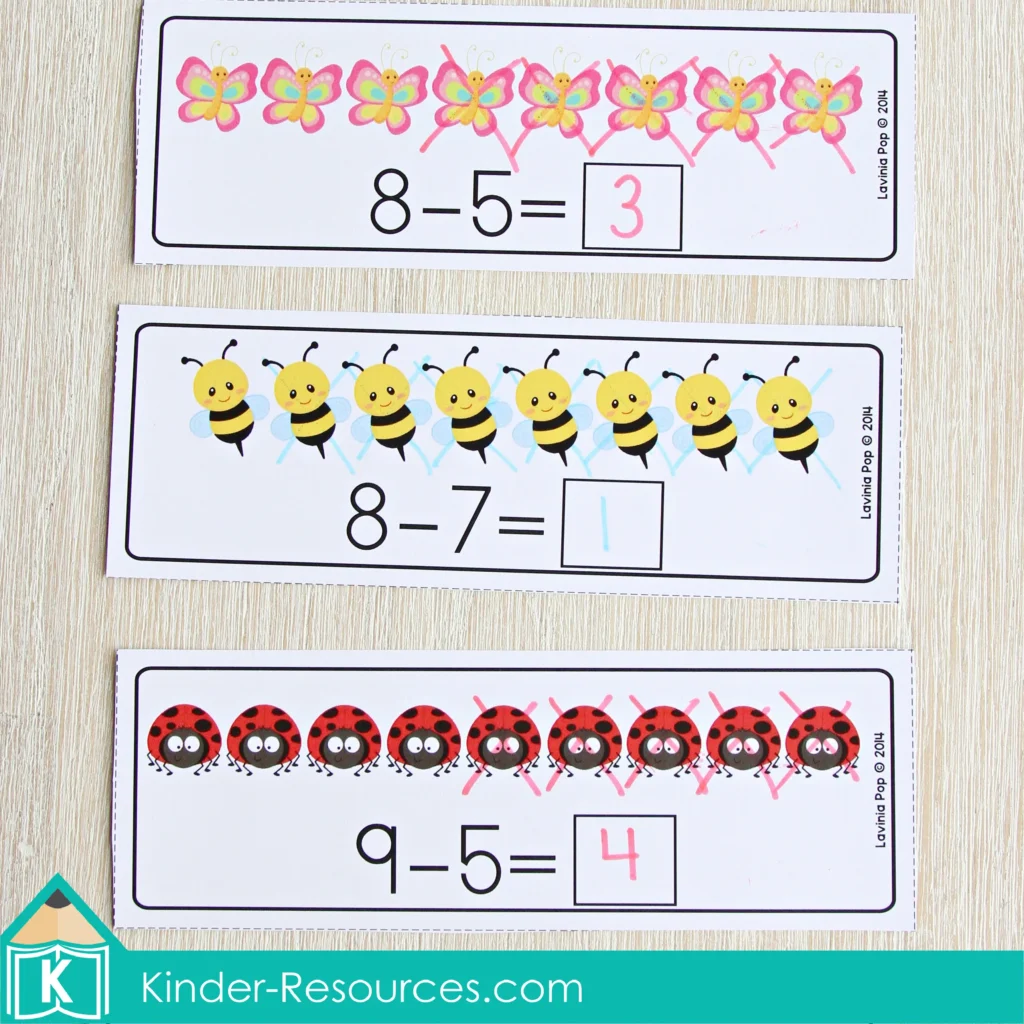
11. Subtraction with Pictures (1–10)
Children solve subtraction problems using visual supports. This makes subtraction easier to understand.
Educational Benefits:
- Builds conceptual understanding of subtraction
- Supports visual learners
- Develops problem solving skills
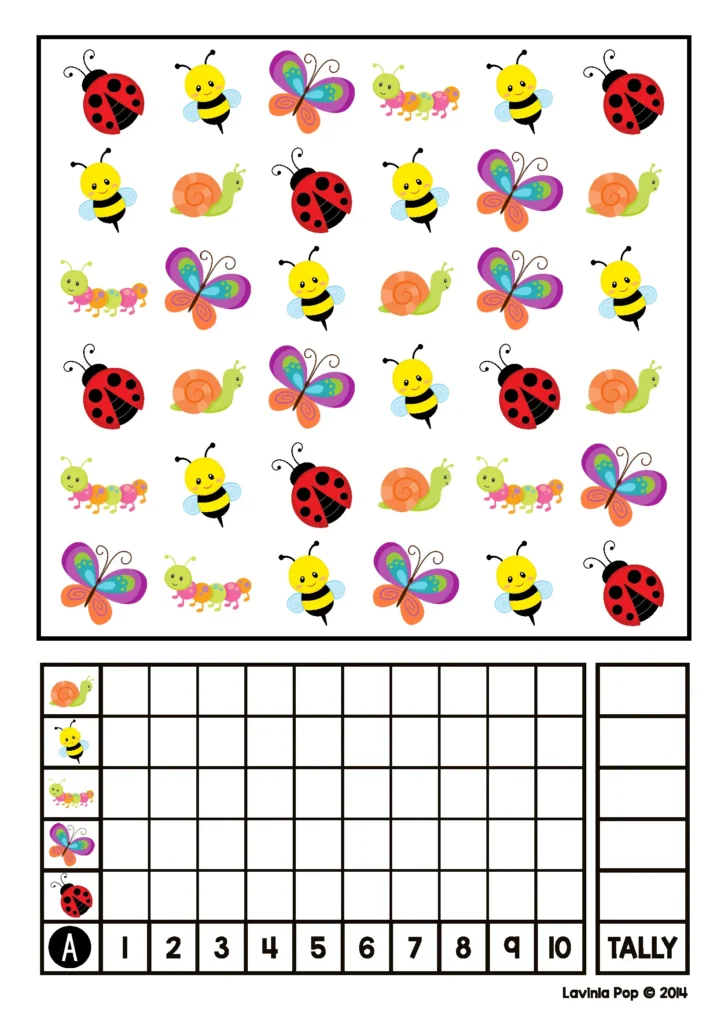
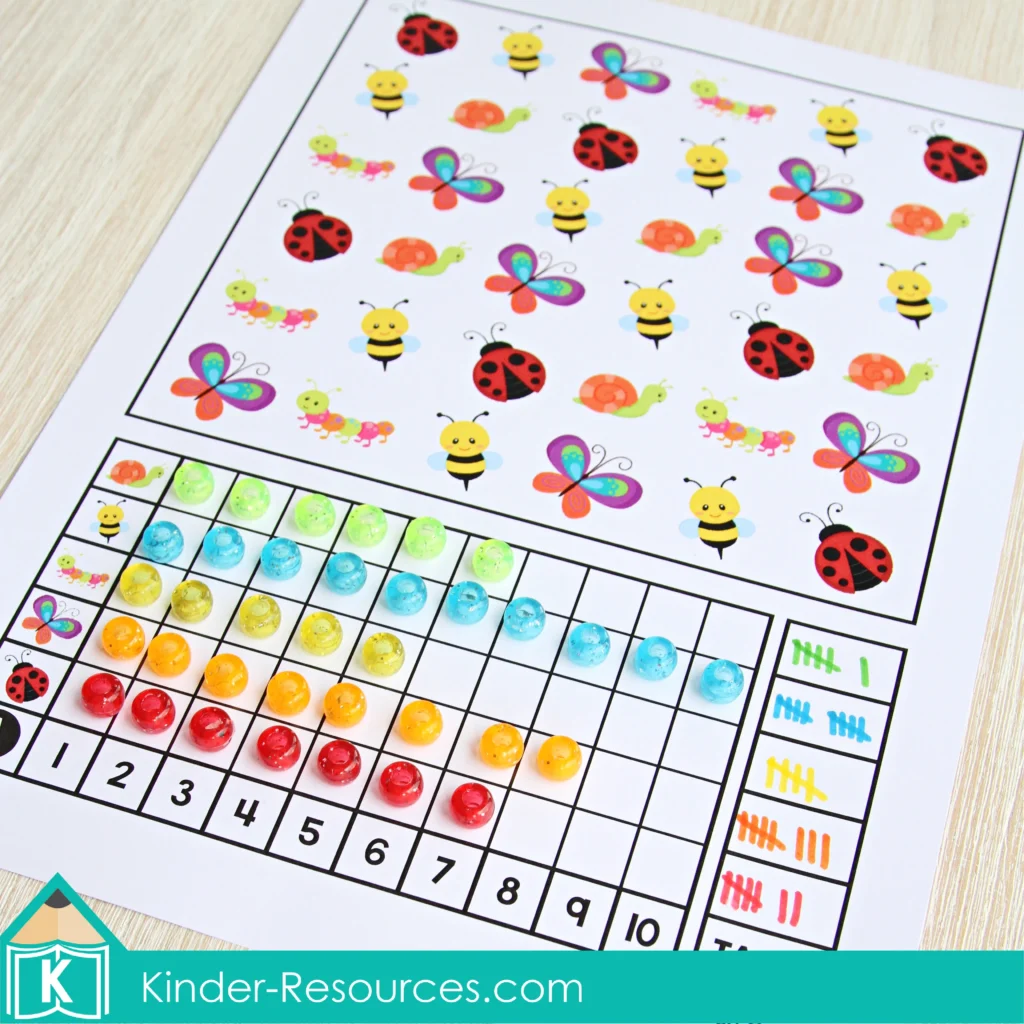
12. Count, Tally, and Graph
Children count, tally, and represent data on a graph. This introduces early data skills in a simple way.
Educational Benefits:
- Introduces data representation
- Builds counting accuracy
- Strengthens graphing skills
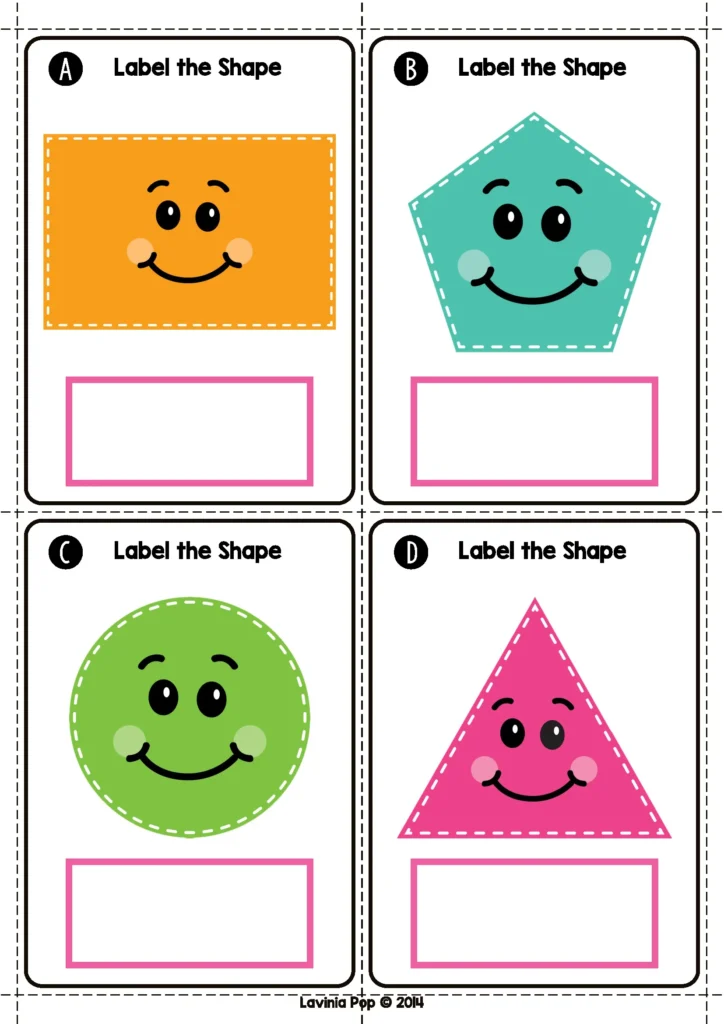
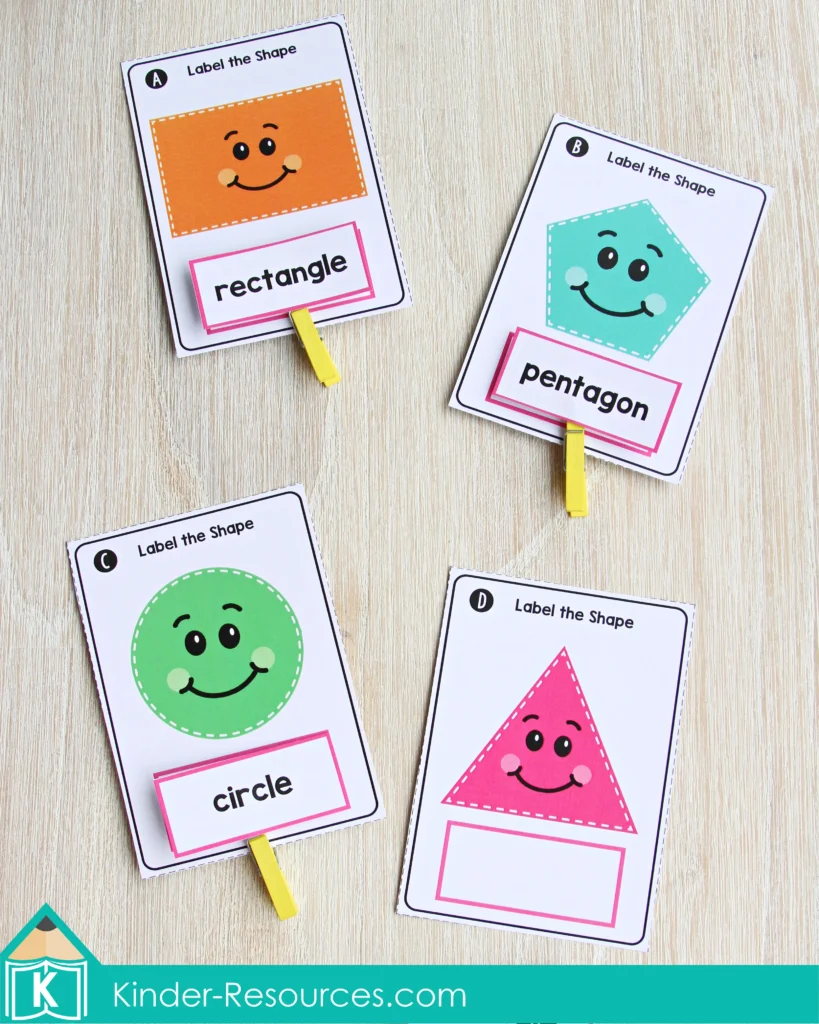
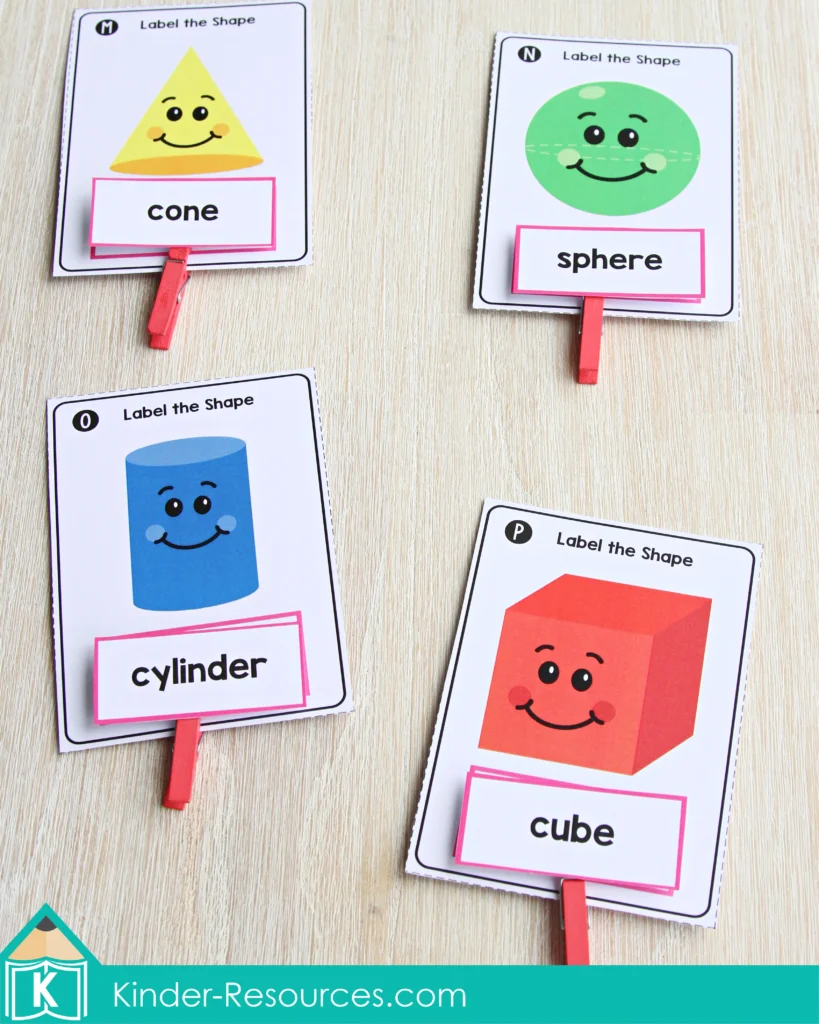
13. Label the Shape (2D and 3D)
Children identify shapes and match them with their names. This builds shape recognition and vocabulary.
Educational Benefits:
- Builds shape recognition
- Expands math vocabulary
- Connects 2D and 3D shapes
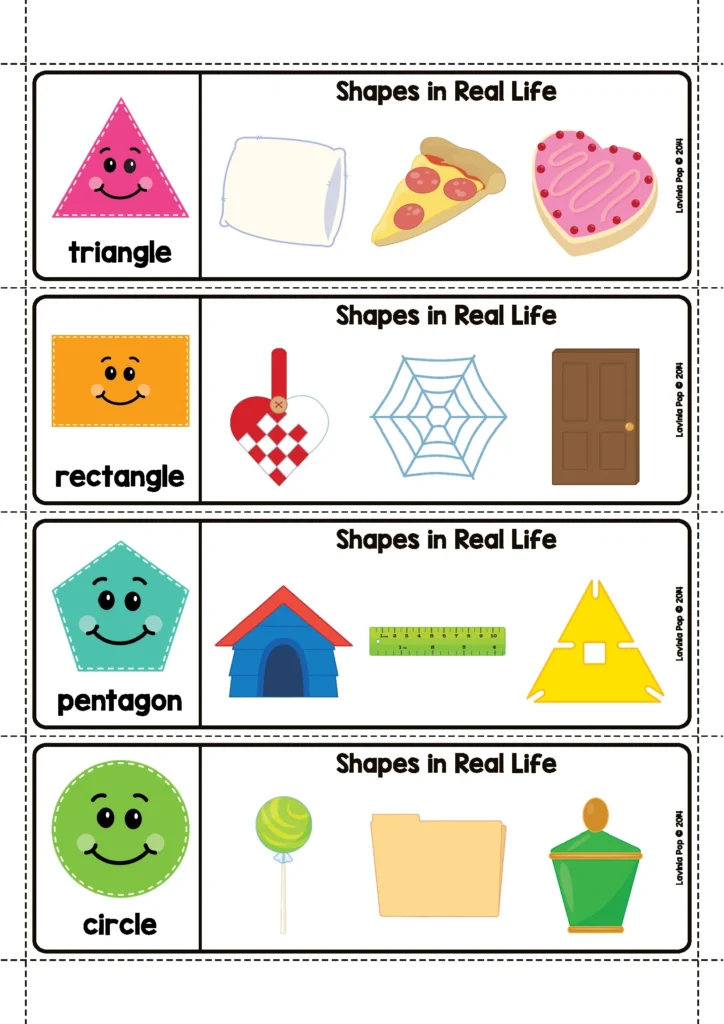
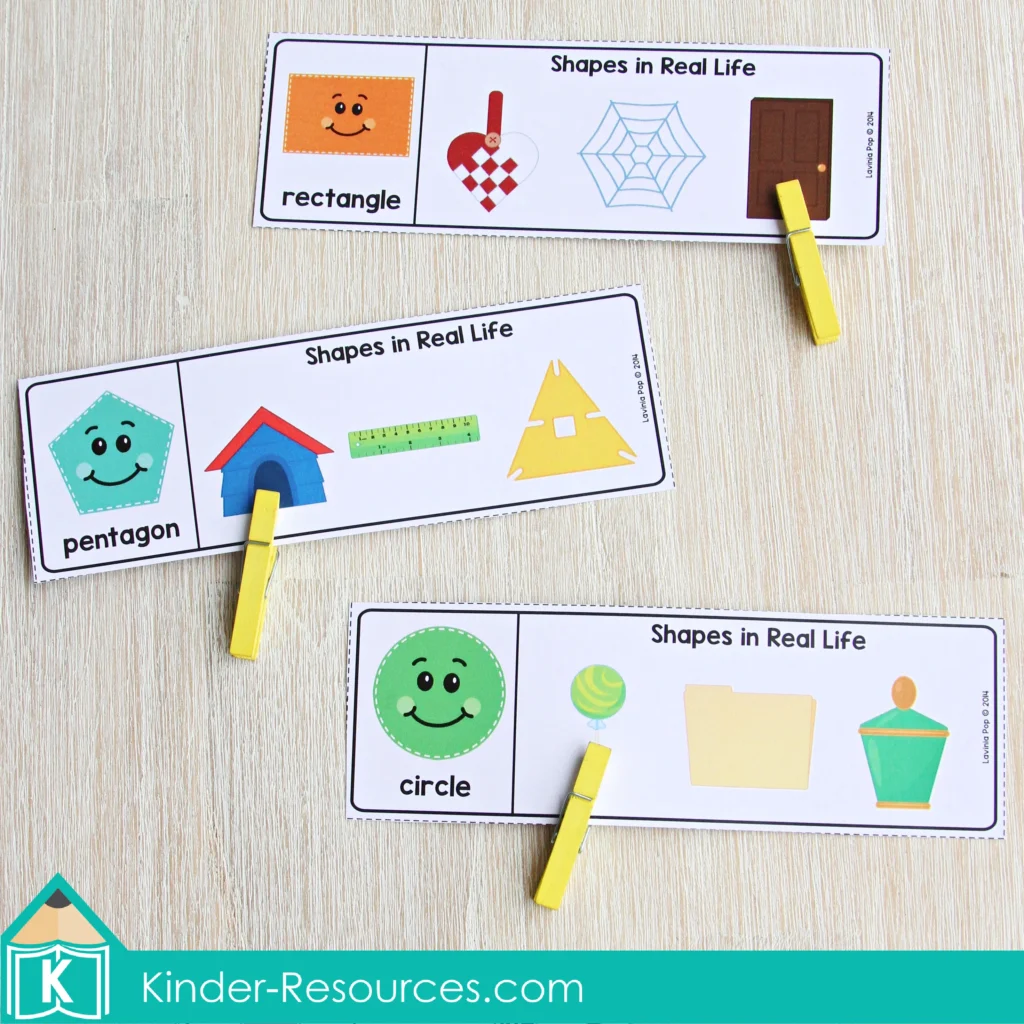
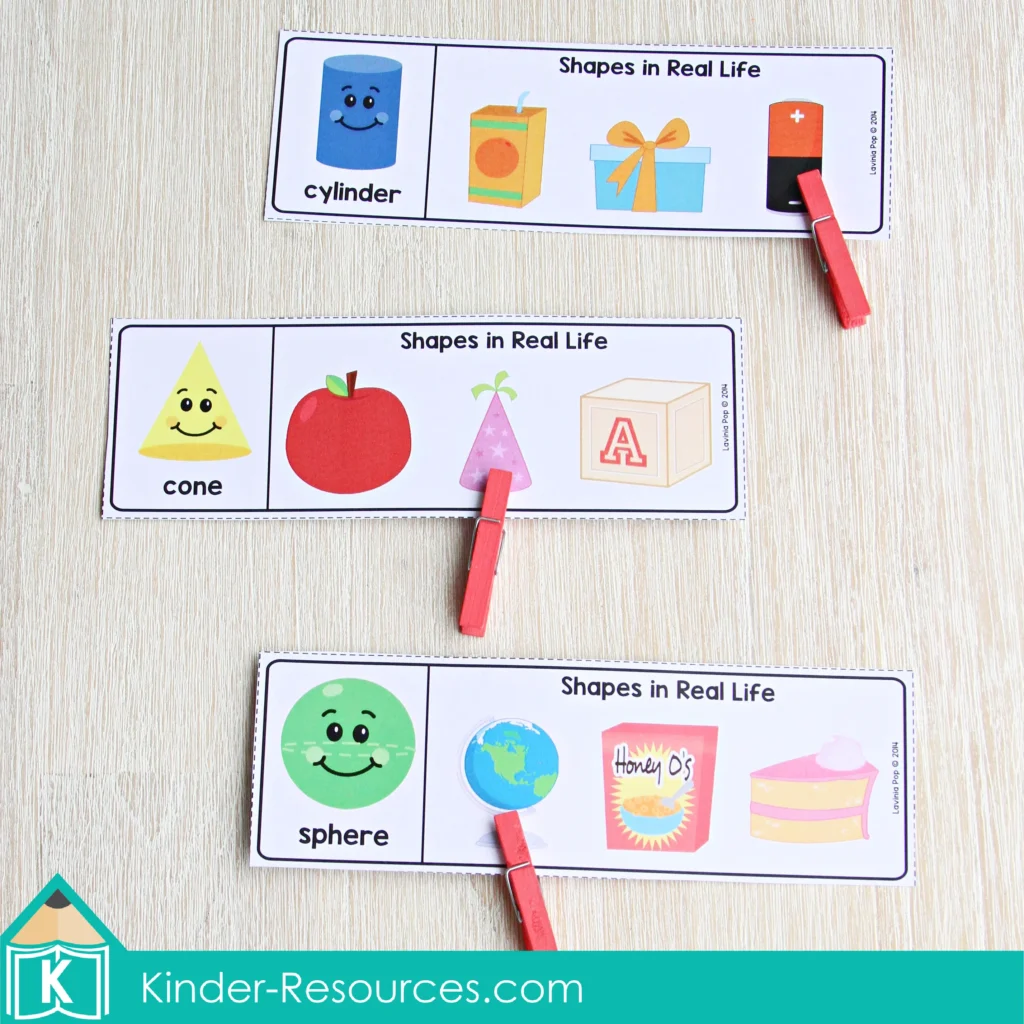
14. Shapes in Real Life (Clip It)
Children identify shapes in real world objects using clip cards. This connects math to everyday life.
Educational Benefits:
- Builds real world connections
- Strengthens observation skills
- Reinforces shape knowledge
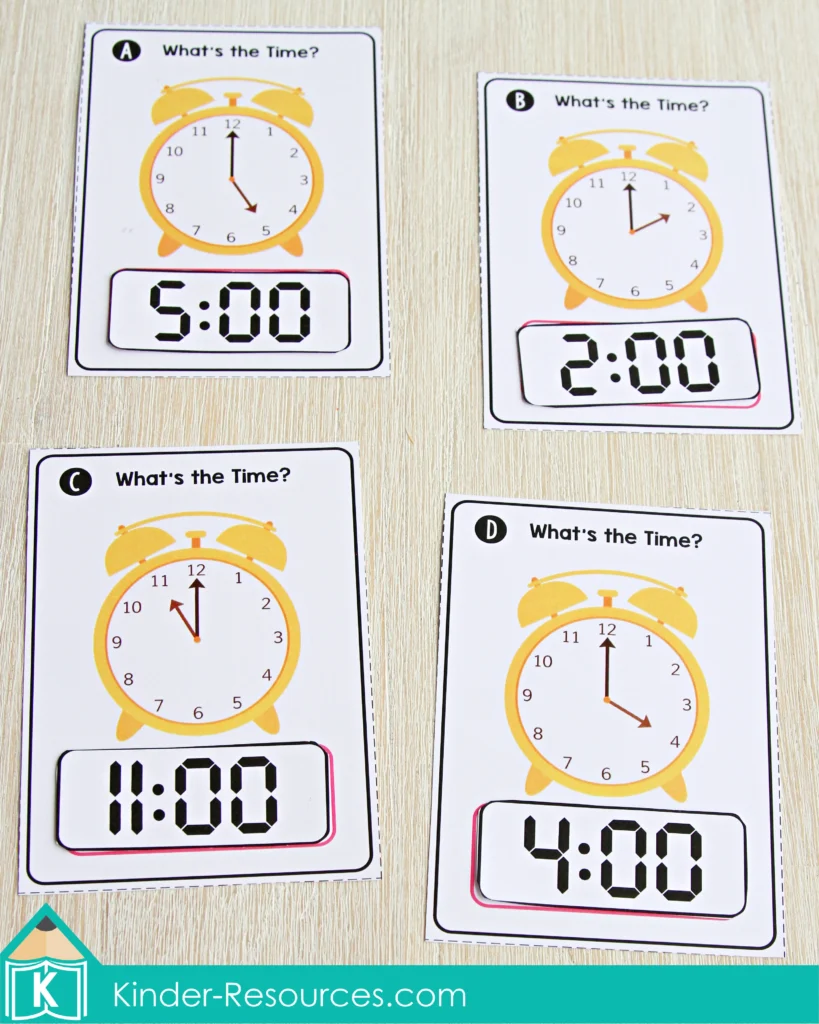
15. Time Match (Analog and Digital)
Children match digital time with analog clocks to the hour. This introduces time in a clear and visual way.
Educational Benefits:
- Introduces time concepts
- Builds understanding of clocks
- Strengthens matching skills
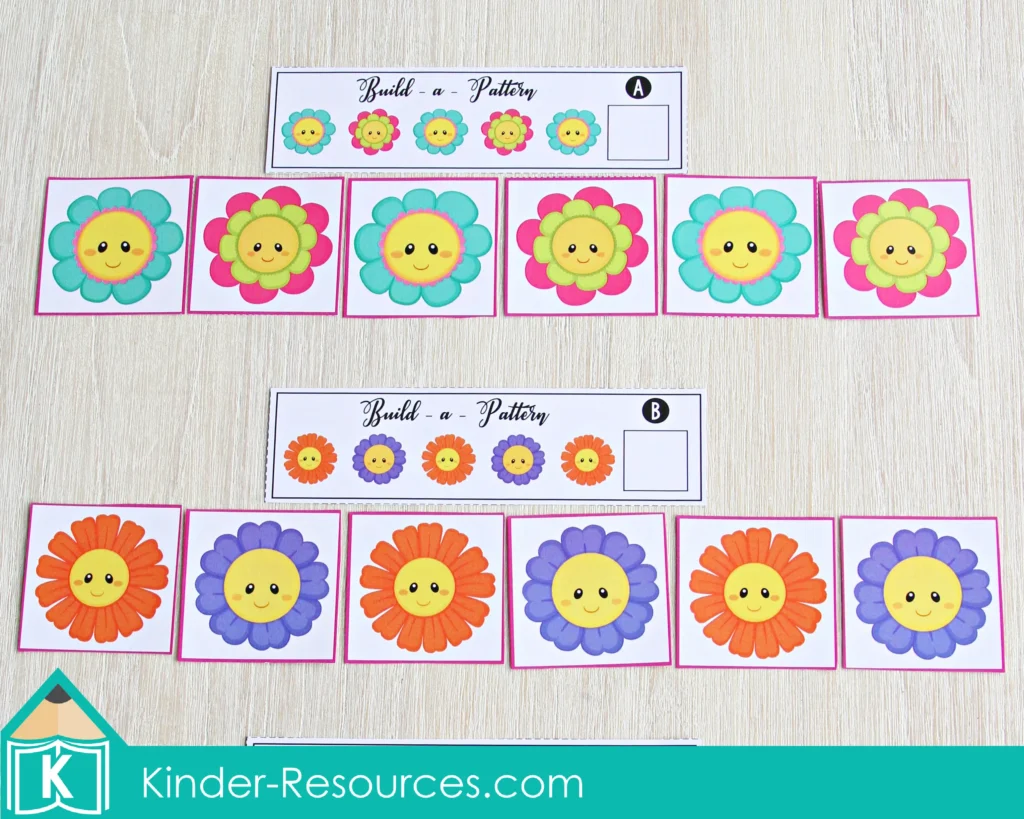
16. Build a Spring Pattern
Children build and complete patterns such as AB, ABB, AAB, and ABC. This supports early math thinking.
Educational Benefits:
- Builds pattern recognition
- Strengthens logical thinking
- Supports early algebra skills
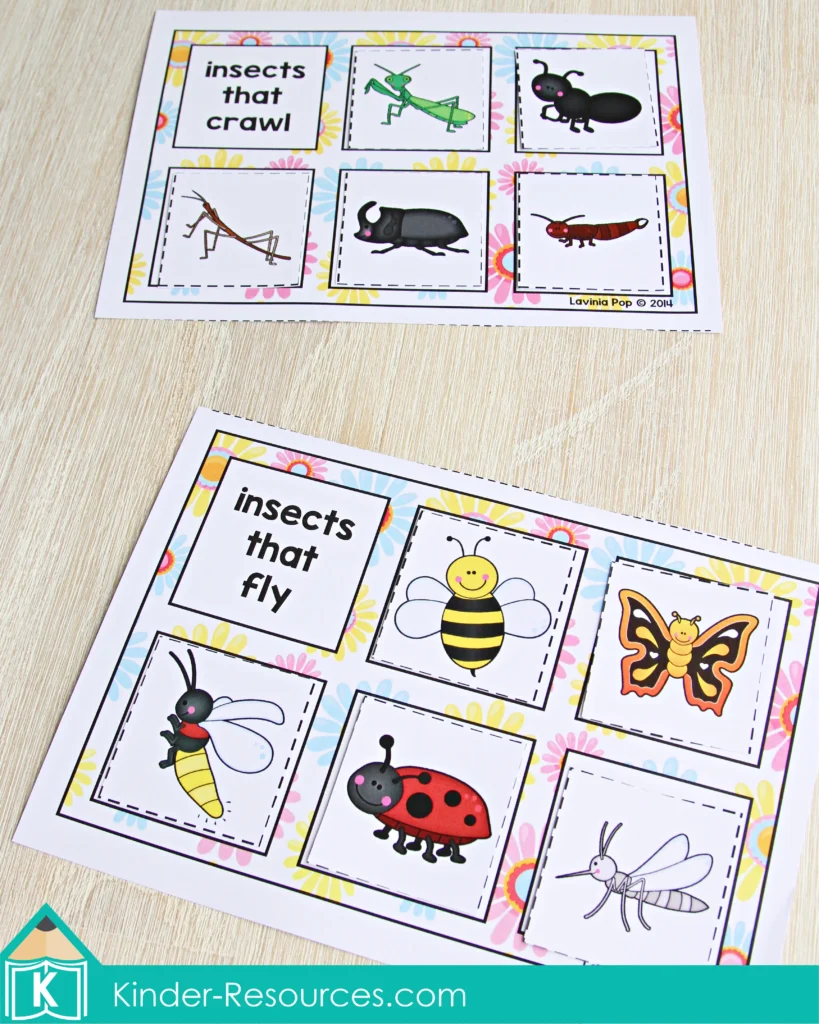
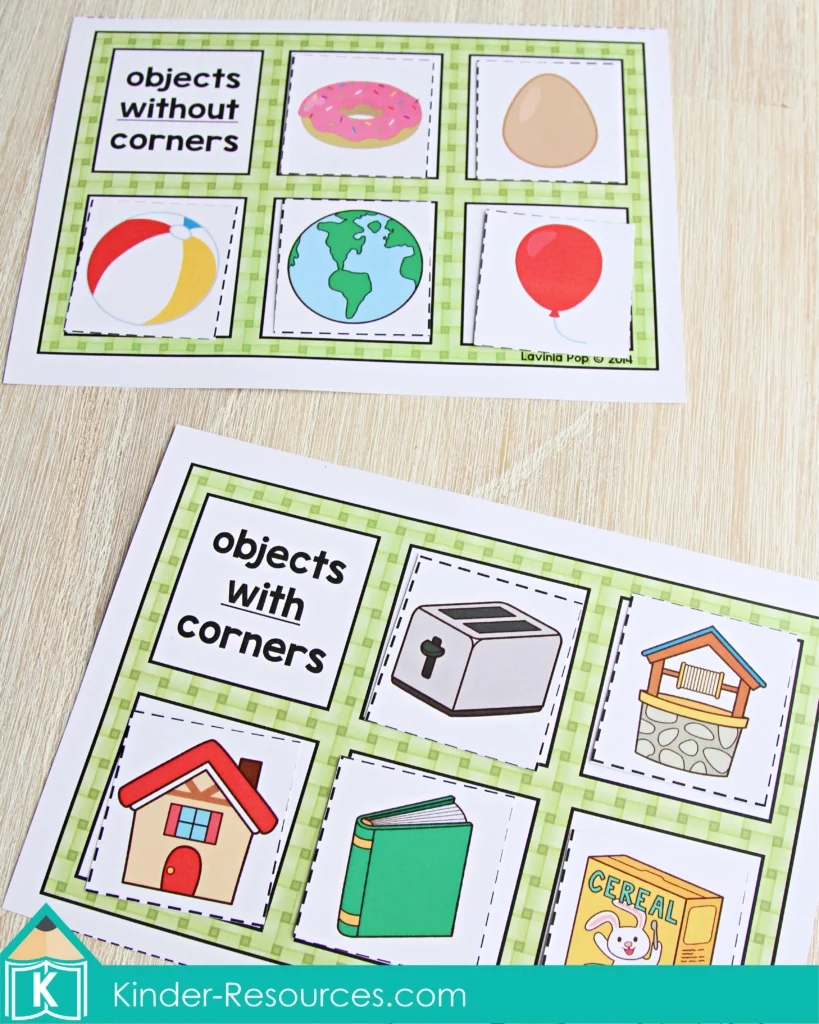
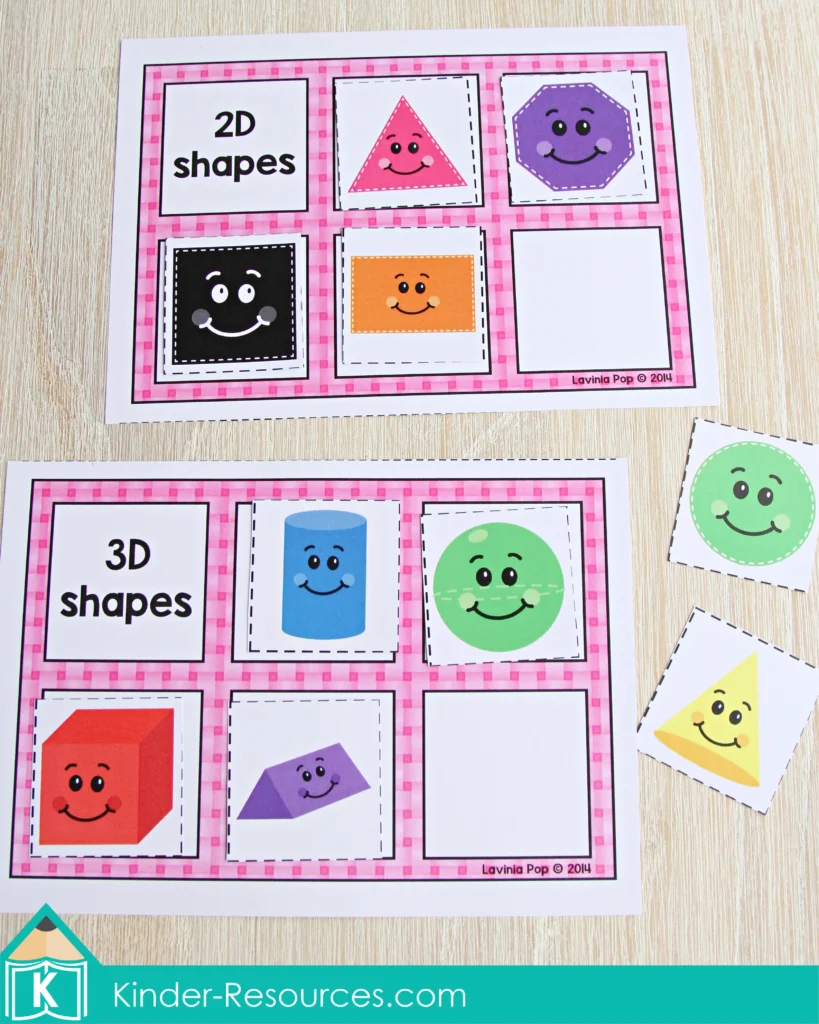
17. Spring Sorting Activities
Children sort cards into groups such as 2D and 3D shapes, shapes with and without corners, and insects that fly or crawl. This activity encourages classification and deeper thinking.
Educational Benefits:
- Builds sorting and categorizing skills
- Strengthens critical thinking
- Reinforces shape and science connections
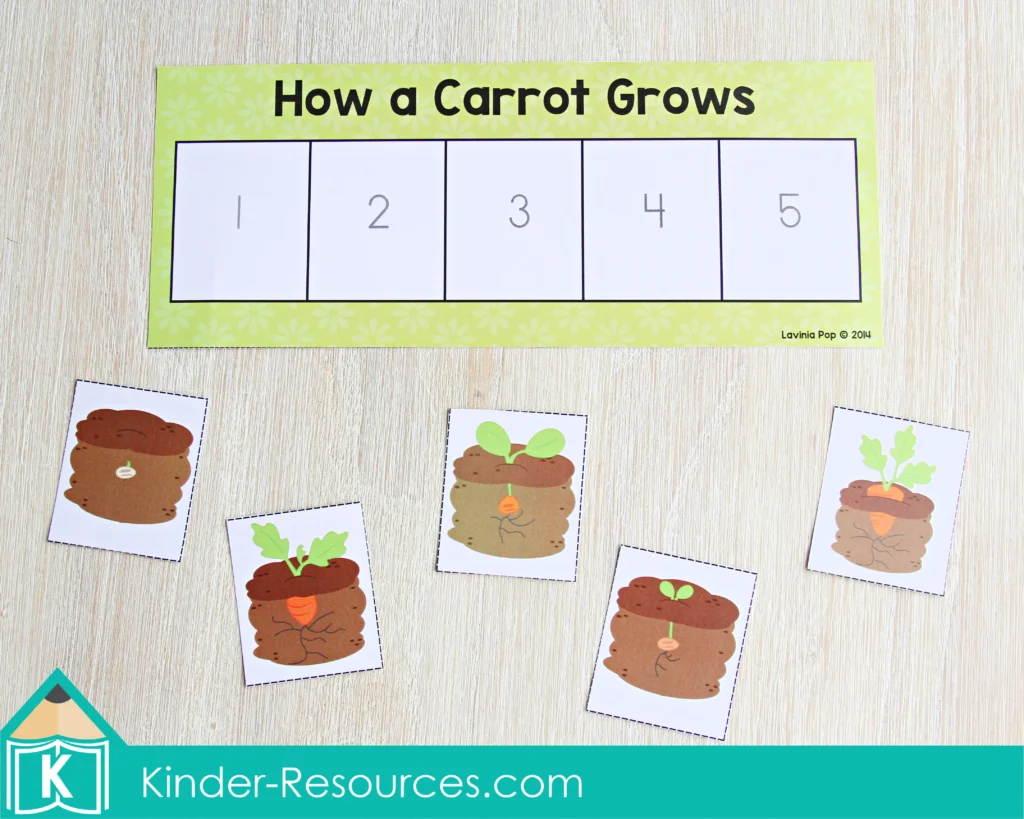
18. How a Carrot Grows Sequencing
Children place picture cards in order to show how a carrot grows. This activity introduces sequencing in a meaningful context.
Educational Benefits:
- Builds sequencing skills
- Strengthens understanding of order
- Connects learning to real life processes
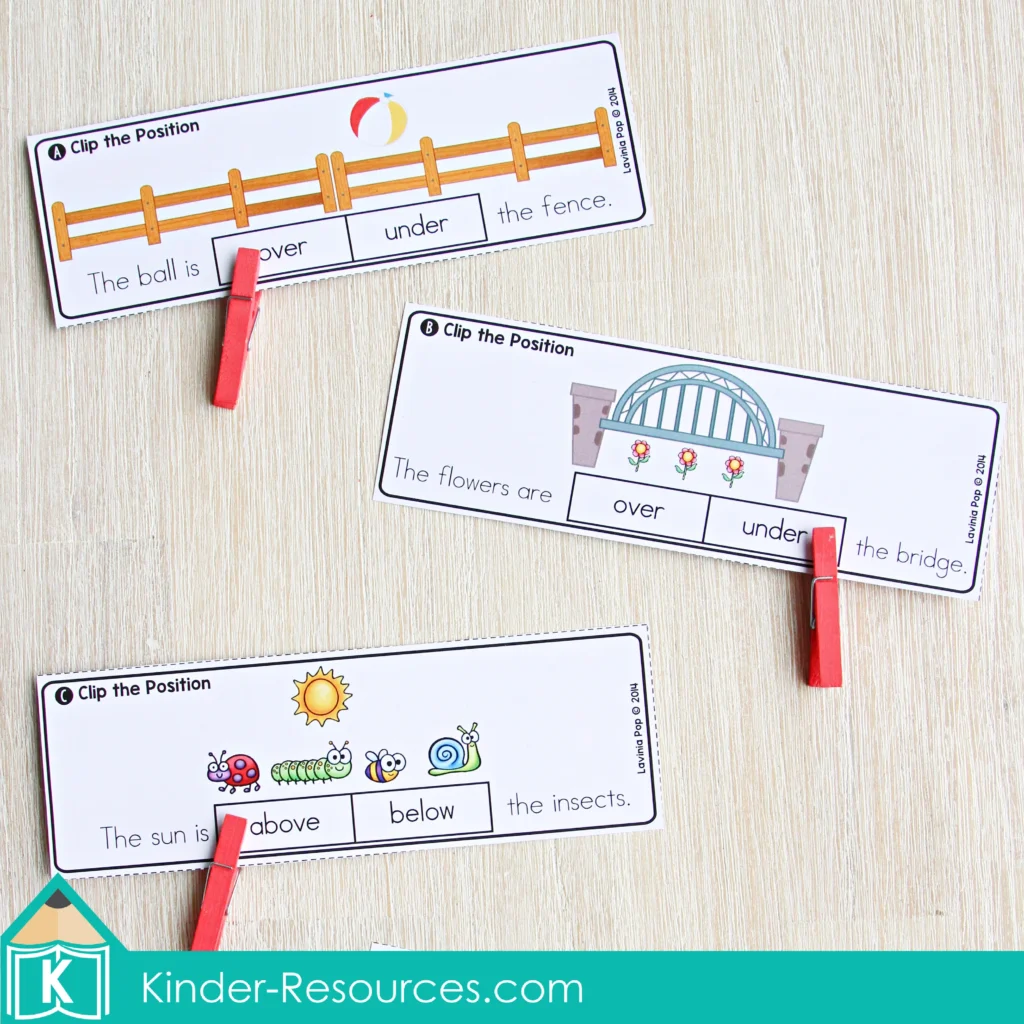
19. Spring Positional Words
Children read simple sentences and clip the correct positional word to complete each sentence. This helps build early language and direction skills.
Educational Benefits:
- Builds understanding of positional vocabulary
- Strengthens reading comprehension
- Supports following directions
Spring Math Centers for Kindergarten: Troubleshooting Tips
If children need extra support:
- Start with smaller numbers
- Model the activity first
- Use hands on materials like counters
- Allow partner work before independent practice
Spring Math Centers for Kindergarten: Quick Checklist
- ✔ Print and laminate activities
- ✔ Set up center tubs
- ✔ Introduce each activity clearly
- ✔ Use “I Can” cards for independence
- ✔ Use recording pages for accountability
Final Thoughts on the Spring Math Centers for Kindergarten
These Spring Math Centers for Kindergarten make it easy to provide meaningful math practice without complicated prep. The variety of activities keeps children engaged while building strong foundational skills that will support future learning.
Happy Teaching! 😊
Purchase the Spring Math Centers for Kindergarten Packet
Ready to use these centers with your learners?


You may also like…
Good day, I am a special education teacher and many of the items shown on Kindergarten Prep are items I can modify to use with some of my students. What is the cost for this packet?
Hello Ms. Lavinia. Just wanted to ask whether your preschool bundle and kindergarten bundle can we customize the bundles. Thank you. Fati
Hello, what is the cost of the kindergarten package?