
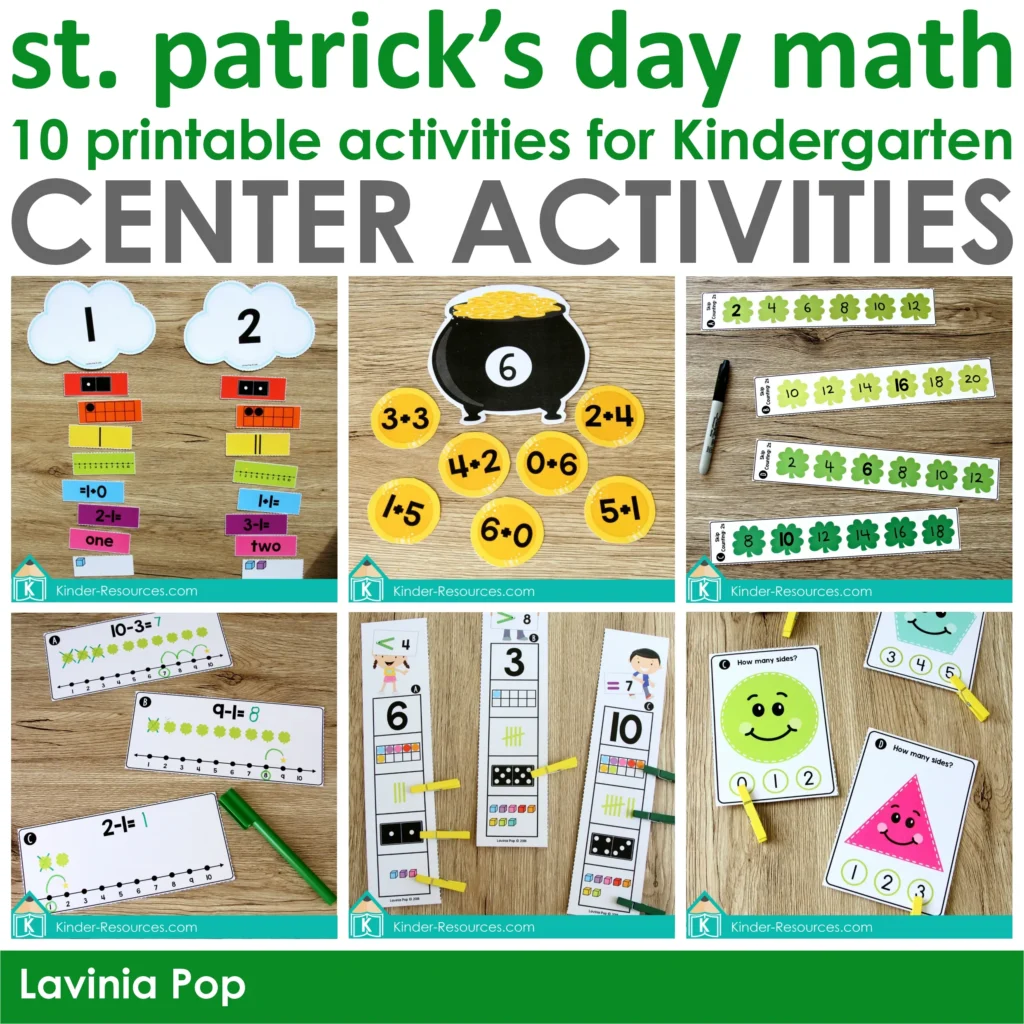
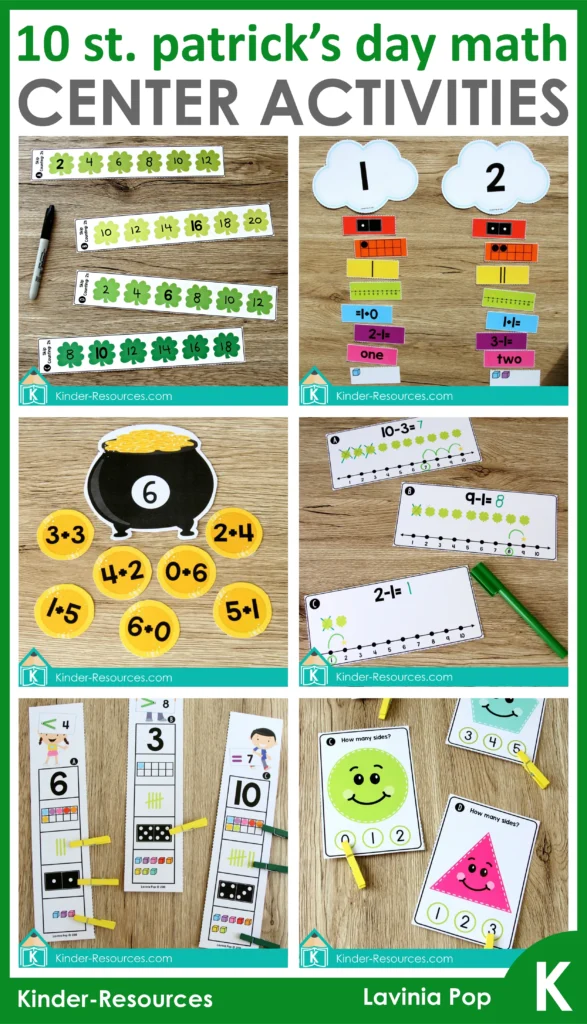
If you are looking for engaging St. Patrick’s Day Math Centers for Kindergarten, this printable pack includes 10 hands on math center activities that make your March math block structured, purposeful, and fun.
Seasonal math centers keep routines consistent while refreshing student interest. Instead of introducing completely new skills, you reinforce essential kindergarten math concepts through a festive theme that keeps students motivated. In this step by step guide, I’ll show you how to use these St. Patrick’s Day Math Centers for Kindergarten and walk you through each activity so you can confidently add them to your math rotations.
PLEASE NOTE: This blog post contains sample pages from my St. Patrick’s Day Centers for Kindergarten packet. You can download the FREE SAMPLE PAGES by clicking on the photos. To purchase the complete 96-page packet, scroll to the end of this post to get links to my online stores.
How to Set Up Your St. Patrick’s Day Math Centers for Kindergarten
To prepare your centers, simply print, laminate, and cut each activity so the materials are durable enough to last all month and can be reused year after year. For easy organization, store each center in a labeled bin or zip bag with the matching recording sheet placed inside.
Each center includes a label, an “I Can” direction card, activity pieces, and a recording page. Introducing two to three centers at a time helps students focus while building independence.
The 10 St. Patrick’s Day Math Centers for Kindergarten
Below you’ll find each center explained so you can see exactly how it works in your classroom.
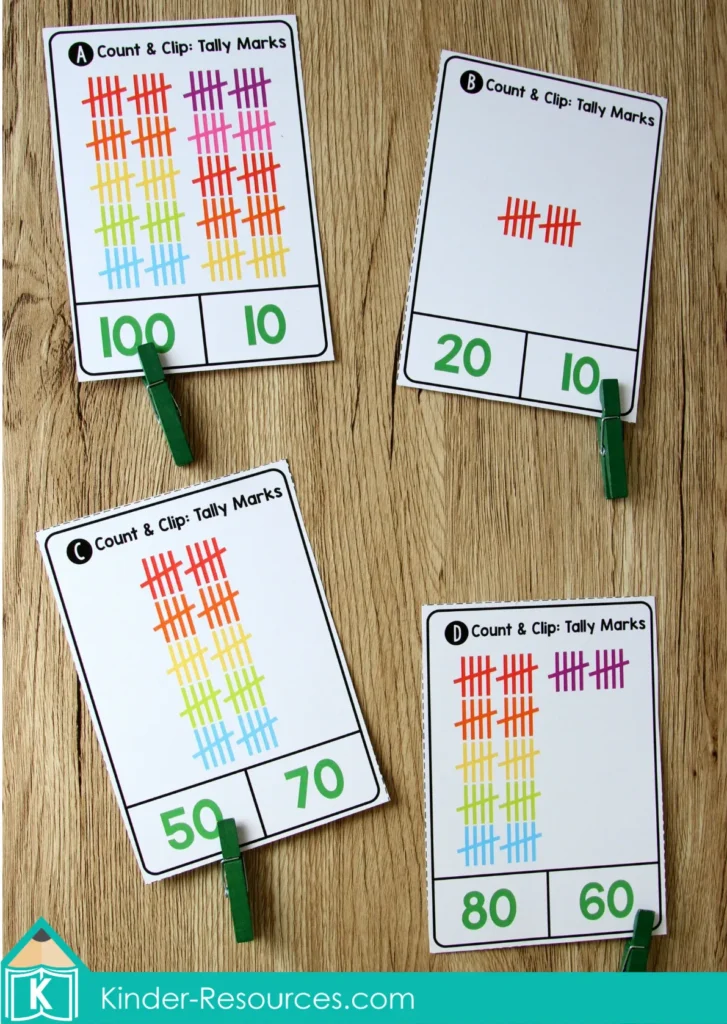
1. Rainbow Tallies Clip Cards (1–20)
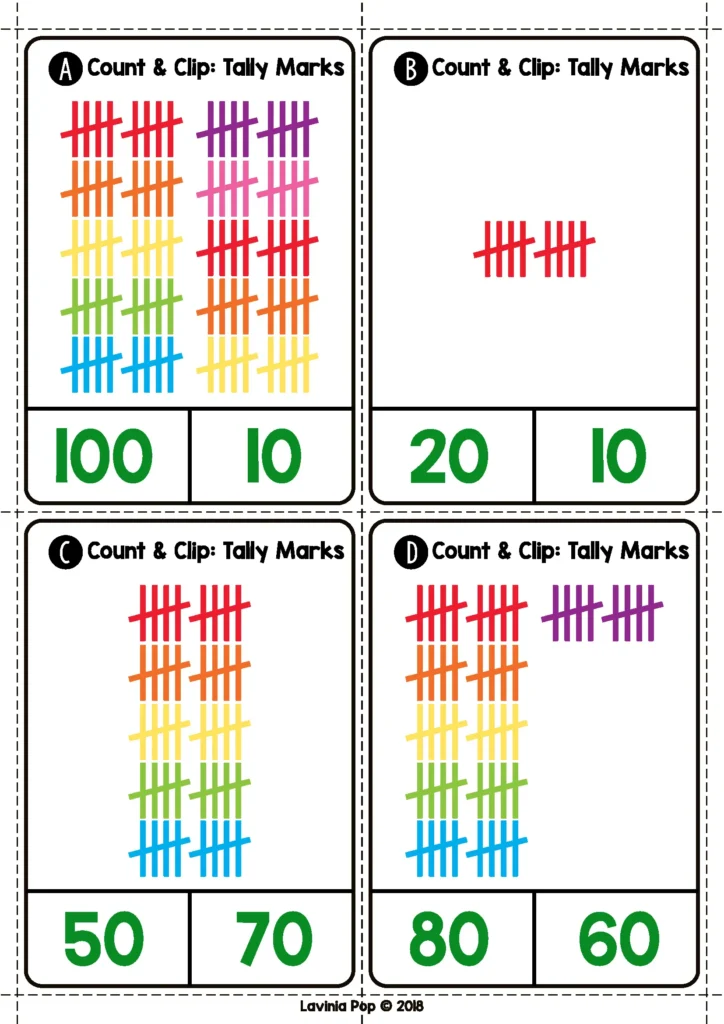
Students count colorful tally mark groups and clip the correct answer from two number choices. Since tally marks are grouped by fives, students naturally strengthen their understanding of grouping and counting efficiently rather than counting one by one.
Teacher Tip: Encourage students to count by fives first, then add the extra tallies.
Skills practiced:
- Counting to 100 (by grouping)
- Tally mark recognition
- Mental counting strategies
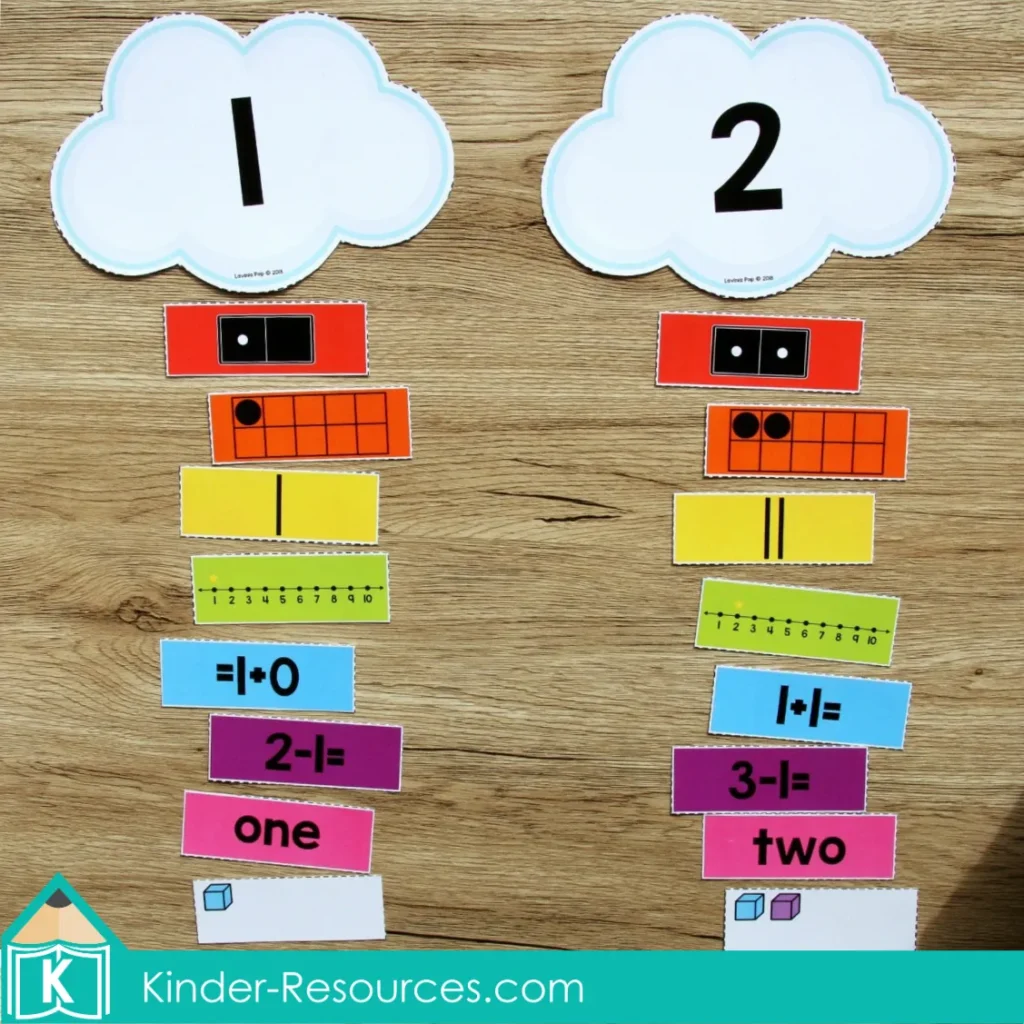
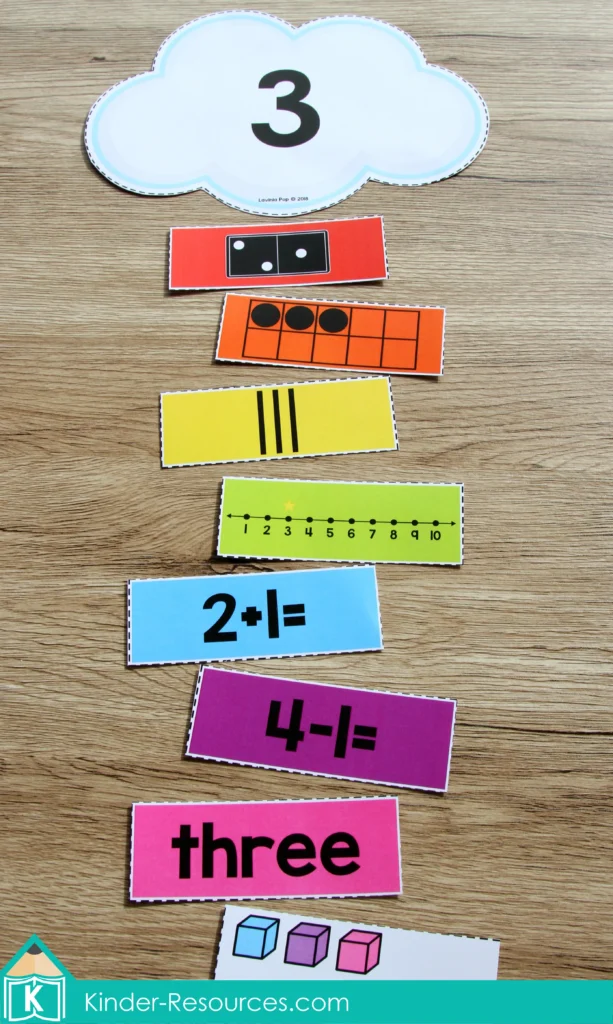
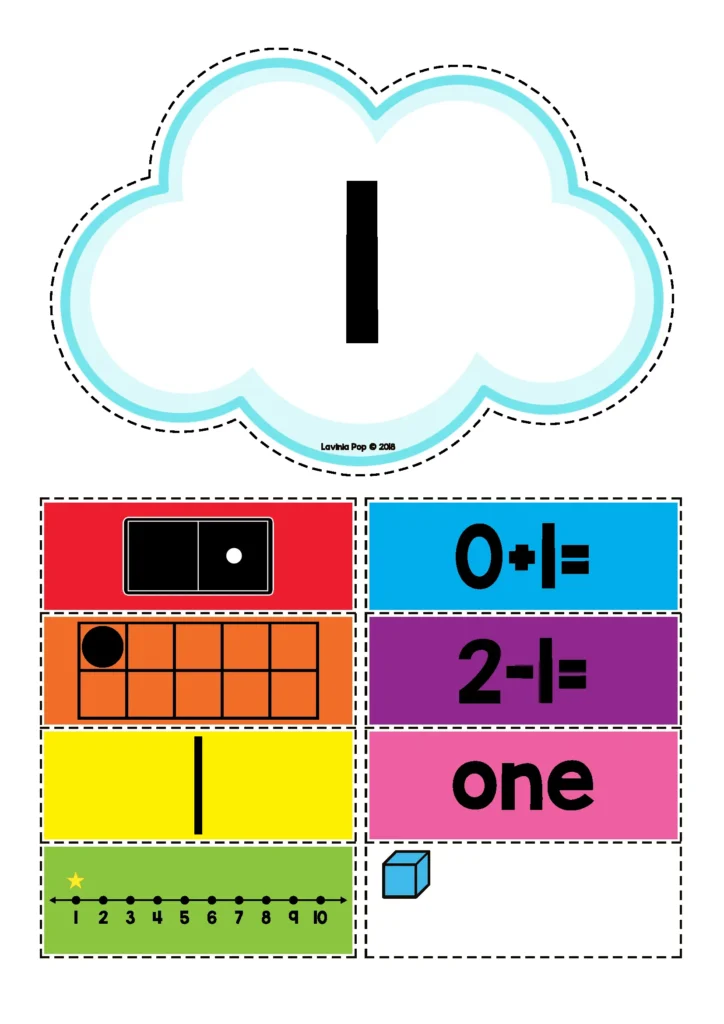
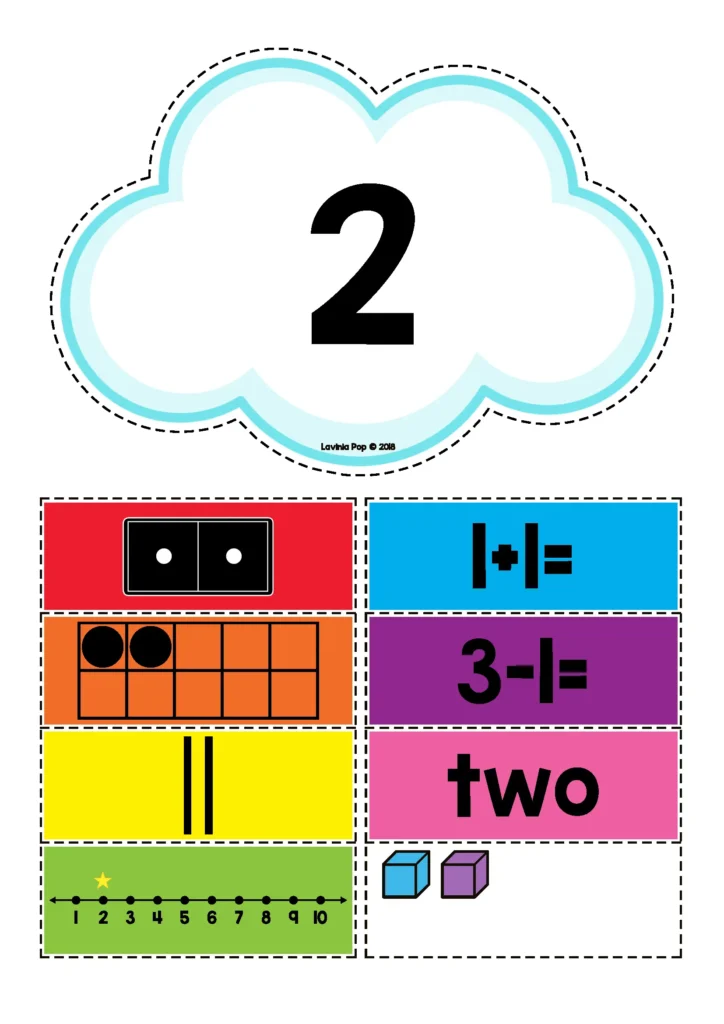
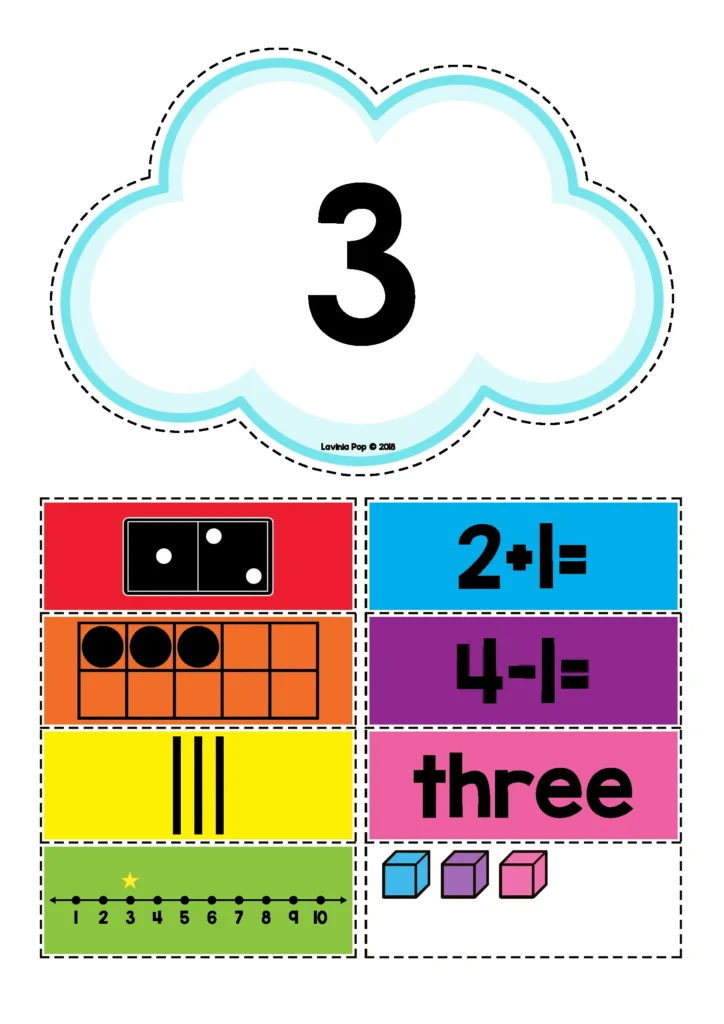
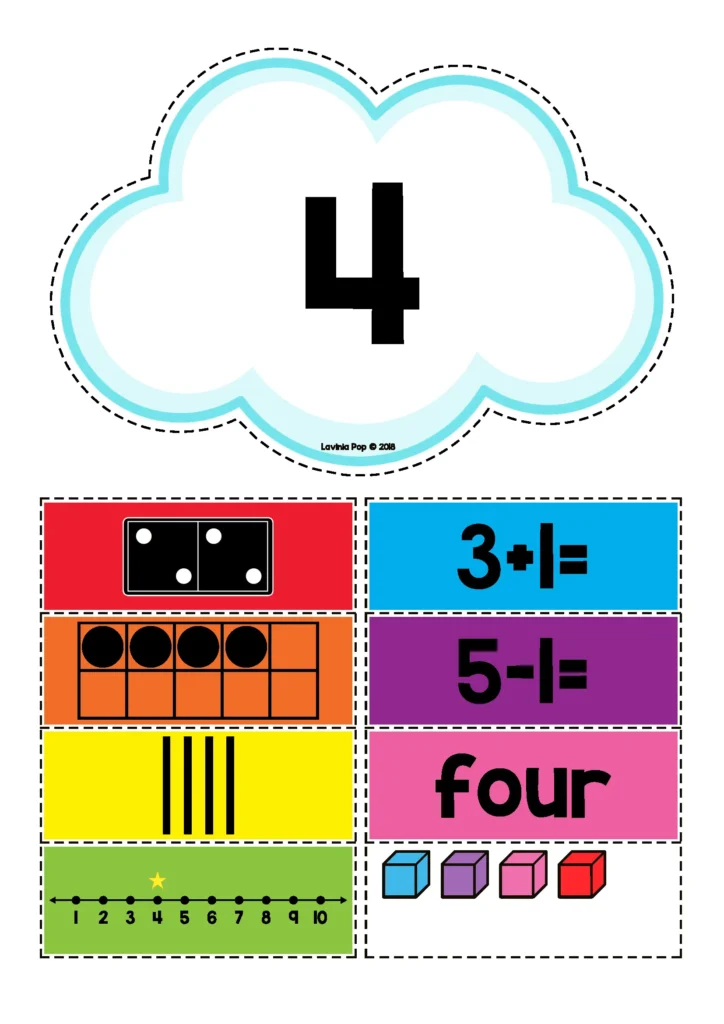
Rainbow and Cloud Number Match
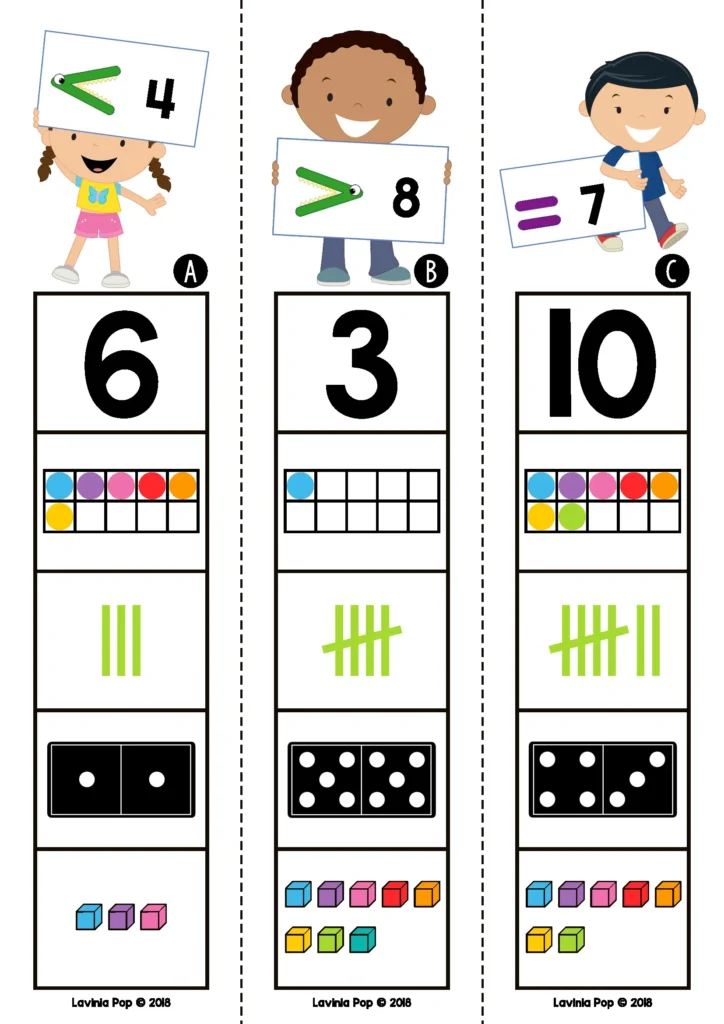
Students match a numeral to different representations including ten frames, tally marks, dice, number lines, number words, and cubes. Because students must interpret each model correctly, they build flexible number sense rather than associating numbers with only one format.
Teacher Tip: Have students explain how they knew the representations matched.
Skills practiced:
- Number recognition
- Ten frame understanding
- Tally marks
- Counting cubes
- Number words
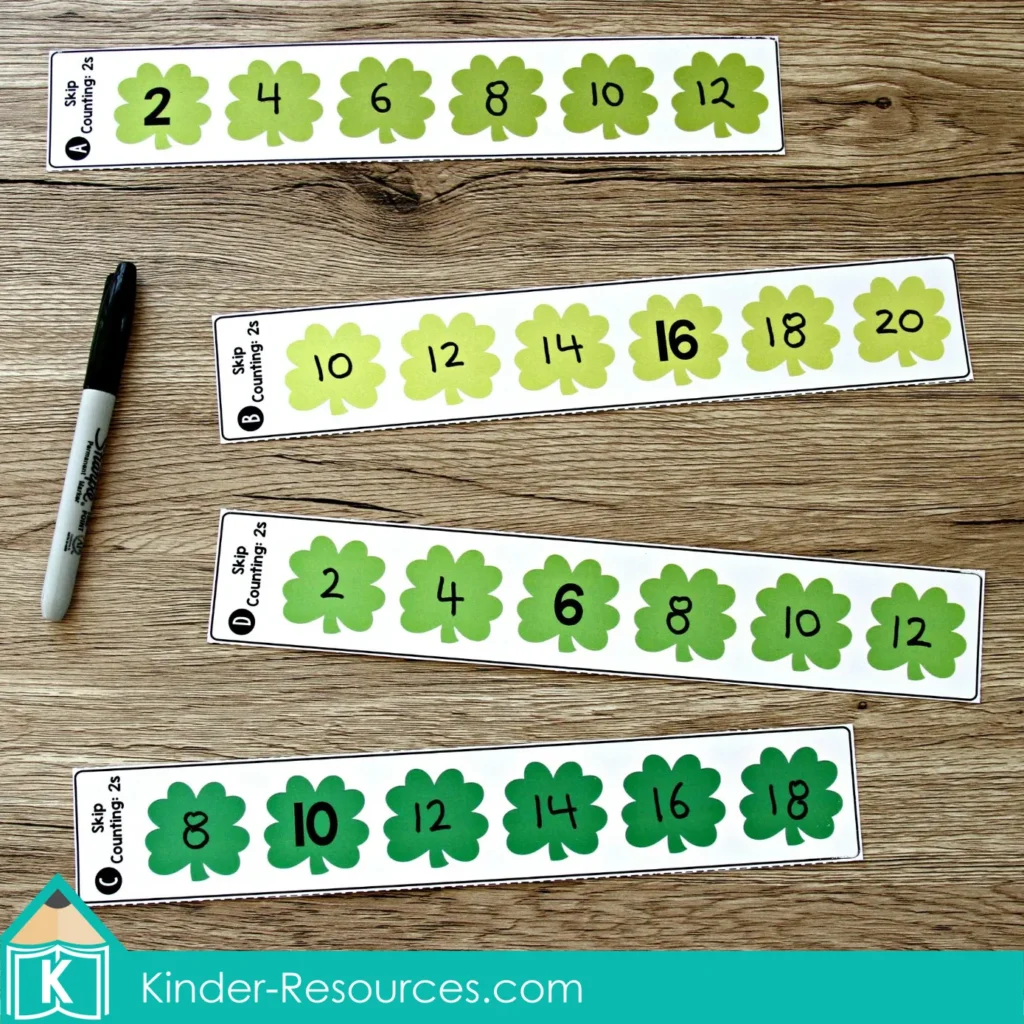
3. Skip Counting by 2 Write and Wipe
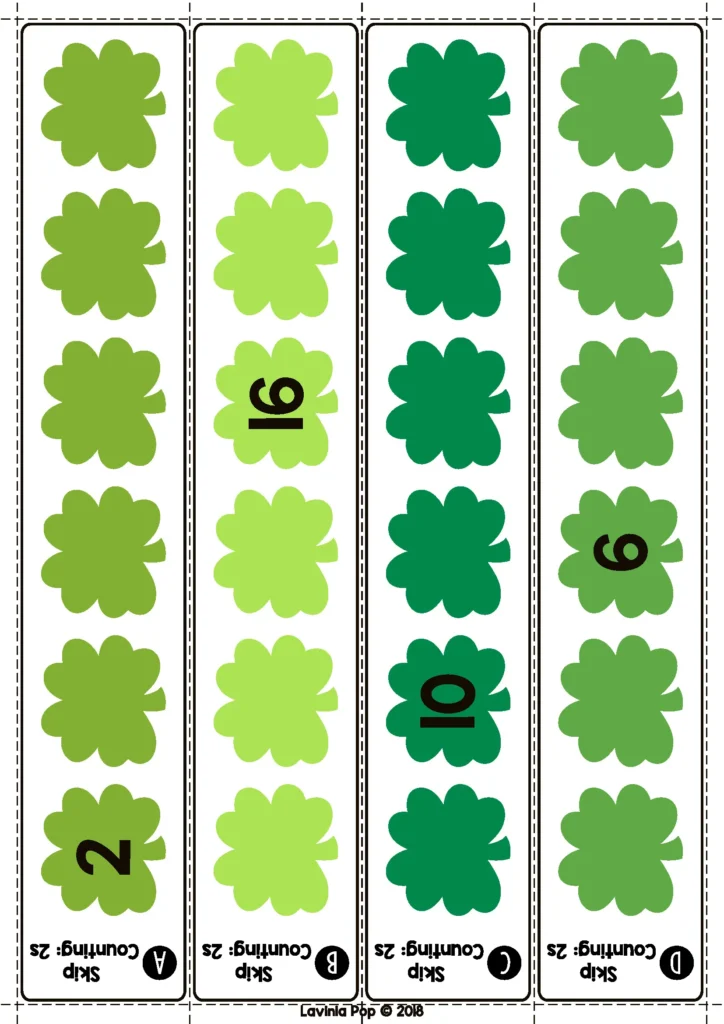
In this center, students complete skip counting by 2 sequences using clover number strips. Because students visually see the pattern growing across the strip, they begin recognizing how numbers increase in equal groups, which strengthens number sense and builds early multiplication foundations
Teacher Tip: Place the cards on a binder ring and use dry erase markers for easy reuse.
Skills practiced:
- Skip counting by 2
- Number sequencing
- Recognizing number patterns
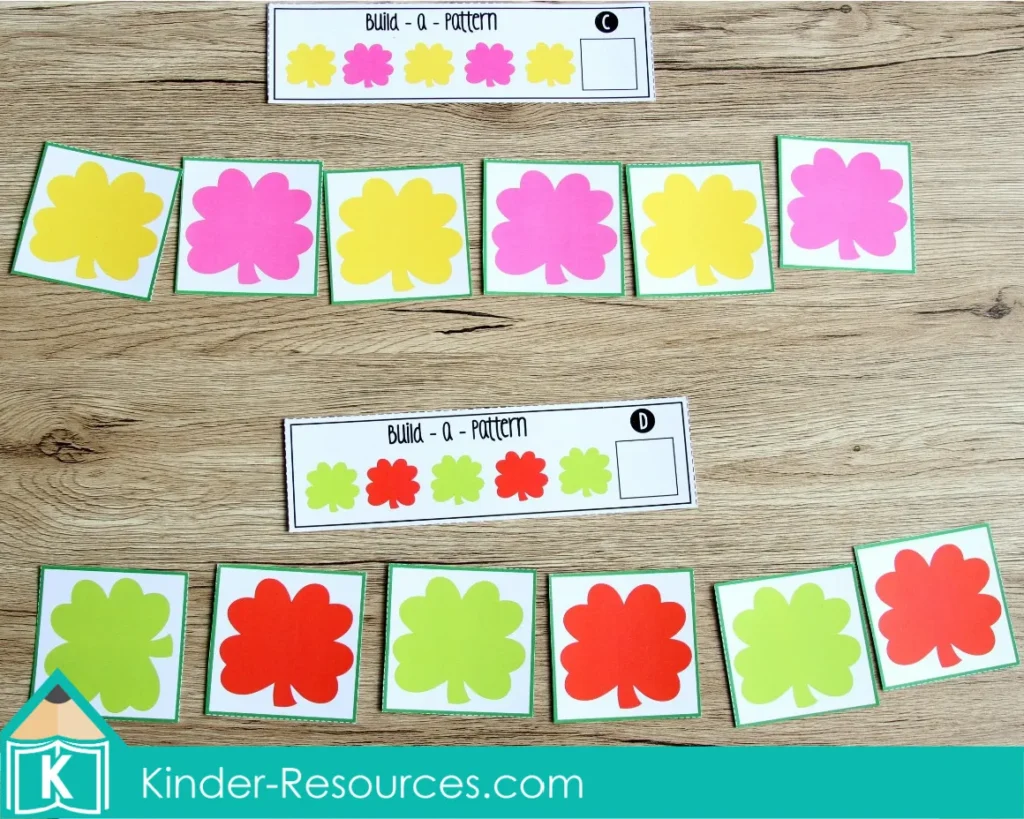
4. Build a Shamrock Patterns (AB, ABB, AAB, ABC)
Students build and extend shamrock color patterns based on the example strip. Identifying the repeating unit strengthens logical thinking and prepares students for future algebra concepts.
Teacher Tip: Challenge students to create their own pattern once they master the given example.
Skills practiced:
- Pattern recognition
- Pattern extension
- Sequencing
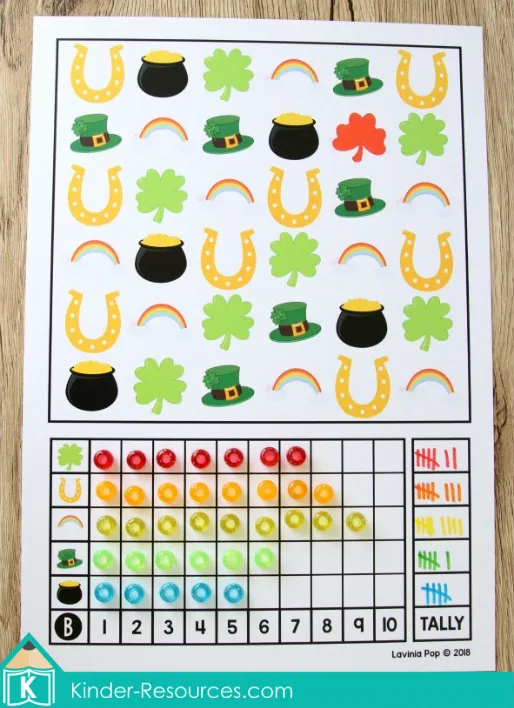
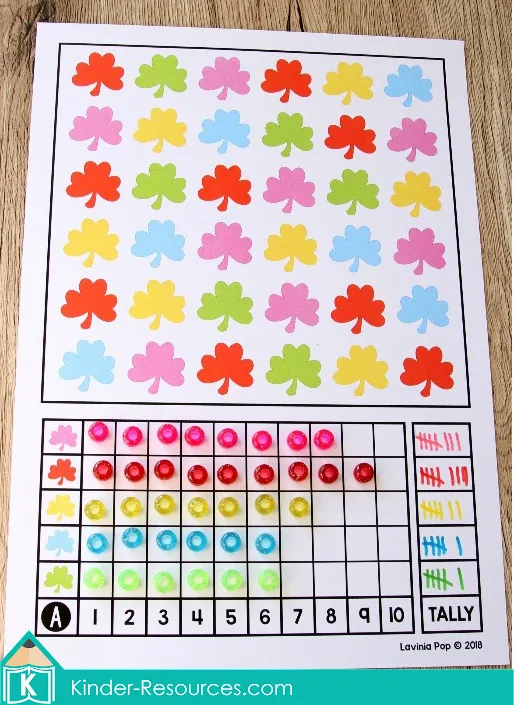
5. Count, Tally and Graph Write and Wipe
In this activity, students count themed pictures, represent their totals on a graph using counters, and then record tally marks. Because students move from counting to graphing to tallying, they build a strong connection between data collection and visual representation.
Teacher Tip: After completing the graph, ask students which color has the most and which has the least.
Skills practiced:
- Counting and categorizing
- Graphing
- Data comparison
- Tally marks
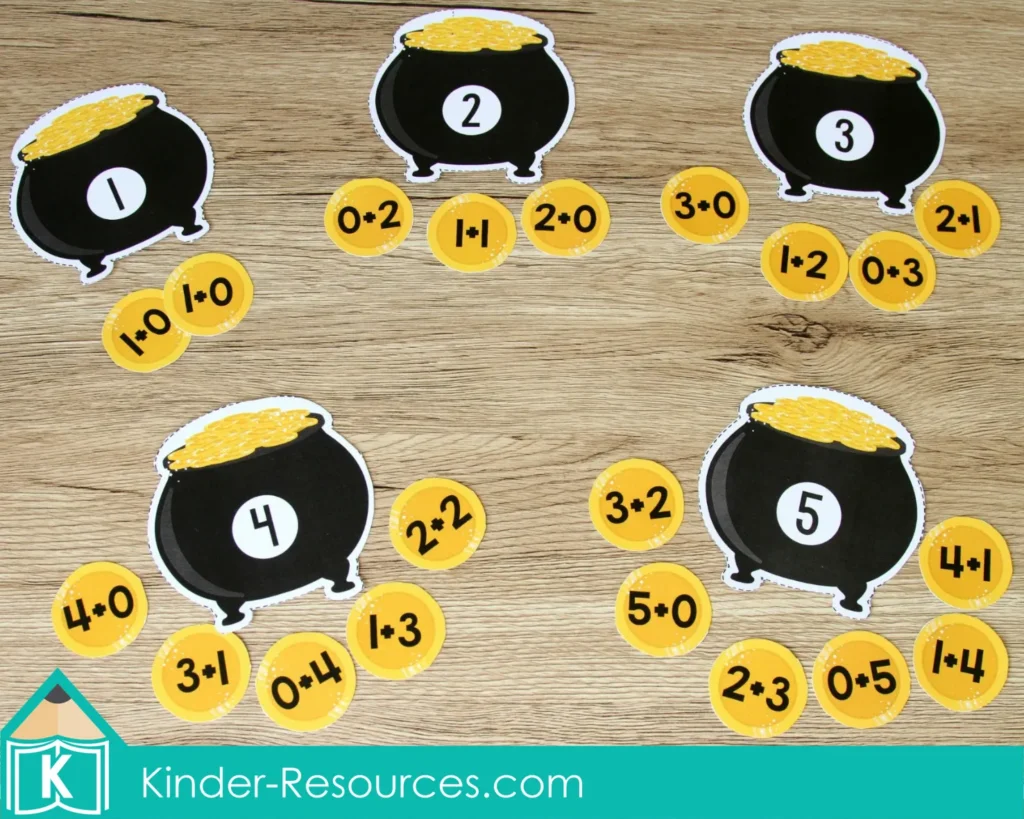
6. Pot of Gold Addition (to 20)
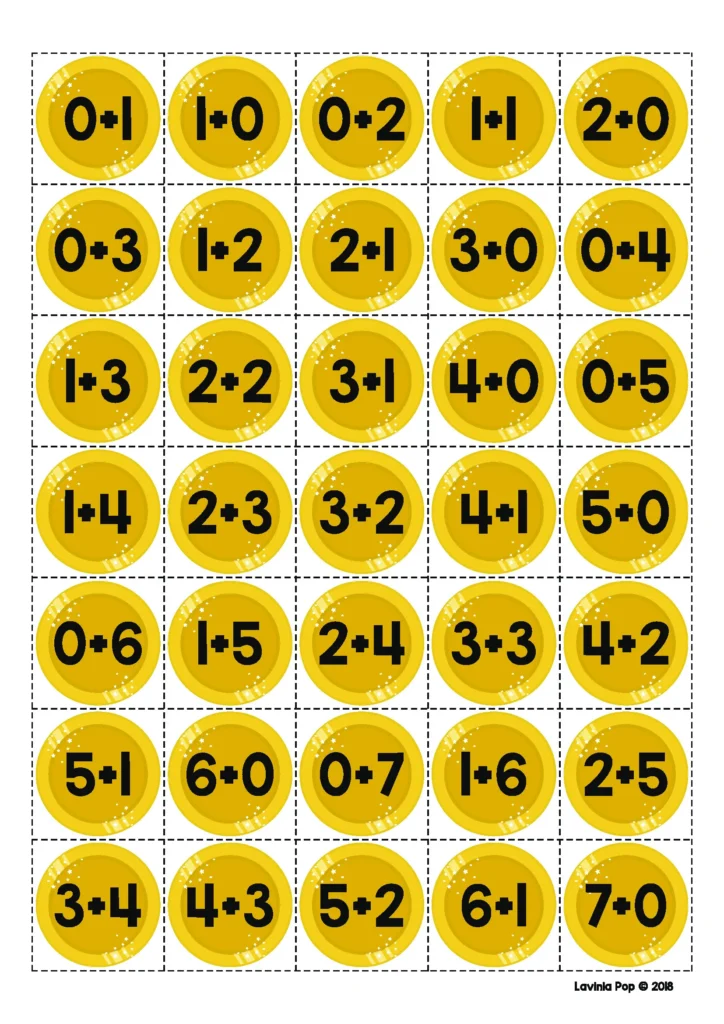
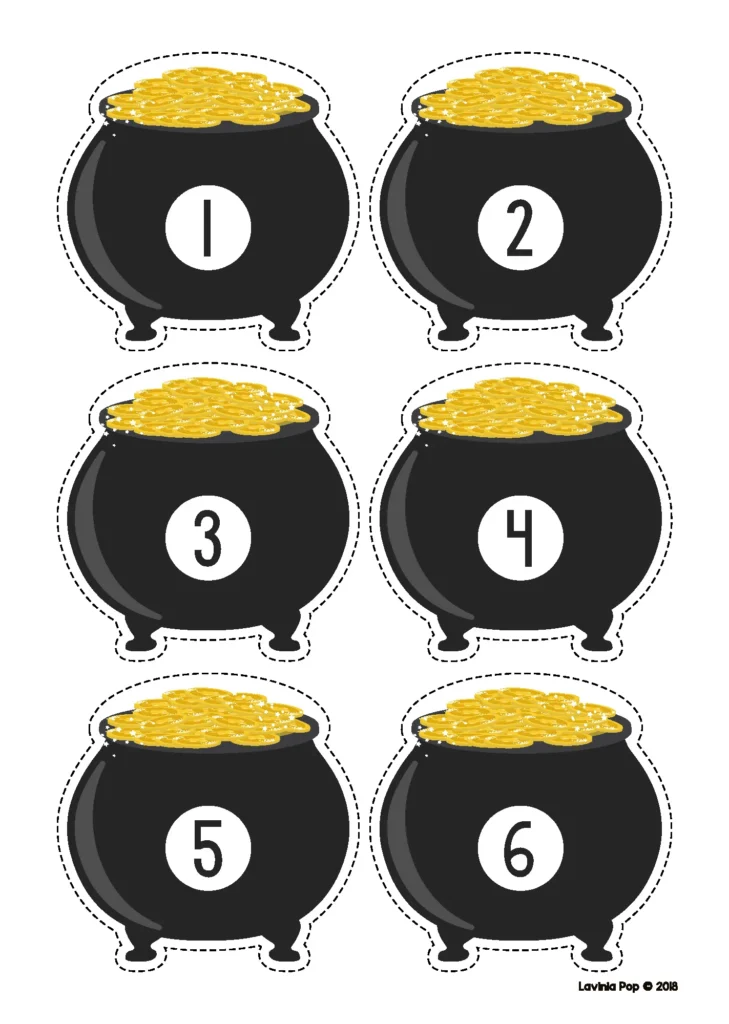
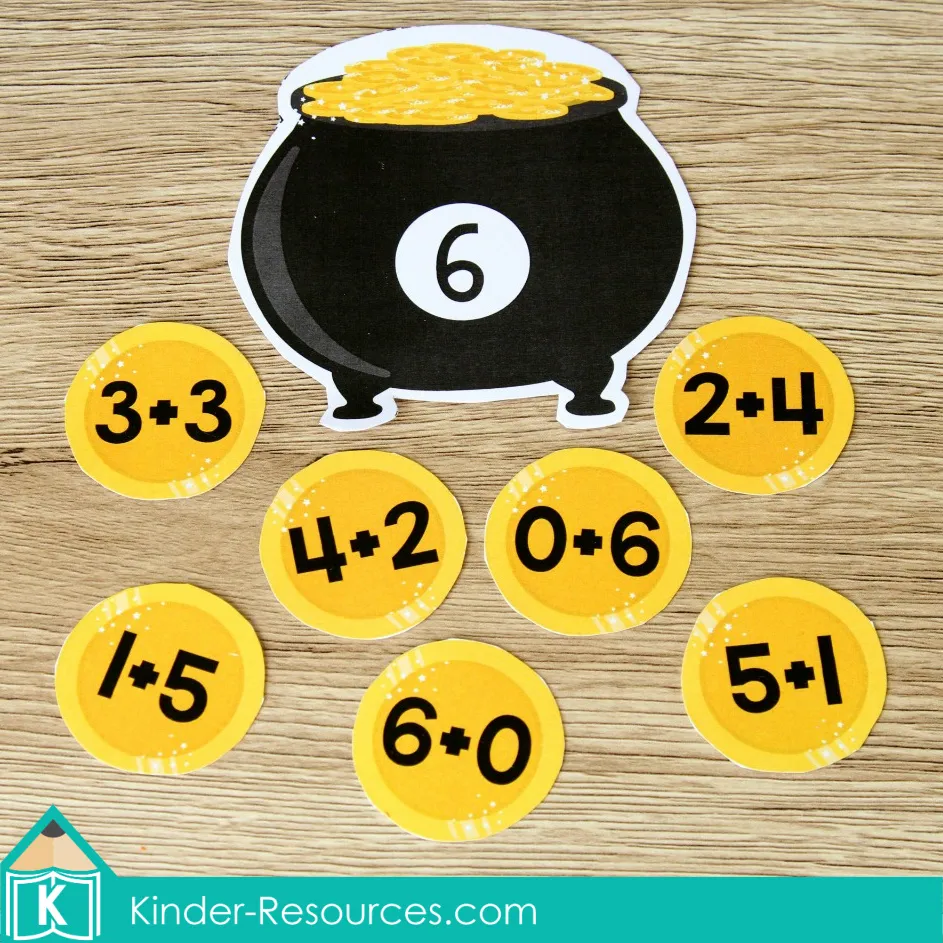
Students solve addition equations on gold coins and match them to the correct pot of gold sum. The matching format encourages students to think about composing numbers rather than just writing answers.
Teacher Tip: Encourage students to use counting on as a strategy when solving.
Skills practiced:
- Addition within 20
- Composing numbers
- Math fluency
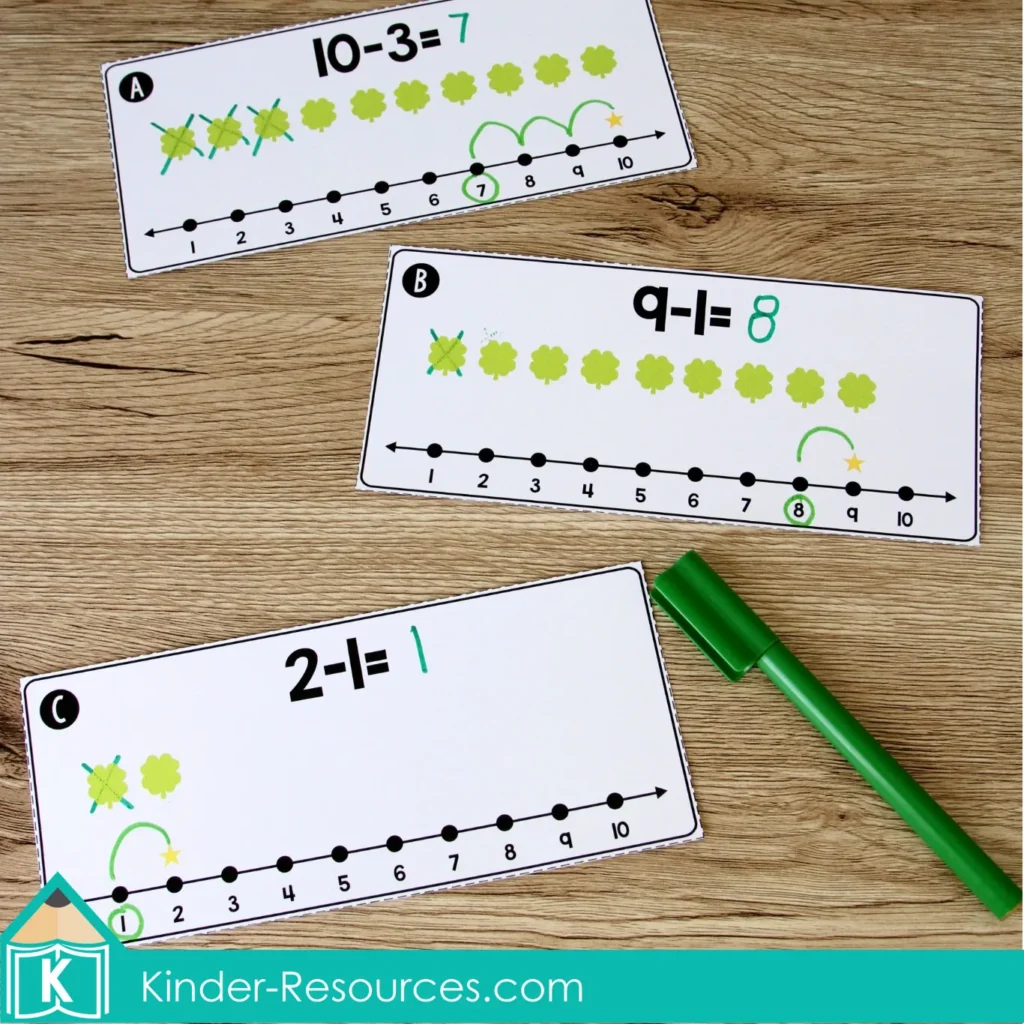
7. Number Line Subtraction (1–10)
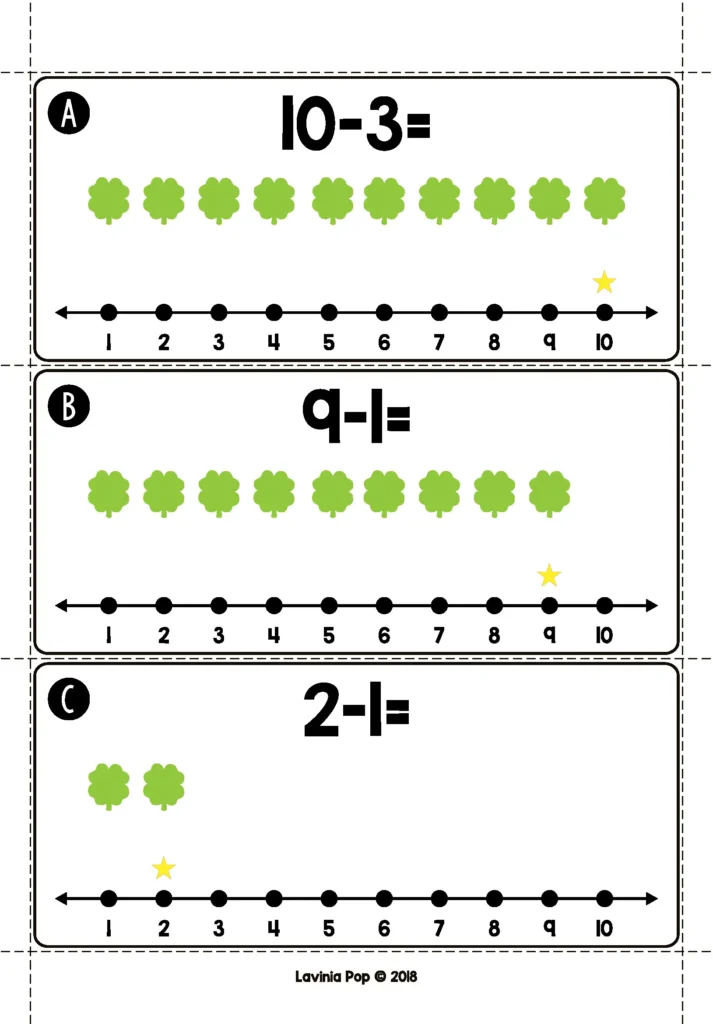
In this center, students solve subtraction problems using a number line and visual shamrock models. By physically seeing the jumps backward, students develop a concrete understanding of subtraction instead of relying on memorization.
Teacher Tip: Model how to “start at the first number and jump back” before students work independently.
Skills practiced:
- Subtraction within 10
- Using a number line
- Counting backward
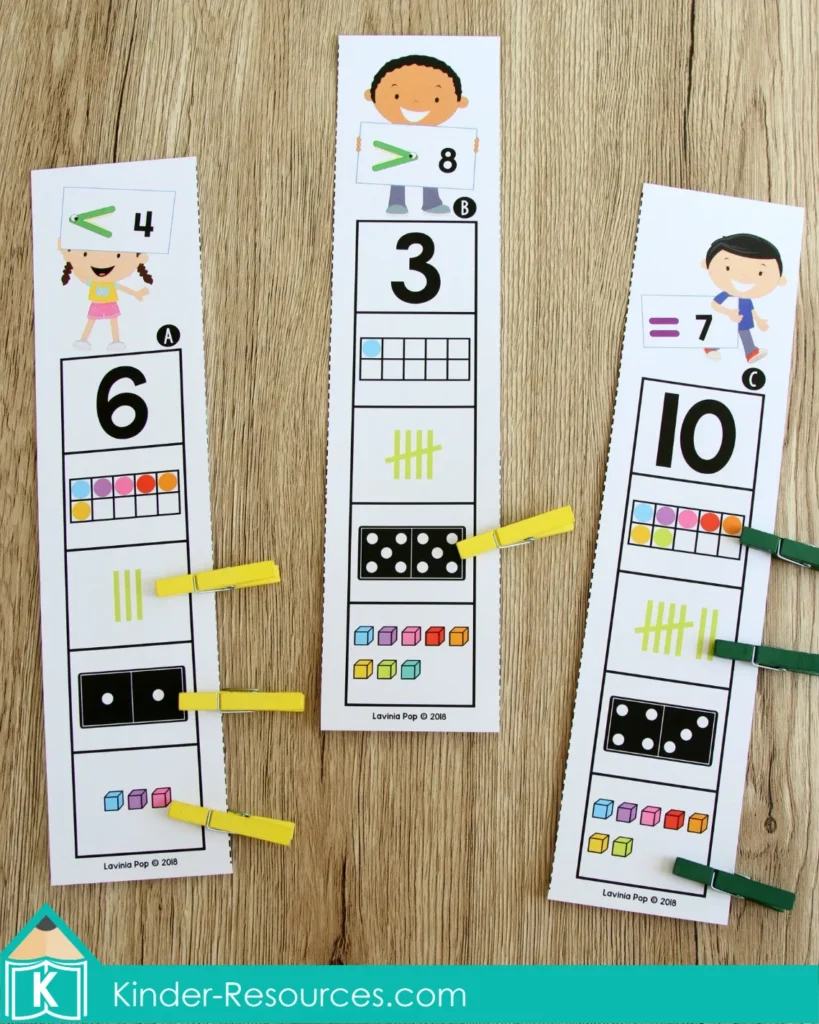
8. Greater Than, Less Than, Equal To
Students compare numbers using visual models such as ten frames, tally marks, and dice, then clip the correct comparison symbol. Because they must interpret the representation first, this center builds deeper number understanding.
Teacher Tip: Have students say the full comparison sentence out loud, such as “Six is greater than four.”
Skills practiced:
- Comparing numbers to 20
- Greater than, less than, equal to
- Math vocabulary
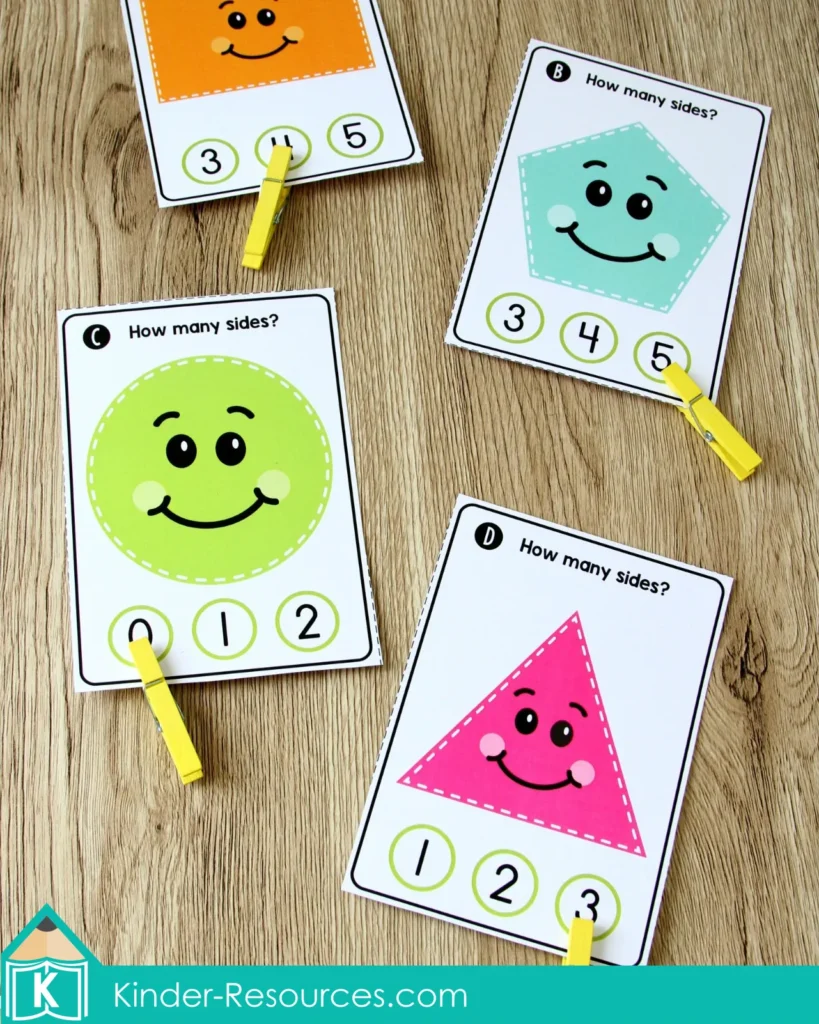
9. Clip the Shape Sides (2D Shapes)
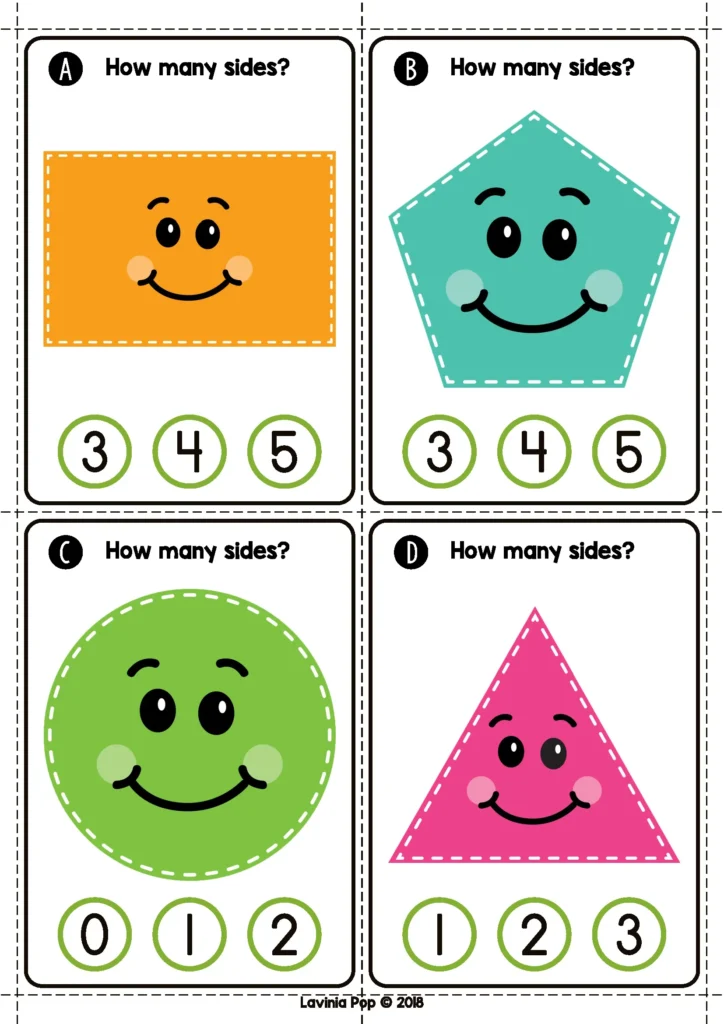
Students identify how many sides each 2D shape has and clip the correct number. Tracing and counting each side helps build geometric vocabulary and attention to detail.
Teacher Tip: Have students trace the sides with their finger before counting.
Skills practiced:
- 2D shapes
- Counting sides
- Geometry vocabulary
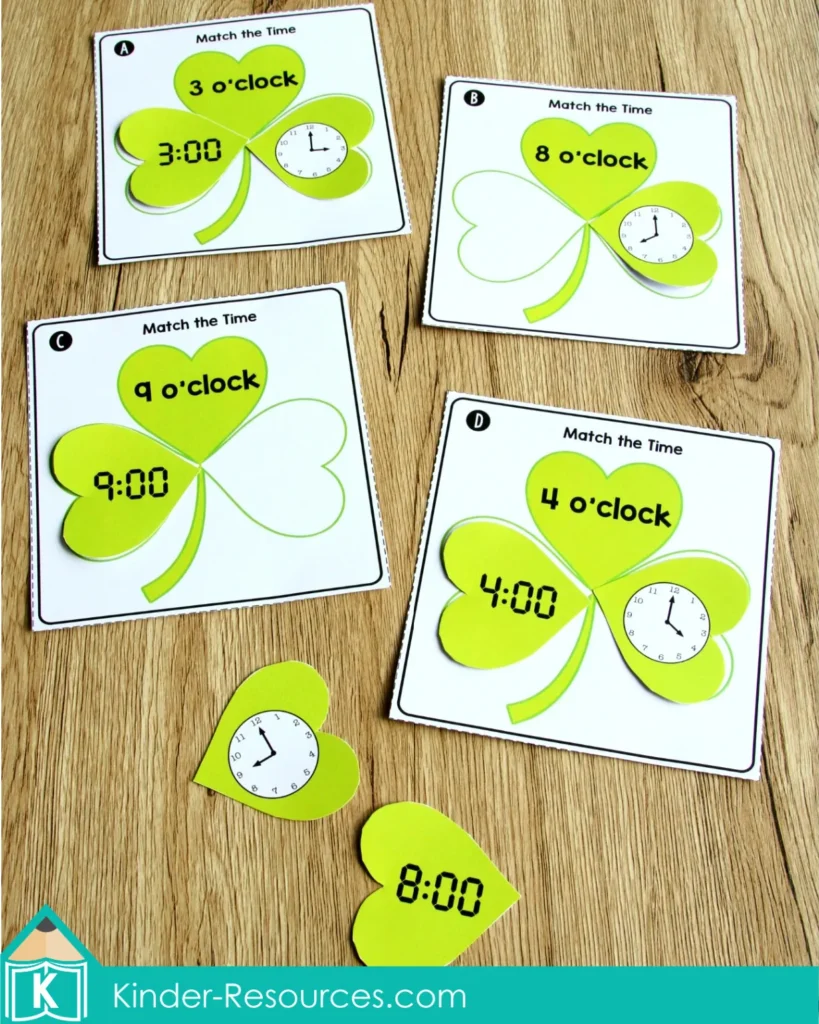
10. Match the Time (Word, Digital, Analog)
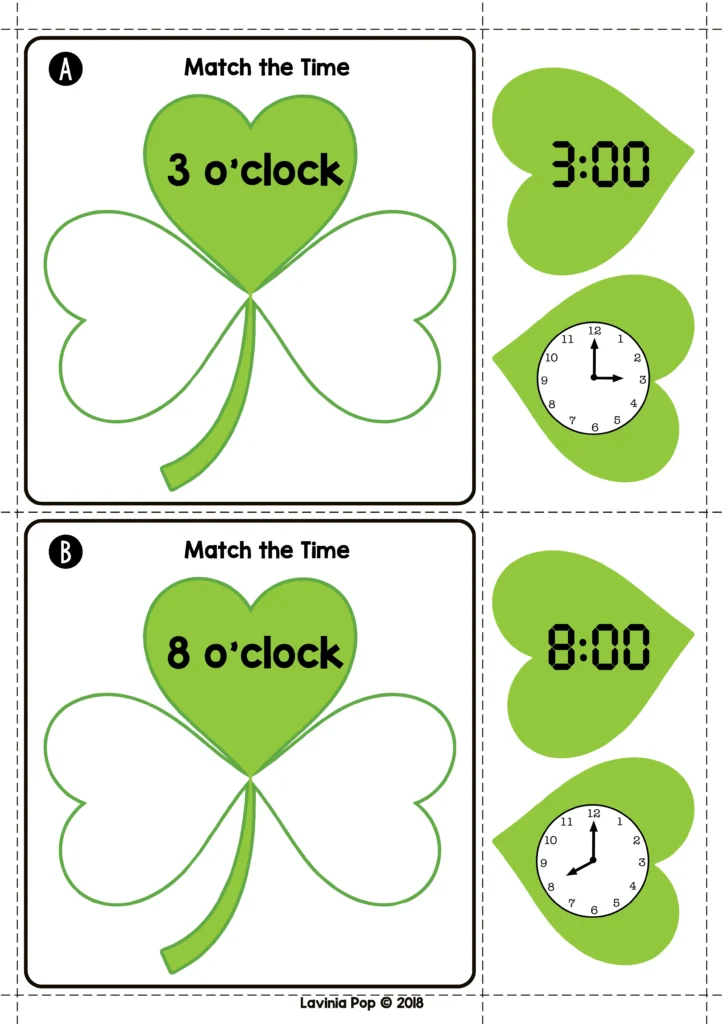
Students match digital time, analog clocks, and written time words such as “3 o’clock.” Seeing the same time in three different formats helps students connect representations and strengthens their understanding of how clocks work.
Teacher Tip: Practice reading the analog clock together before placing this center into rotation.
Skills practiced:
- Telling time to the hour
- Analog clock reading
- Digital clock recognition
- Time vocabulary
Why These St. Patrick’s Day Math Centers for Kindergarten Work
These St. Patrick’s Day Math Centers for Kindergarten provide structure, independence, and accountability through consistent formatting and recording sheets. They cover multiple kindergarten math standards while keeping your March math block engaging and organized.
When students know exactly what to do, they stay focused and productive.
Purchase the St. Patrick’s Day Math Centers for Kindergarten packet
If you would like to purchase the complete St. Patrick’s Day Math Centers packet, click on one of the store links below.
You may also like…
Can you share with me your activities? I know it will be too much useful to my work with children.
I want to make this for my kid
Thanks!
Thank you
Enjoy 🙂
Thank you very much!
You’re welcome, Kathleen 🙂